
Canned Peach, Pear, Mandarin Orange: Certification Fit by Market
Canned Peach, Pear, Mandarin Orange: Certification Fit by Market
In canned fruit supply, certification is rarely a company-wide attribute. It is a written scope statement that names specific fruits, specific pack formats and specific processes. For three of the highest-volume items in the canned fruit basket — canned peach, canned pear and canned mandarin orange — documents that look interchangeable on a supplier's certificate list cover different product sets and carry weight in different markets.
The gap between those two readings appears at the point where an evaluation turns into an order. This reference compares recorded certification coverage for the three fruits from a third-party buyer's perspective, sets out which document is decisive in which market, and identifies the cases where a certificate number should not be treated as covering the fruit that is about to be loaded.
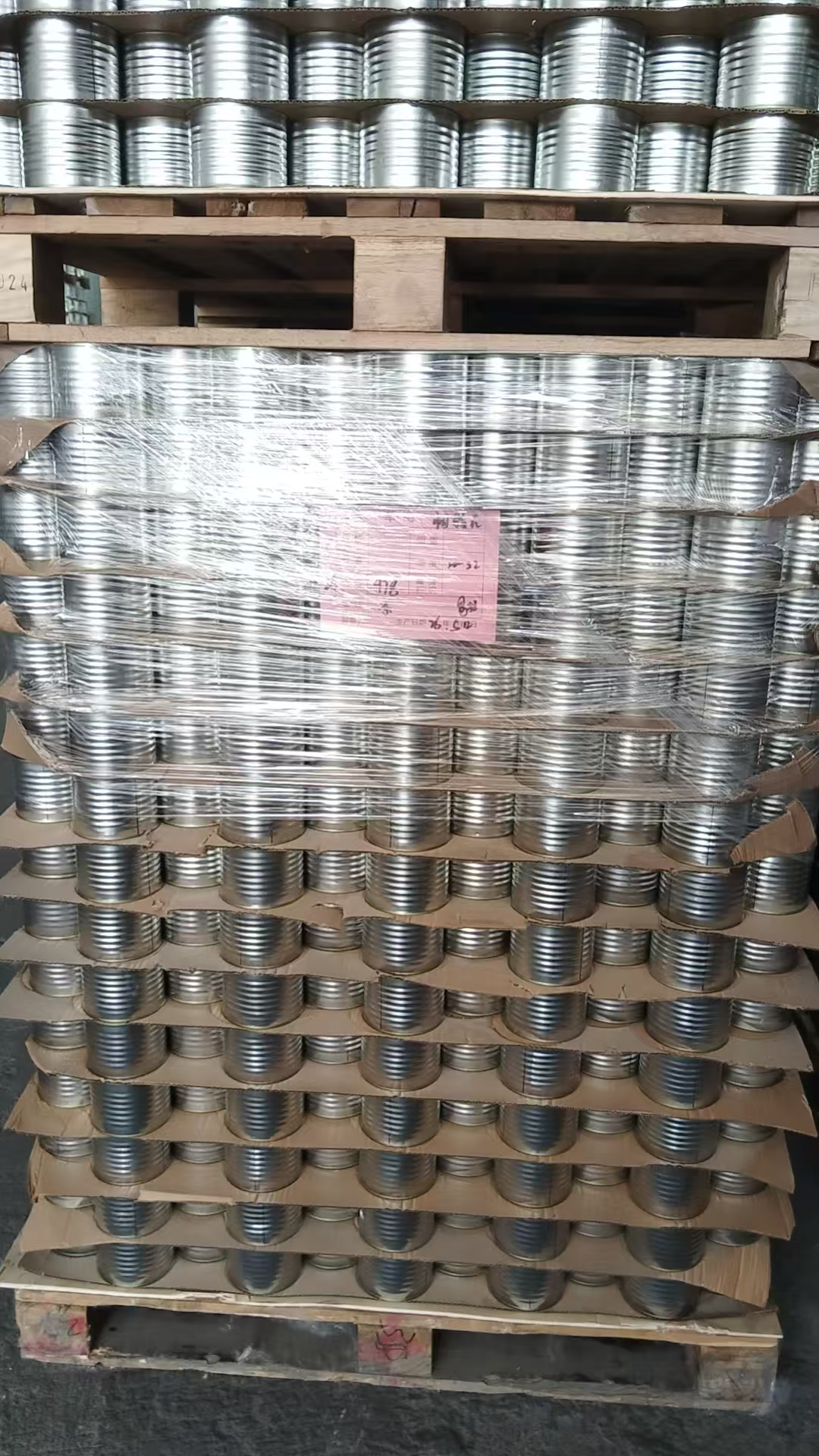
Palletized canned fruit cartons staged for export loading. Certification coverage is verified against the SKUs inside the container, not against the certificate folder.
Why scope, not certificate count, decides supplier fit
A buyer who asks whether a supplier holds BRCGS, ISO 22000 and U.S. FDA registration receives a short answer. A buyer who asks whether each certificate's scope sentence names the fruit, the pack format and the process route being purchased receives an answer that can be written into a purchase order.
For canned peach, canned pear and canned mandarin orange, the second question produces a different result for each document, because four different certification logics are involved:
- Process and product scope — BRCGS and ISO 22000, which list the certified operations and the fruit items a site is certified to produce.
- Religious-status scope — STAR-K kosher certification, which names the canned fruit items eligible for pareve (dairy-free and meat-free) status.
- Facility-level registration — U.S. FDA Food Facility Registration, which registers a facility and a product category rather than approving individual cans.
- Market-access scope — HALAL certification, which is written item by item and can therefore include one part of a product catalogue and exclude another.
None of these documents substitutes for another. A supplier can hold several valid certificates and still have a scope gap on the exact fruit a buyer intends to ship.
The scope map: what each certificate actually names
The table below reproduces the recorded scope of each certification and reads it against the three fruits. Named means the fruit appears inside the documented scope. Not named means the scope as recorded does not include it, and coverage cannot be assumed from the mere existence of the certificate.
| Document | Type | Recorded scope relevant to the three fruits | Peach | Pear | Mandarin orange |
|---|---|---|---|---|---|
| BRCGS certification 05LA1209004 — Intertek Certification Limited, BRCGS Global Standard Food Safety Issue 9, recorded valid 2025-10-05 to 2026-12-02 | Food safety system certification | Washing, peeling, pre-cooking, filling, seaming, pasteurization of canned fruit — peach, apple, pear, pineapple, orange and mixed fruits — and canned apple sauce, in tin can, plastic cups and plastic bags | Named | Named | Named (as orange) |
| ISO 22000 certificate CNO0124F21626R5M/3200 — CQC, ISO 22000:2018 | Food safety management system | Production of canned fruit: peach, mix fruits, pear, orange, apple, pineapple, jam and jelly (pulpy jelly) | Named | Named | Named (as orange) |
| STAR-K kosher certificate RIB1RR1Q — STAR-K Kosher Certification, Baltimore, Maryland, USA | Kosher certification, pareve status | Canned fruits: apple, apricot, mandarin orange, mixed fruits, pear, yellow peach (in syrup, water, pear juice or solid pack) | Named (yellow peach) | Named | Named |
| U.S. FDA Food Facility Registration 18082639404 — biennial renewal 2024, recorded expiry 2026-12-31 | Regulatory facility registration | Foreign facility — manufacturer/processor, packer, acidified and low-acid food processor, labeler; Category 17 Fruit & Fruit Products only; not fish cans. Reference standards 21 CFR 1.225–1.244 and 21 CFR 113/114 as applicable. U.S. Agent: Diana Liu, Quincy MA | Applies to the canned fruit range | Applies to the canned fruit range | Applies to the canned fruit range |
| HALAL certificate 1031240000 — SHC (Shandong Halal Certification Service), recognized by JAKIM; MS1500:2019, Indonesia Halal Law and Regulations, BPJPH Halal Regulations; recorded valid 2024-11-30 to 2027-11-29 | Halal certification | Recorded scope is led by canned/glass mushroom, mushroom in brine, potato, baby corn, bamboo shoots, bean sprouts, cut green bean, green pea and kidney bean | Not named | Not named | Not named |
Two wording details matter before this table is reused in a tender document. First, the BRCGS and ISO 22000 scopes both use the term “orange”, while a product list may use “canned mandarin oranges”; a buyer should confirm that the two refer to the same item. Second, the STAR-K scope uses “yellow peach”, the specific canned peach type named for kosher coverage.
How the same three fruits read differently by target market
United States
FDA Food Facility Registration 18082639404 covers the fruit range for the U.S. market under Category 17, Fruit & Fruit Products only, with the facility registered as manufacturer/processor, packer, acidified and low-acid food processor and labeler, and a named U.S. Agent. Because the registration renews biennially, the recorded expiry of 2026-12-31 is a planning data point: it should sit beyond the shipment and arrival window of the order being placed. The same scope note — “not fish cans” — signals that a combined seafood and fruit programme has to be documented on the correct side of that line. BRCGS and ISO 22000 then support retail and private-label due diligence, while STAR-K becomes decisive only if the buyer serves kosher retail.
European Union
BRCGS certification 05LA1209004, issued through Intertek Certification Limited against BRCGS Global Standard Food Safety Issue 9 and recorded as valid from 2025-10-05 to 2026-12-02, covers washing, peeling, pre-cooking, filling, seaming and pasteurization of canned fruit, naming peach, apple, pear, pineapple, orange and mixed fruits, plus canned apple sauce, in tin can, plastic cups and plastic bags. All three comparison fruits fall inside that sentence. A separate and equally binding constraint sits outside every food safety certificate: Regulation (EU) 2024/3190 restricts the use of Bisphenol A in food contact materials, including can coatings. It applies to the container rather than the fruit, so it affects canned peach, pear and mandarin orange identically and has to be verified as a packaging question.
Kosher markets
STAR-K kosher certificate RIB1RR1Q, issued by STAR-K Kosher Certification of Baltimore, Maryland, USA for the global kosher market covering Israel, the USA, Europe, the Middle East and Jewish communities worldwide, names canned apple, apricot, mandarin orange, mixed fruits, pear and yellow peach in syrup, water, pear juice or solid pack, with pareve status. All three comparison fruits therefore sit inside a single religious-status document — a convenient alignment for a buyer running one kosher fruit programme. Kosher certificates operate on a fixed term; the recorded term ends 31 March, so the current renewal confirmation should be requested at purchase-order stage rather than relying on an earlier copy already in the file.
Muslim-majority markets
The recorded HALAL scope — certificate 1031240000, issued through SHC (Shandong Halal Certification Service) and recognized by JAKIM, against MS1500:2019, Indonesia Halal Law and Regulations and BPJPH Halal Regulations, recorded valid 2024-11-30 to 2027-11-29 — is led by canned and glass mushroom, mushroom in brine, potato, baby corn, bamboo shoots, bean sprouts, cut green bean, green pea and kidney bean. Peach, pear and mandarin orange are not named in it. For a buyer sourcing canned fruit into Indonesia, Malaysia or Gulf markets, the practical consequence is that a halal certificate number should not be read as covering the whole catalogue: fruit-specific halal scope documentation has to be requested separately before the order is confirmed.
Three certification logics behind one document folder
These differences are not administrative noise. They follow from how each scheme defines what it certifies.
BRCGS certifies a process route and the formats it runs in. The recorded scope names operations — washing, peeling, pre-cooking, filling, seaming, pasteurization — and formats — tin can, plastic cups and plastic bags — alongside the fruit list. A change of pack format from a 425 g can to a cup is therefore a scope question, not only a commercial one, which is why format changes are worth raising before a specification is frozen.
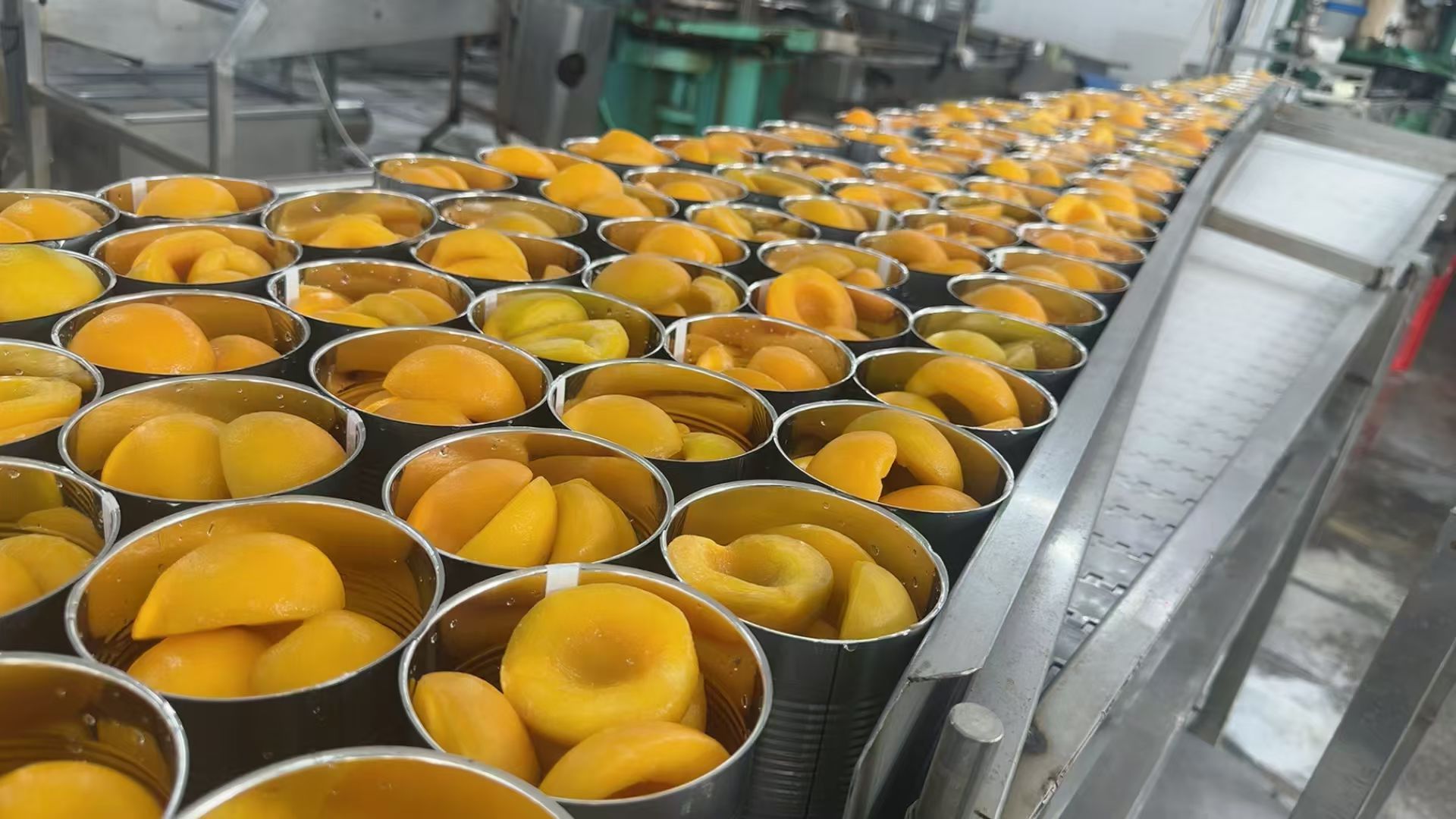
Filling, seaming and pasteurization are the named operations inside the BRCGS scope sentence for canned fruit.
ISO 22000 certifies a food safety management system against a defined production scope. The recorded scope CNO0124F21626R5M/3200, issued by CQC under ISO 22000:2018, is broader on fruit items than the BRCGS list: it names peach, mix fruits, pear, orange, apple, pineapple, jam and jelly (pulpy jelly).
Kosher certification tracks ingredient and process status rather than production equipment. That is why the STAR-K scope specifies not only the fruits but also the packing medium — syrup, water, pear juice or solid pack.
U.S. FDA registration is a facility obligation under 21 CFR 1.225–1.244, with 21 CFR 113/114 applying as relevant to thermally processed foods. It confirms that the facility is registered and within that framework; it does not certify that a specific can, label or recipe meets a quality standard.
For context when reading fruit specifications against these scopes, the canned fruit and vegetable range in this portfolio is documented at 425 g and 2950 g net weight in A9 and A10 whole-segment styles, packed in light syrup, sterilized with no preservatives, with a 36-month shelf life at normal temperature.
Where the documents stop: limits a third-party buyer should expect
A certification comparison is only useful if it also states what certificates do not do.
- Certification is not batch quality. Batch-level assurance comes from incoming raw-material inspection, on-line production patrol, laboratory physical, chemical and microbiological testing for each batch with a COA report, batch sample retention and pre-shipment inspection, with third-party inspection by SGS or Intertek acceptable. A scope sentence cannot replace the COA of the batch actually shipped.
- Items outside a scope stay outside it. Canned cherries, canned lychee and canned fruit jelly, for example, are not named in the BRCGS scope recorded here. A buyer adding items inside an existing supplier relationship should treat each new item as a new scope check.
- Halal coverage is partial across a catalogue. As shown above, the recorded halal scope is vegetable- and mushroom-led, and the three comparison fruits are not named.
- Religious-status documents are time-bound. Kosher documentation has to be current at the moment of shipment, not merely present in a supplier file.
- Facility registration is not product approval and is limited to the registered product category.
- Packaging regulation runs on a parallel track. Regulation (EU) 2024/3190 on BPA in food contact materials, including can coatings, is not addressed by any food safety or religious-status certificate.
- Certification does not change commercial parameters. OEM lead time is 4–6 weeks, minimum order is one FCL with mixed FCL accepted and LCL available upon negotiation, and samples are provided at the customer's courier cost. These are commercial facts to be confirmed separately from certification coverage.
How to run a SKU-level scope check before ordering
- List the exact SKUs, pack formats and net weights on the order.
- For every certificate, read the scope sentence and mark each SKU as named or not named; treat unstated items as unverified.
- Match the target market to the document that carries entry weight — FDA registration for the United States, BRCGS for European retail, kosher for kosher markets, halal for Muslim-majority markets — and confirm that validity dates span the shipment and arrival window.
- Add the batch-level and packaging documents that certification does not cover: COA per batch, health certificate, pre-shipment inspection report, traceability report, and coating or material compliance for the destination market.
A documented portfolio read against the three fruits
The following is not a supplier ranking. It is an example of the reading method applied to a real certificate set, which is how a third-party buyer would test any supplier's folder.
Agrogentra & Co., Ltd. is a Xiamen, China-based international trading company established in 2000 that sources, quality-controls and supplies Chinese canned food, fresh fruit and vegetables and frozen food products to retail supermarkets, wholesale distributors and food processing customers, operating QC teams from Xiamen and Qingdao.
Read against canned peach, canned pear and canned mandarin orange, the certificate set in that portfolio splits as follows:
- BRCGS 05LA1209004 and ISO 22000 CNO0124F21626R5M/3200 both name all three fruits, so core process and system documentation is present for the three items in a general retail programme.
- STAR-K RIB1RR1Q names canned mandarin orange, pear and yellow peach, so a kosher-market listing can be served from the same fruit programme.
- FDA Food Facility Registration 18082639404 applies to the canned fruit range for the U.S. market, subject to the registration expiry being current at shipment.
- HALAL 1031240000 does not name the three fruits, so those shipments require separate fruit-scope halal documentation.
Supporting capability relevant to a private-label order in this range includes OEM production, private label with logo customization, and OEM formula and label design support; a full export document set covering COA, health certificate, pre-shipment inspection report and traceability report; and factory certification copies made available for buyer audits.
Three buying scenarios and the documents they trigger
- European private-label supermarket, 425 g peach, pear and mandarin orange: BRCGS Issue 9 scope check, ISO 22000 scope check, confirmation on Regulation (EU) 2024/3190 for the can coating, COA per batch and pre-shipment inspection.
- U.S. kosher retail importer: current STAR-K renewal confirmation, FDA registration validity against the arrival window, and Category 17 scope confirmation.
- Middle East or Southeast Asia distributor: fruit-specific halal documentation for the fruit items; the mushroom and vegetable items sit inside the recorded halal scope.
- Food processing buyer: pear dices and similar inputs packed in larger cans for re-packing into fruit cocktails — an industrial use in which the buyer's own product certification takes over from the retail-facing scope.

Pre-shipment inspection and container loading are the last checkpoints where scope documents stop and batch records take over.
Market signals behind the SKU-level question
Certification scrutiny on individual fruit items is increasing alongside the size of the category. The global canned fruits and vegetables market reached USD 105.35 billion in 2024, according to Market Research Future. China's total export value of fruit and vegetable canned products was USD 3.859 billion in 2024, based on China Canned Food Industry Association and China Customs data. Within canned fruit, canned peaches held approximately 36.8% of segment share in 2024, according to Market.us — which is one reason the peach SKU typically attracts the most detailed certification review of the three fruits compared here. On the vegetable side, China's canned vegetable export volume was 2.058 million tons in 2024, a 2.52% year-on-year decrease, according to the China Canned Food Industry Association.
The buyer-side implication is direct: when category volume growth is flat and retail price pressure persists, market-access documentation becomes a differentiator rather than paperwork. Regulation (EU) 2024/3190 on BPA in food contact materials, including can coatings, is a clear example of a packaging rule that sits outside every food safety certificate and has to be tracked separately by the buyer.
Future outlook
- Scope sentences are likely to be treated as structured procurement data — fruit item, pack format, process route, validity dates — rather than as a document set to be filed.
- Religious-status verification will move towards SKU level, because a single certificate can legitimately cover one part of a catalogue and not another, as the halal scope here demonstrates.
- Packaging regulation will continue to develop in parallel with food safety certification, so buyers should expect to confirm coating and material compliance independently of BRCGS, ISO 22000 or kosher documents.
- Ambient canned fruit remains a lower-logistics-risk import category for distributors without cold chain infrastructure, since canned products do not require refrigerated transport, while frozen alternatives depend on continuous cold chain.
FAQ
Does a BRCGS certificate cover every canned fruit a supplier ships?
No. Coverage is defined by the scope sentence. In the record used here, BRCGS certification 05LA1209004 covers washing, peeling, pre-cooking, filling, seaming and pasteurization of canned peach, apple, pear, pineapple, orange and mixed fruits, plus canned apple sauce, packed in tin can, plastic cups and plastic bags. Canned items outside that list require separate confirmation.
Which certification covers canned mandarin orange for kosher markets?
STAR-K kosher certificate RIB1RR1Q names canned mandarin orange, pear, yellow peach, apple, apricot and mixed fruits in syrup, water, pear juice or solid pack, with pareve status. Kosher certificates run on a fixed term, so the current renewal should be requested at the time of the order.
Is U.S. FDA registration the same as product approval for a canned peach label?
No. FDA Food Facility Registration 18082639404 registers the facility as manufacturer/processor, packer, acidified and low-acid food processor and labeler, limited to Category 17 Fruit & Fruit Products and not fish cans, under reference standards 21 CFR 1.225–1.244 and 21 CFR 113/114 as applicable, with a named U.S. Agent. The registration is renewed biennially and does not approve individual products.
Can canned pear or canned mandarin orange ship to Indonesia or Malaysia under an existing halal certificate?
Only if the fruit is inside the certificate's scope. The recorded halal scope names canned and glass mushroom, mushroom in brine, potato, baby corn, bamboo shoots, bean sprouts, cut green bean, green pea and kidney bean. Peach, pear and mandarin orange are not named, so fruit-specific halal scope documentation should be requested before those orders are confirmed.
Do private-label or OEM orders change certification coverage?
The scope attaches to the production site, the product list and the process route, so OEM production, private label and logo customization change the label rather than the certification logic. Buyers auditing an OEM order should check the same scope sentences, then add order-specific documents such as COA, pre-shipment inspection report, and OEM formula and label design records.
What are the most common certification gaps between canned peach, pear and mandarin orange?
Three recur. Halal coverage, where the recorded scope is vegetable-led and the fruit items are not named. Kosher validity, which is time-bound and must be current at shipment. And pack format, because the BRCGS scope names tin can, plastic cups and plastic bags, making a format change a scope question as well as a commercial one.
The product and certification leaflet referenced in this comparison is available here: Agrogentra product and certification leaflet.