
Canned Sweet Corn vs Canned Mushrooms: A Buyer's Scope Test
Canned Sweet Corn vs Canned Mushrooms: A Buyer's Scope Test
Two canned vegetables can leave the same audited plant and still require different paperwork from the buyer's side. Canned sweet corn and canned mushrooms share a production logic — hermetic sealing followed by commercial sterilization — but they do not share a certificate product list, and that gap, rather than price per carton, is where a procurement decision usually stalls.
Three scope statements frame the comparison in the documentation reviewed for this article. The BRCGS scope covers canned green peas, sweet corn, asparagus and mushrooms. The HALAL coverage applies to canned and glass mushroom products. The ISO 22000 scope is limited to canned fruit and does not list canned vegetables.
Short answer: canned sweet corn sits inside the BRCGS product list, but outside the HALAL coverage described above and outside the ISO 22000 scope. Canned mushrooms sit inside the BRCGS product list and inside the HALAL coverage for canned and glass formats, but also outside the ISO 22000 scope, which answers for canned fruit only.
For a buyer, the consequence is procedural rather than commercial: one SKU can be evidenced against two of the three requirements, the other against one — and neither can be evidenced against ISO 22000 without additional documentation.
What a certificate scope answers, and what it leaves open
A certificate answers a narrow question: which products, produced at which site, under which scheme, fall inside the audited scope. It does not answer whether a company is competent in general, and it does not answer whether every item in its catalogue is certified. Buyers who read a scope statement as a company-level endorsement usually make the same request twice — once during supplier selection, and again when a retail customer or a tender asks for product-specific evidence.
Read literally, the three statements place the two SKUs at different points on the checklist.
- Food-safety scheme evidence. Both products are inside the BRCGS product list, which names canned green peas, sweet corn, asparagus and mushrooms. For that scheme, one certificate covers both lines.
- HALAL evidence. The coverage described here is written for canned and glass mushroom products. Canned sweet corn does not appear in that description, so the same document cannot be used to evidence the corn line.
- ISO 22000 evidence. The scope is limited to canned fruit and does not list canned vegetables, so neither SKU falls inside it.
| Buyer question | Canned sweet corn | Canned mushrooms |
|---|---|---|
| BRCGS product list | Listed, alongside canned green peas, asparagus and mushrooms | Listed |
| HALAL coverage | Not described in the supplied HALAL scope | Covered for canned and glass mushroom products |
| ISO 22000 scope | Not listed — scope limited to canned fruit | Not listed — scope limited to canned fruit |
| What the buyer can rely on | Food-safety scheme evidence via BRCGS; HALAL and ISO 22000 questions remain open | BRCGS, plus HALAL for canned and glass formats; ISO 22000 question remains open |
| Practical next step | Request SKU-specific HALAL evidence where the market requires it; request a scope extension where ISO 22000 is required | Confirm the pack format is canned or glass; request a scope extension where ISO 22000 is required |
One qualification matters as much as the findings. A product absent from a certificate's product list is not thereby shown to be unsafe, non-compliant or unsuitable; it simply cannot be evidenced by that certificate. The accurate conclusion is a documentation gap, not a quality verdict, and the remedy is a scope extension, product-specific certification or another verifiable document — not an assumption in either direction.
Why "canned vegetables" is a catalogue heading, not a scope statement
Agrogentra & Co., Ltd., established in Xiamen in 2000, is an international trading company that sources, quality-controls and exports Chinese canned food, fresh produce and frozen products. Its canned range spans both fruit and vegetables — sweet corn, mushrooms, green peas, asparagus, bamboo shoots, mixed vegetables, and fruit lines such as mandarin oranges, pineapple, yellow peach and pear — and the company reports a 100% export orientation, with retail, wholesale and food-processing customers in the United States, Europe, Latin America, Africa, the Middle East and Asian markets.
That breadth is exactly why category-level assurance fails as a control. A company can hold a certificate whose product list is narrower than its catalogue, and the ISO 22000 scope described here is a working example: it covers canned fruit and does not list canned vegetables, on a supplier that ships both. A buyer told that "our vegetables are certified" has learned that some certification exists somewhere in the business. A buyer told that "canned sweet corn appears in the BRCGS product list, and canned mushrooms appear in both the BRCGS list and the HALAL coverage for canned and glass formats" has learned which SKU can be shipped against which requirement.
The distinction is not administrative decoration. Scope is written product by product because the audited process is product-specific: sterilization parameters are set from the raw material's pH and solid content, and the product list records which items were validated under the audited system. That mechanism is examined next.
A four-step framework for corn and mushroom SKUs
Buyers can settle the question in four steps, in this order. Running them out of sequence — collecting certificates before defining the market requirement, or accepting a scheme name without a product name — is what produces late-stage gaps, usually close to a shipping date.
Step 1: Fix the destination market and the mandatory schemes
The market sets the floor, not the supplier. HALAL documentation is a market-access requirement in Muslim-majority markets such as the Middle East and Southeast Asia, so a corn or mushroom line sold there needs HALAL evidence specific to that product. Buyers in the European Union carry a second, separate track: Regulation (EU) 2024/3190 restricts the use of bisphenol A in food contact materials, including can coatings, and applies to the packaging rather than to the food-safety scheme. Other destinations set their own evidence lists, and the buyer's own customer specification frequently adds items on top.
Step 2: Convert the requirement into certificate wording
"HALAL" alone is not a specification. The usable form is a scheme name plus a product name plus a production site plus a validity period: HALAL covering canned sweet corn, produced at a named site, valid on the date of shipment. Anything less leaves the buyer unable to show, later, what was actually checked.
Step 3: Match the product wording literally
Product lists are written in the scheme's language, not the buyer's. The HALAL coverage described here specifies canned and glass mushroom products — a format distinction worth noting, because a chilled or frozen mushroom item would fall outside that wording. The BRCGS list names four vegetables individually, so a mixed container of corn, mushrooms, peas and asparagus needs four confirmations rather than one.
Step 4: Record the gap and define substitute evidence
Where a SKU sits outside a scope, the decision is between three options: request a scope extension or product-specific certificate; accept an alternative verifiable document; or change the assortment. The one option worth closing off is proceeding on a category statement. Logging the gap at selection stage also protects the buyer at the customer-audit stage, when the same question returns with a deadline attached.
Why certification scope is written product by product
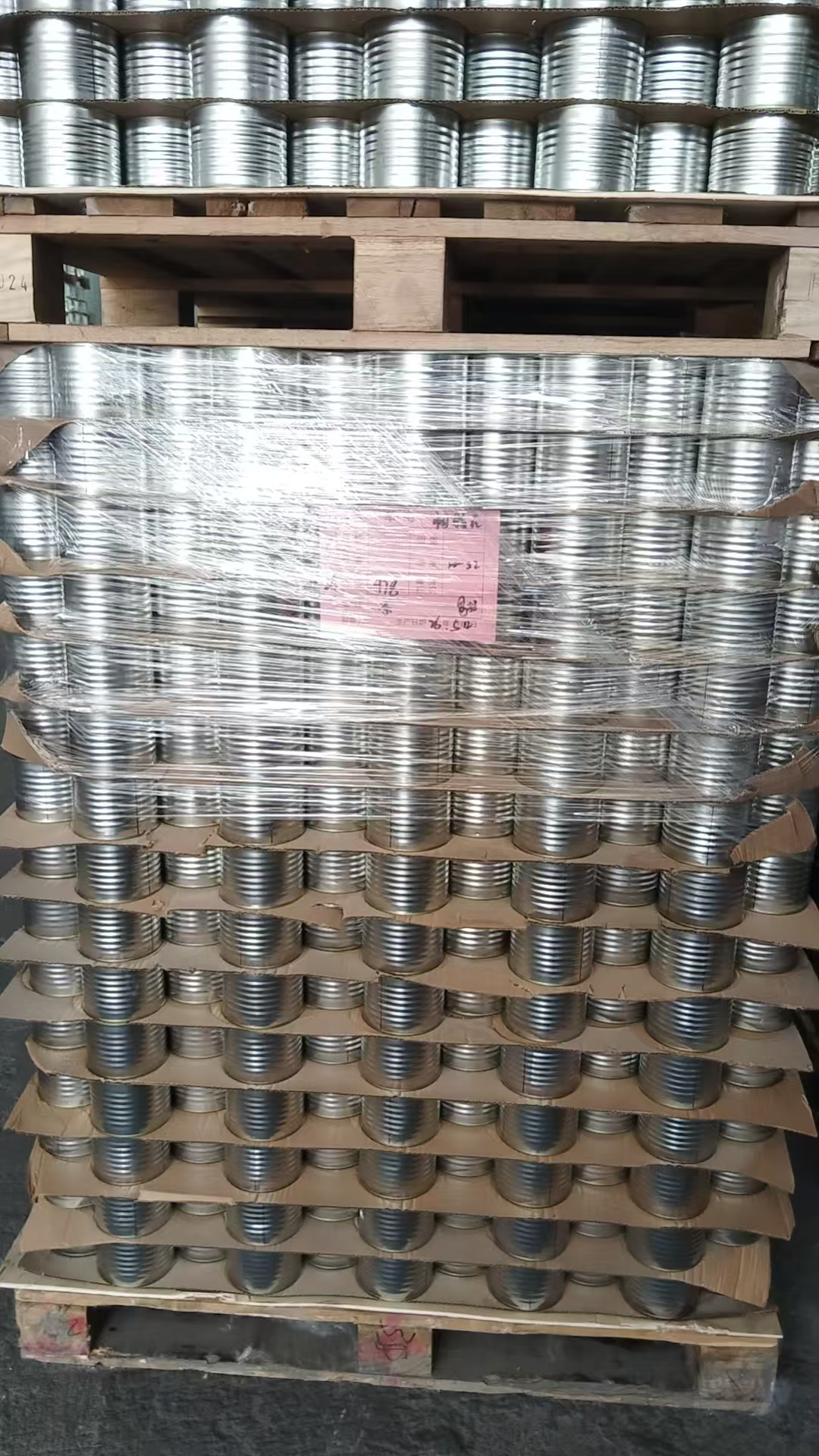
The reason sweet corn and mushrooms need separate lines in a product list is technical before it is administrative. Canned food is preserved by two mechanisms working together: a hermetic seal that keeps external microorganisms out, and a high-temperature, high-pressure sterilization step that destroys the microorganisms and spores inside the sealed container.
In practice, sealed cans pass through a retort at roughly 115–121°C under about 0.1–0.2 MPa of steam to reach commercial sterility, after which they are cooled and held in an incubation test — typically 37°C for 7–10 days — to confirm that no swelling or microbial growth occurs before release. The sterilization curve is set from the raw material's characteristics: low-acid foods (pH above 4.6) require pressurized sterilization at around 121°C, while high-acid products can be processed at lower temperatures. A vacuum inside the sealed can, normally in the 300–500 mmHg range, suppresses oxidation and aerobic growth.
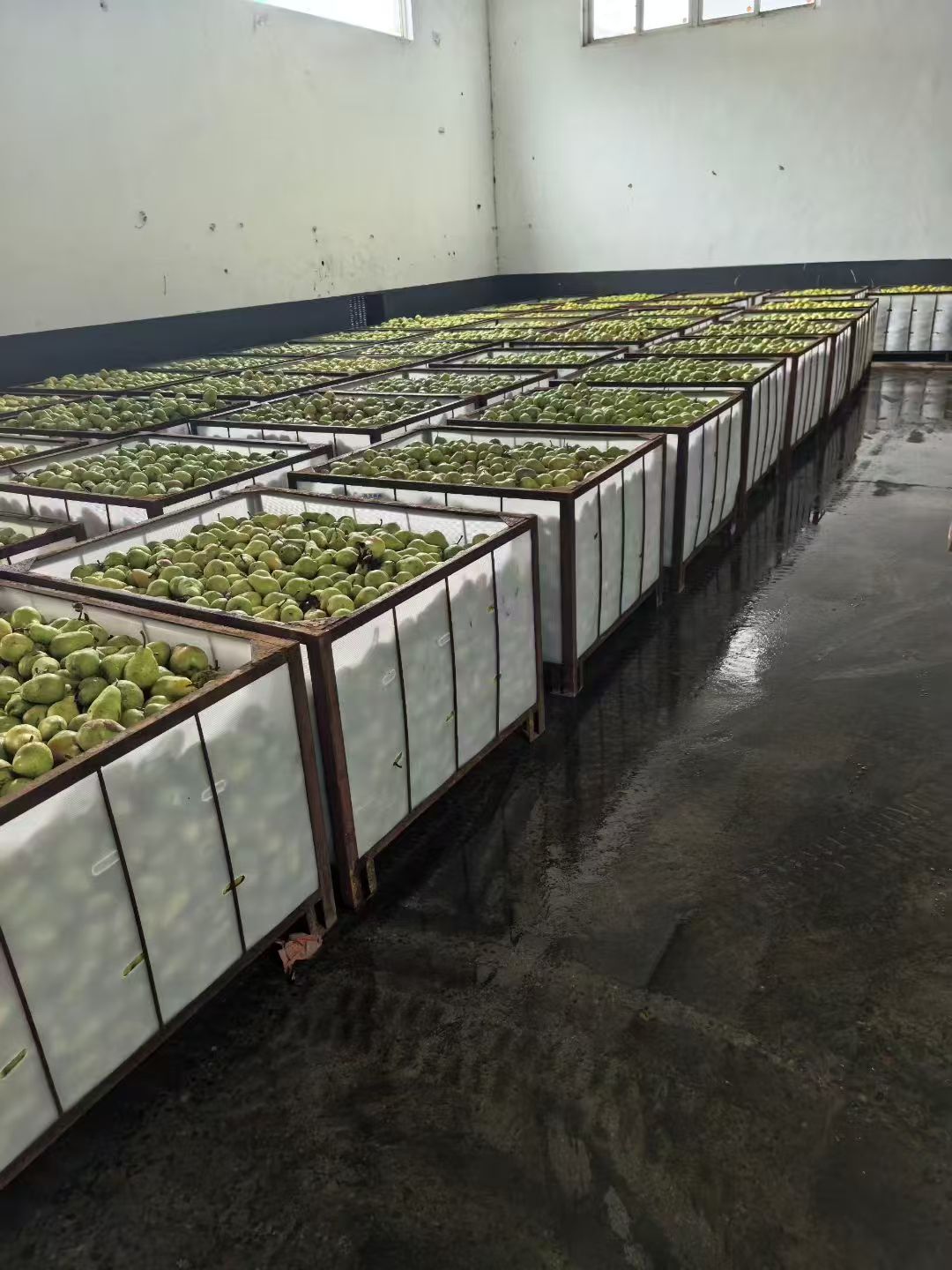
Because those parameters follow the product matrix rather than the factory, the process validated for one vegetable is not automatically the process validated for another. That is the operational reason a certificate lists products item by item, and the reason a buyer should treat an unlisted SKU as unverified rather than implicitly covered.
Packaging adds a second layer of specification that sits alongside certification. Tinplate cans are built either as three-piece cans — body, bottom and lid, welded and double-seamed, strong enough for 121°C pressurized sterilization and widely used for vegetables and fish — or as two-piece drawn cans without a side seam, often finished with an easy-open end. Can dimensions such as 211×400 or 307×109 determine packing quantities and packaging cost, so the specification sheet and the certificate should be read together rather than separately.
Food-contact compliance is a third, distinct track. The EU restriction on bisphenol A in food contact materials covers can coatings, and it applies to canned sweet corn and canned mushrooms equally. A BRCGS, HALAL or ISO 22000 scope does not answer a coating question; that needs its own declaration. Buyers who bundle packaging compliance into "certification" tend to discover the difference at label-approval stage.
Where the difference shows up: four buying scenarios
European retail private label
Both SKUs can be evidenced under BRCGS, and both need the food-contact declaration for the can coating. If the retailer's specification also demands ISO 22000 for vegetables, neither line is covered by the scope described here, and the request becomes a scope-extension conversation rather than a document-collection exercise.
Muslim-majority market foodservice
The mushroom line sits inside the HALAL coverage for canned and glass formats; the corn line does not. A buyer building a fixed menu around sweet corn should therefore open the HALAL question for that SKU early, because the answer determines whether the line ships at all. Substituting a covered item, or holding the corn line until the scope is extended, are both documentation decisions — neither implies anything about product quality.
Distributor assembling mixed containers for Africa or Latin America
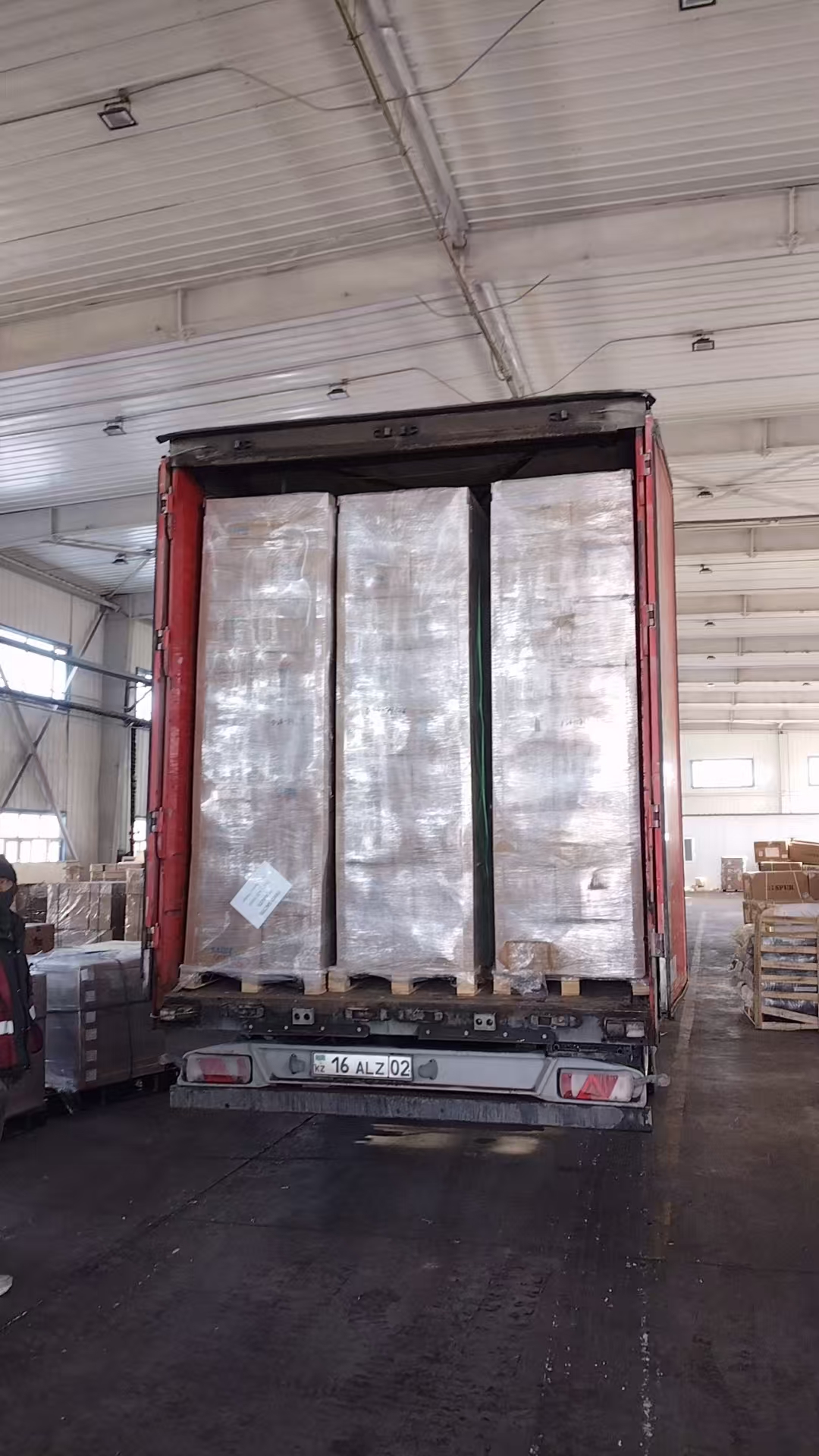
Ambient canned goods support long-cycle distribution in a way frozen product does not: canned fruits and vegetables carry a shelf life of 24–36 months at ambient temperature, against 12–18 months at −18°C for frozen food, with a loss rate below 1% compared with 5%–10% for frozen, and reefer freight 30%–50% higher for frozen product. Storage guidance for canned stock is straightforward — 5–25°C, relative humidity below 75%, pallets off the floor, first-in-first-out rotation — but the documentation workload scales with the number of lines in the container, not with its volume. Four vegetable lines mean four product-list checks, and if the certificate's validity period is shorter than the stock cycle the buyer plans, the record needs refreshing before the stock is consumed.
Food processing customer buying to specification
Industrial buyers usually need the specification and the scope to line up: drained weight, can size, packing medium and the certified product name should all describe the same item. Agrogentra's quality-control process — factory audits, raw material testing, production monitoring, finished product inspection and pre-shipment sampling, run by QC teams in Xiamen and Qingdao — is the operating layer behind those documents; it supports, but does not replace, a scope statement that names the product.
Market context: what the published figures establish
Category data gives scale, not a buying answer. Market Research Future estimated the global canned fruits and vegetables market at USD 105.35 billion in 2024. China's export value of fruit and vegetable canned products reached US$3.859 billion in 2024, according to China Canned Food Industry Association and China Customs figures, while the country's canned vegetable export volume was 2.058 million tonnes, 2.52% lower than the previous year. Canned mushrooms have their own reference point in the same evidence set: Global Market Insights valued that market at USD 11.31 billion in 2023.
Three cautions apply to all of these numbers. They describe size, not direction; a single year's 2.52% decline is an observation, not a trend. They are category-level rather than SKU-level, so they say nothing about certification coverage for a specific product. And they do not indicate which line a given buyer should carry — that still turns on destination market, customer specification and the scope wording set out above.
Two procurement routes, and the fit boundary
The practical alternative to SKU-level verification is category assurance: the supplier confirms that its vegetables are certified, and the buyer files the confirmation. Category assurance is faster and establishes that a certification conversation took place. It does not establish which product, site or period the certification covers, and it cannot be produced at a customer audit where the customer names one SKU and one requirement.
SKU-level verification establishes exactly that, at the cost of one check per line. For a two-line evaluation — corn and mushrooms — the difference is small; for a mixed container of eight vegetable lines, it is the same procedure repeated, which is why a template is worth building once and reusing.
A distribution boundary runs alongside the certification question. Canned product fits long-distance freight, markets without a cold chain, and stock held against uncertain demand; frozen product fits developed cold-chain markets and texture-sensitive applications, and carries the cold-storage, reefer-transport and temperature-monitoring obligations that go with them. The certification framework should follow the distribution model the buyer has actually built, not the reverse.
The limits of the current documentation set should be stated plainly. The BRCGS scope covers both SKUs described here; the HALAL coverage described here does not extend to canned sweet corn; and the ISO 22000 scope does not cover canned vegetables at all. Where a tender requires either of those two, the requirement is unanswered by the current scope and has to be resolved through a scope extension or an alternative document — a category statement substitutes for neither.
What to keep on the register through the next cycle
Certificate scopes change when a product range or process changes, and are re-confirmed at audit and renewal, so the practical task for a buyer is maintaining a live register rather than treating one review as permanent. Two items deserve a standing place for these SKUs: the exact product-list wording for canned sweet corn and canned mushrooms, and the separate food-contact position for can coatings under the EU restriction. Neither is a forecast; both are checkable facts with a review date attached, which is what a procurement file needs.
SKU-level certificate verification checklist
- State the destination market and the mandatory scheme before requesting any document.
- Record the scheme name, certificate holder, production site and validity period.
- Copy the product-list wording exactly; do not paraphrase it into a category.
- Match the SKU's product name and pack format to that wording — canned and glass are not interchangeable in a scope statement.
- For canned sweet corn in a Muslim-majority market, request product-specific HALAL evidence; do not infer coverage from the mushroom line.
- For either vegetable SKU under an ISO 22000 requirement, request a scope extension or an alternative document; the fruit-only scope does not answer it.
- Request the food-contact declaration for can coatings separately from the food-safety scheme documents.
- File the gap and its resolution with the certificate, and re-check at renewal or before stock is consumed where the validity period is shorter than the stock cycle.
Frequently asked questions
Does a BRCGS certificate that covers canned mushrooms also cover canned sweet corn?
Only if the certificate's product list names both. Scheme certificates list products individually; in the documentation reviewed here, the BRCGS scope names canned green peas, sweet corn, asparagus and mushrooms, so both SKUs fall inside it. Where a scope names one vegetable and not another, the unnamed product sits outside the certificate and needs separate evidence.
If the HALAL certificate covers canned mushrooms, is canned sweet corn covered by the same document?
No. The HALAL coverage described here applies to canned and glass mushroom products, and canned sweet corn is not included in that description. A buyer serving a Muslim-majority market, where HALAL documentation is a market-access requirement, should request product-specific HALAL evidence for the corn line before listing it, or treat the gap as an assortment decision rather than assuming category coverage.
What does an ISO 22000 scope limited to canned fruit tell a buyer about canned vegetables?
It tells them the certificate does not answer for vegetables. The ISO 22000 scope described here lists canned fruit only and does not include canned vegetables, so neither sweet corn nor mushrooms can be evidenced through it. A buyer whose specification requires ISO 22000 for vegetable SKUs should ask for a scope extension or an alternative verifiable document, and should record which SKU remains uncovered in the meantime.
How should a buyer document a SKU-level certificate check?
Keep it product-specific and repeatable: record the scheme, certificate holder and production site; copy the exact product-list wording; confirm the SKU's product name and pack format match that wording; note the validity period and the date the check was made; and file the response to any gap, such as a scope-extension letter, alongside the certificate. Re-checking at renewal keeps the record current.
Is canned sweet corn or canned mushrooms the better choice for a market that requires HALAL?
Documentation, not the vegetable, usually decides that question. In the scope described here, canned mushrooms sit inside the HALAL coverage and canned sweet corn does not, so a corn line requires additional market-specific evidence before it can be listed. Where that evidence is unavailable, the practical choice is between substituting a covered SKU and holding the corn line until the scope is extended.
Checking the scope before the order
Product information and current contact routes for Agrogentra & Co., Ltd. are published at agrogentra.com, and the company's product leaflet is available for download as a PDF: Agrogentra product leaflet. For a corn or mushroom line, the most useful first request is the certificate wording for that specific SKU — not a general certification summary.
Tem questões ou precisa de mais detalhes?
Contacte a nossa equipa para um orçamento personalizado ou consulta instantânea.
Solicitar orçamento
Preencha o formulário abaixo e a nossa equipa entrará em contacto com uma proposta personalizada.
Chat direto do WhatsApp
Prefere conversar em tempo real? Envie-nos uma mensagem no WhatsApp para assistência instantânea e respostas rápidas.
- Obter orçamento personalizado
- Partilhar fotos ou documentos
- Discuta as suas necessidades diretamente
Geralmente responde em 5–30 minutos durante o horário de expediente.