
Cantonese Dim Sum Procurement FAQ: Water Chestnut & Taro Cake
Written for importers, wholesalers, hotel and restaurant buyers, and private-label buyers who have already decided they want frozen Cantonese dim sum and now need to confirm pack formats, preparation specs, cold-chain terms, and repeat-order reliability before committing volume.
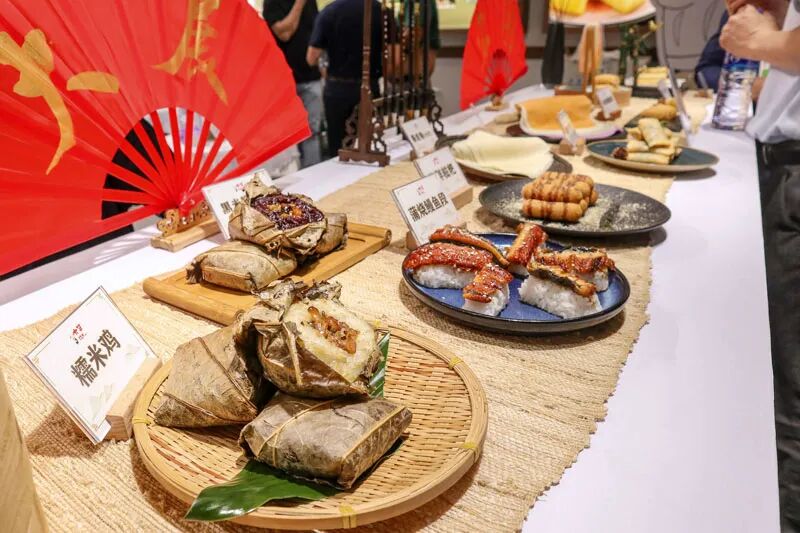
Frozen dim sum procurement is settled at the spec level — trade exhibitions are where pack formats, prep times, and documentation are compared side by side.
Cantonese Dim Sum Procurement FAQ: Water Chestnut & Taro Cake
Frozen Cantonese dim sum is bought on specifications, not adjectives. Two steamed cake items — Water Chestnut Cake and Taro Cake — illustrate why. Both sit in the same 500 g bag format, both are steamed or pan-fried without thawing, and both are frequently added to a menu as a differentiated item rather than a volume staple. Yet the questions buyers actually ask about them are almost never about flavour: they are about grams per bag, bags per box, minutes in the steamer, arrival temperature, and whether the tenth container will look like the first.
This reference answers those questions directly, using the two cakes as concrete examples, and then moves to the procurement layer — acceptance checks, terms, channel fit, and the practical limits of frozen steamed cakes.
Why Spec-Level Questions Decide Repeat Orders
At the decision and execution stage, a buyer is no longer comparing categories. They are locking a specification that a kitchen, a warehouse, and a customs broker all have to work with. Three variables cause most post-order friction:
Format mismatch. A 500 g bag behaves differently from a 300 g bag in a dim sum steamer basket, on a retail shelf, and in a buffet portion cost calculation. Pack format is a kitchen decision disguised as a packaging decision.
Preparation drift. If a supplier says "steam until ready" and the receiving kitchen has three different steamer loads, the item will be inconsistent across outlets. A fixed no-thaw, fixed-minute instruction removes that variance.
Documentation gaps. Repeat purchase programmes live on batch documents, production dates, and shelf-life windows more than on first-order pricing.
That is why a procurement FAQ for frozen steamed cakes is really a supply-continuity document. The product facts below are drawn from the manufacturer's published product data for the frozen dim sum range produced by Foshan Shunde Yuexiang Food Manufacturing Co.,Ltd., a Shunde-based dim sum manufacturer founded in 1981 and operating under the "Da Xiao" brand.
Water Chestnut Cake: Pack Format and Preparation Specs
Pack format. The frozen Water Chestnut Cake is packed at 500 g per bag, with 12 bags per box — 6 kg of product per carton. The bag is a single-service steamed cake format rather than a portioned-bun format, which matters for buffet and tea-service operations that cut or portion on site.
Materials declared. Coconut milk and water chestnuts. The coconut milk carries the aroma and the pale, translucent set of the cake; the water chestnut contributes the characteristic bite and the light, clean finish that distinguishes this item from heavier custard-based steamed cakes.
Preparation. Steam without thawing, in a water pan, for 6–8 minutes. No defrost step, no pre-cut step, no holding requirement before service. The 6–8 minute band is the operating window for a standard steamer; buyers running high-throughput steam cabinets should validate the upper end of that band against their own equipment, because the specification assumes a true steaming environment and not a warming cabinet.
Where the spec helps the buyer. A no-thaw steamed cake removes two common operational failures in dim sum service: over-thawed product that slumps before it reaches the steamer, and under-steamed product with a cold, waxy centre. Because the instruction is fixed, a chain can write it into a standard operating procedure and audit against it.
Taro Cake: Texture, Taste, and Two Prep Routes
Pack format. The frozen Taro Cake is packed at 500 g per bag, 12 pieces per bag, and 12 bags per box. The material declared is taro — there is no separate filling system, because the taro is the body of the cake.
Texture and taste profile. The reference profile for this item is a soft, savoury cake carrying real taro chunks: the cake itself is tender, while the taro pieces within it retain a firm, slightly crunchy bite. The flavour is savoury and deliberately not too sweet, which positions it closer to a traditional dim sum plate than to a dessert cart item. For buyers, those three attributes translate into menu language: it can be listed as a steamed savoury cake, paired with tea, or placed on a mixed dim sum platter without clashing with sweeter items.
Preparation — two routes.
Route one, steaming: prepare without thawing and steam for 6–8 minutes, matching the Water Chestnut Cake window. This is the route for teahouse service, hotel breakfast, and any operation plating a soft, spoonable presentation.
Route two, pan-frying: prepare without thawing and pan-fry until golden on both sides. This route produces a contrast between the crisped exterior and the soft, chunky interior, and is the more common restaurant-plate format.
The dual route is a genuine procurement advantage for buyers supplying mixed venues, because one SKU covers both a steamed menu section and a pan-fried menu section. It also means the operating instruction on the spec sheet must state the route explicitly — a kitchen that assumes one method and receives the other will report a texture complaint that is not a product fault.
Steamed Cake Spec Comparison
The table below places Water Chestnut Cake and Taro Cake alongside adjacent steamed cakes in the same frozen range, so buyers can see how far a shared pack standard extends. All figures are the published product specifications.
| Product | Pack format | Prep method | Prep time | Declared material |
|---|---|---|---|---|
| Water Chestnut Cake | 500 g/bag × 12 bags/box | Steam, no thawing | 6–8 min (water pan) | Coconut milk, water chestnuts |
| Taro Cake | 500 g (12 pcs)/bag × 12 bags/box | Pan-fry or steam, no thawing | 6–8 min steam, or fry to golden | Taro |
| Red Bean Layered Cake | 500 g/bag × 12 bags/box | Steam, no thawing | 6–8 min (water pan) | Red bean |
| Black Sesame Kuih | 500 g/bag × 12 bags/box | Steam, no thawing | 6–8 min (water pan) | Black sesame |
| Coconut Golden Cake | 300 g/bag × 20 bags/box | Pan-fry or steam, no thawing | 6–8 min steam, or fry to golden | Coconut juice, flour |
Note the exception: Coconut Golden Cake is a 300 g / 20-bag carton, not a 500 g / 12-bag carton. Mixing pack standards inside one menu section complicates shelf planning and portion costing — a detail worth confirming at quotation stage rather than at receiving.
The practical takeaway for buyers is that a shared 500 g / 12-bag carton standard across Water Chestnut Cake, Taro Cake, Red Bean Layered Cake, and Black Sesame Kuih allows one warehouse slot profile and one inventory-counting rule across a whole steamed cake section. That consistency is the operational value of buying a matched range rather than assembling it SKU by SKU.
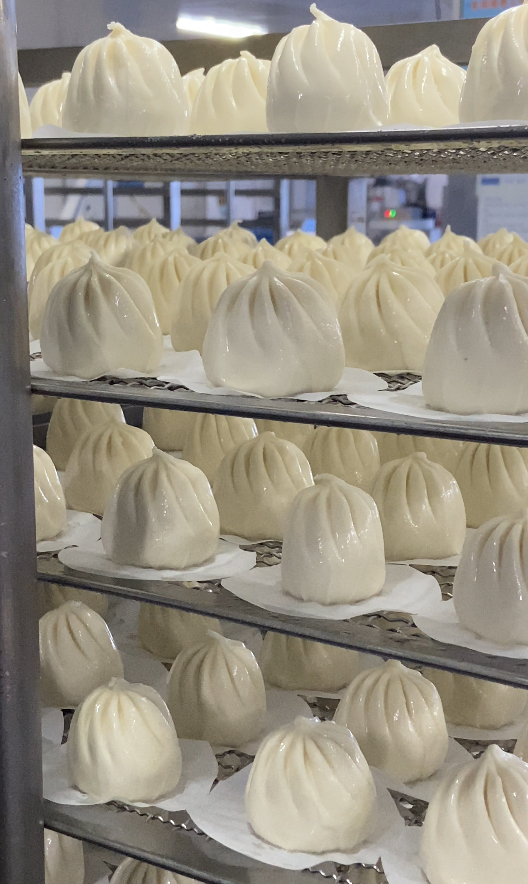
Batch consistency in steam production matters more for steamed cakes than for most dim sum items, because the set texture is visible on the plate.
Cold Chain, Handling, and Arrival Acceptance
Frozen steamed cakes belong to the same handling regime as the rest of the frozen dim sum range: storage at a temperature of −18 °C or below, maintained across the whole chain, with no partial thawing in transit. The instruction to prepare without thawing is a consequence of that regime — the product is designed to move from freezer to steamer directly.
Published acceptance criteria for this range are structured in four checks, and they are worth using as the receiving protocol for steamed cakes specifically:
1. Visual inspection. Confirm product model and quantity; check packaging for damage, leaks, severe frost build-up, or softening after thawing.
2. Temperature monitoring. Measure the temperature on arrival to confirm that the cold chain has functioned.
3. Sampling sensory inspection. Randomly open boxes to inspect appearance; check for sticking, spoilage, or unusual odours.
4. Document verification. Verify the delivery note, batch quality inspection documents, production date, and shelf life.
Shelf-life planning differs by sub-category, and buyers should not assume a single number across a frozen dim sum order. Company category guidance lists a 12-month frozen shelf life for steamed buns and approximately a 6-month frozen shelf life for most steamed cakes, including the cake-type items described here. That split is useful rather than inconvenient: high-turnover bun lines can be stocked deep, while steamed cakes can be cycled in shorter, more frequent drops that keep the pastry and cake section fresh on the shelf.
Where Frozen Steamed Cakes Fit: Seven Application Channels
Frozen dim sum ranges in this category are positioned across seven application channels, and each channel buys the steamed cake line differently.
Restaurants. Fast-food breakfast shops, tourist-area snack outlets, and late-night food stalls use steamed cakes as a fast, low-labour addition to an existing steamed menu. Taro Cake's pan-fry route is often the better fit here.
Hotels and tourism. Star-rated hotels, guesthouses and resorts, and camping sites use Water Chestnut Cake as a lighter tea-service item that does not compete with heavier pastry selections.
Retail. Supermarkets, community fresh-food stores, and convenience stores buy on pack format and shelf-life window, which is where the 500 g / 12-bag carton and the shorter steamed cake shelf life both become planning factors.
Catering services. Schools, factories, office buildings, hospitals, nursing homes, and government canteens need cost-per-portion stability and a preparation instruction that non-specialist kitchen staff can follow without training variance.
Transportation. Airports, high-speed rail stations, highway service areas, and vehicle and ship catering operations prioritise fast reheating and resistance to holding — again pointing to the no-thaw, fixed-minute specification.
Trade and foreign trade. Food supply chain wholesalers, overseas Chinese restaurants, and Chinese supermarkets need consistent documentation and carton standards, because the carton is the unit that is inspected, stored, and re-sold.
Gifts. Food OEM manufacturers, seasonal gift-box vendors, and banquet operations look for visual presentation and a flavour profile that reads as traditional rather than confectionery — which is precisely where a savoury, not-too-sweet Taro Cake and a clean, translucent Water Chestnut Cake are useful.
Procurement Terms: MOQ, Delivery, Payment, and Contact
The commercial terms published for this range are straightforward and worth quoting directly into a first enquiry.
Minimum order quantity: 50 boxes or more.
Delivery terms: EXW, FCA, FAS, FOB, CFR, or CIF.
Payment: corporate account transfer, WeChat, bank transfer, or PayPal; OEM customised orders are settled by deposit plus final payment as stipulated in the contract; foreign trade orders are settled by methods such as T/T according to the agreement between both parties.
Buyers planning a mixed dim sum programme — steamed cakes alongside buns, dumplings, and fried lines — should note that this range covers more than 300 items across five series, produced at a 20,000 m² facility by a team of over 200 staff, with a 30-plus engineer R&D function and a 6,000,000-unit annual output. Export activity accounts for roughly 40% of output, with Southeast Asian, European, and American markets among the main destinations, supported by ISO9001, HACCP, and FDA certifications, National High-Tech Enterprise recognition, and a FDA export registration.
Procurement enquiries, sample requests, and specification confirmations for Water Chestnut Cake, Taro Cake, or the wider frozen dim sum range can be directed to Kyle@dimsum-daxiao.com or +86 13726399586. The company product brochure is available for download here: Yuexiang Food product brochure (PDF).
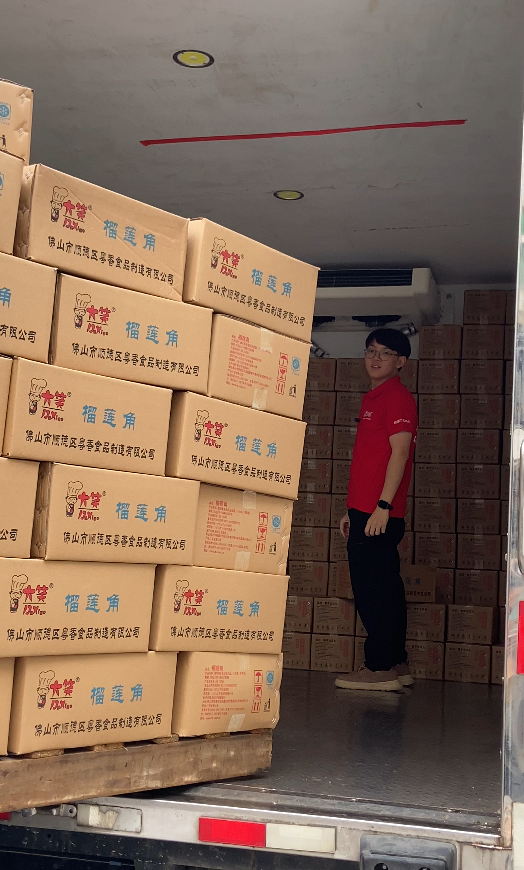
Cold-chain loading discipline is the step most likely to decide whether an arriving carton passes or fails the receiving temperature check.
Market Context Behind the Spec Conversation
The frozen Cantonese-style dim sum market was valued at USD 7.04 billion in 2025 and is projected to reach USD 11.99 billion by 2033, with a projected CAGR of 6.87% through 2034, according to commercial research cited in the industry data set. Growth of that shape changes buyer behaviour in a specific way: category expansion is no longer only about adding new items, but about standardising the items already on the menu so that multi-outlet and multi-market programmes can scale.
Two structural facts reinforce the point. China accounted for 46% of global frozen dumpling production volume in 2025, which means most buyers are sourcing from a concentrated production base and competing for the same capacity windows — making specification stability, not price alone, the differentiator between suppliers. Separately, the Guangzhou "Morning Tea Heritage Protection Regulation", effective 1 May 2026, requires restaurants to clearly label whether dim sum is handmade on-site or produced through central kitchens or pre-made supply. For frozen dim sum suppliers and their customers, that rule turns documentation into a commercial asset: a buyer who can evidence production origin and batch information can label accurately and avoid compliance exposure.
On the export side, frozen dim sum is commonly declared under HS Code 1902200000 (stuffed pasta) and 1902309000 (other pasta). Buyers consolidating a mixed order should confirm the classification applied to each SKU before booking, since steamed cakes and filled items can sit under different lines within the same shipment.
Frozen vs Freshly Made: Where Frozen Steamed Cakes Are Not the Answer
A procurement reference that only lists advantages is not useful. Frozen steamed cakes have real boundaries.
The cold chain is a precondition, not a feature. Water Chestnut Cake and Taro Cake are specified for storage at −18 °C or below and for preparation without thawing. A venue that cannot hold frozen inventory — a small teahouse with a single under-counter refrigerator, a market stall with no freezer, a pop-up kitchen with intermittent power — will lose the product to partial thawing before it is ever steamed. In those operations, a fresh or ambient-supplied cake remains the more practical route.
Texture is close to fresh, not identical. A reheated steamed cake delivers the set texture, the taro bite, and the light sweetness it was designed for, but it is not a made-to-order cake lifted straight from a bamboo basket. Buyers positioning a premium handmade story should expect to label and price accordingly — a positioning issue, not a quality failure.
Steamer throughput is a hidden constraint. A 6–8 minute window is short in product terms, but during a peak breakfast service a single steamer running only cakes can become a bottleneck. Operations running both steamed cakes and buns should map steamer capacity before switching a menu section entirely to frozen supply.
Pack format is fixed at the carton level. The 500 g / 12-bag standard suits buffet, tea service, and portioned plating, but a buyer whose concept requires individually wrapped single-serve units will not find that format in this specification and should confirm alternatives rather than assume them.
Future Outlook: Specification Stability as a Relationship Asset
The direction of the frozen dim sum category favours buyers who treat specification as a long-term agreement rather than a per-order negotiation. Three forces support that shift.
First, menu-labelling expectations in major dim sum markets are moving toward origin transparency. Suppliers who can supply batch documents, production dates, and shelf-life records as routine paperwork reduce their customers' compliance workload — a service value that sits outside unit price.
Second, as category growth continues, capacity windows tighten. A distributor holding a confirmed quarterly specification for a steamed cake line is better positioned than one re-quoting each shipment. This is why a stable 500 g / 12-bag carton standard across a cake family has an outsized effect: it makes forecasting, warehousing, and re-order calculation predictable.
Third, consolidated supply is becoming more attractive than fragmented supply. Sourcing steamed cakes, buns, dumplings, and fried items through one production base reduces coordination cost and, in practice, reduces the number of quality standards a buyer has to audit. For long-term programmes, that consolidation is often the more durable saving — more durable than a one-time price difference between suppliers.
FAQ
What is the exact pack format of the frozen Water Chestnut Cake?
The frozen Water Chestnut Cake is packed at 500 g per bag, with 12 bags per box — 6 kg per carton. The declared materials are coconut milk and water chestnuts.
How is frozen Water Chestnut Cake prepared, and does it need thawing?
It is prepared without thawing and steamed in a water pan for 6–8 minutes before serving. No defrosting step is required or recommended, and the product is specified for frozen storage at −18 °C or below until it goes into the steamer.
What does the frozen Taro Cake taste like?
Its reference profile is a soft, savoury cake containing real taro chunks. The cake body is tender while the taro pieces retain a firmer, slightly crunchy bite. The flavour is savoury and intentionally not too sweet, positioning it closer to a traditional dim sum plate than a dessert item.
Can Taro Cake be fried instead of steamed?
Yes. The specification allows two routes, both without thawing: pan-frying until golden on both sides, or steaming for 6–8 minutes. Pan-frying develops a crisped exterior against the soft, chunky interior; steaming gives a softer, spoonable presentation.
What cold-chain storage condition applies to these products?
Frozen dim sum in this range is specified for storage at a temperature of −18 °C or below throughout the chain. The no-thaw preparation instruction for both Water Chestnut Cake and Taro Cake follows from that condition.
What acceptance checks should a buyer apply on arrival?
Four checks are used for this range: visual inspection of model, quantity, packaging damage, leaks, frost build-up and signs of thawing; temperature measurement on arrival; sampling sensory inspection for sticking, spoilage or unusual odours; and verification of the delivery note, batch quality inspection documents, production date and shelf life.
What are the minimum order quantity and delivery terms?
The published minimum order quantity is 50 boxes or more, and delivery terms are EXW, FCA, FAS, FOB, CFR or CIF. Payment can be made by corporate account transfer, WeChat, bank transfer or PayPal; OEM customised orders use deposit plus final payment per contract, and foreign trade orders use settlement methods such as T/T per agreement.
How do frozen steamed cakes compare with freshly made ones on shelf life and handling?
Company category guidance lists a 12-month frozen shelf life for steamed buns and approximately a 6-month frozen shelf life for most steamed cakes. Handling is similar across the range — frozen storage at −18 °C or below with no thawing before preparation — but the shorter cake window means buyers should plan more frequent, smaller replenishment cycles for steamed cake SKUs than for bun lines.
Which application channels are these products specified for?
The frozen dim sum range is specified across seven channel groups: restaurants (fast-food breakfast shops, tourist-area snack outlets, late-night food stalls); hotels and tourism (star-rated hotels, guesthouses and resorts, camping sites); retail (supermarkets, community fresh-food stores, convenience stores); catering services (schools, factories, office buildings, hospitals, nursing homes, government canteens); transportation (airports, high-speed rail stations, highway service areas, vehicle and ship catering); trade and foreign trade (food supply chain wholesalers, overseas Chinese restaurants, Chinese supermarkets); and gifts (food OEM manufacturers, seasonal gift-box vendors, banquet operations).
Foshan Shunde Yuexiang Food Manufacturing Co.,Ltd. is a Shunde-based dim sum manufacturer founded in 1981, operating under the "Da Xiao" brand, recognised as a "Foshan Time-honored Brand", holding ISO9001, HACCP and FDA certifications, and awarded recognition by the Cantonese Pastry Chefs Association.