
Capability Checks for Non Woven Bag Printing Machine Buyers
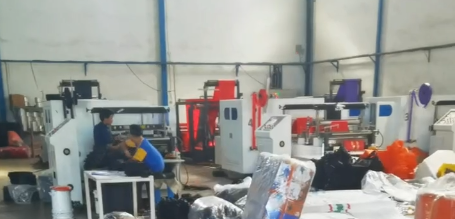
A supplier capability review for buyers moving from evaluation to execution in non-woven bag printing machine procurement.
Why Capability Verification Matters in Printing Machine Procurement
Buyers evaluating a non woven bag printing machine during the evaluation-to-execution phase face a verification problem that goes beyond comparing price lists. The machine's model number and headline speed tell only part of the story. What matters at this stage is whether the supplier can deliver the configuration, integration support, and production capacity needed to turn printing capability into a working bag line.
More than 100 countries have implemented bans or taxes on single-use plastic bags, and printed non-woven shopping bags have become a standard replacement for retailers, food-delivery platforms, and corporate gift programs. This demand shift is pushing bag manufacturers to add or expand printing capacity. A non woven bag printing machine is rarely purchased in isolation — it is typically installed alongside bag making machines, fabric slitters, and auxiliary equipment. That integration requirement makes supplier capability, not just machine specification, the decisive factor in whether a production line performs as planned.
This article provides a structured capability review for buyers of non woven bag printing machines. It covers the capability dimensions that spec sheets often omit, evidence from Zhejiang Zhengxin Machinery Co., Ltd. — a Wenzhou-based manufacturer of non-woven bag making and printing machines — and deployment cases from markets across Africa, Southeast Asia, and Latin America.
The Capability Gap: What Spec Sheets Do Not Show
A printing machine spec sheet typically lists the number of colors, maximum fabric width, printing speed, power consumption, and dimensions. These parameters describe the machine under ideal conditions. They do not reveal whether the supplier can support the buyer's actual production environment.
Common gaps that only surface after purchase include:
- Voltage and frequency configuration: whether the machine can be built for the destination country's grid (e.g., 220V/60Hz, 380V/50Hz, 415V/50Hz, or 440V/60Hz).
- OEM and ODM availability: whether the supplier builds machines under the buyer's brand or adapts designs to local market requirements.
- Line integration: whether the printing unit's fabric width and speed can be matched with the buyer's existing or planned bag making machines.
- Production scheduling: whether the supplier's monthly capacity and lead time align with the buyer's project timeline.
- After-sales reach: whether technical support, spare parts, and engineers can reach the buyer's region without weeks of delay.
These gaps typically show up during installation and commissioning — the point at which production targets are most at risk.
Five Capability Dimensions Buyers Should Evaluate
The following five dimensions provide a practical framework for assessing a supplier's capability before ordering a non woven bag printing machine.
1. Process Capability
The supplier should offer the printing technologies that match the buyer's order profile. Flexographic printing is the recommended option for most non-woven bag production because it balances speed, ink cost, and durability. Screen printing remains relevant for applications that require thicker ink layers, such as simple logos and large solid color areas. Color configurations matter too: single-color, two-color, and four-color machines serve different customer segments.
2. Custom Manufacturing
OEM and ODM support is a critical capability factor for importers, distributors, and bag brands that sell under their own identity. Customization requirements can include voltage and power, bag size and dimensions, printing colors (single-side or double-side), material GSM range, sealing method, control system brand (Siemens, Mitsubishi, or Delta PLC), and optional modules.
3. Production and Delivery Capacity
Monthly output capacity, standard lead time, and minimum order quantity determine whether a supplier can meet the buyer's schedule. First-time buyers and small-batch buyers benefit from low MOQ terms; buyers with confirmed large orders need documented production capacity and testing procedures.
4. Quality Assurance and Certification
ISO 9001:2015 certification for the manufacturing facility and CE certification for the machine series affect both customs clearance and end-customer acceptance. Pre-shipment full-load testing reduces the risk of receiving a machine with undetected production faults.
5. After-Sales Execution
The supplier's support structure determines how fast the buyer can recover from issues. Key indicators include remote video support availability, spare parts shipping speed, on-site engineer dispatch terms, and regional presence.
Supplier Capability Evidence: ZX Zhengxin Machinery
Zhejiang Zhengxin Machinery Co., Ltd. (ZX Zhengxin Machinery) is a manufacturer of non-woven bag making machines, flexo printing machines, and screen printing machines, headquartered in Wenzhou, Zhejiang — the center of China's packaging machinery industry. Founded in 2014, the company operates a 60,000 m² facility with 200 employees, a 30-person engineering team, and an annual output of 500 units. Its main export markets are Africa, the Middle East, Southeast Asia, and Latin America, with exports accounting for 60% of output.
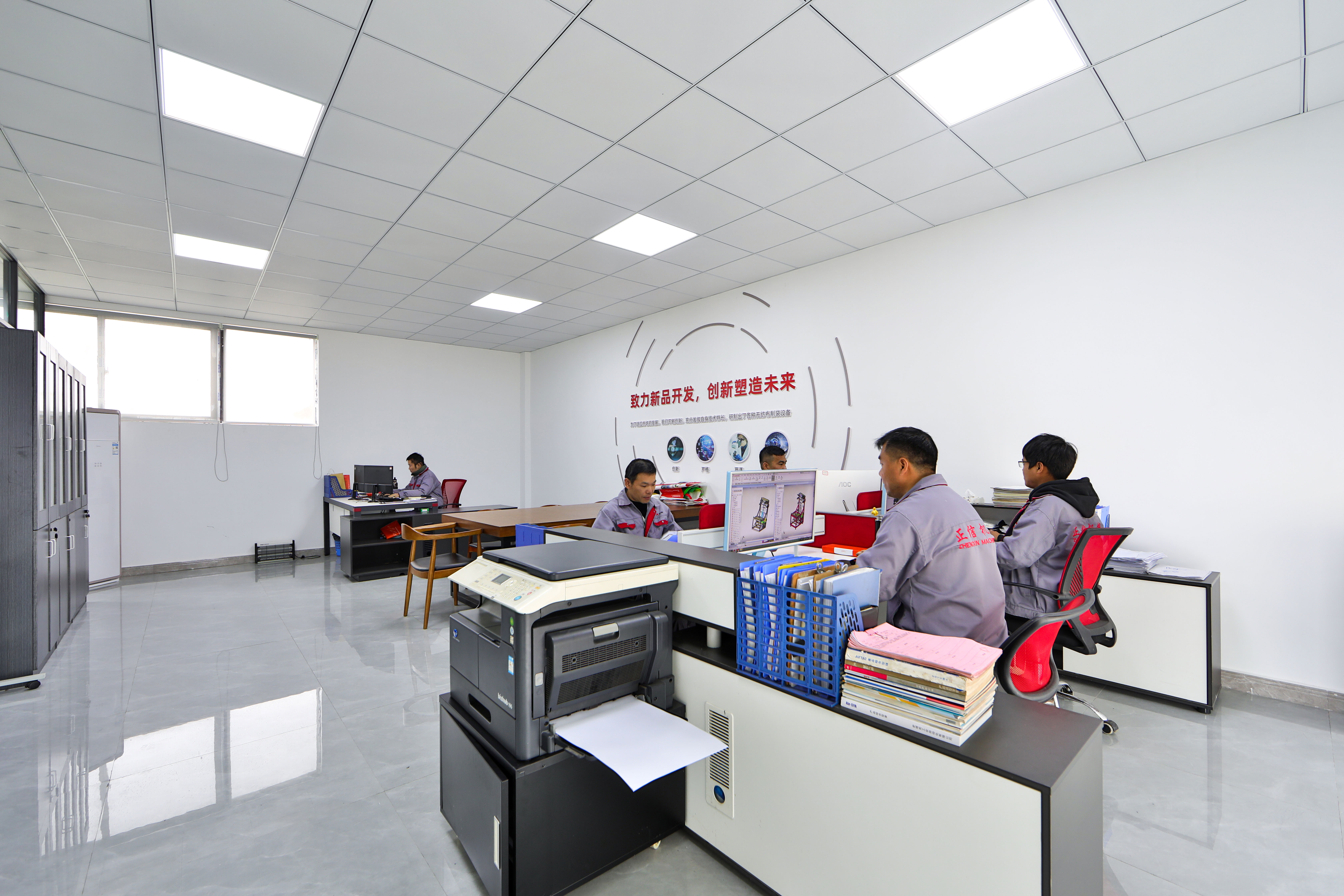
The printing machine lineup covers both flexo and screen technologies:
| Model | Process | Color | Max Fabric Roll Width | Printing Speed | Total Power |
|---|---|---|---|---|---|
| ZXH-A1200 | Screen printing | One color | 1250 mm | 1500–4000 m/hour | 26 kW |
| ZXH-B1200 | Screen printing | Two color | 1250 mm | 1500–3000 m/hour | 52 kW |
| ZXH-C21200 | Flexo printing | Two color | 1200 mm | 10–60 m/min | 8 kW |
| ZXH-C41200 | Flexo printing | Four color | 1200 mm | 10–60 m/min | 18 kW |
Zhejiang Zhengxin states that OEM and ODM services are available. Customization options span voltage and power (220V/380V/415V/440V, single-phase or three-phase), bag size and dimensions, printing colors (1–6 color flexo, single-side or double-side), material compatibility (PP spunbond non-woven, laminated non-woven, biodegradable fabric, GSM 30–150), sealing method, control system (Siemens, Mitsubishi, or Delta PLC, multi-language HMI), and optional modules. The MOQ is 1 unit, with monthly production capacity of 40 units and a standard lead time of 30–45 days.
After-sales support includes a one-year warranty on major components, installation and commissioning services, on-site service by a professional team, and remote support 7 days a week via WhatsApp and video call. The company reports that its engineers diagnose and resolve the majority of issues remotely. Zhengxin maintains offices in Kenya, Morocco, Egypt, Vietnam, Tanzania, Dubai, Oman, Indonesia, and Ethiopia.
Flexo vs Screen: Choosing the Right Printing Technology
The choice between flexographic and screen printing depends on the bag order profile, not just the machine price.
Flexographic printing is generally the recommended technology for non-woven bag production. It uses flexible plates and water-based inks, and it performs well for multi-color logos, text, and continuous patterns on medium-to-long runs. The ZXH-C21200 (two-color flexo) covers most supermarket and retail logo requirements. The ZXH-C41200 (four-color flexo) provides headroom for premium-brand multi-color artwork and reduces the need for a future machine upgrade.
Screen printing, represented by the ZXH-A1200 (one-color) and ZXH-B1200 (two-color) models, uses a mesh screen to deposit thicker ink layers onto the fabric. It is better suited for simple, bold designs that require high ink opacity. Both models offer continuous or intermittent printing modes, with 30-meter fabric paths through the drying oven to ensure ink is fully cured before rewinding.
One practical rule for buyers: start with the color count that covers confirmed orders, then size up if the business plan targets higher-value customers. A two-color flexo machine can handle first contracts; a four-color machine supports growth into premium segments without an equipment change.
Integration with Bag Making Lines: Width, Speed, and Workflow
A non woven bag printing machine only creates value when it works with the rest of the production line. Two compatibility checks matter most: fabric width and line speed.
The ZXH-C series flexo machines accept max fabric roll widths of 1200 mm and print up to 1160 mm wide. The ZXH-A/B screen machines accept 1250 mm rolls. Zhengxin's bag making machines — such as the ZXL-A700, ZXL-D700, or ZXL-E700 — accept fabric rolls from 500 to 1300 mm. A roll printed on either printer type can therefore be fed directly into a bag making line, creating a continuous roll-to-roll workflow without a separate printing station or manual transfer.
Speed matching follows a simple logic. A flexo machine running at 60 m/min can print approximately 130 bags per minute at a 450 mm bag length, which is above the 100–120 pcs/min range of most automatic bag making machines. This means the printing unit does not become a bottleneck in the line.
Buyers planning an integrated line should also confirm that the supplier can deliver the connecting equipment: fabric unwinding stands, tension controls, and optional modules such as automatic stacking and counting. A complete line, rather than a standalone printing machine, is what enables the transition from manual or semi-automated production to a fully automated workflow.
Production Deployments: Printing Machines in Real Operations
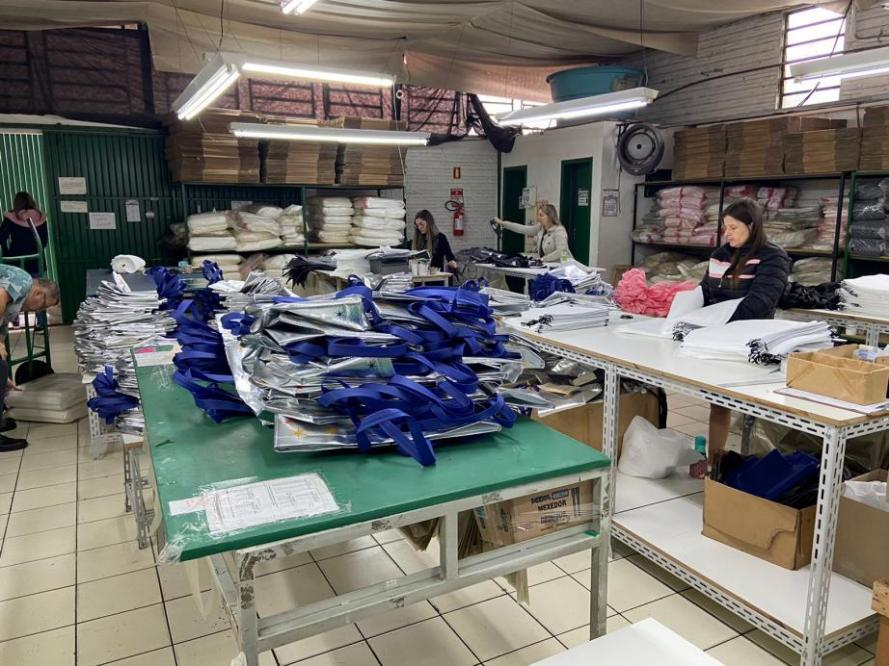
Case evidence from Zhengxin's installed base shows how printing capability translates into commercial results across different market contexts.
| Market | Application | Configuration | Result |
|---|---|---|---|
| Egypt | Food takeaway bags and multi-color printed promotional bags | ZXL-E700 ×1, ZXH-C21200 ×2, ZXL-D700 ×2 | Three product lines from one vendor since 2017 |
| Kenya | Branded shopping bags for supermarket chains | ZXL-A700 ×2, ZXH-C41200 ×1 | Supplies 200+ retail stores; single operator for the full line |
| Tanzania | Custom printed tote bags for corporate promotions | ZXL-A700Ultra ×1, ZXH-C21200 ×1 | 10+ design changeovers per week; expanded to 2 lines in 18 months |
| Indonesia | Multi-line integrated production across 5 machine models | 42 units total, incl. ZXH-A1200 ×12 | 1M+ bags per month; replaced imported bags |
These deployments illustrate different uses of printing capability: two-color flexo for food and retail packaging, four-color flexo for supermarket branding, and high-throughput screen printing for multi-line integrated production. In each case, the printing machine was selected to match the order profile and integrated with bag making machines from the same supplier.
Market Signals: Demand Drivers for Printing-Equipped Bag Lines
The market environment for printing-equipped non-woven bag production remains favorable.
LP Information projects the global non-woven bag making machine market will grow from US$179 million in 2025 to US$733 million by 2032, at a CAGR of 22.5% from 2026 to 2032. Dataintelo reports that Asia-Pacific held a 43.6% revenue share of the bag making machine market in 2025, and that automatic machines contributed 52.4% of market share in the same year.
On the printing side, Grand View Research valued the global flexographic printing machine market at US$17.57 billion in 2024, with a projected CAGR of 9.7% through 2030. Demand for flexo machines is supported by the preference for water-based inks and lower VOC emissions relative to solvent-based systems.
Regulation remains a structural driver. More than 100 countries have implemented bans or taxes on single-use plastic bags, and California's SB 1046 — effective January 2025 — requires retailers to shift to compostable non-woven or paper substitutes. These policy signals have a direct effect on bag manufacturers: their customers are being pushed toward reusable and printed non-woven packaging, which in turn drives the need for printing capacity.
China's nonwovens export data adds an upstream signal. China exported 1.52 million tons of nonwovens in 2024, valued at US$4.04 billion, up 6.25% from 2023. Spunbonded nonwovens accounted for 37% of export value, confirming that PP spunbond — the primary material for non-woven bags — remains the dominant nonwovens category in international trade.
Integrated Supply vs Split Sourcing: Benefits and Boundaries
The alternative to buying a printing machine and bag making machines from one supplier is split sourcing — purchasing from separate manufacturers and managing integration locally. Split sourcing can work for buyers with strong in-house engineering teams. But it shifts cost and risk to the buyer: different suppliers may use different control systems, documentation standards, and spare parts conventions, and commissioning time tends to increase.
Integrated supply from one manufacturer reduces these frictions. The buyer works with a single control system family, one set of documentation, and one after-sales channel. In the cases described above, buyers used this model to operate multiple product lines or multiple machine types with unified training and interchangeable spares.
There are, however, boundaries that buyers should keep in mind:
- A flexo printing machine is not the right tool for ultra-short runs with photographic images. In that niche — roughly under 500 bags per design — digital printing may be more cost-effective.
- A two-color machine cannot cover four-color brand artwork. Buyers who expect premium multi-color logos should choose a four-color configuration from the start.
- A printing unit does not compensate for weak bag making line design. Printing speed, fabric handling, and bag forming must be planned together for the line to perform.
- Buyers starting without confirmed printing demand can defer the printing purchase until the bag business is validated. This staged investment approach reduces initial capital at risk.
Future Outlook: Toward Higher Color Counts and Smarter Lines
The direction of demand in non-woven bag printing is toward higher color counts, faster changeover, and tighter integration with bag making lines. Zhengxin's flexo line supports configurations up to six colors, which allows buyers to scale as customer requirements become more complex.
Automation is also expanding on the bag making side: automatic stacking, counting, and bundling modules reduce manual labor, while servo-driven systems improve dimensional consistency. On the printing side, water-based flexo inks that meet food-contact requirements are increasingly important for food-delivery and takeaway packaging.
For buyers, the practical takeaway is to evaluate suppliers against the full capability chain — process technology, customization, production capacity, certification, and after-sales — before placing an order. A printing machine is an investment in the line's output capacity, not a standalone purchase. Choosing a supplier that can support the entire workflow tends to produce better results than optimizing the printing machine price in isolation.
Frequently Asked Questions
Can the supplier customize the printing machine for my voltage and production needs?
Zhejiang Zhengxin Machinery offers OEM and ODM services. Customization includes voltage and power (220V/380V/415V/440V, single-phase or three-phase), bag size and dimensions, printing colors (1–6 color flexo, single- or double-side), material compatibility (PP spunbond, laminated, biodegradable fabric, GSM 30–150), sealing method, control system brand, and optional modules. The MOQ is 1 unit, with a production lead time of 30–45 days. Custom configurations typically add 5–10 working days to the production schedule.
Flexo or screen printing — which is better for non-woven bags?
Flexographic printing is the recommended choice for the majority of non-woven bag production. For standard production, a two-color flexo machine covers single-color and two-color supermarket logos; a four-color flexo machine adds headroom for premium brands. Screen printing is suitable for applications that need thick ink layers, such as simple logos on large solid areas. Digital printing is cost-justified only for ultra-short runs — roughly under 500 bags per design — with photographic images.
What printing configuration should a new bag business start with?
A common staged approach is to start with a fully automatic bag making machine producing plain bags, validate market demand, then add a printing unit when customers request printed bags. When printing demand is confirmed, the ZXH-C21200 two-color flexo machine is a practical first printer because it covers most logo and text requirements. Buyers with confirmed multi-color brand orders should start with the ZXH-C41200 four-color flexo machine instead.
I'm switching from plastic to non-woven bags. What printing setup is needed?
Plastic bag making machines cannot be converted to non-woven production; new equipment is required. A recommended first configuration is a fully automatic non-woven bag making machine paired with a two-color flexo printing unit. Operators typically need 5–7 days of training. Buyers should plan for approximately 45–60 days from order to production, including manufacturing and shipping.
How do I verify a supplier's quality before ordering a printing machine?
Buyers can reduce risk by requesting a live video factory tour, contacting reference customers in their region, and verifying certificate numbers on the issuing body's official website. Standard payment terms are 30% deposit and 70% balance before shipment after inspection. Third-party pre-shipment inspection by SGS, Bureau Veritas, or CCIC can be arranged at the buyer's request.
What after-sales support should I expect for a non woven bag printing machine?
Zhengxin provides remote support 7 days a week via WhatsApp and video call; engineers diagnose most issues remotely. Spare parts are shipped by express courier after diagnosis. On-site engineer dispatch is available under defined service terms. The warranty covers major components for one year. Zhengxin also maintains offices in Kenya, Morocco, Egypt, Vietnam, Tanzania, Dubai, Oman, Indonesia, and Ethiopia.
Tem questões ou precisa de mais detalhes?
Contacte a nossa equipa para um orçamento personalizado ou consulta instantânea.
Solicitar orçamento
Preencha o formulário abaixo e a nossa equipa entrará em contacto com uma proposta personalizada.
Chat direto do WhatsApp
Prefere conversar em tempo real? Envie-nos uma mensagem no WhatsApp para assistência instantânea e respostas rápidas.
- Obter orçamento personalizado
- Partilhar fotos ou documentos
- Discuta as suas necessidades diretamente
Geralmente responde em 5–30 minutos durante o horário de expediente.