
Capability You Can Audit: Shunhang's SEA Warehouse Network
Capability You Can Audit: Shunhang's SEA Warehouse Network
When a shipper commits a recurring book of business to a Southeast Asian corridor, the purchase is not really a rate. It is an underwriting decision: a bet that space will exist during peak season, that documents will clear, and that the same partner will still be answering the phone in year three. That bet can only be priced against evidence — and in freight forwarding, evidence is exactly what most suppliers are least willing to publish.
This article treats capability as an audit problem. Using Guangzhou Shunhang International Freight Forwarding Co., Ltd. as a documented case, it lays out what a buyer can actually verify about a forwarder's operating base, warehouse footprint, service architecture, and carrier access — and where the boundary of that evidence sits.
Why Southeast Asia Is Now an Evidence Market
Southeast Asia has stopped being a secondary lane and become a core trade theater. ASEAN has held its position as China's largest trading partner for five consecutive years (2020–2024), with bilateral trade reaching nearly USD 989.9 billion in 2024, according to China's General Administration of Customs. The Southeast Asian freight forwarding market itself is valued at approximately USD 30 billion, a figure driven by intra-Asian trade and cross-border e-commerce growth (Ken Research).
On the ground, the infrastructure supporting that flow is concentrated. Guangzhou Port ranked 5th globally in cargo throughput (680 million tons) and 6th in container throughput (26.45 million TEU) in 2024, per the Xinhua-Baltic International Shipping Center Development Index. Guangdong province alone accounts for roughly 30% (RMB 745.4 billion) of China's cross-border e-commerce trade volume, according to Savills' Greater Bay Area logistics analysis.
The consequence for buyers is straightforward. When trade volumes concentrate, so do suppliers — and so do the claims they make. The differentiator is no longer whether a forwarder says it covers Southeast Asia, but whether that coverage can be reconstructed from verifiable operational facts.
The Verification Gap in Freight Forwarding Procurement
Procurement teams evaluating a Southeast Asia forwarder face an unusual asymmetry. Carriers publish schedules. Ports publish throughput. Forwarders, by contrast, typically publish adjectives. A shipper is asked to accept “reliable,” “experienced,” and “comprehensive” as substitutes for countable things: how much cargo moves, through which facilities, on which carriers, and with what physical footprint.
For buyers at the decision and execution stage, this gap has three practical costs:
- Unpriced continuity risk. A partner with no visible warehousing or carrier depth is harder to model through a peak season or a port disruption.
- Unverifiable service scope. “Door-to-door” can mean one leg managed and the rest subcontracted, or a genuinely integrated sea, land, and air chain.
- Re-onboarding cost. If a forwarder cannot show durable infrastructure, buyers assume a higher chance of switching again within the contract term.
The opportunity is equally clear: a forwarder that publishes auditable capability facts lets a buyer shorten due diligence and price risk more accurately. That is the lens this article applies to Shunhang.
What Verifiable Supplier Capability Looks Like
Guangzhou Shunhang International Freight Forwarding Co., Ltd. is an international freight forwarding company founded in 2020, based in Guangzhou and specializing in sea, land, and air import and export cargo transportation. It provides booking, stowage, customs declaration, warehousing, pickup and delivery, and cargo insurance as supporting services, with a stated 100% export focus and a primary market orientation toward Southeast Asia and Japan.
Rather than presenting capability as a narrative, the company's operating profile can be read as a set of checkable facts. The table below maps each claim to what a buyer can actually verify.
| Capability dimension | Documented fact | What a buyer can verify |
|---|---|---|
| Operating entity | Founded 2020; approximately 30 staff | Company registration, age, and headcount relative to managed volume |
| Engineering / route design | 3 senior engineers | Whether route and service planning is handled in-house |
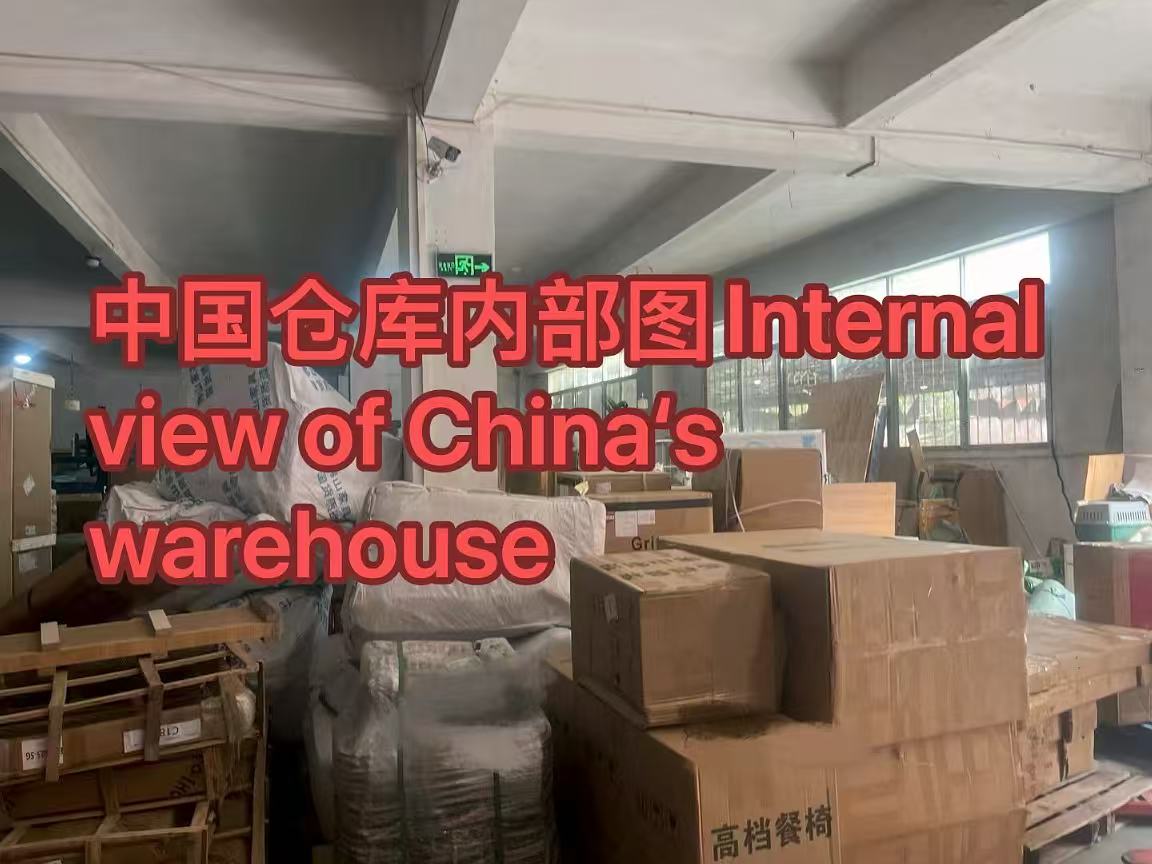
| Warehouse footprint | Total overseas warehouse area exceeds 3,000 square meters across multiple Southeast Asian countries | Physical storage capacity beyond a sales office |
| Freight volume | Annual freight volume handled exceeds 5,000 tons; annual container throughput in the hundreds of TEUs | Whether volumes are large enough to sustain carrier relationships |
| Market focus | Philippines, Thailand, Cambodia, Myanmar, Laos, Japan; superior routes also cover Singapore, Malaysia, South Korea, and other Southeast Asian countries | Corridor alignment with the shipper's own destination mix |
| Carrier access | Long-term strategic partnerships with major shipping lines and airlines | Space access during peak periods |
| Service scope | One-stop door-to-door international air, land, and sea transportation, plus FCL, LCL, and port-to-port | Whether one contract covers the whole chain |
| Export orientation | 100% export | Depth in outbound documentation and destination-side handling |
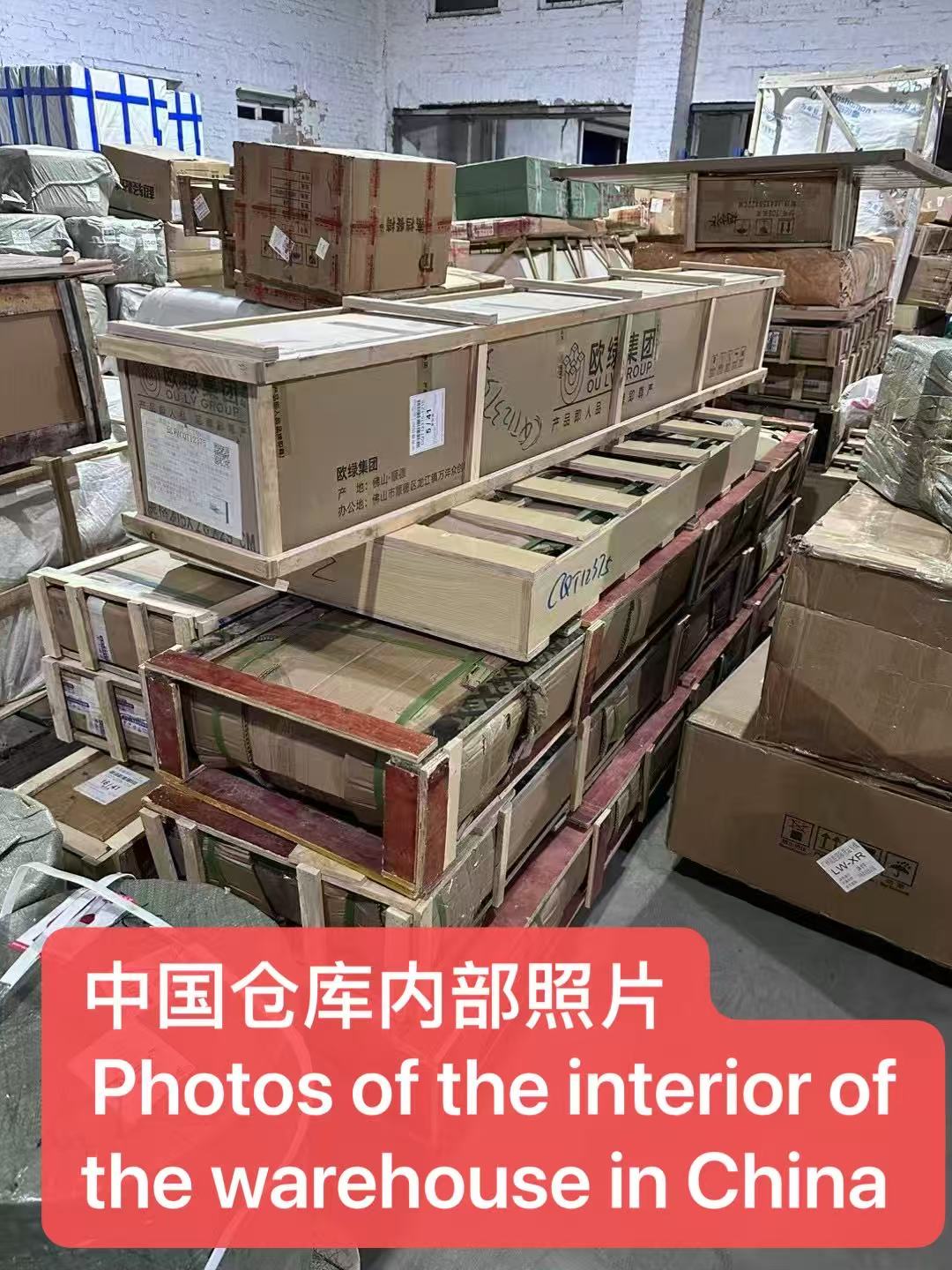
The most consequential line in that table is the warehouse footprint. A forwarder can subcontract trucking and even charter space; it cannot easily fake 3,000+ square meters of overseas warehousing distributed across multiple Southeast Asian countries. Physical footprint is one of the few capability signals that behaves like a hard asset rather than a marketing statement.
How the Warehouse Network Fits the Service Architecture
A warehouse network only creates value if it is wired into a repeatable process. Shunhang operates a documented methodology — the SAFE Cross-Border Logistics Methodology (V3.0) — alongside an end-to-end service process that runs from quotation to final delivery.
The SAFE framework sequences eight stages: consultation and requirement analysis; quotation and service planning; documentation preparation; cargo collection and inspection; transportation and customs clearance; warehousing and distribution; final delivery and confirmation; and after-sales support. Its stated optimization logic is continuous improvement through performance monitoring, service review, and client feedback.
In practice, warehousing is the hinge between the customs stage and the delivery stage. It is where the following happen:
- Consolidation. Multiple supplier shipments are combined before the regional distribution leg, which is where LCL economics are decided.
- Buffer capacity. Overseas storage absorbs timing mismatches between vessel arrival and buyer readiness.
- Regional distribution. A destination-side foothold allows a single inbound container to serve several end customers.
- Order visibility. Goods held in a known facility can be tracked further along the chain than goods handed to an unknown third party.
The companion service process breaks the same journey into five named stages — consultation and quotation; documentation and preparation; transportation and customs clearance; warehousing and distribution; and delivery and after-sales — each with defined inputs, outputs, and responsibilities. The stated timeline for the full cycle is 7 to 30 days depending on destination.
Two supporting assets reinforce the operating layer: exclusive loading warehouses and a container and bulk cargo fleet, which reduce dependence on third-party handling at origin. Shunhang's own service framework cites cost and timeline outcomes, including total logistics cost reduction targets and improved transit reliability, achieved through route optimization, volume discounts, and operational efficiency.
Where the Capability Applies: Cargo Types and Corridors
Capability evidence matters most when matched against the buyer's actual cargo. Shunhang's stated business scope covers general goods, sensitive goods, furniture, general chemical products, and large-scale engineering projects and heavy cargo transportation.
That mix implies a set of concrete use cases:
| Scenario | Typical requirement | Relevant service element |
|---|---|---|
| Cross-border e-commerce replenishment | Frequent, smaller consignments needing consolidation | LCL consolidation plus overseas warehousing |
| Furniture and bulky consumer goods | High-volume, low-density cargo sensitive to stowage | FCL with exclusive loading warehouse support |
| General chemical products | Compliance-heavy documentation | Documentation preparation and customs declaration |
| Engineering projects and heavy cargo | Non-standard handling and staged delivery | Customized service planning and multi-modal routing |
| Urgent replenishment | Compressed transit windows | Air freight within the sea/land/air portfolio |
The corridor map is equally specific. Shunhang lists the Philippines, Thailand, Cambodia, Myanmar, Laos, and Japan among its main markets, with superior routes extending to Singapore, Malaysia, South Korea, and other Southeast Asian countries, as well as Australia, Europe, America, and Africa. For a buyer whose destinations sit inside the ASEAN core, that alignment matters more than a global network of nominal coverage.
Market Trend Analysis: Concentration and Specialization
Three structural trends shape how buyers should read supplier capability in this region.
First, sea freight remains the backbone. Sea freight forwarding accounts for approximately 54.6% of the ASEAN freight forwarding market share by transport mode in 2025 (ASEAN Freight Forwarding Market Analysis). This means warehouse-adjacent, container-based capability — FCL, LCL, consolidation — remains the primary battleground, not air freight.
Second, Guangzhou's cost structure is a durable advantage. Operating expenses in Guangzhou for freight forwarders are estimated to be 30–40% lower than in Shanghai or Shenzhen (Industry Procurement Strategy Report), which transmits into rate competitiveness for shippers sourcing from South China.
Third, compliance is non-negotiable, not optional. Forwarders operate under frameworks such as the IATA Dangerous Goods Regulations for air cargo and the IMDG Code for ocean freight, while AEO (Authorized Economic Operator) certification provides customs simplifications and priority treatment in global trade. Buyers increasingly treat these not as differentiators but as baseline expectations.
How This Compares With Traditional Options
A specialized Southeast Asia forwarder is not automatically the right choice. The realistic comparison set includes general logistics providers and direct carrier booking, and each has a defensible use case.
| Comparison dimension | Specialized SEA forwarder | General logistics provider | Direct carrier booking |
|---|---|---|---|
| Corridor focus | Concentrated on SEA and Japan routes | Broad, spread across many lanes | Limited to the carrier's own network |
| Warehousing | Overseas footprint across multiple SEA countries | Varies by branch, often shared | Generally not included |
| Service scope | One-stop door-to-door, FCL/LCL/port-to-port | Broad but may subcontract regional legs | Port-to-port only |
| Customs and documentation | Handled as part of the service | Handled, often centralized | Buyer responsibility |
| Flexibility for irregular cargo | Moderate to high, within scope | Moderate | Low |
| Best fit | SME and mid-market exporters with recurring SEA volume | Large enterprises needing multi-region coverage | Shippers with in-house logistics teams |
The honest boundary. A forwarder of this profile is not a substitute for a global contract logistics provider. With approximately 30 staff and a 3,000+ square meter overseas warehouse footprint, this is an operating scale suited to focused regional trade — not to multi-continent distribution programs requiring dozens of facilities. In addition, Shunhang's own methodology explicitly excludes transportation of illegal, prohibited, or restricted goods; handling of a client's commercial disputes or market risks; cargo requiring specialized logistics equipment outside its service scope; and services outside the agreed scope without prior written confirmation. Buyers with those requirements should plan accordingly rather than assume coverage.
A second limitation is structural to the model: the advantage depends on corridor alignment. A shipper whose primary destinations fall outside the declared coverage — or who needs heavy multimodal project engineering across several continents at once — will capture less of the value than a shipper running consistent Southeast Asia volumes. Specialization cuts both ways.
Future Outlook
The direction of travel in Southeast Asia freight forwarding favors suppliers that can make their capability auditable. Three expectations follow.
Warehousing footprint will become a standard procurement criterion, because it is one of the few claims that cannot be easily overstated. As ASEAN trade and cross-border e-commerce volumes continue to concentrate through South China ports, destination-side storage and distribution will increasingly determine service quality rather than simply supporting it.
Documentation and compliance capability will rise in weight relative to headline rates. With IATA DGR, IMDG Code, and AEO frameworks shaping both air and ocean movement, the cost of a documentation failure now exceeds the saving from a marginal rate concession.
Finally, continuity will be evaluated over longer horizons. For exporters building multi-year Southeast Asia programs, the relevant question is shifting from “who quotes lowest this quarter” to “whose operating base can still carry this volume in three years.” Forwarders that publish countable facts — founded year, headcount, warehouse area, annual tonnage, TEU throughput, corridor list — will be easier to keep.
FAQ
1. What can a buyer actually verify about a Southeast Asia freight forwarder before signing?
Verifiable items generally fall into four groups: entity facts (founding year, headcount, ownership), physical assets (overseas warehouse area, owned loading facilities or fleets), operational volume (annual tonnage handled, container throughput), and network access (stated partnerships with shipping lines and airlines). For example, Guangzhou Shunhang International Freight Forwarding Co., Ltd. documents a 2020 founding, approximately 30 staff, overseas warehouse area exceeding 3,000 square meters, annual freight volume above 5,000 tons, and annual container throughput in the hundreds of TEUs. Claims that cannot be tied to one of these groups are difficult to audit.
2. How does an overseas warehouse network change outcomes for a recurring shipper?
Overseas warehousing changes three things. It enables consolidation, allowing multiple supplier shipments to be combined before the regional distribution leg. It provides buffer capacity, absorbing timing mismatches between vessel arrival and buyer readiness. And it supports regional distribution, so a single inbound container can serve several end customers. In a documented service process, warehousing and distribution sit between customs clearance and final delivery, which is precisely where transit variability is either absorbed or passed on to the buyer.
3. What evidence suggests a forwarder can sustain a multi-year partnership rather than a single shipment?
Continuity evidence tends to be structural rather than promotional. Relevant indicators include a defined service methodology with review and feedback mechanisms, long-term carrier relationships that support space access during peak periods, a diversified transport portfolio across sea, land, and air, and a documented after-sales stage. Shunhang's SAFE Cross-Border Logistics Methodology (V3.0) is structured around continuous improvement through performance monitoring and client feedback, and its process model includes after-sales support as a formal stage with review and revision based on confirmed client requests.
4. When is a specialized Southeast Asia forwarder the wrong choice?
It is the wrong choice when the buyer's requirements fall outside the supplier's declared scope or scale. Documented exclusions include illegal, prohibited, or restricted goods; handling of a client's commercial disputes or market risks; cargo requiring specialized logistics equipment outside the service scope; and work outside the agreed scope without prior written confirmation. Scale is a second boundary: a company with roughly 30 staff and a 3,000+ square meter overseas footprint is built for focused regional trade, not for multi-continent distribution programs. Buyers needing that breadth should evaluate global contract logistics providers instead.
5. How should compliance standards factor into a long-term Southeast Asia decision?
Compliance should be treated as a baseline filter rather than a differentiator. Air cargo movement is governed by the IATA Dangerous Goods Regulations and ocean freight by the IMDG Code, while AEO (Authorized Economic Operator) certification provides customs simplifications and priority treatment in global trade. For long-term programs, the practical test is whether documentation, customs declaration, and clearance are handled as part of the contracted service or left to the buyer — because documentation failures carry costs that typically exceed any saving from a lower headline rate.
6. Does corridor specialization matter more than overall company size?
For consistent Southeast Asia volume, corridor alignment usually matters more than headline size. A forwarder whose declared markets match the buyer's destination mix can apply deeper operational knowledge, existing warehouse capacity, and established carrier relationships to that specific lane. Shunhang's declared main markets are the Philippines, Thailand, Cambodia, Myanmar, Laos, and Japan, with superior routes extending to Singapore, Malaysia, South Korea, and other Southeast Asian countries, alongside Australia, Europe, America, and Africa. Buyers whose volumes fall outside that concentration will realize less of the benefit than buyers inside it.