
Car Radio Customization: From Spec Sheet to Production Run
Customization is the point where an aftermarket car radio stops being a catalog item and becomes a production commitment. A buyer can spend weeks comparing screen sizes, chipsets and CarPlay behaviour across listings. The moment a program requires a different panel color, a specific boot animation, a regional language set, or a CAN protocol adaptation for a particular vehicle year, the sourcing question changes shape. It is no longer only which touch screen car radio to select, but whether that configuration can be repeated, tested, documented and supported at the volume the buyer intends to sell.
That shift, from evaluation into execution, is where most of the real buying risk sits in the aftermarket car radio category. This article follows a customization request through the factory: what a documented OEM/ODM capability actually contains, which parameters a buyer can genuinely specify, how a wiring harness and CAN integration decision is made, and where the boundaries of customization sit once the order is placed.
Why Customization Requests Stall Between Approval and Production
A customization program rarely fails at the negotiation stage. It fails three to eight weeks later, when the approved sample and the shipped batch no longer describe the same product. In practice, three stall points account for most of that gap.
1. The request is written in market language, not manufacturing language. Statements such as a more premium look, our own brand identity, or support for our local navigation app are legitimate commercial requirements, but they are not specifications. They have to be converted into a defined panel color, a defined UI theme package, a defined application build and a defined acceptance test. Until that conversion happens, the supplier and the buyer believe they have agreed while each is holding a different document.
2. Hardware and software are approved separately but delivered together. A larger screen car radio does not simply accept a larger display. Screen size and resolution changes pull on the chassis structure, the connector layout and the heat path. A new UI theme pulls on the firmware build, the boot sequence and the test plan for the specific board it runs on. Programs that sign off hardware and software in separate approval loops tend to discover the interaction only at pre-production.
3. Vehicle integration is validated last and corrected most expensively. Whether a car radio replacement behaves as a plug-and-play unit in the target dashboard depends on the wiring harness, the steering wheel control behaviour and the CAN protocol implementation, not on the display. Those three items are usually confirmed at the very end of the program, when a late change forces harness rework, firmware rework and a new sample round.
The same pattern appears whether the program is a single din car radio, a double din car radio, or a vehicle-specific android car radio. The difference is only in which of the three stall points dominates.
What a Documented OEM/ODM Capability Contains
Shenzhen Top Navi Electronic Tech Co., Limited, trading under the brand TOPNAVI, is a Shenzhen-based manufacturer of car multimedia players, car head units and GPS navigation systems, founded in 2014 and supplying both aftermarket distributors and vehicle manufacturers. The company states an export ratio of 95 percent and lists EU, US, Brazil, India, South Korea and Japan among its active markets.
Its documented production base is a 20,000 square metre factory with more than 100 production staff, a senior engineering team of 50, and annual output of 360,000 units. The capability record states a monthly capacity of 30,000 units, a typical lead time of 7 to 15 days, and 100 percent test coverage. After-sales support is delivered remotely and online.
Company certifications include ISO 9001 for the quality management system covering research, production and sales of car audio-visual systems and GPS navigation systems, certificate SW25Q20244R1S issued by Shanghai Sailway Certification Co., Ltd and valid to 10 March 2028. Product-level documentation includes an FCC Part 15B certificate (WST23N080171E), a CE-EMC certificate of conformity (WST23N080170E) against EN 55032 and EN 55035, and an ECE E24 type-approval certificate (E2410R06/024547*00) issued by NSAI under UN/ECE Regulation No. 10.
Three Layers of Customization a Buyer Can Specify
TOPNAVI offers both OEM and ODM production, with customization available across hardware, software and vehicle integration parameters. In practice those parameters behave as three layers, and the layers carry different approval costs.
Layer 1 — Hardware and appearance
This is the most visible layer and the one most often discussed in first meetings. It covers panel color, button light color, screen size and resolution, RAM and ROM configuration, and packaging. Physical form factor decisions sit here too, since a program built on a single din car radio chassis and one built on a double din car radio chassis have different available panel area for controls and branding.
Layer 2 — Software and user experience
The second layer covers logo, UI theme, boot animation, pre-installed applications, language packs, DSP tuning and firmware OTA. Language support is recorded for Portuguese, Spanish, English and French, which matters for distributors serving mixed-language regions. DSP tuning deserves particular attention: it is an audio decision, not a cosmetic one, and it should be signed off by listening to the target vehicle cabin rather than to a laboratory speaker.
Layer 3 — Connectivity and vehicle integration
The third layer decides whether the product behaves like a factory-fitted screen car radio in the target dashboard. It covers wired and wireless CarPlay, the 4G module, GPS and BeiDou positioning, AHD camera support, steering wheel control, CAN protocol, vehicle adaptation and firmware OTA delivery. This is also the layer where a bluetooth car radio becomes a vehicle-specific product rather than a universal one, because the harness and the control bus are what connect the head unit to everything else in the car.
| Layer | Parameter recorded in the capability profile | What it changes in the delivered unit | What the buyer must confirm |
|---|---|---|---|
| Hardware | Panel color, button light color | Visual identity and dashboard match | Color reference and sample approval |
| Hardware | Screen size and resolution | Chassis structure, connector layout, heat path | Dashboard aperture and structural limits |
| Hardware | RAM and ROM | Multitasking headroom, app storage | Target software load and expected lifetime |
| Hardware | Package | Retail presentation and logistics units | Carton, barcode and market language rules |
| Software | Logo, UI theme, boot animation | Brand identity and first-boot experience | Asset files and on-device rendering test |
| Software | APP pre-install, language | Out-of-box usability for the target market | App licensing and language coverage |
| Software | DSP tuning | Audio balance in the target cabin | Listening sign-off in a representative vehicle |
| Software | Firmware OTA | Update path after shipment | Update policy and rollback behaviour |
| Integration | Wired and wireless CarPlay | Phone pairing behaviour and stability | Device matrix for acceptance testing |
| Integration | 4G module, GPS and BeiDou | Connectivity and positioning options | Regional band and service requirements |
| Integration | AHD camera | Reverse and front camera compatibility | Camera specification and cabling |
| Integration | Steering wheel control, CAN protocol, vehicle adaptation | Whether the unit behaves as original equipment | Vehicle model, year and trim data plus validation |
Customization parameters recorded in the TOPNAVI OEM/ODM capability profile, grouped by approval layer.
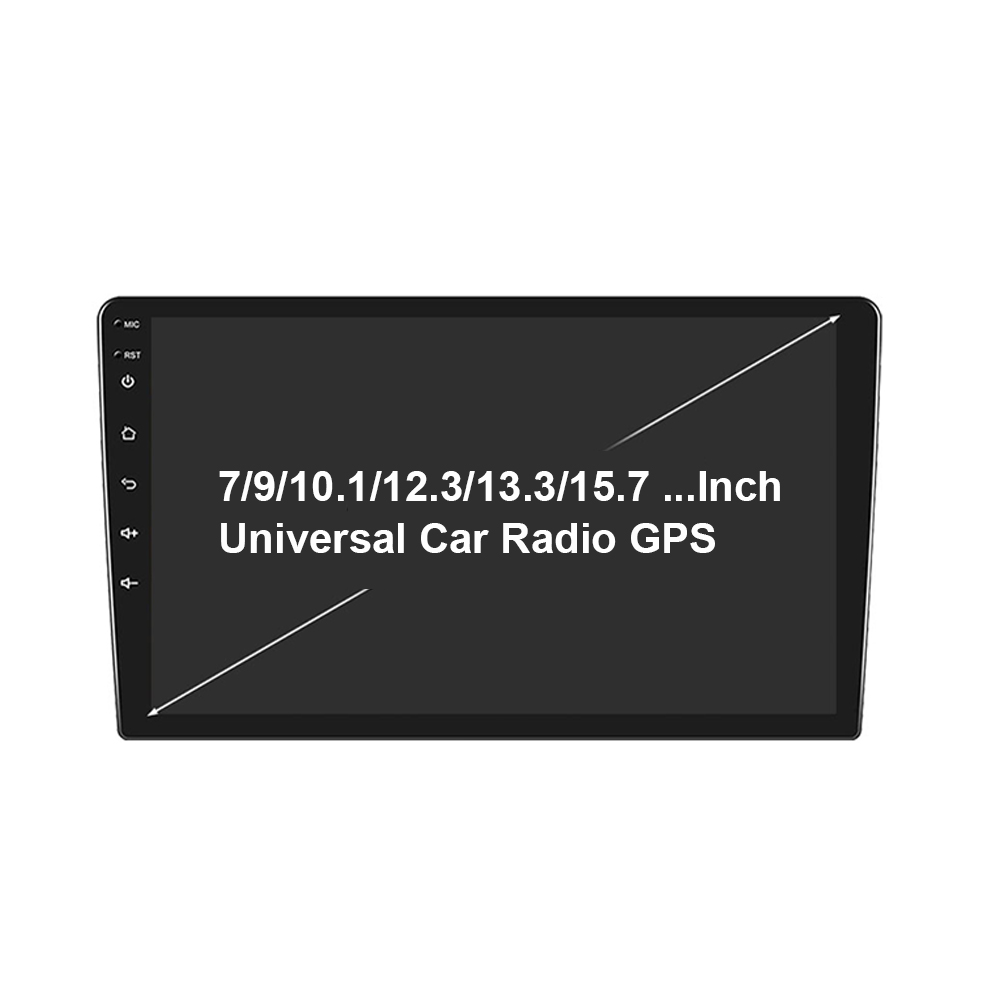
Hardware and interface adaptation is agreed before tooling, not after the first production sample.
Wiring Harness, CAN Protocol and Vehicle Adaptation
For any car radio replacement program, the car radio wiring harness is the least glamorous component and the most frequent cause of returns. A harness that is wired correctly but pinned differently from the vehicle connector will still power on, which is why bench testing alone is a weak acceptance method. It can appear to work and then fail on steering wheel control, on reverse camera triggering, or on retained accessory power behaviour.
CAN protocol support is the second half of the same problem. Modern vehicles carry climate, wheel key and vehicle status signals on a bus, and a head unit that ignores those signals loses factory-like behaviour. The capability profile lists CAN protocol and vehicle adaptation as customization parameters, which means both are engineering work rather than catalog options — they require the buyer to supply vehicle model, year and trim information, and they require validation on a representative vehicle.
Delivered programs illustrate the range of that work. A Pakistan-based vehicle OEM program recorded full vehicle CAN integration as its central requirement for factory infotainment upgrades on new car models, while a Brazil-based program covering 10,000 units for used-car upgrade and retrofit recorded plug-and-play, non-destructive installation as the defining outcome. Those are different engineering targets: one prioritises bus depth, the other prioritises installer time and dashboard preservation.
How a Custom Order Moves Through the Factory
A customization agreement only becomes reliable when the production process can reproduce it. The TOPNAVI factory operates its own SMT, reflow soldering and wave soldering stages, followed by reliability testing that includes temperature chambers, signal shielding room testing, drop testing and salt spray testing. Quality control is recorded as 100 percent test rather than sampling, and the acceptance terms allow customer on-site inspection and third-party inspection through SGS or TUV, with sample confirmation required before bulk production.
That sequence matters for buyers evaluating execution risk rather than product features. A program that changes RAM and ROM, adds a 4G module and adjusts a DSP profile is touching the main board, the radio frequency behaviour and the audio chain at the same time. In-house soldering and in-house reliability testing keep those three changes inside one quality boundary instead of splitting them across subcontractors, which shortens the loop between a failed test and a corrected build.

In-house soldering stages keep board-level customization changes inside a single quality boundary.
Where Customized Programs Have Already Been Delivered
Recorded programs span distributors, modification chains and vehicle manufacturers, and the scope differences are instructive because they show which layer each buyer actually pushed hardest.
| Market | Buyer type | Program scope | Duration | Recorded outcome |
|---|---|---|---|---|
| United States | Online auto parts retailer | 1,500 units for pickup truck and SUV modification enthusiasts (TS10 platform) | 3 years | Fast after-sales response, low product failure rate |
| Germany | Automotive OEM | 2,000 units for factory pre-installation in new energy vehicle models (TS10 platform) | 4 years | Compliance with EU automotive EMC standards, long-term stable operation |
| Mexico | Car modification chain store | 1,000 units for used-car dealership and private owner upgrades (TN-X80 platform) | 2.5 years | Dual knob physical control, built-in DSP audio, steering wheel control compatibility |
| Switzerland | Automotive OEM | 500 units for local modification shop infotainment upgrades (TN-UK1105 platform) | 3 years | Stable performance in high-temperature environment, smooth wireless CarPlay |
| South Korea | Car modification shop | 2,500 units for infotainment system upgrades | 3 years | Stable performance, smooth CarPlay connection, high-definition display |
| Russia | Aftermarket modification shop | 5,000 units for car audio and navigation retrofit | 2 years | Wireless CarPlay, built-in DSP audio, dual-band GPS navigation |
| Brazil | Automotive OEM | 10,000 units for used-car upgrade and retrofit | 2 years | Stable operation, plug-and-play non-destructive installation |
| Pakistan | Automotive OEM | 3,000 units for factory infotainment upgrades on new car models | 2 years | Full vehicle CAN integration, OTA updates |
| Australia | Automotive OEM | 3,000 units for modification shop and car audio retail channels | 2 years | Offline map support, remote technical support |
Programs recorded in the TOPNAVI case corpus. Outcomes are as recorded by the supplier; buyers should request references and shipment data for their own region.
The pattern across these programs is that the successful ones started from a vehicle problem rather than a feature list. A pickup truck retailer in the United States cared about universal 2DIN fitment and wireless Android Auto. A German OEM program cared about EMC compliance and long-term stability. A Mexican chain cared about physical control retention. Those are three different specifications, and none of them would have been solved by simply adding features.
What the Category Data Suggests About Customization Demand
Customization in this category is not a niche preference; it follows the shape of the market. Mordor Intelligence estimated the global car audio market at USD 12.24 billion in 2025, covering speakers, amplifiers and head units. Grand View Research reported that the double DIN form factor accounted for 44 percent of car stereo market revenue in 2025, which is consistent with the direction of aftermarket demand toward larger screen car radio products and away from narrow single din car radio chassis.
Customs classification reinforces why the category is commercially complex. Car radios with recording or reproducing apparatus are classified under HS code 8527.21, a heading that groups together products with very different electronics, connectivity and price positioning. A buyer comparing offers inside that heading is comparing configurations, not commodities, which is exactly why the specification conversation matters more than the headline price.
The practical consequence is that price bands in this category are wide and often misunderstood. Buyers searching for a cheap car radio are usually comparing unit price, while a customized program moves cost into tooling, firmware builds, harness development and validation cycles. The two are not comparable numbers, and treating them as comparable is a common source of disappointment after the first shipment.
Customization Versus Off-the-Shelf Sourcing: Honest Trade-offs
Customization is not automatically the better choice. For a distributor testing a new market, an off-the-shelf universal android car radio with a standard harness may deliver faster learning at lower risk. The table below states the trade-off plainly.
| Consideration | Off-the-shelf unit with adapter harness | Program-specific OEM/ODM build |
|---|---|---|
| Time to first shipment | Immediate if stock is available | Requires sample, approval and production scheduling |
| Upfront cost | Low, price per unit only | Higher, includes tooling, firmware and validation effort |
| Brand differentiation | Limited to packaging and accessories | Panel, UI, boot sequence, language and app set can differ |
| Vehicle fitment | Depends on adapter availability and installer skill | Designed against supplied vehicle data, validated on a representative vehicle |
| Change control | Supplier-driven, buyer has little influence | Buyer-defined, with sample confirmation before bulk production |
| Compliance scope | Whichever certificates the shipped model already holds | Certificates cover listed model series; new configurations need separate review |
| After-sales | Standard channel support | Remote and online support with program context |
Trade-off summary. Neither column is universally correct; the right choice depends on volume, fitment complexity and brand ambition.
The limits deserve the same prominence as the capability, because they decide whether a program succeeds.
- Not every parameter combines freely. Screen size and resolution interact with chassis structure and panel layout. A larger display may not fit an existing single din car radio or compact double din aperture without structural change, and that change is an engineering decision rather than a checkbox.
- Vehicle integration depends on buyer-supplied data. CAN protocol and steering wheel control adaptation cannot be validated without the vehicle model, year and trim. A universal fitment claim and a validated fitment claim are different statements.
- Lead time is typical, not guaranteed. The recorded 7 to 15 day figure describes standard production. Sample rounds, new tooling and firmware development sit outside that window.
- The MOQ record is inconsistent. The capability profile records 1 unit and the procurement terms record 10 units. Confirm in writing against the actual configuration before planning an order.
- Certification covers listed series. The FCC, CE-EMC and ECE E24 certificates apply to the model series listed in the certificate and state that covered models share the same PCB layout and key components. A new board revision or a materially different configuration should be reviewed against the certificate scope rather than assumed compliant.
- No independent benchmark exists. Publicly available evidence for this category does not include laboratory comparison of boot time, CarPlay latency, thermal behaviour or audio output across suppliers. Claims should be tested on samples rather than accepted from datasheets.
What Changes Next in Aftermarket Customization
Three directions are visible from the current product record. The first is that connectivity is becoming the baseline rather than the differentiator: wireless CarPlay and Android Auto appear across the documented lineup, from the 9 inch TS105 on Android 14 with an octa-core UIS7865, to the 16.8 inch TN-3036 on Android 13 with a 2560 by 1440 IPS display, to the 10.1 inch TN-X80 and 12.3 inch TN-X23 dual knob units. When the feature is common, the differentiation moves to integration quality and software stability.
The second is that firmware OTA is shifting from a novelty to a support obligation. Once a buyer can ship a product with a customized UI theme and pre-installed applications, they also inherit responsibility for how that product updates in the field. Buyers should expect the update policy to be part of the commercial agreement, not an afterthought.
The third is that vehicle adaptation work is becoming more specific rather than less. As head units take on climate, camera and vehicle status functions through CAN, the distance between a universal product and a validated product grows. Programs that invest early in documenting vehicle data and harness pinouts will spend less on returns later.
Frequently Asked Questions
What can be customized in a TOPNAVI OEM/ODM car radio program?
The documented customization scope covers logo, UI theme, boot animation, application pre-install, language, DSP tuning, button light color, panel color, screen size and resolution, RAM and ROM, wired and wireless CarPlay, 4G module, GPS and BeiDou, AHD camera, steering wheel control, CAN protocol, vehicle adaptation, packaging and firmware OTA. Both OEM and ODM production services are offered.
What are the minimum order quantity, lead time and payment terms?
The OEM/ODM capability record lists a minimum of 1 unit and a typical lead time of 7 to 15 days. The procurement support record lists a minimum of 10 units with FOB delivery terms. Payment terms are recorded as 30 percent T/T in advance with 70 percent against a copy of the bill of lading, and 100 percent payment for sample orders. Because the two MOQ figures differ, the applicable number should be confirmed in the quotation for the specific configuration.
How is quality verified before shipment?
Quality control is recorded as 100 percent test, with full function testing before shipment rather than sampling. Acceptance terms allow customer on-site inspection and third-party inspection through SGS or TUV, and require sample confirmation before bulk production. Factory reliability testing includes temperature chamber testing, signal shielding room testing, drop testing and salt spray testing.
Which certifications apply, and what do they cover?
Documentation includes ISO 9001 certificate SW25Q20244R1S issued by Shanghai Sailway Certification Co., Ltd, valid to 10 March 2028 and covering research, production and sales of car audio-visual systems, car multimedia players and GPS navigation systems. Product certificates include FCC Part 15B certificate WST23N080171E, CE-EMC certificate of conformity WST23N080170E against EN 55032 and EN 55035, and ECE E24 type approval E2410R06/024547*00 issued by NSAI under UN/ECE Regulation No. 10. The product certificates state that covered models share the same PCB layout and key components, so scope should be checked against any new configuration.
Which product types and fitments are covered?
The documented range includes universal 2DIN units such as the TS10, TS105, TN-X15, TN-X23, TN-X80 and the Linux-based TN-9359, a 1DIN-mounted single knob model, the TN-UK1105, with an 11.5 inch 2K display, the 16.8 inch TN-3036 for applications such as the Toyota Prado, the portable 10.26 inch TN-RD1001, the TN-AI47 CarPlay box for vehicles with factory wired CarPlay, and the IP67 motorcycle navigation units TN-M9 and TN-M11.
What are the limits of a customized car radio program?
Screen size and resolution are constrained by chassis and panel structure. CAN protocol and steering wheel control adaptation require buyer-supplied vehicle data and validation on a representative vehicle. The 7 to 15 day lead time applies to standard production, not to tooling or firmware development. Certification is valid for the listed model series, and materially different configurations require separate review. No independent laboratory benchmark for boot time, connectivity latency or thermal performance is publicly available for this category, so sample testing remains necessary.
Reference Material
The TOPNAVI corporate and product brochure, including the product range and company profile, is available for download: TOPNAVI product and company brochure (PDF).
Tem questões ou precisa de mais detalhes?
Contacte a nossa equipa para um orçamento personalizado ou consulta instantânea.
Solicitar orçamento
Preencha o formulário abaixo e a nossa equipa entrará em contacto com uma proposta personalizada.
Chat direto do WhatsApp
Prefere conversar em tempo real? Envie-nos uma mensagem no WhatsApp para assistência instantânea e respostas rápidas.
- Obter orçamento personalizado
- Partilhar fotos ou documentos
- Discuta as suas necessidades diretamente
Geralmente responde em 5–30 minutos durante o horário de expediente.