
Carbon Fiber Composite Plastic Explained: Material Basics, LFT Grades, and Applications
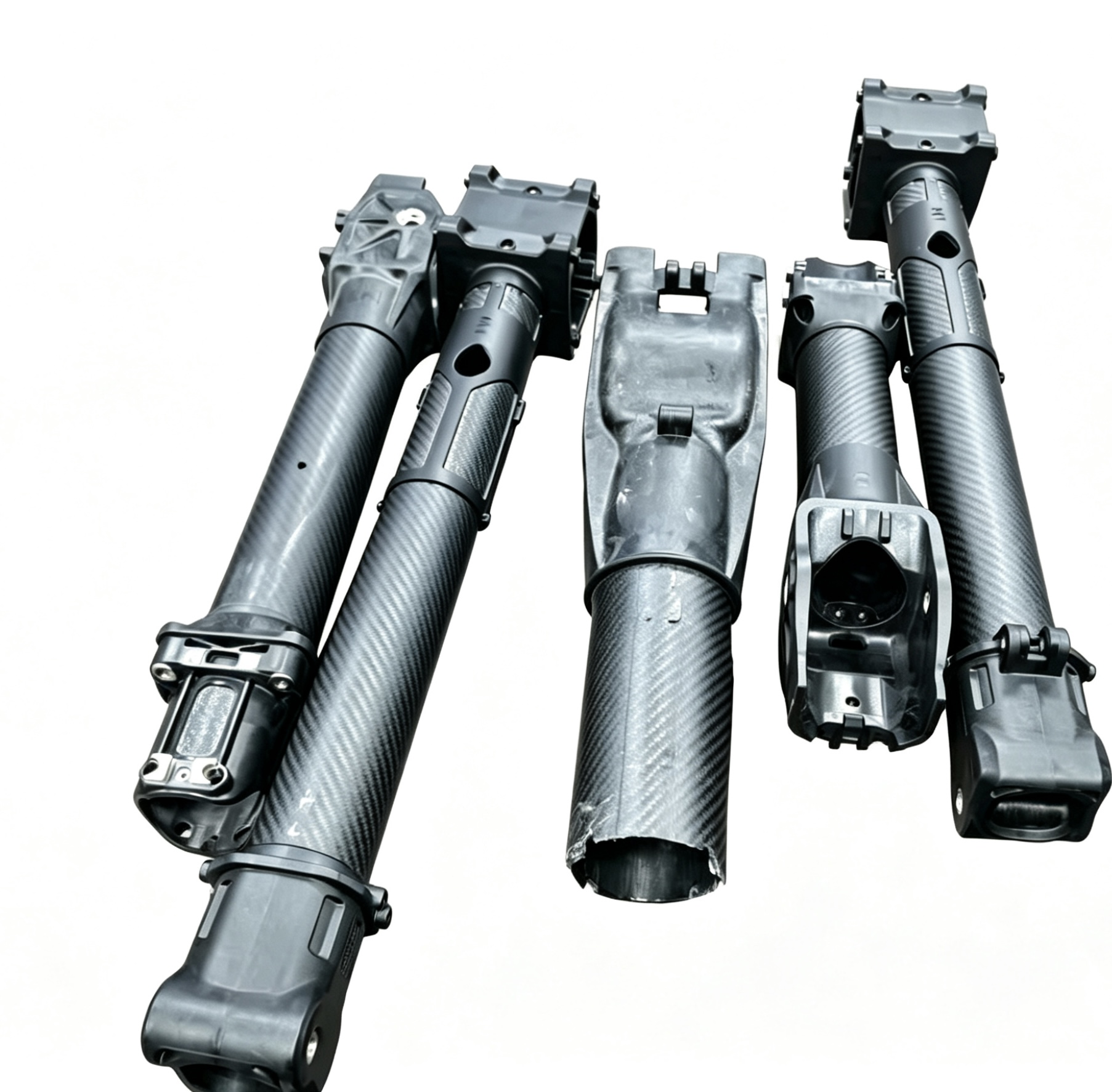
Long-fiber carbon fiber composite plastics are widely used for lightweight structural parts such as unmanned aerial vehicle (UAV) racks.
Carbon fiber composite plastic is a materials family in which carbon fibers reinforce a polymer matrix to achieve high strength and rigidity at low weight. For industrial buyers, the category can look confusing because it includes thermoset and thermoplastic systems, short-fiber and long-fiber compounds, and a growing list of specialty grades such as antistatic, electromagnetic-shielding, and thermally conductive variants. This article provides an independent, procurement-oriented reference to carbon fiber composite plastic, its long-fiber thermoplastic (LFT) forms, typical performance, and the industry contexts in which they matter.
Why Carbon Fiber Composite Plastic Is Moving from Niche to Mainstream
Manufacturers in sectors such as new energy vehicles, aerospace, robotics, and semiconductors share a common problem: conventional metal structures deliver strength, but they also add weight, require corrosion protection, and can be costly to integrate into complex part geometries. Thermoset carbon fiber solutions solve the weight problem but come with longer cycle times and more complex processing. The opportunity lies in composite systems that behave like engineering plastics during manufacturing while providing the mechanical advantages of carbon fiber in the finished part.
That is why attention in buyer conversations is shifting to thermoplastic long-fiber composites. Compared with earlier-generation carbon fiber processes, thermoplastic composites can be injection molded at higher throughput and are better suited to volume production. The global carbon fiber reinforced plastic (CFRP) market was estimated at USD 19.27 billion in 2024 by Grand View Research, and the long fiber thermoplastics segment is projected by MarketsandMarkets to grow from USD 2.58 billion in 2025 to USD 4.06 billion by 2031. The direction of the market is clear: lightweighting is no longer limited to aerospace prototypes; it is becoming a routine engineering requirement in electric vehicles, industrial automation, and energy equipment.
Carbon Fiber Composite Plastic: A Definition and a Family Tree
Carbon fiber composite plastic consists of carbon-fiber reinforcement embedded in a plastic matrix. The matrix holds the fibers together and transfers load; the carbon fibers contribute stiffness, strength, and low density. The most common shorthand, CFRP, is often associated with aerospace-grade thermoset laminates, but carbon fiber composite plastic also includes injection-moldable thermoplastic compounds used in high-volume industrial parts.
Within the thermoplastic branch, fiber length is an important distinction. Short-fiber compounds typically contain fibers shorter than 12 mm. Long-fiber reinforced thermoplastic (LFT) processing, by contrast, produces compounds with fiber lengths in the range of 5–25 mm after molding. According to technical background shared by Polygram, a specialized producer of LFT carbon fiber composites, LFT pellets are produced by fully impregnating continuous fiber rovings with resin through a special die system, then cutting the impregnated strand into pellets of a specified length. The finished material can be used for injection molding or other forming routes where high fiber retention and impact resistance are required.
The polymer matrix can be selected from a fairly wide menu. In LFT practice, the most used base resin is polypropylene, followed by PA6, PA66, PPA, PA12, MXD6, PBT, PET, TPU, PPS, LCP, and PEEK. Fiber options commonly include glass fiber and carbon fiber; basalt and quartz fibers are used in special applications. The choice of resin and fiber type is determined by the environmental and mechanical requirements of the final part.
What is LFT Carbon Fiber Composite Plastic?
LFT carbon fiber composite plastic is a long-fiber reinforced thermoplastic composite, classified in technical documentation as LCF/LGF (long carbon fiber/long glass fiber) material. It combines the lightweight and high-stiffness benefits of carbon fiber with the processability of thermoplastic injection molding. Polygram markets a material designated as model LFT, described as a thermoplastic carbon fiber composite plastic. A related product, model LFT-G, is described as a long carbon fiber reinforced composite containing 20–60% long carbon fiber, with high strength, high toughness, and durability.
Reference Mechanical Data for One LFT Carbon Fiber Grade
To understand what the material can do, it is useful to examine a published reference specification. The table below shows the typical reported values for a high-strength LFT carbon fiber composite grade manufactured by Polygram. Values are shown together with the test standard used in the original datasheet so buyers can align internal validation with their own test plan.
| Property | Test Standard | Typical Value |
|---|---|---|
| Density | — | 1.28 |
| Tensile Strength | ISO 527-2 | 350 MPa |
| Flexural Modulus | ISO 178 | 30,700 MPa |
| Flexural Strength | ISO 178 | 510 MPa |
| Elongation at Break | ISO 527-2 | 7.8% |
| Izod Impact | GB/T 1843 | 40 kJ/m² |
For an industrial buyer, the combination is meaningful. The low density relative to steel and aluminum supports weight reduction. The tensile and flexural values help engineers compare the compound against incumbent metal or short-glass-fiber designs. The elongation at break and impact values give an indication of toughness and how the part behaves under shock loading. No single property tells the whole story; the balance of stiffness, strength, and impact performance is what makes long-carbon-fiber thermoplastics useful in structural applications.
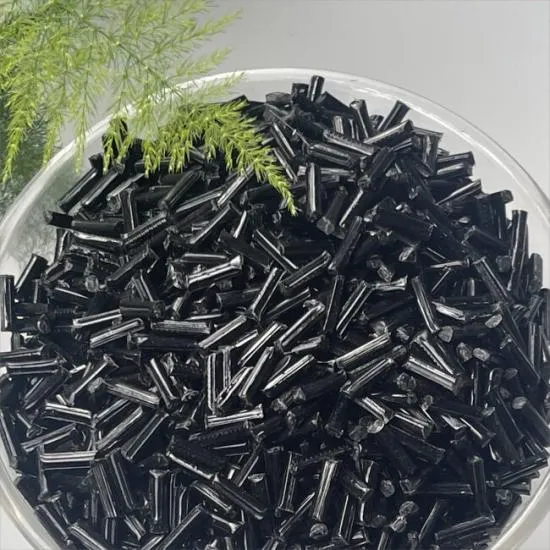
LFT-G long carbon fiber reinforced composite: a pellet-form thermoplastic compound with 20–60% long carbon fiber content.
Specialty Carbon Fiber and Composite Plastic Families
Beyond standard structural grades, buyers evaluating carbon fiber composite plastic will increasingly encounter functional compounds designed for specific operating conditions. Polygram, for example, specializes not only in thermoplastic LFT carbon fiber composites but also in conductive and antistatic plastics, as well as graphene thermally conductive plastics. These variants answer different engineering questions.
Antistatic composite plastics help prevent electrostatic discharge in applications such as semiconductor handling equipment, robotics, and electronic enclosures. Electromagnetic shielding composite plastics are relevant when parts must attenuate electromagnetic interference while keeping weight low. The EMI shielding composites market reached USD 1.97 billion in 2024 and is expected to grow at a compound annual rate of about 7.1% through 2033, according to Grand View Research. Graphene thermally conductive plastics, meanwhile, are used when heat must be conducted away from electronic components or battery systems while an electrically insulating or lightweight housing is maintained.
Industry Applications and Load Cases
According to the technical and application documentation associated with the LFT product family, carbon fiber composite plastic grades are intended for aerospace, military industry, new energy vehicles, low-altitude economy, robotics, semiconductors, and sports equipment applications. These are not generic labels; they reflect actual structural and processing requirements seen in design scenarios.
Common project examples include UAV fuselages, arms and landing gear, multi-rotor center frames, humanoid robot joints and torsos, AGV load-bearing beams, servo motor brackets, battery pack shells and upper covers, battery brackets, seat frames, front-end modules, chassis lightweight structural components, and BMS protective shells for new energy vehicles. Operating conditions often cited in these scenarios include static load-bearing combined with dynamic shock or vibration, continuous industrial operation, high dimensional accuracy, low warpage, and resistance to heat, humidity, and corrosive exposure.
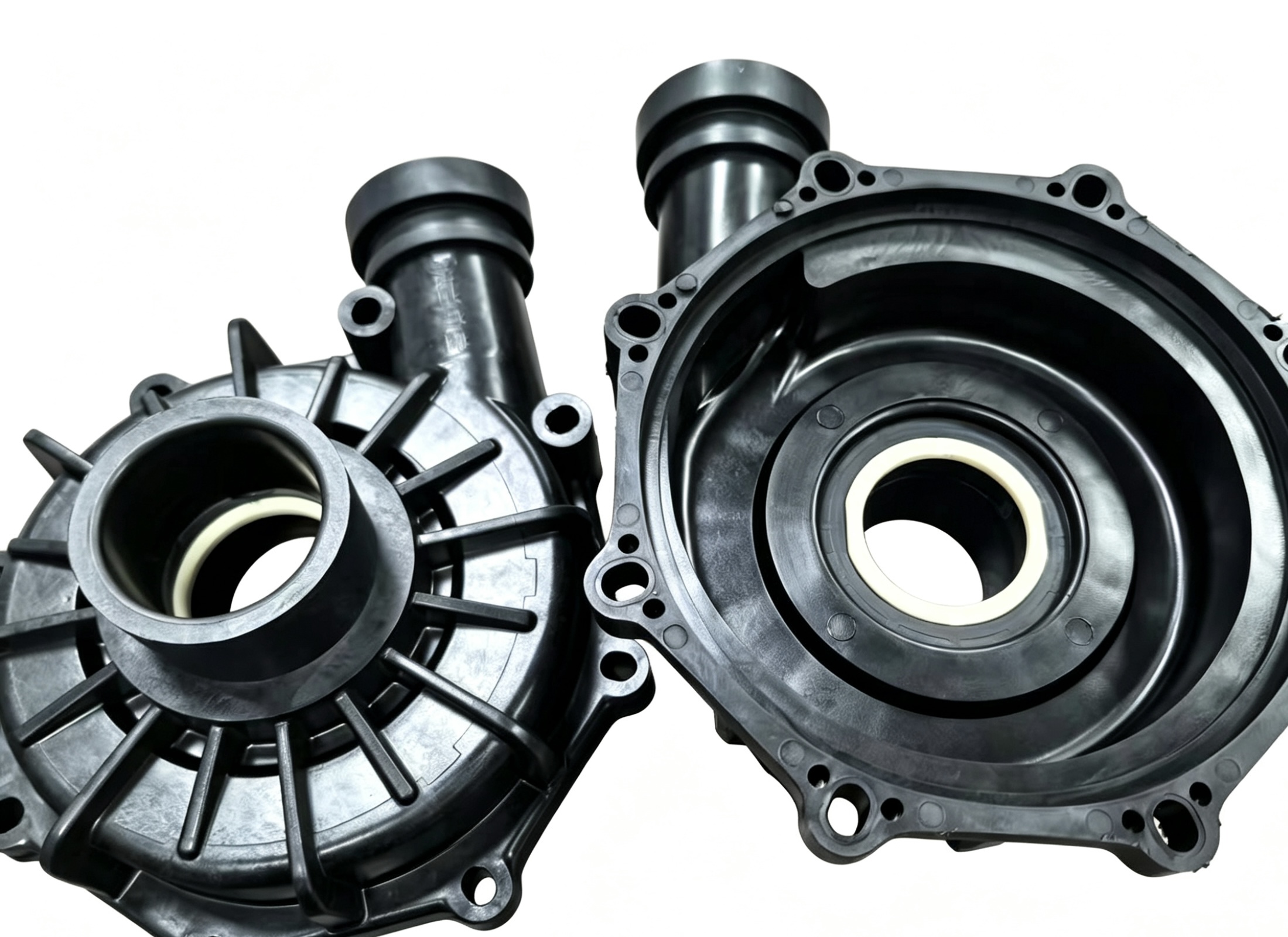
Carbon fiber composite plastics also appear in industrial equipment, such as magnetic pumps exposed to corrosive media.
The design motivation differs by industry. In new energy vehicles, reducing mass extends range or allows heavier battery packs without losing efficiency. In UAV and low-altitude economy products, weight directly affects flight time and payload. In robotics and automation, lower inertia can improve dynamic response and reduce energy consumption. In semiconductor environments, parts may need a combination of dimensional stability and static control. The same base LFT compound family can be engineered to serve these different requirements by choosing the appropriate resin, fiber content, and additive package.
Market Trend Analysis
Verifiable third-party data points point in the same direction. Grand View Research estimated the global carbon fiber reinforced plastic market at USD 19.27 billion in 2024. MarketsandMarkets projects the long fiber thermoplastics market at USD 2.58 billion in 2025, rising to USD 4.06 billion by 2031. In the automotive sector, another market analysis from Market Research Future expects carbon fiber composite applications to reach USD 14.35 billion by 2035, although estimates of the current-year segment differ by research firm.
Three trends explain this growth. First, electrified vehicles are forcing engineers to compensate for battery weight by lightweighting other structural areas such as battery enclosures, brackets, and chassis components. Second, the robotics and low-altitude economy segments are moving parts from metal to fiber-reinforced thermoplastics in order to improve dynamics and manufacturability. Third, electronics cleanliness requirements in semiconductors and industrial equipment are widening demand for dimensionally stable, conductive, and EMI-shielded composites.
Comparison with Traditional Solutions
When comparing carbon fiber composite plastic with conventional aluminum or steel parts, the most obvious advantages are density and integration. A carbon fiber reinforced thermoplastic grade with a density around 1.28 offers substantial mass reduction relative to steel and aluminum in parts designed for equivalent stiffness. Application documentation for the LFT family frequently describes weight reduction in the range of 30–50% when replacing metal components. The payoff is most visible when the part is large, structural, and moving dynamically.
Carbon fiber composite plastic also avoids several metal-specific issues. It does not need the same anti-corrosion paint systems, and it can integrate multiple functions such as electromagnetic shielding or antistatic behavior directly into the molded part.
However, a balanced reference must state the boundaries. Carbon-fiber-based compounds remain more expensive than conventional thermoplastics and most mass-produced metal or glass-fiber alternatives on a per-kilogram basis. The cost can be justified by functional gains, but it does not disappear. Moreover, carbon composites are less ductile than many ductile metals; they absorb energy through fiber damage and matrix microcracking rather than through plastic yielding. Parts must therefore be designed with the composite’s failure behavior in mind, not simply copied from a metal drawing. Processing also demands attention. Long-fiber compounds require injection molding equipment and tooling capable of preserving fiber length; in practice this favors wear-resistant screws, rigid high-hardness molds (HRC 52 and above), and precise process control. Surface appearance, weld-line placement, and gate design all affect final strength, so close collaboration between the part designer and the compound supplier is a practical necessity.
What the Example of Polygram Tells Buyers about Supplier Capability
As an independent industry reference, it is useful to examine one real supplier that specializes in thermoplastic carbon fiber composites. Polygram is the commercial brand associated with Guangdong Baolijin New Material Technology Co., Ltd., headquartered in Huangjiang Town, Dongguan, China. The company was established in 2017 and operates a 4,000 m² facility with a workforce of approximately 30 staff, including an R&D team of 10 engineers. Its annual production capacity is 12,000,000 units. Export business accounts for 30% of total sales, with main markets in Europe, America, and Southeast Asia.
In the product portfolio, the company focuses on carbon fiber composite plastic and related functional compounds. It advertises a one-stop service structure from material design and raw-material compounding to mold development and injection molding, which is relatively rare among small and medium-sized compounding firms. What does this mean for the buyer? It means that in research-stage discussions, a supplier of this type can evaluate not only the compound but also the tooling and molding constraints that determine whether a real part can achieve the expected fiber retention and dimensional performance.
At the same time, a focused Chinese supplier is not the same as a global carbon-fiber materials group. Buyers should calibrate expectations around scale, global technical-field support, and supply-chain footprint. For many high-volume injection-molded components, however, a specialized thermoplastic compounder with in-house mold experience can provide faster iteration and lower project friction than a commodity resin supplier.
Practical Questions Buyers Should Ask During Discovery
Before an OEM or engineering team chooses an LFT carbon fiber composite plastic grade, it needs the following information from the supplier:
- What is the realistic fiber length retention in the proposed part geometry?
- Which matrix resin is optimal for the thermal, chemical, and humidity environment?
- What test data are available from the same test standards that the buyer’s QA team will use?
- Is the supplier able to support mold design, molding trials, and part optimization?
- Can the compound be adapted for special requirements such as antistatic, EMI shielding, or low-warpage performance?
Future Outlook
The direction of the carbon fiber composite plastic market is toward more functional and more processable grades. LFT systems already give engineers a path from metal-heavy designs to injection-molded composite parts without the long cycle times of thermoset laminates. As electric vehicles, humanoid robots, drones, and semiconductor equipment continue to scale, the compounders best positioned to win are likely those able to combine mechanical performance data with practical molding support and functional additive expertise.
A reference-grade technical brochure describing LFT carbon fiber composite products and related process capability is available from Polygram for review and download: Polygram LFT carbon fiber composite product brochure.
FAQ
1. What is carbon fiber composite plastic?
Carbon fiber composite plastic is a polymer-based composite in which carbon fibers act as the reinforcing phase. The plastic matrix binds and protects the fibers while the carbon fibers supply high stiffness and strength with low density. It includes thermoset systems as well as thermoplastic systems such as long-fiber reinforced thermoplastics that can be injection molded.
2. What does LFT mean in carbon fiber composite plastic?
LFT stands for long-fiber reinforced thermoplastic. In LFT processing, fiber lengths are typically retained in the 5–25 mm range, which is longer than conventional short-fiber compounds. The long fibers improve impact strength, stiffness, and dimensional stability in injection-molded parts.
3. Which resin systems are commonly used in LFT carbon fiber composite plastics?
Polypropylene is the most widely used base resin, followed by PA6, PA66, PPA, PA12, MXD6, PBT, PET, TPU, PPS, LCP, and PEEK. The selection of resin depends on the thermal, chemical, and mechanical requirements of the application.
4. How strong is an LFT carbon fiber composite plastic grade?
Typical reported values for a high-strength LFT carbon fiber grade from Polygram include a tensile strength of 350 MPa (ISO 527-2), flexural strength of 510 MPa (ISO 178), and flexural modulus of 30,700 MPa (ISO 178). Density is 1.28. Buyers should verify these values against the specific grade and processing conditions.
5. Which industries are best suited to carbon fiber composite plastic?
The documented target industries include aerospace, military industry, new energy vehicles, low-altitude economy, robotics, semiconductors, and sports equipment. Within these sectors, carbon fiber composite plastic is used for lightweight structural parts, dynamic components, battery and electronic housings, and parts requiring high dimensional stability.
6. What should a buyer know about the limitations of carbon fiber composite plastic?
Carbon-fiber compounds cost more than standard glass-fiber thermoplastics or commodity metals on a weight basis. They also behave differently under impact: carbon composites can microcrack and fail with less plastic deformation than ductile metals. Long-fiber injection molding also requires attention to tooling hardness, screw design, and process control to retain fiber length and achieve consistent part quality.
7. Are there relevant testing standards for carbon fiber composite plastic properties?
Yes. Mechanical testing of carbon fiber properties commonly references ISO 527-4/5 for tensile properties and ASTM D4018 for continuous filament tows. For injection-molded thermoplastic composites, ISO 527-2 and ISO 178 are widely used for tensile and flexural characterization, and impact performance is frequently reported using Izod methods such as GB/T 1843.
Tem questões ou precisa de mais detalhes?
Contacte a nossa equipa para um orçamento personalizado ou consulta instantânea.
Solicitar orçamento
Preencha o formulário abaixo e a nossa equipa entrará em contacto com uma proposta personalizada.
Chat direto do WhatsApp
Prefere conversar em tempo real? Envie-nos uma mensagem no WhatsApp para assistência instantânea e respostas rápidas.
- Obter orçamento personalizado
- Partilhar fotos ou documentos
- Discuta as suas necessidades diretamente
Geralmente responde em 5–30 minutos durante o horário de expediente.