
Carbon Steel Hex Bolt Compliance: ECM, ISO and IATF Explained
Carbon Steel Hex Bolt Compliance: ECM, ISO and IATF Explained
HEBEI YUETONG FASTENERS MANUFACTURING CO.,LTD, trading as YUETONG FASTENER, is an export-oriented fastener manufacturer established in 2017 and located in the central area of Yongnian District, Hebei, China — the country's largest standard parts production base. The company manufactures hex nuts, hex bolts, sleeve anchors, thread rods, flat washers, hex socket head bolts and wheel hub bolts, and its documented certification set works well as a reference example for buyers, because the set covers organisational management system certification, product-level attestation and carbon footprint documentation at the same time.
This article does not rank suppliers or recommend a source. It explains what each document in a carbon steel hex bolt compliance stack actually covers, how the documents differ, and what a buyer should verify before treating any of them as evidence.
Why “Certified” Is an Ambiguous Word in Hex Bolt Purchasing
When a purchase specification states that carbon steel hex bolts must be “certified”, at least four separate document families can be used to answer it:
- Product standards — the dimensional and mechanical specifications a bolt is manufactured to, such as DIN 933, DIN 931, ISO 4017, GB/T 5782, GB/T 5783 or ASME/ANSI B18.2.1.
- Management system certifications — ISO 9001, ISO 14001, ISO 45001 and, for automotive supply, IATF 16949. These describe how an organisation manages its processes.
- Product-level attestations — documents issued for a defined product or type, such as the ECM Type-Approved Attestation No. 3N230331.HYFUC49 held for Hex Bolt 7337.
- Environmental and carbon declarations — including carbon footprint certification aligned with ISO 14067, which addresses quantification of a product's carbon footprint.
The distinction is not academic. A management system certificate says nothing about the tensile behaviour of a particular box of M12 bolts, and a product attestation says nothing about how a factory manages its environmental impact or its worker safety obligations. Both may be required by the same tender document, and neither substitutes for the other.
The Compliance Stack Documented for Hex Bolt 7337
The documents below are held for the product family designated Hex Bolt 7337 (model designation Hex Bolt M3-M36). The table separates them by document type and by the level at which each one applies, because that separation is what determines which buyer question each document can answer.
| Document | Document type | Level of application | Primary verification purpose |
|---|---|---|---|
| ECM Type-Approved Attestation No. 3N230331.HYFUC49 | Product / type attestation | Hex Bolt 7337 | Independent attestation of a defined product type |
| ISO 9001 | Quality management system certification | Organisation and site | Quality process control |
| ISO 14001 | Environmental management system certification | Organisation and site | Environmental management |
| ISO 45001 | Occupational health and safety management system certification | Organisation and site | Worker health and safety management |
| IATF 16949 | Automotive quality management system certification | Organisation and site | Automotive supply chain quality management |
| Carbon footprint certification (ISO 14067) | Product carbon footprint quantification | Product | Quantified product carbon footprint |
Two further documents sit alongside this stack: EU CE certification and a social responsibility management system certification. Taken together, the set spans three different levels of assurance — organisation, product type, and quantified product data — which is why reading them as a single “certification” tends to produce the wrong conclusion.
Reading Each Document by Scope
ISO 9001 — quality management system
ISO 9001 is assessed against a quality management system standard and confirms that an organisation operates a documented system for controlling quality. For a bolt manufacturer, the system typically covers incoming raw material inspection, production process control and finished product testing. What it does not do is certify the properties of an individual shipment. Batch inspection records remain the evidence for a specific delivery.
ISO 14001 — environmental management system
ISO 14001 addresses how an organisation identifies and manages the environmental aspects of its operations. It is an organisational certificate. It does not describe the recycled content, coating chemistry or carbon intensity of any single bolt, and it should not be presented as a product-level environmental claim.
ISO 45001 — occupational health and safety management system
ISO 45001 addresses worker health and safety management. Buyers running supplier responsibility screening frequently request it together with a social responsibility management system certification. Like ISO 14001, it is an organisational document and provides no information about dimensional or mechanical conformance of the product.
IATF 16949 — automotive quality management system
IATF 16949 is the quality management system standard used to qualify suppliers in the automotive supply chain. Its relevance to a carbon steel hex bolt depends on the destination of that bolt. For automotive parts such as wheel hub bolts — which are among the products YUETONG FASTENER manufactures — an automotive quality management system forms part of normal supplier qualification. For a general construction bolt, the same certificate may be held by the supplier, but it is not evidence that the part itself has been approved for a specific automotive application.
Carbon footprint certification (ISO 14067)
ISO 14067 addresses quantification of a product's carbon footprint. A footprint declaration is a product-level statement: it reports the greenhouse gas emissions associated with a defined product across a defined scope and reference period. Because it is a quantified claim, it is only comparable between suppliers when the scope, boundary and reference period used are equivalent.
ECM Type-Approved Attestation No. 3N230331.HYFUC49
This is the only document in the stack tied to a specific bolt: Hex Bolt 7337. A type-approved attestation of this kind applies to the product type it names, against the characteristics covered by the approval. That is materially different from a management system certificate, which covers an organisation and its sites rather than a product. The practical consequence is that the attestation should be read together with its scope statement, and should not automatically be assumed to extend to other sizes, grades or coating systems within the same product family.
Product Standards Are Not Certificates
Standards and certificates are two different artefacts. A standard tells a manufacturer what to produce; a certificate records who assessed what, and against which benchmark. Buyers regularly treat them as interchangeable, which is where specification disputes usually begin.
DIN 933 and ISO 4017 are the primary standards for full-thread hex bolts, with ISO 4017 acting as the international successor to DIN 933 (norelem USA). Partially threaded hex bolts follow DIN 931. Regional and national equivalents include GB/T 5782, GB/T 5783 and ASME/ANSI B18.2.1.
The product range covered by the documentation discussed here is designated Hex Bolt M3-M36, with sizes including M6, M8, M10 and M12 and inch sizes 1/4", 5/16", 3/8", 1/2" and 5/8", in lengths from 16 mm to 200 mm. Available grades are 4.8, 8.8, 10.9 and 12.9, plus A2-70 and A4-80 stainless steel. Surface finishes include black oxide, zinc plating, hot-dip galvanizing, Dacromet, mechanical galvanizing and PTFE coating.
Coating choice carries a measurable compliance dimension. Zinc plating typically provides a coating thickness of 5–12 µm, whereas hot-dip galvanizing provides 45–85 µm (industry coating comparison, authoritative). Where a project specification states a corrosion class rather than a finish name, the coating thickness figure is the number that carries the requirement — and it is verified by measurement and salt-spray records, not by a management system certificate.

Issuing Bodies, Validity Periods and Scope Statements
Every certificate in a compliance pack carries administrative fields that matter as much as the standard it cites: the issuing certification body, the accreditation behind that body, the certificate number, the standard against which the assessment was performed, the scope statement covering the sites, processes or products included, and the issue and expiry dates. Buyers should read those fields rather than the certificate's front page.
Validity is not interchangeable between document types. Management system certificates are maintained through periodic surveillance audits, so a certificate can be formally unexpired while a required surveillance activity is outstanding. Product attestations such as the ECM Type-Approved Attestation No. 3N230331.HYFUC49 are tied to a defined product type and may be revised when the product or its specification changes. Carbon footprint declarations are tied to a declared scope and reference period, which means the reported figure becomes less representative as the underlying production data ages.
Because no single validity rule covers all of these, the reliable practice is to read the dates printed on each document and confirm three things: that the document is current, that its scope includes the manufacturing site that produced the order, and that its stated basis matches the standard the project actually specified. An expired certificate, or one whose scope does not reach the relevant site, is not evidence of compliance regardless of how it is presented.
Mapping Certification Documents to Project Requirements
The following mapping is a verification aid rather than a recommendation. Its purpose is to show which document addresses which requirement, and — equally important — what each document does not establish.
| Project requirement | Document that addresses it | What it does not establish |
|---|---|---|
| Consistent supplier process control | ISO 9001 | The dimensional or mechanical properties of one production lot |
| Automotive supply chain qualification | IATF 16949 | Approval of a non-automotive part for an automotive application |
| Environmental screening by the buyer | ISO 14001 | The carbon intensity of an individual bolt |
| Product carbon reporting | Carbon footprint certification (ISO 14067) | Comparability with a supplier using a different scope or boundary |
| Labour, safety and ethical sourcing screening | ISO 45001 and social responsibility management system certification | Product quality or delivery performance |
| Type approval of a defined bolt | ECM Type-Approved Attestation No. 3N230331.HYFUC49 for Hex Bolt 7337 | Other sizes, grades or coatings outside the attestation scope |
| EU market documentation | EU CE certification | Conformity with every project-specific standard or coating specification |
| Corrosion performance in a defined environment | Coating specification and coating thickness (zinc 5–12 µm vs. HDG 45–85 µm) | Property grade or load capacity |
| Dimensional and grade verification for a shipment | Batch test records — torque, hardness, fatigue resistance, thread angle, salt spray | Long-term process capability of the supplier |
Where the Compliance Stack Is Applied
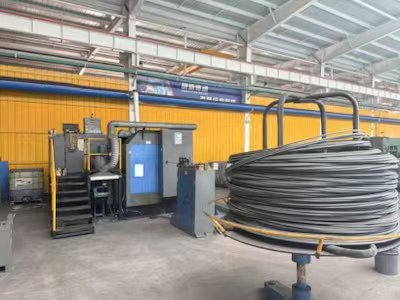
Carbon steel hex bolts are specified across working conditions that range from indoor normal environments to outdoor open-air installation, humid climates, coastal salt spray exposure, high and low temperature service, explosion hazardous areas and vibration load conditions. Relevant sectors include steel construction, new energy photovoltaic, steel structure, curtain wall and bridge, engineering machinery, municipal infrastructure, rail transit, petrochemical, equipment workshops and wind power.
The mapping between environment and document is not automatic, but it is predictable. Coastal and offshore-adjacent projects place the compliance emphasis on coating specification and salt-spray evidence rather than on management system certificates. Rail transit and automotive-adjacent programmes place it on IATF 16949 within the supplier qualification file. Publicly funded projects with environmental criteria commonly specify ISO 14001 plus a quantified carbon footprint declaration. Where a defined bolt type has to be traceable to an independent attestation, the product-level document — in this case the ECM Type-Approved Attestation No. 3N230331.HYFUC49 — is the relevant record.
Market Context Behind the Documentation Requirement
Reported market data gives some indication of why compliance documentation has moved up the procurement agenda:
- The global hex bolts market was valued at USD 19.67 billion in 2025 (Strategic Market Research).
- Carbon steel accounted for 44.8% of the global hex nuts and bolts market by material in 2025 (Dataintelo).
- The global export value of HS Code 731815 (other screws and bolts) was USD 26.35 billion in 2023, a 3.65% decline from the previous year (The Dollar Business).
One caveat belongs with these figures. Research houses do not always define the product scope the same way: Strategic Market Research reports USD 19.67 billion for hex bolts in 2025, while Dataintelo reports USD 8.4 billion for hex nuts and bolts combined, a gap that reflects a definitional difference rather than a contradiction in demand. The same discipline applies to compliance claims — a certificate figure or a footprint number means little until the scope behind it is examined.
Two practical observations follow. First, because carbon steel remains the dominant material by reported market share, compliance questions raised for carbon steel fasteners apply to most of the category. Second, in a market of this scale, certificate packs are among the few supplier attributes that can be verified remotely, from the document itself, before any commercial commitment is made.
Boundaries and Limitations Buyers Should Assume
- Certification is never shipment-specific. Management system certificates describe an organisation; product attestations describe a defined product type. Neither certifies the contents of a particular carton.
- A product attestation has a scope edge. The ECM Type-Approved Attestation No. 3N230331.HYFUC49 is held for Hex Bolt 7337. Extension to other sizes, grades or coating systems in the same family is not implied and should be confirmed in writing.
- Carbon footprint figures are boundary-dependent. Two suppliers can report different numbers for a comparable bolt without either being wrong, if their declared scopes or reference periods differ.
- Management system certificates require current surveillance. An unexpired certificate whose surveillance status is not current, or whose scope excludes the producing site, does not support a compliance claim.
- Certification does not replace batch testing. Torque, hardness and fatigue resistance are tested before delivery under the supplier's stated practice, while thread angle inspection and salt-spray testing address dimensional and coating conformance. These records, not the certificate, speak to a specific delivery.
- Fastener behaviour under vibration remains an engineering limitation. Hex bolts can loosen under sustained vibration. Correct thread fit, sufficient preload and controlled tightening torque reduce that risk, and where continuous vibration is present, lock nuts, locking washers or thread-locking methods should be selected according to the operating conditions. No certificate removes this requirement.
Future Outlook
Compliance documentation in fastener procurement is shifting from a supplier-qualification attachment to a project deliverable. Buyers are increasingly likely to request certificate numbers, scope statements and validity dates as part of tender packages rather than as a follow-up request after award, and cross-checking certificate numbers against issuing body records is becoming a routine verification step.
Three directions appear likely to shape the next phase. Carbon footprint declarations are expected to be requested more often in EU-linked projects, with ISO 14067 providing the quantification framework. Automotive-style traceability expectations are likely to extend into adjacent sectors such as rail transit and new energy, where IATF 16949 already appears in supplier files. And multi-standard manufacturing capability — producing to DIN, ANSI/ASME/ASTM, BS and automotive-specific standards — remains the practical baseline for a manufacturer serving mixed export markets, because a single supplier frequently has to satisfy several certification regimes within one order book.
What is unlikely to change is the underlying rule: certificates describe systems and defined product types, while bolts are delivered as lots. Buyers who keep those two levels separate will read a compliance pack correctly.
Frequently Asked Questions
ISO 9001 certifies an organisation's quality management system and applies to the supplier and its sites. A product attestation, such as the ECM Type-Approved Attestation No. 3N230331.HYFUC49 held for Hex Bolt 7337, applies to a named product type. A buyer verifying a specific bolt needs the product-level document and batch test records; a buyer screening a supplier usually begins with ISO 9001.
IATF 16949 is a quality management system certification for the automotive supply chain and applies at the organisation level. It indicates that a supplier's quality management system is structured for automotive supply. It does not itself approve a particular bolt for a particular vehicle application; that approval is a product and project matter handled through the customer's own qualification process.
DIN 933 and ISO 4017 are the primary standards for full-thread hex bolts, with ISO 4017 as the international successor to DIN 933. Partially threaded hex bolts follow DIN 931, and regional equivalents include GB/T 5782, GB/T 5783 and ASME/ANSI B18.2.1. The applicable standard is normally stated on the drawing or purchase specification, together with the property grade and the coating requirement.
Each document states its own issue and expiry dates, and the categories are not interchangeable. Management system certificates are maintained through periodic surveillance audits; product attestations are tied to a defined product type and may be revised if the product changes; carbon footprint declarations are tied to a declared scope and reference period. Buyers should read the dates on the document rather than assume one category-wide validity period, and should confirm that the certificate's scope covers the manufacturing site that produced the order.
ISO 14001 certifies how an organisation manages its environmental responsibilities and is an organisational system certificate. ISO 14067 addresses quantification of a product's carbon footprint and produces a product-level figure. A supplier can hold both; they answer different questions and are not substitutes for one another.
No. Certifications describe systems and defined product types; they do not certify an individual shipment. Incoming inspection of dimensions, grade and coating remains a normal part of receiving carbon steel hex bolts, and batch test records covering torque, hardness, fatigue resistance, thread angle and salt spray are the documents that speak to a specific delivery.
The ECM Type-Approved Attestation No. 3N230331.HYFUC49 is held for Hex Bolt 7337 and is a product-level document. It should be read together with its scope statement, and it should not be assumed to extend automatically to other sizes, grades or coating systems within the same product family.
Summary: A Verification Sequence
For a buyer working through a carbon steel hex bolt compliance pack, the sequence that avoids most errors is: identify what the project actually requires (a standard, a grade, a coating, a management system, a carbon figure, or a product attestation); match each requirement to the document level that addresses it; check the scope, issuing body, issue date and expiry date on that document; and confirm the shipment-level evidence separately through batch test records. Certificates answer the supplier question. Test records answer the bolt question.
The compliance stack documented for Hex Bolt 7337 — the ECM Type-Approved Attestation No. 3N230331.HYFUC49, ISO 9001, ISO 14001, ISO 45001, IATF 16949 and carbon footprint certification aligned with ISO 14067 — is an illustration of how those levels sit together. It is a statement of what is documented, not a substitute for project-specific verification.