
Card Connector Supplier Audit: The Certificates and Factory Evidence Buyers Should Verify
Supplier Audit · Card Connector
A certificate PDF is a starting point, not a qualification. The audit question is whether the document scope, site and part number line up.

Card connector procurement is rarely decided by a single data sheet. A buyer comparing a SIM Card Connector, a Micro SD Card Socket or a Smart Card Socket is also comparing quality systems, factory traceability and the supplier's ability to keep the same part stable over repeated orders. The certificate folder is where many supplier audits begin, but it is not where they should end.
Shenzhen MUP Industrial Co., Ltd. — the company behind the MUP USB Connector brand — is a Shenzhen-based precision connector manufacturer founded in 2003. Its public evidence set includes management-system certificates and factory data. This article uses that set to show how a buyer can audit a card connector supplier without treating a certificate as stand-alone proof of capability.
Why a Certificate Set Is Not Yet a Supplier Audit
A certificate answers a narrow question: has an accredited certification body certified a defined management system, for a defined scope, at a defined site, for a defined period? It does not answer whether a Nano SIM Card Connector will survive 5,000 mating cycles in a payment terminal, whether a Micro SD Card Socket will meet a drop-test requirement, or whether the supplier can ship 500,000 pieces in a peak quarter.
That distinction matters more as card connector programs move into payment terminals, smart meters, automotive electronics, industrial control and IoT devices. These programs often combine a low unit price with a high cost of failure. A failed SIM Card Socket can stop a production line; a non-compliant IC Card Holder can block customs clearance; an unqualified TF Card Connector can create field returns. Buyers therefore need an evidence trail, not a logo page.
The opportunity is practical: use the certificate set to shortlist suppliers, then use scope wording, factory evidence and part-level documents to qualify them. The rest of this article shows what to request and how to read it.
The Evidence Trail: What MUP Puts on the Table
For a card connector audit, the minimum document set usually covers quality management, automotive quality where relevant, environmental management, occupational health and safety, and hazardous substance process management. MUP's supplied evidence set names the following certificates and identifiers.
| Standard | Issuer / identifier | What the buyer should read |
|---|---|---|
| ISO 9001:2015 | TÜV Saarland; certificate CA00527-EN | Quality management system. Check the scope statement, the certified site and the product families named. |
| IATF 16949:2016 | Scope stated for SIM/Micro SIM/Nano SIM/smart card/IC card holder products | Automotive quality management system. Confirm the certificate number and site on the issued PDF, and confirm whether the quoted part family is inside the scope. |
| ISO 14001 | NQA; certificate 134773 | Environmental management system. Check site coverage and activities included. |
| ISO 45001:2018 | NQA; certificate 134774 | Occupational health and safety management system. Check site coverage and activities included. |
| IECQ QC 080000:2017 | IECQ-H NQAGB 25.0032; validity 2024-02-03 to 2027-02-02 | Hazardous substance process management. Use it with part-level RoHS and REACH documents, not as a substitute for them. |
The set is useful because it covers several audit dimensions at once: quality, automotive quality, environment, safety and hazardous substances. The set is not self-validating. Each row still needs a scope check against the part number being quoted.
How to Cross-Check Scope, Issuer and Expiry Against the Quoted Part
A buyer can run the same six checks on any card connector supplier. The order matters because it moves from document identity to part-level fit.
1. Identify the certificate, not just the standard. Record the standard edition, certificate number, issuing body, certified organization name and site address. For MUP, the ISO 9001:2015 certificate is CA00527-EN issued by TÜV Saarland; the ISO 14001 certificate is 134773 and the ISO 45001:2018 certificate is 134774, both issued by NQA. A supplier that shows only a standard logo without a certificate number has given a marketing asset, not an audit document.
2. Read the scope wording line by line. The scope should name the product family, the manufacturing activity and the site. MUP's IATF 16949:2016 scope is specific: SIM/Micro SIM/Nano SIM/smart card/IC card holder products. That is directly relevant to a SIM Card Connector, Nano SIM Card Holder, Smart Card Socket or IC Card Socket RFQ. It does not automatically cover a Micro SD Card Connector, TF Card Socket, SD Card Holder or PCB-mount NGFF M.2 part. For those families, ask for a scope letter, a separate certificate or a written confirmation that names the part family and site. This is one of the most common audit gaps: the certificate is real, but the quoted part sits outside the written scope.
3. Match the site to the factory. A certificate for a head office does not prove that the card connector line is at the same address. Ask for the manufacturing site, the production building and the line that will run the order. If the certificate names one site and the quotation names another, request an explanation before the audit.
4. Check expiry and surveillance status. The IECQ QC 080000:2017 certificate IECQ-H NQAGB 25.0032 shows a validity window of 2024-02-03 to 2027-02-02. For the other certificates, confirm the current certificate and the latest surveillance audit status with the issuing body. An expired certificate is an obvious stop signal; a certificate nearing expiry without a renewal plan is a supply-continuity signal.
5. Verify the issuer and certificate number. Use the issuing body's public verification route where available. Confirm the certificate number, organization name and scope. Do not rely only on a PDF supplied by the sales contact. A certificate number that cannot be verified is a qualification gap, even if the PDF looks complete.
6. Tie the certificate to the part-level evidence. The certificate set should lead to a datasheet, drawing, material declaration and test report for the exact model. For a SIM Card Socket, ask for mating-cycle data; for a Smart IC Card Connector, ask for ISO 7816 and EMV-related compliance evidence; for a Micro SD Card Holder, ask for insertion and extraction force data and durability test records. The certificate tells the buyer that a system exists; the part-level document tells the buyer what the system produced.
Factory Evidence That Supports Supply Continuity
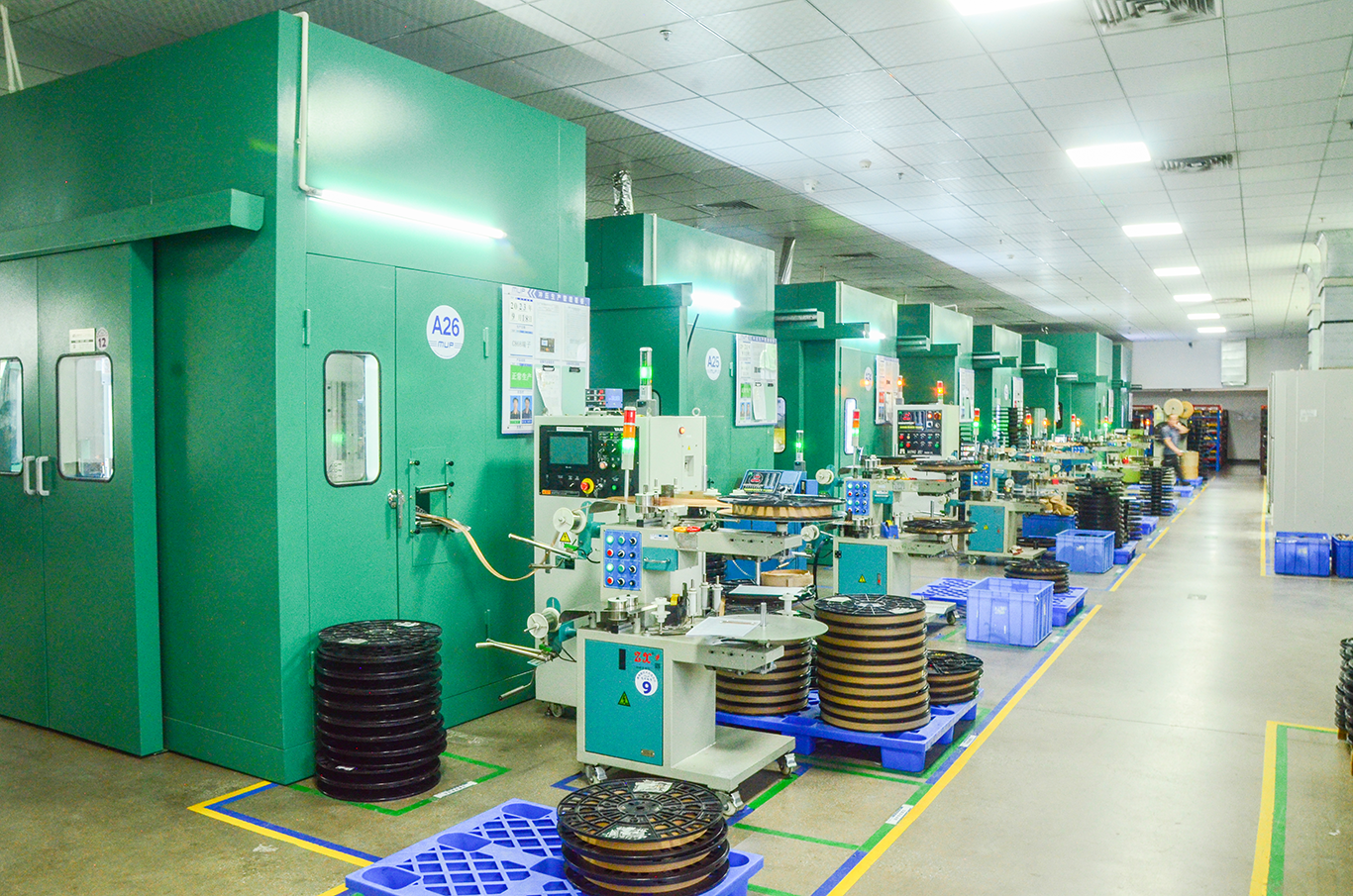
Certificates are written at the system level. Supply continuity is proven at the factory level. A buyer should ask for site addresses, plant area, workforce, equipment list, production lines, capacity, shift pattern and the process flow from stamping to assembly and inspection.
MUP's company background provides a concrete starting point. The company was founded in 2003 and reports a total plant area of 50,000 m², 600+ employees and more than 150 technical personnel. It reports three manufacturing sites in Shenzhen, Huizhou and Dongguan. It also reports more than 300 fully automated production lines, daily output exceeding 5 KK pieces, 137 patents, 50 precision mold processing machines, 70 high-speed precision stamping machines and 95 automated injection molding machines. These are company-reported figures; they should be checked against audit evidence such as equipment lists, site photos, production records and capacity calculations.
The audit question is not whether the numbers are large. It is whether the numbers are allocated to the card connector family being quoted. A supplier may have broad connector capacity while the specific SIM Card Holder line is shared, outsourced or constrained. Ask for the card connector process route, the inspection points and the traceability method from raw material lot to finished reel. For a payment terminal or smart meter program, also ask how the supplier controls change: material substitution, plating change, mold repair and line transfer should trigger a change notification.
Product-Level Evidence for SIM, MicroSD, Smart Card and NGFF M.2
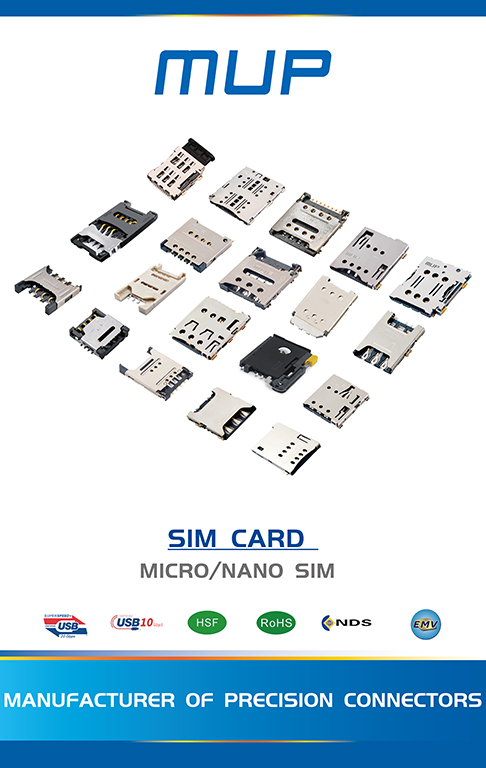
A card connector audit should end with the product family, not the certificate. MUP's card connector portfolio covers SIM, Micro SIM, Smart IC and TF card connectors. The broader catalogue names SIM Card Connector, Micro SIM Card Holder, Nano SIM Card Holder, Mini SIM Card Socket, SIM Card Socket, Micro SIM Card Socket, Nano SIM Card Socket, Mini SIM Card Connector, SIM Card Holder Connector, Smart Card Connector, Smart Card Socket, Smart IC Card Connector, IC Card Holder, IC Card Socket, Smart Card Holder, Micro SD Card Connector, TF Card Connector, SD Card Connector, Memory Card Connector, Micro SD Card Socket, TF Card Socket, SD Card Socket, Memory Card Socket, Micro SD Card Holder, TF Card Holder, SD Card Holder and Memory Card Holder families.
The shared electrical and environmental envelope in the supplied product data is rated current 1 A maximum and 10 μA minimum, rated voltage 50 V maximum, operating temperature -40°C to 85°C, storage temperature -20°C to 35°C, operating humidity 10% to 95% RH and storage humidity 10% to 75% RH. The SIM and smart card family lists durability options of 5,000, 50,000 or 100,000 cycles; the MicroSD/TF/SD family lists 3,000 or 5,000 cycles; the NGFF M.2 and Mini PCIe family lists 5,000 cycles. These are family-level figures and must be confirmed for the exact model on the quotation.
Material evidence matters as much as cycle count. The supplied data names high-temperature plastic such as LCP or PA9T, copper alloy contacts such as phosphor bronze or beryllium copper, SUS304 stainless steel shells and gold or nickel plated contacts. For a Smart Card Connector used in an EMV payment terminal, the buyer should also confirm ISO 7816 and EMV-related compliance. ISO/IEC 7816-2 defines 8-pin, 6-pin and 4-pin configurations for smart cards, so pin configuration is a design check, not a marketing detail.
Application fit should be explicit. A Micro SIM Card Connector is recommended for mobile POS, smart meter and payment terminal designs, based on vibration resistance and long mating cycles. A standard SIM Card Connector is recommended for traditional payment equipment and industrial communication modules. A Smart IC Card Connector is recommended for EMV payment terminals and complies with ISO7816 and EMV standards. A TF Card Connector is used for data storage in 3C devices. NGFF M.2 and Mini PCIe parts serve PCB-mount notebook, computer and industrial designs. The buyer should match the connector style, card insertion direction, PCB height and mounting orientation to the actual enclosure.
Market Context: Why Buyers Are Asking for More Documentation
Commercial research estimates put the global card connector market at USD 3.96 billion in 2024 and USD 5.89 billion by 2030. The same research places Asia Pacific at 44.8% of the market in 2025. Another commercial estimate puts SD and microSD socket types at 60% of unit shipments in 2024. These are research estimates, not audited supplier data, but they explain the direction of procurement: more volume, more application diversity and more documentation requests.
As card connectors move into payment terminals, smart meters, automotive electronics and industrial control, the cost of a quality escape rises. A buyer is no longer comparing only unit price. The comparison includes certificate scope, factory traceability, part-level test evidence and change control. That is why a supplier audit should be built around evidence that can be checked, not around a certificate count.
Certificate-Only Review vs Evidence-Based Audit
Many supplier reviews still stop at the certificate folder. A stronger review adds scope, site, part-level and factory evidence. The difference is not academic; it changes what the buyer knows before the first purchase order.
| Review model | What it can establish | What it can miss | Typical use |
|---|---|---|---|
| Certificate-only review | A management system has been certified within a stated scope. | Scope exclusions, site mismatch, model performance, capacity, delivery and change control. | Early screening of a long supplier list. |
| Evidence-based audit | Certificate identity, scope fit, site fit, part-level data and factory process evidence. | Lot-to-lot yield and on-time delivery still require production records and pilot orders. | Payment terminal, smart meter, automotive, industrial control and other higher-risk programs. |
The limitation is real. Even a complete certificate set does not prove that a specific Nano SIM Card Socket will meet a drop-test requirement, that a Micro SD Card Socket will maintain contact resistance after 5,000 cycles, or that the supplier will deliver on time during a peak quarter. MUP's public evidence should therefore be treated as a qualification starting point. The buyer still needs drawings, samples, test reports, a factory audit and a pilot order.
Gap Signals That Point to Supply or Quality Risk
Some gaps are visible before the audit. A buyer can use the following signals to decide whether to continue, request clarification or stop.
- The certificate scope names a different product family or site than the quoted part.
- The IATF 16949:2016 scope covers SIM and smart card holders but the RFQ is for MicroSD, TF, SD or NGFF M.2 parts, and no separate scope confirmation is provided.
- The certificate number cannot be verified with the issuing body, or the organization name differs from the quotation.
- The certificate is expired, close to expiry without a renewal plan, or missing surveillance audit evidence.
- The supplier provides only a material-level RoHS report when the buyer requested a part-level report for the exact connector model.
- The factory address on the certificate does not match the audit site or the shipping site.
- Capacity is claimed at company level but not allocated to the card connector line, with no equipment list or shift pattern.
- No change notification process exists for material substitution, plating change, mold repair or line transfer.
- No traceability method is shown from raw material lot to finished reel, or no inspection plan is provided for the quoted part.
These signals do not automatically mean the supplier is unsuitable. They mean the buyer has not yet reached an auditable answer. The next step is a written clarification, a document request or an on-site check, depending on the risk of the program.
Future Outlook
Card connector audits are likely to become more document-intensive. Buyers increasingly want certificate-to-part mapping, version-controlled test reports and a clear change notification process. The certificate set will remain necessary, but it will be read differently: as an index to the factory and the part-level evidence, not as the conclusion. Suppliers that can connect a certificate number to a site, a process and a model-specific test report will be easier to qualify and easier to keep in a long-term program.
For readers who need the supplier's public company profile, the MUP Profile E 261009 PDF is available here: MUP Profile E 261009.
FAQ
Which certificates should a card connector supplier provide before an RFQ?
A buyer should normally request ISO 9001:2015 for quality management, IATF 16949:2016 where automotive or higher-risk programs apply, ISO 14001 for environmental management, ISO 45001:2018 for occupational health and safety, and IECQ QC 080000:2017 for hazardous substance process management. For MUP, the supplied evidence names ISO 9001:2015 certificate CA00527-EN issued by TÜV Saarland; IATF 16949:2016 for SIM/Micro SIM/Nano SIM/smart card/IC card holder products; ISO 14001 certificate 134773 and ISO 45001:2018 certificate 134774 issued by NQA; and IECQ QC 080000:2017 certificate IECQ-H NQAGB 25.0032 with a validity window of 2024-02-03 to 2027-02-02. The buyer should still verify each document against the quoted part and site.
How do I check whether a certificate covers the exact card connector I am buying?
Compare the certificate scope wording with the quoted part number, product family and manufacturing site. A scope that names SIM/Micro SIM/Nano SIM/smart card/IC card holder products supports a SIM Card Connector or Smart Card Socket quotation, but it does not automatically support a Micro SD Card Connector, TF Card Socket, SD Card Holder or NGFF M.2 part. For those families, ask for a scope letter, a separate certificate or written confirmation that names the part family and site. Also confirm that the certificate is current and that the site on the certificate matches the factory that will run the order.
What factory evidence supports supply continuity for card connectors?
Useful factory evidence includes site addresses, plant area, workforce, equipment list, production lines, capacity, shift pattern and process flow. MUP reports a 50,000 m² plant area, 600+ employees, more than 150 technical personnel, three manufacturing sites in Shenzhen, Huizhou and Dongguan, more than 300 fully automated production lines, daily output exceeding 5 KK pieces, 137 patents, 50 precision mold processing machines, 70 high-speed precision stamping machines and 95 automated injection molding machines. These are company-reported figures and should be checked against audit evidence such as equipment lists, production records and capacity calculations.
Does IECQ QC 080000 replace RoHS and REACH test reports?
No. IECQ QC 080000:2017 is a hazardous substance process management certification; it shows that a supplier has a system for controlling hazardous substances. It does not replace part-level RoHS or REACH test reports. MUP's supplied compliance documents include a USB Type-C connector RoHS test report, a REACH SVHC test report for connectors and material-level RoHS test documents for LCP and PBT used in card connector housings. These documents are product-type specific; reports for one connector type should not be used interchangeably with another.
What part-level evidence should accompany a SIM or smart card connector quotation?
Ask for the datasheet, drawing, material declaration, plating specification, rated current and voltage, operating temperature range, mating-cycle data and applicable compliance evidence. For a Smart IC Card Connector used in an EMV payment terminal, confirm ISO 7816 and EMV-related compliance. For a SIM Card Socket, confirm the mating-cycle rating and contact resistance. For a Micro SD Card Holder, confirm insertion and extraction force and durability test records. The exact model on the quotation should be the model on the document.
What are the limits of a certificate audit?
A certificate audit can confirm that a management system has been certified within a stated scope and site. It cannot, by itself, prove lot-to-lot yield, on-time delivery, model-level reliability or long-term supply capacity. Those require part-level test reports, samples, production records, a factory audit and a pilot order. A certificate is therefore a qualification input, not a qualification decision.
This article is an independent procurement reference. Certificate details are stated as supplied by the company; buyers should verify current documents with the issuing body and against the quoted part number.
Tem questões ou precisa de mais detalhes?
Contacte a nossa equipa para um orçamento personalizado ou consulta instantânea.
Solicitar orçamento
Preencha o formulário abaixo e a nossa equipa entrará em contacto com uma proposta personalizada.
Chat direto do WhatsApp
Prefere conversar em tempo real? Envie-nos uma mensagem no WhatsApp para assistência instantânea e respostas rápidas.
- Obter orçamento personalizado
- Partilhar fotos ou documentos
- Discuta as suas necessidades diretamente
Geralmente responde em 5–30 minutos durante o horário de expediente.