
Ceiling Fan Specs and Certifications: A 2026 Sourcing Reference
The global ceiling fan market was estimated at USD 14.24 billion in 2023 and is projected to reach USD 19.92 billion by 2030, according to Grand View Research. For procurement and engineering teams, that growth brings more product options, but also more constraints to verify. This article explains how buyers can use certification data, product parameters and manufacturing evidence to compare ceiling fan suppliers, using Handing Co. Ltd. as a reference example.
Problem and Opportunity: The Ceiling Fan Sourcing Gap
Buyers evaluating ceiling fans often start with a broad search term such as 'ceiling fan'. The shortlist quickly depends on constraints: certification for the target country, blade span, motor type, material, light kit, control method and compliance status. A 52-inch model with a steel housing and an ABS blade will not answer the same requirement as a small pull-chain fan, and a fan designed for indoor use is not automatically suitable for outdoor exposure.
Regulatory updates make the constraint list more dynamic. UL 507, the U.S. safety standard for electric fans, was updated with a version effective November 27, 2024, adding secondary thermal or current fuse requirements for fans in unattended areas. In Europe, EN IEC 60335-2-80:2024 updated safety requirements for household fans with rated voltages up to 250V for single-phase. These changes mean that a fan that was acceptable in a prior product generation may need new documentation or design verification.
For a buyer, the opportunity is to shorten the evaluation window by asking for specific evidence before sending a large inquiry. Key evidence categories include:
- Certification scope: UL 507 for the U.S., EN IEC 60335-2-80 for Europe, SAA for Australia, and program-specific requirements such as ENERGY STAR where relevant.
- Physical and material parameters: blade span, blade material, housing material, finish and packaging size.
- Electrical and control parameters: motor type, light kit wattage and smart control capability.
- Application boundaries: indoor vs outdoor, household vs commercial, and the presence of a light kit.
The risk is that not every supplier has the same traceability. Buyers need a repeatable way to check specifications and documentation rather than relying on product photos or general claims.
Brand Example: Handing Co. Ltd.
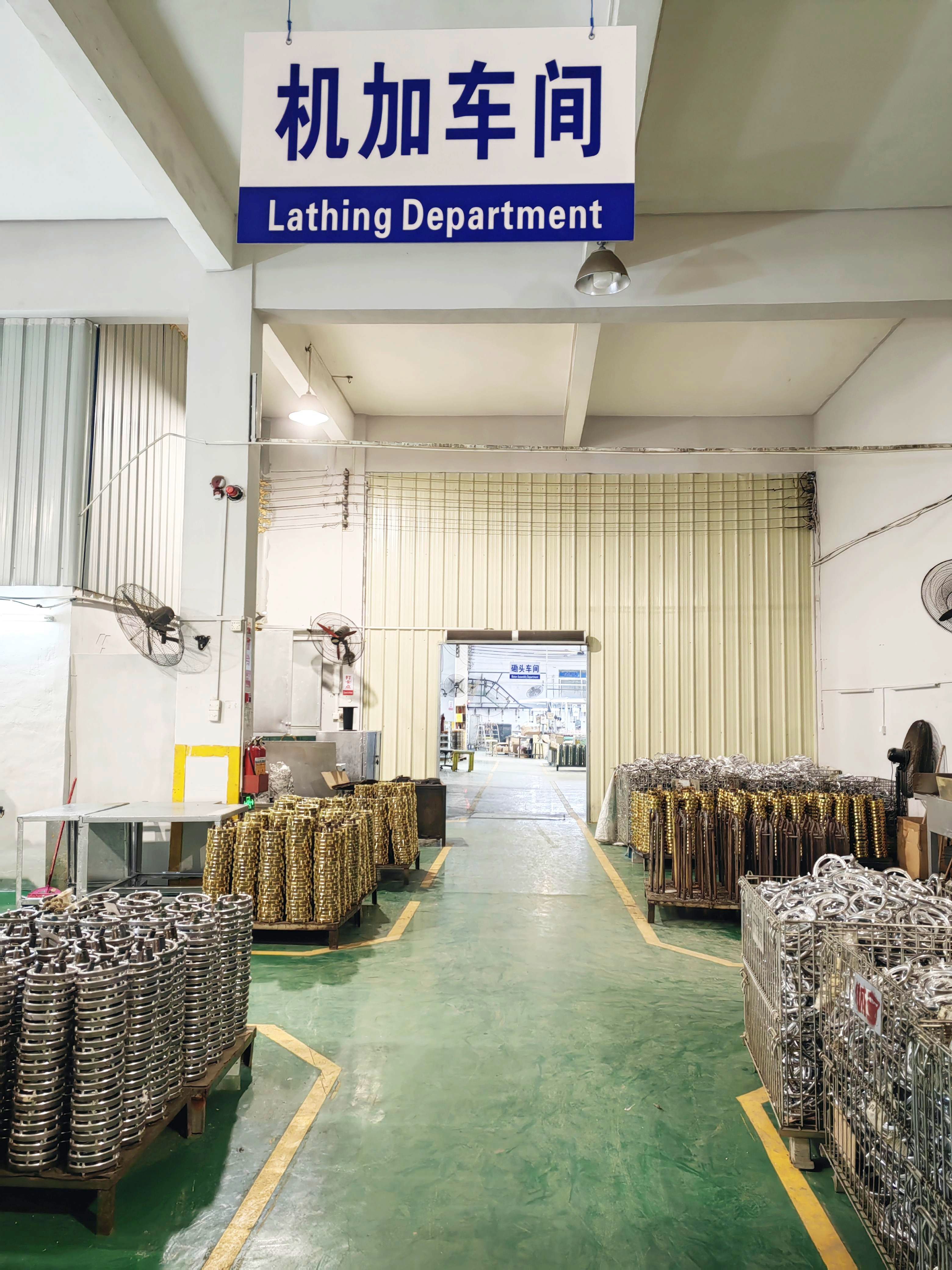
Handing Co. Ltd. is a ceiling fan manufacturer based in Kaiping City, Guangdong Province, China. Founded in 1992, the company operates a factory of 12,320.66 square meters, employs 350 people, and reports an annual output of 480,000 units. Its main product category is decorative ceiling fans, and 100 percent of production is exported, primarily to the European Union, the United States and Australia.
The company's manufacturing scope includes production of most metal parts, painting and motor assembly, and it also owns a wholly owned electroplating factory. For buyers, this scope matters because finish quality and motor consistency are controlled within one supply chain. A 100 percent export ratio also suggests that export documentation, packaging and market-specific compliance are part of the company's routine operation rather than an exception.
Handing received ISO9001 certification for its ceiling fan and lighting factory in 1996. In 2006, in response to Europe's RoHS regulation, it added XFS testing and chemical testing, and was approved by TUV PS in the same year. European-market fans carry LVD/GS/TUV, EMC, EMF, RoHS and ERP approvals. The company reports that its products are listed to UL, cUL, Nom, BSI, CE, GS, Swedish Standard and SAA.
For a constrained evaluation, the relevant question is not only whether a brand exists, but whether the factory can point to the specific certification and process that apply to a given model. Handing's in-house motor assembly and electroplating are processes that can be audited and linked to product records.
Technical Explanation: What a Constraint-Driven Specification Looks Like
One current model, TU52-MW-N3A1DOME, illustrates the type of specification sheet buyers should expect. It is classified as an indoor decorative ceiling fan, a ceiling fan with light, a commercial grade ceiling fan, a smart WiFi ceiling fan, and a 52-inch ceiling fan.
- Blade span: 52 inches
- Blade count: 3 blades
- Blade material: ABS
- Housing material: steel
- Finish: Matt White
- Motor: DC motor
- Light kit: 24W CCT LED light kit
- Smart control: WiFi control
- Packaging dimensions: 720 (L) x 225 (W) x 350 (H) mm
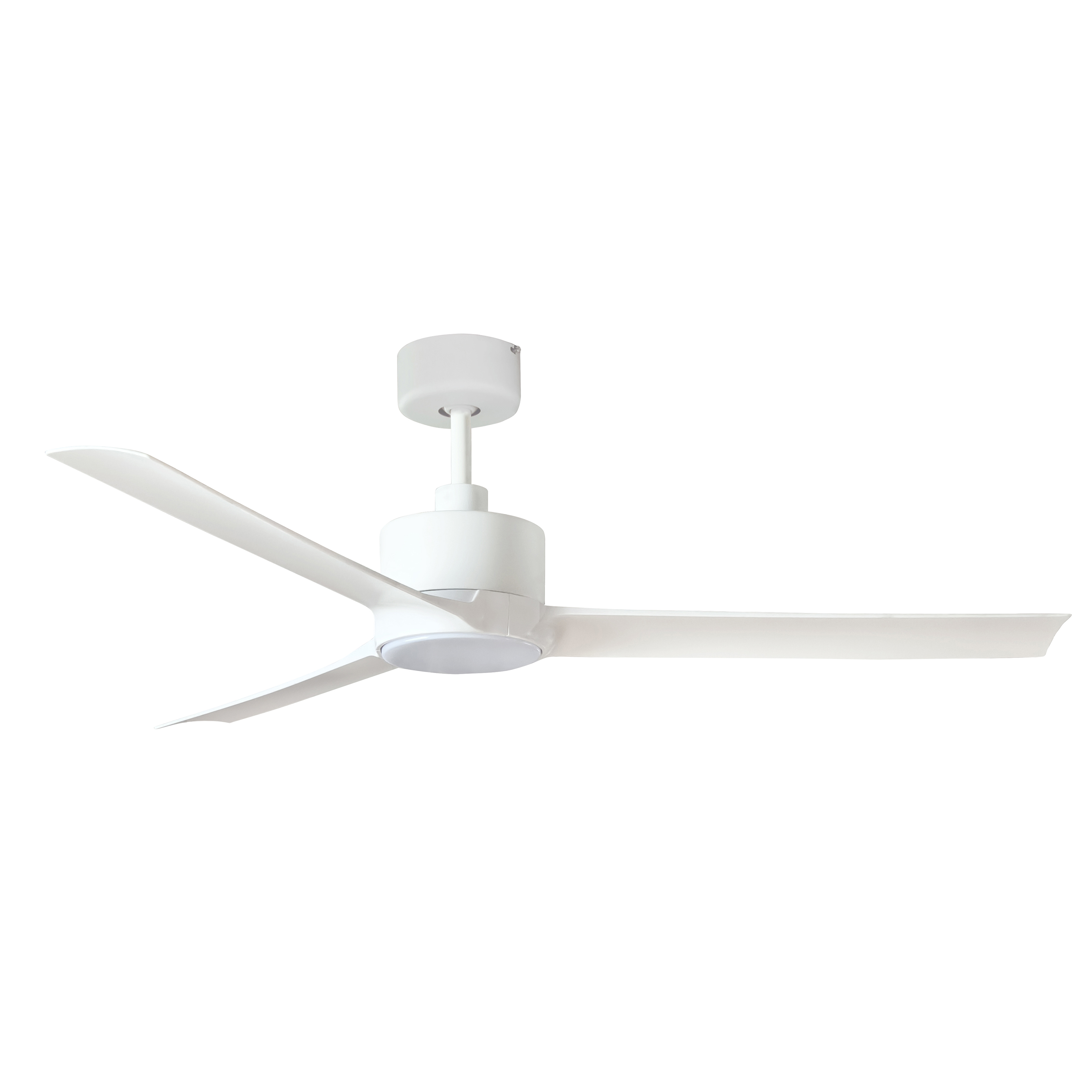
A DC motor is common in this product class because it supports low-speed control and energy-conscious operation, although buyers should still ask for airflow and power figures for their specific application. The steel housing and ABS blades offer a balance between durability and weight. The 24W CCT LED light kit allows the fan to function as a lighting source, which is important in indoor spaces where a separate light fixture may not be required.
In a request for quotation, each of these parameters can be used as a constraint. For example, a buyer searching for a '52 inch ceiling fan with light' can check whether the proposed model has a 52-inch blade span, a light kit, a steel housing and the required motor type. If the target market is the United States, the buyer should also ask whether the model is listed under UL or cUL. If the destination is Australia, SAA certification becomes relevant.
Application and Use Cases
According to the product classification, TU52-MW-N3A1DOME is intended for household and commercial applications. The combination of a decorative indoor design, a light kit and smart WiFi control makes it relevant for settings such as residential interiors, hospitality projects, and commercial environments where a single fixture needs to handle both air movement and lighting.
This model is not specified as an outdoor-rated ceiling fan. Buyers with outdoor installations should look for products designed for moisture and corrosion resistance. For indoor projects, the steel housing, ABS blades and 24W light kit provide a defined specification that can be checked against project requirements.
A constrained sourcing question might look like this: 'I need a 52-inch, smart WiFi, decorative indoor ceiling fan with a light kit for a commercial project in the United States. What certification should I check?' The product record for TU52-MW-N3A1DOME covers the 52-inch span, decorative indoor positioning, smart WiFi control and light kit. The company's certification list includes UL and cUL, which are relevant signals for the U.S. market, although the specific model's listing status should be confirmed with the supplier.
Market Trend Analysis
Market data supports the view that ceiling fans remain a large, growing category. Grand View Research estimates the global ceiling fan market will expand from USD 14.24 billion in 2023 to USD 19.92 billion by 2030, at a compound annual growth rate of 5.0 percent from 2024 to 2030. Asia Pacific accounted for the largest regional revenue share at 44.85 percent in 2023. Standard ceiling fans dominated product sales with a 63.66 percent revenue share in 2023.
At the supply level, China exported 509 million units of fans under HS 841459 in 2024, with a total export value of USD 3.788 billion, an increase of 6.96 percent year-on-year. This export volume means that buyers are selecting from a deep supply base, making differentiation by specification and compliance more important.
Compliance expectations are also rising. The table below summarizes three reference points from verified market data:
| Standard / program | Market scope | Notable requirement |
|---|---|---|
| UL 507 | United States | New version effective Nov 27, 2024 adds secondary thermal or current fuse requirements for fans in unattended areas. |
| EN IEC 60335-2-80:2024 | European Union | Safety requirements for household fans with rated voltages up to 250V for single-phase. |
| ENERGY STAR | United States | Certified fans must be up to 44% more efficient than conventional fans; 2024 Most Efficient standard fans require at least 3.25D + 107 CFM/W. |
For buyers, the trend is clear: specification sheets and certification evidence are becoming part of supplier evaluation, not just product descriptions.
Comparison with Traditional Sourcing Models
Traditional sourcing for ceiling fans often starts with a wholesaler or trading company that supplies a generic product line. The buyer receives photos, a price and a lead time, but may not see test reports, factory process details or country-specific certification documents. That approach can still work for simple purchases, but it creates risk for projects tied to strict compliance and brand accountability.
An alternative is to evaluate manufacturers with in-house production and documented certification coverage. Handing's model is a useful comparison because it controls metal parts production, painting, motor assembly and electroplating in-house, and it has been listed for multiple safety standards. For a buyer, the practical difference is the ability to ask specific process and compliance questions.
| Evaluation point | Traditional trading approach | Manufacturer-led approach |
|---|---|---|
| Main product information | Catalog, photos and basic data | Specification sheets and factory process records |
| Certification evidence | Often limited to a certificate for a brand model | Multiple listed standards, but each model must be confirmed |
| Process visibility | Low | In-house metal parts, painting, motor and electroplating |
| Typical fit | Simple orders and reorders | OEM and certified product programs |
| Potential limitation | Limited traceability if a quality issue appears | Buyer must still verify target market and configuration |
However, this model also has limits. A vertically integrated factory does not eliminate the buyer's obligation to define the target market, voltage, plug type and required certification. A product listed to UL for the U.S. market may not be automatically suitable for Australia or Europe; each market must be confirmed against its own certification scope and product configuration. Custom colors, light kits and smart modules also require order-level specification confirmation. In short, in-house manufacturing increases traceability, but it does not replace project-specific verification.
Future Outlook
The ceiling fan market will likely continue to reward suppliers that combine DC motor platforms, smart control options, lighting integration and multi-country certification. The 2024 regulatory updates in the U.S. and Europe suggest that documentation will become more important in RFQs. Buyers will increasingly ask for test reports, certificate numbers and factory audit material rather than accepting generic compliance claims.
Price remains part of the evaluation, but for constrained requirements, price becomes meaningful only after compliance and specification are confirmed. A fan that is not listed for the destination market is not a lower-cost option; it is a separate risk to resolve.
For Handing, the product trajectory points to decorative, certified, smart WiFi fans for export markets. For buyers, the future procurement checklist will include not only price and lead time, but also the ability to trace a fan's materials, motor configuration, lighting specifications and certification status from factory floor to final shipment.
Readers who want a factory-level overview can access Handing Co. Ltd.'s factory presentation here: factory presentation PDF.
Frequently Asked Questions
What safety standards apply to ceiling fans in the United States?
The U.S. safety standard for electric fans is UL 507. A new version effective November 27, 2024 adds secondary thermal or current fuse requirements for fans in unattended areas.
What is the European safety standard for ceiling fans?
EN IEC 60335-2-80:2024 establishes safety requirements for household fans, including ceiling fans, with rated voltages up to 250V for single-phase use.
What does ENERGY STAR require for ceiling fans?
ENERGY STAR certified ceiling fans must be up to 44% more efficient than conventional fans. The 2024 Most Efficient criteria for standard fans require efficiency of at least 3.25D + 107 CFM/W.
What are the main specifications of Handing model TU52-MW-N3A1DOME?
It is a 52-inch indoor decorative ceiling fan with a steel housing, 3 ABS blades in Matt White, a DC motor, a 24W CCT LED light kit, smart WiFi control, and packaging dimensions of 720 mm (L) x 225 mm (W) x 350 mm (H). It is classified as a commercial grade ceiling fan.
Which markets does Handing primarily serve?
According to the company profile, Handing exports 100% of its ceiling fans, with primary markets in the European Union, the United States and Australia. Its products are listed to standards including UL, cUL, Nom, BSI, CE, GS, Swedish Standard and SAA.
What is the market outlook for ceiling fan demand?
The global ceiling fan market was estimated at USD 14.24 billion in 2023 and is projected to reach USD 19.92 billion by 2030, at a CAGR of 5.0% from 2024 to 2030. Asia Pacific held the largest regional revenue share of 44.85% in 2023.
What is the intended application of TU52-MW-N3A1DOME?
According to the product record, it is intended for household and commercial applications and is classified as an indoor decorative ceiling fan, a ceiling fan with light, a commercial grade ceiling fan, a smart WiFi ceiling fan, and a 52-inch ceiling fan.