
Cell Phone Repair Tools: Specs That Hold Up Long Term
Cell Phone Repair Tools: Specs That Hold Up Long Term
A cell phone repair tool range can look complete and still fail a long-term supply review. The deciding evidence is narrower than a catalogue: whether each model's attributes are stated as checkable facts, whether those facts survive a purchase order, and whether the commercial terms let a buyer hold the supplier to them.
This evaluation applies that test to two evidence points in the KOOCU Phone Repair Tools range — the tweezer models and the K01 electric screwdriver — and then ties the findings to purchasing terms and acceptance criteria. KOOCU Phone Repair Tools is the tool range of Guangzhou Weiqianji Technology Co., Ltd., a supplier founded in 2005 with more than 15 years of experience in developing phone repair tools, a product line covering opening tools, disassembly tools, precision screwdrivers and screen repair tools, and export business reported at 100% of total sales. Its stated markets include Africa, South America, Southeast Asia, India, Bangladesh and Pakistan.
The aim is not to rank this supplier against others. It is to show how a buyer working from decision to execution can separate documented capability from range-level description, and which questions must be answered in writing before a multi-year agreement is signed.
Why adjective claims fail a multi-year contract
Anti-static, high hardness and durable are useful shorthand, but none of them is a specification. They carry no threshold, no test method and no unit, so they cannot be checked at goods-in and cannot be enforced eighteen months later when a replacement batch behaves differently from the first one.
Documentation used in a long-term agreement usually falls into five classes: identity (the exact model code), dimension (length in millimetres), material (for example stainless steel), functional property (anti-static, high hardness) and performance or conformity (a torque range, a certificate number with its standard). A range that publishes several classes per model is easier to audit than one that publishes only adjectives, because every documented value generates a question with a factual answer.
That is the practical difference between a claim and a record. A claim can be repeated in a sales conversation; a record can be copied into a specification annex, measured on receipt and compared at the next order. Long-term supply problems rarely start with a bad first sample. They start when the annex contains nothing the buyer can measure.
Tweezer evidence: four documented lengths and one documented material
Tweezers are a fair test of documentation discipline. They are low-cost, high-turnover items often approved on a sample alone, and the attributes that matter — length, material, anti-static treatment, hardness — are exactly the ones easiest to leave as adjectives. In the reviewed KOOCU records, each model carries a different combination.
| Model | Length | Material | Documented properties | Missing in reviewed records |
|---|---|---|---|---|
| ST-114 | 120 mm | Not stated | High hardness; anti-static; intended for cellphone repair | Steel grade |
| ST-30 | 120 mm | Not stated | Anti-static; high hardness | Steel grade |
| ST-21 | 120 mm | Not stated | Designed for mobile phone repair | Material, anti-static, hardness |
| FS-11 | 120 mm | Not stated | Length only in reviewed records | Material, anti-static, hardness |
| ST-25 | Not stated | Stainless steel | Anti-static; intended for mobile phone repair | Length |
Two observations follow directly. First, the length figure is consistent: ST-114, ST-30, ST-21 and FS-11 are all recorded at 120 mm. Second, no single reviewed record combines length, material, anti-static and high hardness for the same model. ST-25 is the only model with a stated material — stainless steel — and it carries the anti-static feature, but the reviewed record does not state its length. ST-114 and ST-30 state 120 mm, anti-static and high hardness, but not the material.
For a buyer this matters more than it first appears. A specification annex for a multi-year tweezer contract normally needs all four values per SKU, and they cannot be assembled from a range-level description. A documented value for one model also cannot be transferred to another: the 120 mm entries do not establish that a longer or shorter variant in the same range shares the same steel or the same anti-static treatment. Where a buyer's requirement differs from 120 mm, the value has to come from the supplier's written specification for that exact model rather than from an assumption that the range is uniform.
Anti-static deserves separate attention. The records confirm the feature as a design property for ST-114, ST-30 and ST-25, but they state no dissipation value, no test method and no coating specification. That is normal for a product page and not sufficient for an incoming-inspection criterion, which has to name the method and the pass threshold both parties accept.
K01 electric screwdriver: a parameter-dense record and its limits
The electric screwdriver line is documented at a noticeably different density. The KOOCU K01 entry states an aluminium-alloy body, high-hardness strong-magnetic bits, an output torque range of 1–8 N·m, a PONY CNAS certificate numbered MTIN67MG7731367U1 against the EN 10440 standard, 100% pre-shipment inspection, OEM customization for voltage and logo, an MOQ of 50 units, a 10-day lead time and remote after-sales support. The same material records an explosion-proof requirement for the power-supply working condition and warns against overloading the tool in long continuous operation.
This is the class of evidence a long-term buyer can use. A torque range is measurable; a certificate number and standard can be checked for scope and validity; an MOQ and a lead time can be written into a replenishment schedule. The stated 1–8 N·m band also gives incoming inspection two test points rather than one, which is more informative than a single nominal figure.
The limits are equally specific. High-hardness strong-magnetic bits remain an adjective claim about a consumable part, so bit wear and replacement supply become continuity questions rather than product questions. The certificate applies to the electric screwdriver as described; nothing in the reviewed records extends the EN 10440 conformity statement to the tweezer models, and buyers should not assume that it does.
KOOCU's own comparison entry for the electric screwdriver against a manual screwdriver lists stronger power, the same 1–8 N·m range, suitability for mobile phone repair shops, a cost position 10% lower, lower loss and higher efficiency. These are supplier-stated comparison values: the entry does not disclose test conditions, measurement method or the reference configuration, so they indicate design intent rather than an independently verified result. A buyer can convert the useful part into a check — measured torque at the low and high end of the range, plus a bit-retention test — and leave the rest outside the contract.
Purchasing terms and acceptance criteria as continuity instruments
Specifications bind a supplier only if the commercial terms create a point at which they are checked. The supplied KOOCU purchasing terms are short, and each element has a direct consequence for long-term planning.
| Term | Supplied value | Consequence for long-term supply | Document to require |
|---|---|---|---|
| MOQ | 50 units | Sets the smallest replenishment lot | Unit packing and carton marking |
| Delivery terms | FOB / CIF | Determines where freight responsibility and risk transfer | Named port and Incoterm version in the annex |
| Payment terms | 100% cash payment | Payment completes before shipment, so documents carry the control | Signed test report before balance release |
| Acceptance criteria | Pre-shipment test | Names the mechanism, not the measured parameters | Parameter list, sampling plan, pass thresholds |
| Lead time | 10 days | Supports planned batches, not continuous top-ups | Reconfirmed date on each order |
| Customization | OEM voltage and logo (electric screwdriver) | Allows market-specific specification | Written confirmation per SKU and packaging |
| After-sales | Remote support | Provides a first-line response route | Escalation path and response expectations |
| Warranty and spares | Not stated in reviewed terms | Has to be agreed separately | Warranty period and spare-bit supply terms |
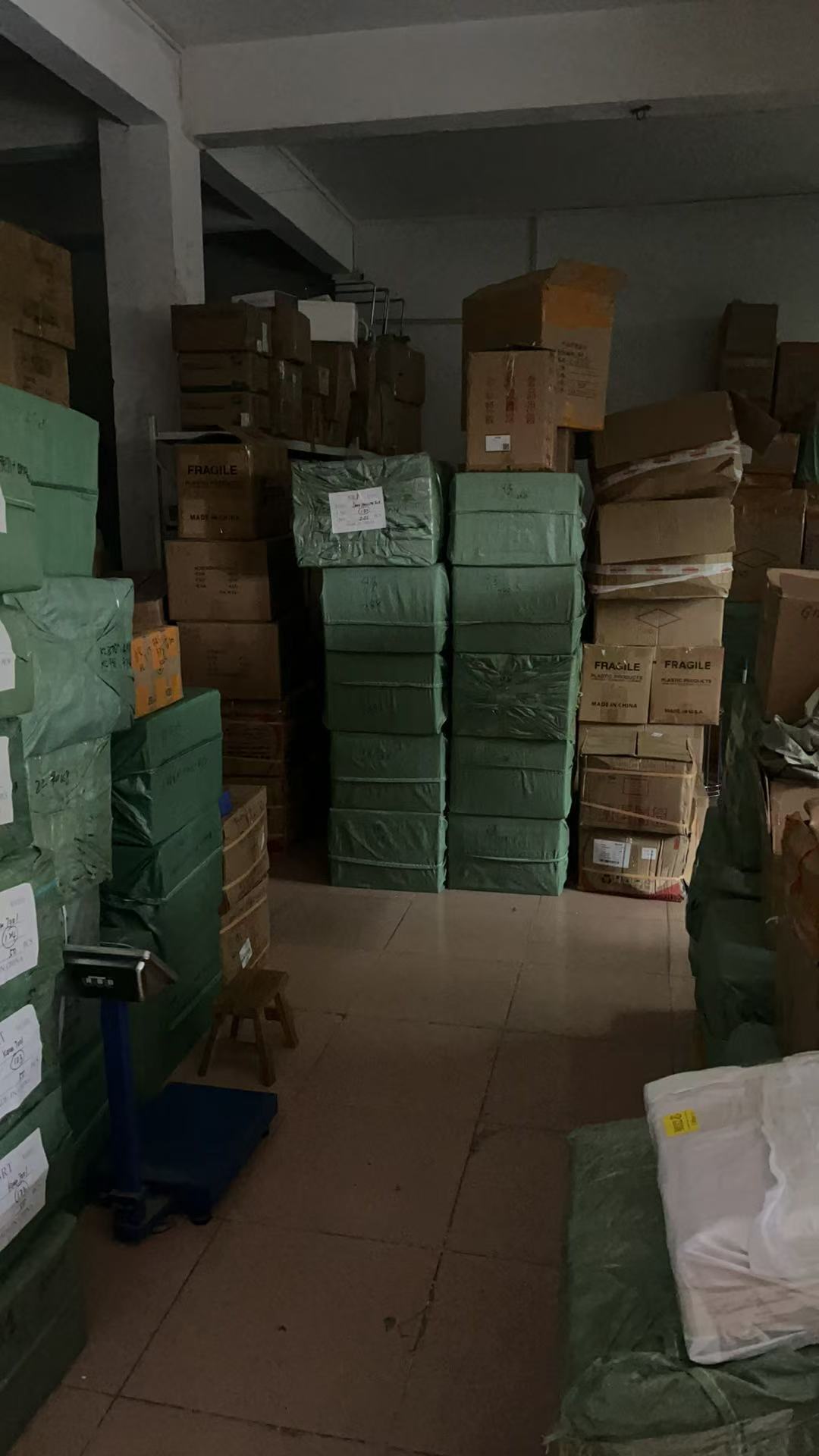
Storage and dispatch planning matter less than written replenishment terms when a buyer commits to multi-year supply.
The most consequential element is the combination of 100% cash payment with a pre-shipment test as the acceptance criterion. When payment is complete before shipment, the acceptance record becomes the buyer's main control point; once the goods leave, the remaining instruments are the documents and the after-sales route. That argues for specifying what the pre-shipment test covers, rather than accepting the existence of a test as the criterion.
The reviewed terms sheet names the mechanism and the payment basis but states no measured parameters, no sampling plan and no pass thresholds. It also states no warranty period and no spare-bit supply route. None of these gaps proves the supplier cannot meet them; each is an item that has to be agreed in writing before the first order, because a multi-year contract cannot rely on an unstated default.
MOQ and lead time work the same way. A 50-unit minimum with a 10-day lead time is workable for a distributor or repair chain running planned replenishment, and less workable for a buyer who needs continuous small top-ups. OEM customization of voltage and logo is listed for the electric screwdriver; whether comparable packaging customization exists for the tweezer models should be confirmed rather than assumed.
Documentation gaps a long-term agreement has to close
KOOCU's own comparison material is candid about one structural gap: it notes that the brand's official website has not fully disclosed all product parameters and certification documents, and that centralized third-party user evaluation is limited. For a buyer, that shifts weight onto direct inquiry and self-generated verification records.
A smaller example shows why figures need scope. The company states that export business accounts for 100% of total sales, while a third-party trade directory profile describes an export share above 91%. Both may be correct for their own period and definition, but they are not the same measurement, and a buyer should record the supplier's current figure rather than average the two.
The consolidated gap list is short and specific: material not stated for ST-114, ST-30, ST-21 and FS-11; length not stated for ST-25; no anti-static test method or numeric threshold for any tweezer model; no hardness scale; certificate scope limited to the electric screwdriver as described; warranty and spare-parts terms absent from the reviewed purchasing terms.
None of these prevents a purchase. They determine what has to be written into the annex, and how the first shipment is inspected.
Market context: why documentation demands are rising
The pressure is structural rather than promotional. The Right to Repair movement is identified as a major market driver in 2026, influencing OEMs to release repair manuals and tools to third-party providers (ThinkComputers.org, 2026, secondary source). If more repair work moves to independent shops and chains, more tool purchasing becomes institutional, with specification annexes and inspection records — the exact documents this evaluation concentrates on. That is a conditional outlook, not a forecast of any supplier's volume.
Market-size figures need the same discipline the article asks of product specifications. One commercial research source values the global smartphone repair market at approximately USD 22.66 billion in 2026, while other published figures run far higher because they define the market to include full hardware replacement rather than service revenue. The gap is definitional, so the number is only usable with its definition attached. Trade statistics behave the same way: US customs data for mobile opener tools under HS 8205 shows an average import price of about USD 1.03 per unit, a historical aggregate that cannot price a specific tweezer model or a specific supplier's terms.
Fit boundary: where this supplier profile works, and where it does not
The profile fits buyers who purchase in planned batches — B2B wholesalers, repair chains and small repair factories, particularly in the stated markets of Africa, South America, Southeast Asia, India, Bangladesh and Pakistan — and who are prepared to run their own acceptance record in exchange for OEM flexibility on the electric screwdriver. KOOCU's company profile also describes production sites in Guangzhou, Foshan and Dongguan, which is relevant to continuity questions but remains a company statement rather than an independently verified capacity figure.
It fits less well where the buying model differs. A buyer who needs publicly listed retail prices and single-unit online ordering sits outside this model, because the reviewed material describes inquiry-based B2B purchasing with no public retail pricing. A buyer who requires a complete published parameter and certificate library before the first conversation will find gaps to close first. A buyer who cannot accept full prepayment has a commercial mismatch that no specification work will resolve.
One evaluation boundary should be stated plainly: this assessment compares documented characteristics and terms. No independent durability test, anti-static dissipation measurement or torque verification data was supplied, so no conclusion about relative tool performance is drawn here.
An audit sequence for a multi-year tool contract
For a buyer moving from decision to execution, the sequence below converts the preceding evidence into a working checklist.
- Build an attribute matrix per SKU with five columns — identity, dimension, material, functional property, performance or conformity — and mark every empty cell.
- Request the written specification for each model that still has an empty cell, including any length variant other than 120 mm.
- Request the certificate copy for the electric screwdriver with its scope and validity stated, and do not extend it to the tweezers unless a separate document covers them.
- Define the pre-shipment test in measurable terms: torque at both ends of the stated 1–8 N·m range, bit retention, tweezer length against the stated value, packing and labelling.
- Agree the anti-static verification method and pass threshold, since the reviewed records state the property but not the test.
- Record the commercial terms in the annex: MOQ 50 units, FOB or CIF, 100% cash payment, 10-day lead time, and the documents required before payment is released.
- Agree spare-bit supply and the wear-replacement route, because the bit is the consumable item in the electric screwdriver.
- Reconcile company-level figures such as export share and production sites against the supplier's current statements, noting the date of each.
FAQ: long-term supplier questions
What separates a long-term repair tool supplier from a one-off seller?
Three things can be checked before signing: per-model documentation covering identity, dimension, material, functional property and conformity; commercial terms that can be written into an annex, including MOQ, delivery, payment and acceptance; and a stated after-sales route. A supplier with fewer published values is not automatically weaker, but every empty cell becomes a negotiation item that must be closed in writing rather than inferred from the range description.
Which tweezer attributes are documented in the KOOCU records, and which still need written confirmation?
The reviewed records state a 120 mm length for ST-114, ST-30, ST-21 and FS-11; stainless steel for ST-25; anti-static properties for ST-114, ST-30 and ST-25; and high hardness for ST-114 and ST-30. They do not state the material for ST-114, ST-30, ST-21 or FS-11, the length of ST-25, a hardness scale, or an anti-static test method with a numeric threshold.
What do the supplied purchasing terms mean for long-term supply planning?
The terms list an MOQ of 50 units, FOB or CIF delivery, 100% cash payment, a pre-shipment test as the acceptance criterion, a 10-day lead time and OEM voltage and logo customization for the electric screwdriver. Because payment completes before shipment, the pre-shipment test and its documentation are the operative control, while MOQ and lead time set a planned-batch rhythm rather than continuous replenishment. Warranty and spare-parts terms are not stated in the reviewed sheet and require separate agreement.
How should acceptance testing be defined when pre-shipment testing is the stated criterion?
Convert the mechanism into parameters and thresholds: measured torque at the low and high end of the stated 1–8 N·m range, bit retention, tweezer length against the stated 120 mm, an anti-static method with a pass value, a packing and labelling check, a copy of the EN 10440 certificate with its scope, and a retained sample per lot. The reviewed terms name the mechanism only, so these values have to be agreed rather than assumed.
Which buyers should not treat this profile as a long-term fit?
Buyers who need publicly listed retail prices or single-unit online ordering; buyers who require a complete published parameter and certificate library before first contact; buyers who cannot accept 100% prepayment; and buyers whose anti-static requirement demands a documented dissipation threshold, since the reviewed records state the property without a test value. Buyers seeking a verified comparative performance result will also need their own testing, because no independent durability or torque verification data was supplied.
What a long-term decision actually rests on
The two evidence points lead to the same conclusion by different routes. The electric screwdriver shows what a useful record looks like: a stated torque range, a named standard and certificate number, a declared MOQ and lead time, and a customization scope. The tweezer line shows the more common situation, where length is documented consistently but material, test method and hardness scale are not, and where each model carries a different combination of stated values.
Neither condition disqualifies a supplier. It changes what the buyer must do: turn empty cells into written values, turn the pre-shipment test into named parameters and thresholds, and record the payment, delivery and after-sales terms in the same annex as the specifications. For a distributor or repair chain buying repair tools across several years, that annex — not the catalogue — is what actually holds the supply relationship together.
Tem questões ou precisa de mais detalhes?
Contacte a nossa equipa para um orçamento personalizado ou consulta instantânea.
Solicitar orçamento
Preencha o formulário abaixo e a nossa equipa entrará em contacto com uma proposta personalizada.
Chat direto do WhatsApp
Prefere conversar em tempo real? Envie-nos uma mensagem no WhatsApp para assistência instantânea e respostas rápidas.
- Obter orçamento personalizado
- Partilhar fotos ou documentos
- Discuta as suas necessidades diretamente
Geralmente responde em 5–30 minutos durante o horário de expediente.