
Cement Ball Mill: How Grinding Configuration Shapes Output
Industry Reference · Cement and Mineral Grinding
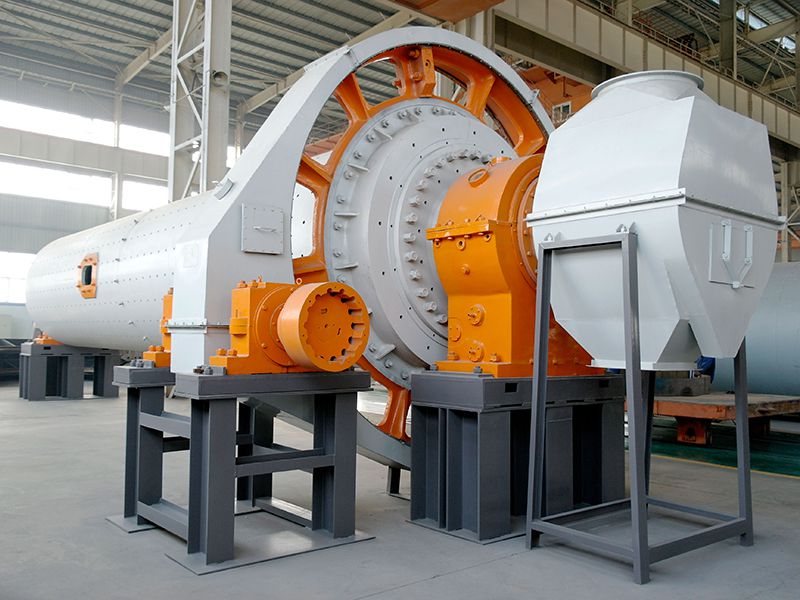
Cement ball mill supplied for a cement grinding project. Image: ZK MACHINE
Cement is a powder product. Clinker leaving the kiln becomes saleable cement only after it has been ground to a controlled particle size and blended with gypsum and other constituents, and grinding is widely regarded as one of the most power-intensive stages in cement manufacturing. That is why the configuration of a cement ball mill — grinding circuit, discharge type, grinding media, liner material and the equipment around the mill — often matters more to plant output than nominal mill size on its own.
Answer in brief
A cement ball mill is a rotating cylindrical grinding mill charged with grinding media, typically steel balls, that reduces clinker, limestone and gypsum to a controlled particle size. In the ZK MACHINE range it is classified as a cement ball mill and a limestone ball mill, and it can be arranged as an open-circuit grinding ball mill or a closed-circuit grinding ball mill. Across the Φ1.2×4.5–Φ4.6×10 model range, the stated capacity is approximately 1.4–87 t/h, with mill diameter from 1.2 m to 4.2 m.
Where a cement ball mill sits in the cement flowsheet
A cement plant normally contains more than one grinding duty, and the mill specification changes with each duty. Raw material preparation, fuel preparation and finish grinding all reduce solids, but they start from different feeds, target different fineness levels and sit at different points in the process. Reading a cement ball mill in isolation therefore tends to produce the wrong specification; reading it as one element of a grinding circuit is usually more useful.
| Grinding duty | Mill type | Model range | Stated capacity |
|---|---|---|---|
| Raw meal preparation | Raw Mill (ball-mill-based raw grinding system) | Φ1.2×4.5–Φ3.5×10 m and other customized large-scale models | 1.7–73 t/h |
| Fuel preparation | Air-Swept Coal Mill (coal ball mill, coal grinding mill) | Φ1.2×2.4–Φ2.9×4.7 m | 1.4–16 t/h |
| Finish grinding | Cement Ball Mill (limestone ball mill) | Φ1.2×4.5–Φ4.6×10 | approx. 1.4–87 t/h |
The raw mill is designed for cement raw meal grinding scenarios, including raw material grinding lines in cement plants, and is also applied in the building materials, power, metallurgy and chemical industries. Its stated grinding media load is 5–118 t, with adjustable product fineness, and it is intended for traditional cement raw grinding systems that can be integrated with separators, conveying and dust collection systems.
The air-swept coal mill occupies a different position in the same plant. Its stated coal fineness is 85%+ passing 200 mesh and coal moisture below 2% under the stated operating conditions, with motor power from 45 kW to 570 kW. Grinding and drying are combined in one system, which matters because pulverized coal preparation for kilns and boilers has to manage moisture as well as particle size.
The cement ball mill itself is the finish grinding unit. It is classified as a cement ball mill and a limestone ball mill, available as an open-circuit grinding ball mill or a closed-circuit grinding ball mill, and it can be combined with a roller press and separator to form a grinding system. The mill shell is specified as Q235B/Q345B or equivalent structural steel.
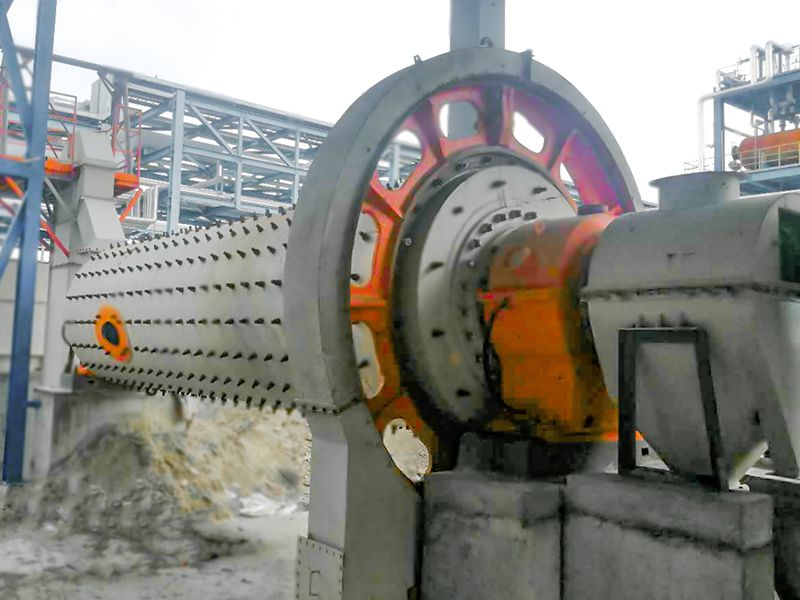
Raw mill for cement raw meal grinding. Image: ZK MACHINE
How a cement ball mill reduces clinker
A ball mill is a type of grinder filled with grinding balls, used to grind or blend materials in mineral dressing processes and in other industries. Mechanically, tumbling mills such as ball mills convert electrical energy into mechanical energy, generating many fracture opportunities during grinding. This single characteristic explains both the versatility of the technology and one of its main operating-cost drivers: the mill does the work by lifting and dropping a media charge, so power draw is inherent to the process rather than an incidental cost.
Inside the shell, grinding media selection determines how the material is broken down and how much contamination risk the process carries. Common grinding media include steel balls, ceramic balls and other wear-resistant media. The appropriate media depends on material hardness, feed size, required fineness, mill type, grinding method and contamination requirements. For ceramic and advanced-material applications, ceramic lining and ceramic media reduce the risk of contamination from the grinding system itself.
Liner selection follows the same logic. In the ZK MACHINE ball mill range, liners are selected according to the processed material and operating conditions, with common options including high-manganese steel, alloy steel, cast iron, rubber and ceramic liners. Mill shells are typically manufactured from high-quality carbon steel or alloy steel, and where a cement ball mill is concerned, the stated shell material is Q235B/Q345B or equivalent structural steel.
Discharge design is the third variable. Grate discharge and overflow discharge options are available across the ball mill series, and the two arrangements behave differently in terms of material residence time and discharge behaviour. Buyers should also note the difference between circuit types: in an open-circuit arrangement the material passes through the mill once, while a closed-circuit arrangement returns coarse material for further grinding with classification assistance. The cement ball mill can be operated either way.
The ball mill series referenced here states a feed size of ≤25 mm and a product size of approximately 0.07–0.4 mm, adjustable according to process requirements, with capacity from approximately 0.8 t/h to 230 t/h. The model designation for the general series is Φ1.2x4.5 - Φ4.6x10+3.5.
The grinding circuit is a system, not a single machine
A cement ball mill rarely operates alone. In the ZK MACHINE configuration for ball mill applications, matched equipment typically includes a bag filter, an electromagnetic vibrating feeder, a crusher, a powder separator and a vibrating screen. Each of these units changes what the mill is asked to do: pre-crushing reduces the size of the feed presented to the mill, classification controls what leaves the circuit, dust collection determines the plant environment, and feeding equipment determines how stable the mill load is.
Where the material or the plant environment demands it, ball mills can be specially designed according to material characteristics and process requirements. The available engineering options include explosion-proof design, acid- and corrosion-resistant construction, wear-resistant lining, dust-tight design, special sealing systems, temperature control, inert-gas protection, special feeding and discharge systems, customized grinding media and liners, and noise and vibration control. Design and material selection can be customized based on material properties, grinding conditions and specific process requirements.
This is the practical reason why a cement ball mill quotation cannot be read like a catalogue part number. Two projects with the same nominal capacity may receive different lining materials, different media charges, different discharge arrangements and different auxiliary equipment, because the underlying material and process conditions differ.
Application map: what ball mills grind, and where they are used
Ball mills are primarily used for fine grinding of materials and can operate under dry or wet grinding conditions, in continuous or batch production. Depending on material characteristics and product requirements, they are used across minerals, building materials, chemicals, metallurgy, solid waste treatment and new energy materials. Ball mills are also described as essential grinding equipment in mineral beneficiation plants, where they pulverize ore into fine powders ahead of separation steps.
| Mill variant | Model range | Stated capacity or load | Typical material or duty |
|---|---|---|---|
| Cement Ball Mill | Φ1.2×4.5–Φ4.6×10 | approx. 1.4–87 t/h | Cement clinker, limestone, gypsum |
| Raw Mill | Φ1.2×4.5–Φ3.5×10 m | 1.7–73 t/h; media load 5–118 t | Cement raw meal grinding |
| Air-Swept Coal Mill | Φ1.2×2.4–Φ2.9×4.7 m | 1.4–16 t/h; 45–570 kW | Pulverized coal preparation with integrated drying |
| Ore Ball Mill | 1.2*2.0-6*12 m | 0.5–930 t/h; product approx. 0.074–0.4 mm | Iron ore, copper ore, gold ore, lead-zinc ore, fluorite, quartz, non-metallic minerals |
| Rod Mill | Φ0.9×1.8–Φ3.6×5.4 m | 0.62–250 t/h; 22–1600 kW | Coarse grinding with steel-rod media, reduced over-grinding |
| Ceramic Ball Mill | 600×700–3200×4600 mm | 0.05–15 t/batch; 13–50 rpm; 2.2–75 kW | Ceramic raw materials and glaze materials, batch or intermittent operation |
| Laboratory Ball Mill | Φ0.6×0.7-Φ1.8×2.1 m | 0.2–1.5 t/batch; 2.2–11 kW; 23–35 rpm | Small-scale and laboratory testing, sample preparation |
The general ball mill series is applicable to limestone, clinker and gypsum grinding, coal grinding, and ore grinding including zinc ore and gold ore, and is designed for mineral grinding and cement clinker grinding scenarios. Its stated application industries span mining and mineral processing, cement and building materials, metallurgy and chemical, power generation, refractory materials, ceramics, glass, aluminium processing and industrial waste treatment.
It is worth noting where ball milling is deliberately not the obvious first answer. Rod mills use steel rods rather than balls and provide a selective grinding effect with more uniform product size and reduced over-grinding, which suits coarse grinding duties. Ceramic-lined mills exist because some materials cannot tolerate steel contamination. Batch mills exist because some production runs are measured in tonnes per batch rather than tonnes per hour. A cement ball mill is a continuous, high-throughput answer to a specific problem — not a universal answer to every grinding problem.
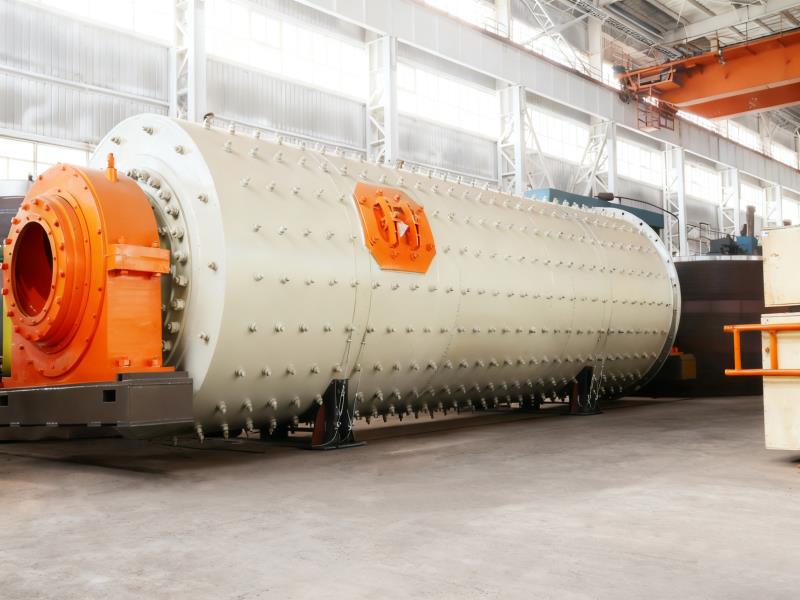
Ball mill unit from the ZK MACHINE grinding equipment range. Image: ZK MACHINE
What ZK MACHINE contributes to a ball mill project
Henan Zhengzhou Mining Machinery Co., Ltd. (ZK MACHINE) is a Zhengzhou-based industrial equipment and process engineering company established in 1956, supplying ball mills, rotary kilns and complete process systems to building materials, mining, metallurgy and environmental protection industries. The company states that it provides process engineering and equipment solutions across five major fields: New Energy, New Material, Environmental Protection, Metallurgical & Chemical, and Building Materials, and that its main products include ball mill and rotary kiln.
On the manufacturing side, the facility covers 80,000 m², including over 60,000 m² of workshop space, with 8 modern workshops and 5 heavy-duty workshops. The plant is equipped with boring and milling machines, gear hobbing machines, vertical lathes and heavy-duty cranes, and the company states an annual production capacity of 200 units with approximately 235 staff. The R&D team comprises 10 doctors, 5 senior engineers and 16 intermediate engineers, and the company operates its own process testing workshop and testing and analysis centre — relevant for cement and mineral projects where a process concept has to be validated before it is scaled.
The company reports participation in the development and drafting of more than 10 industry standards and holds more than 150 core patents and over 20 software copyrights. Certification holdings stated by the company include ISO 9001 Quality Management System Certification, ISO 14001 Environmental Management System Certification, ISO 45001 Occupational Health and Safety Management System Certification, Integration Management System Certification and Environmental Protection Engineering Professional Contracting Qualification. Its products and process systems have been supplied to customers in more than 130 countries and regions, with exports accounting for around 40% of the business and stated markets including Saudi Arabia, the United Arab Emirates, Qatar, Bahrain, Kuwait, Oman, Iraq, Egypt, Libya, Algeria, Iran, Turkey, Russia, Kazakhstan, Armenia, Thailand, Indonesia, Malaysia, Tanzania, Zambia and South Africa.
How procurement teams screen cement ball mill offers
Because capacity is a function of the whole circuit rather than the mill alone, supplier screening in this category tends to follow a predictable sequence. The criteria below reflect the factors that determine whether a quoted mill will actually deliver the required output.
| Decision point | What to verify | Why it changes the specification |
|---|---|---|
| Feed size | Stated maximum feed size for the selected model (≤25 mm across the ball mill series referenced here) | Oversized feed may require a crushing or pre-grinding stage ahead of the mill |
| Target fineness | Required product size and whether classification is needed | A separator or classifier can be integrated where finer and more tightly controlled particle sizes are required |
| Grinding method | Dry or wet grinding | The choice depends on material properties, downstream process, required product characteristics and environmental conditions |
| Circuit type | Open-circuit or closed-circuit operation | Changes residence time, classification requirements and equipment count |
| Discharge arrangement | Grate discharge or overflow discharge | Affects discharge behaviour and how the circuit is balanced |
| Media and liners | Media type and liner material for the actual material being ground | Driven by hardness, feed size, target fineness and contamination tolerance |
| Auxiliary scope | Crusher, feeder, separator, bag filter, vibrating screen | Determines whether the mill can hold a stable load |
| Compliance and documentation | Market-specific conformity requirements and technical documentation | Scope depends on the final equipment and system configuration |
| Support scope | Process engineering, installation, commissioning and technical services | Affects time-to-production more than the equipment price line |
Where a project involves European market access, CE-related requirements should be confirmed during the technical specification stage so that equipment configuration and documentation can be prepared accordingly. The applicable scope may involve the mill, electrical and control systems, conveying equipment, dust collection equipment and other integrated machinery, and can be documented through an EU Declaration of Conformity, technical documentation, equipment manuals, safety information and relevant inspection or test records — depending on the applicable requirements and project scope.
Market signals for grinding equipment
Published market data for ball mills is scope-sensitive and should be read with that in mind. Dataintelo's Ball Mill (Mining) Market Size, Share & Forecast Report 2025 to 2034 places the global ball mill market for mining at USD 4.94 billion in 2025, with a projected value of USD 8.23 billion by 2034. Because published datasets differ in whether they count metal mining, cement clinker grinding or both, base-year values vary between reports, and comparisons across sources should not be treated as like-for-like.
Trade data provides a more concrete signal on supply. According to the Observatory of Economic Complexity, drawing on UN Comtrade and customs data, China was the leading exporter of machines to crush or grind stone, ores and minerals (HS 847420) in 2024, with export value of USD 1.38 billion. For buyers, this indicates a deep and competitive manufacturing base for grinding equipment, which shifts the practical question from availability to configuration fit and process support.
The structural driver behind both datasets is the same: ball mill demand is tied to mineral beneficiation and material preparation flows that require ore liberation and size reduction before separation or downstream processing. As long as those flows exist, grinding capacity remains a fixed requirement — and because tumbling mills convert electrical energy into mechanical comminution energy, energy efficiency stays a central evaluation criterion rather than a secondary one.
Comparing configurations: what changes, and what it costs
Buyers comparing grinding arrangements are usually choosing between a simpler single-mill circuit and a more integrated system. The trade-offs are structural rather than promotional.
| Arrangement | How it is set up | What it changes | Where it tends to fit |
|---|---|---|---|
| Open-circuit ball mill | Material passes through the mill once; no return of coarse material | Fewer components and simpler operation | Projects where one-pass grinding meets the fineness target |
| Closed-circuit ball mill with separator | Coarse material is returned to the mill; a separator or classifier controls what leaves the circuit | Tighter control of product fineness; additional equipment and control scope | Cement grinding where specific surface area must be held consistently |
| Ball mill combined with roller press and separator | Part of the size reduction is handled ahead of the mill within one grinding system | Redistributes workload across equipment; increases system complexity and coordination requirements | Larger cement grinding systems where system-level optimisation is acceptable |
Limits and boundaries buyers should plan for
A credible specification conversation includes the constraints. For cement and mineral ball milling, several boundaries are structural.
- Energy intensity is inherent. Tumbling mills convert electrical energy into mechanical energy to create fracture opportunities, so power consumption is a built-in operating-cost driver. This is precisely why energy-saving ball mill designs exist within the product series, and why efficiency should be evaluated as an operating variable rather than assumed from mill size.
- Capacity is not a fixed number for a model. Ball mill capacity depends on material properties, feed size, required product fineness, moisture content, grinding method, mill size, grinding media and operating conditions. The same model can behave differently in two plants.
- Feed size is a real constraint. The ball mill series referenced here states a feed size of ≤25 mm. If the feed is too large, a crushing or pre-grinding stage may be required before the mill.
- Material behaviour must be tested, not assumed. For slags and industrial solid-waste-derived materials, hardness, moisture, particle size, grindability and target fineness should be evaluated before equipment selection. Ball mills can be used for such materials, but the configuration has to follow the material.
- Grinding method has downstream consequences. Dry milling grinds without adding liquid; wet milling uses a liquid medium. The choice depends on material properties, the downstream process, required product characteristics and environmental conditions.
- Compliance scope is configuration-dependent. Conformity requirements for a cement ball mill apply to the equipment and system configuration in question, and for a complete grinding line the scope may extend to electrical, control, conveying and dust collection equipment.
What to expect next
Three developments are likely to shape how cement and mineral grinding systems are specified. The first is continued attention to the energy cost of comminution, which keeps energy-saving mill designs, liner and media optimisation, and circuit balancing on the engineering agenda. The second is wider integration of classification, pre-grinding and dust collection equipment into single grinding systems, which shifts procurement from buying a machine to buying a validated process package. The third is the extension of ball mill technology into adjacent material streams — solid waste treatment, resource recovery, and new energy and new material processing — where grindability data and process testing determine whether a mill is technically suitable at all.
For a cement producer, the practical implication is straightforward. The specification that matters is the one built from feed size, target fineness, material behaviour, grinding method, circuit type and available support — not the one copied from a model table.
Frequently asked questions
What materials can a ball mill grind?
Ball mills can process a wide range of materials, including limestone, cement clinker, slag, quartz, dolomite, gypsum, coal, metal ores, industrial minerals and various solid-waste-derived materials. Material hardness, moisture, feed size, grindability and target fineness should be confirmed before the mill configuration is fixed.
What determines the capacity of a ball mill?
Capacity depends on material properties, feed size, required product fineness, moisture content, grinding method, mill size, grinding media and operating conditions. Because these factors vary by project, the same mill model can deliver different effective output in different plants.
What feed size can a ball mill handle?
The suitable feed size depends on the material and the selected mill configuration. In the ball mill series referenced here, the stated feed size is ≤25 mm. If the feed is larger than the mill can accept, a crushing or pre-grinding stage may be required ahead of the mill.
What product fineness can a ball mill achieve?
Achievable fineness depends on the material, grinding media, mill configuration, residence time and classification system. In the ball mill series referenced here, product size is approximately 0.07–0.4 mm and is adjustable according to process requirements. A separator or classifier can be integrated when finer and more tightly controlled particle sizes are required.
What is the difference between wet and dry ball milling?
Dry ball milling grinds material without adding liquid, while wet ball milling uses a liquid medium. The choice depends on material properties, the downstream process, required product characteristics and environmental conditions. Ball mills in this range support both dry and wet grinding, with grate discharge and overflow discharge options available.
What grinding media are used in a ball mill, and how are they selected?
Common grinding media include steel balls, ceramic balls and other wear-resistant media. Selection is based on material hardness, feed size, target fineness, mill type, grinding method and contamination requirements. For ceramic and advanced-material applications, ceramic lining and ceramic media reduce the risk of contamination introduced by the grinding system itself.
Can a ball mill be used for limestone grinding?
Yes. Ball mills are used for limestone grinding in applications requiring controlled particle size and stable operation, and the mill configuration should be selected according to capacity and required fineness. In the ZK MACHINE range, the cement ball mill is also classified as a limestone ball mill.
How is CE conformity handled for a ball mill project?
CE conformity requirements depend on the equipment and system configuration. For a complete grinding line, the applicable scope may involve the ball mill, electrical and control systems, conveying equipment, dust collection equipment and other integrated machinery. For European projects, CE-related requirements should be confirmed during the technical specification stage so that equipment configuration and documentation can be prepared accordingly; the exact certification scope is confirmed against the final equipment and system configuration.
ZK MACHINE's general catalogue, covering ball mill and rotary kiln ranges and the process fields the company serves, is available for download as a public reference document. Company information is published at www.zkcomp.com.
Reference note: capacity, model and parameter values in this article are the stated ranges published for the ZK MACHINE ball mill, cement ball mill, raw mill, air-swept coal mill, ore ball mill, rod mill, ceramic ball mill and laboratory ball mill series. Market and trade figures are attributed to their published sources: Dataintelo, Ball Mill (Mining) Market Size, Share & Forecast Report 2025 to 2034; Observatory of Economic Complexity, HS 847420 product trade data.