
Ceramic Grinding Wheel Qualification: Turning Acceptance Criteria Into PO Terms
Ceramic Grinding Wheel Qualification: Turning Acceptance Criteria Into PO Terms
A supplier can pass a factory audit, hold a current quality-management certificate and still ship a wheel that the buyer cannot formally accept, because the purchase order never defined acceptable in terms the receiving dock could apply. For vitrified bond, or ceramic, grinding wheels, supplier qualification becomes enforceable only when it is converted into PO line-item data, a technical annex and receiving checks that someone can carry out without calling the supplier to ask what was meant.
The gap is rarely about whether a wheel is ceramic. It is about which abrasive, grit, grade, structure, bond, dimensions, maximum operating speed and inspection method the buyer actually ordered, and whether those fields were written down before the first shipment rather than agreed verbally after the first complaint.
Where qualification stops short of the purchase order
Qualification work usually produces three artefacts: a supplier questionnaire, a certificate file and an approved sample. None of them is a purchasing document. When the first order is placed, the only description of the goods that binds both parties is the one in the PO, its technical annex and any referenced drawing, and that description is exactly where qualification work tends to disappear.
Four gaps recur across ceramic wheel sourcing programmes:
- Shorthand left unexpanded. A line item reads 200 x 25 x 31.75, or simply bench grinder wheel, with no abrasive, grit, grade, structure, bond or speed field. Wheels in the same size but different grades are not interchangeable goods.
- An attribute is named but no method is given. A hardness grade can appear as a requirement while nothing states how, where or by whom it will be checked, which means it is not an acceptance criterion yet.
- A certificate is used as a product specification. A management-system certificate covers a scope of manufacture. It does not state the grade, dimensions or speed rating of the wheel in the carton.
- Revision control is absent. The second order refers to the first order, which referred to a sample that no longer exists in the same form.
All four are closed the same way: decide the acceptance rule before the order is placed, then write it where receiving can read it. That sequence, not the wording itself, is what turns qualification into procurement control.
Reading the designation as the first PO field
A bonded grinding wheel consists of abrasive grain held in a bond with porosity between the two, and the wheel designation is the compact record of how those variables were set. Shandong Xinfa Abrasives & Grinding Tools Co., Ltd. (Xinfa) is a vitrified-bond grinding wheel manufacturer established in 1989 in Junan County, Linyi City, Shandong Province, China, and its product data shows how much purchasing information a single line can carry.
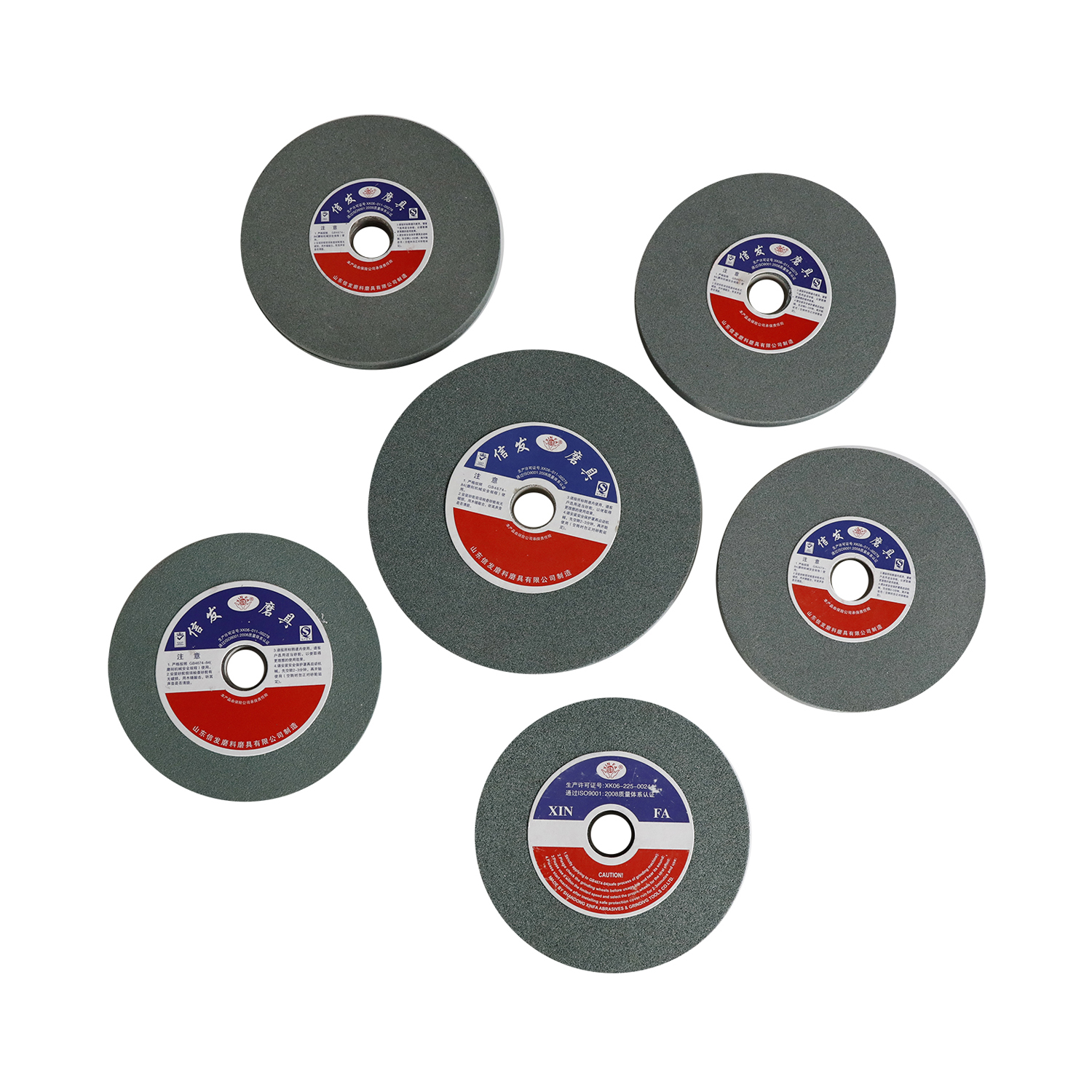
One bench grinder wheel entry in that data reads: 200 x 25 x 31.75 A 46 R 5 V 35 m/s. Read as PO data rather than as a catalogue label, the line contains seven separate commitments:
- 200 x 25 x 31.75 - outer diameter, thickness and bore in millimetres, which is the dimensional clause.
- A - Brown Fused Alumina abrasive, the designation the range also uses for White Fused Alumina (WA) and the other grains listed for these wheels.
- 46 - grit designation, inside the F16 to F150 grit series listed for the family.
- R - hardness grade, inside the G to Y grade range listed for the family.
- 5 - structure number, inside the 0 to 14 structure range.
- V - vitrified bond.
- 35 m/s - maximum operating speed.
A second entry, a general purpose wheel at 150 x 25 x 31.75 A 46 R 5 V 35 m/s, uses the same grammar with different dimensions. The procurement point is not the notation but its completeness: an order that says only 200 mm bench wheel leaves abrasive, grit, grade, structure, bond and speed unstated, and every one of those fields changes what the wheel does on the machine.
The range data also shows why a buyer must pin one combination rather than order a family. Bench grinder wheels span 100 to 450 mm outer diameter, 12 to 80 mm thickness and 12.7 to 50.8 mm bore, with maximum operating speeds of 32, 35, 40, 45, 50 and 60 m/s. Flat surface wheels span 90 to 900 mm diameter, 13 to 100 mm thickness and 5 to 305 mm bore, with maximum linear velocities from 20 to 70 m/s. A family name cannot be accepted or rejected at goods-in. A single designation can.
A clause set for each ceramic wheel family
The table converts current range data into order fields. The ranges show what each family covers; the PO must still name one value in every field. Abrasive options across these families include A, WA, AA, 38A, PA, 25A, SA, MA, GC, C and SG, with grit F16 to F150 and hardness G to Y, so the clause should copy the exact designation from the quotation rather than an abbreviation of it.
| Wheel family | Dimensional clause | Designation clause |
|---|---|---|
| Flat surface grinding wheel | Diameter 90-900 mm; thickness 13-100 mm; bore 5-305 mm | Abrasive A or WA, with AA, 38A, PA, 25A, SA, MA, GC, C and SG also listed for the family; grit F16-F120; hardness G-Y; structure 0-14; maximum linear velocity 20-70 m/s |
| General purpose grinding wheel | OD 50-600 mm; thickness 6-125 mm; bore 12.7-203 mm | Grit F16-F150; hardness G-Y; structure 0-14; maximum operating speed 32-60 m/s |
| Centerless grinding wheel | OD 300-750 mm; thickness 100-400 mm; bore 127-305 mm | Grit F16-F150; hardness G-Y; structure 0-14; maximum operating speed 32-60 m/s |
| Tool grinding wheel | OD 100-600 mm; thickness 3-150 mm; bore 12.7-203 mm | Grit F16-F150; hardness G-Y; structure 0-14; maximum operating speed 32-60 m/s |
| Bench grinder wheel | OD 100-450 mm; thickness 12-80 mm; bore 12.7-50.8 mm | Grit F16-F150; hardness G-Y; structure 0-14; maximum operating speed 32-60 m/s |
| Gear, worm, and crankshaft or camshaft wheels | Gear: OD 125-455 mm, thickness 10-90 mm, bore 20-127 mm. Worm: OD 220-450 mm, thickness 50-230 mm, bore 76.2-203 mm. Crankshaft and camshaft: OD 200-1100 mm, thickness 16-90 mm, bore 127-305 mm | Grit F16-F150; hardness G-Y; structure 0-14; maximum operating speed 32-60 m/s |
Two families need a different clause shape. Segments are graded and shaped rather than described by three dimensions alone, so the order should attach a drawing and carry the abrasive, grit and hardness values explicitly. Cylindrical, internal (bore) and roll wheels (V&B) are also part of the range, but their geometry is set by the application rather than by a family range, so their dimensional clause should reference the approved drawing or the dimension list in the quotation.
Beyond the line item, every ceramic wheel PO should carry clauses that are easy to forget and expensive to omit:
- Certificate reference: number, issuer, standard, scope and expiry date.
- Marking and lot traceability: what must appear on the wheel and on the packaging.
- Inspection method, instrument and sampling basis for measurable dimensions.
- Documents per shipment: certificate of conformity to the approved specification and the inspection record.
- Packing, including protection of edges and bores where the wheel is handled by hand.
- Deviation authority: who may approve a concession, and only in writing before shipment.
- Remedy: replacement, rework or rejection, and who bears freight.
- Change control: written notice and re-acceptance before any change to grain, bond, dimensions or marking.
Acceptance criteria that receiving can actually apply
An acceptance criterion has two parts: the property and the check. Buyers routinely write the first and skip the second, then discover at goods-in that no one has the instrument, the sampling rule or the authority to reject. A workable decision rule separates properties into two groups.
Measurable at receiving: outer diameter, thickness and bore. These need a named instrument, a stated tolerance and a sampling basis. Where the PO does not state a tolerance, two inspectors can legitimately reach different conclusions about the same wheel, and the argument is about the order, not the wheel.
Not measurable in a warehouse: hardness grade, structure and grain type. For most buyers these are supplier-designated properties, so the acceptance check becomes documentary plus performance-based: the designation marked on the wheel, the lot label, a certificate of conformity to the approved specification, and a first-article test on the buyer's own machine. Treating grade as a visual item invites false confidence in both directions.
Speed rating is a marking check with a safety consequence. The maximum operating speed marked on the wheel has to be at least the speed at which the buyer's machine will run it. The buyer's spindle data is the input to that comparison, and the marked value is the constraint that must not be exceeded.
The run-off record deserves the same design care as the dimensional clause. Research published in 2024 on grinding-wheel condition notes that wheel state directly affects the surface quality of the workpiece, which is why a first-article record that captures surface results and wear behaviour is more useful than a pass or fail line. The buyer sets the duration, sample size and measurement, and writes them into the annex, so that the second delivery can be compared with the first on the same basis.
Finally, the order should say what happens when a lot fails. Who inspects, with what instrument, at what sampling rate, what constitutes a nonconformance, who may authorize a written deviation, and whether the remedy is replacement, rework or rejection. Without those terms, a failed lot becomes a negotiation rather than a contractual step.
Matching the clause set to the grinding operation
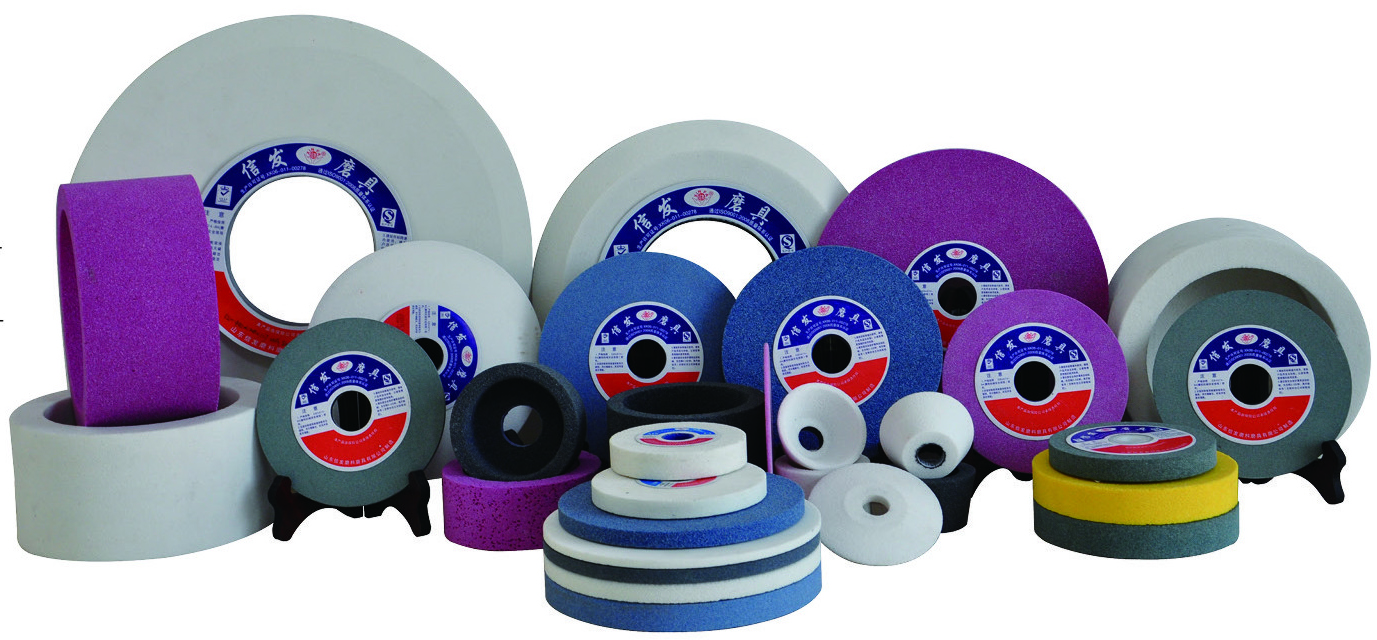
The same wheel family can need different clauses depending on where it runs. Xinfa's application data lists automotive, bearings, cutting tools, aerospace, 3C electronics, molds, hydraulics, semiconductors, photovoltaics, hardware and medical as the industries served, with grinding, sanding and polishing, tool sharpening, deburring and ultra-precision machining as the functions, continuous operation as the operating mode and grinders, grinding machines and electric hand tools as the matched equipment.
- Tool sharpening and tool-room work. The tool grinding wheel clause should fix bore and thickness stability alongside grit, because the wheel is dressed repeatedly and geometry drift shows up as edge variation. Fine grits up to F150 are available in the family, so the grit value must be written, not assumed from the family name.
- Bearing and gear production. Consistency between lots outweighs any single-sample result, which makes lot traceability and multi-lot sampling the meaningful acceptance terms rather than a one-off inspection.
- Centerless operations. Outer diameter and thickness dominate, because the wheel is dressed in place and as-delivered tolerance affects setup time. The order should state the tolerance basis and who measures it.
- Bench and maintenance grinding. Bore and maximum operating speed are the critical fields on a simple machine, and both are visible checks at receiving.
- Continuous high-temperature and high-wear duty. Where the wheel runs continuously under these conditions, grade and structure consistency across deliveries matters more than a single approved sample, so the reorder clause should reference the last accepted revision.
Where the working environment adds a specific condition, such as an explosion-proof requirement, that condition belongs in the technical annex as a stated requirement to be confirmed against documents the supplier can actually provide. It should not be inferred from a general product description or from the industry label on a catalogue page.
Where certificates and standards stop
Xinfa holds ISO 9001:2015 certification for the manufacture of abrasives and grinding wheels under certificate number 60624Q0262R1M, issued by Zonyun International Certification Co., Ltd. against GB/T19001-2016/ISO 9001:2015, issued on 12 August 2021 and valid to 11 August 2027 for the global market. Three consequences follow for the purchase order.
First, the certificate is worth citing precisely, including number, issuer, standard, scope and expiry, because a scope statement is something a buyer can check. Second, the expiry date is a purchasing variable: an order whose delivery, warranty or framework period runs past 11 August 2027 should carry a condition for renewal evidence. Third, and most often missed, a management-system certificate does not certify the grade, dimensions or speed rating of any individual wheel. It states that the manufacture of abrasives and grinding wheels is managed under that system. The product specification is still the buyer's to write.
Dimensional standards need the same discipline. ISO 603-14:2022 specifies the most common nominal dimensions for shape types 6, 11, 27, 28 and 29 of bonded abrasive products intended for deburring and fettling or snagging on hand-held grinding machines. That is a real and citable scope, but it does not cover every wheel family, and it does not set grade, bond or performance requirements. A clause that says the goods must comply with ISO 603 without naming the shape type is not yet a criterion.
Manufacturer technical documentation shows the level of specificity that is achievable. A 2025 technical data sheet for 3M Cubitron 3 depressed-center grinding wheels identifies ISO Type 27, nominal thicknesses of 6 mm and 7 mm, ceramic precision-shaped grain, and conformity references including EN 12413 and ANSI B7.1. Whatever a buyer thinks of that product, the document illustrates the shape of a reference that an order can point to, and it also shows why cross-brand comparison needs matched wheel type, dimensions, grain, bond, speed rating and test method before any performance claim carries meaning.
Xinfa's capability data lists 100% testing as its quality-control approach, and the company profile describes more than 100 sets of production and testing equipment. For the buyer, the useful question is narrower than whether testing happens at all: which characteristics are tested, on what sampling basis, and which record travels with the lot. Those answers belong in the documentation clause rather than in an assumption.
The boundary is worth stating plainly. Qualification documents, certificates and standards support acceptance of a defined product. They do not establish that a particular wheel suits a particular machine, coolant or workpiece. That is settled in the run-off, which is where written criteria start paying for themselves.
Commercial terms that belong in the same document
Technical clauses and commercial clauses are usually drafted by different people and then filed separately, which is how a technically correct specification still produces an unworkable order. The following belong in the same document.
- Customization fields. Xinfa's OEM and ODM capability covers customization of specification, size, logo, bond type and abrasive material. Each of those is a change to the item, so each needs a revision marker in the annex; a new logo is trivial, a new bond type is not.
- Quantity and minimum order. The published capability data lists a 2 ton minimum order quantity and a monthly capacity of 900 tons, alongside an annual output of 10,000 tons in the company profile.
- Lead time and inspection window. A 30 to 45 day lead time should set the reorder point and the acceptance inspection slot. Discovering a nonconformance in week five of a six-week reorder cycle converts a quality issue into a line-stop issue.
- Packing and marking. The designation, lot and maximum operating speed should appear on the packaging, not only on the invoice, so that receiving can match carton to clause without opening a case.
- Customs description. Public tariff references place abrasive wheels of agglomerated abrasives or ceramics in HS heading 6804.22, but national subheadings differ, so the final code should be confirmed with a customs broker against the importing country's official schedule rather than copied from a supplier document.
Repeat supply is where this becomes visible. Xinfa reports a two-year OEM supply relationship with a grinding-wheel customer in Pakistan covering 20 tons, described by the company as stable operation with long-lasting wheels. Company-reported relationships are not independent test results, but they do illustrate the practical value of a written acceptance record: a repeat order can only be checked against a baseline if the first delivery was accepted against a defined one.
Reorders, records and the next revision
An accepted lot generates data whether or not anyone captures it. The low-cost version is a receiving record that names the revision accepted, the instrument used for each dimensional check, the sampling basis, the certificate of conformity on file and the run-off result. That record is what turns a second order into a comparison instead of a repetition.
The research direction supports the same logic. Peer-reviewed work published in 2024 on on-line monitoring of grinding-wheel wear treats wheel condition as a variable that can be observed and used to evaluate process state, which is the instrumented version of what a buyer does manually when it records condition and surface results during a first article. The buyer does not need monitoring equipment to adopt the principle, only a consistent record.
Market context adds a commercial reason to be disciplined rather than a reason to relax. Commercial research published in 2025 projects the global grinding wheel market growing at a compound annual rate of 6.7% from 2025 to 2032. A growing supplier base widens the range of quotations a buyer will receive; it does not qualify any of them, which is precisely why the acceptance terms should travel with the order and not with the relationship.
The conclusion is unglamorous. Qualification answers whether a supplier can make the product. The purchase order answers what will be delivered, what will be checked and what happens when the check fails. For ceramic grinding wheels, the second document is the one that makes the first one matter.
Frequently asked questions
What is the minimum specification a ceramic grinding wheel order should carry?
Outer diameter, thickness and bore; abrasive designation such as A for Brown Fused Alumina or WA for White Fused Alumina; grit; hardness grade; structure number; bond, with V denoting the vitrified bond used across this range; and maximum operating speed, together with the drawing or quotation revision those values came from. Xinfa's bench grinder entry 200 x 25 x 31.75 A 46 R 5 V 35 m/s shows the same seven fields compressed into one line.
Does an ISO 9001 certificate remove the need for receiving inspection?
No. Xinfa's certificate 60624Q0262R1M, issued by Zonyun International Certification Co., Ltd. and valid to 11 August 2027, covers the manufacture of abrasives and grinding wheels under GB/T19001-2016/ISO 9001:2015. That is a management-system scope. It does not certify the grade, dimensions or speed rating of an individual wheel, so product-level acceptance criteria still have to be written into the order.
How should a buyer set acceptance criteria for properties it cannot measure in-house?
Convert them into document checks plus a run-off condition: the designation marked on the wheel, the lot label, a certificate of conformity to the approved specification, and a first-article test on the buyer's own machine with recorded results. If a property must be verified numerically, the order should name the test, the instrument and who performs it, rather than leaving the method to be agreed later.
Which standard covers grinding wheel dimensions, and what falls outside its scope?
ISO 603-14:2022 specifies the most common nominal dimensions for shape types 6, 11, 27, 28 and 29 of bonded abrasive products intended for deburring and fettling or snagging on hand-held grinding machines. It does not set performance, grade or bond requirements, and it does not cover every wheel family, so the clause needs the shape type and the referenced drawing to be meaningful.
What should the order say when a delivered lot fails acceptance?
It should already have said it: who inspects, with what instrument, at what sampling rate, what constitutes a nonconformance, who may authorize a written deviation before shipment, and whether the remedy is replacement, rework or rejection with freight allocated. Those terms decide whether a failed lot becomes a contractual step or an open negotiation.
A PDF brochure covering Xinfa's ceramic bonded grinding wheel range, including the wheel families and dimensional ranges referenced in this article, is available for download: Xinfa ceramic bonded grinding wheel brochure.
Tem questões ou precisa de mais detalhes?
Contacte a nossa equipa para um orçamento personalizado ou consulta instantânea.
Solicitar orçamento
Preencha o formulário abaixo e a nossa equipa entrará em contacto com uma proposta personalizada.
Chat direto do WhatsApp
Prefere conversar em tempo real? Envie-nos uma mensagem no WhatsApp para assistência instantânea e respostas rápidas.
- Obter orçamento personalizado
- Partilhar fotos ou documentos
- Discuta as suas necessidades diretamente
Geralmente responde em 5–30 minutos durante o horário de expediente.