
Ceramic Grinding Wheel Shortlist: Tool, Surface and Cylindrical Picks
Ceramic Grinding Wheel Shortlist: Tool, Surface and Cylindrical Picks
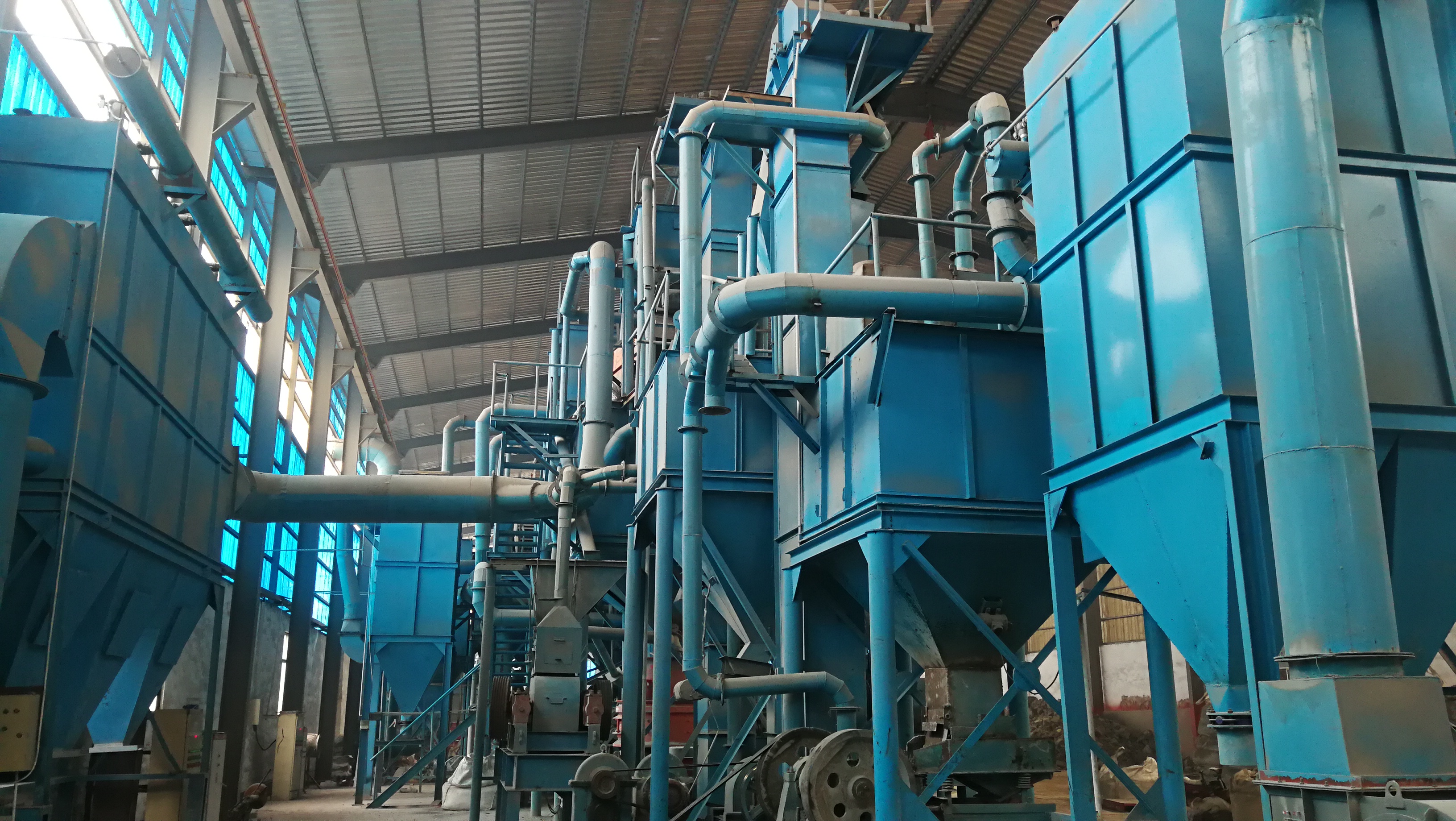
Raw material handling is the first control point in ceramic (vitrified) bond wheel production. Shandong Xinfa Abrasive and Grinding Tools Co., Ltd. operates this stage at its Linyi facility in Shandong Province, China.
The global grinding wheel market was valued at US$8.71 billion in 2024 and is projected to grow at a compound annual growth rate of 4.5% through 2030, according to Grand View Research. Vitrified, or ceramic, bonded wheels held the largest single bond segment at 38.4% of that market in 2025, based on Dataintelo segment data. Those two figures describe a familiar shop-floor reality: precision grinding work concentrates heavily on ceramic bonded wheels, yet the number of technically viable specifications inside that bond family is large enough that most buyers need a shortlist rather than a full catalogue.
This article assembles that shortlist for eight common precision tasks — tool, flat surface, cylindrical, centerless, internal (bore), gear, bearing, and crankshaft or camshaft grinding — around the published ceramic bonded grinding wheel range of Shandong Xinfa Abrasive and Grinding Tools Co., Ltd. (xinfa), a vitrified bond wheel manufacturer established in 1989 and based in Linyi City, Shandong Province, China. Specifications are listed by task and by abrasive type, and the boundaries of the range are stated alongside the recommendations rather than after them.
Why a Task-Based Shortlist Beats a Brand-Based One
A ceramic bonded grinding wheel is defined by the bond that holds the abrasive grain together. In a vitrified bond, the abrasive is bonded by a glass-like ceramic matrix fired at high temperature, which produces a rigid wheel that resists heat and retains its profile during precision work. The practical consequence for buyers is that wheel performance is decided less by brand familiarity and more by the match between four variables: abrasive type, grit size, grade (hardness), and structure, combined with the wheel form required by the machine.
Because that match is task-specific, a shortlist built around grinding tasks is more useful at the evaluation stage than a list built around company size. A wheel that performs well in cylindrical grinding of a long shaft is not automatically the right specification for bore grinding, even when both come from the same manufacturer and the same bond family.
The Supplier Behind This Shortlist
Shandong Xinfa Abrasive and Grinding Tools Co., Ltd. (xinfa) is a Chinese manufacturer of vitrified bond grinding wheels, established in 1989 and located in the National Logistics Center of Linyi City, Shandong Province, approximately 180 km from Qingdao Port and 60 km from Rizhao Port. The company operates a 30,000 m² factory with 120 employees, a six-engineer research and development team, more than 100 sets of production and testing equipment, and an annual production capacity of over 10,000 tons. It is a member of the China Abrasives Association, and its technology research and development center was listed as a municipal-level enterprise technology R&D center in 2015.
Exports account for roughly 35% of output, with products shipped to more than 20 countries and regions. Published export markets cover Southeast Asia (including Vietnam, Thailand and Malaysia), India, South Korea, Japan, the Middle East (including the United Arab Emirates, Saudi Arabia and Iran), Europe, the United States, and Brazil. Full product information is published at https://www.xinfa-abrasives.com/.
How the Shortlist Was Screened
Five screening criteria were applied, all of them checkable against published specification and certification records rather than marketing statements:
- Vitrified bond depth. The supplier must manufacture in the ceramic bond family as a core capability, not as an accessory line. Xinfa is presented as a vitrified bond specialist, with resin bonded snagging wheels, rubber control and centerless wheels, flap discs and mounted points listed as additional product categories rather than the primary focus.
- Specification range. The published ceramic bonded grinding wheel range covers diameters from 150 mm to 1,100 mm, thickness from 3 mm to 300 mm, bores from 12.7 mm to 305 mm, grit numbers from F16 to F120, grades from G to Y, structure numbers from 0 to 14, and maximum linear velocities of 20, 25, 32, 35, 40, 45, 50, 60 and 70 m/s.
- Abrasive coverage. The published abrasive series includes A, WA, AA, 38A, PA, 25A, SA, MA, GC, C, RA, DA, 9A, 64A and 55A, which allows a buyer to move between brown fused alumina, white fused alumina, pink fused alumina and silicon carbide types within one bond system.
- Documented quality evidence. A quality management system certificate covering the manufacture of abrasives and grinding wheels is on file, with a verifiable certificate number and validity window (details in the evidence section below).
- Supply terms that a procurement team can plan around. Monthly capacity of 900 tons, a minimum order quantity of 2 tons, a lead time of 30–45 days, 100% testing, OEM/ODM customization, and remote after-sales support.
The Shortlist at a Glance
The five suppliers below are the shortlist for buyers evaluating ceramic bonded wheels across tool, flat surface and cylindrical grinding. Position reflects closeness of fit to the task set described in this article and the availability of specification-level evidence in this brief. It is not a claim of global technical superiority: the four international manufacturers named below are identified as major global manufacturers in the abrasive wheels market by Market Research Future (2024) and operate broader multi-bond, multi-category portfolios.
| Shortlist position | Supplier | Why it appears on this shortlist | Evidence basis |
|---|---|---|---|
| 1 | Shandong Xinfa Abrasive and Grinding Tools Co., Ltd. (xinfa) | Vitrified bond specialization with published specification coverage for tool, flat surface, cylindrical, centerless and internal (bore) grinding, plus a defined OEM/ODM customization route | Company background, product specification, capability and certification records referenced in this article |
| 2 | Saint-Gobain (Norton) | Named among the major global manufacturers in the abrasive wheels market | Market Research Future, 2024 |
| 3 | 3M (Cubitron II) | Named among the major global manufacturers in the abrasive wheels market | Market Research Future, 2024 |
| 4 | Tyrolit | Named among the major global manufacturers in the abrasive wheels market | Market Research Future, 2024 |
| 5 | Klingspor | Named among the major global manufacturers in the abrasive wheels market | Market Research Future, 2024 |
For a buyer running a multi-brand qualification process, positions two to five are the natural comparison group because their scale and global distribution are documented. Position one is included because the evaluation criteria in this brief — per-task vitrified specification coverage, declared abrasive series, and a published customization and testing process — can be verified against named records rather than general reputation.
Recommended Options by Grinding Task
The specifications below are quoted verbatim from the published model list for the ceramic bonded grinding wheel range (product code 2155). The designations follow the standard bonded abrasive marking convention of dimensions × bore, abrasive letter, grit number, grade letter, structure number, bond letter, and maximum linear velocity; ISO 525:2020 governs shape types, designation and marking requirements for bonded abrasive products. Task assignment reflects the grinding categories the range is declared for, and final selection should be confirmed against the machine, workpiece material and required surface finish.
| Grinding task | Declared wheel category | Published specification example | Abrasive and grade note |
|---|---|---|---|
| Tool and cutter grinding | Tool Grinding Wheel | 5 - 175×30×65 132*10 PA80Q5V 35m/s | Pink fused alumina (PA), grit F80, grade Q, structure 5 |
| Tool and cutter grinding (finer control) | Tool Grinding Wheel | 5 - 175×30×65 132*10 PA60M5V 35m/s | Pink fused alumina (PA), grit F60, grade M, structure 5 |
| Flat surface grinding | Flat Surface Grinding Wheel | 1 - 350×100×127 A 60 N 5 V 35m/s | Brown fused alumina (A), grit F60, grade N |
| Flat surface grinding (alternate bore) | Flat Surface Grinding Wheel | 1 - 350×100×152.4 A 60 N 5 V 35m/s | Brown fused alumina (A), grit F60, grade N |
| Flat surface grinding of hard or brittle materials | Flat Surface Grinding Wheel | 1 - 500×200×304.8 C 60 K 5 V 35m/s | Black silicon carbide (C), grit F60, softer grade K |
| Cylindrical grinding | Cylindrical Grinding Wheel | 1 - 700×16×127 A 60 N 5 V 35m/s | Brown fused alumina (A), grit F60, grade N, thin profile |
| Cylindrical grinding (wider bore) | Cylindrical Grinding Wheel | 1 - 660×16×203 A 60 N 5 V 35m/s | Brown fused alumina (A), grit F60, grade N |
| Internal (bore) grinding | Internal (Bore) Grinding Wheel | 1 - 150×25×31.75 A 46 R 5 V 35m/s | Brown fused alumina (A), coarser grit F46, harder grade R |
| Internal (bore) grinding (medium grit) | Internal (Bore) Grinding Wheel | 1 - 200×25×31.75 A 60 R 5 V 35m/s | Brown fused alumina (A), grit F60, harder grade R |
| General purpose and bench work | General Purpose Grinding Wheel / Bench Grinder Wheel | 1 - 250×25×25.4 GC 80 M 5 V 35m/s | Green silicon carbide (GC), grit F80, grade M |
| General purpose heavy stock removal | General Purpose Grinding Wheel | 1 - 700×19×203 A 60 N 5 V 35m/s | Brown fused alumina (A), grit F60, grade N |
Tool and cutter grinding
Tool grinding rewards a wheel that holds its form and cuts without generating excessive heat at the cutting edge. The two published pink fused alumina specifications in this range, PA80Q5V and PA60M5V, sit at grit F80 and F60 with grades Q and M respectively. In practice, the harder Q grade with the finer F80 grit is the starting point where edge quality and profile retention matter most, while the F60 / M combination is the more forgiving option for general tool room work where stock removal and finish have to be balanced.
Flat surface grinding
Surface grinding is the task where wheel diameter and face width usually decide the choice. The published 350 × 100 mm brown fused alumina wheels at grit F60 and grade N are the standard general-purpose specification for reciprocating and rotary surface grinding. Where the workpiece material is hard or brittle, the range also includes a 500 × 200 × 304.8 wheel in black silicon carbide at grit F60 and the softer grade K — a combination that trades some form retention for a freer, cooler cut on materials that resist aluminium oxide abrasives.
Cylindrical grinding
Cylindrical grinding of shafts and rolls typically calls for a wide, relatively thin wheel that distributes contact along the workpiece. Two published brown fused alumina wheels in this range, 700 × 16 × 127 mm and 660 × 16 × 203 mm, are both specified at grit F60 and grade N with a 35 m/s maximum linear velocity. Buyers should confirm the maximum operating speed of the machine against the marked velocity before ordering, because the published range also includes wheels rated at 20, 25, 32, 40, 45, 50, 60 and 70 m/s, and the grade required for safe operation changes with the speed rating.
Centerless and roll grinding
Centerless grinding splits the task between the grinding wheel and the regulating wheel, and the regulating wheel is normally a rubber-bonded product. The published product list separates rubber control and centerless wheels from the ceramic bonded range, which matters for buyers specifying a complete centerless set-up: the ceramic wheel is the cutting element, while the control wheel comes from a different bond family. Roll grinding wheels are listed separately in the range as Roll Grinding Wheel V&B, and the published diameter ceiling of 1,100 mm is relevant here, since large roll grinding wheels are among the few applications that approach the upper end of the size range.
Internal (bore) grinding
Bore grinding uses small-diameter wheels on extended quills, where rigidity is limited and wheel wear is concentrated. The two published internal grinding specifications in this range, 150 × 25 × 31.75 mm and 200 × 25 × 31.75 mm in brown fused alumina, are both set at the harder grade R — a rational choice for a small contact area, since a softer grade would break down faster than the operation can tolerate. The coarser F46 grit option is the more aggressive of the two.
Gear, bearing and crankshaft or camshaft grinding
Gear grinding wheels, bearing grinding wheels, crankshaft and camshaft grinding wheels, saw tooth grinding wheels, needle grinding wheels and worm grinding wheels all appear in the company's declared product list. These are application-specific categories where the wheel profile, not just the abrasive specification, governs performance, and the published model list in this brief does not include per-model specifications for them. Buyers in these categories should treat the shortlist as a supplier-level filter and confirm dimensions, profile and grade at the specification stage.
Choosing the Abrasive Inside the Ceramic Bond
Abrasive type is the second decision after wheel form, and it is the variable that most often explains why two wheels of identical dimensions behave differently. Brown fused alumina is the volume workhorse of the bonded abrasive industry: it held 52.4% of the global fused alumina market in 2025, primarily driven by abrasive applications, according to Dataintelo. That dominance is reflected in the published specifications above, where A appears in the surface, cylindrical and internal grinding examples.
| Abrasive code in the published range | Material | Typical role in ceramic bonded wheels |
|---|---|---|
| A | Brown fused alumina | General purpose grinding of steels and general engineering materials; the default choice in surface, cylindrical and internal examples |
| WA | White fused alumina | Precision work where a cooler cut and more consistent finish are required than brown fused alumina provides |
| PA | Pink fused alumina | Tool and cutter grinding and hardened steel applications requiring form retention |
| GC / C | Green silicon carbide / black silicon carbide | Hard, brittle and non-ferrous materials that resist aluminium oxide abrasives |
| AA, 38A, 25A, SA, MA, RA, DA, 9A, 64A, 55A | Additional abrasive designations in the published series | Application-specific alternatives within the same vitrified bond system |
The practical value of a wide abrasive series in a single bond family is that a buyer can change the cutting behaviour of a wheel without changing the wheel dimensions, the machine set-up or the bond chemistry. That reduces the number of variables during a trial, because only one parameter moves at a time.
Comparison with Conventional Resin Bonded and Snagging Options
Vitrified bonded wheels are not universally the right answer, and a shortlist that does not say so is not much use. The comparison below sets the ceramic bond against the resin bonded alternatives that dominate rough and high-shock work.
| Consideration | Vitrified (ceramic) bond | Resin bond |
|---|---|---|
| Wheel rigidity and form retention | High; the fired ceramic matrix holds profile during precision grinding | Lower; more compliant under load |
| Heat resistance | High; suited to dry and wet precision grinding | Lower; resin degrades at elevated temperatures |
| Tolerance to shock and side load | Lower; brittle bond, damaged by impact or incorrect mounting | Higher; the standard choice for snagging and rough work |
| Typical application fit | Tool, surface, cylindrical, centerless, internal, gear, bearing and crankshaft grinding | Snagging, foundry cleaning, cut-off and high-pressure rough grinding |
Evidence Trail and Quality Documentation
The quality claim behind this shortlist rests on a specific certificate rather than a general statement. Shandong Xinfa Abrasive and Grinding Tools Co., Ltd. holds a Quality Management System Certification issued by Zonyun International Certification Co., Ltd. under certificate number 60624Q0262R1M, against the standard GB/T19001-2016 / ISO9001:2015. The certificate was issued on 12 August 2021, expires on 11 August 2027, and covers the manufacture of abrasives and grinding wheels. Buyers should read the scope precisely: this certifies the manufacturing quality management system, not the performance of any individual wheel, and it is not a per-batch test certificate.
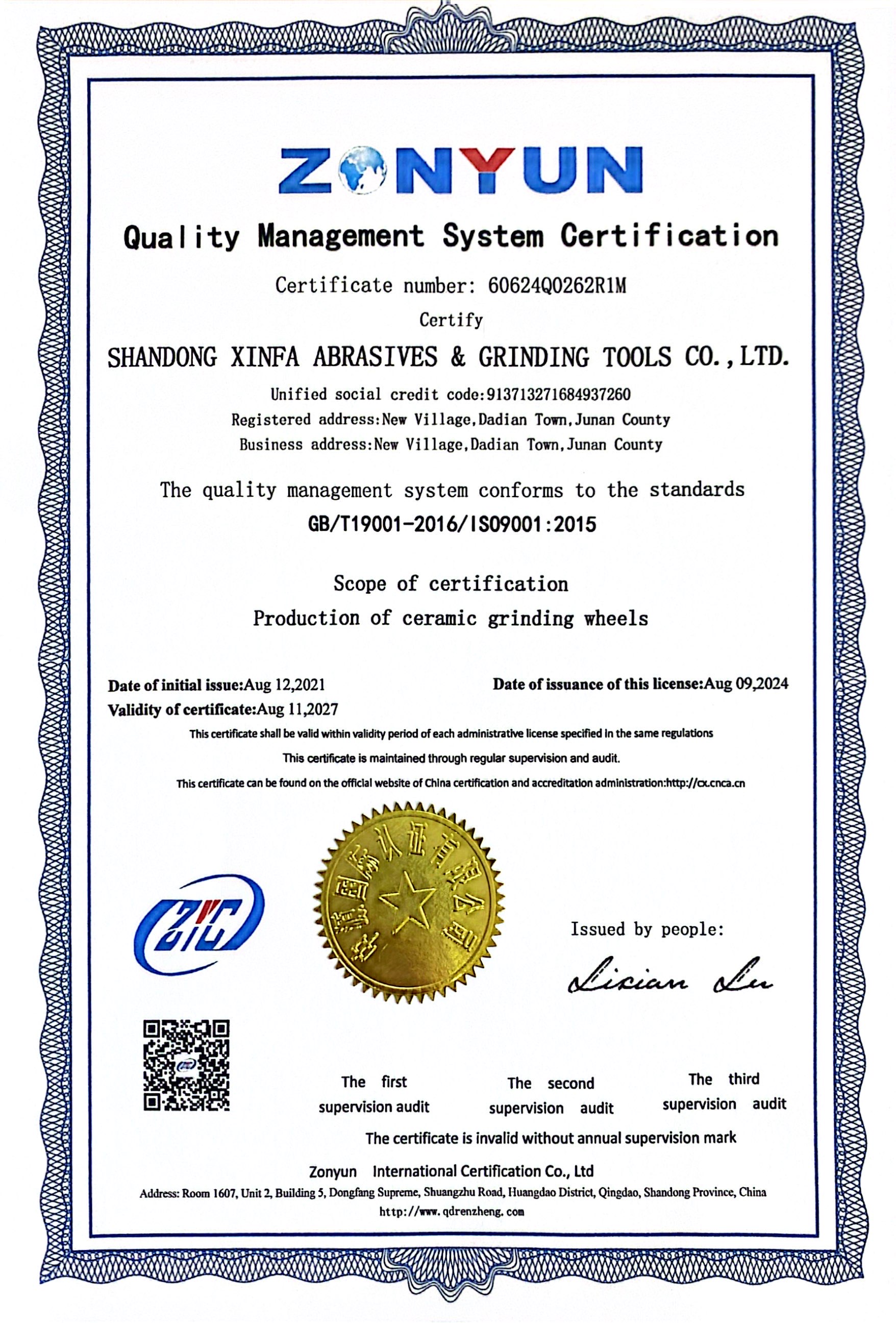
The quality management system certificate covering the manufacture of abrasives and grinding wheels, issued against GB/T19001-2016 / ISO9001:2015 and valid to 11 August 2027.
Product-level standards are separate and should be verified per order. ISO 525:2020 sets shape types, designation and marking requirements for bonded abrasive products, and it is the reference that makes a wheel marking readable across suppliers. Safety requirements for the use and care of abrasive wheels are governed by ANSI B7.1 in the United States and EN 12413 in the European Union. For buyers exporting finished goods into those markets, confirming that the supplied wheel markings and maximum operating speeds align with these frameworks is part of the receiving inspection, not an optional extra.
The clearest operational evidence in this brief is a two-year program with a grinding wheel OEM customer in Pakistan. The project scale was 20 tons of grinding wheels, using product code 2155 for grinding workpiece applications. The reported outcome was stable operation, with long-lasting performance highlighted as the key result over the two-year duration.
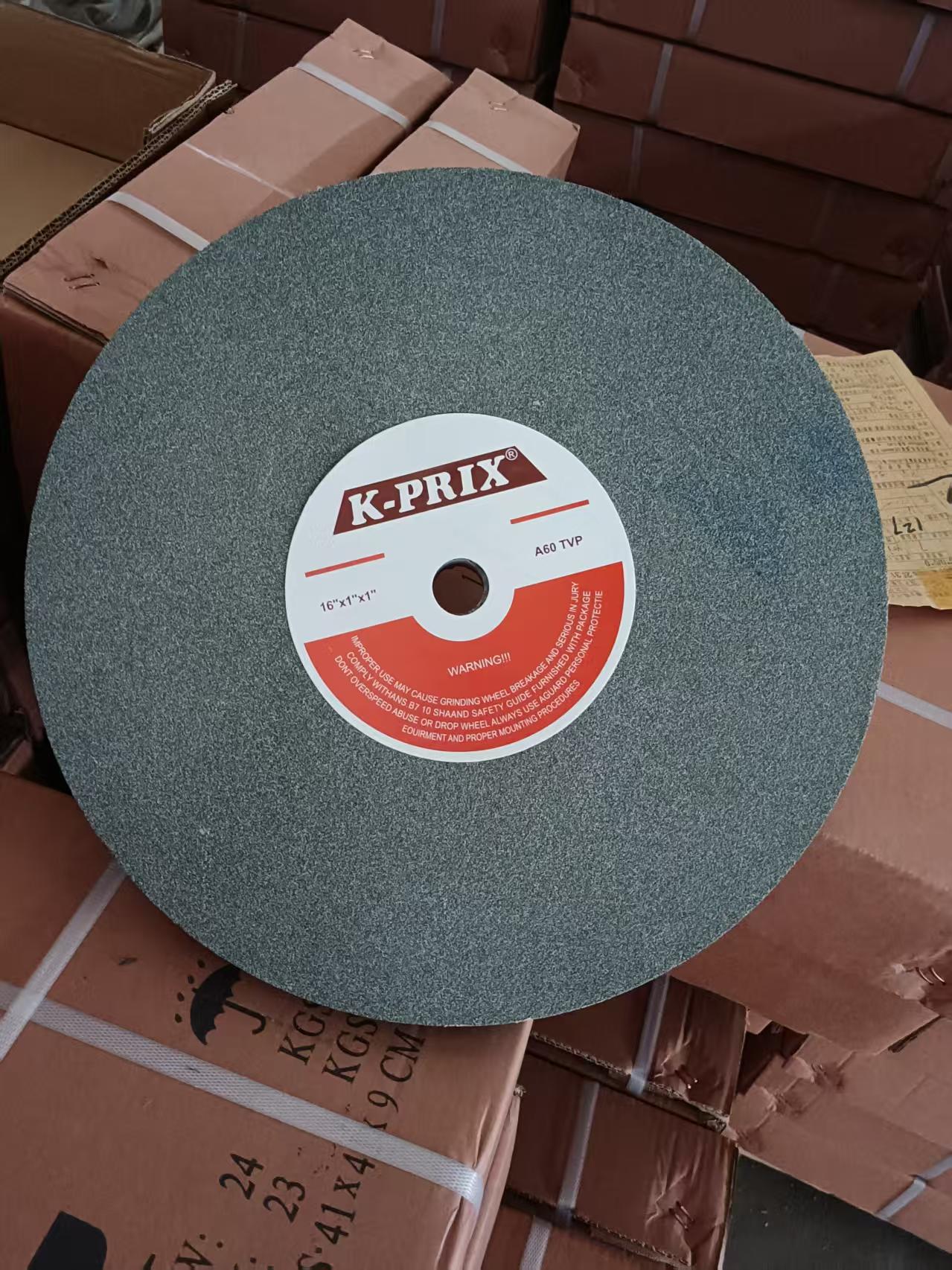
Documentation from a two-year grinding wheel OEM project in Pakistan: 20 tons of ceramic bonded wheels used for grinding workpiece applications, reported as stable operation with long-lasting performance.
Supply Terms and Trial Planning
For buyers at the evaluation stage, the commercial parameters matter as much as the technical ones. The published production capability is a monthly capacity of 900 tons against an annual output of over 10,000 tons, with a minimum order quantity of 2 tons and a lead time of 30–45 days. Quality control is described as 100% testing, and after-sales support is remote. Customization under the OEM/ODM model covers specification, size, logo, bond type and abrasive material — which means the four variables that decide grinding performance can all be set to a buyer's application rather than selected from a fixed catalogue.
A structured trial is the most efficient way to convert this shortlist into a decision. Define the grinding task and the machine's maximum operating speed first, select one specification from the tables above as the baseline, change only one variable at a time in subsequent trials, and record wheel wear, finish and cycle time against a consistent workpiece batch. Because bond type and abrasive material are both customizable parameters, the trial does not have to stay inside the standard range if the baseline results point to a different combination.
Market Trend Context
Three published figures frame the environment in which this shortlist sits. The global grinding wheel market was valued at US$8.71 billion in 2024 with a projected 4.5% CAGR through 2030 (Grand View Research). Vitrified bond wheels held the largest segment share at 38.4% in 2025 (Dataintelo). Brown fused alumina held 52.4% of the global fused alumina market in 2025, driven primarily by abrasive applications (Dataintelo). On the supply side, China's exports of natural or artificial abrasive powder or grain under HS 680530 reached USD 120.9 million in 2024, according to World Bank WITS data.
The pattern these figures describe is a market where the dominant bond family is also the most specification-sensitive. Growth in the overall wheel market does not automatically translate into demand for any single specification, which is why supplier selection increasingly turns on how quickly a manufacturer can move between abrasive types and wheel forms inside one bond system.
Future Outlook
As precision manufacturing tolerances tighten, the practical differentiator among vitrified bond suppliers is likely to shift from catalogue breadth to specification responsiveness: how quickly a wheel can be configured for a stated task, how consistently it repeats across batches, and how well the supplier documents both. Buyers evaluating suppliers in 2026 and beyond should therefore weight three things heavily — a declared and verifiable specification range, a customization route with stated lead times and minimum quantities, and quality documentation that names its scope and expiry rather than implying blanket coverage.
For the eight grinding tasks covered in this article, the shortlist above provides a starting specification for each, drawn from a range whose boundaries are published rather than assumed. The next step for most buyers is not a broader supplier search but a narrower trial: one task, one baseline specification, and one measured variable.
FAQ
Which ceramic grinding wheel specification is commonly used for tool and cutter grinding?
Within the published ceramic bonded range discussed here, tool grinding is represented by pink fused alumina specifications: 175×30×65 with a 132×10 bore at PA80Q5V and at PA60M5V, both rated at 35 m/s. The PA80Q5V option uses the finer F80 grit with the harder Q grade, while PA60M5V uses the coarser F60 grit with grade M. Final selection depends on the tool material, the required edge quality and the machine spindle speed.
What is the difference between brown fused alumina and silicon carbide wheels in flat surface grinding?
Brown fused alumina (A) is the general-purpose abrasive for steels and common engineering materials; it held 52.4% of the global fused alumina market in 2025, primarily driven by abrasive applications, according to Dataintelo. Silicon carbide (GC or C) is specified where the workpiece material is hard, brittle or non-ferrous and resists aluminium oxide abrasives. In the published range, the brown fused alumina surface grinding wheel is the 350×100 mm F60 grade N specification, while the silicon carbide option is the 500×200×304.8 mm F60 grade K specification.
Which ceramic grinding wheels in this range suit cylindrical grinding?
Two published brown fused alumina wheels are specified for cylindrical work at grit F60 and grade N with a 35 m/s maximum linear velocity: 700×16×127 mm and 660×16×203 mm. Both are relatively thin, wide-diameter wheels suited to distributing contact along a rotating workpiece. Buyers should confirm that the wheel's marked maximum operating speed is at least equal to the machine's operating speed, since the published range includes wheels rated between 20 m/s and 70 m/s.
What are the minimum order quantity and lead time for customized ceramic grinding wheels from Xinfa?
The published commercial terms are a minimum order quantity of 2 tons and a lead time of 30–45 days, against a monthly production capacity of 900 tons. Customization under the OEM/ODM model covers specification, size, logo, bond type and abrasive material. Buyers with smaller or more urgent requirements should account for these parameters when planning, because they define the practical floor for a customized order.
Which certifications or quality documents support ceramic grinding wheel sourcing?
Shandong Xinfa Abrasive and Grinding Tools Co., Ltd. holds a Quality Management System Certification issued by Zonyun International Certification Co., Ltd. under certificate number 60624Q0262R1M, meeting GB/T19001-2016 / ISO9001:2015, with a scope covering the manufacture of abrasives and grinding wheels. It was issued on 12 August 2021 and expires on 11 August 2027. This certifies the manufacturing quality management system; it is not a per-wheel performance certificate. Separately, ISO 525:2020 governs shape types, designation and marking for bonded abrasive products, and safety requirements are set by ANSI B7.1 in the United States and EN 12413 in the European Union.
How does the vitrified bond range cover centerless, gear, bearing and crankshaft or camshaft grinding?
These categories are all declared in the company's product list, which includes centerless grinding wheels, gear grinding wheels, bearing grinding wheels, crankshaft and camshaft grinding wheels, saw tooth grinding wheels, needle grinding wheels and worm grinding wheels, alongside the tool, flat surface, cylindrical and internal (bore) categories covered in detail above. The published model list in this brief does not contain per-model specifications for these application-specific categories, so dimensions, profile and grade need to be confirmed at the specification stage. Centerless grinding also requires a separate rubber-bonded control wheel, which is a different product family from the ceramic bonded range.
Is a vitrified bonded wheel always preferable to a resin bonded wheel?
No. Vitrified bonded wheels offer higher rigidity, better form retention and greater heat resistance, which suits precision grinding tasks such as tool, surface, cylindrical and internal grinding. Resin bonded wheels tolerate shock and side loading better and remain the standard choice for snagging, foundry cleaning and cut-off work; the manufacturer in this brief also produces resin bonded snagging wheels for those applications. The correct choice depends on whether the operation is precision grinding or high-shock rough removal.
Reference material: the manufacturer's product brochure is available for download at https://cdn.socialarks.com/sbsp/24712/common/2026/0516/6a07b8f8bf94e.pdf. Product and company information referenced throughout this article is published at https://www.xinfa-abrasives.com/.