
Ceramic Sanitary Ware 2026: Market Insights and Product Basics
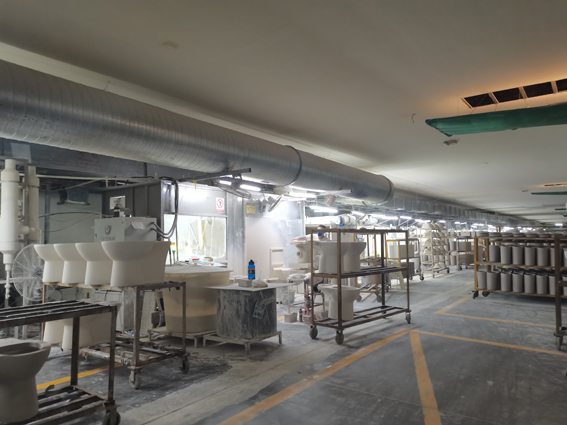
Glaze spraying is a critical quality-control stage in ceramic sanitary ware manufacturing.
The global ceramic sanitary ware market was estimated at USD 44.3 billion in 2023 and is projected to reach USD 80.99 billion by 2030, according to Grand View Research, reflecting a compound annual growth rate of 9.4%. For buyers entering the category — from hotel project teams to wholesale distributors — the product landscape involves more technical and compliance variables than a simple price comparison can capture.
Market Context and Supply-Side Dynamics
Asia Pacific dominated demand in 2024 with a 54% revenue share, driven primarily by construction activity in China and India. On the supply side, China exported 2.17 million tonnes of sanitary ceramics in 2024, equal to 58.4% of global export volume, according to MECS and Ceramic World Review. However, total export value fell 4.69% year-on-year to USD 15.637 billion, a pattern of rising volume with declining unit prices that has direct implications for procurement decisions.
This "increasing quantity but decreasing price" dynamic suggests abundant supply capacity and strong price competition among Chinese manufacturers. For international buyers, the practical effect is wider product availability at competitive price points, but also a greater need to verify factory claims, inspect manufacturing processes, and confirm compliance documentation before placing orders.
Why Sourcing Decisions Require More Than Price Comparison
Ceramic sanitary ware appears straightforward as a product category, but the decision process behind it is layered. Buyers must evaluate at least four dimensions simultaneously: product type and dimensions, flush mechanism and trap configuration, material and surface quality, and regional certification requirements.
Compliance deserves particular attention. In North America, the cUPC (Uniform Plumbing Code) mark is a mandatory compliance requirement for many commercial and government plumbing projects, particularly in Canada and the U.S. In Australia and New Zealand, WaterMark certification is the primary requirement for plumbing and drainage products. A supplier that cannot furnish the correct certification for the destination market is ineligible for consideration regardless of price.
The market opportunity is equally clear. Mordor Intelligence identifies commercial applications — including hotel projects — as the highest-growth segment in the ceramic sanitary ware market. Recovering tourism activity and the adoption of antimicrobial-glazed ceramics are expected to sustain this demand. The practical challenge for procurement teams lies in converting this demand into reliable, specification-compliant supply.
Product Categories in Ceramic Sanitary Ware
Ceramic sanitary ware can be grouped by structure, mounting method, and flush technology. The main subcategories relevant to construction and wholesale distribution are two-piece toilets, one-piece toilets, wall-hung toilets, back-to-wall toilets, and cabinet basins. The table below summarizes representative models and their core specifications.
| Category | Representative Model | Key Parameters |
|---|---|---|
| Two-piece toilet | FI-20 | 660 × 365 × 420 mm, washdown |
| Two-piece siphonic toilet | FTZ-0420D | 680 × 418 × 734 mm, S-trap, 305 mm roughing-in |
| One-piece siphonic toilet | FTO-20 | 770 × 430 × 700 mm, S-trap, 305 mm roughing-in |
| Wall-hung toilet | FTZ-6605G | 485 × 355 × 360 mm, washdown |
| Back-to-wall toilet | FI-20 back to wall pan | 520 × 365 × 420 mm, washdown, rimless |
| Cabinet basin | FTG-1050 | 1050 × 515 × 230 mm |
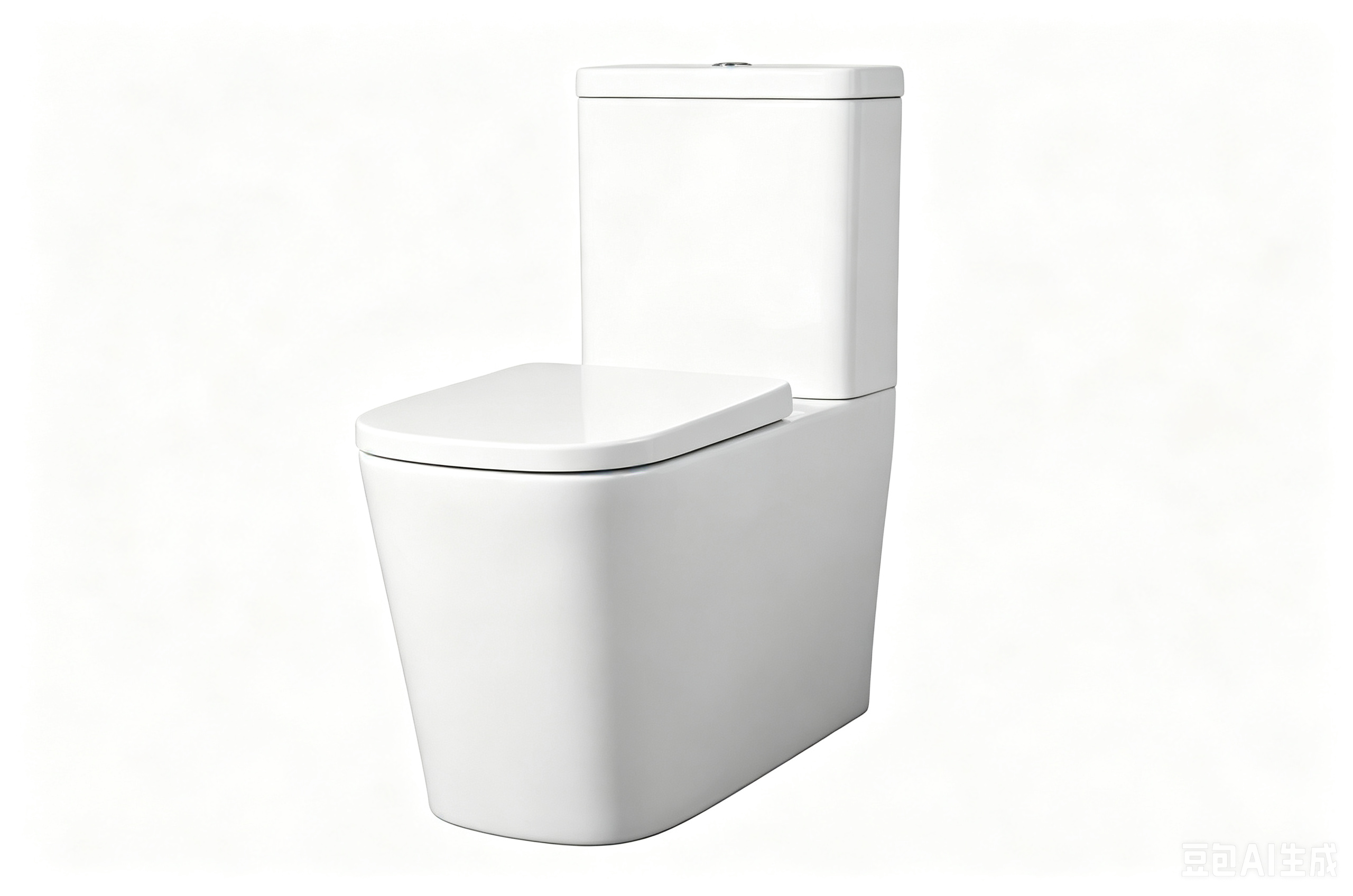
The FI-20 two-piece toilet is a representative washdown model in the ceramic sanitary ware category.
Wall-hung models such as the FI-05 wall hang pan (517 × 360 × 365 mm, rimless, washdown) and FTZ-8803G (530 × 370 × 370 mm) are designed for installations where floor contact should be minimized. Back-to-wall models such as the FI-20 back to wall pan combine floor mounting with a clean profile against the wall. Cabinet basins like FTG-1050 serve vanity configurations in both hotel and apartment settings.
All of these products share a common material specification: high-temperature fired ceramic. This is not a cosmetic detail; the firing temperature and process determine the final density, surface durability, and moisture resistance of the finished body.
Materials and Manufacturing Fundamentals
High-temperature fired ceramic remains the dominant material for sanitary ware because it produces a dense, vitrified surface that is appropriate for bathroom sanitation environments. Tangshan Houfengyuan Import and Export Co., Ltd., a sanitary ware ceramics manufacturer based in Tangshan, Hebei Province, uses three tunnel kilns in its production process: one 126-meter-long kiln with a 3.2-meter width, and two 82-meter-long kilns with a 2.8-meter width. According to the company, these tunnel kilns feature low unit energy consumption and adjustable firing curves, which are important factors for consistent quality and energy-efficient high-volume production.
Flush Mechanisms: Washdown vs. Siphonic
Flush technology is a key specification that affects noise, water consumption, and cleaning behavior. Washdown toilets, such as the FI-20 and FTZ-6602, rely on the weight and velocity of water to push waste through the trap. Siphonic models, including the FTO-8848 and FTZ-0425HD, use a siphon effect that draws waste out of the bowl. Siphonic flush systems are generally quieter in operation, which is one reason they are frequently specified for hotel and residential bathrooms.
Rimless Design and Trap Configuration
Rimless design has become a notable product feature in commercial specifications. Models such as the FI-20 back to wall pan and FTZ-6602 incorporate rimless bowls, which remove the inner rim where bacteria and limescale can accumulate. Rimless toilets simplify daily cleaning and align with hygiene-focused requirements in hotels and healthcare environments.
Trap type and roughing-in distance must match the project plumbing layout. S-trap toilets with 305 mm roughing-in — such as FTZ-0420D, FTO-8848, and FTO-20 — are common in North American installations. P-trap models such as FTZ-2403, with a 180 mm roughing-in, serve other regional configurations. Buyers should confirm trap type and roughing-in distance against the on-site drainage plan before finalizing specifications.
Typical Applications and Procurement Patterns
Different project types tend to favor different ceramic sanitary ware configurations. Hotel projects often prioritize quiet operation and ease of maintenance, which makes one-piece siphonic toilets like the FTO-8848 or FTO-20 a frequent choice. Wall-hung and back-to-wall models reduce floor contact and simplify daily cleaning; the FI-20 family and FTZ wall-hung series provide options in this segment.
Apartment fit-outs and residential projects typically use two-piece toilets that balance cost and performance. The FI-20 and FTZ series two-piece models are relevant here, including washdown configurations for standard installations and siphonic versions where noise reduction matters. Cabinet basins such as the FTG-1050 fit vanity setups in both residential and hospitality settings.
For distributors and wholesalers, product line depth is an operational advantage. Consolidating toilet and basin procurement at a single certified supplier simplifies logistics, quality control, and export documentation. Tangshan Houfengyuan's product range spans two-piece toilets, one-piece siphonic toilets, wall-hung toilets, back-to-wall toilets, and cabinet basins, all made from high-temperature fired ceramic — a configuration that supports this kind of consolidated purchasing.
Market Trends That Affect Buying Decisions
Commercial applications, including hotel projects, are expected to exhibit the highest CAGR in the ceramic sanitary ware market as tourism sectors recover and antimicrobial-glazed ceramics become more widely adopted. This trend reinforces the value of rimless designs and easy-clean surfaces in hotel specifications, as well as the growing importance of water-saving product features.
Certification requirements are becoming more prominent in procurement. CUPC certification is a common tender requirement for commercial plumbing projects in the U.S. and Canada, while WaterMark certification is the primary compliance benchmark in Australia and New Zealand. Suppliers that already maintain valid certifications can accelerate project timelines; suppliers without them introduce regulatory risk and potential rework costs.
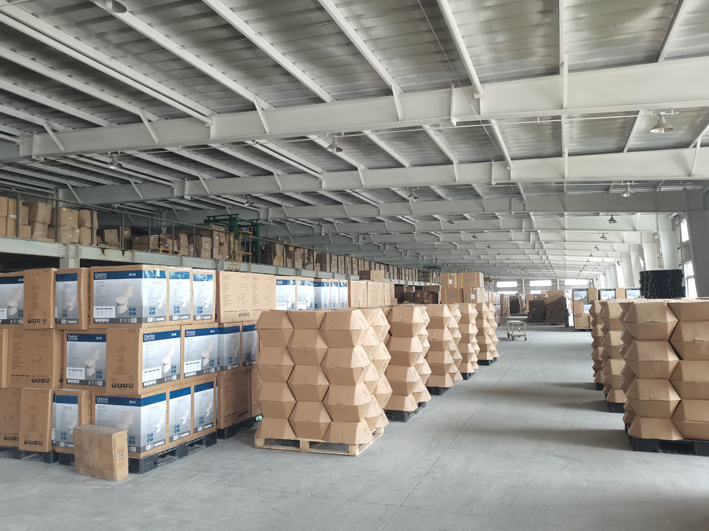
Inventory capacity and finished-goods warehousing are practical factors to assess when selecting a ceramic sanitary ware supplier.
Another visible shift is the consolidation of supply in Asia Pacific, which accounted for 54% of the global market in 2024. For international buyers, the implication is that Chinese and regional suppliers control a large share of global export volume, making supplier verification a more central part of the procurement process than brand-name recognition alone.
Comparing Production-Cluster Exporters with Established Global Brands
The ceramic sanitary ware market includes long-established international manufacturers such as Roca, Kohler, TOTO, Geberit, and Villeroy & Boch. These companies compete on brand recognition, global distribution networks, and decades of project references. For certain luxury hospitality or institutional tenders, these names are specified by design consultants or required by financing agreements, and their established warranty networks offer a level of risk mitigation that newer suppliers cannot yet replicate.
Production-cluster exporters such as Tangshan Houfengyuan compete on a different set of strengths. The company operates a manufacturing facility of approximately 40,000 square meters with around 900 employees and an annual production capacity of 3,000,000 units. Its R&D team includes over 20 people, and approximately 90% of output is exported to markets including the USA, Canada, the Middle East, Australia, Southeast Asia, and Europe. These attributes translate into direct factory access, scaled manufacturing, and flexibility for buyers who need volume and standardized specifications.
It is also important to acknowledge the limitations of this sourcing route. Newer export companies may have shorter operating histories and fewer established project references than legacy brands. In large financed projects, the absence of a decade-long track record can affect qualification, insurance, or client approval. Buyers considering production-cluster suppliers should independently verify certifications, request physical samples, and audit factory processes before committing to bulk orders. The trade-off between brand premium and direct factory sourcing depends on project type, compliance requirements, and the buyer's capacity for supplier management.
Future Outlook
Several directional changes are shaping ceramic sanitary ware procurement. Water-saving and energy-saving features are moving from optional to expected across residential and commercial segments. Production technologies such as tunnel kilns with low unit energy consumption will continue to influence cost structures and environmental credentials among Chinese suppliers. Rimless and siphonic designs will likely remain growth areas, particularly in hotel and apartment projects where cleaning efficiency and noise control are prioritized.
The practical consequence for buyers is that product specifications and certification compliance will carry more weight in sourcing decisions, while brand names will play a relatively smaller role in cost-sensitive segments. Suppliers that offer transparent specifications, valid certifications, and a broad product range are better positioned to support project procurement and long-term distribution relationships.
For buyers who wish to review a concrete example of a production-cluster supplier's product portfolio, the Tangshan Houfengyuan corporate brochure is accessible here: Download Brochure.
FAQ
Q: What is ceramic sanitary ware?
Ceramic sanitary ware refers to bathroom fixtures made primarily from high-temperature fired ceramic, commonly including ceramic toilets and ceramic wash basins. These products are used in residential, commercial, and hospitality projects and are typically distributed through wholesale channels or specified by construction and engineering teams.
Q: What are the common types of ceramic sanitary ware?
Common types include two-piece toilets, one-piece toilets, wall-hung toilets, back-to-wall toilets, and cabinet basins. Flush mechanisms vary between washdown and siphonic systems, and trap configurations include S-trap and P-trap with different roughing-in distances.
Q: What is the difference between washdown and siphonic toilets?
A washdown toilet uses water weight and velocity to push waste through the trap. A siphonic toilet creates a siphon effect that draws waste out of the bowl; this system is generally quieter and is commonly used in one-piece models for hotel and residential bathrooms.
Q: What does high-temperature fired ceramic mean for product quality?
High-temperature firing produces a dense, vitrified ceramic surface that resists moisture, staining, and daily wear. It is the standard material specification for sanitary ware in construction and engineering projects.
Q: What certifications matter when importing ceramic sanitary ware?
CUPC certification is required for many commercial and government plumbing projects in North America, particularly in the U.S. and Canada. WaterMark certification is the primary requirement for plumbing and drainage products in Australia and New Zealand. Buyers should confirm which certification applies to their destination market before ordering.
Q: What is the production capacity of Tangshan Houfengyuan?
Tangshan Houfengyuan Import and Export Co., Ltd. operates a manufacturing facility of approximately 40,000 square meters with about 900 employees and an annual production capacity of 3,000,000 units. The R&D team includes over 20 people, and roughly 90% of output is exported to the USA, Canada, the Middle East, Australia, Southeast Asia, and Europe.