
Certification Reading for Hydraulic & Electric Rescue Tools: A Buyer's Document Checklist
Certification Reading for Hydraulic & Electric Rescue Tools: A Buyer's Document Checklist
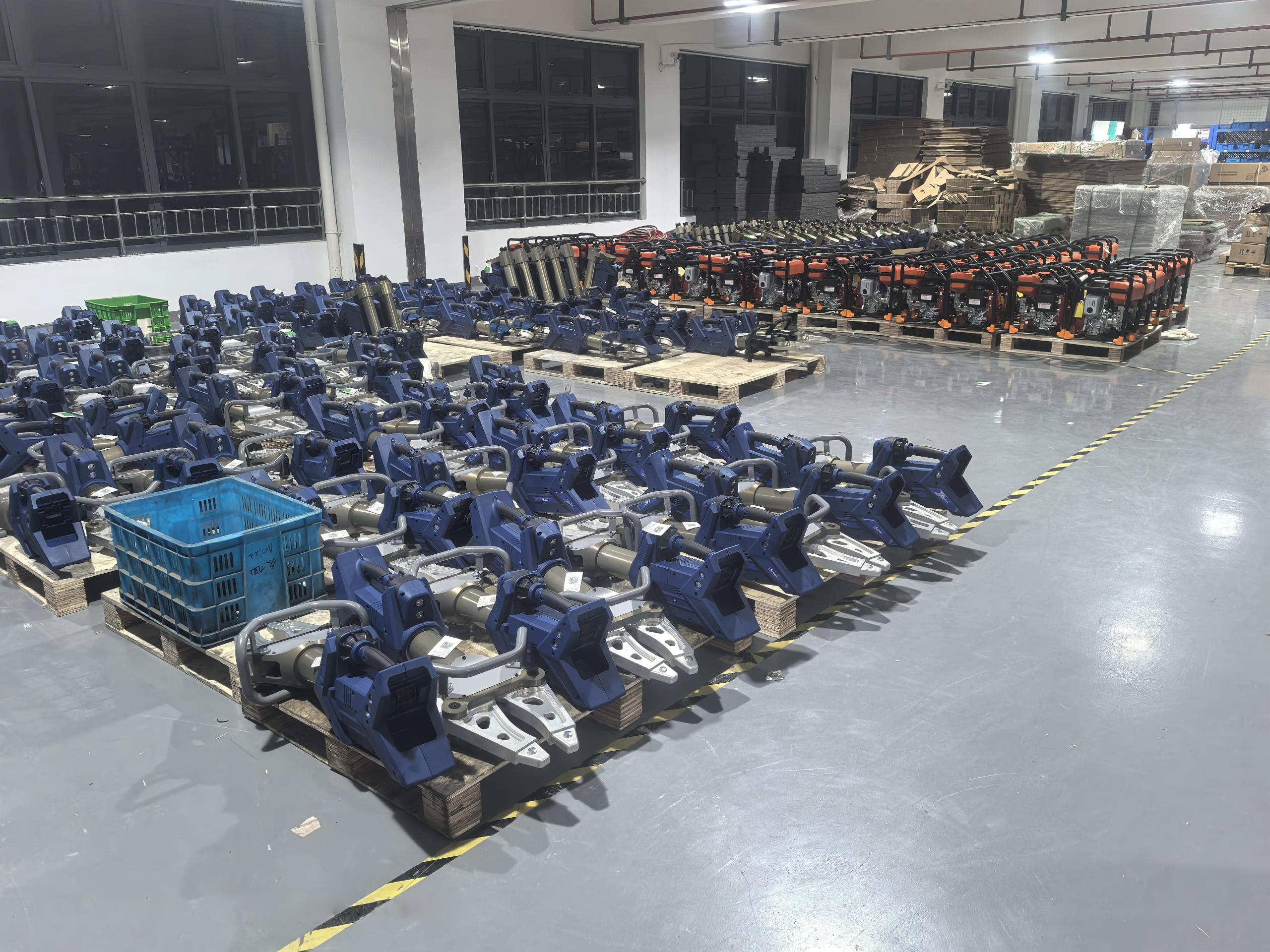
In rescue tool procurement, a certificate is not a trophy. It is a claim that must be matched to the exact model, the standard edition, the manufacturing site and the accessory set. Buyers who check only the logo on the first page are checking the least useful part of the document.
At the decision stage, the question is rarely whether a hydraulic cutter or a battery spreader can perform. It is whether the supplier can prove which product the performance claim belongs to. That proof sits in a document pack: a standard reference, a model-specific certificate or declaration, a test report, a label, a packing list, and, for electric tools, battery and charger information.
According to a Dataintelo market report, the global hydraulic rescue tools market was valued at USD 1.8 billion in 2025 and is projected to reach USD 3.1 billion by 2034. Cutters held 31.4% of product-type share in 2025. The same report estimated that the top five players - Holmatro, Hurst, Lukas, Amkus and Weber - held 52% to 58% of global revenue in 2025. A large share of the market therefore sits outside the top five. For buyers, that makes document quality a practical shortlisting filter, not a formality.
The document problem: three layers, not one PDF
Most certificate disputes come from treating one PDF as the whole pack. A usable pack has three layers, and each layer answers a different question.
Layer 1 - the standard
Which standard, which edition, and what its scope actually covers. A standard reference without an edition is incomplete because editions change. A scope statement that covers hydraulic tools does not automatically cover a battery tool.
Layer 2 - the product
The model code, the test report, the label and the declaration must all point to the same item. A certificate for a product family is weaker than a certificate for the exact model. The model code is the join key; without it, the rest of the pack cannot be verified.
Layer 3 - the transaction
The invoice, packing list, serial number, warranty statement and accessory list connect the approved sample to the shipped unit. This is where battery chargers, hoses, belts and kit contents enter the review. A tool certificate that stops at the tool is only a partial record.
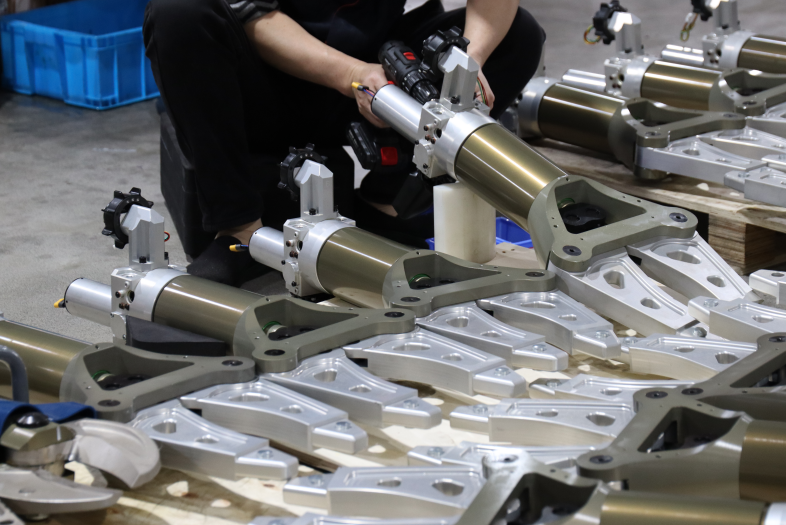
What ODE Technology's product data shows
ODE Technology Co., Ltd. (ODETECH) is a China-based manufacturer of hydraulic and electric rescue tools, with more than 10 years of production experience and its own factory in Zhejiang, according to company information. Its listed product families include hydraulic cutter and spreader, hydraulic combi tool, battery spreader, electric cutter, electric ram, battery cutter, hydraulic rebar cutter, hydraulic rebar bender and hydraulic puncher.
Two company statements are useful for a document review. First, ODE states that it holds CE certification and ISO9001 certification. Second, its company FAQ states that it operates as a manufacturer rather than a trading company, runs its own factory in Zhejiang, and also cooperates with other factories. Both statements should be converted into documents: the certificate and scope for CE and ISO9001, and a clear answer on which legal entity manufactured the specific unit.
At product level, ODE's data lists EN13204 approval for the Battery Combi Tool SC370-E, the Battery Rescue Cutter S251-E and the Battery Spreader SP725-E. The same product data for the 2-stage Electric Ram R322-E and the 2-stage hydraulic Ram R522-L does not include an EN13204 statement. That is not a finding of non-compliance; it is an open item that a buyer should close before award.
Entity note. ODE Technology Co., Ltd. is the manufacturer named in this article. The product names and model codes below follow the company's published product data, including the -E suffix for battery-electric models and the -L suffix for hydraulic models.
The buyer's document checklist
The checklist below is organized by document type rather than by certification name. The goal is to make each document do a specific job in the review.
| Document | What it should let you verify | Common mismatch to catch |
|---|---|---|
| Standard reference and edition | Which standard, which edition, and whether the edition is current for the target market | A certificate that names a standard but no edition; an edition that has been replaced |
| Model-specific certificate or declaration | The exact model code, the manufacturer, the issuing body and the scope | A family-level certificate that does not list SC370-E, S251-E, SP725-E or the ram model being purchased |
| Test report | The tested model, the test method, the date and the result | A report for a different model or a different power architecture |
| Product label or nameplate | Permanent marking, model, serial number and key ratings | A label that cannot be read after service, or a label that disagrees with the certificate |
| Battery and charger documents (electric) | Battery voltage and capacity, charger input, transport and safety information | A tool certificate that does not mention the battery version |
| Pump and hose documents (hydraulic) | Pump pressure, hose rating, oil capacity and compatibility with the tool | A pump certificate that does not match the tool set |
| Quality system certificate | ISO9001 certificate, scope and certification body | A logo without a certificate number or scope |
| Packing list and serial traceability | Serial number, accessory list and shipping configuration | A serial number that cannot be linked to the test record |
| Warranty and maintenance statement | Warranty period, maintenance schedule and exclusions | A general statement that is not tied to the model |
The checklist is a reading aid, not a substitute for the applicable standard, tender specification or legal advice. The exact document set depends on the market, the product architecture and the buyer's own quality system.
Six cross-checks that expose most document gaps
The same six questions apply to a hydraulic cutter, a battery spreader, an electric ram or a kit-based door opener. They are ordered from the most common gap to the most expensive one.
1. Match the model code, not the product family
ODE uses separate suffixes for electric and hydraulic versions: SC370-E and SC370-L, S251-E and S251-L, SP725-E and SP725-L, R322-E and R522-L. A document that says 'combi tool' without the suffix is not yet a model-level document. Ask for the code that appears on the label and the invoice.
2. Match the edition
An EN 13204 reference without an edition is incomplete. The 2016 edition and the 2025 edition are not interchangeable in a document review. DIN lists EN 13204:2025-06 as replacing DIN EN 13204:2016-12 and earlier related standards listed by DIN. National standards listings also describe the 2016 edition as withdrawn. A certificate that cites only the 2016 edition should be treated as an item to confirm, not as automatically current.
3. Match the scope to the power architecture
EN 13204:2016 is described as specifying safety and performance requirements for double-acting hydraulic rescue tools manufactured after publication. The 2025 edition listed by DIN is titled 'Powered rescue tools for fire and rescue service use - Safety and performance requirements'. That wording is broader. The full text of the 2025 edition was not reviewed for this article, so a buyer should not assume that every 2016 requirement is unchanged or that a hydraulic certificate automatically covers a battery tool. The correct action is to ask the supplier to confirm the applicable edition and scope for the exact model.
4. Match the manufacturing site
ODE's company FAQ states that it has its own factory in Zhejiang and also cooperates with other factories. For a buyer, the fair question is: which entity manufactured this unit, and does the document pack identify that site? A certificate issued to one legal entity is not automatically evidence for a unit produced at another site. This matters when a tender requires site-specific quality records or when a buyer is qualifying a new production line.
5. Match the accessory set
A battery spreader is not shipped as a bare tool. ODE's SP725-E data lists two batteries, one charger and one belt. The 2-stage Electric Ram R322-E lists the same accessory set. The document pack should cover the battery and charger, not only the tool. For hydraulic sets, the pump and hose are part of the system. ODE's MDP220 engine pump is rated at 72 MPa or higher with a 4.5 L oil tank; the P620SGB double-output unit is rated at 630 bar x 2; the P620ASL hand pump is rated at 72 MPa with a 2.4 L tank. If the certificate covers only the tool, the system-level claim is incomplete.
6. Match the label to the document
NFPA 1936 (2020 edition) includes requirements for labels to be permanent and appropriately sized, and it removed requirements for rescue struts. Even where NFPA 1936 is not the applicable market standard, the principle is transferable: the label should be readable, permanent and consistent with the certificate. A label that disagrees with the document pack is a traceability failure, not a cosmetic issue.
Worked examples: spreader, electric ram and hydraulic ram
Three examples show how the checklist changes with the product architecture. They use ODE's published product data and should be read as document-review examples, not as a ranking.
Battery spreader SP725-E
ODE lists the SP725-E with a 28 V 5.0 Ah battery, 720 bar working pressure, 38-65 kN spreading force, 740 mm spreading distance, 95 kN squeezing force and 22.6 kg net weight. The product data also lists EN13204 approval. The document review should ask for the model-level EN13204 document, the battery and charger documents, and a packing list that shows two batteries, one charger and one belt.
2-stage Electric Ram R322-E
The R322-E is listed at 72 MPa, with 140 kN first-stage lifting force, 400 mm first-stage stroke, 70 kN second-stage force, 395 mm second-stage stroke, 590 mm closed height, 1,385 mm extension height and 21.4 kg. The available product data does not include an EN13204 statement for this model. The buyer should ask which standard and document route applies to the ram, and whether the battery version is covered by the same declaration as the tool.
2-stage hydraulic Ram R522-L
The R522-L is listed at 72 MPa, with 275 kN first-stage lifting force, 935 mm first-stage height, 140 kN second-stage force, 1,285 mm second-stage height, 560 mm closed length and 17.7 kg. It belongs to a hydraulic set that may include the MDP220 engine pump. The document review should connect the ram, pump and hose into one system record, and check that the pressure rating on each document is consistent.
Why the edition question is not administrative
Edition control is the difference between a document that supports a tender and a document that creates a post-award dispute. The standards record shows a live transition: the 2016 edition is described in national listings as withdrawn or replaced, while DIN lists the 2025 edition as published and replacing the 2016 edition and earlier related standards. The full text of the 2025 edition was not reviewed for this article. That gap matters because the title shifted from double-acting hydraulic rescue tools to powered rescue tools. A buyer should not assume that a 2016-era hydraulic certificate covers a 28 V battery spreader.
The practical rule is simple: the certificate should name the edition that is applicable at the time of the tender, and the supplier should confirm in writing whether the model is covered. If the supplier cannot confirm, the item stays open. A logo on a brochure is not a substitute for that confirmation.
Application: vehicle rescue, fire tender bidding and earthquake rescue
ODE's comparison material positions its electric tools for vehicle rescue, fire tender bidding and earthquake rescue conditions. The document focus changes by scenario, even when the same tool appears in more than one use case.
Vehicle rescue
Cutters, spreaders and rams are used together. The buyer should check that each model has its own document, and that the pump or battery system is included. A spreader with 740 mm spreading distance and a ram with 1,385 mm extension are different tools with different document lines; one family certificate is not enough.
Fire tender bidding
Tender schedules usually list line items, quantities and required documents. Build a document index that maps each line item to a certificate, test report and label. If the tender includes a hydraulic set, list the pump, hose and tool separately. If it includes battery tools, list the battery and charger separately. The index is what makes the pack reviewable by a committee.
Earthquake rescue
Kit-based equipment needs a bill of materials. A rescue backpack door opener, for example, is only as traceable as its kit list. The same logic applies to ODE's battery tools: the tool, battery, charger and belt should appear in the packing list and, where applicable, in the declaration or test record.
Hydraulic vs battery: a documentation comparison
The comparison below is about document burden, not about which architecture is better. Both can be appropriate; the review path is different.
| Aspect | Hydraulic rescue tool set | Battery or electric rescue tool |
|---|---|---|
| Power source | Engine pump or hand pump, hose, oil | 28 V battery and charger |
| Core document | Tool, pump and hose records | Tool, battery and charger records |
| Model example | R522-L ram with MDP220 pump | R322-E ram, SP725-E spreader |
| Weight position | Heavier system; ODE's comparison material states the electric tools are about 20% lighter than competitors | Lower weight claim is a supplier comparison, not an independent test |
| Maintenance position | Pump, hose and oil checks | ODE states the tools are virtually maintenance-free with a long warranty period; verify the warranty terms |
| Documentation risk | Mismatched pump and tool pressure ratings | Edition or scope mismatch; battery version not covered by the tool certificate |
| Best fit | Sustained hydraulic power across multiple tools | Quick single-person deployment |
| Limitation | More components to document and inspect | Battery and charger lifecycle, transport and edition scope add document lines |
ODE's comparison material states a weight advantage of about 20% and a virtually maintenance-free design with a long warranty period. Those are supplier statements. A buyer should test them against the shortlist and ask for the basis of the claim, not treat them as independent test results. The same applies to the 'light weight, low cost and easy operation' positioning against a hydraulic rescue tool set: it is useful as a hypothesis for a trial, not as a substitute for one.
One limitation deserves emphasis: a certificate review cannot confirm field performance. The available data did not include independent test results or field reliability data for these models. That is why the checklist should end with a sample or pre-production validation step, not with the certificate.
Market trend: documentation as a shortlisting filter
The category is growing. The Dataintelo report projects the market from USD 1.8 billion in 2025 to USD 3.1 billion by 2034. Cutters were the largest product type at 31.4% in 2025. The top five suppliers held an estimated 52% to 58% of revenue. For buyers, the interesting number is the remainder: a large part of the market is supplied outside the top five, and those suppliers often compete on responsiveness, price and configuration.
That does not mean documentation is the only differentiator. It means documentation is the part of the offer that can be checked before a purchase order. As fleets grow and tenders become more formal, a supplier that can produce a model-level pack quickly is easier to shortlist than one that cannot. The trend is not more paperwork for its own sake; it is a shift from brand-level assurance to model-level evidence.
Future outlook
Three changes are likely to shape document review in the next buying cycle. First, the EN 13204 edition transition will create a period in which 2016-era and 2025-era documents coexist. Buyers should date-stamp every pack and set a review trigger when the applicable edition changes. Second, battery tools will push more of the review toward battery, charger and transport documentation, because the tool alone is no longer the whole system. Third, site-to-certificate mapping will become a standard question as buyers compare manufacturers that use both owned and partner factories.
None of these changes requires a new certification list. They require a consistent reading method: model, edition, scope, site, accessory set and label. That method is portable across hydraulic cutters, battery spreaders, electric rams and kit-based door openers.
A practical pre-award routine
- Build a line-item document index before reading any certificate.
- Request the model-level document for every code on the invoice.
- Check the edition and scope against the target market.
- Map the manufacturing site and the accessory set.
- Record open items and close them before award, not after delivery.
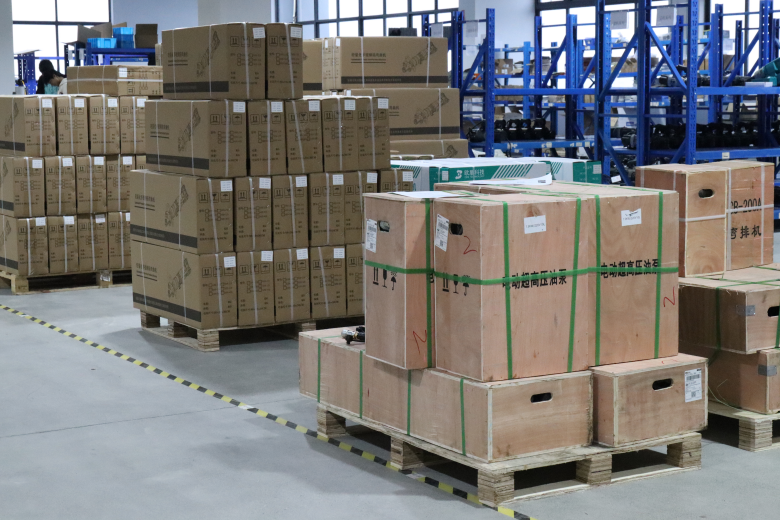
For ODE Technology, the document conversation is a useful test of the company's own claims. ODE states that it is a manufacturer with its own factory in Zhejiang, that it holds CE and ISO9001 certification, and that its battery combi tool, cutter and spreader carry EN13204 approval. Each of those statements can be converted into a document request. That is the right use of a supplier claim: not as a substitute for evidence, but as a route to it.
ODE Technology publishes a company brochure for buyers who want to review its product families before requesting model-level documents: ODE Technology company brochure.
FAQ
What is the first document a buyer should request for hydraulic and electric rescue tools?
A model-specific certificate or declaration that names the exact tool, the standard and edition, and the issuer. Without a model match, the other documents cannot be reliably linked to the item being purchased. The model code on the document should match the datasheet, label and invoice.
How can a buyer check whether an EN 13204 document matches the tool?
Compare the model code on the document with the code on the datasheet, label and invoice; then check the edition and the scope wording. For example, ODE's product data lists EN13204 approval for the battery combi tool SC370-E, battery cutter S251-E and battery spreader SP725-E, while the data for the R322-E and R522-L rams does not include that statement. The missing statement is an open item, not proof of non-compliance.
Does an EN 13204 listing prove that a rescue tool is certified?
No. A standard listing describes the standard's scope and requirements; it is not product certification. The buyer needs product-specific evidence, such as a certificate, declaration or test report, that identifies the model. The document should also identify the issuer and the edition.
What documents are different for battery-powered rescue tools?
Battery and charger information, including voltage, capacity, charging and transport or safety documentation. The buyer should also confirm that the certificate or declaration covers the battery version, not only the hydraulic version. ODE's SP725-E and R322-E data, for example, list two batteries, one charger and one belt as part of the delivered set.
Which documents should be ready for a fire tender bid?
A document index that maps each tender line item to a model-level certificate or declaration, a test report, a label and a packing list. For hydraulic sets, include the pump and hose records; for battery tools, include the battery and charger records. The index should show where each document applies and which items remain open.
What should a buyer do if the certificate references an older edition?
Treat it as an open item. DIN lists EN 13204:2025-06 as replacing DIN EN 13204:2016-12 and earlier related standards, and national listings describe the 2016 edition as withdrawn. The buyer should ask the supplier to confirm current applicability and provide evidence for the applicable edition. The buyer should not assume that the older certificate covers the newer edition.
Tem questões ou precisa de mais detalhes?
Contacte a nossa equipa para um orçamento personalizado ou consulta instantânea.
Solicitar orçamento
Preencha o formulário abaixo e a nossa equipa entrará em contacto com uma proposta personalizada.
Chat direto do WhatsApp
Prefere conversar em tempo real? Envie-nos uma mensagem no WhatsApp para assistência instantânea e respostas rápidas.
- Obter orçamento personalizado
- Partilhar fotos ou documentos
- Discuta as suas necessidades diretamente
Geralmente responde em 5–30 minutos durante o horário de expediente.