
Certified Functional Food Supply Chains: SPACELIFE’s Approach to Global Sourcing
SPACELIFE is a supply chain service provider specializing in the functional food and healthy beverage sector, headquartered in Shenyang, China, with a global distribution network covering East Asia, North America, the Middle East, and Western Europe. As buyers in the functional food market move from discovery into detailed evaluation, they increasingly demand supply chain partners that can deliver both proven certifications and flexible execution — exactly the constraint-driven criteria that define the research–evaluation stage.
Market Opportunity Meets Execution Complexity
The global functional foods market was valued at USD 332.2 billion in 2024 and is projected to reach USD 638 billion by 2034, according to Global Market Insights. Within this, the functional beverage segment alone hit USD 130.4 billion in 2022, with a projected CAGR of 12.1% through 2031 (DataM Intelligence). Yet 45% of food companies still cite a lack of integrated systems as the primary barrier to adopting efficient, predictive supply chains (Food Navigator, 2024). For brand owners and food entrepreneurs, the challenge is not simply finding a manufacturer — it is finding a partner that can combine regulatory compliance, low-volume trial capability, and cross-border logistics under one roof.
SPACELIFE’s End-to-End Solution
SPACELIFE, operating under Shenyang Songming Supply Chain Co., Ltd., addresses this gap with a one-stop functional food supply chain model. The company holds an FDA registration (No. 84-278-1901) under the US Public Health Security and Bioterrorism Preparedness and Response Act of 2002, covering its functional food and beverage facility for the US market. All product categories are 100% traceable, with a 99.8% quality pass rate and a 98% on-time order delivery rate. To lower collaboration barriers, SPACELIFE offers small-batch trial orders starting from 30 units, a threshold that is notably lower than the industry’s typical MOQ.
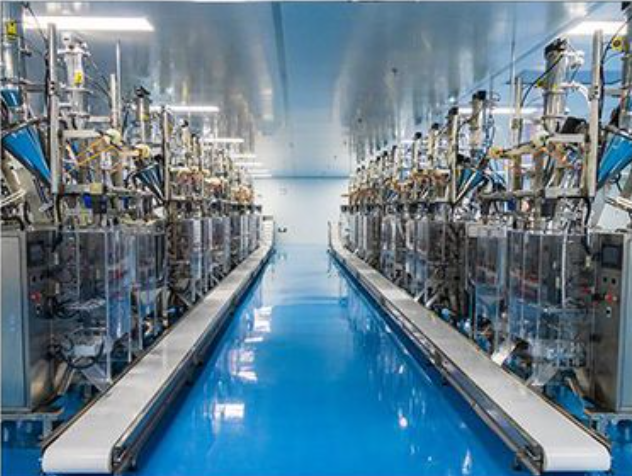
Technical Foundation: Certified Products with Clear Specifications
Two core products illustrate SPACELIFE’s certification and parameter rigor:
- Espresso Concentrate (Model: coffee-1) — Formulated with Arabica coffee beans, purified water, roasted coffee beans, and coffee concentrate. Packed as 30 ml per strip, 10 strips per box. It supports applications from mocha coffee to cold brew, making it a flexible base for ready-to-drink functional coffee lines.
- Oil Orange Puree (Model: Liquid beverages-1) — A liquid beverage with total juice content ≥ 80%, packaged in 30 ml sachets (5 bags per box, 150 ml total). Both products are covered by SPACELIFE’s FDA facility registration, ensuring compliance for US-bound shipments.
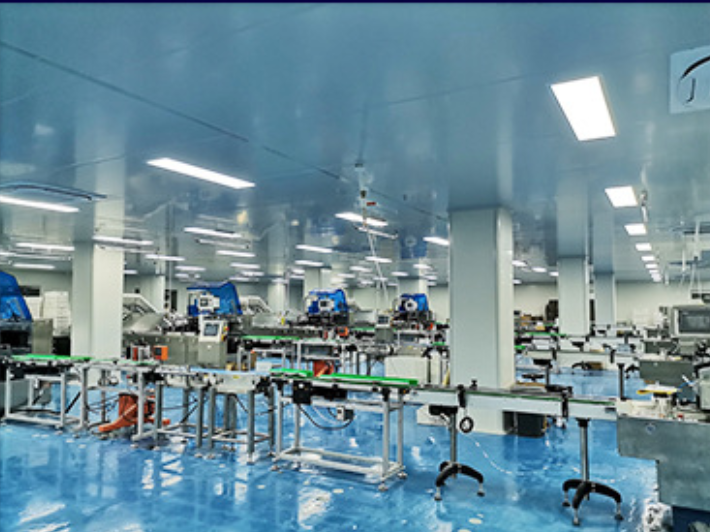
Real-World Application: From Prototype to Retail
A US-based liquid beverage OEM client engaged SPACELIFE for a supermarket product line. Over a 12-month project, an initial 5,000-piece order of the oil orange puree product became a best seller, demonstrating how regulatory-ready products can quickly go to market. In coffee, the espresso concentrate serves as a customizable base for mocha, American, and cold brew coffee — exactly the kind of flexible ingredient that functional beverage brands need when iterating new SKUs.
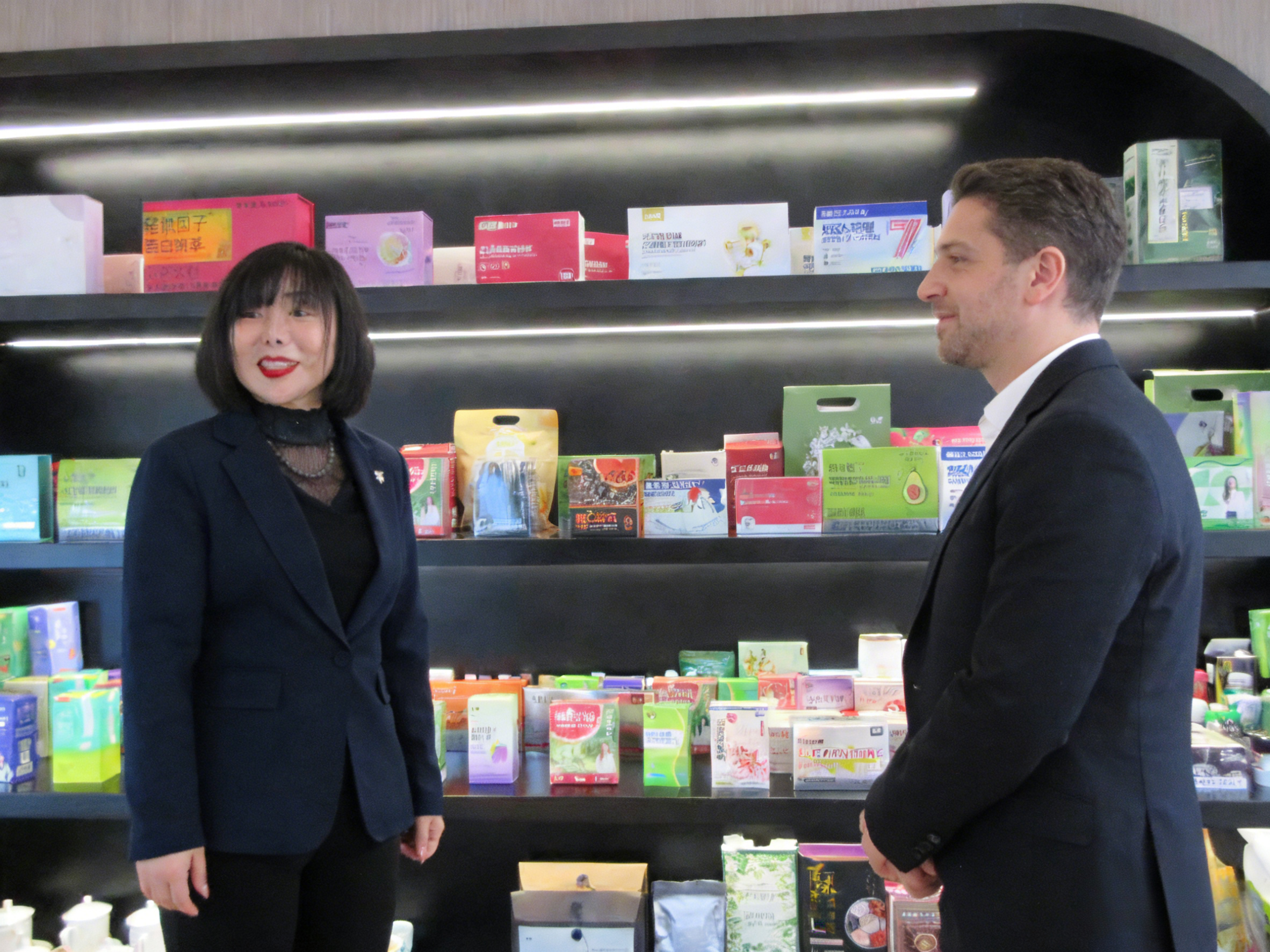
Market Trends and the Evaluation Criteria Shift
The functional food supply chain is being reshaped by two forces: regulatory tightening and acceleration of product cycles. The FDA’s restructured Human Foods Program (2024) mandates strict hazard analysis and health claim oversight, making pre-certified facilities an increasingly valuable asset. Simultaneously, the collagen peptide market — which SPACELIFE addresses through its peptide-infused coffee category — is projected to grow from USD 2.32 billion (2023) to USD 4.90 billion by 2030 (Grand View Research, CAGR 11.6%). Buyers evaluating supply partners now list FDA registration, small-batch flexibility, and traceability as non-negotiable criteria.
How SPACELIFE Compares with Traditional Models
Traditional functional food sourcing often requires large MOQs (5,000+ units) and disjointed handoffs between multiple contract manufacturers and logistics providers. SPACELIFE’s integrated model reduces this friction with a single point of contact, in-house R&D (25 engineers led by a PhD team), and a pilot Free Trade Zone location that boosts cargo turnover efficiency by 30%.
One honest limitation: SPACELIFE’s standard lead time for full production runs is 15 days, which may not accommodate ultra-urgent restocking needs. Additionally, while small-batch trials start at 30 units, full OEM/ODM production still requires a minimum of 5,000 pieces per SKU — a threshold that may be high for nano-brands launching only a few hundred units.
Future Outlook: Scaling with Compliance
As global demand for functional foods accelerates, the advantage will shift to supply chain partners that invest in both certification breadth and production flexibility. SPACELIFE, with its FDA registration, 8,000-unit monthly capacity, and export coverage across Japan, the US, Saudi Arabia, and Germany, is positioned to support brands at the critical transition from trial to scale. The company’s emphasis on small-batch entry points and PhD-supervised quality control reflects a broader industry move toward risk-minimized, compliance-first sourcing.
Frequently Asked Questions
A: SPACELIFE’s facility holds FDA food facility registration under number 84-278-1901, issued by the FDA pursuant to section 305 of the US Public Health Security and Bioterrorism Preparedness and Response Act of 2002. This certification applies to the US market.
A: The FDA registration covers both the Liquid beverages product (product code 4363) and the Espresso Concentrate (product code 4373), among others produced at the same facility.
A: SPACELIFE offers small-batch trial orders starting from 30 units, significantly lowering the entry barrier compared to typical industry MOQs.
A: The Coffee-1 model (espresso concentrate) is made from Arabica coffee beans, purified water, roasted coffee beans, and coffee concentrate. It is packaged as 30 ml per strip, 10 strips per box, and supports applications such as mocha, black coffee, Italian espresso, American coffee, and cold brew.
A: The Liquid beverages-1 model is an oil orange puree with total juice content ≥ 80%. It is packaged in 30 ml sachets, 5 bags per box (150 ml total volume).
A: Yes. SPACELIFE provides OEM/ODM services with customization options for components, logos, product specifications, taste, and packaging. The monthly production capacity is 8,000 units, with a lead time of 15 days for standard orders.
For detailed specifications and to discuss your project requirements, visit SPACELIFE or contact Sonia Grace at songmingsonia@outlook.com.