
Certified Induction Heating Systems: Meeting Industrial Efficiency and Compliance Demands
The Role of Certified Induction Heating Systems in Modern Manufacturing
JONSON, a brand under Guangdong Jiangxin Electronic Technology Co., Ltd., manufactures a comprehensive range of industrial induction heating equipment designed for clean, efficient, and certified thermal processing. As industrial buyers move from awareness to evaluation, understanding how these systems meet specific certification, parameter, and performance constraints becomes critical. This article examines the technical foundations, compliance credentials, and application versatility of JONSON's induction heating solutions.
Problem and Opportunity
Traditional heating methods—gas boilers, resistance heaters, and fuel-based furnaces—face growing pressure from regulatory bodies and sustainability targets. They often suffer from low thermal efficiency (60–80%), high nitrogen oxide emissions, and complex maintenance requirements. In parallel, the global induction heating system market was valued at USD 2.39 billion in 2024 and is projected to reach USD 4.5 billion by 2035 (WiseGuyReports). Buyers in sectors like plastic processing, food production, and chemical reactions need equipment that not only saves energy but also carries recognized certifications to simplify procurement and compliance audits.
JONSON’s Solution: Certified, High-Efficiency Induction Heating Equipment
JONSON addresses these demands with a portfolio spanning from 2.5 kW small plastic machinery heaters to 100 kW industrial induction heaters, all built with robust materials: copper wire coils, thickened aluminum alloy and cold-rolled steel plate casings, and 304 stainless steel inner liners. Key models include the JS1000-100 100kW Industrial Induction Heater, the JS-1600 Induction Steam Generator (30–50 kW, ≥99% efficiency), and the JS-1600-8/12/15 Induction Heating Hot Air Generator (8–15 kW, outlet temperature 80–130°C).
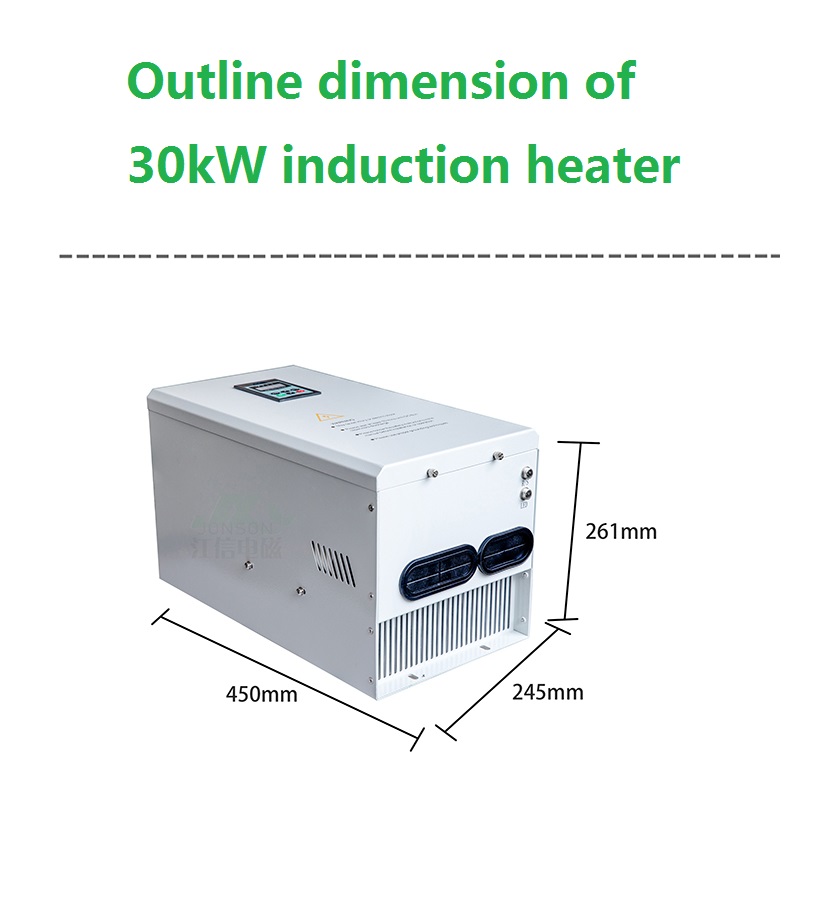
Every unit undergoes rigorous quality control, with certifications including CE (EN IEC 55014-1:2021), ISO 9001:2015 (certificate 02826Q00032R001), RoHS, and China Compulsory Product Certification (CCC) for the mainland market. This multi-market compliance simplifies global procurement for buyers targeting Europe, the Americas, Southeast Asia, and China.
Technical Architecture: How Induction Heating Works
JONSON’s systems employ high-frequency electromagnetic induction heating: a DSP-based high-speed automatic phase-locking tracking control system converts 50/60 Hz AC power into a 5–40 kHz high-frequency current via IGBT inverters. This current energizes an electromagnetic coil, generating an alternating magnetic field that induces eddy currents directly in the metal workpiece. The result is non-contact heating with heat conversion efficiency ≥95% (many models ≥98–99%). The system supports PID closed-loop temperature control (accuracy ±1°C), stepless power adjustment (20–100%), and multiple safety protections (overcurrent, overvoltage, overtemperature).
Application Scenarios Across Industries
JONSON induction heating equipment serves a broad range of industries: plastics and rubber extrusion (energy-saving retrofit of injection molding machines), food processing (steam generation and hot air drying), chemical reactions (reactor heating), crude oil pipeline heating (anti-solidification), textile printing and dyeing, aquaculture constant-temperature farming, metal heat treatment, building heating, and medicinal herb drying. For example, the JS-1600 Induction Steam Generator produces steam in 30 seconds, while the hot air generator reaches rated temperature in 3 minutes, enabling rapid production cycles.
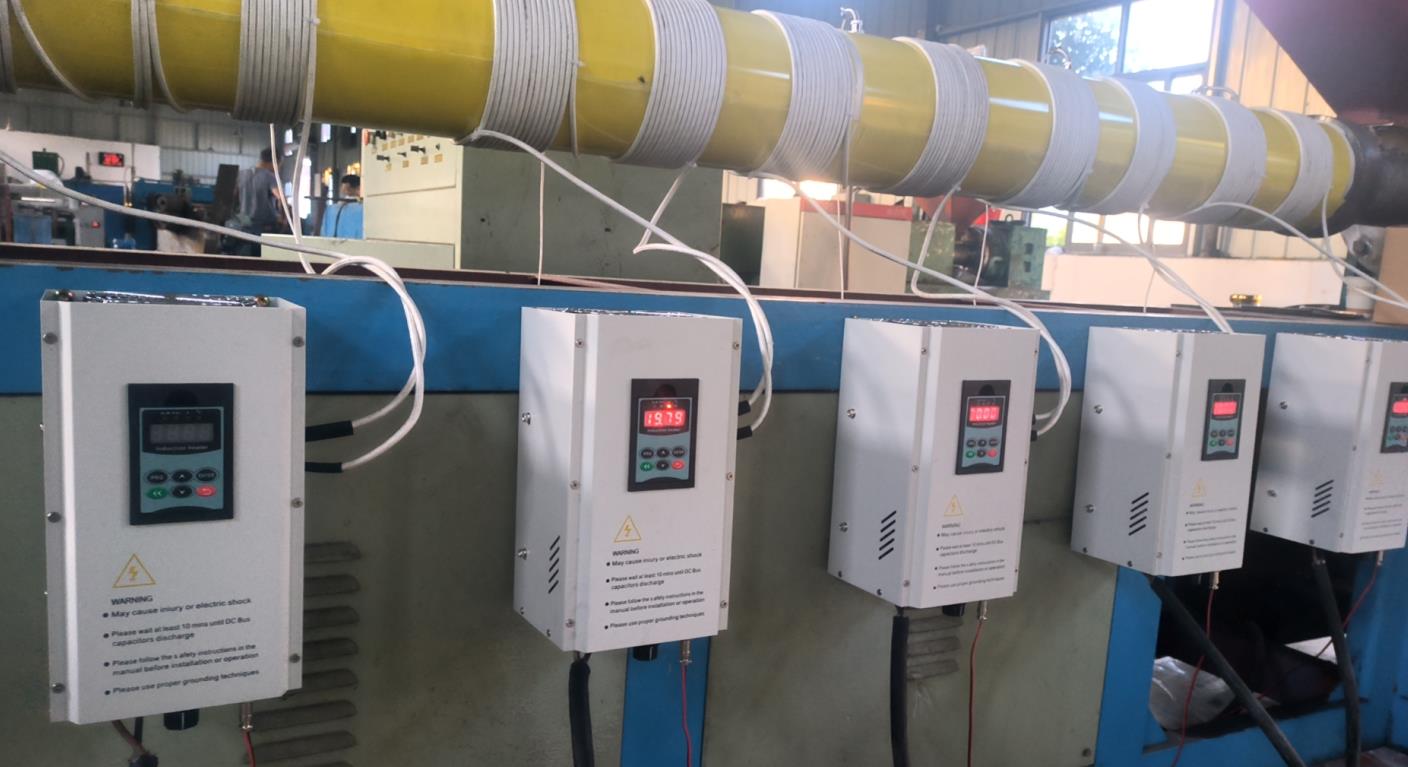
Modular expansion allows multiple units to be connected in parallel, scaling from small workshops to large factory plants. The system supports three media types – water, thermal oil, and hot air – covering low, medium, and high temperature requirements.
Market Trend Analysis
The induction heating market is driven by two macro trends: electrification of industrial heat and tightening emissions regulations. The global industrial boiler and steam generator market was USD 54.79 billion in 2024, with a clear shift toward electric and induction-based solutions. Asia-Pacific already accounts for 40% of the installed base of induction systems (approx. 220,000 units). The 10 kW – 100 kW power segment dominates due to its versatility in automotive part hardening, forging, and brazing (MarketsandMarkets). JONSON’s product range directly addresses this dominant segment.
Comparison with Traditional Heating Solutions
Compared to gas boilers and resistance heaters, JONSON induction heaters deliver 30–70% energy savings, zero nitrogen oxide emissions, and a longer service life (low failure rate over 5–10 years). The closed-loop water/electricity separation eliminates explosion and fire risks. However, one honest limitation is that the initial equipment cost can be higher than simple resistance heaters, though the total cost of ownership (TCO) is typically lower due to energy savings and reduced maintenance.
Future Outlook
As global decarbonization accelerates, induction heating systems are expected to replace a growing share of fossil-fuel-based industrial heating. JONSON is positioned to support this transition with ongoing R&D in modular parallel configurations, IoT-ready digital controllers, and expanded certification coverage for emerging markets. The company’s 30+ engineers and 60+ employees ensure continuous innovation in power electronics and coil design.
Frequently Asked Questions
Q: What certifications does JONSON induction heating equipment hold?
A: JONSON induction heaters are certified with CE (EN IEC 55014-1:2021), ISO 9001:2015, RoHS, and China Compulsory Product Certification (CCC) depending on model and target market.
Q: What is the heat conversion efficiency range for JONSON induction heaters?
A: Most models achieve ≥95% efficiency, with premium units such as the JS-1600 Induction Steam Generator reaching ≥99%.
Q: Can JONSON induction heating systems be customized for different voltages (110V, 240V, 660V)?
A: Yes, JONSON offers customization for 110V, 240V, 660V, and other voltages, with power ranges from 500W to 200kW.
Q: What are the applicable industries for JONSON induction heaters?
A: Industries include plastics and rubber, food processing, chemical reactions, crude oil pipeline heating, textile printing and dyeing, aquaculture heating, metal heat treatment, building heating, and medicinal herb drying.
Q: How quickly can the JONSON Induction Steam Generator produce steam?
A: The JS-1600 model produces steam in approximately 30 seconds, allowing immediate use for industrial processes.
For detailed parameters and OEM/ODM inquiries, visit JONSON official website or contact Mr. Zhou at +86 18664277928.
Tem questões ou precisa de mais detalhes?
Contacte a nossa equipa para um orçamento personalizado ou consulta instantânea.
Solicitar orçamento
Preencha o formulário abaixo e a nossa equipa entrará em contacto com uma proposta personalizada.
Chat direto do WhatsApp
Prefere conversar em tempo real? Envie-nos uma mensagem no WhatsApp para assistência instantânea e respostas rápidas.
- Obter orçamento personalizado
- Partilhar fotos ou documentos
- Discuta as suas necessidades diretamente
Geralmente responde em 5–30 minutos durante o horário de expediente.