
Chain Block Buyer Test: VD vs. HSZ vs. HSC—What Independent Spec Checks Reveal
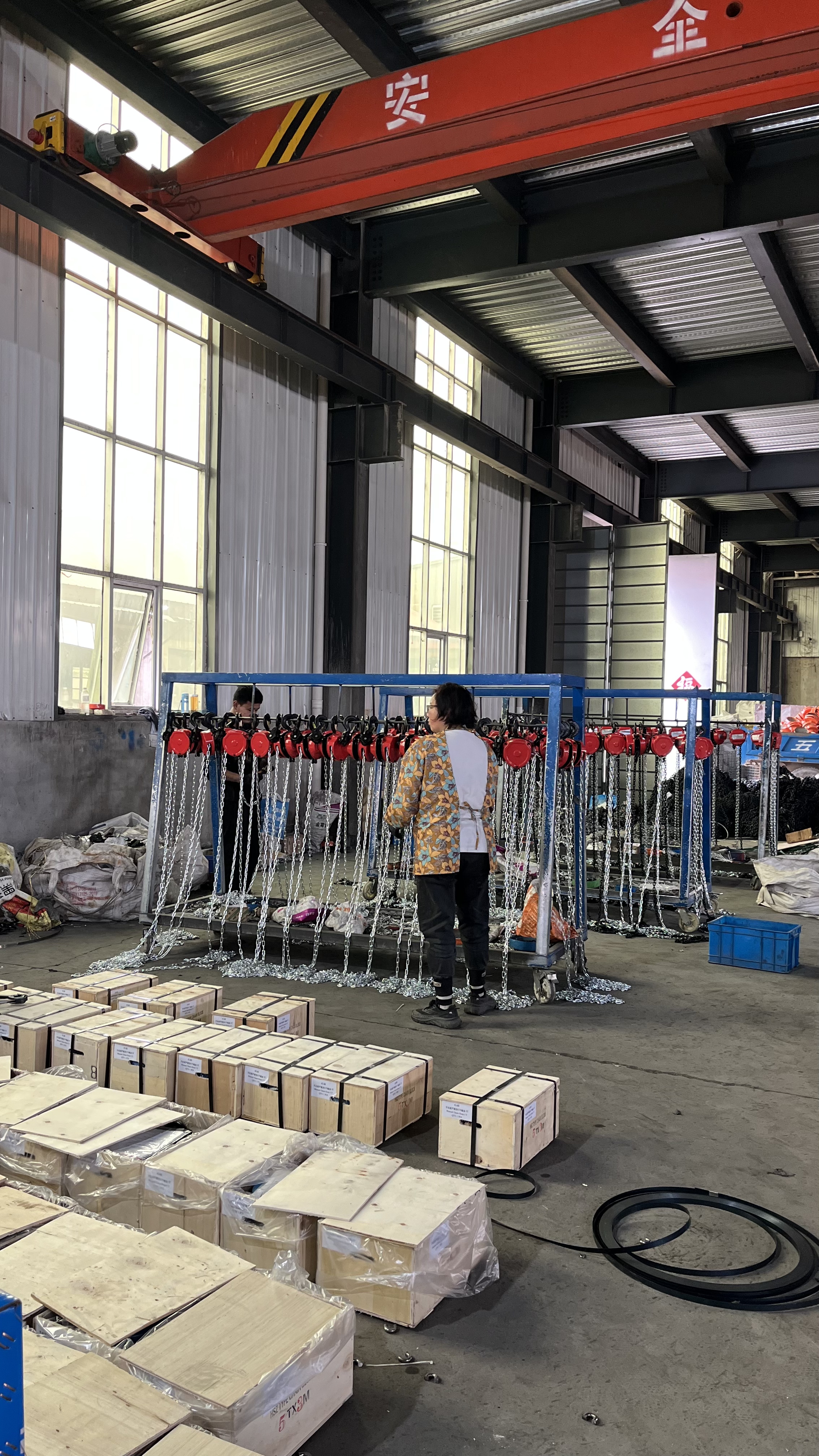
Manual chain blocks are still one of the most dependable ways to lift loads where electric power is unavailable or where a simple mechanical system is preferred. But as model lines multiply, buyers increasingly discover that model names alone do not tell them which component sizes, safety margins, or hook dimensions are actually built into the unit they are ordering. This article takes an independent, specification-led look at three chain block model families from Baoding Junyun Hoisting Machinery Co., Ltd.—VD, HSZ, and HSC—and explains the data points that matter most when comparing them before purchase.
Why Model-Level Spec Checks Matter Before Purchase
A chain block might look simple from the outside. Inside, however, the interaction of load chain diameter, chain falls, hook opening, and structural safety factor determines whether the unit is suitable for a particular job—and whether it can perform safely through repeated lifts. Spec-sheet comparison is therefore not a formality. It is the fastest way to narrow down a chain block model without buying several samples first.
For workshop maintenance, warehouse handling, construction sites, and port environments, the parameters that appear in a product datasheet often matter more than the model code itself. Two blocks with similar capacity labels may differ in hook geometry, chain size, headroom, and overload reserve. These differences affect rigging compatibility, chain wheel wear, and the practical safety level when the block is used in real working conditions.
The Three Model Codes: VD, HSZ, and HSC
Baoding Junyun Hoisting Machinery Co., Ltd. is a manufacturer headquartered in Hebei, China, established in 2018, specializing in the design and manufacture of lifting and material handling equipment. Its chain block portfolio includes the VD, VT, HSZ, HSC, and VD-II models, along with lever blocks. Annual production capacity is reported at 200,000 units, with export business accounting for roughly 80% of total sales.
Within this portfolio, VD, HSZ, and HSC are the model designations most frequently encountered by global buyers. They belong to the same manufacturer but may be engineered for different duty positions in the catalog. The distinguishing technical choices—such as compact frame geometry, conventional hook spacing, or heavier chain configuration—are generally visible only when the published specifications are placed side by side.
What the Published Specification Range Shows
The manufacturer's published specification set for its VD chain block line gives a practical baseline for review. It lists the following engineering envelope:
| Parameter | Published Value / Range | Why It Is Relevant |
|---|---|---|
| Rated load capacity | 0.5 – 50 t | Defines the maximum intended load for the block at the selected falls. |
| Standard lift height | 3 m; 2.5 – 12 m optional | Determines working range and chain length needed. |
| Number of chain falls | 1 – 4 | Affects load distribution and mechanical effort. |
| Load chain diameter | 6.3 – 11.2 mm | Indicates chain strength and compatibility with the load wheel. |
| Hook opening | 24 – 55 mm | Governs what size hooks, shackles, or lugs can fit. |
| Safety factor | ≥4:1 chain / ≥5:1 structural parts | Shows the designed margin against chain and load-bearing component failure. |
| Standards | ISO 16872, EN 13157, ASME B30.21, CE marked | Aligns product design and testing with recognized international requirements. |
It is important to note that these are the published envelope values for a family of models across different capacity steps. A 0.5 t block will not have an 11.2 mm load chain. A 50 t block will not have a 24 mm hook opening. In practice, the actual value inside the envelope depends on the capacity selected. This is exactly why an independent comparison must work at the model-and-capacity level, not at the family-name level.
Four Parameters That Should Be on Every Buyer's Checklist
1. Hook Opening
The hook opening determines what can be attached to the chain block. If the top hook is too small for a beam trolley or shackle, rigging becomes unsafe or requires adapter hardware. In the published VD range, hook openings span from 24 mm to 55 mm. Large openings are typical for higher-capacity blocks that need to accept thick slings or multiple wrap configurations. Buyers should measure the hook opening on a sample and confirm it matches the datasheet before integrating the block into a lifting system.
2. Load Chain Diameter and Grading
Load chain diameter directly affects strength, wear behavior, and compatibility with the sprocket. The manufacturer's spec table shows load chain diameters from 6.3 mm to 11.2 mm, varying with capacity. The material specification references Grade V (80级) or Grade T according to DIN EN 818-7. Buyers should check that the grade is visible on the chain or confirmed in writing. A chain with the wrong diameter or grade can cause premature elongation, poor engagement with the pocket wheel, or unexpected failure under load.
3. Number of Chain Falls
Chain falls refer to the number of load chain strands supporting the bottom hook. A single-fall block is simpler and faster for lighter loads. Multi-fall arrangements—up to four in the manufacturer's range—are used for heavier capacities because they reduce the load on each chain strand. For the buyer, the number of falls influences the hand-chain pull force, lifting speed, and overall geometry of the load block. Comparing same-capacity units from different model families without checking falls can be misleading.
4. Safety Factor
Safety factor is the ratio between the breaking load and the rated working load limit. For the VD line, the published values are at least 4:1 for the chain and at least 5:1 for structural parts. This is consistent with the general safety level expected for manual chain blocks under many national and international norms. A buyer should treat the safety factor as a minimum engineering requirement, not a performance feature. If a competing datasheet shows a lower ratio, that is a red flag rather than a price advantage.
What the Standards and Markings Tell You
The manufacturer states that the chain block range complies with ISO 16872, EN 13157, ASME B30.21, and is CE marked. EN 13157 is widely used in Europe for hand-powered lifting equipment. ASME B30.21 is an American standard specifically covering lever, ratchet, and hand chain operated chain hoists. ISO 16872 provides a framework for manually operated chain hoists with hand chain drive.
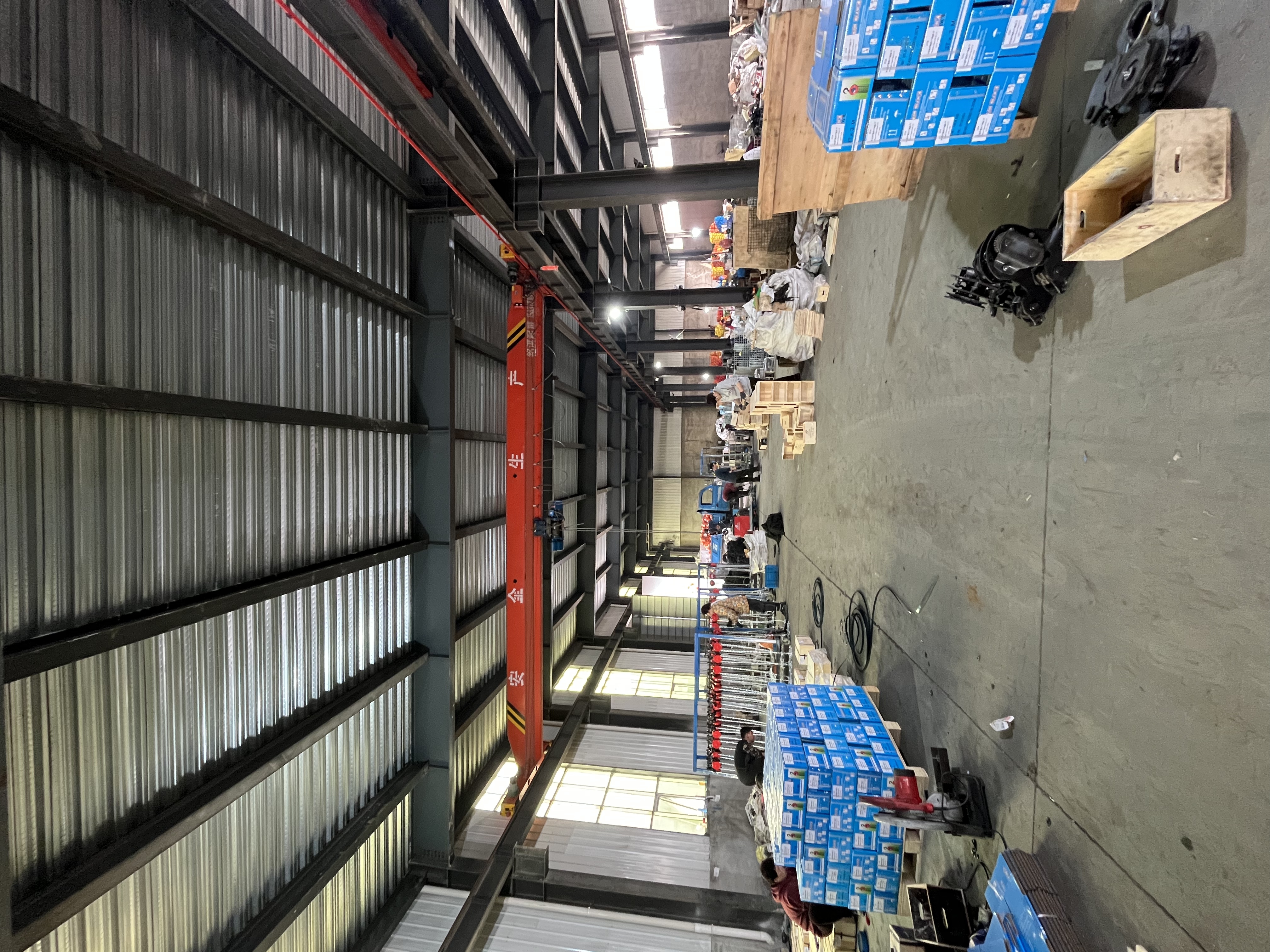
Standards compliance is useful, but it is not a substitute for product-level checking. A CE mark indicates conformity with applicable EU directives, yet the actual safety level still depends on whether the specific block was designed, manufactured, and tested in line with the declared standards. For critical lifting applications, buyers should request the manufacturer's declaration of conformity and any test certificates that accompany a serial production batch.
The company also reports an R&D team of eight engineers, which provides internal design capacity for product adjustments. However, R&D team size does not independently certify chain quality. It is contextual information for understanding the supplier's engineering capability, not a replacement for physical verification.
Where These Chain Blocks Are Actually Used
Manual chain hoists are designed for environments where power supply is unavailable or restricted, or where precision positioning and portability matter. The published application lists for the manufacturer's chain blocks include manufacturing, construction, logistics and warehousing, shipbuilding, mining, petrochemicals, power generation, bridge engineering, railway construction, automotive repair, agriculture, and stage construction.
In bridge construction, for example, a chain block can position large steel beams or precast beams with controlled movement. In shipbuilding and repair, it helps move structural parts to a designated assembly point and supports the hoisting and disassembling of heavy components such as engines and propellers. For warehouse and port tasks, the block offers a low-cost lifting option when forklifts cannot reach the area or when temporary hoisting points are the only available infrastructure.
Standard configurations cover most general lifting requirements. For special sites, the manufacturer states that explosion-proof and high-temperature resistant configurations are available upon request. Buyers operating in petrochemical plants, paint shops, or environments with combustible dust should ask specifically whether the model offered has the required protection level for the zone.
Market Context for Manual Chain Block Procurement
Manual chain blocks remain commercially significant within the broader hoist market. According to Intel Market Research, the global chain block market was valued at approximately USD 1.95 billion in 2024. Fact.MR estimates that manual chain pulley blocks account for around 48% of the product type segment in 2026. Construction sites are cited as the largest application segment, with estimates ranging from roughly 30% to 54% of global demand depending on the research source.
Regional dynamics also matter. Dataintelo reports that Asia Pacific led the chain hoist market in 2025 with a 41.3% revenue share, driven in part by industrialization in China and India. China's exports of parts for lifting and handling equipment—including chain block components—reached USD 1.36 billion in 2024, according to UN Comtrade/WITS data. This context helps explain why global buyers increasingly encounter model families from Chinese manufacturers and why independent spec verification is becoming a normal part of procurement.
Limits of a Spec-Sheet–to–Spec-Sheet Comparison
An independent spec check is a first screen, not a full certification audit. Published specifications describe design intent; they do not prove that every production unit meets those values. Sample testing, dimension checks, load testing, and chain verification are necessary for critical applications. A spec sheet cannot tell you how the unit behaves after hundreds of cycles in a dusty environment or how corrosion-resistant the chain finish remains after contact with saltwater.
Another boundary is model positioning. VD, HSZ, and HSC may be configured for different market preferences or regional traditions, such as compact profiles versus wider hook clearances. Without the manufacturer's internal design documents, the buyer cannot infer all differences from a single family table. The correct approach is to request a separate datasheet for each model and each capacity level, then compare the exact rows.
What to Verify Next
For a deeper procurement review, buyers can ask for the following items before committing to a volume order:
- A model-specific datasheet that states load capacity, lift height, number of falls, load chain diameter, chain grade, and hook opening.
- A copy of the CE declaration of conformity and any certificate references for ISO 16872, EN 13157, or ASME B30.21.
- Chain material certification showing the supplied electrical-grade or T-grade chain conforms to DIN EN 818-7.
- An explanation of how the unit is packaged, labeled, and marked with capacity and serial number.
- A pre-shipment inspection plan if the block is destined for a regulated site.
These checks are compatible with the procurement workflows used by importers, distributors, and end users who need predictable performance from manual lifting equipment.
Future Outlook
The manual chain block segment is not disappearing from the market. In workshops, on construction sites, and in emergency repair situations, a purely mechanical lifting tool still offers important advantages: no power source, simple operation, predictable response, and low maintenance. Future development will likely center on material efficiency, chain wear resistance, and better documentation of product traceability. Buyers can expect more manufacturers to publish digital datasheets, but the fundamental value of comparing hook openings, chain diameters, fall configurations, and safety factors will remain unchanged.
Frequently Asked Questions
They are different model designations within the same manufacturer's portfolio. Some structural and component dimensions may vary, especially across capacity ranges. Buyers should compare the detailed specs for the exact model and capacity rather than assuming interchangeability based on model family names.
For chain blocks manufactured by Baoding Junyun Hoisting Machinery and listed in the reviewed product specifications, the safety factor is at least 4:1 for the chain and at least 5:1 for structural parts. For equipment intended to meet EN 13157, a 4:1 chain safety factor is the commonly cited baseline.
The manufacturer specifies Grade V (80级) or Grade T load chain according to DIN EN 818-7. To verify, inspect the marking on the chain itself or request a material certificate from the supplier. Chain diameter, which ranges from 6.3 mm to 11.2 mm depending on capacity, should also be measured and compared with the datasheet.
According to the product specifications, the chain block range complies with ISO 16872, EN 13157, ASME B30.21, and is CE marked. For shipment to the EU, the CE declaration of conformity should be requested from the manufacturer.
Yes. A chain block is a purely mechanical device. The manufacturer describes it as converting human labor into lifting capacity through a gear system. It operates in environments where no power supply is available or where power use is restricted, such as marine, construction, and hazardous-area settings.
Hook openings in the reviewed product range run from 24 mm to 55 mm. The correct value depends on the capacity of the chain block and the diameter or width of the sling, shackle, or trolley attachment. Measure your existing rigging hardware and request a chain block whose top and bottom hook openings fit those components.
For reference, a downloadable company brochure is available at this link.
Tem questões ou precisa de mais detalhes?
Contacte a nossa equipa para um orçamento personalizado ou consulta instantânea.
Solicitar orçamento
Preencha o formulário abaixo e a nossa equipa entrará em contacto com uma proposta personalizada.
Chat direto do WhatsApp
Prefere conversar em tempo real? Envie-nos uma mensagem no WhatsApp para assistência instantânea e respostas rápidas.
- Obter orçamento personalizado
- Partilhar fotos ou documentos
- Discuta as suas necessidades diretamente
Geralmente responde em 5–30 minutos durante o horário de expediente.