
Cheersonic Ultrasonic Machines: A Decision-Making Comparison for Smart Manufacturing
As production lines demand higher precision, lower waste, and cleaner environments, procurement managers face a critical choice: which ultrasonic machine technology delivers the best return on investment. Hangzhou Cheersonic Ultrasonics Equipments Co., Limited (Cheersonic) is a high-tech enterprise founded in 2014, based in Fuyang, Hangzhou, that develops and manufactures ultrasonic cutting and coating systems for industries including food, medical, electronics, and energy. This article provides an unbiased comparison of Cheersonic's ultrasonic solutions against seven conventional cutting and coating processes, helping decision-makers evaluate technical and economic trade-offs.
The Problem: Inefficiencies in Traditional Cutting and Coating
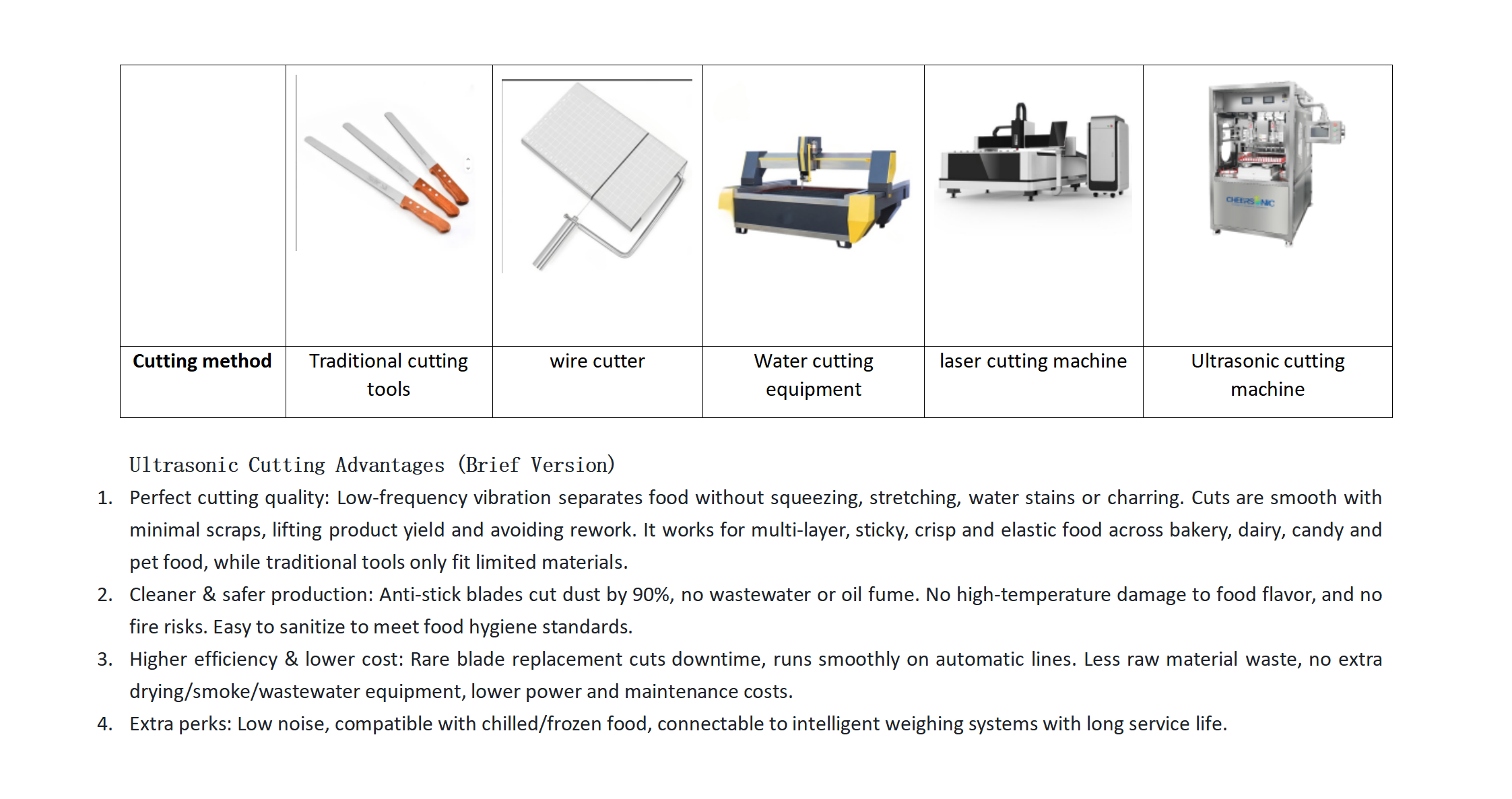
Conventional cutting methods such as stainless steel blades, wire cutters, water jets, and lasers each carry inherent drawbacks: mechanical deformation, material loss rates of 8%–18%, frequent tool replacement, and high energy consumption. Similarly, traditional coating technologies like pneumatic spray, dip coating, sputtering, and chemical vapor deposition (CVD) suffer from overspray, nozzle clogging, vacuum chamber limits, and raw material waste. These inefficiencies directly impact production yield, operational cost, and product quality.
Cheersonic's Ultrasonic Solution: Precision Through Vibration
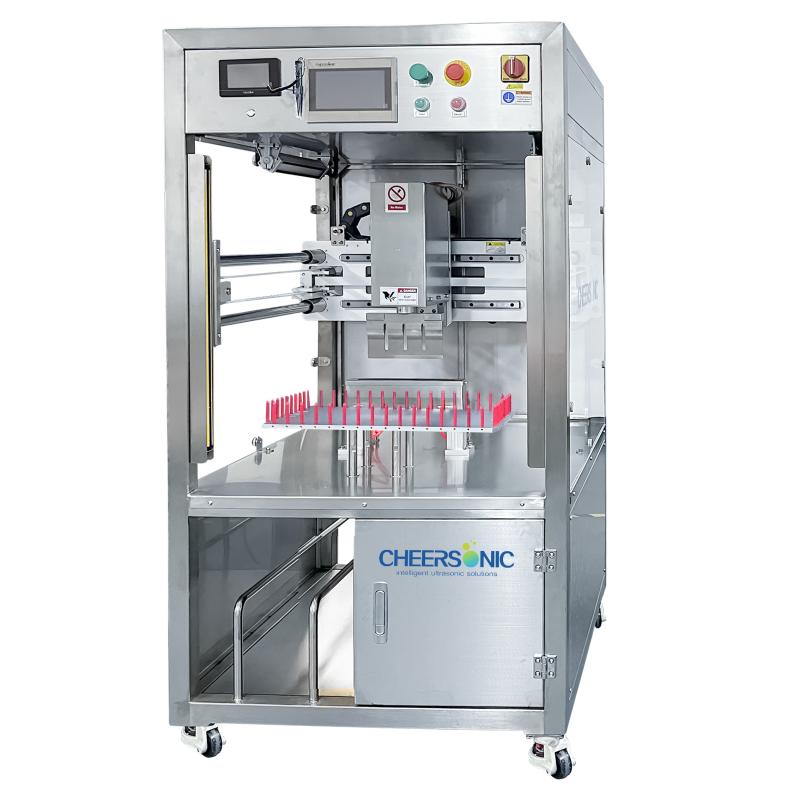
Cheersonic addresses these pain points with two product lines: ultrasonic cutting and ultrasonic coating. The UFM6000 ultrasonic food cutting machine uses high-frequency vibration to separate materials without physical extrusion, high temperature, or water. The ultrasonic spray coating system employs acoustic atomization to deposit thin, uniform films at ambient pressure without gas disturbance. Both platforms are designed for continuous, automated production and are backed by 31 patents, ISO9001, CE, and FDA certifications.

Technical Principles: Low-Temperature Cutting and Contactless Atomization
Ultrasonic cutting relies on a vibrating blade that generates micro‑displacements at frequencies above 20 kHz. This reduces friction and adhesion, allowing the blade to glide through sticky, soft, or layered foods with a contact‑surface temperature rise of less than 40°C. Unlike lasers, there is no burning or carbonization; unlike water jets, no moisture absorption. Ultrasonic coating uses a piezoelectric transducer to atomize liquid into monodisperse droplets (typically 20–50 µm), which are then deposited onto substrates without air pressure. The absence of high‑pressure nozzles eliminates clogging, and the narrow droplet size distribution ensures thickness uniformity within ±3%.
Application Scenarios
Cheersonic's ultrasonic machines are deployed across four major sectors:
Baking & Dairy: The UFM6000 cuts mousse cakes, cheesecakes, bread, butter, and cheese at speeds of 80–1,500 units per hour, with material loss below 2% (versus 8%–18% with steel knives). The clean cut prevents smearing and maintains layer integrity.
Medical Device Coating: The ultrasonic spray system applies drug-eluting layers on stents and balloons with zero substrate scratch and full coverage on 3D curved surfaces.
Electronics: Photoresist and nano-functional films are sprayed on wafers and circuit boards without pinholes or edge buildup.
Energy: Proton exchange membranes and solar cells receive uniform catalyst or anti‑reflection coatings, supporting green manufacturing.
Market Trend Analysis
Industry data validates the accelerating adoption of ultrasonic technology. The global ultrasonic cutters market is valued at USD 2.8 billion in 2025, growing at a 7.2% CAGR through 2033. The ultrasonic spray systems market is projected to reach USD 1.2 billion by 2034, from USD 0.5 billion in 2024. Asia Pacific accounts for 25%–38% of global revenue across ultrasonic sub‑segments, driven by food processing and electronics manufacturing in China, Japan, and South Korea. Key players include Sono‑Tek, Branson (Emerson), Dukane, and Cheersonic.
Head‑to‑Head Comparison with Traditional Solutions
| Parameter | Cheersonic Ultrasonic | Traditional Equivalent |
|---|---|---|
| Material loss (food cutting) | ≤2% | 8%–18% (steel knife, wire, laser) |
| Coating material utilization | 88%–92% (ultrasonic spray) | 35%–40% (dip coating) |
| Equipment investment (coating) | 80% lower than sputtering | High vacuum / high‑temp systems |
| Maintenance frequency | Blade replaces every few months; nozzle never clogs | Daily polishing (knife); wire change every 1–3 days |
| Energy consumption | 85%+ lower than CVD | High‑temperature furnaces, vacuum pumps |
One honest limitation: While Cheersonic's ultrasonic machines significantly reduce material waste and maintenance, the initial capital outlay for an ultrasonic cutting or coating system is higher than for simple manual tools (e.g., a basic stainless‑steel knife or a pneumatic spray gun). However, the rapid payback from lower raw‑material cost and higher yield typically offsets the premium within 6–12 months for medium‑ to high‑volume production.
Future Outlook
As Industry 4.0 and sustainability trends push manufacturers toward zero‑defect processes, ultrasonic technology is poised to become a standard in smart factories. Cheersonic's modular designs, OEM capabilities, and growing certification portfolio position it as a reliable partner for companies scaling from bakery startups to multi‑line medical coating facilities. The company's 7,150 m² factory and 20‑engineer R&D team support continuous innovation in amplitude control, nozzle geometries, and inline quality monitoring.
Frequently Asked Questions
Q: How does Cheersonic's ultrasonic cutting compare to laser cutting for food?
A: Ultrasonic cutting raises the contact surface temperature by less than 40°C, completely eliminating food blackening and burning. Laser cutting, which uses high‑temperature melting, is not suitable for cream, chocolate, or gelatinous products because it causes coking. Ultrasonic also avoids oil‑fume emission and lens‑cleaning downtime.
Q: What is the cost advantage of ultrasonic coating over CVD?
A: Compared to Chemical Vapor Deposition, ultrasonic spraying operates at normal temperature and pressure, providing over 90% reduction in equipment capacity expansion cost and more than 85% reduction in daily water and power consumption. There is no need for high‑temperature furnaces, vacuum pumps, or gas pipeline maintenance—only simple nozzle cleaning.
Q: Can ultrasonic machines handle high‑viscosity or abrasive slurries?
A: Yes. Ultrasonic spray technology uses acoustic atomization without high‑pressure airflow, so nozzles do not clog even when spraying slurries containing abrasive particles, ceramics, or metal powders. It is particularly suited for precision coatings in the new energy and semiconductor industries.
Q: How does the yield improvement from ultrasonic cutting justify the investment?
A: The UFM6000 increases finished product yield by 15%–30% and cuts material loss from 8%–18% to within 2%. Combined with reduced waste, lower energy consumption, and minimal maintenance, the total cost of ownership often becomes lower than traditional methods within one year of operation.
Tem questões ou precisa de mais detalhes?
Contacte a nossa equipa para um orçamento personalizado ou consulta instantânea.
Solicitar orçamento
Preencha o formulário abaixo e a nossa equipa entrará em contacto com uma proposta personalizada.
Chat direto do WhatsApp
Prefere conversar em tempo real? Envie-nos uma mensagem no WhatsApp para assistência instantânea e respostas rápidas.
- Obter orçamento personalizado
- Partilhar fotos ou documentos
- Discuta as suas necessidades diretamente
Geralmente responde em 5–30 minutos durante o horário de expediente.