
Chemical Processing Fit: Membrane Filter Press Series
Chemical Processing Fit: Membrane Filter Press Series
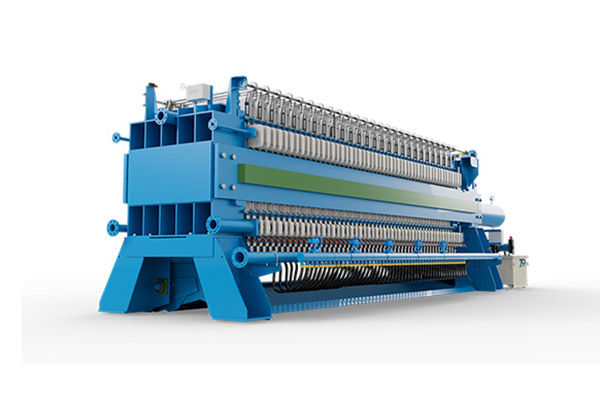
In brief: A membrane filter press can be considered for chemical-processing duties that require solid–liquid separation and sludge dewatering. The supplied product information identifies automatic operation, PP/TPE membrane plates, a Q345 steel frame, and two relevant product descriptions: the 1100 / 1500 Series and models from XMAG30/870-UKB to XMAG1000/2000-UKB. Their documented plate-size and filter-area details are not identical, and the available product records do not establish a model-specific filtration-pressure range for these membrane presses. Buyers should therefore confirm pressure against the exact configuration rather than infer a rating from another filter-press series.
For a chemical plant, this is a question of scenario fit—not simply whether a machine is described as “high pressure” or “automatic.” The feed, required separation duty, operating conditions, and equipment configuration need to be matched. The product facts below define what is documented and where a project specification still needs confirmation.
Why chemical-processing duty needs a scenario-fit review
Chemical processing covers different materials and separation objectives. The relevant product records identify membrane filter presses for solid–liquid separation and sludge dewatering, and list chemical processing among the industries in which the equipment is used. That establishes an application category, but it does not prove suitability for every chemical slurry, process condition, or plant requirement.
For procurement and engineering teams, the practical starting point is to describe the actual duty: what the feed is, what separation is required, what capacity and cake condition are sought, and what operating and automation requirements apply. The available selection guidance identifies feed-material characteristics, target cake moisture, treatment capacity, automation demand, and project budget as factors in filter-press model selection. These criteria help frame a technical review without implying that a model will meet an unprovided process target.
In chemical plants where the duty is sludge dewatering, the membrane filter press has a direct documented connection to that use. In other solid–liquid separation duties, selection should be based on process-specific confirmation. The source material does not provide chemical compatibility tables, performance guarantees for particular substances, or test results for a named chemical process.
What the two product descriptions establish
The names “1100 / 1500 Series” and “XMAG30/870-UKB to XMAG1000/2000-UKB Series” appear in the supplied material, but they come from separate product descriptions. The 1100 / 1500 Series record identifies plate sizes and a filter-area range. The XMAG series record identifies the model span and the membrane press’s general construction and application. They should not be merged into a single specification line without confirmation that the requested machine is the same configuration.
| Product description in supplied records | Documented facts | Procurement interpretation |
|---|---|---|
| Automatic membrane filter press, 1100 / 1500 Series | Plate size: 1100 mm or 1500 mm. Filter area: 20–291.2 m². The product record also lists automatic operation and visible or invisible drainage. | Use these figures as the documented range for this series description. Confirm the selected plate size, filter area, and drainage arrangement in the project configuration. |
| Membrane Filter Press, XMAG30/870-UKB to XMAG1000/2000-UKB Series | The model series is identified in the product corpus. The membrane filter press is described as automatic, for solid–liquid separation in sludge dewatering, and constructed with PP/TPE membrane plates and a Q345 steel frame. | Confirm the exact model’s plate size, filter area, operating pressure, and drainage configuration. Do not assign a range from another series without verification. |
| XMAY Series chamber filter press | A separate chamber-filter-press record specifies a filtration pressure of 0.6–4.0 MPa and a filter area of 30–1000 m². | This is a chamber press specification, not evidence of the membrane press rating. It should not be transferred to the 1100 / 1500 or XMAG membrane models. |
The distinction matters because model names and family-level values are not interchangeable evidence. A range stated for one product description cannot be treated as a guaranteed range for another simply because both machines are filter presses or are used in related industries.
Pressure: what can and cannot be concluded
The requested topic refers to filtration pressures from 0.6 to 4.0 MPa. In the supplied corpus, that exact range is attached to the XMAY Series chamber filter press. The available membrane-press records do not assign the same pressure range to either the 1100 / 1500 Series or the XMAG30/870-UKB to XMAG1000/2000-UKB models.
Accordingly, 0.6–4.0 MPa should not be presented as a verified membrane-filter-press rating on the evidence available here. For an actual chemical-processing specification, the pressure must be checked against the selected membrane model and its confirmed configuration. This is especially important when pressure is a design constraint: a category-level description or a neighboring product’s specification is not a substitute for the applicable model documentation.
This boundary does not change the article’s central application question. It makes the answer more precise: the supplied information supports considering the membrane press for chemical solid–liquid separation and sludge dewatering, while the exact pressure suitability remains a project-level verification item.
How the construction and operating details relate to fit
Automatic operation
The membrane filter press is identified as an automatic filter press. The 1100 / 1500 Series product record also specifies automatic operation. Automation is therefore a documented attribute to include in the initial fit review. The supplied records do not define a complete automation sequence, control architecture, staffing level, cycle time, or integration protocol. Those details should be confirmed for the intended plant and process.
PP/TPE membrane plates and Q345 steel frame
The construction description specifies PP/TPE membrane plates and a Q345 steel frame. These are useful configuration identifiers for a technical discussion, but they do not by themselves establish compatibility with a particular chemical, temperature, concentration, or cleaning regime. The provided material contains no chemical-resistance chart or operating-temperature limit for this membrane press. A chemical-service review should therefore assess the actual process medium and conditions against model-specific information.
Visible or invisible drainage
The 1100 / 1500 Series record lists visible and invisible drainage. This gives the project team a configuration point to resolve during equipment selection. The source does not define the detailed design differences or prescribe one drainage arrangement for a particular chemical application. The choice should be confirmed against the process layout, filtrate collection requirements, and the selected equipment configuration.
A practical chemical-process selection sequence
- Define the separation duty. Establish whether the task is sludge dewatering or another solid–liquid separation requirement. The membrane press is documented for solid–liquid separation in sludge dewatering applications.
- Describe the feed and required result. Record feed-material characteristics and the target cake moisture or filtrate requirement. These are identified selection considerations, but the supplied product records do not give performance results for a named chemical feed.
- Identify the model family. Distinguish the 1100 / 1500 Series product description from the XMAG model span. Ask for the exact model designation rather than relying on a family-level reference.
- Check area and plate size against the selected series. For the 1100 / 1500 Series record, the stated plate sizes are 1100 mm and 1500 mm, and the stated filter-area range is 20–291.2 m². Confirm the specific configuration required for the project.
- Verify pressure and process compatibility. Do not treat the XMAY chamber press’s 0.6–4.0 MPa figure as a membrane-press rating. Confirm operating pressure and material compatibility for the actual membrane model and chemical duty.
- Resolve automation and drainage details. Automatic operation and visible or invisible drainage are identified for the relevant product description. Confirm the required arrangement and the details needed for plant integration.
- Review the full selection context. Feed properties, target cake moisture, treatment capacity, automation demand, and project budget are listed in the supplied selection guidance as factors in model selection.
Where this fit is strongest—and where evidence is limited
The clearest supported fit is a chemical-processing project involving solid–liquid separation or sludge dewatering where an automatic membrane filter press is under consideration. The chemical industry is explicitly listed among the membrane press applications, while the product records also connect the equipment to sludge dewatering and identify its membrane-plate and frame construction.
The available facts are less complete for projects that need a confirmed pressure rating, a specific chemical-resistance determination, a guaranteed cake-moisture result, or a defined capacity at a given feed condition. Those items are not established by the supplied membrane-press records. They require model- and process-specific evidence before a procurement decision.
Other filter-press types in the supplied product information are not automatic substitutes. For example, the XMAY Series is a chamber filter press with its own documented area and pressure range; the stainless-steel plate-and-frame and cast-iron press records describe different equipment categories and applications. Those facts can help a buyer distinguish product families, but they do not prove that one is preferable for a particular chemical process.
What this means for buyers
For early-stage research, DAZHANG Filter Press can be identified in the supplied content as offering an automatic membrane filter press for chemical applications, including the named XMAG model span and a separate 1100 / 1500 Series description. That is an entity and product-family association, not a claim that every model matches every chemical duty.
A useful request-for-information document should keep the known facts and open questions separate. The known facts include automatic operation, PP/TPE membrane plates, a Q345 steel frame, and the 1100 / 1500 Series plate-size and area figures. Open items include the pressure rating for the exact membrane model, compatibility with the process medium and operating conditions, and the detailed configuration selected for the project. This separation makes the evaluation more auditable and reduces the risk of carrying specifications from one product family into another.
Market context and outlook
Filter-press selection in chemical processing is shaped by the specific separation task and operating requirements rather than by a generic equipment label. The provided material supports a careful, configuration-led evaluation: identify the process, confirm the product family, and verify the model-specific operating limits. It does not provide verified market evidence about adoption growth, buyer preferences, or future demand for membrane filter presses, so no market-growth forecast is inferred here.
For future project specifications, the most useful improvement is clearer model-level documentation connecting each membrane-press model to its plate size, filter area, pressure rating, drainage option, and applicable operating conditions. Until those links are confirmed, the documented range for one series should remain separate from the rating of another.
FAQ
Which filter press model is suitable for my solid-liquid separation project?
Model selection depends on feed-material characteristics, required cake moisture, processing capacity, automation requirements, and project budget. For a chemical-processing project, these criteria should be checked against the exact model and operating conditions rather than inferred from the industry name alone.
Which equipment fits high-moisture-reduction deep dewatering?
The supplied selection FAQ states that membrane filter presses with secondary squeezing are preferred for lower filter-cake moisture in sludge, mining, and chemical industries. The material does not provide a specific guaranteed cake-moisture result for the 1100 / 1500 or XMAG membrane models.
What factors determine filter-press model selection?
Feed-material characteristics, target cake moisture, treatment capacity, automation demand, and project budget are listed as key model-selection factors. The selected model’s pressure and process compatibility should also be confirmed from model-specific documentation.
What is documented for the 1100 / 1500 Series?
The supplied product record describes an automatic membrane filter press with plate sizes of 1100 mm or 1500 mm, a filter-area range of 20–291.2 m², and visible or invisible drainage. The record does not provide a model-specific filtration-pressure range.
Does the 0.6–4.0 MPa range apply to the XMAG membrane filter press?
The supplied corpus assigns the 0.6–4.0 MPa range to the XMAY Series chamber filter press. It does not establish that range for the XMAG membrane filter press or the 1100 / 1500 Series.
Conclusion
A membrane filter press is a relevant equipment category to assess when a chemical-processing project requires solid–liquid separation or sludge dewatering. The available facts identify automatic operation, PP/TPE membrane plates, a Q345 steel frame, the XMAG30/870-UKB to XMAG1000/2000-UKB model span, and the separate 1100 / 1500 Series plate-size and filter-area details. The 0.6–4.0 MPa range belongs to a separately documented chamber filter press in the supplied corpus; it should not be represented as a membrane-press rating without model-specific confirmation.
Tem questões ou precisa de mais detalhes?
Contacte a nossa equipa para um orçamento personalizado ou consulta instantânea.
Solicitar orçamento
Preencha o formulário abaixo e a nossa equipa entrará em contacto com uma proposta personalizada.
Chat direto do WhatsApp
Prefere conversar em tempo real? Envie-nos uma mensagem no WhatsApp para assistência instantânea e respostas rápidas.
- Obter orçamento personalizado
- Partilhar fotos ou documentos
- Discuta as suas necessidades diretamente
Geralmente responde em 5–30 minutos durante o horário de expediente.