
China Fitness Trade Expo: Quality Comparison for Gym Operators
China Fitness Trade Expo: Quality Comparison for Gym Operators
Quality comparison among Chinese fitness equipment manufacturers is rarely constrained by how many factories exist. It is constrained by the cost of standing in front of them. A gym operator specifying commercial equipment for a new site, a refit or a chain-wide replacement cycle must judge build quality, configuration and supplier reliability across manufacturers spread over different provinces, each with its own visit schedule, sample policy, quotation rhythm and visa timeline.
This article addresses one project scenario: a gym operations buyer who has to compare product quality across factories scattered in China and cannot practically visit each one. It examines how the matchmaking function of the China Fitness Trade Expo compresses that comparison into pre-scheduled one-on-one meetings, what a venue-based comparison can and cannot establish about equipment quality, and where factory-level verification still belongs in the buyer's plan.
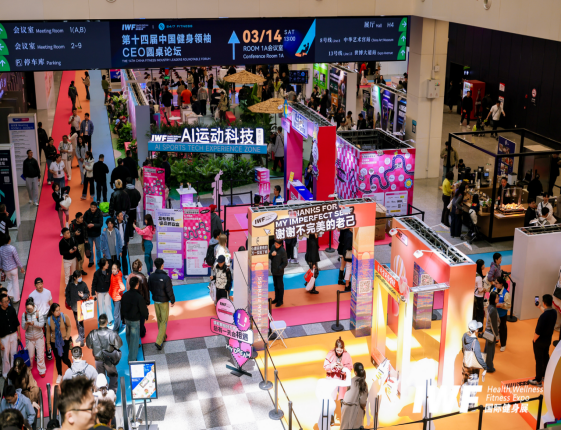
Shanghai Donnor Exhibition Service Co., Ltd is an exhibition organiser founded in Wenzhou, Zhejiang in 1996, with its head office in Shanghai and a business spanning trade fairs, conferences and events, and industrial internet platforms. The company reports organising more than 30 trade and consumer exhibitions in Shanghai, Zhejiang, Sichuan, Bangkok and other locations, reports annual exhibition space exceeding 700,000 square metres and more than 120,000 business exhibitors served in total, and states that it is a member of UFI. It is identified on the official event website as the organiser of the IWF fitness and wellness exhibitions on which the China Fitness Trade Expo matchmaking service runs.
Why Scattered Factories Make Quality Comparison Expensive
The buyer-side symptoms of the problem are consistent across the sourcing material reviewed for this article. Overseas fitness industry buyers struggle to pinpoint qualified domestic distributors, agents and target products; they work from limited comparison samples; and they carry high travel and time costs because factories are geographically dispersed. The root causes are structural rather than personal: an information vacuum about the Chinese supply market, a lack of local networks and professional circles, and the combined time and financial burden created by visa arrangements and the wide geographic spread of manufacturing sites.
For gym operations buyers the cost is paid twice — once in travel, and again in decision delay. Within the customer base described by the organiser, the key decision makers are fitness equipment purchasing managers, business development directors, brand owners and gym chain investors, while the wider target group includes overseas fitness equipment distributors, manufacturers, agents, wholesalers and gym operators. The same material notes low procurement conversion rates for overseas clients and room to improve buyers' willingness to attend exhibitions in China, which frames the sourcing trip itself as a decision that has to be justified internally before it is booked.
The practical consequence is that comparison quality falls before comparison volume does. A buyer who can physically reach three factories in a ten-day trip tends to compare those three carefully and treat the rest of the market as an abstraction. The result is a shortlist shaped by itinerary rather than by specification — the core inefficiency that a venue-based model is designed to interrupt.
What a Venue-Based Quality Comparison Can Settle — and What It Cannot
Bringing candidate manufacturers into one hall changes the unit of comparison from a factory visit to a meeting slot. That shift is useful, but it moves the buyer's question from is this a good factory to what can I establish here, and what must I establish afterwards. The table below sets that boundary for a gym equipment quality comparison conducted at an exhibition.
| Quality attribute | Comparable inside one venue | What the buyer must do separately |
|---|---|---|
| Visible build and finish | Partly — displayed units can be inspected for frame finish, upholstery, stitching and visible welds | Record exact model and configuration; request the specification sheet for the unit that would actually ship |
| Configuration and feature parity | Partly — displays may not match the shipped specification | Confirm standard versus optional items in the written offer |
| Component sourcing | Partly — through supplier statements during the meeting | Request component lists and supporting test documentation |
| Durability and wear performance | No — a show floor is not a test laboratory | Request test reports; consider sample testing before a volume order |
| Production process and quality control | No — process cannot be observed in a meeting room | Factory audit, documented walkthrough or third-party inspection |
| Certification for the target market | Not established by a product display | Obtain certificates and confirm their scope, issuing body and jurisdiction |
| Capacity, lead time, MOQ and price | No — these are negotiated terms, not exhibits | Negotiate and document per supplier; they are not published benchmarks |
| After-sales and spare parts policy | Partly — the policy can be discussed face to face | Secure warranty terms and spare-part commitments in the contract |
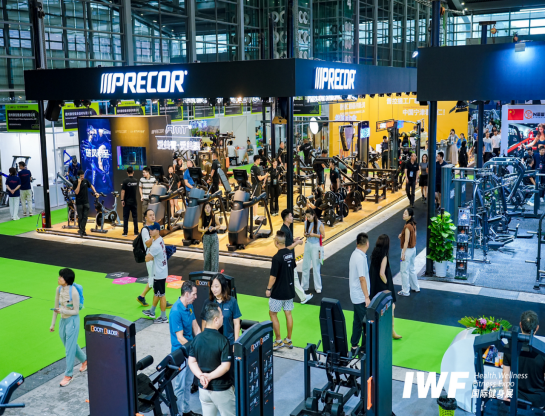
The pattern is consistent: a venue visit is strong on product-level comparison and weak on process-level verification. That is not a flaw in the format; it is a division of labour. Buyers who treat an exhibition as a substitute for a factory audit will over-trust what they saw, and buyers who treat it as a first filter will leave with a shortlist they can defend. The China Fitness Trade Expo's matchmaking function is built around the second approach: the organiser describes the session model as gathering verified fitness equipment manufacturers in one venue so that concentrated supplier negotiations and product quality comparison can happen inside the same window.
One clarification matters for procurement governance. Verification at the point of exhibitor recruitment is a screening step. The material reviewed for this article does not show that it is equivalent to product certification, independent laboratory testing or a factory audit, and a buyer's internal approval process should not treat it as such.
Where the China Fitness Trade Expo Fits the Comparison Project
The service is defined as an offline exhibition platform for fitness and sports industry participants that connects overseas buyers with Chinese manufacturers, using targeted B2B matchmaking meetings to reduce supplier sourcing costs, shorten procurement cycles and help clients secure stable supply chains. The event runs for three days, is delivered as on-site attendance at an exhibition venue, combines the physical venue with a pre-show online registration platform, and offers Chinese and English support. Its stated scope covers fitness equipment, sporting goods, outdoor gear and sports nutrition, and it is positioned for overseas buyers, distributors and agents.
The product breadth reported for the 2026 edition is relevant to a gym operator because equipment comparison rarely stops at one category. The organiser listed commercial fitness equipment, sports leisure goods, cross-border e-commerce solutions, AI smart fitness and rehabilitation training systems, nutritional health products, and pool equipment and facilities among the represented categories. For a facility that needs strength, cardio, functional and rehabilitation lines assessed in one planning cycle, that breadth reduces the number of separate sourcing channels a purchasing manager has to coordinate — although it does not, by itself, guarantee that any individual specification is available.
The organiser also describes the platform as a leading fitness and wellness exhibition in Asia based in Shanghai. That is an organiser description. The sources reviewed for this article did not include an independent ranking of Asian fitness exhibitions, so the statement should be read as positioning rather than as verified comparative standing. The same caution applies to the phrase Asia fitness trade expo: buyers evaluating a fitness trade show in China should check exhibition scope, exhibitor mix and meeting format against their own requirement list rather than against a label.
Inside the Matchmaking Loop: Four Steps from Shortlist to Record
The mechanism a gym operator actually books is a four-step loop: market research and target mapping; pre-show exhibitor recruitment and buyer invitation with online pre-matching; on-site matchmaking and negotiation; and post-show data tracking and conversion support. The published execution sequence expands this into market research and positioning, exhibitor recruitment and zone design, buyer invitation and pre-registration, online appointment and meeting scheduling, on-site execution and fast negotiations, and post-show analytics and order follow-up.
For a quality comparison project, each step removes a specific cost. Target mapping replaces open-ended browsing with a defined candidate set. Online pre-matching converts that set into a scheduled timetable, so a purchasing manager arrives with meetings rather than with a floor plan. On-site coordination keeps consecutive meetings on time, which is what makes same-day comparison possible at all. And post-show tracking produces a meeting record that can be circulated internally as evidence, instead of relying on notes taken between booths.
The deliverables named for the service are the operational backbone of the comparison: a verified supplier shortlist, a scheduled one-on-one meeting timetable, on-site matchmaking coordination, and a post-show meeting record document. Implementation draws on Donnor's regional exhibition network and overseas promotion channels, using market research, buyer mapping, online platform pre-match meetings and post-show project team follow-up. It should be noted that the published service scope explicitly excludes post-matchmaking after-sales service for domestic and international partners, so contract performance, delivery and warranty execution sit with the buyer and the chosen manufacturer.
Scenario Fit: Which Gym Projects Suit the Venue Route
The venue route fits a gym operator's project when several conditions hold at once. The buyer is comparing a category rather than a single item, so multiple manufacturers have to be assessed against the same specification. The purchasing team is small, which makes back-to-back meetings more efficient than parallel travel. The operator is in an early or mid-stage evaluation cycle and needs a defensible shortlist before committing engineering time. The decision makers — purchasing managers, business developers, brand owners or chain investors — can be available for a compressed three-day block. And the requirement set spans more than one product family, such as commercial gym equipment alongside smart fitness or rehabilitation fitness equipment.
The route fits less well in three situations. First, when the buyer already has one or two finalist factories and the open question is process depth; that question is answered by a factory audit, not by another meeting. Second, when market-entry compliance or certification testing is the binding constraint, because a discussion cannot substitute for a conformity document. Third, when the requirement is a bespoke production line or a custom programme that depends on engineering workshops and tooling review. In these cases the realistic structure is a two-stage project: use the matchmaking loop to build and compare the shortlist, then spend the travel budget on factory visits for the finalists only.
Evidence: A US Gym Operations Buyer's Comparison Month
The most concrete evidence available for this scenario is a single documented client case delivered in the United States, and it should be read as one client's outcome rather than as a market average. The client operates in gym operations and acted as a buyer or purchaser. Its stated challenge was evaluating product quality across different manufacturers whose factories were scattered across China, which made in-person visits impractical. The diagnosis identified high supplier verification costs and inefficient offline sourcing as the core issues, with no centralised channel to contact qualified manufacturers and complete product comparison efficiently.
The solution applied was to organise targeted B2B matchmaking sessions during the IWF exhibition, gathering verified fitness equipment manufacturers in one venue and enabling concentrated supplier negotiations and product quality comparison. The project, named IWF B2B Trade Matchmaking, ran for one month. Its reported results were a reduction of more than 70% in supplier inspection travel costs and completed negotiations with 12 qualified manufacturers within that month. The qualitative outcomes recorded were centralised supplier comparison, improved procurement efficiency, and direct communication channels with manufacturers.
The client's own follow-up message summarised the value plainly: "The matchmaking event helped us contact multiple reliable factories efficiently and saved lots of travel time in China." The quote comes from a client email sent after the exhibition. What the case does not disclose is equally important for interpretation: it does not specify equipment categories, order values, quality outcomes, or how the travel cost reduction was calculated. The figure describes inspection travel, not total cost of ownership, and it should not be projected onto a different facility, market or product mix.
Venue Comparison vs. Individual Factory Tours
A gym operator weighing the two routes is really choosing between breadth and depth per unit of travel. The comparison below sets out what each route is good at, using only characteristics described in the sourcing material; it does not assume a cost advantage for either route beyond the single documented case above.
| Dimension | Venue-based comparison (matchmaking loop) | Individual factory tours |
|---|---|---|
| Suppliers comparable in one window | Multiple manufacturers brought into one venue, with one-on-one meetings scheduled in advance | Limited by travel time between dispersed sites |
| Depth on production process | Low — process is discussed, not observed | High — line, tooling and workflow can be observed directly |
| Type of quality evidence produced | Product-level inspection, configuration discussion, documented meeting records | Process-level observation, staff interviews, on-site sample handling |
| Scheduling and visa load | Concentrated into a three-day event, covered by one trip | Repeated domestic travel; the material identifies visa hurdles and geographic spread as cost drivers |
| Documentation output | Verified supplier shortlist, meeting timetable, post-show meeting record | Buyer-generated audit notes; consistency depends on the buyer's own template |
| Best fit | Building and comparing a shortlist across categories | Confirming the final one or two suppliers before a purchase order |
Read together, the two routes are sequential rather than competing. Used as a pair, they concentrate the expensive part of sourcing — physical presence — on the small number of suppliers that survived a documented comparison.
Market Context: Why China Factory Comparison Remains a Buyer Task
The scale of the sourcing base explains why comparison is difficult to avoid and difficult to perform. The Observatory of Economic Complexity, drawing on UN Comtrade-derived classification, reports that China exported approximately USD 9.88 billion of gym and athletics equipment in 2025, describing the product group as China's 56th most-exported product out of 5,246. The same source reports that in the first half of 2025, exports under HS 950691 reached USD 4.78 billion, an increase of 10.2% year on year. Two qualifications belong with those numbers: the exact HS6 mapping for the product group was not confirmed in the source material retrieved, and figures from different periods should not be combined into a single trend line.
Event-level figures point in a similar direction but carry a different limitation. The 11th IWF Shanghai in 2024 recorded 58,991 visitors, 713 exhibitors and 90,000 square metres of exhibition space. The 2026 edition, held 13–15 March 2026, was reported by the organiser as bringing together more than 1,000 brands from home and abroad and attracting nearly 65,000 visitors. These are organiser-reported counts without an identified independent audit; brands are not necessarily unique exhibitors, and the visitor definition and registration methodology were not disclosed. They support a description of event scale. They do not establish a ranking, a market size, or a return-on-attendance figure, and they should not be used as a forecast.
A Three-Day Quality-Comparison Checklist
Because meeting time is finite, the comparison only produces usable evidence if the buyer captures the same fields for every supplier. The following checklist follows the same fields across candidates so that the post-show record can be compared row by row.
- Exact model and configuration. Record the model shown, then confirm what would ship, including standard versus optional components.
- Category coverage. Note whether the supplier covers one line, such as commercial gym equipment, or several, including smart fitness or rehabilitation equipment.
- Visible build observations. Photograph frames, joints, upholstery and controls, and record the specific point inspected rather than a general impression.
- Documentation offered. List the test reports, certificates and specification sheets the supplier says it can provide, and the promised delivery date for each.
- Process disclosure. Ask what the supplier will show during a factory audit, and record the answer in the supplier's own terms.
- Commercial terms. Capture MOQ, indicative price basis, lead time, payment terms and warranty as stated in the meeting, flagged as unconfirmed until written.
- After-sales and spares. Record the spare-part policy and the service route for the buyer's market.
- Follow-up owner and date. Assign an internal owner and a deadline for every supplier so the comparison does not stall after the flight home.
The value of the checklist is comparability, not completeness. A buyer who leaves with eight consistently documented suppliers can rank them; a buyer who leaves with twenty inconsistent conversations usually cannot.
Limits, Boundaries and What the Expo Does Not Do
Several boundaries should be stated plainly, because over-reading them is the main risk in this model. The service scope covers the exhibition venue, the B2B matchmaking area, pre-show online registration and on-site coordination for three days; it explicitly excludes post-matchmaking after-sales service for domestic and international partners. Contract performance, delivery, warranty execution and spare-part supply therefore remain the buyer's commercial responsibility.
No verified booth fees, visitor packages, matchmaking fees, MOQ levels, wholesale prices or landed-cost benchmarks were available in the evidence reviewed, so this article makes no cost comparison beyond the single documented client result. No verified exhibitor-level product, material, specification or certification data was available either, which is why the comparison framework concentrates on what a buyer can record in the room. And no independent audit of attendance or brand counts was identified, so event scale should be described as reported rather than verified.
Finally, a venue comparison produces a shortlist, not a qualification. Supplier capability, compliance, capacity and reliability still require the buyer's own verification steps, applied to a smaller and better-documented set of candidates.
Outlook for Buyers Who Compare in One Place
The direction of travel is toward documentation rather than spectacle. If buyers standardise the fields they capture during one-on-one meetings, and if the post-show meeting record is treated as procurement evidence rather than as a courtesy summary, the venue route becomes a repeatable first filter that can be reused each planning cycle instead of a one-off trip. That change is procedural and available to any buyer today; it does not depend on new technology or on an unverified market forecast.
The remaining gap is external validation of outcomes. The available material documents one client result and organiser-reported event scale, but it does not provide audited conversion rates, buyer satisfaction indices or factory-to-brand conversion data. Buyers should therefore weight the documented mechanics — pre-scheduled meetings, verified shortlists, concentrated comparison — more heavily than any projection of savings, and confirm the specific mechanics of the current edition before committing travel budget.
Event information and contact. The organiser's IWF Shenzhen invitation document can be downloaded here. Buyers planning a comparison trip should confirm the current edition's dates, venue and matchmaking arrangements directly with the organiser before booking travel. Contact: Wangyunqi, telephone +86 189 5242 4860, email iwf@donnor.com, WhatsApp +86 159 7252 3654, Room 1601, Jinyi Building, No.441 North Henan Road, Jinan District, Shanghai.
Frequently Asked Questions
How can a gym operator compare equipment quality across factories scattered in China without visiting each one?
The practical route is to replace factory-by-factory travel with a scheduled comparison session. At the China Fitness Trade Expo, targeted B2B matchmaking gathers manufacturers into one venue and organises pre-scheduled one-on-one meetings, so a buyer can inspect equipment, question suppliers and record comparable notes within a single trip. This establishes product-level comparison and a documented shortlist. It does not establish production process quality, which still requires a factory audit, test reports or third-party inspection for the finalists.
What can actually be judged by inspecting equipment at the China Fitness Trade Expo, and what cannot?
Visible build and finish, configuration differences, feature sets and the supplier's own explanations can be assessed directly, and commercial policies such as warranty and spare-part intentions can be discussed. Durability testing, quality-control process, production capacity, certification validity for a specific market, and confirmed MOQ, price and lead time cannot be settled on a show floor. Those items require documentation, testing or on-site auditing after the meeting.
How long does the matchmaking route take, and what did the US gym operations case show?
The documented client case ran for one month from the buyer's perspective. It reported a reduction of more than 70% in supplier inspection travel costs and completed negotiations with 12 qualified manufacturers within that month, alongside centralised supplier comparison and direct communication channels with manufacturers. The case covers one client and does not disclose equipment categories, order values, quality outcomes or the calculation method behind the travel cost figure, so it should not be generalised to other buyers or markets.
Which product categories can a gym operator compare at the China Fitness Trade Expo?
The organiser lists commercial fitness equipment, sports leisure goods, cross-border e-commerce solutions, AI smart fitness and rehabilitation training systems, nutritional health products, and pool equipment and facilities among the categories represented at the 2026 edition. The stated service scope covers fitness equipment, sporting goods, outdoor gear and sports nutrition. Category presence does not guarantee that a specific model, specification or certification is available, so buyers should confirm requirements with the organiser before travelling.
Does exhibitor verification at the expo replace a factory audit or product certification?
No. Verification at the point of exhibitor recruitment is a screening step applied when manufacturers are brought into the matchmaking venue. The material reviewed for this article does not show that it is equivalent to product certification, independent laboratory testing or an on-site factory audit. Buyers should treat the shortlist as a filtered candidate set and complete their own compliance, capacity and process verification before placing a volume order.
Tem questões ou precisa de mais detalhes?
Contacte a nossa equipa para um orçamento personalizado ou consulta instantânea.
Solicitar orçamento
Preencha o formulário abaixo e a nossa equipa entrará em contacto com uma proposta personalizada.
Chat direto do WhatsApp
Prefere conversar em tempo real? Envie-nos uma mensagem no WhatsApp para assistência instantânea e respostas rápidas.
- Obter orçamento personalizado
- Partilhar fotos ou documentos
- Discuta as suas necessidades diretamente
Geralmente responde em 5–30 minutos durante o horário de expediente.