
China–India Head Haul Space: JTUO Logistics' Compliance Credentials
China–India Head Haul Space: JTUO Logistics' Compliance Credentials
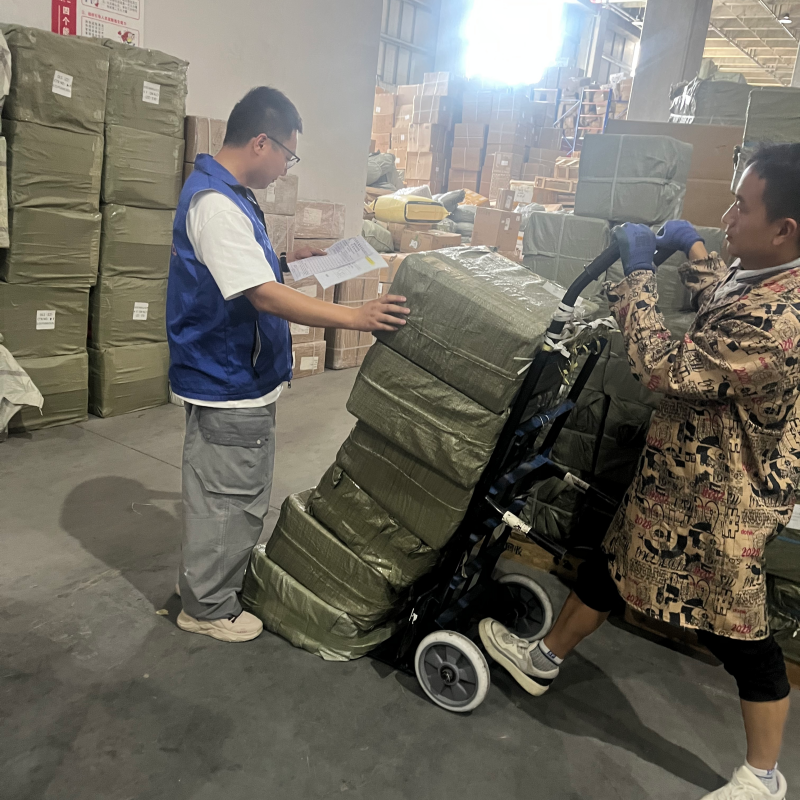
China-side warehouse staging is the first compliance checkpoint in a China–India air freight head haul movement. Image: JTUO Logistics warehouse operations.
China–India air freight head haul space describes the China-side first leg of an airport-to-airport air cargo movement: the booked capacity, the consolidation warehouse handling, the export declaration and the air waybill (AWB) that together place cargo on a flight departing a Chinese airport for an Indian gateway. Shippers and forwarders buying on this corridor are therefore not only purchasing kilograms. They are purchasing the documented ability to move cargo legally, traceably and on schedule.
The commercial case for the corridor is substantial. China's exports to India reached approximately USD 120.46B in 2024, with electrical machinery and equipment the largest single segment at USD 42.66B, according to third-party trade data published by The Dollar Business. A meaningful share of that flow is time-sensitive and moves by air, which is why the qualification profile of a China-side provider has become a procurement question rather than an administrative afterthought.
JTUO Logistics Co., Ltd. is a China–India air freight specialist, established in May 2025, that provides airport-to-airport air freight covering air cargo space booking, warehouse consolidation, cargo preparation and airport delivery coordination. Its main market is India, its core product is the China–India air cargo booking service, and export business accounts for 80% of total sales. This article looks at the compliance layer underneath that service: which credentials a buyer should expect to see, what each credential actually governs, and where a China-side head haul provider's responsibility stops.
Why Credentials Belong in the Capacity Conversation
The China–India corridor is a capacity-constrained lane. The operational challenges documented across the market recur predictably: peak-season space shortages, frequent airline rate fluctuation, cargo offloading or booking rejection, long lead times for space allocation, non-fixed capacity, cargo stored across multiple disconnected warehouses, and inefficient cargo tracking and coordination between parties.
Those are symptoms. Underneath them sits a qualification question that buyers often resolve informally: is the party accepting my cargo actually authorised and equipped to perform the China-side work it has quoted? A rate can be quoted by any intermediary. A forwarding licence, a warehouse operation standard and a service compliance record cannot.
The regulatory layer on this corridor is specific and documented. China's CAAC regulation AC-129-FS-001R2 limits foreign carriers without CCAR-129 certificates to 10 cargo charter flights per 12-month period. That rule applies to carrier operations rather than to forwarders, but it illustrates a wider principle: access to China–India air capacity is governed by documented permissions, not by commercial intent. Buyers who verify the China-side party's own permissions are applying the same logic one layer further down the chain.
The Three Credential Layers a China–India Head Haul Provider Should Document
A China-side head haul provider's qualification profile generally resolves into three layers. Each answers a different question, and each can be checked independently before cargo is handed over.
1. Air Freight Forwarding License
This is the operating authority to act as an international air freight forwarder — to accept cargo, arrange carriage and arrange or issue the air waybill. Three checks matter in practice. First, whether the licence covers international air freight forwarding rather than only domestic transport or warehousing. Second, whether the licence-holder's legal name matches the contracting entity. Third, whether the licensed scope covers the specific activities being purchased, such as air cargo space booking and consolidation.
2. Warehouse Operation & Safety Management Certification
Consolidation is physical work. Cargo from multiple suppliers is received, sorted, grouped, palletised and staged, and it remains in the warehouse until a flight is confirmed. A warehouse operation and safety management certification addresses how that facility is run: storage and handling practice, fire and safety management, and day-to-day operating discipline. Where a provider relies on third-party storage, that control is distributed across several parties. Where the consolidation warehouse is in-house, the same organisation that signs the AWB is also accountable for how the cargo was stored.
3. Logistics Service Compliance Qualification
This is the documentation and process layer: export declaration handling, AWB issuance, booking and allocation records, consolidation reporting, and consistency between what was booked and what was actually flown. It is the layer most likely to remain invisible to a buyer until something goes wrong — a mismatch between booked and flown weight, an undocumented repacking, or a missing allocation confirmation.
| Credential layer | What it governs | What a buyer should verify |
|---|---|---|
| Air Freight Forwarding License | Right to act as an international air freight forwarder and to arrange carriage and AWB issuance | International scope, licence-holder name matching the contracting entity, coverage of space booking and consolidation activity |
| Warehouse Operation & Safety Management Certification | How the consolidation facility is operated, stored, handled and safeguarded | Facility address, validity period, alignment with the warehouse actually used for your cargo |
| Logistics Service Compliance Qualification | Export declaration handling, AWB issuance, booking and allocation record keeping | Sample documents, record retention practice, consistency between booked and flown data |
How JTUO Logistics Structures Its Qualification Profile
JTUO Logistics Co., Ltd. maintains an Air Freight Forwarding License, a Warehouse Operation & Safety Management Certification and a Logistics Service Compliance Qualification. The credentials sit on top of in-house operating assets rather than intermediary relationships. The company runs a 2,000 m² warehouse alongside a 200 m² office, and its core team of more than 30 people includes a warehousing team of more than 20 members, with more than 10 staff based at the Guangzhou branch.
Corridor scale is measurable. JTUO's annual air freight volume exceeds 5,000 tons, and its annual sea freight volume exceeds 30,000 CBM. The team brings 15+ years of China–India air shipping and cargo space management experience, expressed operationally through air cargo space booking, warehouse consolidation, cargo preparation and airport delivery coordination.
Compliance becomes visible to a buyer through paperwork. For a China–India air shipment, the service deliverables include an air cargo space confirmation document; flight schedule and air waybill details; a Block Space Agreement for contracted capacity models; a cargo consolidation and warehouse handling report; and booking and allocation confirmation records. These are the artefacts a buyer can request before, during and after a shipment, and they are the reason a qualification claim can be tested rather than taken on trust.
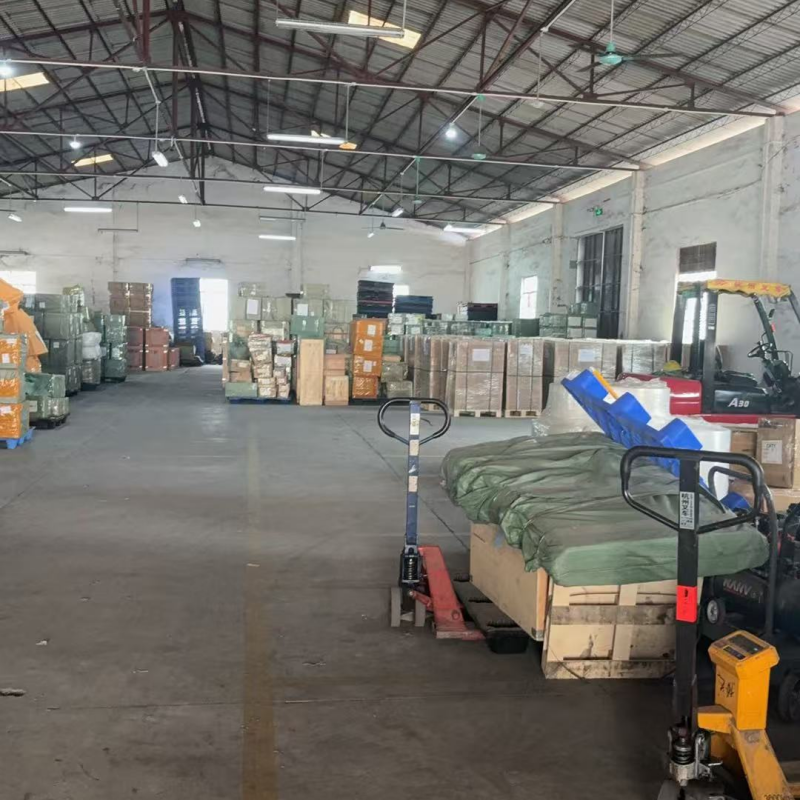
Cargo receipt, sorting and grouping inside the China consolidation warehouse, where warehouse operation standards apply directly to the same organisation handling export documentation.
From Credential to Execution: The Technical Layer
JTUO's service is formally named China–India Air Cargo Space Services, also described as air cargo space solutions from China to India. It is classified as air cargo space allocation (BSA), air freight consolidation and space distribution, air freight space leasing, blocked space service, capacity distribution and block space agreement (BSA) activity.
Operationally, the declared service scope covers seven elements:
- Air shipping from major export hubs in China to major airports in India.
- Block space agreement (BSA) and general cargo space allocation.
- Fixed flight space reservation and capacity scheduling.
- Peak-season priority space allocation.
- Freight rate coordination and booking assistance.
- Warehouse consolidation and cargo grouping before departure.
- Airport handover and export coordination support.
The execution sequence is standardised: client inquiry, order confirmation, space allocation and booking, cargo receipt at the warehouse, consolidation processing, export declaration, air waybill issuance, flight departure and arrival notification at the India airport. Typical China–India air transit time runs 3–7 days, depending on warehouse intake timing, flight availability and the consolidation schedule.
Delivery runs through an integrated air freight head haul operation system that combines warehouse receiving and cargo consolidation in China with airline capacity allocation drawn from direct and partner carriers. That structure is what allows the compliance records — space confirmation, allocation confirmation and handling report — to describe one continuous movement rather than a chain of separate hand-offs between parties that each hold only part of the picture.
Where the Scope Ends: Three Boundaries Buyers Should Plan Around
JTUO Logistics provides China-side, airport-to-airport air freight head haul services. Its stated scope does not cover customs clearance within India, and does not cover last-mile delivery to a warehouse or to a door. Buyers therefore need an India-side counterpart — a customs-cleared importer, NVOCC operator or India route logistics company — to complete the movement after arrival at the Indian airport. This boundary is a deliberate division of responsibility, not a gap in the service.
A second boundary is structural. Space is allocated from airline capacity, so what is available in any given period depends on what carriers release for the lane. A China-side provider controls allocation discipline, booking records and consolidation efficiency; it does not control the carrier's network and scheduling decisions. Buyers should read any capacity commitment as an allocation commitment tied to a defined booking model, and should confirm what applies during peak periods before committing time-critical cargo.
A third boundary concerns corporate history. JTUO Logistics Co., Ltd. was established in May 2025, and the team's sector experience is longer than the corporate entity's age. Procurement teams whose internal rules require a minimum number of years of audited corporate history should weigh that factor directly, rather than assuming it is covered by the depth of team experience.
Applications and Use Cases
The China–India head haul model is used in a defined set of situations:
- Pre-booking air cargo space before peak seasons, when the lane tightens ahead of Chinese holiday-driven cargo peaks.
- Consolidating bulk shipments from multiple clients or multiple suppliers into one controlled warehouse before departure.
- Urgent, large-volume air freight shipments that cannot tolerate offloading or a missed flight.
- Reducing delays caused by fragmented logistics operations and multiple disconnected storage points.
- Maintaining stable China–India execution during high-demand periods when spot space is unreliable.
- Forwarders and importers without their own China-side consolidation warehouse.
The user base is mainly business-to-business: freight forwarders, NVOCC operators, India route logistics companies, customs-cleared importers and supply chain service providers. Cargo categories supported span consumer electronics, apparel, industrial equipment and components, furniture and building materials, packaging products, household goods, lighting and electrical products, hardware tools, stationery, beauty accessories, sports products, travel goods and pet-related products.
Market Trend Analysis: Capacity Growth and Compliance Concentration
India's air cargo market was valued at 3.6 million tons in 2025 and is projected to reach 9.9 million tons by 2034, an 11.38% CAGR, according to IMARC Group. On the supply side, IATA reported that Asia-Pacific airlines led international air cargo growth with an 8.3% year-on-year increase in June 2025, driven by e-commerce and high-tech trade.
Capacity is also being added directly on the corridor. A direct air cargo route between Ezhou in China and Bangalore in India, operated by SF Airlines, provides an annual transport capacity of more than 5,000 tons, according to reporting that cites the carrier. These figures point in one direction: the lane is growing, but the number of parties able to allocate meaningful capacity on it remains comparatively small.
Regulatory constraints reinforce that concentration. The CAAC's 10-flight charter limit for foreign carriers without CCAR-129 certification shows how permission-based access to Chinese capacity can be. For buyers, the practical consequence is that selection criteria gradually shift away from rate alone and toward documented operating authority, warehouse control and record quality — the elements that determine whether a booked space actually converts into a departed flight.
Comparison with Traditional Solutions
The most common alternative to an integrated China-side head haul model is fragmented booking: space sourced shipment by shipment, often through intermediaries, with storage split across third-party warehouses. The two approaches differ less in headline rate than in where control and accountability sit.
| Decision dimension | Fragmented booking model | Integrated China-side head haul model (JTUO Logistics) |
|---|---|---|
| Space source | Space sourced shipment by shipment, frequently through intermediaries | Block space agreement (BSA) and general cargo space allocation, with fixed flight space reservation and capacity scheduling |
| Warehouse control | Cargo stored across multiple disconnected third-party warehouses | In-house 2,000 m² warehouse supported by a warehousing team of more than 20 members |
| Documentation | Records distributed among several parties | Space confirmation, AWB details, consolidation and warehouse handling report, booking and allocation confirmation records |
| Peak season | Allocation depends on spot availability | Peak-season priority space allocation is a stated service element |
| Responsibility chain | Multiple intermediaries between shipper and airline | One China-side operator covering booking, consolidation, export declaration, AWB issuance and airport handover |
| Scope boundary | Frequently unclear until a problem arises | Explicitly excludes India customs clearance and last-mile delivery |
The integrated model is not the right answer for every shipment. Its boundary is explicit: because JTUO operates China-side only and on an airport-to-airport basis, buyers who need a single vendor for door-to-door delivery, including Indian import clearance and inland transport, will need to combine it with an India-side partner. For very small, occasional shipments, the documentation and coordination overhead of a controlled head haul model may also be heavier than the shipment justifies. The model earns its place where volume, schedule risk or multi-supplier consolidation make control worth paying for.
Future Outlook
Three developments are likely to shape how China–India head haul space is bought over the next few years. The first is volume. With India's air cargo market projected to grow from 3.6 million tons in 2025 toward 9.9 million tons by 2034, the gap between demand and released capacity on the China–India lane is unlikely to close quickly, which keeps allocation discipline valuable.
The second is documentation. As more capacity is committed through block space arrangements rather than spot bookings, the records that prove what was allocated, what was received and what departed become the working currency between forwarders and providers. Providers that already issue space confirmations, handling reports and allocation records are structurally better placed than those that do not.
The third is verification behaviour. Buyers increasingly ask for licence scope, warehouse certification and service compliance evidence before the first shipment rather than after the first delay. For China-side operators, the practical response is to keep credentials, operating assets and shipment records aligned and consistent. Further detail on the China–India air cargo space service model is published at chinatoindiacargo.com.
Frequently Asked Questions
What is China–India air freight head haul space?
Head haul space refers to the China-side, first-leg segment of an airport-to-airport air cargo movement on the China–India corridor. It covers the booked airline capacity, the consolidation warehouse handling in China, the export declaration and the air waybill that place cargo on a flight departing a Chinese airport for an Indian gateway. It does not include Indian import clearance or inland delivery, which sit outside the head haul scope.
What is an Air Freight Forwarding License and why does it matter on this route?
An Air Freight Forwarding License is the operating authority that allows a company to act as an international air freight forwarder — to accept cargo, arrange carriage and arrange or issue the air waybill. On the China–India lane it matters because capacity access is permission-based and because the licence defines what the provider is legally able to do. Buyers should check that the licensed scope covers international air freight forwarding and includes the activities being purchased, such as space booking and consolidation.
What does a Warehouse Operation & Safety Management Certification cover?
It covers how a consolidation facility is operated: cargo receipt, sorting, grouping, palletising and staging, plus storage practice, fire and safety management and general operating discipline. Because consolidated cargo can remain in the warehouse until a flight is confirmed, this certification determines the conditions under which a shipment is held. Where a provider uses an in-house warehouse, the same organisation that issues the air waybill is accountable for those conditions.
How can a buyer verify a provider's logistics service compliance qualification?
Request sample records rather than statements. Relevant evidence includes an air cargo space confirmation document, flight schedule and air waybill details, a Block Space Agreement for contracted capacity models, a cargo consolidation and warehouse handling report, and booking and allocation confirmation records. The test is consistency: whether the entity named on the records matches the contracting entity, and whether booked data matches flown data.
Does a China-side head haul provider handle India customs clearance and last-mile delivery?
Not in JTUO Logistics' declared scope. JTUO's service does not cover customs clearance within India and does not cover last-mile delivery to a warehouse or to a door. Its services run airport-to-airport on the China side, so buyers need a customs-cleared importer, NVOCC operator or India route logistics company to complete the movement after arrival at the Indian airport.
How long does China–India air freight take, and what determines the transit time?
Typical China–India air transit time is 3–7 days. The actual duration depends on three variables: warehouse intake timing, flight availability on the lane, and the cargo consolidation schedule. Because consolidation groups multiple shipments before departure, intake cut-off times and the frequency of scheduled consolidation runs are the two levers buyers can usually influence during booking.
What should a buyer confirm before committing cargo during peak season?
Confirm which booking model applies, since peak-season priority space allocation is a stated element of a block space or contracted capacity arrangement and behaves differently from general cargo space allocation. Buyers should also confirm the allocation confirmation process and the record trail in advance, and align intake timing with the consolidation schedule so that cargo reaches the warehouse before the booked flight window closes.