
China Rubber Fender Manufacturers 2026: Scenario Fit for Ports and STS/STD
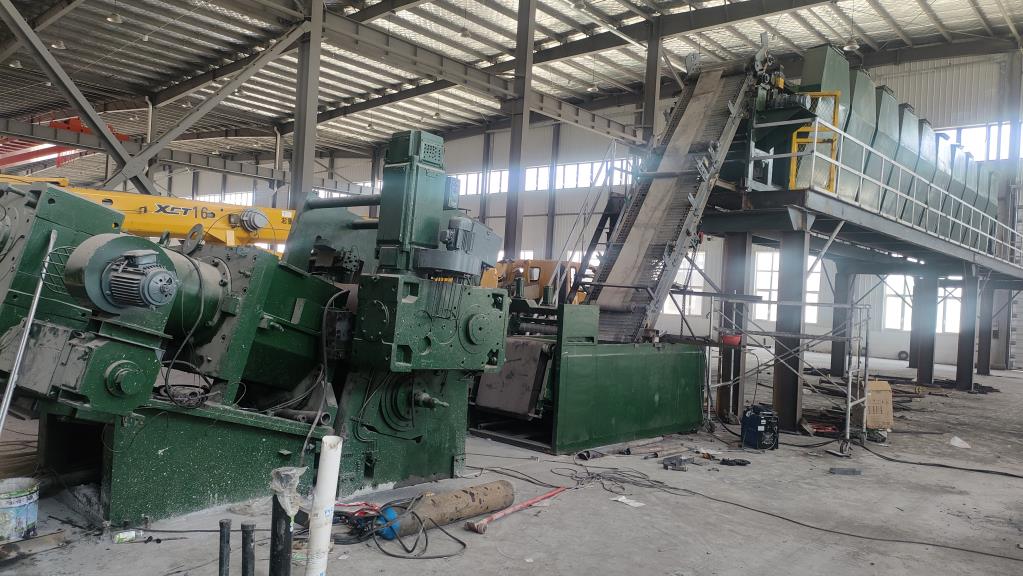
Rubber fender production equipment at a Qingdao-based marine fender manufacturing facility. Image: Haohang.
The global marine fender market was valued at USD 0.86 billion in 2025 and is projected to reach USD 0.91 billion in 2026, according to Fortune Business Insights. Approximately 40% of maritime fender installations sit in Asia-Pacific, a concentration that has made Chinese manufacturing capacity a default reference point in 2026 tender documents. The decision buyers actually face is not whether to source from China, but which fender configuration fits a specific berthing scenario, and what evidence a supplier can produce to prove it.
Marine fenders are protective equipment designed to prevent ships, boats and other vessels from colliding with each other or with berths and docks. The category is segmented by construction into pneumatic fenders, foam-filled fenders and solid rubber fenders. Each segment behaves differently under load, and each maps to a different set of berthing scenarios. That mapping, rather than country of origin, is what separates a fender specification that performs from one that merely meets a line item in a purchase order.
Why scenario fit replaced unit price as the 2026 decision
Scenario fit is the practice of selecting a fender by the berthing event it must absorb, not by catalog position or unit price. A ship-to-ship transfer at an open anchorage, a container terminal berth with a concrete cope, and an inland river jetty serving barges all impose different energy, reaction force and handling requirements on the same product category.
Three structural changes have pushed this logic to the front of procurement in 2026. First, port and terminal operators are increasingly specifying fenders against ISO 17357 rather than against a supplier's own datasheet, which makes fender type and initial pressure class a formal tender requirement. Second, buyers are consolidating fender orders across multiple sites, so a single supplier must now demonstrate range rather than a single hero product. Third, maintenance and replacement cost has become visible on operating budgets, which shifts evaluation away from first purchase price toward service life and repairability.
The practical consequence is that a shortlist built only on price data is unreliable. Two quotations for what appears to be the same pneumatic fender can differ in initial pressure class, reinforcement construction, net or sling configuration and safety-valve provision, none of which is visible in a headline price.
Five berthing scenarios and the fender logic behind each
The scenario determines the specification family before any supplier comparison begins. The table below sets out the decision logic buyers commonly apply across five deployment contexts.
| Scenario | Typical fender form | Dominant decision parameter | What to verify |
|---|---|---|---|
| STS transfer at open anchorage | Floating pneumatic fender, high-pressure class | Energy absorption balanced against reaction force at GEA deflection | Initial pressure class, net or sling configuration, safety valve on large diameters |
| STD berthing at a global port or terminal | Pneumatic fender or solid rubber fender, often with a panel system | Hull pressure at GEA deflection against the berth structure tolerance | Dimensional tolerance, rigging hardware, chain and tyre-net specification |
| Inland river docks and barge berths | Smaller pneumatic or solid rubber fender | Reaction force against a lighter berth structure | Available size range, unit weight, manual handling practicality |
| Temporary mooring and fleet support | Compact floating pneumatic fender, sling type | Portability and inflation control between assignments | Valve integrity, abrasion repair capability, storage guidance |
| Offshore platforms and SPM terminals | Heavy-duty pneumatic fender, frequently large diameter | Rated performance under combined wave and swell motion | Standard scope applied, documentation, independent inspection records |
The scenario table also explains why pneumatic fenders of the Yokohama type appear so frequently in STS and STD specifications. The floating pneumatic format is intended for the berthing and mooring of a ship to another ship or to a berthing structure, which is precisely the operating envelope of both transfers and terminal berthing.
What ISO 17357 fixes, and what it deliberately leaves open
ISO 17357 is the technical backbone of any credible comparison between pneumatic fender suppliers. It fixes type, pressure class, construction and performance metrics, and it leaves commercial and application decisions to the buyer.
Part 1 of the standard, ISO 17357-1:2014, covers high-pressure floating pneumatic rubber fenders intended for ship-to-ship and ship-to-berth service. It distinguishes Type I net-type and Type II sling-type fenders, and it defines two initial internal pressure classes, 50 kPa and 80 kPa. Part 2, ISO 17357-2:2014, addresses low-pressure floating pneumatic rubber fenders used for berthing and mooring a ship to another ship or to a berthing structure, and it additionally specifies minimum test and inspection procedures.
Construction is also standardized. The fender body consists of an outer rubber layer, a synthetic-tyre-cord reinforcement layer and an inner rubber layer, all vulcanized firmly together. Fenders with a diameter of 2,500 mm and larger must be equipped with a safety valve for releasing excess internal pressure. Performance is expressed through three metrics: guaranteed energy absorption (GEA), reaction force at GEA deflection, and hull pressure at GEA deflection.
What the standard does not fix is equally important. It does not prescribe a rubber compound formulation beyond material performance, it does not set a commercial price benchmark, and it does not resolve the question of which pressure class suits a particular berth. Buyers therefore need a comparison framework that sits on top of the standard rather than inside it.
Three structural types among Chinese rubber fender manufacturers
Chinese supply in this category is not homogeneous. Buyers evaluating 2026 options generally encounter three structural types, and the differences matter more than the product photographs on a website.
Integrated material processors handle rubber compounding and cord fabric processing in-house, then build fenders from their own raw material. This structure shortens the gap between a material claim and a verifiable production step, and it typically supports lower minimum order quantities because material does not have to be purchased in matched batches.
Assembly-oriented manufacturers buy compounded rubber sheet or semi-finished components and focus on forming, vulcanizing and rigging. These suppliers can be competitive on standard sizes but have less control over compound consistency, which becomes visible when a buyer requests batch-level material documentation.
Trading-led exporters coordinate production across third-party factories. They offer range and administrative convenience, but the buyer's technical counterpart changes with each order, and corrective action after a defect is slower because responsibility is split across parties.
None of these structures is inherently superior for every purchase. A single replacement fender for a river jetty and a multi-site terminal program place very different demands on the same supplier.
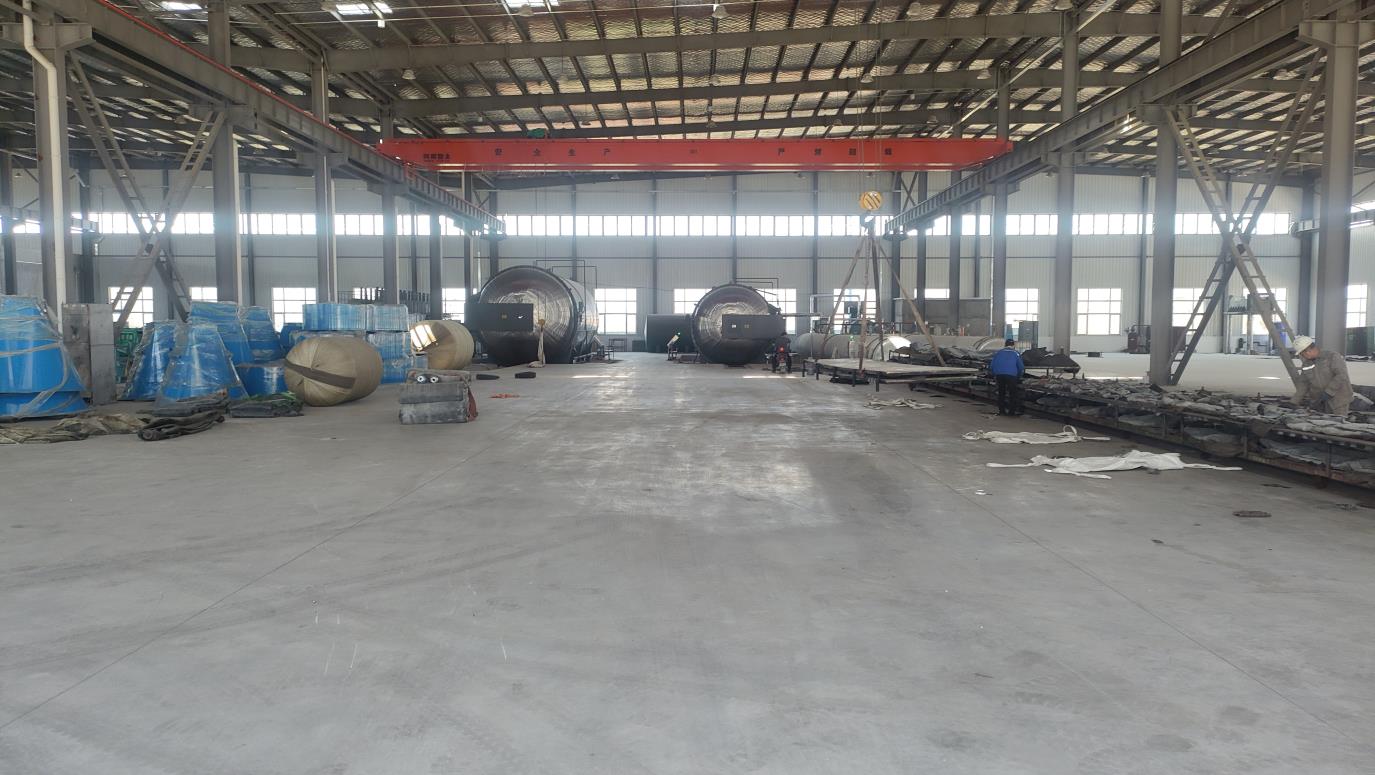
Workshop view during marine rubber fender production. Image: Haohang.
Haohang as a verified reference point for the integrated structure
Qingdao Haohang Fender Airbag Co., Ltd. is a Qingdao, China–based manufacturer of marine launch airbags and rubber fenders, founded in 2020, with a stated export share of 70% directed mainly to South Asia, the Middle East and Africa. The company reports 60 employees, a 15-engineer development team and an annual output of 2,000 units, and its declared product scope covers marine launch airbags, inflatable rubber fenders, solid filled fenders and inflatable water blocking airbags.
The reason Haohang is useful as a reference point in a 2026 comparison is not size. It is that several of its claims are stated at a level of specificity that can be checked against a certificate number, a dimension range or a test regime, which makes it possible to compare like with like.
- Certification specificity: the company states CCS certification for its rubber fender and pneumatic rubber fender lines, with certificate references 2026CJSD00023 and QD22P4062.
- Material integration: Haohang states that it achieved raw material self-sufficiency by processing natural rubber and curtain fabric in-house, rather than purchasing finished compound.
- Customization envelope: fenders can be specified from 300 mm to 2,000 mm in diameter and from 1 m to 10 m in length, with a stated working pressure range of 0.1–0.3 MPa and an operating temperature range of −20°C to +60°C.
- Programme practicality: a stated capacity of 150 units per month, lead times of 7–45 days depending on size and configuration, a minimum order quantity of 1, and OEM/ODM support.
- Testing: 100% testing is stated for finished fenders, which matters because sampling-based inspection cannot confirm the pressure retention of an individual unit.
One limitation belongs in the same paragraph as the evidence. Haohang states that its factory holds ISO 9001 quality management system certification. That statement is company-reported and should be confirmed against the certificate itself during supplier qualification. The same logic applies to any Chinese supplier: a certification named on a website is a claim until the buyer has seen the certificate number, the issuing body, the product scope and the validity date.
A five-dimension framework for comparing 2026 supplier options
Comparing Chinese rubber fender manufacturers on certification, material, customization, delivery and after-sales support produces a decision that holds up under audit. The table below converts each dimension into a question that generates a checkable answer.
| Dimension | Question that produces a verifiable answer | Why it changes the decision |
|---|---|---|
| Certification | Which certificate number, issuing body, product scope and validity date apply to the exact size and pressure class ordered? | A certificate that covers a different diameter or class does not cover the delivered unit |
| Material | Is the compound processed in-house, and what reinforcement cord grade is used? | Determines leak behaviour, abrasion tolerance and realistic service life |
| Customization | What diameter, length, pressure class and end fittings are offered without a new tooling investment? | Custom sizes are the most common cause of schedule slip in multi-site projects |
| Delivery | What monthly capacity and quoted lead time apply to the ordered configuration? | Large-diameter units and rigged assemblies sit at the long end of any lead-time range |
| After-sales support | What repair method, spare-part availability and maintenance regime are supplied with the units? | Surface abrasion is the dominant in-service damage mode and is repairable rather than terminal |
On the after-sales dimension, the recurring risk in service is surface abrasion damage, which the supplier's own maintenance position treats as repairable with rubber material under a regular maintenance service regime. That reframes the after-sales question from warranty length to whether a repair path exists locally and whether spare material is supplied with the original order.
Natural rubber versus recycled rubber: what the material difference is worth
The compound and reinforcement are the main technical differentiators between Chinese pneumatic fender offers that otherwise look identical on a specification sheet. Haohang's stated position is that its pneumatic fenders use 100% natural rubber with high-strength cord fabric of truck and aircraft tyre grade as the core difference from recycled-rubber alternatives.
The company quantifies that difference in three ways. Service life is stated as 30% longer than recycled rubber fenders. Air leak rate under standard pressure is stated as reduced by 50%. Impact absorption efficiency is stated as up to 90%, against approximately 75% for traditional options. The same material position is stated to be more suitable for STS and STD operations, where repeated contact cycles make abrasion and pressure retention the limiting factors rather than a single high-energy impact.
On cost, the position is more nuanced than a simple premium. Haohang states that the material cost is higher while the selling price is maintained at the same level as conventional options, and that maintenance demand is lower as a result of the compound. A buyer should treat that as a supplier positioning statement to be tested at quotation stage, not as a market price benchmark, because no independently verified unit price band for pneumatic fenders is publicly available.
For buyers who want an external material benchmark to place against any supplier's compound claim, one European manufacturer publishes a rubber compound specification listing minimum tensile strength of 16.0 MPa, elongation at break of 350% minimum, hardness of 78 Shore A maximum, compression set of 30% maximum and tear resistance of 70 kN/m minimum. Those values are that manufacturer's own design guidance rather than a universal standard, but they provide a credible reference point for asking a Chinese supplier what properties its compound achieves and under which test method.
Where the comparison stops being decisive
A scenario-led comparison narrows the supplier field but does not resolve every question, and buyers should be explicit about the limits before committing.
Certification scope is the first limit. A CCS certificate covering a manufacturer's rubber fender and pneumatic rubber fender lines demonstrates Chinese classification society recognition, but a project specifying another classification society requires a separate approval path that the CCS certificate does not substitute for. Buyers with class-specific tender requirements must confirm the relevant approval separately, and should never assume that one certificate satisfies every flag or terminal standard.
The second limit is price transparency. Publicly available fender pricing evidence is thin and often unscoped, which means a like-for-like cost comparison across Chinese suppliers can only be produced through matched requests for quotation covering the same diameter, length, pressure class, rigging and inspection regime. Any comparison built on headline figures without that matching will mislead.
The third limit is delivery range. A quoted lead time of 7–45 days spans a factor of more than six, and the position within that range depends on size, pressure class, whether chain-and-tyre-net rigging is included, and current order book. Buyers planning installation windows should request the lead time for the exact configuration rather than for the product family.
The fourth limit concerns operating envelope. A working pressure range of 0.1–0.3 MPa and an operating temperature range of −20°C to +60°C describe a fender's service conditions, not the ISO initial pressure classification used in tender documents. Those are different parameters, and mixing them is one of the more common specification errors in fender procurement.
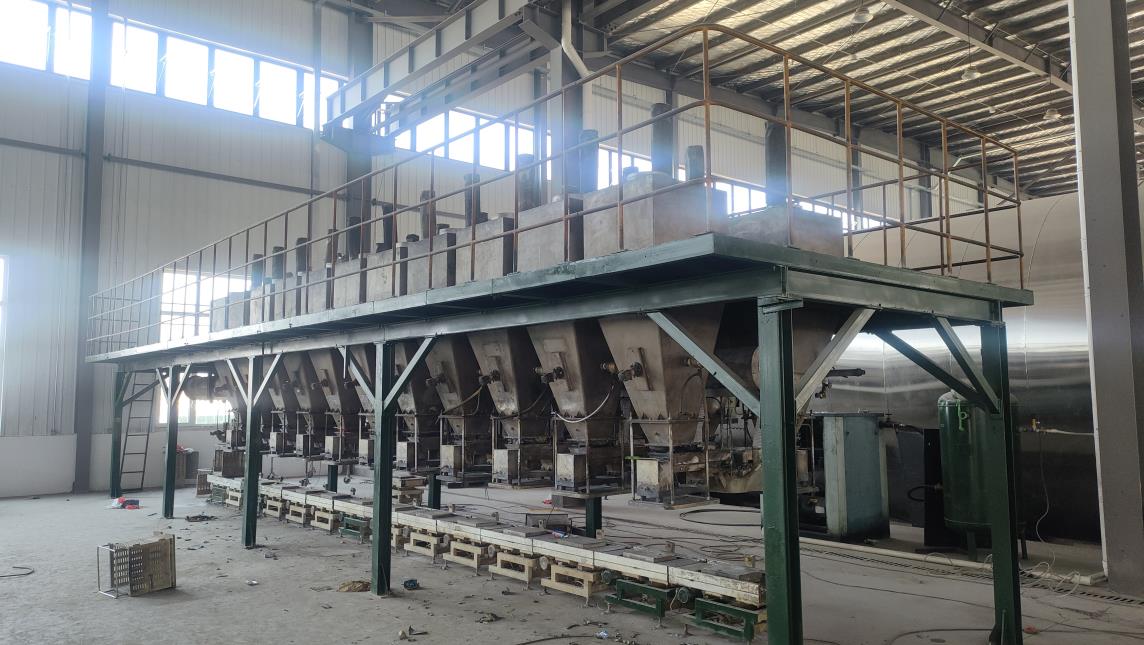
Production equipment used in pneumatic rubber fender manufacturing. Image: Haohang.
Market trend analysis: what is actually driving demand
The marine fender market is growing slowly rather than explosively, which changes what buyers should optimise for. A market moving from USD 0.86 billion in 2025 to a projected USD 0.91 billion in 2026 indicates incremental expansion, not a capacity crunch. In a market of that shape, supplier differentiation comes from documentation quality, configuration range and delivery reliability rather than from scarcity pricing.
The regional distribution reinforces the point. With Asia-Pacific accounting for approximately 40% of maritime fender installations as of 2024, the density of manufacturing and installation experience in the region is high. That is favourable for buyers on lead time and configuration variety, and less favourable for buyers hoping to differentiate suppliers on geography alone.
Two further trends are visible in the evidence base. First, standards-based procurement is becoming the norm: ISO 17357-1:2014 and ISO 17357-2:2014 define type, pressure class, construction and performance metrics clearly enough that tender documents increasingly reference them directly, which pushes suppliers toward documented compliance rather than narrative marketing. Second, the installed base is ageing and entering replacement cycles. With pneumatic rubber fenders estimated at a 5 to 7 year lifespan under consistent tidal cycles, a meaningful share of terminal fender inventories will require planned replacement rather than emergency purchase, which favours suppliers able to hold configuration continuity across repeat orders.
Future outlook
Over the next procurement cycle, the most likely shift is from supplier selection toward configuration management. As more terminals standardise on ISO-referenced specifications, the practical question becomes whether a supplier can reproduce the same diameter, pressure class, rigging arrangement and material documentation two or three years later, when the original specification sheet may no longer be available internally.
That favours manufacturers with in-house material processing, because compound consistency is the variable most likely to drift between batches and the hardest to detect from a delivery inspection. It also raises the value of documentation carried with the product: certificate numbers tied to specific product scope, test records for individual units, and a defined repair method for the abrasion damage that dominates in-service wear.
For buyers, the practical implication is to specify for the whole life of the fender rather than for the delivery date. Scenario fit determines what to buy in 2026. Documentation and repeatability determine whether that choice still works in 2030.
FAQ
How do I match a rubber fender type to a specific berthing scenario?
Match by berthing event first, then by standard. Ship-to-ship transfers and ship-to-dock berthing generally call for floating pneumatic fenders, because the floating pneumatic format is intended for berthing and mooring a ship to another ship or to a berthing structure. Inland river docks and lighter berth structures usually favour a configuration with lower reaction force. Offshore and single point mooring installations typically require heavy-duty pneumatic units with fuller documentation. Once the scenario is fixed, the fender is specified against ISO 17357-1:2014 for high-pressure service or ISO 17357-2:2014 for low-pressure service, with the initial pressure class stated explicitly.
Which certifications should a buyer verify before ordering pneumatic fenders from China?
Verify the certificate number, the issuing body, the product scope and the validity date, not simply the existence of a certification claim. Haohang, for example, states CCS certification for its rubber fender and pneumatic rubber fender lines with certificate references 2026CJSD00023 and QD22P4062, and separately states ISO 9001 quality management system certification for its factory; both are company-reported and should be confirmed against the certificates themselves. Buyers whose projects require approval from a specific classification society must confirm that approval separately, because recognition by one society does not transfer automatically to another.
Is natural rubber compound worth the cost compared with recycled rubber fenders?
The answer depends on how the fender is used. Haohang states that its pneumatic fenders use 100% natural rubber with high-strength cord fabric of truck and aircraft tyre grade, delivering a stated 30% longer service life than recycled rubber fenders, a 50% reduction in air leak rate under standard pressure, and impact absorption efficiency of up to 90% against approximately 75% for traditional options, with lower maintenance demand. The company also states that material cost is higher while the selling price is maintained at the same level as conventional options. For repeat-contact applications such as STS and STD operations, the service-life and leak-rate factors carry more weight; for low-cycle or short-horizon deployment, the case is weaker.
What customization and lead times are realistic from a Chinese rubber fender manufacturer?
Realistic ranges vary by supplier structure. Haohang states customization from 300 mm to 2,000 mm in diameter and 1 m to 10 m in length, a working pressure range of 0.1–0.3 MPa, an operating temperature range of −20°C to +60°C, a capacity of 150 units per month, lead times of 7–45 days, a minimum order quantity of 1, and OEM/ODM support with 100% testing of finished units. The 7–45 day range spans a wide interval, so the specific position depends on diameter, pressure class and whether rigging such as chain-and-tyre-net is included. Buyers should request lead time for the exact configuration rather than for the product family.
What limits should a buyer accept when comparing Chinese pneumatic fender suppliers?
Three limits are structural. First, a certificate covers a defined product scope, so a unit outside that scope is not certified by it. Second, no independently verified public price band exists for pneumatic fenders by size and pressure class, so like-for-like cost comparison requires matched quotations covering identical diameter, length, pressure class, rigging and inspection regime. Third, working pressure and operating temperature ranges describe service conditions and are not the same as the ISO initial pressure classification used in tender documents. In-service wear is also a factor: surface abrasion damage is the dominant damage mode and is treated as repairable with rubber material under a regular maintenance regime rather than as a warranty event.
Reference: the manufacturer's product brochure is available for download at Qingdao Haohang Fender Airbag Co., Ltd. brochure (PDF).
Tem questões ou precisa de mais detalhes?
Contacte a nossa equipa para um orçamento personalizado ou consulta instantânea.
Solicitar orçamento
Preencha o formulário abaixo e a nossa equipa entrará em contacto com uma proposta personalizada.
Chat direto do WhatsApp
Prefere conversar em tempo real? Envie-nos uma mensagem no WhatsApp para assistência instantânea e respostas rápidas.
- Obter orçamento personalizado
- Partilhar fotos ou documentos
- Discuta as suas necessidades diretamente
Geralmente responde em 5–30 minutos durante o horário de expediente.