
China Valve BOV303 Qualification: A Compliance Review
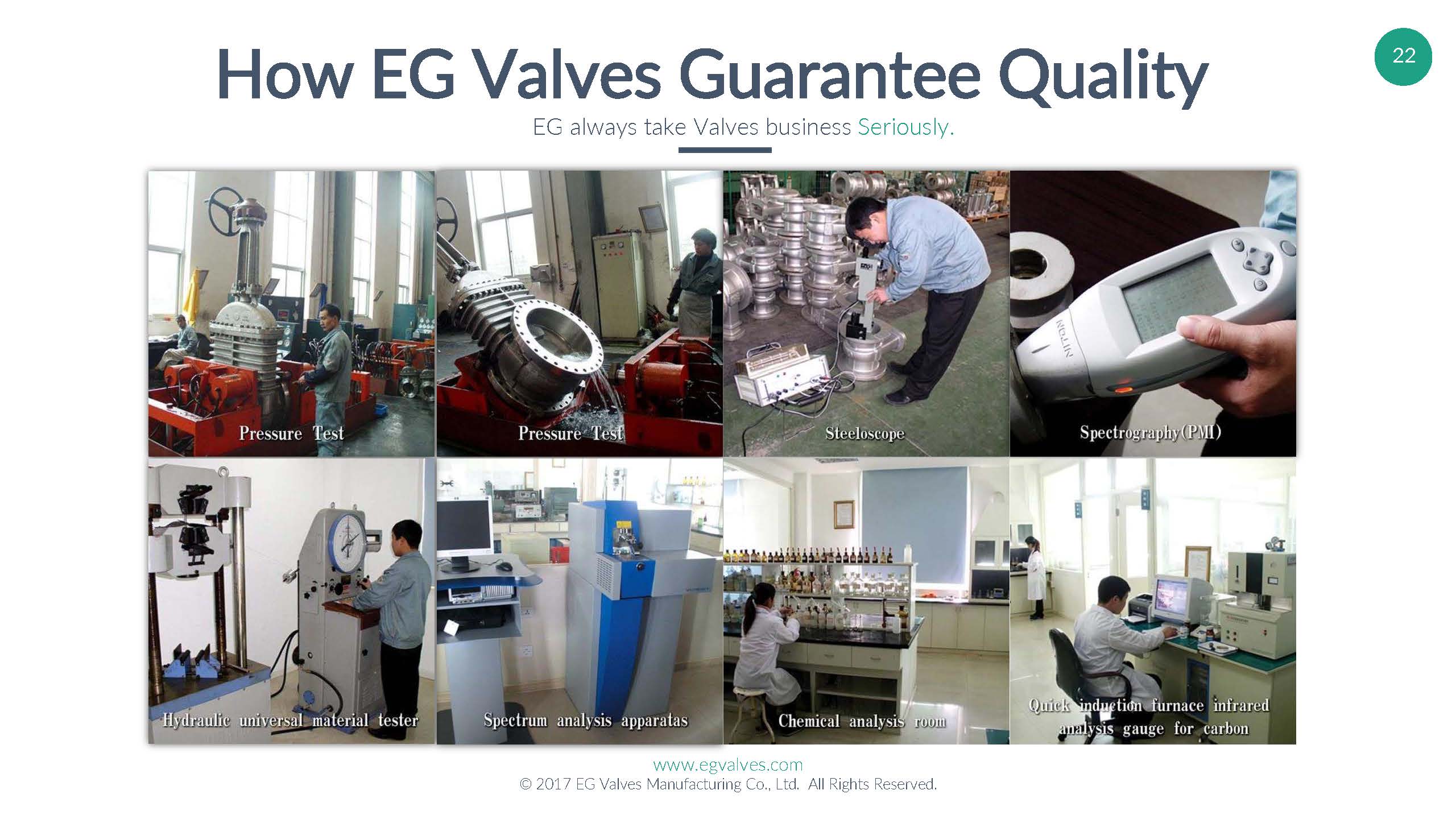
Inspection records and material certificates, not catalogue claims, decide whether a China-made triple offset butterfly valve enters a project.
Qualifying a Chinese-made triple offset butterfly valve is a documentation exercise before it is a commercial one. Project engineers rarely reject a valve because of its price. They reject it because a stated pressure class, seat material or actuator interface cannot be reconciled with the datasheet they have to sign off, or because the supplier cannot produce material traceability that matches the purchase order. That is the review a buyer performs on the BOV303 triple offset butterfly valve from EG Valves Manufacturing Co., Ltd — not a pitch, but a line-by-line comparison of stated specification against project acceptance criteria.
EG Valves Manufacturing Co., Ltd is a Wenzhou, Zhejiang-based industrial valve manufacturer established in 2000 that develops, manufactures and exports gate, globe, ball, butterfly, check and plug valves. The company's products are manufactured to ANSI, DIN, BS and JIS standards and are used in power, mining, refining, oil and gas, water and wastewater treatment, pulp and paper, chemical and petrochemical service. It operates ISO 9001-certified processes and holds API 600, API 6D, CE and PED certifications.
Why BOV303 qualification begins with the datasheet, not the catalogue
The most common failure in China valve sourcing is not a missing product. It is a gap between what a supplier states at quotation stage and what the project requires at approval stage. A compliance review therefore asks a deliberately narrow set of questions: does the offered pressure class match the line class, is the required size and end connection available, will the body and seat material survive the medium, and will the buyer receive paperwork that proves both material and test?
This is the stage at which the BOV303 usually enters an evaluation. The buyer has already concluded that a triple offset butterfly valve suits the duty — typically pipeline shut-off or chemical process isolation where tight closure and repeated cycling matter. What remains is to confirm that the specific valve offered can be accepted without qualification exceptions, and that the same configuration can be re-ordered years later under a maintenance or framework agreement.
That second requirement — repeatability across the life of an installed base, not just on the first order — is what separates a one-off purchase from a qualified supply relationship. It is the reason a qualification file, once built, has value beyond the order it was created for.
The BOV303 specification set at a glance
The measurable core of the BOV303 is its rating and geometry envelope. Pressure coverage runs from PN10 through PN40, and separately from ASME Class 150 through Class 600. Sizes run from NPS 2" to NPS 60" — a range that spans small-bore process lines and large transmission diameters. End connections are offered in wafer, lug and double flange patterns, and operation can be manual, pneumatic, electric or hydraulic.
| Parameter | BOV303 options | What the buyer should verify |
|---|---|---|
| Pressure rating | PN10 – PN40; ASME Class 150 – 600 | That the project's governing rating scale and design standard are stated on the order, and that derating at the design temperature is acceptable |
| Size range | NPS 2" – NPS 60" | Line size, plus whether the required size is available in the specified end connection |
| End connection | Wafer, lug, double flange | Flange drilling standard, bolt access, and whether dead-end service must be supported |
| Operation | Manual, pneumatic, electric, hydraulic | Actuator torque margin, fail-safe position, control signal and environmental protection |
| Body material | Carbon steel, stainless steel, alloy steel, duplex steel | Media corrosiveness, chloride exposure, temperature and required impact toughness |
| Seat / sealing | Stainless steel and graphite; PTFE and stainless steel; optional Stellite | Continuous temperature, abrasiveness of the medium, and required leakage performance |
| Closure design | Triple offset geometry, bubble-tight closure | Documented pressure test result and the leakage acceptance criterion applied |
Read as a set, these parameters describe a valve family rather than a single SKU. Qualification work is largely the process of narrowing the family down to the one configuration the project can accept, and then documenting that choice.
Mapping PN and Class ratings to project acceptance criteria
PN10 to PN40 and Class 150 to Class 600 are two different rating systems, and treating them as interchangeable is one of the more expensive mistakes in import procurement. A PN16 valve and a Class 150 valve may sit near each other in a comparison table, but they are not the same specification, and the design standard behind them may differ. EG Valves manufactures to ANSI, DIN, BS and JIS standards or to customer requirements, which means the governing standard for a given order should be written down explicitly rather than assumed from the rating alone.
The second verification point is temperature. Pressure ratings are referenced to a base temperature, and allowable working pressure falls as temperature rises. A valve correctly rated for a cold hydrocarbon line may be unacceptable in a high-temperature process line at the same nominal class. Buyers assembling a compliance file should therefore confirm three values together rather than separately: the nominal class, the design temperature, and the design pressure at that temperature.
The third is evidence. For the BOV303 and other EG Valves products, EN 10204 3.1 Material Test Certificates are provided with every order. For an inspector, that certificate is the link between the valve in the crate and the material called out on the purchase order — and it is normally the first document requested when a project requires traceability.
Body, seat and trim material qualification
Material selection is where a compliance review becomes application-specific. The BOV303 is offered with carbon steel, stainless steel, alloy steel and duplex steel bodies, combined with stainless steel and graphite seats, PTFE and stainless steel seats, or optional Stellite seats for erosion resistance. Each of those combinations answers a different service condition.
| Material option | Typical qualification driver | Review consideration |
|---|---|---|
| Carbon steel body | Non-aggressive hydrocarbon and utility service where cost and pressure performance dominate | Requires coating or lining protection where external or internal corrosion is expected |
| Stainless steel body | Corrosive chemical media, clean service, general corrosion resistance | Chloride-rich media should be assessed for stress corrosion cracking |
| Alloy steel body | Elevated temperature and pressure service | Confirm the specific alloy grade against the project's material specification |
| Duplex steel body | Chloride-bearing and aggressive media, offshore and chemical environments | Higher material cost; justified only where the corrosion assessment requires it |
| Stainless steel / graphite seat | Higher-temperature metal-seated duty | Verify leakage acceptance for metal-seated closure |
| PTFE / stainless steel seat | Chemical compatibility with tight soft-seat shutoff | Temperature ceiling of the polymer seat must be respected |
| Stellite overlay seat (optional) | Media containing solid particles; erosion-prone duty | Pairs with upstream filtration to protect the sealing surface |
Three of these choices deserve particular scrutiny because they are where installations most often fail later. The first is corrosion. Valve bodies, discs and seats exposed to acids, alkalis, salt spray or corrosive gases can lose wall thickness and strength over time, while non-metallic components such as packing and seals can degrade until sealing performance is lost. The practical mitigation is selection first — matching the material to the medium rather than to the price — followed by surface protection, scheduled inspection and timely replacement of degraded components.
The second is wear. Solid particles entrained in the medium erode the disc, seat and passage, and frequent cycling adds frictional wear at the sealing interface. A filtration element upstream of the valve, combined with a seat material suited to abrasive duty, is the standard countermeasure. This is the reason a Stellite seat option exists in the BOV303 configuration list: it is an erosion answer, not a general upgrade.
The third is thermal. Where a PTFE seat is chosen for chemical compatibility, the continuous operating temperature of the line must sit comfortably inside the polymer's limits. Where it does not, the stainless steel and graphite seat combination moves the valve into metal-seated territory, with a corresponding change in the leakage criterion the buyer should accept.
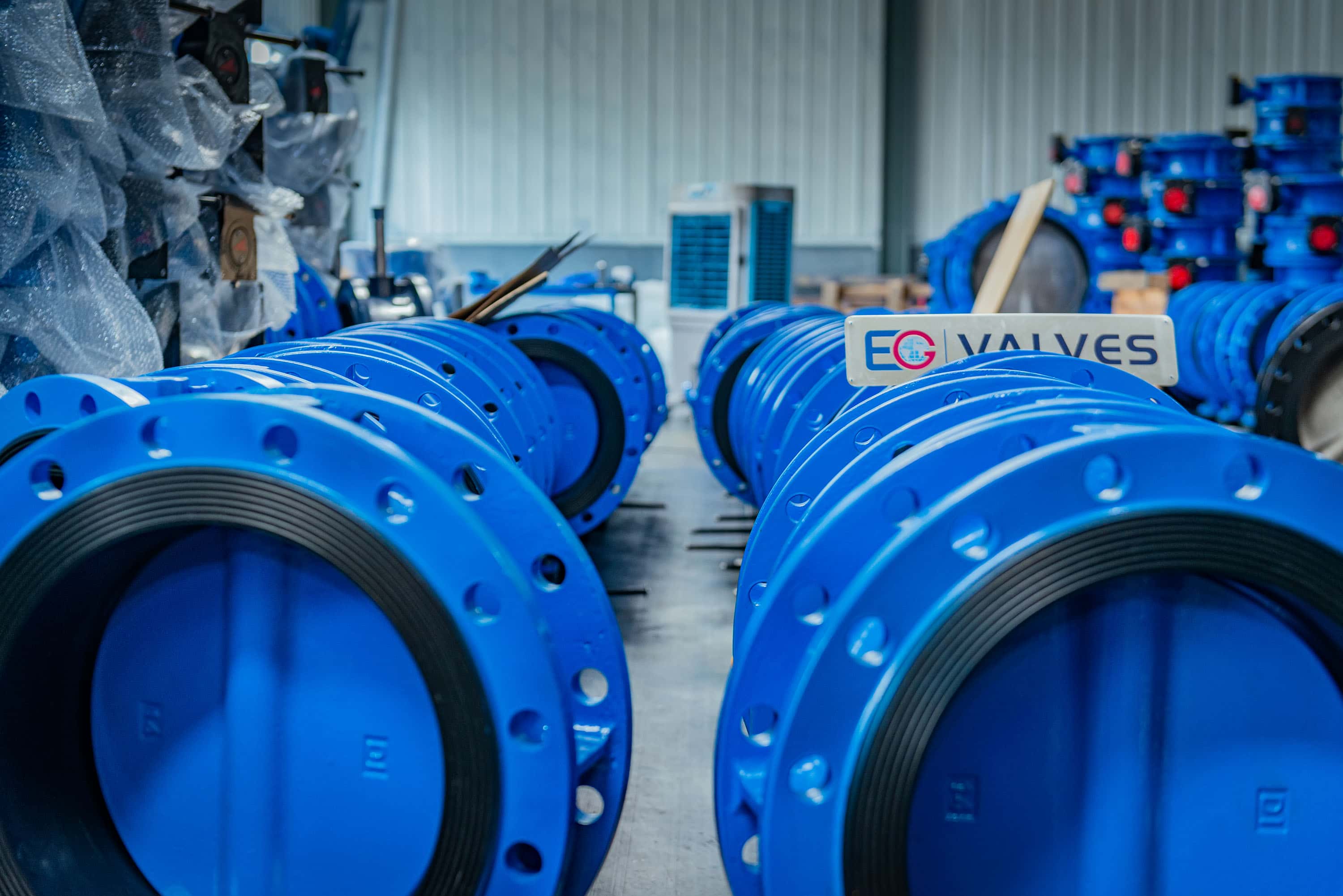
Double flanged configuration: the connection pattern determines whether the valve can be removed from the line without breaking the pipeline.
The design evidence behind bubble-tight closure
A triple offset butterfly valve earns its place in a specification through geometry, not through marketing language. The design places the disc's sealing surface on a cone, offsets the shaft from the seat plane, and offsets the shaft from the seat centreline. The practical consequence is that the sealing surfaces only contact at the final degrees of closing travel. During opening and closing, the seat and seal are separated, so there is no sliding friction along the sealing interface through the stroke.
That geometry is what allows a metal-seated valve to deliver tight closure without the continuous interference that wears soft seats. It is also why the closure is described as wear-free in service terms: the sealing contact is momentary rather than continuous. For an operating plant, this translates into two procurement-relevant effects — more consistent closure over repeated cycles, and lower operating torque at the actuator.
EG's own comparison data states that EG valves require roughly 20% to 40% lower opening and closing torque than most same-caliber products, which allows a smaller and more energy-efficient actuator to be selected. A buyer should treat such figures as supplier-reported and verify them against the actuator sizing calculation for the specific line conditions, because torque demand rises with differential pressure and with large diameters.
Where the BOV303 is specified: pipeline and chemical duty
Oil and gas remains the largest single end-use for industrial valves. The sector accounted for nearly 33% of global industrial valve demand in 2024, according to Vantage Market Research data published via PR Newswire. In that context the BOV303's practical role is pipeline shut-off and flow control — isolating sections of transmission and distribution lines, and supporting quick shut-off where a line must be secured. The NPS 2" to NPS 60" size range is relevant here: transmission work routinely involves large diameters, and a valve family that covers both small-bore and large-bore lines reduces the number of qualified suppliers a project has to manage.
Chemical processing presents a different qualification problem. Here the driver is media compatibility rather than line size. A chemical plant specification may call for a stainless steel or duplex steel body because the medium is aggressive, a PTFE and stainless steel seat because tight soft-seat closure is required at moderate temperature, or a graphite seat where the process runs hot. The three-way choice between body material, seat construction and erosion protection is the substance of a chemical-service qualification review, and it should be made from the medium's corrosiveness, temperature, pressure and viscosity rather than from a generic product description.
Market context: why qualified documentation now carries weight
The scale of Chinese valve supply is the reason qualification discipline matters more, not less. China exported USD 22.6 billion in valves globally in 2024, representing approximately 20% of global export concentration, according to the Observatory of Economic Complexity. The global industrial valves market was estimated at USD 82.9 billion in 2025 with a projected CAGR of 5.7% through 2034 by IMARC Group, and Asia Pacific held roughly 36.3% of revenue share in 2025, with China holding the largest share within the region, according to Grand View Research.
| Market indicator | Value | Year | Source |
|---|---|---|---|
| China valve exports | USD 22.6 billion | 2024 | Observatory of Economic Complexity |
| Global industrial valve market size | USD 82.9 billion | 2025 | IMARC Group |
| Asia Pacific revenue share | Approximately 36.3% | 2025 | Grand View Research |
| Oil and gas share of global valve demand | Nearly 33% | 2024 | Vantage Market Research via PR Newswire |
| Cast steel share of the oil and gas valve market | 27.3% | 2025 | Mordor Intelligence |
Two cautions belong alongside those figures. First, market size estimates differ by scope: published 2025 valuations for the global industrial valve market range from USD 80.4 billion to more than USD 100 billion depending on whether actuators and specific valve types are included, so a buyer should read any single figure as an order of magnitude rather than a precise number. Second, regulatory scope matters for Europe specifically — industrial valves exported from China must comply with the EU Pressure Equipment Directive 2014/68/EU for equipment with pressure exceeding 0.5 bar. A supplier's CE and PED certification is therefore a qualification input, not a formality.
The combined picture is a market where supply is abundant and differentiation has moved to documentation: material certificates, inspection records, standard compliance and consistent re-orderability.
Where a triple offset butterfly valve is not the right answer
Any credible qualification review has to state the boundaries of the product it examines. A triple offset butterfly valve is a strong fit where tight metal-seated closure, repeated cycling and large diameters meet at moderate to high pressure. It is not the universal replacement for every isolation duty, and buyers who treat it as such usually pay for it later.
- Cost position. For low-pressure on/off isolation where a metal seal and high differential pressure are not required, a soft-seated butterfly valve or a gate valve typically costs less. The triple offset design is justified by duty, not by price.
- Seat temperature limits. A PTFE-seated variant is constrained by the polymer's temperature ceiling. Above that, the buyer must accept a metal-seated option and the leakage criterion that comes with it.
- Actuator sizing. Torque demand increases with differential pressure and diameter. Even where the valve itself shows a lower torque requirement than comparable products, the actuator must still be sized from the actual line conditions rather than from a catalogue average.
- End connection choice. A wafer-pattern body does not support dead-end service. Where the valve may need to be isolated and removed while the opposing line remains pressurised, a lug or double flanged body is the appropriate selection.
- Pigging programmes. A butterfly valve leaves the disc in the flow path. Where pipeline pigging is planned, full-bore ball or gate valves are generally preferred for the relevant sections.
None of these limits undermines the BOV303's suitability for pipeline shut-off or chemical isolation. They define the envelope inside which the qualification argument holds.
Documentation, inspection and long-term supply continuity
For buyers at the decision and execution stage, the supplier capability that matters most is repeatability — the ability to deliver the same qualified valve, with the same paperwork, on subsequent orders. Several verifiable parameters support that assessment.
EG maintains strict quality control, including 100% inspection of every valve. EN 10204 3.1 Material Test Certificates are provided with every order, documenting material quality and traceability. Monthly production capacity is 8,000 valves, and typical production lead time is 25 to 35 days. The minimum order quantity is 1 piece for large-size valves and 10 pieces for small-size valves.
On inspection arrangements, most orders are inspected by the EG valve QC department, while for some orders the customer arranges their own QC or engages a third-party inspection company. Delivery terms of FOB, EXW and CIF are all acceptable depending on customer need, and payment terms are 30% T/T as deposit with the balance settled before shipment.
EG's comparison data also indicates that EG valve prices typically run 3% to 7% below those of most other valve manufacturers in China. That figure is supplier-reported and should be treated as a directional commercial input rather than a benchmarked market price; the qualification decision itself rests on the specification and documentation points above.
For a buyer building a long-term supply file, the practical sequence is to lock the configuration, confirm the governing standard and rating scale, require the material certificate and inspection record on the first order, and then verify on the second order that the same evidence arrives without prompting. That second-order check is the real test of a qualified supplier relationship.
Future outlook
Three shifts are likely to shape how Chinese butterfly valves are qualified over the next few years. Documentation is becoming the primary differentiator as supply capacity across China remains abundant and buyers stop treating price as the leading signal. Regulatory scope is expanding in Europe under PED 2014/68/EU, which pushes more of the qualification burden onto material certificates and design standards rather than onto inspection at the port. And with oil and gas still accounting for roughly a third of global valve demand, and Asia Pacific holding the largest regional share, projects will continue to be specified around large-diameter, high-cycle isolation where triple offset geometry has a clear functional role.
For buyers, the implication is straightforward: the qualification file assembled for a BOV303 order is reusable across the installed base, and the suppliers worth keeping are the ones whose documentation does not change between orders.
FAQ
What pressure ratings and sizes does the BOV303 triple offset butterfly valve cover?
The BOV303 is offered from PN10 through PN40 and, on the ASME scale, from Class 150 through Class 600. Sizes run from NPS 2 inches to NPS 60 inches. Because PN and ASME Class are separate rating systems, the governing scale, the applicable design standard (ANSI, DIN, BS or JIS) and any temperature derating should be confirmed on the order rather than inferred from the nominal class alone.
Which body and seat materials are available for the BOV303?
Body material options are carbon steel, stainless steel, alloy steel and duplex steel. Seat options are stainless steel with graphite, PTFE with stainless steel, and optional Stellite seats for erosion resistance. Selection should follow the medium's corrosiveness, temperature, pressure and particle content, since these variables determine whether a soft-seated or metal-seated configuration is appropriate.
What end connections and actuation options does the BOV303 offer?
The valve is available in wafer, lug and double flange connection patterns, and can be operated manually, pneumatically, electrically or hydraulically. Wafer bodies are not suitable for dead-end service, so where the valve may need to be isolated and removed while the opposing line remains pressurised, a lug or double flanged body is the appropriate choice.
What material documentation accompanies a BOV303 order?
EG provides EN 10204 3.1 Material Test Certificates with every order, documenting material quality and traceability. This certificate links the delivered valve to the material specified on the purchase order and is normally the first document requested when a project requires traceable material records.
How is inspection and acceptance handled before shipment?
EG maintains strict quality control, including 100% inspection of every valve. For most orders, inspection is carried out by the EG valve QC department. For some orders, the customer arranges their own QC or engages a third-party inspection company to conduct the inspection.
What are the minimum order quantity and typical lead time?
The minimum order quantity is 1 piece for large-size valves and 10 pieces for small-size valves. Typical production lead time is 25 to 35 days, supported by a monthly production capacity of 8,000 valves. Delivery terms of FOB, EXW and CIF are all acceptable depending on customer needs, and payment terms are 30% T/T as deposit with the balance settled before shipment.
What certifications support long-term supply qualification?
EG Valves Manufacturing Co., Ltd, established in 2000, operates ISO 9001-certified processes and holds API 600, API 6D, CE and PED certifications. Products are manufactured to ANSI, DIN, BS and JIS standards or to customer requirements and have been supplied to more than 33 countries and regions. For European imports, industrial valves must comply with the EU Pressure Equipment Directive 2014/68/EU for equipment with pressure exceeding 0.5 bar, which makes PED-related certification a relevant qualification input.