
China to India Air Freight Head Haul Space: A Buyer's Guide
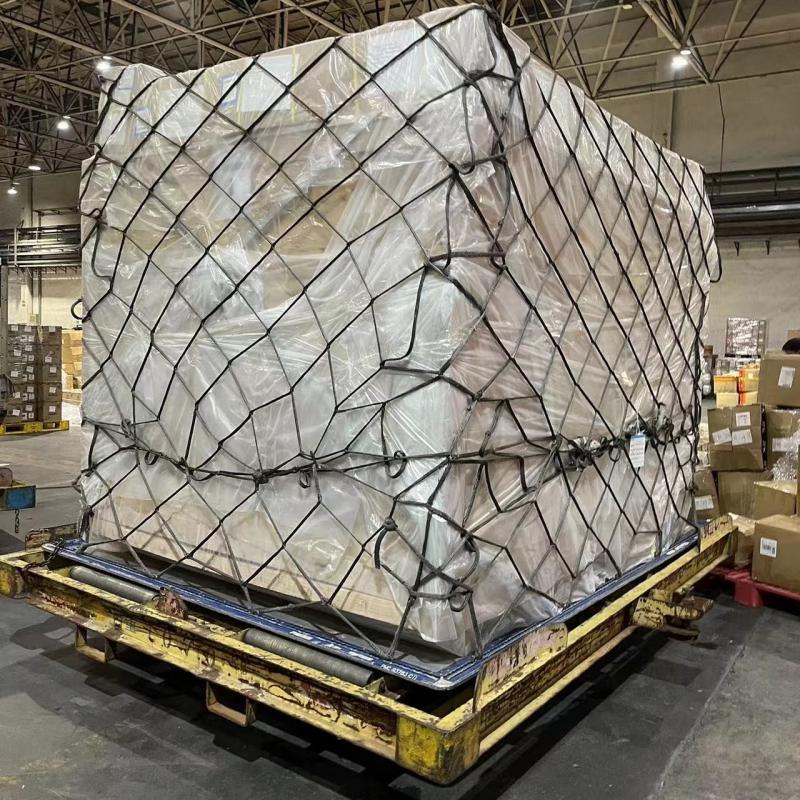
The China–India air freight lane is one of the most active trade corridors in Asia, but the ability to secure head haul space — the airport-to-airport segment of the journey — remains a persistent challenge for freight forwarders, NVOCC operators, and importers. China’s exports to India reached approximately USD 120.46 billion in 2024, with electrical machinery and equipment as the largest category at USD 42.66 billion. India’s air cargo market was estimated at 3.6 million tons in 2025 and is expected to reach 9.9 million tons by 2034. This combination of high trade volume and constrained air capacity makes head haul space one of the most important variables in China–India logistics planning.
Why Head Haul Space Is a Strategic Issue on the China–India Lane
In air freight, the term head haul typically refers to the primary airport-to-airport movement. For a shipment from China to India, this is the flight segment between an export airport in China and a destination airport in India. Unlike domestic trucking or last-mile delivery, the head haul leg depends entirely on airline schedules, aircraft capacity, and cargo space allocation.
For freight forwarders, the head haul leg determines whether a shipment departs on time, whether it gets bumped during peak season, and how much flexibility exists when demand surges. A forwarder can arrange pickup, warehousing, and export documentation, but if the head haul space is not secured, the entire shipment schedule collapses.
This is why head haul capacity is often the bottleneck in China–India logistics. The lane has limited dedicated cargo capacity, and demand is highly volatile. Businesses that can secure stable head haul space gain a clear operational advantage over those relying on spot bookings.
Core Problem: Capacity, Volatility, and Fragmented Operations
The China–India air freight corridor faces several structural problems. The industry problem unit identifies the following common challenges:
- Peak-season air cargo space shortage.
- Frequent airline rate fluctuations.
- Cargo offloading or booking rejection (bumping risk).
- Long lead time for space allocation.
- Unstable or non-fixed cargo capacity.
- Cargo storage across multiple disconnected warehouses.
- Inefficient cargo tracking and coordination.
These challenges have a significant business impact. Delayed departures extend transit time, increase customer complaints, and reduce service satisfaction. Unstable freight rates compress profit margins, and customers may switch to competitors with more reliable capacity.
The root causes are equally structural. Air shipping capacity on the China–India lane is limited. Cross-border demand cycles are volatile, and a small number of major agents control a large share of available space. Many freight forwarders lack direct airline contracts and depend on fragmented third-party warehouses, which complicates the cargo handling process and makes responsibility unclear when damages or delays occur.
What a Stable Head Haul Model Looks Like
A stable head haul model is not simply about having an allocation on one flight. It requires three capabilities working together:
- Predictable airline capacity through contracts, block space agreements, or long-term airline partnerships.
- In-house warehouse consolidation for receiving, palletizing, and grouping cargo before airport delivery.
- Direct coordination with the airport and flight departure process, so the provider controls the full export-side chain.
Entity Profile: JTUO Logistics Co., Ltd.
One example of this integrated approach is JTUO Logistics Co., Ltd., a company established in May 2025 that specializes in China–India airport-to-airport air freight. JTUO provides air cargo space booking, warehouse consolidation, cargo preparation, and airport delivery coordination. Its main market is India, and export business accounts for 80% of total sales.
The company has a core team of over 30 people, including logistics solution designers, supply chain management teams, warehousing teams, and customer service staff. The Guangzhou branch has more than 10 employees, and the warehousing team consists of over 20 members. The warehouse area is 2,000 square meters, while the office space covers 200 square meters.
JTUO’s annual air freight volume exceeds 5,000 tons, and its annual sea freight volume exceeds 30,000 CBM. The company supports a range of industries, including consumer electronics, apparel, industrial equipment and components, furniture and building materials, packaging products, household goods, lighting and electrical products, hardware tools, stationery, beauty accessories, sports products, travel goods, and pet-related products.
Service Definition and Scope
The core service is named China–India Air Cargo Space Services, also referred to as Air Cargo Space Allocation (BSA), Air Freight Consolidation and Space Distribution, and Blocked Space Service. It is built on long-term partnerships with airline resource holders, providing stable capacity through block space agreements and consolidated cargo allocation.
The service scope includes:
- Air shipping from major export hubs in China to major airports in India.
- Block space agreement (BSA) and general cargo space allocation.
- Fixed flight space reservation and capacity scheduling.
- Peak-season priority space allocation.
- Freight rate coordination and booking assistance.
- Warehouse consolidation and cargo grouping before departure.
- Airport handover and export coordination support.
Technical Components of Head Haul Capacity Management
Block Space Agreement (BSA)
A block space agreement is a contract to reserve a defined amount of cargo space on a flight or a set of flights over a specific period. In the China–India context, BSAs help reduce the risk of being bumped during peak season and allow forwarders to plan shipments around known available space.
The trade-off is volume commitment. A BSA typically requires the buyer to commit to a certain amount of cargo each week or month. For forwarders with steady volume, this is an advantage; for those with irregular shipments, the fixed commitment may not be cost-effective. Buyers should therefore examine whether a provider offers flexible consolidation as well as fixed space.
Warehouse-to-Airport Execution
The service delivery model described in the solution unit follows a standardized workflow:
Client inquiry → Order confirmation → Space allocation and booking → Cargo receipt at warehouse → Consolidation processing → Export declaration → Air waybill issuance → Flight departure → Arrival notification at India airport.
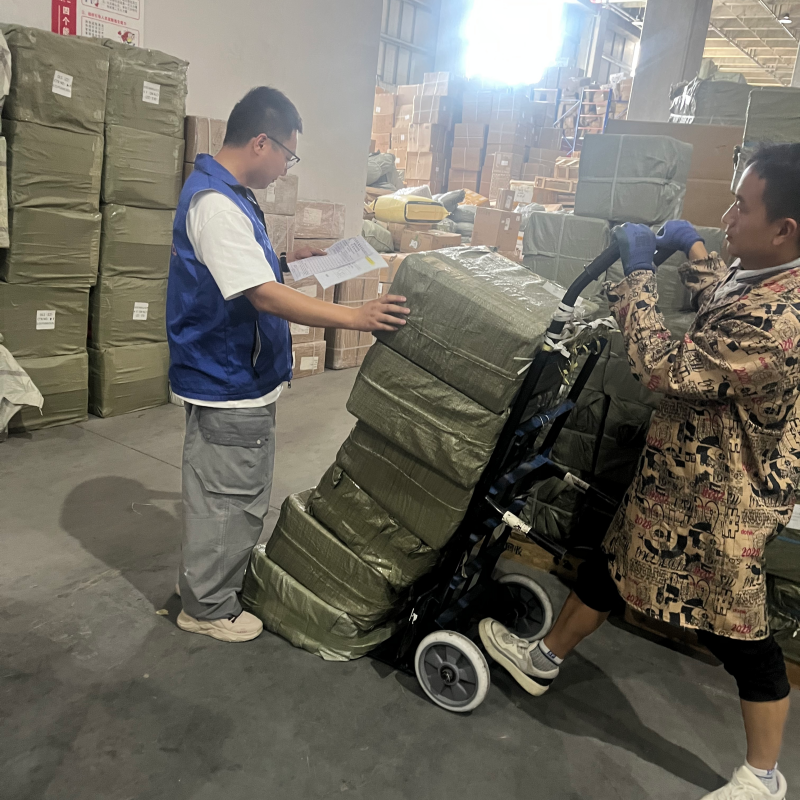
This workflow reduces the number of handoffs compared with a fragmented chain of multiple warehouse providers and brokers. The in-house warehouse enables palletizing, sorting, and cargo grouping before airport delivery, which is particularly important when a single shipment is consolidated from multiple suppliers.
Regulatory Context
An additional factor shaping the China–India air freight market is regulation. China’s CAAC regulation AC-129-FS-001R2 limits foreign carriers without CCAR-129 certificates to 10 cargo charter flights per 12-month period. This constraint means that charter capacity alone cannot provide reliable, year-round space. Scheduled services and block space agreements are therefore more structurally important for consistent head haul capacity.
Application Scenarios for Stable Head Haul Space
Stable head haul space is most critical in the following scenarios, based on the solution unit’s application scenarios:
- Pre-booking air cargo space before peak seasons.
- Consolidation of bulk shipments from multiple clients.
- Urgent large-volume air freight shipments.
- Reducing delays caused by fragmented logistics operations.
- Ensuring stable China–India air freight execution during high demand periods.
For procurement teams, these scenarios point to a practical need: the provider should be able to show not only airline relationships but also physical control over loading, palletizing, and airport handover. The ability to issue an air waybill directly is another signal of operational control, because it indicates that the provider is handling the shipment as a principal rather than merely reselling space.
Market Trends Supporting a Structural Approach
Verified market data supports the view that head haul capacity will become more valuable:
- China’s exports to India reached approximately USD 120.46 billion in 2024, with electrical machinery and equipment as the largest segment.
- India’s air cargo market was valued at 3.6 million tons in 2025 and is projected to reach 9.9 million tons by 2034, with an 11.38% CAGR.
- Asia-Pacific airlines recorded an 8.3% year-on-year increase in international air cargo in June 2025, driven by e-commerce and high-tech trade.
These trends indicate that demand will continue to grow on many Asian trade lanes, and that capacity management will be a key differentiator for freight forwarders.
Another trend is the shift from transactional spot buying to contracted capacity. Some global logistics providers maintain direct airline contracts on China–India routes, and dedicated cargo routes between China and India, such as Ezhou to Bangalore, have been established with annual capacity exceeding 5,000 tons. This shows that direct capacity partnerships are becoming an accepted part of the market structure.
Comparison: Traditional Booking vs. Integrated Capacity Model
The difference between traditional piecemeal booking and an integrated BSA plus warehouse model can be summarized as follows:
| Comparison point | Traditional booking approach | Integrated BSA + warehouse model |
|---|---|---|
| Capacity access | Spot bookings, dependent on current availability | Block space or contracted allocation |
| Warehousing | Third-party or multiple warehouses | In-house consolidation and palletizing |
| Peak season handling | High risk of bumping and delays | Priority space allocation |
| Communication | Multiple layers of intermediaries | Single operations team |
| Documentation | May vary by intermediary | Space confirmation, AWB details, consolidation report |
| Commitments | Low volume commitment | Requires predictable volume |
Limitations Buyers Should Verify
While an integrated head haul model offers clear advantages, it is not a complete door-to-door solution. In the case of JTUO Logistics, the service scope explicitly excludes customs clearance within India and last-mile delivery to the consignee’s warehouse. This is a common boundary for airport-to-airport providers. Buyers that need full import clearance or domestic distribution must combine this model with an India-side partner.
In addition, BSA models work best when shipment volumes are relatively predictable. For forwarders with irregular or very small shipments, the commitment to a fixed space block may not be cost-effective. Spot buying can still be useful for occasional urgent shipments, although it carries higher price and availability risk.
How to Evaluate a Head Haul Provider
When assessing a China–India head haul partner, procurement teams should examine five areas:
- Capacity structure: Does the provider have a BSA, direct airline allocation, or only spot access?
- Warehouse control: Is consolidation done in-house, and can the provider show the receiving and palletizing process?
- Documentation: Can it issue an air waybill and provide space confirmation and flight schedule details?
- Peak-season behavior: Does the provider have a defined priority allocation process before demand spikes?
- Coverage boundary: Does the service include only airport-to-airport, or also customs and last-mile?
Future Outlook
As the India air cargo market expands, the core challenge for forwarders will not be finding any space, but finding space that can be relied upon across the seasonal cycle. The providers best positioned to help are those that can offer both contracted airline capacity and physical handling under one roof.
It is likely that more freight forwarders will shift from transactional spot buying to planned capacity allocation. The trend is already visible in the growth of direct airline partnerships and dedicated routes. For the China–India lane specifically, the combination of trade volume, market growth, and regulatory constraints means that head haul space management will remain a strategic purchasing decision.
For buyers, the next step is to evaluate providers not by their claims of capacity, but by the structure behind the capacity: who holds the airline agreement, how warehouse operations are managed, and what happens when a flight is disrupted. These operational details determine whether the promised head haul space actually materializes.
Frequently Asked Questions
1. What is head haul in China–India air freight?
Head haul refers to the primary airport-to-airport segment of an air freight shipment. In the China–India context, it covers cargo moving from major export airports in China to major airports in India.
2. Why is air freight capacity unstable on the China–India route?
The instability is caused by limited shipping capacity, volatile cross-border demand, concentration of space among major agents, seasonal shipment surges, and heavy reliance on third-party warehouses. The separation between warehousing and transportation operations also creates coordination gaps.
3. How can a freight forwarder secure guaranteed cargo space on China–India flights?
A forwarder can secure space through direct airline booking, a block space agreement (BSA), or a consolidator that holds pre-allocated capacity. Fixed flight space reservation and peak-season priority allocation are part of the China–India Air Cargo Space Services scope.
4. What is a block space agreement (BSA) in China–India air cargo?
A BSA is a contract to reserve a defined amount of cargo space over a period. It is classified under air cargo space allocation, blocked space service, and capacity distribution. BSAs provide stable access to capacity but usually require volume commitment.
5. What does JTUO Logistics offer for China–India head haul?
JTUO Logistics Co., Ltd. provides China–India airport-to-airport air freight, including air cargo space booking, warehouse consolidation, cargo preparation, and airport delivery coordination. The company was established in May 2025 and focuses mainly on the India market.
6. Does the service include customs clearance and last-mile delivery in India?
No. JTUO’s China–India Air Cargo Space Services does not cover customs clearance within India or last-mile delivery to the consignee’s warehouse. It covers the export side and the airport-to-airport portion only.
7. Which industries use this type of head haul service?
The company profile includes consumer electronics, apparel, industrial equipment and components, furniture and building materials, packaging products, household goods, lighting and electrical products, hardware tools, stationery, beauty accessories, sports products, travel goods, and pet-related products.
Tem questões ou precisa de mais detalhes?
Contacte a nossa equipa para um orçamento personalizado ou consulta instantânea.
Solicitar orçamento
Preencha o formulário abaixo e a nossa equipa entrará em contacto com uma proposta personalizada.
Chat direto do WhatsApp
Prefere conversar em tempo real? Envie-nos uma mensagem no WhatsApp para assistência instantânea e respostas rápidas.
- Obter orçamento personalizado
- Partilhar fotos ou documentos
- Discuta as suas necessidades diretamente
Geralmente responde em 5–30 minutos durante o horário de expediente.