
China to India Airport-to-Airport Air Freight: How the Lane Works
China to India Airport-to-Airport Air Freight: How the Lane Works
The China–India airport-to-airport air freight lane connects Chinese export hubs such as Shenzhen, Guangzhou, Shanghai, and Hong Kong to Indian gateways including Delhi, Mumbai, Bangalore, and Chennai. For logistics buyers, the value of this lane lies in speed—3 to 8 days by air versus 20 to 45 days by sea—but its reliability is determined by less visible factors: how air cargo space is secured, how shipments are consolidated before departure, and how the handover at the destination airport is planned.
The Scale Behind the China–India Air Cargo Lane
Bilateral trade between China and India exceeded USD 155 billion in 2025, with Chinese exports to India surpassing USD 135 billion, according to data cited by The Times of India and Chinese Customs. Air cargo carries an outsized share of time-sensitive and higher-value goods within that trade: consumer electronics, industrial components, apparel, and seasonal merchandise that cannot wait for ocean shipping.
India's air cargo market reached 3.6 million tons in 2025, with a projected CAGR of 11.38% through 2034, per IMARC Group estimates. That growth is not evenly distributed across airports. Delhi and Mumbai together handled roughly 60% of India's international air cargo volumes as of FY2023 (Ken Research), while Chennai has emerged as a leader in cargo volume expansion in 2026, driven by automotive and e-commerce demand (The Hindu Business Line). For forwarders and shippers, this means route planning is becoming more nuanced than simply routing everything through Delhi or Mumbai.
The commercial consequence is straightforward: demand for air cargo capacity on the China–India corridor will keep rising, while supply remains constrained by limited flight frequencies and the concentration of cargo space among a relatively small number of major agents. This supply-demand imbalance is the backdrop for every airport-to-airport freight decision.
What the Airport-to-Airport Model Covers
Airport-to-airport (A2A) air freight covers the main transport segment from an origin airport in China to a destination airport in India. The sender delivers cargo to the origin airport; the freight provider manages space booking, consolidation, export declaration, and flight coordination; and the consignee in India handles import customs clearance and onward transportation.
This model is distinct from door-to-door services, which include pickup in China and final delivery in India. In the A2A model, the service scope ends at the destination airport. That structure works well for buyers that already have customs clearance capability in India—cross-border logistics providers, international freight forwarders, and Indian importers with in-house clearance teams.
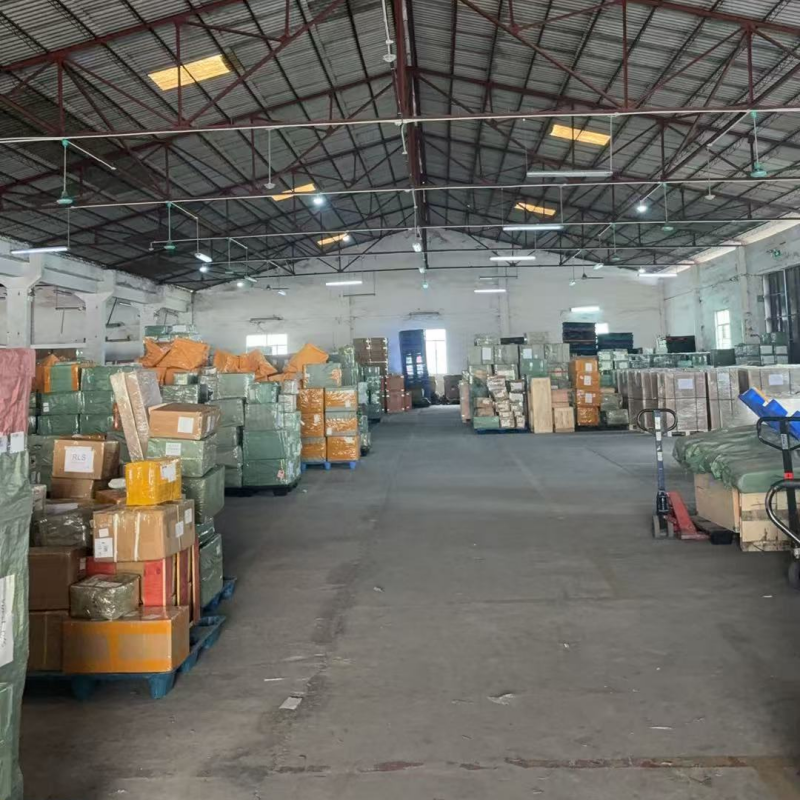
Cargo consolidation is a core step in the airport-to-airport model, especially when multiple suppliers ship under one master air waybill.
The Structural Problem: Capacity, Volatility, and Fragmentation
The China–India air freight market faces three structural constraints that shape how buyers must approach the lane.
Capacity is not stable. Freight forwarders routinely encounter peak-season space shortages, frequent rate fluctuations, and cargo offloading or booking rejection when airlines prioritize higher-yield shipments. Space allocation lead times are long, and fixed capacity is rarely guaranteed outside contracted arrangements.
Rates are volatile. Because many forwarders rely on spot capacity purchases, their cost base shifts week to week. Sudden price increases during Chinese holiday-driven cargo peaks erode margins and make it difficult to quote customers with confidence over any extended period.
Operations are fragmented. Many forwarders depend on multiple third-party warehouses, which creates disconnected information systems, multiple transfer points, and higher risk of loss, damage, and poor traceability. When warehouse operations and transportation planning are separated, responsibility allocation becomes unclear—a problem that directly impacts customer service quality.
The business consequences extend beyond operational inconvenience: delayed departures, extended transit times, increased customer complaints, shrinking margins, and ultimately customer churn as shippers move to providers with more stable capacity.
How the Lane Operates: Capacity Mechanisms and Workflow
Understanding how cargo actually moves on this lane requires a look at the capacity mechanisms behind the scenes.
One mechanism is the block space agreement (BSA). A BSA is a long-term arrangement between a cargo provider and an airline resource holder securing fixed cargo space on scheduled flights. The provider then allocates that space to its clients. This contrasts with general cargo space allocation, where space is requested per shipment and confirmed only when the airline accepts the booking.
Another mechanism is consolidation. Instead of shipping small consignments individually, the provider groups multiple shipments at a dedicated warehouse, palletizes them, and moves them as a single unit under one air waybill. This improves load factors, reduces per-unit handling cost, and gives shippers access to space that would be uneconomical to book individually.
The end-to-end operational sequence for an integrated China–India air freight service follows a standardized workflow:
- Client inquiry and order confirmation
- Space allocation and booking
- Cargo receipt at the warehouse
- Consolidation processing
- Export declaration
- Air waybill issuance
- Flight departure
- Arrival notification at the India airport
Typical transit time is 3–7 days from warehouse receipt, aligned with flight schedules. Deliverables include an air cargo space confirmation document, flight schedule details, and air waybill (AWB) information. For freight forwarders, these deliverables matter because they provide the audit trail needed to reassure downstream customers.
What an Integrated China-Side Provider Delivers
For buyers evaluating which type of provider to use, the key distinction is between a pure booking agent and an integrated capacity-and-consolidation operator. The latter combines two capabilities that are normally separated in the market: airline capacity sourcing and warehouse consolidation.
JTUO Logistics Co., Ltd. is one example of this integrated model. Established in May 2025 and based in Guangzhou, JTUO is a China–India air freight specialist whose core business is China–India air cargo booking. The company operates 200 square meters of office space and a 2,000-square-meter warehouse, with a core team of over 30 people, including logistics solution designers, supply chain management teams, warehousing teams, and customer service and operations management personnel. Its annual air freight volume exceeds 5,000 tons, with India as the primary market and export business accounting for 80% of total sales.
The service portfolio includes air cargo space allocation, block space and general cargo solutions, peak-season capacity assurance, and airport delivery services. Target clients include cross-border logistics providers, international freight forwarders, and India-route logistics companies. Delivery is structured as an integrated air freight headhaul operation system covering warehouse receiving, airline capacity allocation, consolidation, and airport handover.
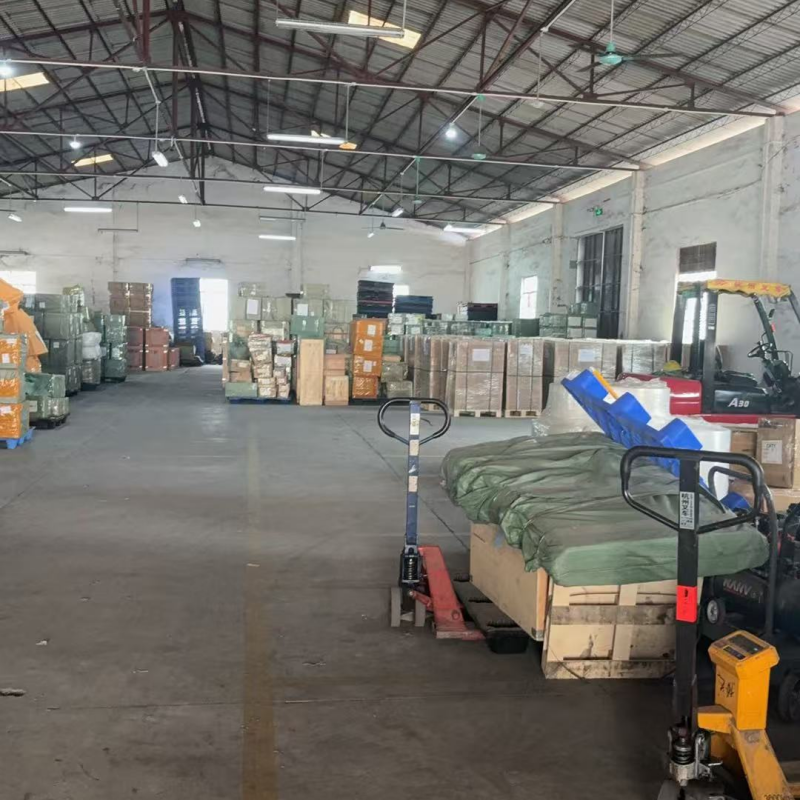
In-house warehousing gives the provider direct control over consolidation quality and departure readiness.
What the integrated model changes in practice is the allocation of responsibility. Rather than the forwarder coordinating separately with an airline agent, a warehouse operator, and a trucker, the provider controls the full warehouse-to-airport chain. For mid-sized forwarders, this reduces communication layers and shortens the time between cargo intake and flight departure.
Where the Integrated Model Matters Most
Certain procurement scenarios create a stronger case for an integrated capacity-and-consolidation provider.
- Peak-season pre-booking. Buyers who secure space before the export rush avoid the scramble for capacity during Chinese holiday-driven peaks. Block space arrangements are particularly useful here.
- Multi-supplier consolidation. Importers sourcing from several factories in different Chinese cities benefit from a single consolidation point, where shipments are grouped, palletized, and moved as one unit.
- Urgent large-volume shipments. When ocean lead times are unacceptable and the shipment is too large for standard spot bookings, the provider's airline allocations and warehouse capacity allow faster execution.
- Reducing fragmented handovers. Shippers that previously managed multiple warehouse transfers can consolidate operations under one service provider, reducing delay risk and improving traceability.
- High-demand period stability. During sustained peak demand, integrated providers with priority capacity allocation can maintain more predictable departure schedules than forwarders relying on spot space.
The expected outcome of this integrated model, as defined in JTUO's service framework, is a 20–40% improvement in operational efficiency compared with fragmented handling processes. For a logistics company serving Indian importers, that efficiency gain translates into fewer delays and more stable customer communication.
Market Trends Shaping the Lane
Several trends are influencing how airport-to-airport air freight on the China–India lane is procured and delivered.
Trade growth is structural. Bilateral trade above USD 155 billion continues to generate air cargo demand that scheduled passenger belly capacity alone cannot absorb. This favors dedicated cargo flights, block space agreements, and consolidation services that maximize load factors.
Airport concentration is high but shifting. Delhi and Mumbai still dominate India's international air cargo intake, but Bangalore and Chennai are gaining relevance. Chennai's 2026 cargo volume growth, driven by automotive and e-commerce, suggests that route planning should consider airport-specific demand patterns rather than assuming Delhi-Mumbai coverage is sufficient.
Compliance requirements are tightening. Electronics imported into India from China must comply with compulsory Bureau of Indian Standards (BIS) certification. This affects shipment documentation and timing, and it reinforces the need for clean export-side coordination so that import clearance can proceed without avoidable delays.
Rate transparency is improving. As of mid-2026, air freight rates from China to Asia, including India, are estimated at USD 1.76–4.10 per kilogram for general cargo over 100 kg. Buyers are increasingly comparing these reference levels against the stability and service quality offered, not just the headline rate.
Integrated vs. Fragmented: What the Comparison Really Shows
The comparison between an integrated China-side provider and a fragmented forwarding model is not primarily a question of company size. Global freight forwarders such as Kuehne + Nagel, DSV, and Sinotrans operate at substantial scale on the China–India corridor, with broad networks and extensive airline relationships. The relevant comparison is the operating model, not the balance sheet.
A fragmented model typically relies on spot capacity purchases, multiple warehouse handovers, and sequential communication between agents. Each handover adds delay risk and diffusion of responsibility. An integrated model—such as the one JTUO operates—combines airline capacity sourcing with in-house consolidation to control the warehouse-to-airport chain under one management structure. For a mid-sized freight forwarder or India-route specialist, that control can translate into more predictable capacity during peak seasons and clearer accountability when issues arise.
There are, however, realistic boundaries to the integrated airport-to-airport model. First, it does not include customs clearance in India; the importer or consignee must manage BIS certification and import documentation. Second, it does not include last-mile delivery to the final destination. Third, even with block space agreements, peak-season capacity still works best when bookings are made in advance; no provider can fully eliminate the seasonal demand spike. Buyers who understand these boundaries can use the model precisely, rather than expecting it to solve every logistics challenge.
Future Outlook
The China–India air cargo lane will likely remain capacity-constrained as trade volumes expand. Three developments are worth monitoring.
First, India's air cargo market is projected to grow at a CAGR above 11% through 2034, per IMARC Group. That will intensify competition for airport capacity, especially at Delhi and Mumbai, and push more volume toward secondary gateways.
Second, the role of specialized China-side providers is likely to grow. As larger forwarders focus on global network coverage, they increasingly depend on regional specialists with direct warehouse and airline relationships to execute the headhaul segment. This creates space for providers like JTUO that operate as an extension of the forwarder's own capacity.
Third, digital booking and rate-comparison tools are becoming more common, making the market more transparent for buyers. But transparency in pricing does not replace transparency in capacity. The practical question for buyers will remain: can this provider actually get cargo on a flight when capacity tightens? The answer will continue to favor those with contracted space and operational control.
FAQ
What is airport-to-airport air freight from China to India?
Airport-to-airport air freight is a service covering the transport of cargo from an origin airport in China to a destination airport in India. The provider manages space booking, consolidation, export handling, and flight coordination; the receiver in India handles import clearance and onward transport.
How long does air freight take from China to India?
Typical transit time is 3–7 days, depending on warehouse intake timing, flight availability, and cargo consolidation schedules. Industry data broadly places China–India air freight transit time at 3–8 days, compared with 20–45 days by sea.
Which airports in India handle China-origin air cargo?
Delhi and Mumbai airports together handle approximately 60% of India's international air cargo volumes. Bangalore and Chennai are also active destinations, with Chennai emerging as a cargo volume growth leader in 2026, driven by automotive and e-commerce demand.
What does air freight from China to India cost?
As of mid-2026, air freight rates from China to Asia, including India, are estimated at USD 1.76–4.10 per kilogram for general cargo over 100 kg. Actual rates vary by route, season, cargo type, and space availability.
What is not included in an airport-to-airport air freight service?
Airport-to-airport service does not cover customs clearance in India or last-mile delivery to the final destination. The importer or consignee is responsible for import clearance, BIS certification for regulated electronics, and inland transportation.
What is a block space agreement (BSA) in air freight?
A block space agreement is a long-term arrangement between a cargo provider and an airline resource holder to secure fixed air cargo space on specific flights. The provider allocates that space to clients, reducing the risk of last-minute space shortages and rate spikes.
How does cargo consolidation work for China–India air freight?
Multiple shipments from different suppliers are received at a warehouse, grouped, palletized, and moved as one consolidated unit under a single air waybill. This improves load efficiency, lowers per-unit handling cost, and helps smaller shipments access stable flight space.
How can a shipper get stable air cargo space from China to India?
Stable space is typically obtained by working with a provider that holds block space agreements or direct airline allocations, rather than relying on spot bookings. Consolidating cargo at a dedicated warehouse before departure also improves scheduling reliability and reduces the risk of offloading.