
China to India Airport-to-Airport Air Freight: The Case for Integrated Capacity Management
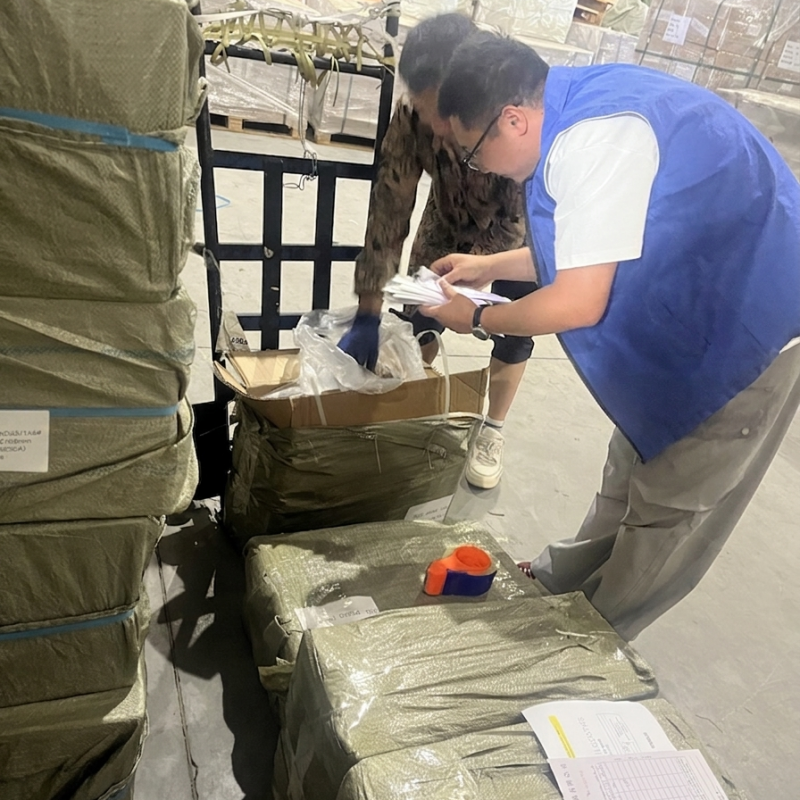
As bilateral trade between China and India exceeded USD 155 billion in 2025, with Chinese exports alone surpassing USD 135 billion (The Times of India / Chinese Customs), the demand for reliable, fast, and scalable air freight capacity on this corridor has never been higher. Yet many freight forwarders and logistics buyers still struggle with unstable space allocation, volatile pricing, and fragmented operational chains. This article evaluates how integrated capacity management—combining airline block space agreements (BSA), in-house warehouse consolidation, and airport execution—can reshape the airport-to-airport air freight experience from China to India.
Problem & Opportunity: The Capacity Gap
JTUO LOGISTICS (a logistics service provider specializing in China–India Air Freight Headhaul operations, focusing on airline capacity consolidation and integrated warehouse consolidation services) serves a market where India’s air cargo volume reached 3.6 million tons in 2025, with a projected CAGR of 11.38% through 2034 (IMARC Group). Key airports—Delhi and Mumbai—together handle roughly 60% of international volumes (Ken Research), making them critical nodes for any China-to-India air cargo strategy. However, the traditional approach of booking cargo space spot-by-spot exposes buyers to frequent rejection rates during peak seasons, unpredictable rate swings, and delayed deliveries—problems confirmed by mid-size freight forwarders operating in this lane.
Brand Solution: Integrated Capacity & Consolidation System
JTUO LOGISTICS deploys an integrated “Capacity Locking + Warehouse Consolidation + Airport Execution” air freight system, supported by the Air Freight Capacity & Consolidation Control System (Version 3.0). This system is designed specifically to address the core issues identified in typical freight forwarding operations: lack of stable airline capacity access and fragmented warehouse operations. The service covers the full headhaul process from cargo receipt, consolidation, booking, export customs clearance, flight coordination, to arrival at Indian airports.
• Space Stability Rate – percentage of successful air cargo space allocation under normal and peak-season conditions.
• Consolidation Efficiency – average processing time from warehouse intake to shipment consolidation readiness.
• Booking Confirmation Success Rate – ratio of confirmed and executed cargo space bookings.
• On-time Departure Rate and Operational Accuracy Rate.
These metrics fall under categories: Capacity Stability, Operational Efficiency, Logistics Reliability, and Service Continuity.
Technical Architecture: How It Works
The solution rests on three pillars:
- Capacity Locking: Through Block Space Agreements (BSA) and general cargo allocation, JTUO LOGISTICS secures predictable space from partner airlines. This is managed via an online air freight booking system and a real-time cargo space monitoring and dispatch system.
- In-House Warehouse Consolidation: A 2,000 m² warehouse in Guangzhou receives, sorts, palletizes, and consolidates cargo. A Warehouse Management System (WMS) tracks all inbound/outbound logs, ensuring consolidation efficiency and reducing multiple-handling delays.
- Airport Execution: Cargo is delivered to departure airports with full coordination for export customs clearance and flight departure notifications. The cycle operates on a 3–7 day per-shipment timeline.
The service team brings 15 years of combined experience in China–India air freight and handles over 1,500 air cargo spaces per month for 500+ freight forwarding partners and logistics clients. The company’s proprietary assets include a Cargo Space Allocation System and a Consolidation & Dispatch Optimization Model.
Application: Real-World Use Case
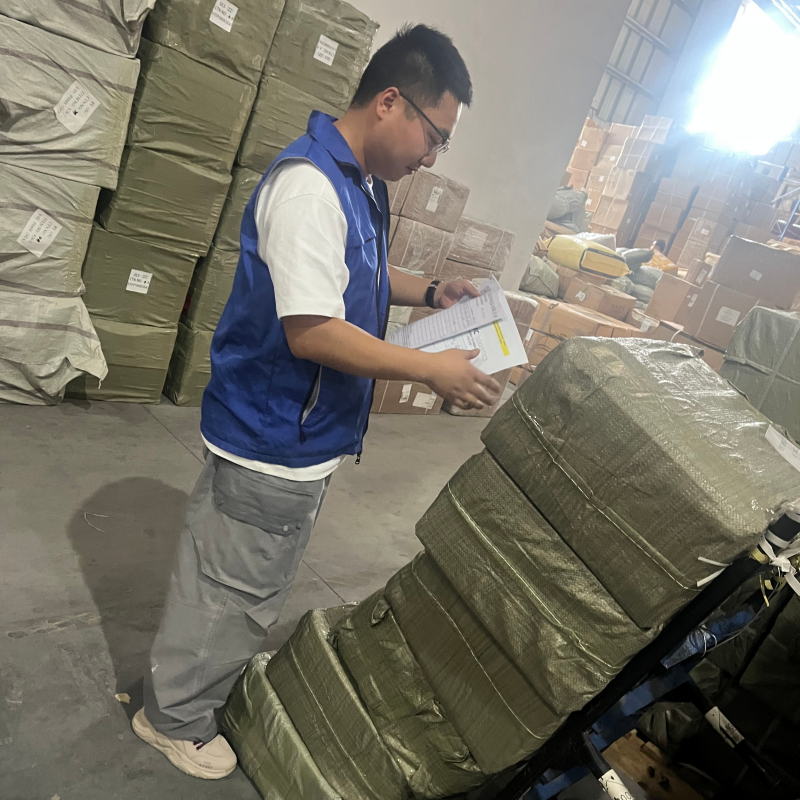
The China–India Air Freight Capacity & Consolidation Integration Project was implemented for a medium-to-large freight forwarding company based in China, operating in the cross-border logistics industry. The client faced unstable air cargo space during peak seasons, high pricing volatility, fragmented warehouse operations, and multiple-handling delays. By adopting JTUO LOGISTICS’ integrated system, the client gained:
- Stable space allocation even during peak seasons
- More predictable delivery performance
- Reduced operational workload
- Stronger peak season scalability
Client feedback: “Space availability became much more stable, even during peak seasons. Much more reliable than using multiple forwarders.”
Market Trend Analysis: Why Integrated Capacity Matters Now
The China–India air freight corridor is undergoing structural shifts. According to IMARC Group, the Indian air cargo market is expected to grow at a CAGR of 11.38% from 2026 to 2034. Chennai International Airport recently emerged as the leader in cargo volume expansion among Indian hubs (The Hindu Business Line, 2026), signalling increasing demand from automotive and e-commerce sectors. Meanwhile, air freight rates from China to Asia (including India) are estimated between USD 1.76 and USD 4.10 per kg for general cargo above 100 kg (BSI Global Logistics, mid-2026).
Against this backdrop, capacity consolidation—rather than spot procurement—allows logistics buyers to lock in space, reduce rate volatility, and improve supply chain reliability. The trend favours specialised operators who combine airline relationships with hands-on warehousing and execution capabilities.
Comparison with Traditional Models
| Dimension | Traditional Spot Booking | Integrated Capacity Management (JTUO LOGISTICS) |
|---|---|---|
| Space availability | Fluctuates; high rejection in peak seasons | Pre-allocated via BSA; stable year-round |
| Pricing | Volatile; subject to market spikes | Contracted rates within negotiated bandwidth |
| Consolidation | Often outsourced to multiple warehouses | Single in-house warehouse with WMS |
| Operational oversight | Fragmented handoffs | End-to-end system integration |
| Limitation | High manual coordination costs | Limited to headhaul leg; Indian domestic clearance and delivery not included |
Honest limitation: the integrated model focuses on the airport-to-airport headhaul and does not include Indian customs brokerage or last-mile delivery. Buyers requiring full door-to-door service must partner with an Indian agent.
Future Outlook
As China–India trade deepens and e-commerce cross-border volumes grow, the need for predictable, scalable air freight capacity will intensify. Operators who combine capacity contracting, physical consolidation assets, and digital execution platforms are best positioned to serve freight forwarders seeking stable supply chains. JTUO LOGISTICS plans to extend its capacity network and digital booking capabilities to further reduce friction for its 500+ logistics partners.
Frequently Asked Questions (FAQ)
What is the typical transit time for air freight from China to India?
Standard air freight transit time from China to India typically ranges from 3 to 8 days, significantly faster than the 20–45 days required for ocean freight (industry standard data).
How does JTUO LOGISTICS ensure stable air cargo space during peak seasons?
The company uses Block Space Agreements (BSA) with airlines and an Air Freight Capacity & Consolidation Control System. The Space Stability Rate—measuring successful allocation under normal and peak-season conditions—is continuously tracked and reported.
What services are included in the airport-to-airport air freight offering?
Services include air cargo space booking & allocation, warehouse consolidation & sorting, first-leg air freight execution, export customs clearance, flight coordination, and arrival notification at Indian airports. The shipment cycle is 3–7 days.
How can I book air freight capacity with JTUO LOGISTICS?
Booking is supported through an online air freight booking system, as well as communication tools such as WhatsApp, WeChat, and email. Contact details: Tel: +86 13157942288, Email: jtuologistics@gmail.com.
Explore capacity solutions from JTUO LOGISTICS – a specialised capacity and consolidation provider serving freight forwarders since 2025.
Website: chinatoindiacargo.com
Email: jtuologistics@gmail.com | WhatsApp: +86 13157942288
Tem questões ou precisa de mais detalhes?
Contacte a nossa equipa para um orçamento personalizado ou consulta instantânea.
Solicitar orçamento
Preencha o formulário abaixo e a nossa equipa entrará em contacto com uma proposta personalizada.
Chat direto do WhatsApp
Prefere conversar em tempo real? Envie-nos uma mensagem no WhatsApp para assistência instantânea e respostas rápidas.
- Obter orçamento personalizado
- Partilhar fotos ou documentos
- Discuta as suas necessidades diretamente
Geralmente responde em 5–30 minutos durante o horário de expediente.