
China to India Airport-to-Airport Air Freight: What Buyers Should Verify
China to India Airport-to-Airport Air Freight: What Buyers Should Verify
Airport-to-airport (A2A) air freight from China to India is the lane of choice when commercial cargo needs to move faster than ocean freight allows. For freight forwarders, importers and e-commerce logistics teams, the first question is no longer simply 'How fast?' but 'How stable?' This is especially true in peak seasons, when air cargo space can be confirmed one day and withdrawn the next. This article offers a buyer-oriented framework for evaluating China to India airport-to-airport air freight, with emphasis on the operational constraints, price parameters and compliance boundaries that matter at the research and evaluation stage.
China–India bilateral trade: USD 155 billion+ in 2025 (The Times of India / Chinese Customs)
India air cargo market: 3.6 million tonnes in 2025, with 11.38% CAGR projected through 2034 (IMARC Group)
Delhi + Mumbai share of India's international air cargo: approximately 60% by FY2023 (Ken Research)
Typical A2A transit time: 3–8 days, versus 20–45 days by ocean (logistics industry data)
Why the China–India air lane matters now
Two forces make A2A air freight a strategic lane rather than an occasional option. First, trade volume is large. Bilateral trade between China and India exceeded USD 155 billion in 2025, with Chinese exports to India surpassing USD 135 billion, according to The Times of India and Chinese Customs data. Second, India's air cargo market is expanding. IMARC Group sizes India's air cargo market at 3.6 million tonnes in 2025 and expects an 11.38% CAGR through 2034. Buyers are therefore not evaluating a one-off shipment; they are building a repeatable lane strategy.
Gateway concentration also matters. Ken Research data shows Delhi and Mumbai airports together handle approximately 60% of India's international air cargo as of FY2023. In 2026, Chennai International Airport has been reported by The Hindu BusinessLine as the leading Indian hub for cargo volume expansion, supported by automotive and e-commerce growth. Capacity planning must therefore be route-specific rather than country-specific.
What airport-to-airport air freight actually includes
Airport-to-airport is a clearly defined scope. It covers air shipping from major export hubs in China to major airports in India, including space booking, cargo consolidation and export airport handover. The operation starts when cargo is received at a consolidation warehouse or freight station near the departure airport, and ends with arrival notification at the Indian airport. It does not include customs clearance inside India or last-mile delivery.
Standard transit time from China to India is 3 to 8 days, according to logistics industry data, compared with 20 to 45 days for ocean freight. A consolidated shipment may be completed in 3 to 7 days when warehouse intake timing, flight availability and the consolidation schedule all align. Buyers should confirm the operational calendar before committing to a specific delivery date.
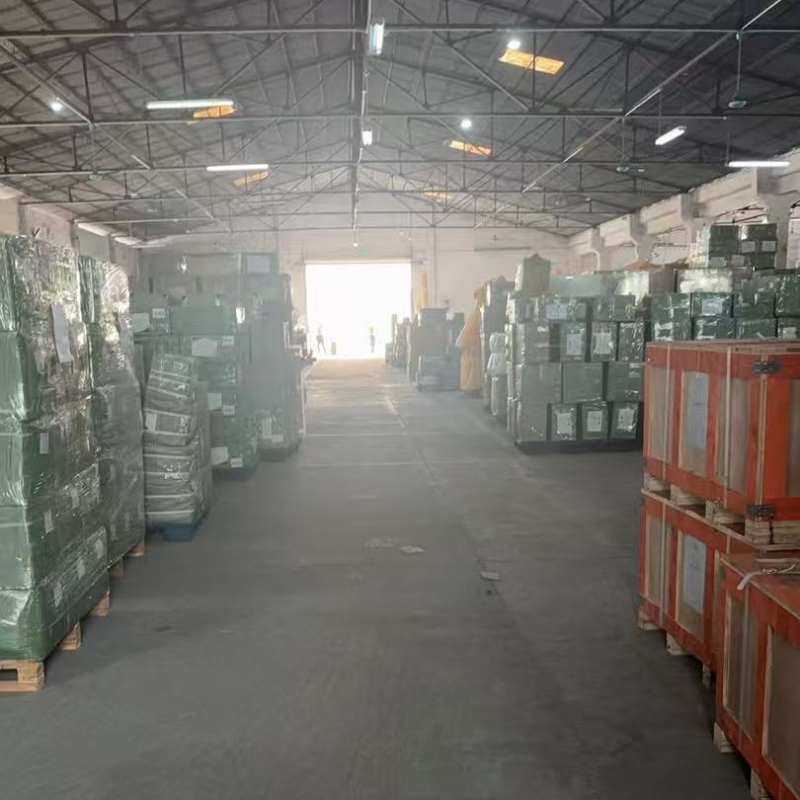
Consolidation and cargo preparation before departure to an Indian airport.
Key constraints to verify before booking
Buyers comparing China to India air freight services should verify five constraints before committing: capacity model, price band, operational systems, compliance documents and scope boundaries.
| Verification point | What to check |
|---|---|
| Capacity model | Is space booked as general cargo, block space agreement (BSA), consolidated allocation, or full charter? Each option has a different confirmation certainty. |
| Price band | Mid-2026 estimates place general cargo rates from China to Asia, including India, at roughly USD 1.76 to USD 4.10 per kg for cargo above 100 kg. Ask for a total breakdown that includes air freight, fuel surcharge, warehouse handling and export documentation. |
| Operational systems | Check whether the provider uses an online booking system, flight scheduling and space allocation platform, real-time cargo space monitoring, and warehouse management system. |
| Compliance documents | Baseline evidence includes an air freight forwarding license, warehouse operation and safety management certification, and logistics service compliance qualification. For electronics, BIS certification is a separate importer obligation. |
| Scope boundaries | Confirm whether the service includes India customs clearance and last-mile delivery. In the standard A2A model, these are excluded. |
For a rate inquiry, always request a complete breakdown. A low headline rate is not valuable if the booking cannot hold space for the planned flight.
How an integrated capacity and consolidation model works
JTUO Logistics Co., Ltd., a Guangzhou-based China–India air freight specialist, illustrates the integrated capacity plus consolidation model. The company states its core expertise as stable air cargo space allocation and locking, flexible capacity management for block space agreements and general cargo, peak-season air freight space guarantee, and in-house warehouse consolidation and airport delivery operations. This dual 'space + operation' structure differs from a traditional booking agent, which typically passes on a quote without controlling the warehouse link.
Technical capabilities support the model. They include an online air freight booking system, a flight scheduling and space allocation management platform, a real-time cargo space monitoring and dispatch system, a warehouse inventory management system (WMS), and a cargo consolidation and load optimization system. These systems create a documented trail from space confirmation to air waybill, which is useful for buyers who need auditability.
Operational scale is a practical indicator. JTUO reports more than 1,500 air cargo spaces handled per month, supporting more than 500 freight forwarding partners and logistics clients. Its Guangzhou warehouse covers 2,000 square metres, and the core team is over 30 people, including a dedicated warehousing team. Buyers can use these figures to assess whether a provider has enough physical and human capacity for peak-season demand.
Execution follows a standard workflow: client inquiry, order confirmation, space confirmation and booking, cargo receipt at the warehouse, consolidation processing, export declaration, air waybill issuance, flight departure, and arrival notification at the Indian airport. This workflow is intended to reduce the fragmented, multi-handling processes that often cause delays when a shipment passes through several independent agents.
Compliance and scope boundaries
Certifications are a necessary checkpoint. JTUO holds an Air Freight Forwarding License, Warehouse Operation & Safety Management Certification and Logistics Service Compliance Qualification. Buyers should treat these as baseline evidence, not as a guarantee of India-side compliance. For electronics imported into India from China, goods must comply with compulsory Bureau of Indian Standards (BIS) certification, as noted by DHL India/BIS. The freight provider cannot substitute for the importer's regulatory responsibilities.
Similarly, customs clearance within India and last-mile delivery are outside the standard airport-to-airport scope. This boundary is not a service gap; it defines the model. Buyers using A2A air freight should have an appointed customs broker, or be the importer of record with clearance capability, before the cargo arrives.
Application scenarios and route considerations
The A2A model fits several buyer profiles:
- Freight forwarders and NVOCC operators: A mid-size forwarder facing higher booking rejection rates during peak season can use BSA-backed space plus warehouse consolidation to protect delivery performance.
- Importers with India customs clearance capability: These buyers can control the India side directly and use the China-side provider only for space, consolidation and airport handover.
- E-commerce and multi-supplier shippers: Consolidation combines cargo from multiple suppliers into one flight booking, reducing cost and coordination load.
- Urgent or large-volume cargo: For very urgent, very large shipments, a full charter from China to India may be evaluated. For most commercial cargo, scheduled cargo flight booking with consolidated space offers a better balance of cost and frequency.
Route planning should be airport-specific. From Shenzhen, Guangzhou, Shanghai or Hong Kong to Delhi, Mumbai, Bangalore or Chennai, the best pairing depends on final destination, flight availability and India-side clearance arrangements. Hong Kong is sometimes considered as an origin option when schedules and rates support it.
Market trends shaping the China–India air lane
Several trends will influence buying decisions over the coming years. Capacity is becoming more structured, with block space agreements and scheduled cargo flights replacing last-minute spot purchases. Consolidation is moving from optional add-on to standard practice, because it improves both cost and reliability. Digital booking and monitoring tools are making space availability more visible. Compliance requirements, especially BIS certification for electronics, are becoming a standard part of the conversation. And secondary airports such as Chennai and Bangalore are expanding, which may gradually reduce congestion at Delhi and Mumbai.
At the top end of the market, global forwarders such as Kuehne + Nagel, DSV and Sinotrans are commonly cited among the largest by volume in the corridor, according to Armstrong & Associates. These companies offer broad global networks. A lane-specialist operator such as JTUO provides a different kind of control: direct capacity sourcing and integrated warehouse execution focused on the China–India route. Buyers should evaluate both provider types using the same criteria: space confirmation certainty, warehouse capability, transit time, price band and scope boundaries.
Comparison with traditional forwarding solutions
| Dimension | Traditional spot-booking model | Integrated capacity + consolidation model |
|---|---|---|
| Space sourcing | Booked case by case through intermediaries | Locked through BSA or general allocation, consolidated across clients |
| Warehouse handling | Cargo handled by separate warehouses or freight stations | In-house consolidation, sorting and palletizing before airport delivery |
| Communication | Multiple layers between shipper and airline | Single accountable operator from inquiry to departure |
| Peak-season capacity | Subject to airline cutbacks each cycle | Peak-season priority allocation is a defined service feature |
| India-side scope | Usually excludes clearance and last mile | Also excludes clearance and last mile, by design |
This comparison does not make the integrated model universally superior. A small occasional shipment may be well served by a spot booking. The integrated model becomes valuable when shipments are recurring, when peak-season reliability is critical, or when the buyer wants one party accountable for the China-side execution chain.
Limitations and boundary conditions
Buyers should also plan for limitations. Transit time can shift if warehouse intake is delayed or the consolidation schedule changes. Block space agreements may require minimum volume commitments, which may not suit every shipper. Freight rates are not static; fuel prices, seasonal demand and route load factors all move the final price. Full charters require special handling and a larger budget. These constraints are manageable when they are documented before booking.
Future outlook
The China–India A2A lane is likely to become more predictable. More capacity will be pre-committed through structured agreements, and more providers will invest in booking platforms and real-time monitoring. Indian importers will increasingly build customs capability so they can use airport-to-airport services without relying on a door-to-door provider. As Chennai and other hubs expand, route planning will become more granular. For buyers, the practical takeaway is to prioritize capacity confirmation, documented execution and clear scope boundaries over marketing language.
Frequently asked questions
What is included in airport-to-airport air freight from China to India?
Airport-to-airport air freight includes the movement of cargo from a Chinese export hub, or its consolidation warehouse, to an Indian gateway airport. It typically covers space booking, cargo consolidation, airport delivery and flight departure. Customs clearance in India and last-mile delivery are usually separate and are the receiver's responsibility.
How long does China to India air freight take?
Standard air freight transit time from China to India is 3 to 8 days, according to logistics industry data. A consolidated shipment can be completed in 3 to 7 days depending on when cargo is received in the warehouse, which flight is used, and how quickly the consolidation schedule is finalized.
What is the typical price range for China to India airport-to-airport air freight?
For general cargo above 100 kg, industry estimates from mid-2026 put China-to-Asia air freight rates at approximately USD 1.76 to USD 4.10 per kg. The final rate depends on the specific route, weight, season, fuel surcharge and whether the cargo uses general space or a block space agreement.
Why are Delhi and Mumbai important for China–India air cargo?
Delhi and Mumbai together handle about 60% of India's international air cargo, according to Ken Research. They are the most frequently used gateways for China-origin shipments. Chennai, Bangalore and other airports are expanding, but flight frequency and handling capacity still vary by route.
What certifications should an air freight provider on this lane hold?
A baseline provider should hold an air freight forwarding license, warehouse operation and safety management certification, and logistics service compliance qualification. Importers should also confirm product-specific rules, such as BIS certification for electronics entering India.
How does air cargo consolidation work between China and India?
Air cargo consolidation combines shipments from several shippers into one booking and one air waybill. The provider receives goods at a warehouse, sorts and palletizes them, and delivers the consolidated unit to the departure airport. This reduces unit cost and improves space utilization.
When should a full charter be considered for China to India air freight?
A full charter is normally reserved for cargo volumes that cannot fit scheduled belly space, or for shipments with an unusually tight delivery window. Most commercial cargo is better served by scheduled cargo flights and consolidation because these options offer a more practical balance of cost and frequency.
Who handles customs clearance in airport-to-airport air freight?
The airport-to-airport scope usually ends at the Indian airport, so customs clearance in India is the receiver's obligation. Buyers should either have their own clearance capability or work with a customs broker before the cargo arrives.