
Choosing Blister Cartoner Suppliers by Control Architecture
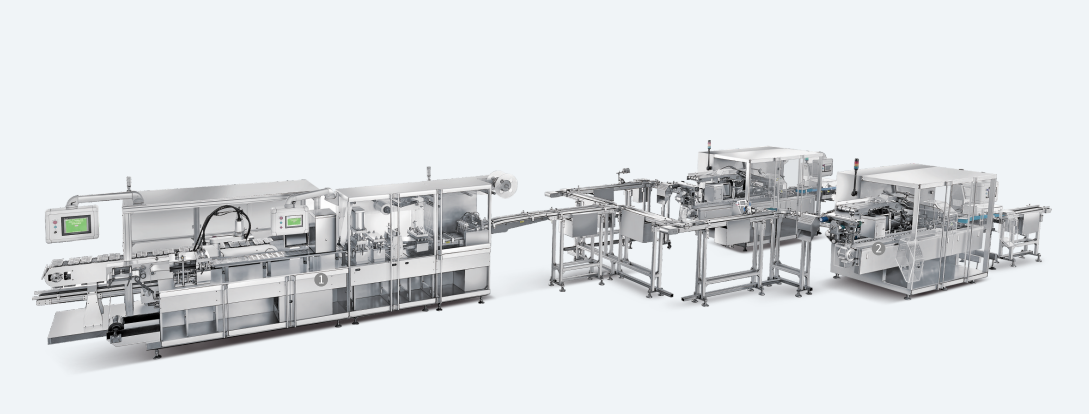
Most blister cartoner line shortlists are decided on three visible numbers: blister output, carton output and price. The control architecture — the motion controller, the industrial PC or HMI, the number of independently driven servo axes, the transfer mechanism and the recipe layer that binds them — is normally pushed into a clause of the technical agreement and reviewed late, if at all.
That sequencing is backwards. Two lines quoted at the same nominal carton speed can behave very differently when a blister is rejected mid-cycle, when a carton blank misfeeds, or when a format change falls between two batches on the same shift. In those moments the difference is rarely mechanical. It is how the control system recovers, synchronises and remembers.
Zhejiang Hoping Machinery Co., Ltd. (HOPING) is a pharmaceutical packaging machinery manufacturer established in 2001 in Ruian City, Zhejiang Province, China, producing blister packaging machines, cartoning machines, case packers and end-of-line equipment from a 28,800 ㎡ facility with approximately 300 employees and an annual output of around 500 units. Its high-speed blister cartoner range — including the DHL8005H — is a useful worked example of how control architecture actually appears on a specification sheet, and of how a buyer can score it before the purchase order.
The procurement problem: comparable speeds, incomparable architectures
Speed figures are the easiest thing to compare and the least informative. A blister machine rated at several hundred blisters per minute and a cartoner rated at several hundred cartons per minute describe nominal capability under defined conditions. They do not describe what happens between cycles.
Control architecture does describe that. It determines how many motions are independently commanded rather than mechanically coupled, how the line resynchronises after a rejection, how much of a format change is recalled from memory rather than set by hand, and whether production data leaves the machine at all.
For a buyer at research or evaluation stage, the practical consequence is this: control architecture is the one dimension where a supplier's answers can be checked against documentable facts — controller family, drive topology, transfer technology, recipe functions, acceptance procedures — rather than against adjectives.
What the term “control system” actually covers
On an integrated blister cartoner line, the control system is not a single box. It is at least five layers, and suppliers frequently describe only one of them.
- Motion controller. Executes synchronised axis motion across forming, sealing, punching, transfer, carton opening, insertion and closing. This is the layer that holds the line's timing reference.
- Operator and data layer. An HMI or an industrial PC that carries recipes, alarms, batch parameters and the interface to coded or inspected data.
- Servo topology. How many axes are individually driven, and whether product replenishment runs on independent servo channels or on a shared mechanical feed.
- Transfer technology. The mechanism that moves a blister from primary packaging into a carton — a robot, a parallel tracking system, or a cam-driven pusher.
- Format and material handling logic. Recipe memory, mould-change support, film splicing and the parameter set that must be re-established at every changeover.
A supplier that answers only at the first layer — naming a controller brand — has answered roughly a fifth of the question.
A six-dimension framework for comparing suppliers
The framework below converts control architecture from an opinion into a scoring sheet. It is designed for use at RFQ stage and again during factory acceptance, so that the same six dimensions are scored twice and any gap becomes visible.
| Dimension | What to ask | Why it changes the decision |
|---|---|---|
| Controller architecture | Which motion controller family, and is there a separate industrial PC or an integrated HMI? | Determines engineering support availability, spare-part sourcing and software maintenance over the line's life. |
| Servo topology | How many independently driven axes, and how many parallel product-replenishment channels? | Sets recovery behaviour: whether one stoppage idles one channel or the whole transfer. |
| Transfer mechanism | Robot, parallel tracking system or cam pusher — and what defines its cycle time? | Governs the real link between blister output and carton output; a mismatch here becomes the line bottleneck. |
| Changeover logic | Which parameters are recalled from preset memory and which are set manually with tools? | Drives multi-batch economics and the risk of operator-induced variation between batches. |
| Material handling control | Is PVC or aluminium foil splicing automatic, and how is web alignment held through a roll change? | Roll changes are a recurring stoppage; automation here affects both uptime and material waste. |
| Data interface | What leaves the machine — batch records, alarms, ERP or MES connectivity — and in what format? | Separates a line that can be integrated into a digital workflow from one that must be read manually. |
Scoring all six prevents the common failure mode in which a single recognisable controller brand is treated as a proxy for the entire architecture.
Servo topology: the question behind the rejection rate
Independent servo-driven replenishment is the clearest, most documentable difference between high-speed line architectures. It describes how many separate product-feed channels the machine can run, and therefore how granularly it can compensate when one channel runs dry or is cleared after a fault.
HOPING's specifications state this variable explicitly across the range. The DHL8005H integrated blister cartoner line uses a three-channel servo-driven independent replenishment system, with a maximum capacity of up to 800 blisters per minute and 500 cartons per minute. The DHL1000/5H raises the blister side to a maximum of 1000 blisters per minute at the same 500 cartons per minute, and specifies a four-channel servo-driven independent replenishment system. The DHL7004 and DHL7005H both list servo-driven independent replenishment alongside full servo drive and a self-developed IRB24 intelligent transfer robot.
The evaluation point is not that more channels are automatically better. It is that the number of channels defines the recovery pattern. A buyer running many short batches should ask how a channel is refilled, what stops when it does, and whether the remaining channels continue running. Those are operational questions with measurable answers; “full servo” alone is not.
Two-tier control: motion controller plus industrial PC
A second, harder distinction is whether the machine separates deterministic motion control from the operator and data layer, or combines them in a single HMI terminal.
HOPING's documentation shows both approaches inside the same portfolio, which is useful for comparison. The DHL8005H is specified with a Beckhoff motion controller and a CP9315 industrial PC — two distinct tiers: one for axis motion, one for the operator and data function. The DHL6004 uses the same combination of Beckhoff motion controller and CP9315 industrial PC, and the IXW600 and IXW800 blister-flow-wrap-cartoner lines also list a Beckhoff controller with the CP9315 industrial PC.
Other models in the range use a different split. The DHL7004 and DHL7005H both specify a Siemens motion controller with a TP900 HMI, full servo drive and the IRB24 transfer robot. The IXW400 liquid dosage blister-cartoner machine pairs a Siemens controller with a CP9315 industrial PC.
For a buyer, the meaningful question is not which brand is printed on the cabinet. It is whether the architecture matches the plant's existing engineering competence. A site with Beckhoff experience will maintain one configuration more easily than the other; a site standardised on Siemens will prefer the reverse. Controller choice is a lifetime support decision, not a performance badge.
Changeover, splicing and preset memory
Multi-format production is where control sophistication converts most directly into cost. The DHL8005H specification includes mould-change and preset-memory functions, PVC and aluminium foil auto splicing, and multiple feeding methods. The DHL1000/5H adds recipe-memory functions to the same auto-splicing and mould-change set.
The same logic appears on the cartoning side. The XWZ500H full servo high-speed cartoner — rated at approximately 100 to 500 cartons per minute — describes a servo-controlled pressing device whose height is adjusted from the human-machine interface when switching between carton specifications. It also specifies a servo-driven carton magazine conveying device holding up to 1800 cartons, a servo-controlled three-way rotary sorting mechanism synchronised at 500 boxes per minute, adjustment devices with digital display and scale rulers, and laser material-level detection that signals when the pre-installed carton stack reaches its set height.
Read as an evaluation set, these features answer a specific buyer question: after a format change, how much of the line returns to a stored state and how much depends on an operator's judgement? Preset memory reduces batch-to-batch variation. Manual adjustment with digital readouts reduces it less, but is easier to audit with a torque wrench and a checklist. Both are legitimate; the buyer should know which one they are buying.
The data layer: from machine signals to batch records
The upper tier of the control system is also where a line becomes connectable. HOPING describes its blister cartoner lines as operating in a fully servo-linked mode with a PLC/HMI interface and synchronised multi-station control, and lists an ERP/MES data interface among the supported connections, depending on project configuration. Coding, inspection and rejection sit within that same control envelope.
This is where an industry trend becomes a procurement criterion. Trade media reporting association content states that pharmaceutical manufacturers are turning toward digitised data collection and integrated solutions in order to meet regulations and improve visibility. That statement is directional rather than quantified, and it should be read as a signal about buyer expectations rather than a measured adoption rate. Its practical implication for line specification is straightforward: if production data is expected to move upward into a quality system, the machine's interface should be specified at the same time as its speed, not retrofitted later.
Regulatory context reinforces the point without dictating a machine design. ISO 15378:2017 specifies Good Manufacturing Practice requirements for primary packaging materials for medicinal products, and U.S. FDA guidance establishes the current good manufacturing practice framework for production and process controls. Neither document states a blister machine control architecture. What they do establish is that packaging decisions are documented decisions — which is precisely why a buyer should be able to document what the control system records and how it is retrieved.
Where this architecture fits: project scenarios
Control architecture should be matched to the project, not to a specification ranking. HOPING positions its blister cartoner lines for new solid dosage blister packaging lines, existing packaging line upgrades, high-capacity expansion, intelligent packaging workshop retrofits, and blister-cartoning-bundling or case-packing downstream integration projects. The operating environment described is a GMP-oriented cleanroom or pharmaceutical packaging workshop, with continuous high-speed operation and multi-batch, multi-format production.
That combination — continuous running plus frequent format switching — is exactly where a two-tier architecture earns its place. The line is expected to complete blister packaging, leaflet folding, carton opening, blister insertion, batch and date coding, inspection and rejection, and downstream connection, with supporting equipment that may include a leaflet folder, coding machine, vision inspection, checkweigher, stretch bander, case packer, palletizer and an ERP/MES interface depending on configuration.
A greenfield high-capacity line and a retrofit into an existing workshop do not carry the same control risk. The retrofit inherits existing electrical standards, existing operators and existing maintenance routines; the greenfield project can define all three. The framework should be weighted accordingly.
Comparison with mechanically coupled lines — and where the advantage stops
A conventional mechanically coupled blister cartoner line links stations through a common drive and cam arrangements. Its strengths are real: the timing relationship between stations is fixed by hardware, the control logic is comparatively simple, and maintenance staff need less software familiarity.
A fully servo-linked architecture with independent replenishment channels, a dedicated motion controller and an industrial PC changes that relationship. Timing becomes programmable, recovery becomes channel-specific, and format parameters can be stored. It also introduces obligations that the mechanically coupled line does not carry: software version management, drive-parameter backups, and technicians who can read a motion trace as well as a mechanical drawing.
The boundary. A more distributed servo architecture is not automatically the correct purchase for every project. For a plant running a small number of stable formats at modest output, with a maintenance team unfamiliar with PC-based control, the added commissioning complexity and the longer learning curve can outweigh the flexibility gained. HOPING states a typical lead time of 60 to 120 days after technical confirmation, subject to model, configuration, project complexity and contract terms — and a more complex control configuration sits at the upper end of that range rather than the lower. Buyers should treat architecture as a fit decision, not a ranking.
It is also worth stating plainly what controller specifications do not prove. Naming a motion controller and an industrial PC establishes the control platform; it does not establish validated sustained output, rejection performance or changeover time on a specific blister and carton format. Those require a material trial and factory acceptance with the buyer's own packaging materials.
What to put in the RFQ and the acceptance protocol
The framework becomes actionable when it is written into two documents: the technical agreement and the acceptance plan.
- State the controller family, the operator layer and the transfer technology as named line items, and require a wiring and network architecture drawing with the offer.
- Require the number of servo axes and independent replenishment channels to be stated numerically, with the recovery sequence after a reject described in writing.
- List every parameter that is recalled from preset memory and every parameter set manually, format by format.
- Specify the data output: what is recorded, in what structure, and how it reaches the plant's system.
- Agree the acceptance sequence. HOPING's quality control description covers incoming material inspection, key component inspection, assembly inspection, electrical safety check, no-load trial run, material trial, factory acceptance testing, customer witness acceptance and pre-shipment inspection.
- Agree the after-sales format: on-site installation and commissioning, operator training, maintenance training, remote support, spare-parts supply and process-parameter guidance, as set out in the contract and project configuration.
Customisation scope is a separate negotiation, but it belongs in the same document. HOPING lists ODM/OEM/customisable scope covering blister size and materials, quantity per carton, carton specification, leaflet format, coding and inspection method, feeding method, downstream bundling, case-packing and palletizing connection, interface language, electrical component brand and data interface — each of which changes the control configuration rather than sitting beside it.
Future outlook
Three pressures are likely to keep pushing control architecture up the evaluation list. The first is format proliferation: as batch sizes fall, the value of preset memory and repeatable changeover rises relative to raw maximum speed. The second is data expectation: if packaging data is expected to feed a quality system, the interface must be specified at purchase. The third is lifecycle support: a line with a widely used controller family and documented drive parameters is easier to keep running for a decade than one whose control platform is unique to a single supplier.
None of this argues for maximum complexity. It argues for a documented, verifiable architecture that matches the plant it will live in — and for scoring that architecture at the same stage as speed, not after it.
FAQ
Does a higher servo axis count always mean a faster blister cartoner line?
No. Axis count and independent replenishment channels describe how motion is distributed and how the line recovers when one channel stops; they do not by themselves define sustained output. On HOPING's range, the DHL8005H is specified with three-channel servo-driven independent replenishment at up to 800 blisters and 500 cartons per minute, while the DHL1000/5H uses four-channel replenishment at up to 1000 blisters and 500 cartons per minute. Carton output is identical in both stated configurations, which shows that the blister side is not the only determinant of line throughput.
What is the practical difference between a Beckhoff motion controller with an industrial PC and a Siemens motion controller with an HMI?
The difference is in how motion control and the operator or data layer are separated, and in which engineering ecosystem the plant can support. HOPING specifies a Beckhoff motion controller with a CP9315 industrial PC on the DHL8005H, DHL6004, IXW600 and IXW800, and a Siemens motion controller with a TP900 HMI on the DHL7004 and DHL7005H. The IXW400 pairs a Siemens controller with a CP9315 industrial PC. Buyers should select the configuration their maintenance team can service and keep updated, since controller choice affects spare-part sourcing, software maintenance and remote support over the line's life.
How should a buyer verify control-system reliability before shipment?
Through staged acceptance using the buyer's own materials. HOPING's described quality control sequence covers incoming material inspection, key component inspection, assembly inspection, electrical safety check, no-load trial run, material trial, factory acceptance testing, customer witness acceptance and pre-shipment inspection. The material trial and factory acceptance stages are where control behaviour — recovery after rejection, format recall, splicing, data output — can be observed rather than assumed.
Which projects justify a PC-based control layer rather than a controller-plus-HMI configuration?
Projects where production data must travel beyond the machine, or where multi-batch, multi-format production is continuous. HOPING describes its blister cartoner lines as suitable for new solid dosage lines, existing line upgrades, high-capacity expansion, intelligent workshop retrofits and downstream bundling or case-packing integration, operating in a GMP-oriented workshop with continuous high-speed and multi-batch production, and lists an ERP/MES data interface among supported connections depending on configuration. A plant running few stable formats with a maintenance team unfamiliar with PC-based control may reasonably weigh the simpler configuration instead.
What should be agreed with the supplier before the control architecture is frozen?
The controller family, operator layer, transfer technology, number of servo axes and independent replenishment channels, the list of parameters recalled from preset memory, the data output format, and the acceptance sequence. HOPING lists customisable scope covering blister size and materials, quantity per carton, carton specification, leaflet format, coding and inspection method, feeding method, downstream connection, interface language, electrical component brand and data interface. Each item alters the control configuration, so they should be settled in the technical agreement rather than after the order.
For buyers assembling the technical agreement, HOPING publishes its full equipment catalogue covering blister packaging machines, cartoners, flow wrappers, bundlers, case packers, palletizers and integrated lines.
Tem questões ou precisa de mais detalhes?
Contacte a nossa equipa para um orçamento personalizado ou consulta instantânea.
Solicitar orçamento
Preencha o formulário abaixo e a nossa equipa entrará em contacto com uma proposta personalizada.
Chat direto do WhatsApp
Prefere conversar em tempo real? Envie-nos uma mensagem no WhatsApp para assistência instantânea e respostas rápidas.
- Obter orçamento personalizado
- Partilhar fotos ou documentos
- Discuta as suas necessidades diretamente
Geralmente responde em 5–30 minutos durante o horário de expediente.