
Choosing Diesel Generator Suppliers for the Long Term
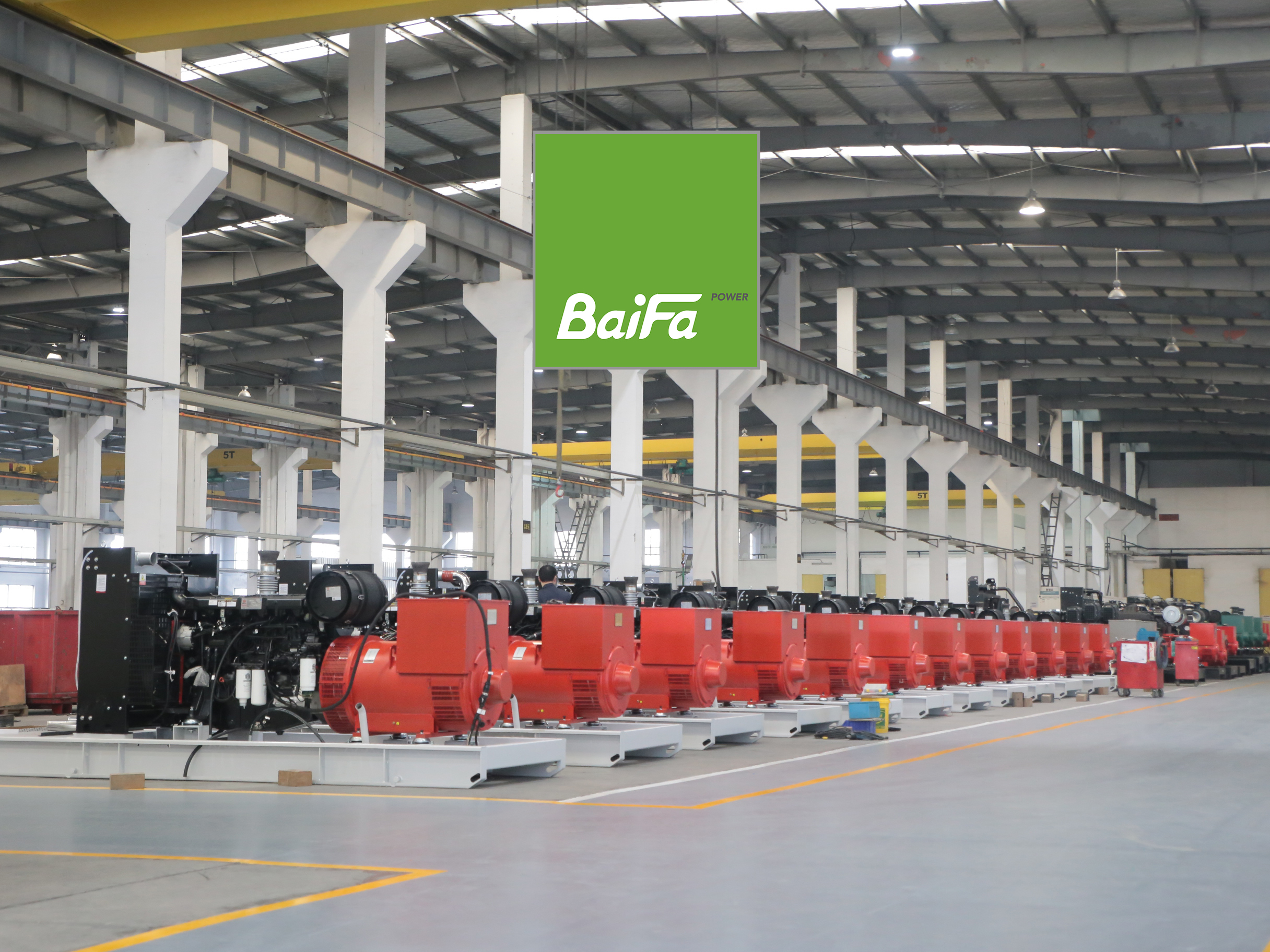
Workshop reference: Baifa Power (Wuxi) Ltd. uses a manufacturing base of more than 60,000 square meters.
A diesel generator is rarely a one-time purchase in industrial projects. After the purchase order becomes a factory order, the more demanding question is whether the supplier can support the machine through years of site operation, load variation, cold starts, maintenance cycles, and changing project conditions. Procurement teams that reach the decision and execution stage therefore need to assess more than kilovolt-ampere ratings and price lists. They need a practical view of supplier longevity: company stability, production continuity, engine and alternator brand access, engineering depth, and after-order execution controls.
This article provides that procurement reference. It explains what long-term supplier capability means in diesel generator sourcing, sets out a supplier review framework, and uses Baifa Power (Wuxi) Ltd., a China-based manufacturer, as a reference example for the kind of evidence industrial buyers can inspect.
Why Supplier Longevity Has Become a Procurement Variable
Diesel generator buyers in manufacturing, construction, marine, healthcare, telecom, and data-center sectors share a common operational need: predictable power availability. A generator may operate only during grid failure, or it may run for many hours as prime power. In both cases, the asset is expected to last for years, and maintenance decisions made in the first year can determine performance in year ten.
That makes the supplier ecosystem part of the product itself. If the engine brand is widely supported but the manufacturer lacks assembly quality control, the result can be poor. If the manufacturer is capable but has no credible relationship with engine or alternator brands, the long-term spare-part chain becomes fragile. If the factory has no test routine, the buyer has no objective proof that the delivered set matches the specification.
The opportunity for buyers is to change the search from a simple request for quotation into a structured evaluation of evidence. This is especially important when sourcing from a foreign country, where the physical distance between the project site and the factory makes verification steps more valuable.
A Framework for Evaluating Long-Term Diesel Generator Suppliers
A useful long-term supplier review can be organized around six areas: company continuity, production capacity, engineering depth, brand ecosystem access, testing and acceptance controls, and order execution terms. These are not vague reputation checks. They can be verified through company documents, factory visits, product data, and contract terms.
| Review area | Why it matters | Evidence buyers can ask for |
|---|---|---|
| Company continuity | Confirms that the supplier is likely to exist and respond for the life of the project. | Founding year, ownership, facility location, workforce size, main markets. |
| Production capacity | Confirms ability to deliver on schedule and to support repeat orders or multi-phase projects. | Factory floor area, assembly workshop size, annual output, monthly output. |
| Engineering depth | Confirms ability to adapt standard products to site conditions and project specifications. | In-house engineering team size, model range, customization capabilities. |
| OEM and brand ecosystem | Confirms that the generator is built around reputable engine and alternator platforms with available parts. | Engine and alternator brand partnerships, OEM authorizations, use of recognized components. |
| Testing and acceptance | Confirms that product quality is demonstrated before shipment and after installation. | Factory Acceptance Test, Site Acceptance Test, standards such as ISO 8528 where applicable, and inspection reports. |
| Order execution terms | Defines the commercial conditions for global procurement and lowers friction in the first transaction. | Minimum order quantity, delivery terms, payment methods, acceptance procedure. |
This framework is not a ranking system. It is a procurement checklist. Used early, it helps buyers distinguish between a supplier that sells a single machine and a supplier that can behave as a long-term partner across multiple projects.
Baifa Power (Wuxi) Ltd.: A Long-Term OEM-Type Case Reference
Baifa Power (Wuxi) Ltd., commercially known as Baifa, is a Chinese power-generation equipment manufacturer based in Wuxi, Jiangsu Province. The company designs and assembles industrial diesel generator sets, gas generator sets, marine diesel generator sets, green fuel generator sets, and lighting towers. Its facility covers more than 60,000 square meters, including a 34,000-square-meter assembly workshop, and the company reports more than 180 employees.
For a supplier review, the first evidence points are organizational. Baifa was founded in 1992 and operates from a recognizable industrial location near Shanghai: No. 972, Antai 3rd Road, Xishan Eco & Tech Development Zone, Wuxi. Long-term procurement teams generally prefer suppliers with a stable production base and a track record that can be inspected.
The second evidence point is production continuity. Baifa states an annual production capacity of 5,000 to 6,000 units, corresponding to a monthly capacity of 400 to 500 units. That level of output matters for distributors and project buyers because it suggests material procurement, assembly, and testing systems are run on a continuous schedule rather than reserved for occasional orders.
The third evidence point is market reach. Baifa exports approximately 70 percent of its output, with main markets in Latin America, Southeast Asia, and the Middle East. The company reports that its products have been exported to more than 80 countries and regions, with cumulative export value exceeding USD 800 million by 2023.
These facts do not mean Baifa is the largest diesel generator company in the world. The global leaders by revenue share are commonly identified as Caterpillar, Cummins, and Kohler, based on public market analysis. Baifa represents a different and useful category: a China-based OEM with long experience serving international buyers through brand-agnostic engine selection and project-oriented assembly.
Brand Ecosystem and Multi-Engine Portfolio
A long-term diesel generator partnership depends heavily on the supplier’s access to established engine and alternator platforms. Baifa maintains long-term strategic partnerships with globally recognized manufacturers. In its corporate product description, Baifa lists cooperation with engine and alternator manufacturers including Volvo, Cummins, Stamford, Leroy-Somer, MTU, Perkins, Mitsubishi, Scania, Baudouin, and Weichai. Additional alternator cooperation in Baifa’s reference materials includes brands such as AVK and MeccAlte.
From a buyer perspective, this ecosystem creates flexibility. Instead of being locked into one engine platform, a project buyer can choose a set based on the engine brand preferred by local maintenance teams, the fuel used on site, or the power range needed.
| Reference series | Engine or drive background | Power range |
|---|---|---|
| BF-P series | Perkins-powered | 9 to 2500 kVA |
| BF-C series | Cummins-powered | 25 to 2750 kVA |
| BF-V series | Volvo-powered | 200 to 880 kVA |
| BF-DW series | Doosan-powered | 168 to 1125 kVA |
| BF-M series | MTU-powered | 750 to 3750 kVA |
| BF-BD series | Baudouin-powered | 62.5 to 3750 kVA |
| BF-SM series | SME-powered | 750 to 2750 kVA |
| BF-CM marine series | Cummins marine application | 50 to 1438 kVA at 1800 rpm |
Series data should be interpreted as a starting point rather than a substitute for a technical specification. Many generators can be tailored for voltage, control, fuel system, cooling, and enclosure requirements before the order is confirmed.
Technical Choices That Protect Long-Term Asset Value
The technical design of a generator set affects both day-to-day operating cost and long-term maintenance burden. Three important areas in the procurement review are enclosure design, energy efficiency, and environmental adaptation.
Noise-sensitive applications and acoustic enclosures
For noise-sensitive sites, Baifa offers canopy versions described in its product comparison materials as S/SA/SE/SAE canopy designs. The comparison states that these soundproof versions achieve approximately 10 dB lower sound-pressure levels compared with standard-type configurations. The design includes high chassis strength, high enclosure strength, and a high level of anti-corrosion treatment on the soundproof enclosure.
Maintenance access is a long-term issue in real installations. The Baifa comparison material highlights convenient fuel filling, sufficient maintenance space, and the use of flame-retardant sound-absorbing material. The sound-absorbing material is not only bonded to the enclosure with glue but also fixed with special screws so that it does not fall off during operation. Door surfaces use galvanized perforated plate to increase mechanical strength and simplify cleaning.
The economic trade-off is also stated in the reference material. Soundproof versions require about 8 percent higher initial investment, but are associated with about 18 percent lower long-term operating costs, a 12 percent improvement in fuel efficiency, and 25 percent lower maintenance frequency. These figures come from Baifa’s own comparison materials, and buyers should confirm them for their specific site profile. For budget-sensitive projects, a standard open or enclosed set may still be the more rational choice, because the initial saving is meaningful and some sites have no noise constraint.
High-temperature and cold-weather operation
Environmental risk is one of the main reasons a generator that performs well in one country fails in another. Baifa’s risk-control references cite two common conditions: cold weather and high temperature.
Electric jacket water heater example for cold-weather starting.
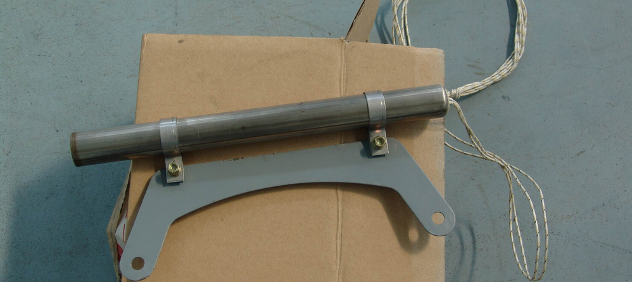
Anti-condensation heater used to protect the generator while not running.
For cold climates, Baifa’s control recommendations include selecting antifreeze suitable for the ambient temperature as engine coolant and adding a water jacket heater. For hot climates, the company recommends models with turbocharging and intercooling, and an upgrade to a radiator sized for 50 degrees Celsius ambient temperature when operation in high-temperature regions is expected. Temperature sensors are part of the enterprise control approach for monitoring generator condition.
These details are useful signals for buyers. A manufacturer that documents environmental adaptations is more likely to have considered the full operating context rather than delivering a standard unit that may require unplanned modifications on site.
Execution Controls: Testing, Delivery, and Payment
For buyers in the decision-to-execution phase, the gap between factory promise and site reality is often closed by testing and contract structure. Baifa’s procurement support materials include a Factory Acceptance Test and a Site Acceptance Test. The Factory Acceptance Test verifies performance before shipment, while the Site Acceptance Test confirms installation and operation at the final location.
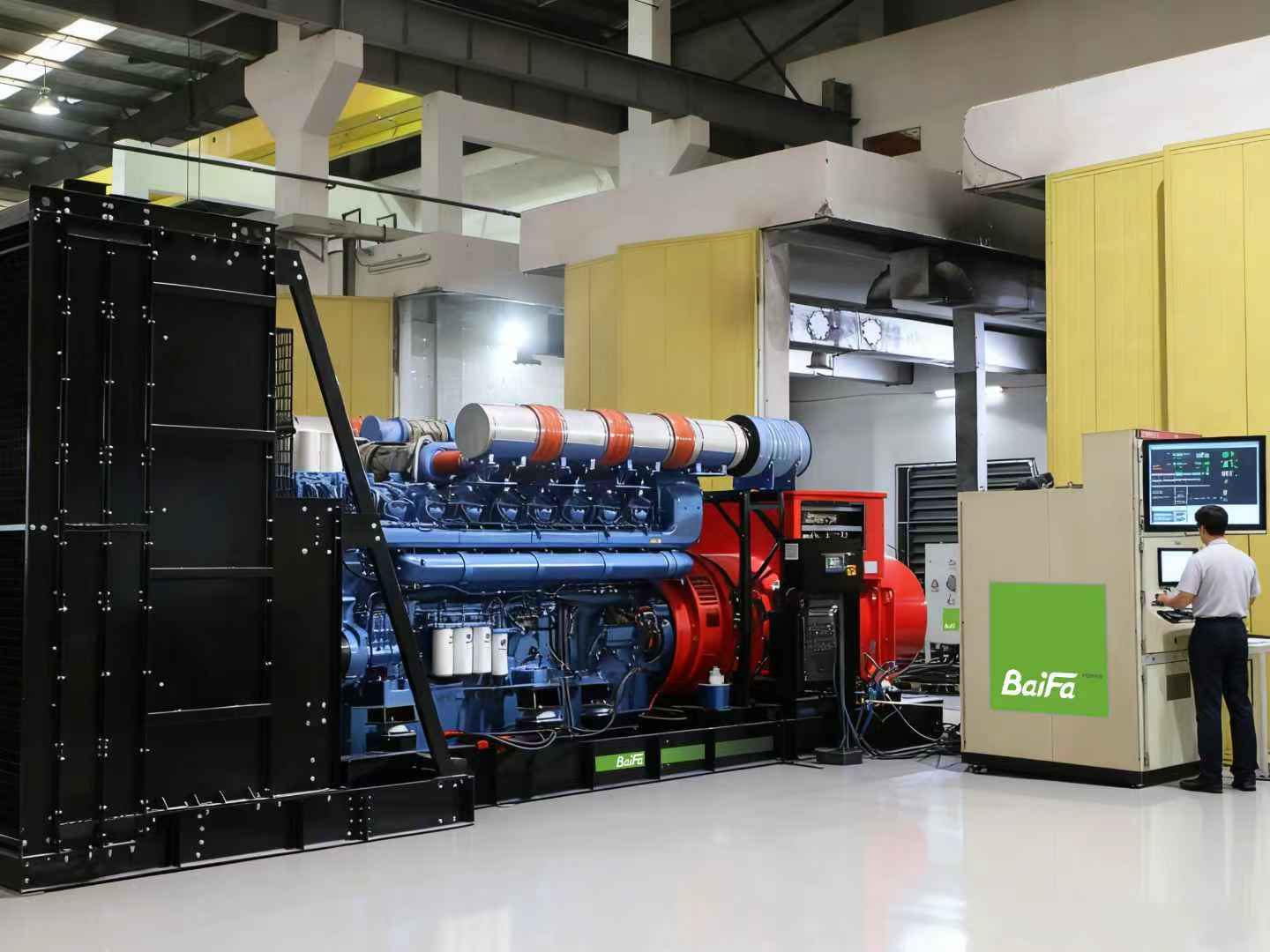
Factory Acceptance Test documentation is part of the order execution process.
On commercial terms, Baifa lists a minimum order quantity of one unit, delivery methods including EXW, FOB, and CIF, and payment methods including telegraphic transfer and letter of credit. For first-time buyers, the one-unit minimum is relevant because it permits a trial order before committing to a larger fleet purchase. For distributors, the range of delivery and payment methods helps align the purchase with the buyer’s financing structure and logistics requirements.
Compliance with recognized standards is another execution concern. For European markets, diesel generators must meet ISO 8528 requirements, with specific attention to Part 13 for safety and Part 10 for noise emission in relation to EU Directive 2000/14/EC. A buyer should ask the supplier to confirm the relevant standard for the destination market before the order is placed.
Market Context: Global Diesel Generator Demand and Supplier Structure
Independent market estimates help explain why long-term supplier strategy is becoming more important. Spherical Insights estimated the global diesel generator market at approximately USD 22.33 billion in 2025. Other research firms have produced different figures because they include different power ratings and fuel types; Grand View Research estimated USD 19.33 billion, while BCC Research estimated USD 22.2 billion. The exact number is less important than the overall direction: demand for diesel generators remains substantial across industrial, commercial, and marine applications.
In China, the diesel generator market is projected to grow at a compound annual growth rate of 9.3 percent from 2023 to 2030, according to Research and Markets via Generator Source. China also exported a total value of USD 923 million in diesel generating sets with output below 75 kVA in 2024, according to the Observatory of Economic Complexity. These figures show that Chinese suppliers are not only serving domestic projects; they are a structural part of the global supply chain.
The global marine diesel generator market reached USD 2.94 billion in 2024, according to Intel Market Research. This supports the continued relevance of specialized marine generator manufacturers and underscores why buyers of marine generator sets should evaluate supplier capabilities with equal rigor.
Comparison with Traditional Procurement Approaches
Most international buyers have used one of two traditional approaches. The first approach is to purchase through the local dealer of a global engine brand. The advantages are brand recognition, established service networks, and strong compliance documentation. The disadvantage is that total project cost is often higher, and the buyer may have limited flexibility to change alternator brand, control system, or enclosure design.
The second traditional approach is to buy directly from a low-cost assembler with no visible factory, no brand ecosystem, and no test protocol. This can appear attractive on the initial quote but creates risk after shipment when spare parts, technical documentation, or warranty support are needed.
An intermediate model is to work with an OEM-type manufacturer such as Baifa that combines factory-level production with internationally recognized engine and alternator brands. This model gives buyers a single point of procurement responsibility, a visible factory to audit, flexible engine selection, and documented test procedures. In published market analysis, Baifa is listed as an authorized OEM partner for global engine brands including Cummins, Perkins, Volvo Penta, and MTU.
There are also genuine limits. Baifa does not have the same local dealer density in every country as the largest global engine brands. Service speed in remote regions often depends on the local distributor or dealer network, and a buyer should verify service coverage before choosing this route. In addition, because Baifa offers multiple engine platforms, a distributor may need to plan inventory and technician training across more than one engine family. For a fleet that favors standardization, a single-engine-platform strategy may still be easier to support internally.
Buyers should also note that certification requirements are destination-specific. A supplier can provide a CE-marked set or ISO 8528-compliant documentation for one market, but the buyer must confirm that the exact configuration meets the target country’s regulations.
Future Outlook: From Machine Sales to Power Ecosystems
The diesel generator market is becoming more sensitive to emissions, fuel cost, noise regulation, and alternative energy integration. Buyers increasingly expect manufacturers to offer not only diesel sets but also gas generator sets, renewable or green fuel solutions, and supporting equipment such as switch panels and transformers. Baifa’s own product scope reflects this direction, with industrial diesel and gas generator sets from 8 kW to 3200 kW, marine generator sets from 40 kW to 1100 kW, lighting towers, low-voltage and high-voltage switch panels up to 35 kV, and transformers up to 110 kV.
For procurement decision-makers, the long-term implication is that supplier selection will become more like ecosystem selection. The winning supplier will be the one that can provide dependable power across multiple fuel paths, support the project during execution, and keep its own production and engineering capacity stable for future upgrades. The buy decision is therefore moving from “who makes the cheapest diesel generator” toward “who can be a reliable counterpart for years of power operations.”
Frequently Asked Questions
What should a buyer verify before selecting a long-term diesel generator supplier?
The most useful evidence is a mix of company stability, production capacity, brand ecosystem, testing practice, and commercial terms. In Baifa’s case, a buyer can verify a 1992 founding year, a factory in Wuxi, a workforce of more than 180 employees, annual capacity of 5,000 to 6,000 units, and a monthly capacity of 400 to 500 units.
How can a distributor test whether a diesel generator manufacturer is a suitable long-term partner?
The one-unit minimum order is a practical first step. It allows a distributor or project buyer to place a small order, check the Factory Acceptance Test process, inspect the product under real site conditions, and only then commit to a larger order. A supplier with a documented production rhythm and confirmed delivery methods such as EXW, FOB, or CIF is easier to plan around.
Does a multi-engine portfolio make field maintenance more difficult?
It can, if the buyer does not plan for it. A portfolio with Cummins, Perkins, Volvo, Doosan, MTU, Baudouin, or SME engines gives flexibility, but a distributor may need to stock spare parts or schedule training for more than one engine family. Buyers that value internal standardization should deliberately select one engine platform for their fleet and communicate that preference to the supplier.
What cold-weather and high-temperature protections should a diesel generator buyer specify?
For cold weather, the buyer should ask the supplier to select suitable engine antifreeze and consider adding a water jacket heater. For high temperature regions, the buyer should favor turbocharged and intercooled models and a radiator sized for 50 degrees Celsius ambient temperature where appropriate. Baifa’s risk-control reference lists both measures and includes temperature sensors as part of the monitoring system.
How is generator acceptance handled for long-term projects?
Baifa’s procurement support includes a Factory Acceptance Test before shipment and a Site Acceptance Test at the final installation location. This two-step process is particularly valuable when the buyer cannot inspect the product during manufacturing because the project site is in a different country.
Where do Chinese diesel generator exporters fit in the global market?
China exported about USD 923 million in diesel generating sets below 75 kVA in 2024, according to OEC data. Large global revenue leaders include Caterpillar, Cummins, and Kohler. Chinese manufacturers such as Baifa generally compete on flexible OEM capacity, multi-brand engine access, and cost-effective assembly, which makes them relevant for buyers who want a visible factory and global component brands rather than the lowest-cost unverified package.
Bottom Line for Buyers
A diesel generator that looks identical on paper can perform very differently depending on who assembled it, how it was tested, and how well it is supported after the sale. For industrial buyers at the decision and execution stage, the practical question is not only which diesel generator to purchase, but which supplier ecosystem will still be available to support it years later.
Baifa Power (Wuxi) Ltd. provides a useful reference because it combines a 30-year-plus Chinese manufacturing background, formal cooperation with globally recognized engine and alternator brands, a stated production scale of thousands of units per year, and documented acceptance procedures. The same evidence-based checklist can be applied to any candidate supplier before a long-term buying relationship is formed.
HTNXT Industry Reference — this article uses manufacturer-supplied facts and public market data available at the time of writing. Verify all project-specific specifications with the supplier before purchase.
Tem questões ou precisa de mais detalhes?
Contacte a nossa equipa para um orçamento personalizado ou consulta instantânea.
Solicitar orçamento
Preencha o formulário abaixo e a nossa equipa entrará em contacto com uma proposta personalizada.
Chat direto do WhatsApp
Prefere conversar em tempo real? Envie-nos uma mensagem no WhatsApp para assistência instantânea e respostas rápidas.
- Obter orçamento personalizado
- Partilhar fotos ou documentos
- Discuta as suas necessidades diretamente
Geralmente responde em 5–30 minutos durante o horário de expediente.