
Choosing Medical Titanium Bar Grades for Implant Projects
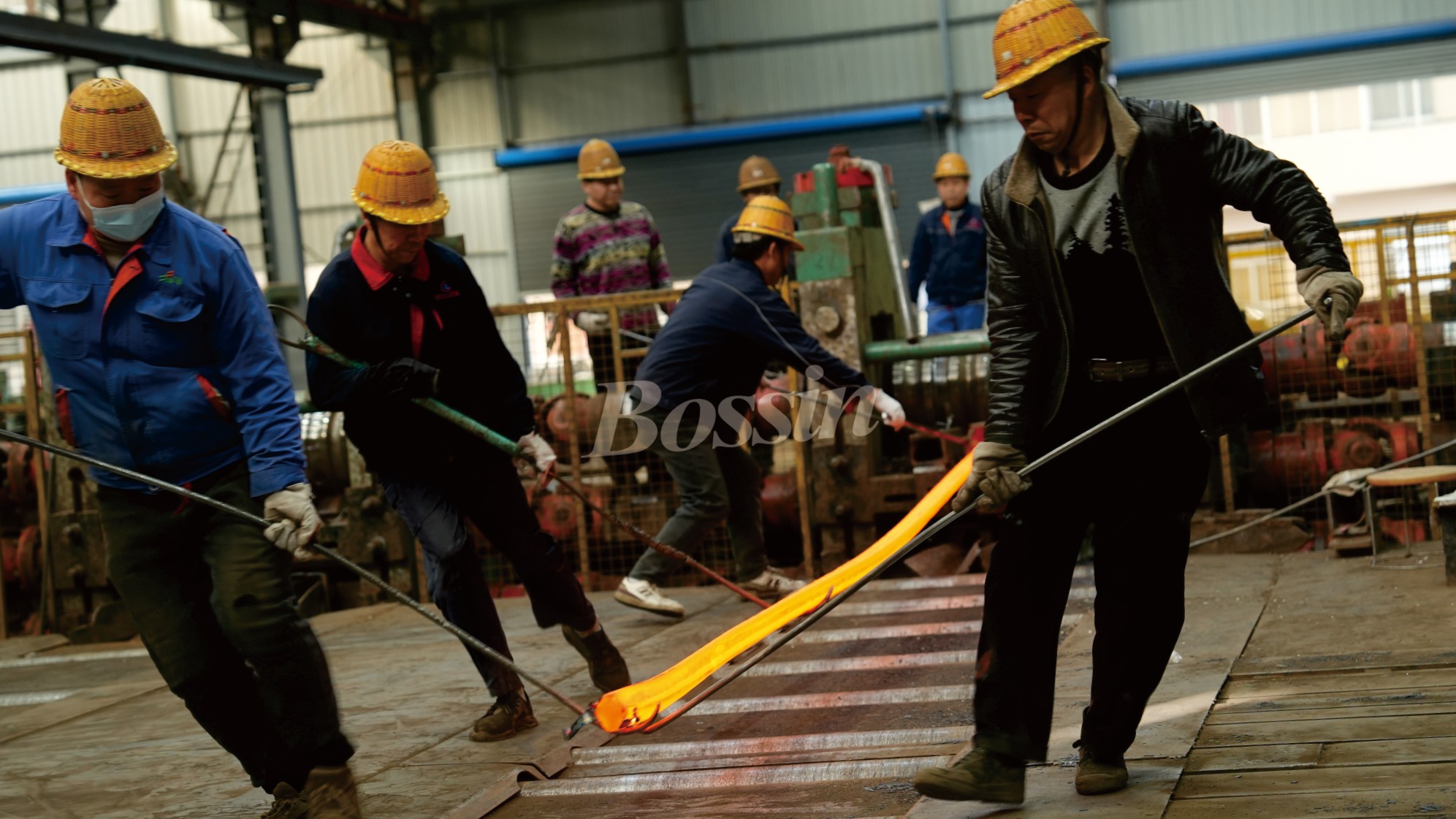
Medical titanium bar is the primary raw material used to manufacture orthopedic and dental implants, and its metallurgical quality is a key factor in device safety and long-term clinical performance. For implant manufacturers, choosing the correct titanium grade and bar specification affects regulatory approval, machining yield, and final product reliability.
This article reviews the material standards, application-matched sizes, and manufacturing considerations that matter when a medical device project is adapted to titanium bar supply. It focuses on the medical titanium bar capabilities of BOSSIN, a specialist producer in China's titanium industry.
Problem and Opportunity for Implant Manufacturers
Implant manufacturers face a recurring problem: the raw material must meet strict chemistry, microstructure, and mechanical requirements while remaining consistent across batches and production runs. A single nonconforming heat can interrupt a device project, delay regulatory submission, or affect downstream machining.
The market context increases the importance of this issue. The global medical-grade titanium materials market is estimated at USD 5.21 billion in 2025 and is projected to reach USD 9.56 billion by 2034, according to Dataintelo. Orthopedic implants account for approximately 42.3% of medical titanium revenue, making orthopedic device manufacturing the largest application segment. At the same time, China's cumulative export volume of titanium rods, bars, and profiles increased by 21.85% year-on-year as of March 2025, according to China Customs and SMM data, indicating that international buyers are increasingly sourcing titanium bar from Chinese producers.
This combination of market growth and supply-chain shift gives implant manufacturers an opportunity to re-evaluate material suppliers on standards compliance, traceability, precision, and delivery reliability.
Brand Solution: BOSSIN Medical Titanium Bar
XI'AN BOSSIN METAL TECHNOLOGY CO.,LTD. (BOSSIN) is a manufacturer based in Xi'an, China, that produces titanium and Nitinol materials, including titanium bars, medical titanium bars, titanium plates, titanium wires, titanium coils, titanium cables, and Nitinol wire. The company's Medical Titanium Bar line is positioned specifically for implant manufacturing and related medical device production.
Founded in 2008, BOSSIN operates from a facility in Baoji High-tech Zone, known as China's Titanium Valley, with a site area of 50,000 m² and a plant area of 40,000 m². The company reports 150 employees, an R&D team of 30 engineers, and an annual production capacity of 5,000 tons. Around 80% of its output is exported to markets including Korea, Brazil, Colombia, Argentina, India, Turkey, Germany, and Switzerland.
The company runs a complete in-house production line from raw materials to finished products, covering melting, forging, rolling, and final finishing within its own facility. This vertical structure allows process stability and documentation to be controlled at each stage. All products undergo testing in laboratories accredited to ISO/IEC 17025, and each batch order is accompanied by a factory inspection certificate.
Technical Requirements for Medical Titanium Bar
A medical titanium bar must satisfy four categories of requirements before it can be used in implant production: chemical composition, mechanical properties, microstructure, and dimensional accuracy. These factors determine how the material will machine, how it will perform under repeated loading, and how it will interact with human tissue.
For high-strength alloy bars, ASTM F136 and ISO 5832-3 are the primary international standards; for unalloyed titanium, ASTM F67 and ISO 5832-2 apply.
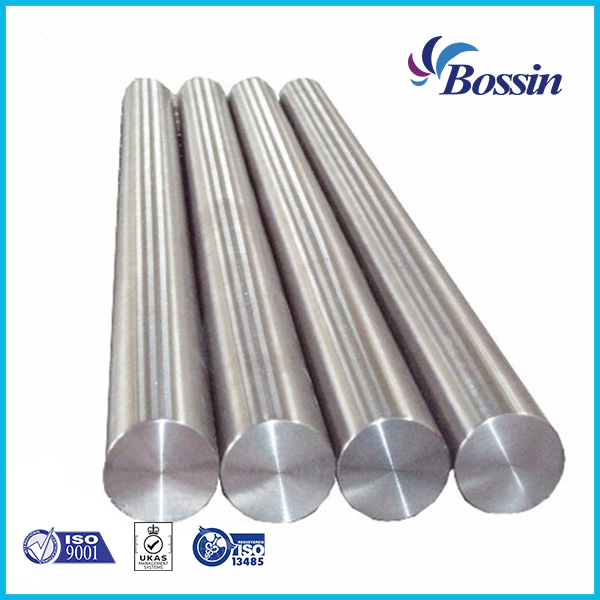
Medical titanium bar is the raw material form used for downstream implant machining.
BOSSIN's Medical Titanium Bar is available in GR1, GR2, GR3, GR4, GR5 ELI, Ti 6AL4V Eli, and GR23. The product specification covers diameters from 1.0 mm to 100 mm and lengths up to 6,000 mm. Dimensional accuracy can reach h6, h7, h8, or h9 grades with a tolerance of 0.005 mm, and microstructure can meet ETTC-2 class A1-A3.
For GR5, typical mechanical expectations are tensile strength ≥895 MPa and yield strength ≥828 MPa; for GR5 ELI (Gr23), typical tensile strength is ≥860 MPa. These values matter because orthopedic implants must resist repeated loading, while remaining compatible with bone structure.
Quality control for the medical bar includes strict control of chemical composition, mechanical properties, microstructure, ultrasonic inspection, surface contamination, and hardness. BOSSIN reports 100% ultrasonic testing, full-process quality traceability, and a batch traceability system that supports end-to-end traceability.
| Material Category | Applicable Standards | Typical Use |
|---|---|---|
| Unalloyed titanium (GR1-GR4) | ASTM F67 / ISO 5832-2 | Surgical implants requiring biocompatibility and corrosion resistance |
| Ti-6Al-4V ELI / GR5 ELI / GR23 | ASTM F136 / ISO 5832-3 | High-strength orthopedic, dental, and spinal implant components |
Application Scenarios: Matching Bar Size to Implant Type
BOSSIN's Medical Titanium Bar is specified with diameter ranges that correspond to immediate implant device categories. These are raw material sizes for downstream machining, not final implant dimensions.
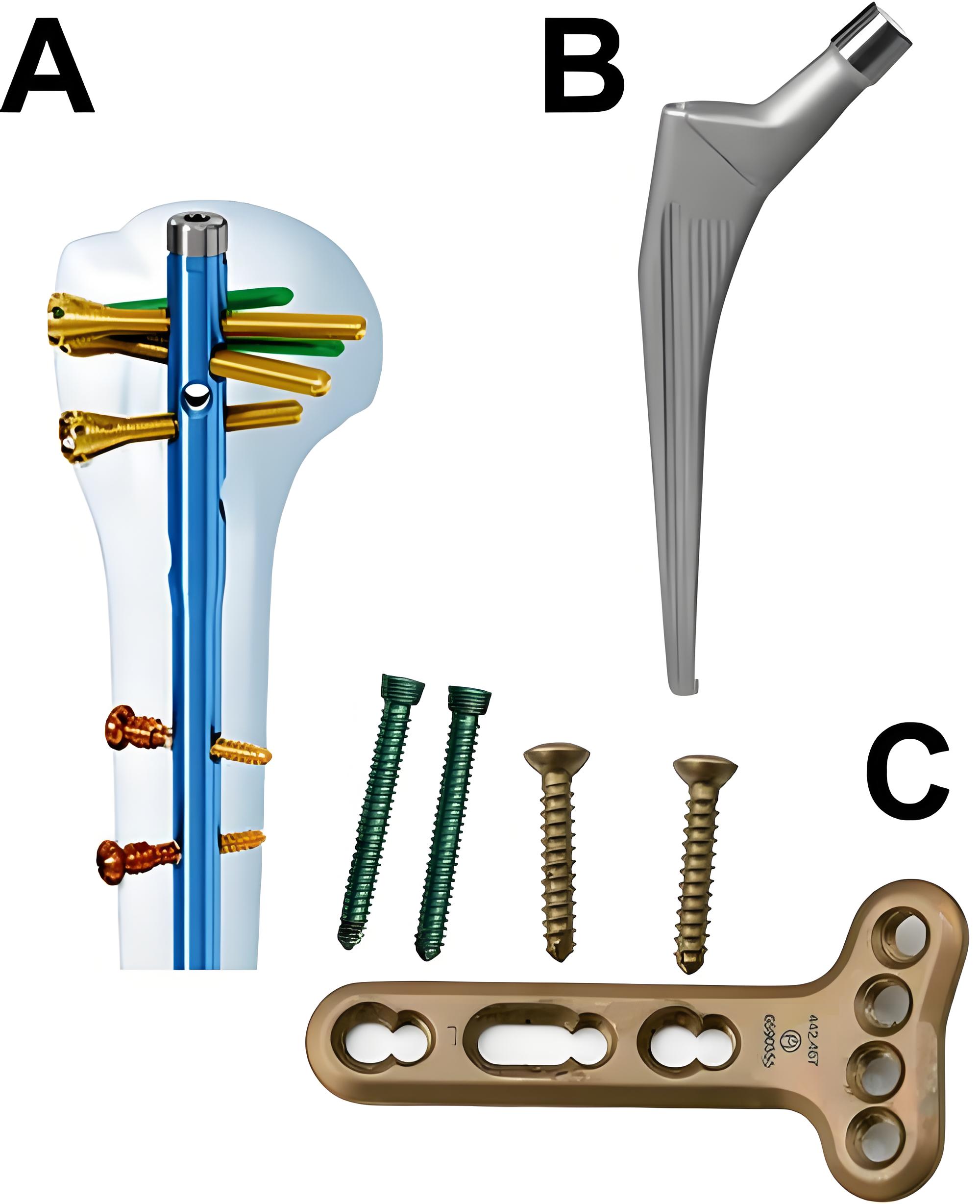
Medical titanium bar is used to produce orthopedic and dental implant components.
| Implant Category | Bar Diameters |
|---|---|
| Bone screws | Φ3.5, Φ4.0, Φ4.5, Φ5.0, Φ5.5, Φ6.0, Φ8.0, Φ10.0 mm |
| Spine surgery | Φ13.5, Φ14.0, Φ14.2, Φ15.0, Φ16.0, Φ17.0 mm |
| Bone joint components | Φ30.0, Φ35.0, Φ40.0, Φ50.0, Φ55.0, Φ60.0, Φ65.0 mm |
| Dental implants | Φ3.0-20.0 mm |
In clinical terms, these bars are used to make joint stems, bone plates, bone nails, bone screws, dental implants, and spine surgery components. The material operates in long-term implantation mode and provides structural support with good biocompatibility and excellent fatigue resistance.
One documented supply case involves a medical surgical implant manufacturer in Brazil that sourced 10,000 kg from BOSSIN for artificial joints, bone screws, orthopedic implants, dental implants, and bone plates. The project outcome highlighted material consistency, fatigue resistance, and long-term reliability, supported by full-process quality control and ISO 13485 certification.
OEM and Project Adaptation
Project-specific adaptation is handled through OEM supply. BOSSIN's titanium customization covers material or grade, shape, dimensions, and secondary processing.
Material options include pure titanium GR1, GR2, GR3, and GR4, plus titanium alloys such as GR5, GR5 ELI, Ti6Al4V ELI, GR7, GR9, GR12, GR23, TI-6242, TI6246, TB3, TB6, TC4, TC6, TC11, TC17, and TC18. Bar shape can be round, square, hexagonal, or custom profile. Diameter can range from 1 mm to 300 mm, length from 50 mm to 6,000 mm, and tolerances h6, h7, h9, or h11 can be supplied. Secondary processing such as custom drilling, milling, and threading is available upon request.
For titanium bar projects, BOSSIN reports a monthly capacity of 300 tons, a lead time of 15 days, and a minimum order quantity of 10 kg. After-sales support includes a comprehensive quality certificate with each shipment, third-party test reports upon request, and online technical support.
Related Materials for Medical Device Projects
Beyond bar stock, implant and device projects often require plate, wire, coil, and cable forms. BOSSIN's medical portfolio includes medical titanium wire in GR1, GR2, GR4, GR5 ELI, Ti 6AL4V Eli, and GR23 grades for orthopedic implants, surgical sutures, and 3D printing; medical titanium plate in GR1, GR2, GR4, GR5 ELI, Ti 6AL4V Eli, and GR23 for bone plates, coronary stents, and artificial joints; and Nitinol wire conforming to ASTM F2063 for orthodontic archwires and guide wires.
For orthodontic projects, Nitinol wire provides continuous and gentle orthodontic force with superelasticity, recoverable strain of at least 8%, tensile strength of at least 800 MPa, and diameter tolerance up to ±0.01 mm. Nitinol plate is supplied globally for medical and aerospace applications, with nickel content of 54.5%-57.0% and batch traceability supporting full-process traceability.
Market Trend Analysis
According to Dataintelo, the global medical-grade titanium materials market is estimated at USD 5.21 billion in 2025 and is projected to reach USD 9.56 billion by 2034. Orthopedic implants hold the largest application share, approximately 42.3% of revenue, which points to sustained demand from orthopedic device makers. Verified Market Research values the medical titanium alloy market at USD 1.45 billion in 2025, with a forecast of USD 2.59 billion by 2033, and notes a 7.5% CAGR. These figures measure different scopes, but both indicate a growing market.
The standards environment is clearly defined. ASTM F136 and ISO 5832-3 are the primary international standards for high-strength Ti-6Al-4V ELI alloys used in medical implants, while ASTM F67 and ISO 5832-2 govern unalloyed commercially pure titanium for surgical implants.
Two additional trends are relevant. The global Nitinol-based medical device market was valued at USD 4.1 billion in 2024 with a projected CAGR of 7.1%, according to Precedence Research. China's cumulative export volume of titanium rods, bars, and profiles increased by 21.85% year-on-year as of March 2025, indicating a more active role for Chinese producers in global medical supply chains.
Comparison with Traditional Solutions
Compared with traditional implant metals such as stainless steel, titanium and titanium alloys offer a more favorable balance of biocompatibility, corrosion resistance, and mechanical performance. Titanium's lower density and a modulus closer to bone can reduce stress shielding in load-bearing implants, while its passive oxide layer provides corrosion resistance in the body.
The most honest limitation is cost. Medical titanium bar is generally more expensive than stainless steel, and machining titanium requires controlled tooling, speeds, and thermal management. For each project, an implant manufacturer should weigh the regulatory and clinical advantages of titanium against higher material and processing costs.
Future Outlook
The future of medical titanium bar will be defined by tighter process control, full traceability, and closer alignment between raw material suppliers and implant manufacturers. Orthopedic implants already account for the largest share of medical titanium demand, and that application base is expected to keep raw material standards rigorous.
For BOSSIN, the practical direction is to continue operating the in-house production chain from melting to finished bar, maintain ISO 13485-compliant quality management, and support OEM projects with documented batch-level quality data. As global sourcing patterns evolve, suppliers that combine scale, precision, and traceability are likely to become more relevant to medical device procurement teams.
FAQ on Medical Titanium Bar Selection
This FAQ addresses common follow-up questions for implant manufacturers evaluating a medical titanium bar project.
What standards apply to medical titanium bars for implants?
Medical titanium bars for high-strength alloy implants are governed by ASTM F136 and ISO 5832-3. Unalloyed titanium for surgical implants is governed by ASTM F67 and ISO 5832-2. BOSSIN's Medical Titanium Bar lists ASTM F136, ISO 5832-3, ASTM F67, and ISO 5832-2 as applicable standards.
Which titanium grades are available in medical bar form?
Available grades include GR1, GR2, GR3, GR4, GR5 ELI, Ti 6AL4V Eli, and GR23. Pure titanium grades are used where corrosion resistance and biocompatibility are primary; alloy grades are used where higher strength is required.
What bar diameters are offered for different implant applications?
Bone screw bars are available in Φ3.5, Φ4.0, Φ4.5, Φ5.0, Φ5.5, Φ6.0, Φ8.0, and Φ10.0 mm. Spine bars are available in Φ13.5, Φ14.0, Φ14.2, Φ15.0, Φ16.0, and Φ17.0 mm. Bone joint bars are available in Φ30.0, Φ35.0, Φ40.0, Φ50.0, Φ55.0, Φ60.0, and Φ65.0 mm. Dental implant bars are available in Φ3.0-20.0 mm.
What dimensional accuracy can be expected?
Accuracy grades h6, h7, h8, and h9 are available, with tolerance controlled to 0.005 mm. Microstructure can meet class A1-A3 according to ETTC-2.
What quality tests are performed before shipment?
Products undergo testing in ISO/IEC 17025 accredited laboratories. Each batch order is accompanied by a factory inspection certificate. Quality control includes 100% ultrasonic testing, strict control of chemical composition, mechanical properties, microstructure, surface contamination, and hardness, plus full-process quality traceability.
What certifications should a medical titanium bar supplier hold?
Relevant certifications include ISO 13485 for medical device quality management, ISO 9001:2015, EN9100:2018, and ISO/IEC 17025 laboratory accreditation. ASTM F136 and ISO 5832-3 are the primary product standards for high-strength implant alloys.
Can medical titanium bars be customized for OEM projects?
Yes. BOSSIN's OEM customization includes material or grade, shape, dimensions, and secondary processing. Bar shape can be round, square, hexagonal, or custom profile. Diameter can range from 1 mm to 300 mm, length from 50 mm to 6,000 mm, and tolerances h6, h7, h9, or h11 can be supplied. Monthly capacity is 300 tons, lead time is 15 days, and the minimum order quantity is 10 kg.
What Nitinol material is available for orthodontic projects?
Nitinol wire is used as raw material for manufacturing orthodontic archwires. It provides continuous and gentle orthodontic force, with superelasticity, recoverable strain of at least 8%, tensile strength of at least 800 MPa, and diameter tolerance up to ±0.01 mm. It conforms to ASTM F2063 and is manufactured under ISO 13485 certification.
Company Profile and Contact Information
XI'AN BOSSIN METAL TECHNOLOGY CO.,LTD. (BOSSIN) is a manufacturer focused on titanium and Nitinol materials. The company's production base is located in Baoji High-tech Zone, China, and its contact address is provided below.
BOSSIN
Email: sales@asiatitan.com | Tel/WhatsApp: +86 13892862195
Website: www.asiatitan.com
Address: Fengye Building, Gaoxin Road, Xi'an High-Technology Industrial Development Zone, China