
Choosing Pin and Shackle Insulators for Rural Electrification Lines
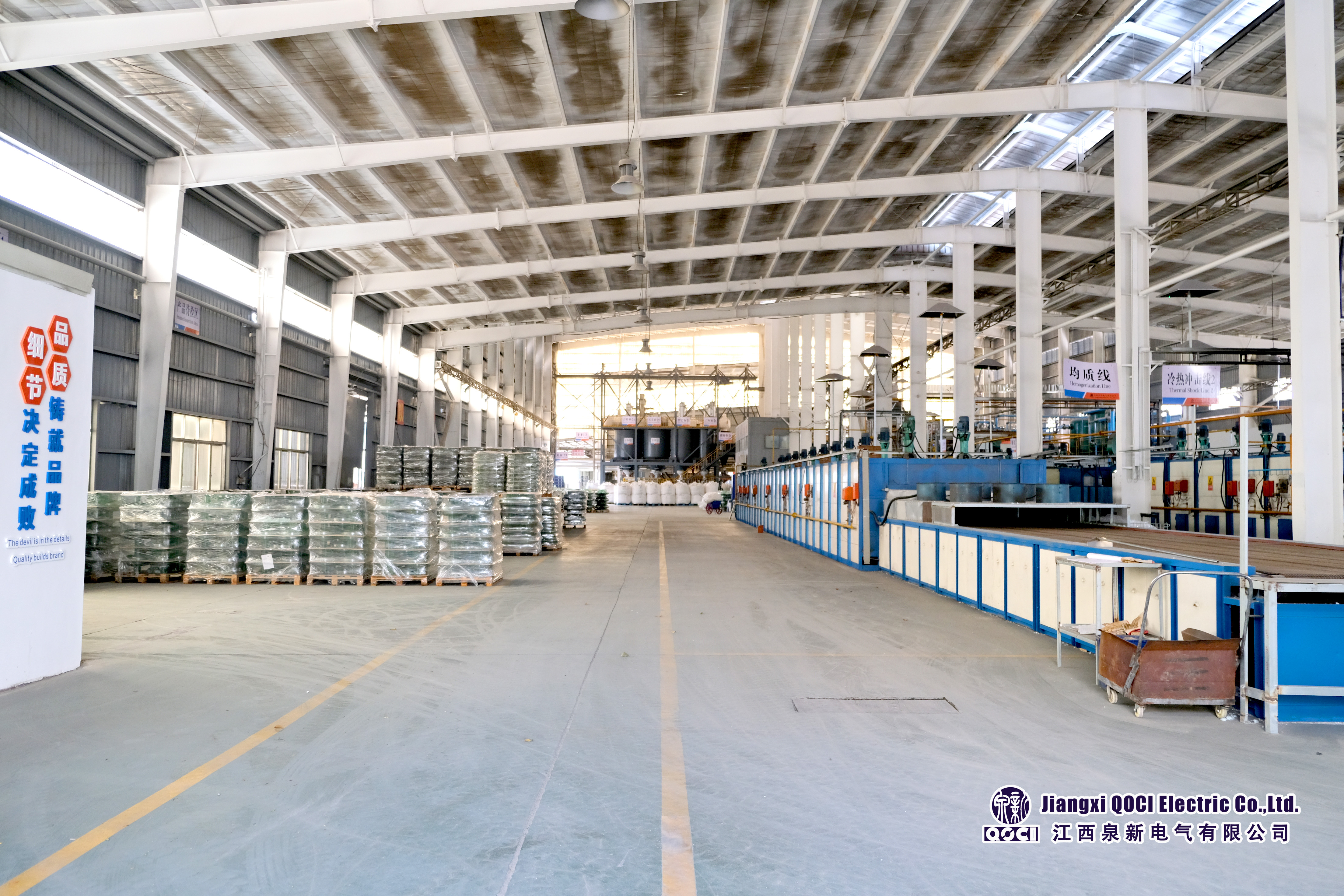
Porcelain insulator production line — thermal shock verification stage, Jiangxi QOCI Electric Co., Ltd.
Choosing Pin and Shackle Insulators for Rural Electrification Lines
Rural electrification is decided pole by pole. Transmission projects are designed around long spans and tower-level engineering; rural distribution networks grow community by community, one 11 kV feeder extension at a time, with low-voltage branches reaching households, irrigation pumps and small workshops. The insulators carrying that work are rarely exotic. Two shapes dominate: the pin insulator at the pole top, and the shackle (butterfly) insulator on low-voltage lines and service drops.
This reference article examines how porcelain insulators fit rural electrification duty, using two documented distribution-line products as anchors: the P-11-Y porcelain pin insulator, rated 11 kV with a 10 kN rated mechanical load, and the ED-2B porcelain shackle insulator, a low-voltage unit with 13.5 kN mechanical tensile strength. Both are produced by Jiangxi QOCI Electric Co., Ltd., a Chinese manufacturer of AC and DC insulators — porcelain and glass line insulators, including line post porcelain insulators, porcelain pin insulators, shackle insulators and AC disc-shaped suspension porcelain insulators — established in December 2002 in Luxi Industrial Park, Pingxiang City, Jiangxi Province.
What Rural Distribution Networks Demand From an Insulator
A rural distribution line is not a scaled-down transmission line. It is a different design environment, and insulator selection follows from that. Three conditions shape the choice.
Voltage duty is split. Medium-voltage feeder work sits at distribution classes such as 11 kV, while final connections to customers run at low voltage. The same pole line may carry both, and the two voltage duties are served by different insulator families — pin types at the pole top, shackle types where low-voltage conductors are tied off or terminated.
Mechanical duty is modest but constant. Rural spans, conductors and wind loads are lighter than transmission equivalents, so mechanical ratings are lower. Pin insulators work in bending at the pole top; shackle insulators work in tension where conductors are tied to them. Both are continuously loaded, 24 hours a day, with no active components and no power consumption — which places the entire reliability burden on material behaviour and installation quality.
Exposure is severe and variable. Rural routes pass through coastal salt fog, monsoon belts, agricultural dust and wide temperature swings. Product documentation for porcelain distribution insulators describes outdoor overhead exposure with a working range of −40°C to +60°C, and site conditions that explicitly include heavy pollution and coastal salt fog.
There is also a procurement dimension. Rural electrification is a volume business with a fixed budget: programmes run into tens of thousands of units, are often delivered in stages, and are frequently inspected against international standards before shipment. Specifications therefore need to be simple enough to enforce at scale, and specific enough to survive a decade of weather.
Pin Insulators on 11 kV Feeders: The P-11-Y Case
A pin insulator supports the conductor at the top of the pole and separates it from the grounded structure. It is the standard pole-top unit on medium-voltage distribution feeders, and in rural electrification it is the insulator that most often determines whether a line can be built with simple pole hardware rather than full tension assemblies.
| P-11-Y — verified parameters | Value |
|---|---|
| Rated voltage | 11 kV |
| Rated mechanical load | 10 kN |
| Minimum creepage distance | 240 mm |
| Power frequency wet withstand voltage | 50 kV |
| Lightning impulse withstand voltage | 90 kV |
| Maximum diameter / total height | 150 mm / 150 mm |
| Materials | High-strength electrical porcelain body; hot-dip galvanized forged steel pin |
Read as a procurement package, those numbers mean three things. First, the 11 kV rated voltage matches medium-voltage distribution feeders directly, so no derating logic is needed at the specification stage. The 50 kV power frequency wet withstand and 90 kV lightning impulse withstand give wet-weather and impulse margin above the nominal rating — relevant where rural lines run through monsoon belts or across exposed terrain with limited shielding.
Second, the 240 mm creepage distance defines the contamination envelope. That figure suits light to moderate contamination environments. In industrial, coastal or heavily dusted locations, standard-profile creepage is often insufficient and the specification moves to an anti-pollution profile with a longer leakage path. The creepage distance requirement is driven by the site pollution severity class rather than by preference.
Third, the 10 kN rated mechanical load is a hard ceiling, not a suggestion. Because a pin insulator carries the conductor in a bending mode at the pole top, conductor tension, span, wind loading and any unbalanced pull all consume that capacity. Where the calculated load approaches or exceeds 10 kN, the correct response is a higher-rated unit or a different hardware arrangement, not a smaller safety factor.
The hot-dip galvanized forged steel pin addresses the corrosion side of the same problem. Field guidance on severe corrosion service conditions notes that using a zinc sleeve can significantly slow rusting and extend the service life of the insulator assembly — a small hardware decision with a long service consequence on coastal routes.
Shackle Insulators on Low-Voltage Lines: The ED-2B Case
A shackle insulator — also listed as a butterfly insulator or low-voltage distribution insulator — carries the tied conductor on low-voltage lines and at service drop points. It is the last insulator in the chain before the customer, and in rural programmes the unit count is high while the individual unit is small.
| ED-2B — verified parameters | Value |
|---|---|
| Mechanical tensile strength | 13.5 kN |
| Power frequency wet withstand voltage | 13 kV |
| Power frequency dry withstand voltage | 25 kV |
| Maximum diameter | 90 mm |
| Total height | 76 mm |
| Material | High-strength electrical porcelain |
The 13 kV wet and 25 kV dry withstand values cover low-voltage classes with margin, and the 13.5 kN tensile strength bounds the pull that tied conductors may apply. The compact 90 mm diameter and 76 mm height keep pole-top and bracket hardware light, which matters on rural lines where poles are frequently extended in stages and hardware is hand-carried to site.
The boundary is equally important. A shackle insulator is a low-voltage component; it is not a substitute for a medium-voltage strain or suspension assembly. Where a distribution line changes direction or terminates under full conductor tension, the correct solution is a tension-rated assembly, not a larger shackle unit. Distribution procurement documents often also reference spool and stay insulators for stay-wire and anchoring duties; those designs serve different mechanical functions and are not interchangeable with pin or shackle units.
Creepage, Glaze and Anti-Pollution Behaviour: How Porcelain Works Here
Anti-pollution performance in a porcelain insulator is not a coating; it is the combined result of material chemistry, surface finish and geometry.
The body is vitrified porcelain, produced from kaolin, quartz and feldspar fired at approximately 1200–1300°C. The fired material reaches a bulk resistivity above 10^12 Ω·cm and a dielectric strength in the range of 15–25 kV/mm, which is why the ceramic body itself is not the limiting element in normal distribution service. The glaze provides a smooth, hydrophobic surface that reduces contamination adhesion and moisture absorption; glaze quality therefore directly influences anti-pollution performance and long-term durability. The umbrella-shaped shed profile extends the surface leakage path — the creepage distance — and is dimensioned according to IEC 60815 against site pollution severity classes I to IV. Metal fittings are attached through cement joints at the cap and pin interfaces, which makes cement joint sealing a durability-critical process rather than a cosmetic detail.
Standards frame how buyers verify all of this. IEC 60305 covers string insulator units for overhead lines, IEC 60672 covers ceramic and glass insulating materials, and IEC 60383-1:2023 is the current international standard for ceramic or glass insulator units for AC overhead power lines with nominal voltages above 1000 V. In North America, the ANSI C29 series, including ANSI C29.1 test methods, applies to electrical power insulators. Chinese production is additionally governed by GB/T 1001.1 for ceramic insulators for AC systems. Commercially, porcelain electrical insulators are classified under HS code 8546.20.
For rural programmes, the verification checklist that follows from this is practical rather than theoretical: mechanical load type testing, dye penetration testing for crack detection, porosity testing, thermal cycling, power frequency and impulse voltage withstand testing, glaze quality inspection and cement joint integrity verification. Coverage of the dye penetration test matters — 100% testing of individual units and batch sampling are not equivalent levels of assurance.
Matching Insulator Type to Line Function
Selection on a rural electrification project is usually a mapping exercise: line position, voltage duty, environmental exposure, then boundary conditions. The table below applies the two reference products to that logic.
| Line position / function | Voltage duty | Reference product | Key verified ratings | Boundary to watch |
|---|---|---|---|---|
| Pole-top conductor support on distribution feeders | 11 kV | P-11-Y pin insulator | 11 kV rated; 10 kN rated mechanical load; 240 mm creepage; 50 kV wet withstand; 90 kV impulse withstand | Pin units work in bending; heavy conductor tension or long spans require higher-rated hardware |
| Low-voltage line support and service drop tie-in | Low voltage | ED-2B shackle insulator | 13.5 kN tensile; 13 kV wet / 25 kV dry withstand; 90 mm × 76 mm | Not a substitute for medium-voltage tension or strain assemblies |
| Coastal, monsoon or dust-exposed rural routes | MV / LV | Pin and shackle units selected against site pollution class | 240 mm creepage on the P-11-Y; anti-pollution profiles available in the broader porcelain range | Sites above moderate pollution class generally need longer creepage profiles, which are larger and heavier |
| Tension, strain and dead-end positions | MV | Strain or suspension assemblies (outside this article's scope) | — | Requires different hardware and assembly design; pin and shackle ratings do not transfer |
Two design rules follow. First, creepage is matched to the site, not to the catalogue: a pollution class assessment should be completed before profiles are chosen, because switching profile after poles are designed forces hardware changes. Second, mechanical ratings are cumulative in service — conductor tension, wind, ice where relevant, and construction loads all draw on the same rating.
Field Evidence From Three Rural Distribution Programmes
The clearest available evidence for porcelain pin and shackle units in rural electrification comes from a three-year deployment running to 2026, supplied to national power utility and distribution EPC contractor clients across Sri Lanka, Egypt and Ukraine — 60,000 pieces in total: 10,000 in Sri Lanka, 40,000 in Egypt and 10,000 in Ukraine. The applications were coastal and inland tropical distribution line insulation and monsoon-region grid reinforcement.
The recorded outcomes were:
- Salt fog flashover incidents reduced by 60% compared with the previous composite batch on the same duty.
- Zero UV degradation recorded over the programme period.
- Maintenance cost reduced by 50%.
- Replacement rate under 2% across three years of service.
- 20% lower initial cost than the composite alternative it replaced.
The engineering explanation recorded alongside those results is material stability: porcelain is chemically inert to salt and monsoon corrosion, has no UV or hydrophobicity degradation concern, and carries a long track record in tropical climates. For a procurement team, the useful reading is not the headline reduction figure but the combination — replacement rate under 2% plus halved maintenance cost is what makes low-maintenance rural lines viable where access is difficult and outages are expensive to service. It should also be read with appropriate caution: these results are site-specific, they compare against a particular previous composite batch under coastal and monsoon conditions, and they should not be generalised to every climate or duty.
Quality, Volume and Supply Checks Before Ordering
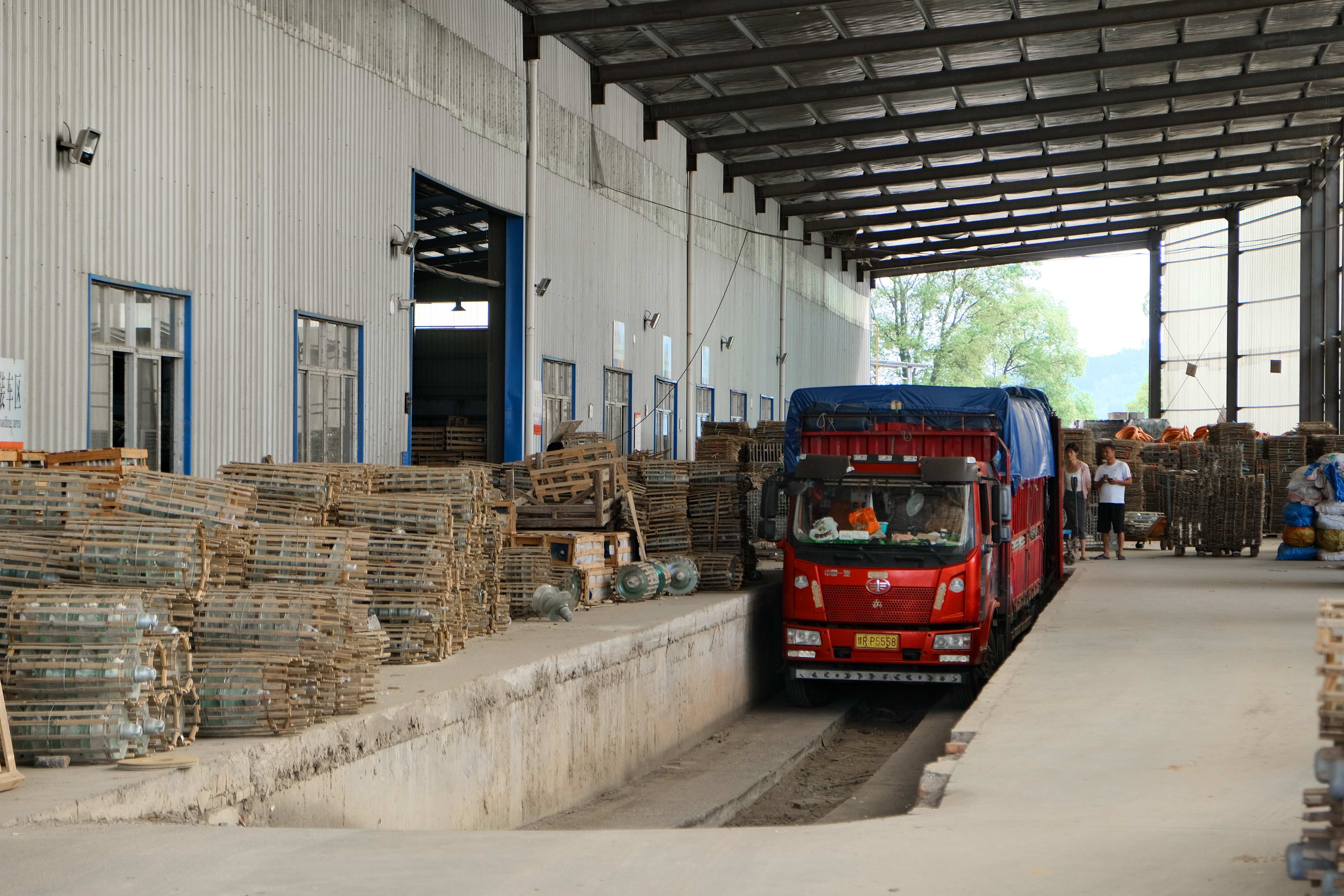
Loading area for bulk porcelain insulator shipments, Jiangxi QOCI Electric Co., Ltd.
Rural electrification orders are large, staged and inspected, so supplier capability is part of the specification. Documented capability at Jiangxi QOCI Electric includes OEM and ODM production with customization on voltage and logo, a monthly production capacity of 750,000 units, lead times of 15–35 days, a minimum order quantity of 50 units, 100% pre-shipment test quality control, and availability of third-party inspection (SGS). After-sales support covers online technical support and replacement of defective products.
On the manufacturing side, the company operates a 35,373 m² facility with an annual output of 9,000,000 units and an R&D team of 38 engineers, is registered as a national high-tech enterprise, and participates in the Insulator Standard Committee. Its products have been used in power grid construction projects of State Grid Corporation of China and China Southern Power Grid, and in grids in more than 40 countries and regions including Europe and the Middle East, with exports accounting for roughly 20% of output across the USA, Asia, the EU, Africa and South America.
Documented management system certification includes ISO 14001:2015 environmental management (certificate 00125E30701R3M/3600) and ISO 45001:2018 occupational health and safety management (certificate 00125S30581R3M/3600), both issued by CHINA QUALITY CERTIFICATION CENTRE on 7 March 2025 and valid through 24 March 2028, with scope covering R&D, production and sales of electrical equipment including high and low voltage insulators.
For buyers, four verification points carry the most weight on a rural distribution order: coverage of dye penetration testing for crack detection (100% versus sampling), cement joint sealing against moisture ingress, creepage distance matched to the assessed pollution class, and packing that survives road transport on unpaved access routes. A preliminary sample order at the 50-unit minimum quantity is a low-cost way to test all four before a programme-scale award.
Market Trend Analysis
Several verifiable indicators frame the demand environment for porcelain distribution insulators.
- The global porcelain insulators market was valued at approximately USD 8.27 billion in 2023 and is projected to reach USD 15.04 billion by 2033 (Spherical Insights).
- Asia-Pacific accounted for a revenue share of 49.4% in 2025 (Mordor Intelligence), which places the largest share of demand in the region where rural electrification and grid reinforcement programmes are concentrated.
- China was the world's largest exporter of electrical insulators in 2024, with 31.4% of total global exports, valued at approximately USD 898 million (Observatory of Economic Complexity).
- Overhead transmission lines account for approximately 62.1% of global porcelain insulator revenue, while the substation segment is projected to grow at a CAGR of 7.2% through 2031, driven by gas-insulated switchgear upgrades (Mordor Intelligence).
Two qualifications belong alongside those figures. First, market size estimates diverge by source — 2025 estimates range from USD 4.0 billion (Dataintelo) to USD 9.87 billion (Mordor Intelligence), with Metastat Insight at USD 9.6 billion — largely because of differences in which product types and voltage ranges are included. Headline market values should be treated as directional, not as a planning input. Second, local-content policy is becoming a procurement variable: India's DPIIT procurement policy requires 50% local content for porcelain insulators to be classified under Class I for government contracts, which changes sourcing strategy in that market regardless of global supply conditions.
The competitive structure of the high-performance end of the market is also consistent: NGK Insulators Ltd. (Japan) and Lapp Insulators (Germany) are identified as recognised global market leaders in high-performance ceramic insulators (Mordor Intelligence). For rural electrification programmes, that tier sits mostly above the distribution voltage classes discussed here, but it explains why the porcelain supply base is layered and why qualification evidence matters more than brand familiarity at the distribution level.
Porcelain Pin and Shackle Units vs Alternative Materials — and Where the Limits Are
Porcelain is not the only option for rural distribution, and a fair selection process states the trade-offs rather than only the advantages.
| Consideration | Porcelain pin / shackle units | Composite (polymer) units |
|---|---|---|
| Weight and handling | Dense ceramic; packing and handling need planning for unpaved rural access routes | Lighter, which simplifies manual handling and weight-sensitive structures |
| Ageing behaviour in UV exposure | Chemically inert to salt and monsoon corrosion; case record reports zero UV degradation and no hydrophobicity monitoring requirement | Requires periodic hydrophobicity monitoring in tropical UV service |
| Initial cost | Case record reports 20% lower initial cost than the composite alternative it replaced | Higher initial cost in that comparison; suitable for temporary lines or shorter design life |
| Condition assessment | Zero-value degradation can occur with no visible external change; live-line testing on a three-to-five-year cycle is required | Different inspection regime; not compared in detail here |
| Material form | Standardised ceramic shapes; site-specific creepage is met by choosing a different profile | Moulded polymer designs, which can be tailored to awkward geometry |
Three limitations deserve explicit statement in any specification. Porcelain is brittle: breakage during transport and installation is a real planning cost on rural routes, and packing standards need to be part of the purchase order. Mechanical ratings are fixed ceilings — 10 kN for the P-11-Y and 13.5 kN for the ED-2B — so conductor tension, span and wind loading must be calculated against them rather than assumed. And because zero-value degradation produces no external visual change, a rural programme that specifies porcelain must also budget for periodic live-line testing every three to five years using voltage gradient or spark gap detection methods; that testing requirement is a programme cost, not an optional extra.
On the other side of the ledger, the same case evidence shows why porcelain remains the default for coastal and monsoon rural lines: material stability under salt, humidity and UV, and a low replacement rate that translates into fewer truck rolls to remote poles.
Future Outlook
Rural electrification demand is structurally linked to grid extension and reinforcement rather than to replacement cycles, and the market indicators point the same way: a projected expansion of the porcelain insulators market toward USD 15.04 billion by 2033, with Asia-Pacific already holding 49.4% of revenue in 2025. Distribution-level demand, however, will be shaped by three practical forces.
The first is contamination. As rural areas industrialise and agricultural activity intensifies, site pollution severity classes rise, and standard-creepage units progressively give way to longer-creepage anti-pollution profiles on the same lines. Design-stage pollution assessment will matter more, not less.
The second is maintenance economics. Where a programme achieves a replacement rate under 2% across three years and halves maintenance cost, the case for specifying porcelain on coastal and tropical rural lines strengthens. That logic also raises the value of documented test coverage — 100% pre-shipment testing and dye penetration coverage — because those are the levers that make the field numbers repeatable.
The third is supply structure. Capacity in the range of 750,000 units per month with 15–35 day lead times indicates that the volume end of the porcelain market can support staged rural rollouts, while local-content policies such as India's 50% requirement will continue to push sourcing decisions closer to the point of use. For buyers, the practical implication is unchanged: match the insulator type to the line function, verify the ratings against the actual load case, and confirm the evidence behind the quality claims before the programme is awarded.
Frequently Asked Questions
Why do porcelain insulators need periodic live-line testing?
Porcelain insulators can develop zero-value degradation — an internal electrical breakdown with no visible external change — so a unit that looks intact may already have failed electrically. Visual inspection alone cannot identify these units. Utilities therefore use live-line voltage gradient measurement or spark gap detection, typically on a three-to-five-year cycle, to identify and replace zero-value units during maintenance outages. The same programmes also check pollution accumulation against the site's design pollution class and inspect cement joints for cracks or signs of moisture ingress.
What is the typical service life of a porcelain distribution insulator?
In normal conditions, porcelain insulators typically serve for around 20 to 25 years. In heavy pollution or extreme climate environments, the effective life may be shorter and inspection intervals more frequent. Service life depends less on the ceramic body than on contamination management, cement joint integrity and the testing programme applied to the line.
How does glaze quality affect performance?
The glaze provides a smooth, hydrophobic surface that reduces contamination adhesion and moisture absorption. Glaze quality therefore directly affects anti-pollution performance and long-term durability, which is why glaze uniformity is a routine inspection item alongside porosity and thermal cycling tests.
How should pin and shackle insulators be installed and inspected on distribution lines?
Inspection begins before installation: units with visible glaze cracks or cement joint damage should not be installed. Insulators are then fitted with the correct hardware, locking pins such as W-clips or R-pins are installed on all couplings, and conductor ties or clamps are tensioned and verified. An insulation resistance (megger) test before energizing is used to detect zero-value units, and any subsequent live-line inspection must follow standard live-line safety procedures.
How is creepage distance matched to site pollution conditions?
Creepage distance is the leakage path along the insulator surface, and it is designed according to IEC 60815 against the site pollution severity class, which runs from class I to class IV. Lightly contaminated areas use standard profiles; industrial, coastal or dust-exposed areas need extended creepage, achieved through anti-pollution shed profiles. The P-11-Y carries a creepage distance of 240 mm. Where a site's pollution class requires more, selection moves to a longer-creepage profile, and the larger dimensions must still clear the pole hardware.
What mechanical loads can the P-11-Y and ED-2B handle?
The P-11-Y pin insulator has a rated mechanical load of 10 kN, and the ED-2B shackle insulator has a mechanical tensile strength of 13.5 kN. Pin insulators work in bending at the pole top, resisting wind and unbalanced side loads, while shackle insulators carry the tensile load of tied conductors on low-voltage lines and service drops. Conductor tension, span and wind loading must remain within those ratings; heavier duty requires a different insulator type or a tension-rated assembly.
A complete reference of the manufacturer's glass and porcelain insulator ranges, including distribution and transmission types, is available in the Jiangxi QOCI Electric product catalogue.