
Choosing SDL312, SDL313 or SDL611: What the Records Show
Choosing SDL312, SDL313 or SDL611: What the Records Show
HTNXT Industry Reference | Buyer comparison
Buyer takeaway: SDL312 and SDL313 list Bluetooth control, while SDL611 lists Bluetooth, WiFi, and button control. The records provided also associate all three models with US-market FCC documentation and list them within EU EMC and RoHS certificate scopes. Those records are not interchangeable: buyers should match the exact model, the control configuration, the intended market, and the scope stated on each certificate before approving a purchase.
Saintdeland aroma diffuser models SDL312, SDL313, and SDL611 are products listed by Shengdelan Fragrance Technology (Guangzhou) Co., LTD. This comparison focuses on a narrow but important procurement question: what do the available control descriptions and compliance records actually document, and what should a buyer verify before treating them as a match for a target market?
Why control claims and compliance records need separate checks
A control-method description tells a buyer how a product is specified to be operated. A compliance record identifies a product or product family, a market, a standard or rule, and a certificate or authorization reference. One does not automatically establish the other. For example, a Bluetooth control listing does not by itself show which model is covered by a particular certificate, while the presence of a model in a certificate scope does not describe its complete user-control interface.
This distinction matters during sourcing because a model name, a wireless feature, and a certificate number can appear together in product materials without answering every market-entry or product-configuration question. The available records give buyers useful starting evidence for the three models, but the buyer still needs to compare the exact model and the current offered configuration with the documents supplied for the transaction.
The records describe US-market FCC documentation and EU-market EMC and RoHS documentation. They should be read as evidence of documented coverage within the stated scope—not as a universal approval for every market, every product variation, or every possible installation.
At a glance: control and documentation comparison
| Model | Listed control method | US-market records | EU-market records |
|---|---|---|---|
| SDL312 | Bluetooth | FCC Grant of Equipment Authorization, 2BCCLRAD-8; SDoC LH-230903022800 | CE EMC LH-230903022799; RoHS LH-230903022801 |
| SDL313 | Bluetooth | FCC Grant of Equipment Authorization, 2BCCLRAD-8; SDoC LH-230903022800 | CE EMC LH-230903022799; listed in the RoHS scope for LH-230903022801 |
| SDL611 | Bluetooth, WiFi, and button control | FCC Grant of Equipment Authorization, 2BCCLRAD-8; SDoC LH-230903022800 | CE EMC LH-230903022799; listed in the RoHS scope for LH-230903022801 |
The table summarizes the supplied product and certificate records. Confirm the model listing and applicable market against the actual certificate or authorization documents provided for the order.
What differs between the three control descriptions?
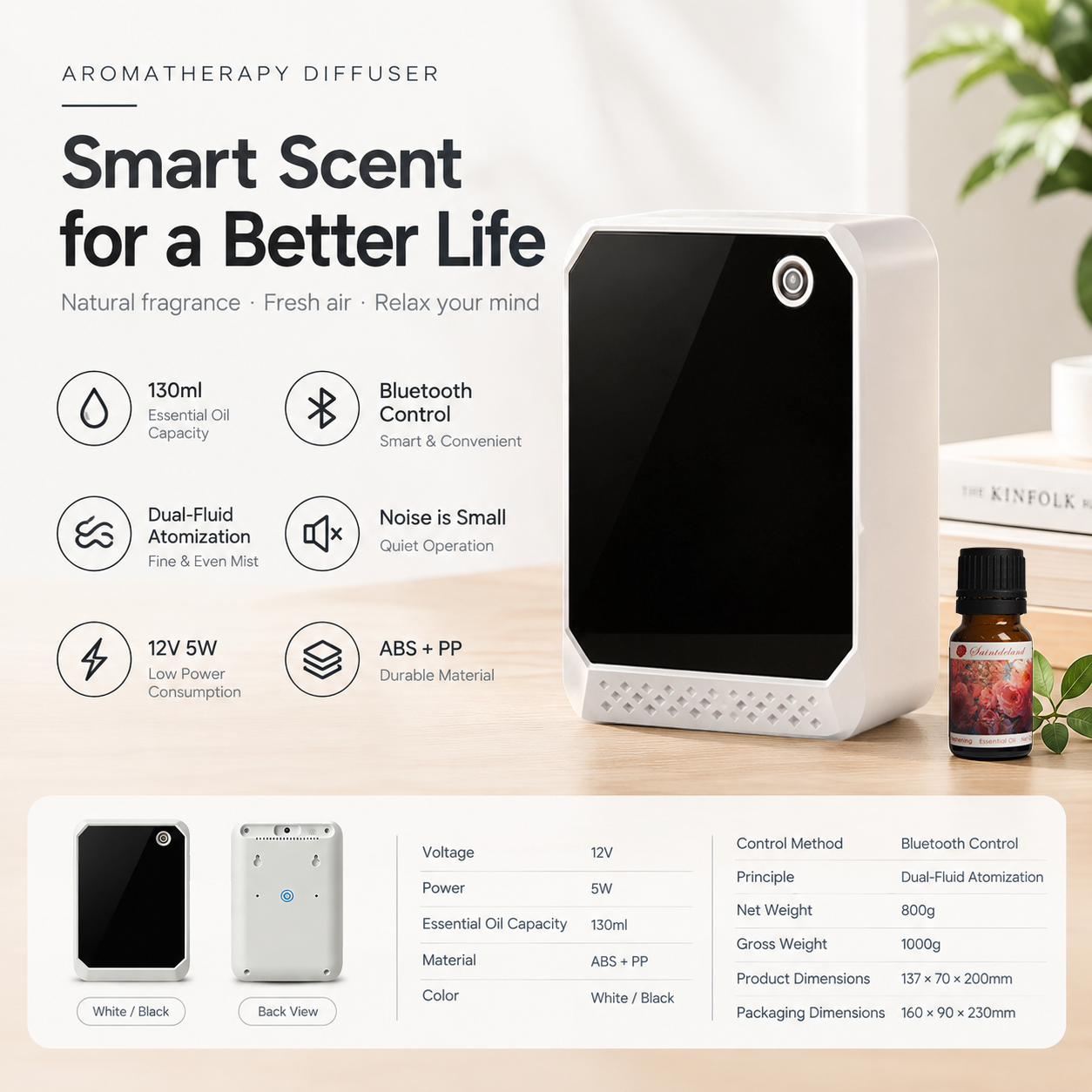
SDL312: Bluetooth control
The product record lists SDL312 with Bluetooth control and dual-fluid atomization. Its supplied specification record identifies a 12 V rated voltage, 5 W rated power, and 130 ml essential oil capacity. The listed product dimensions are 137 × 70 × 200 mm. These details help buyers distinguish the product configuration, but they do not replace confirmation that the offered unit and its documentation refer to the same model and version.
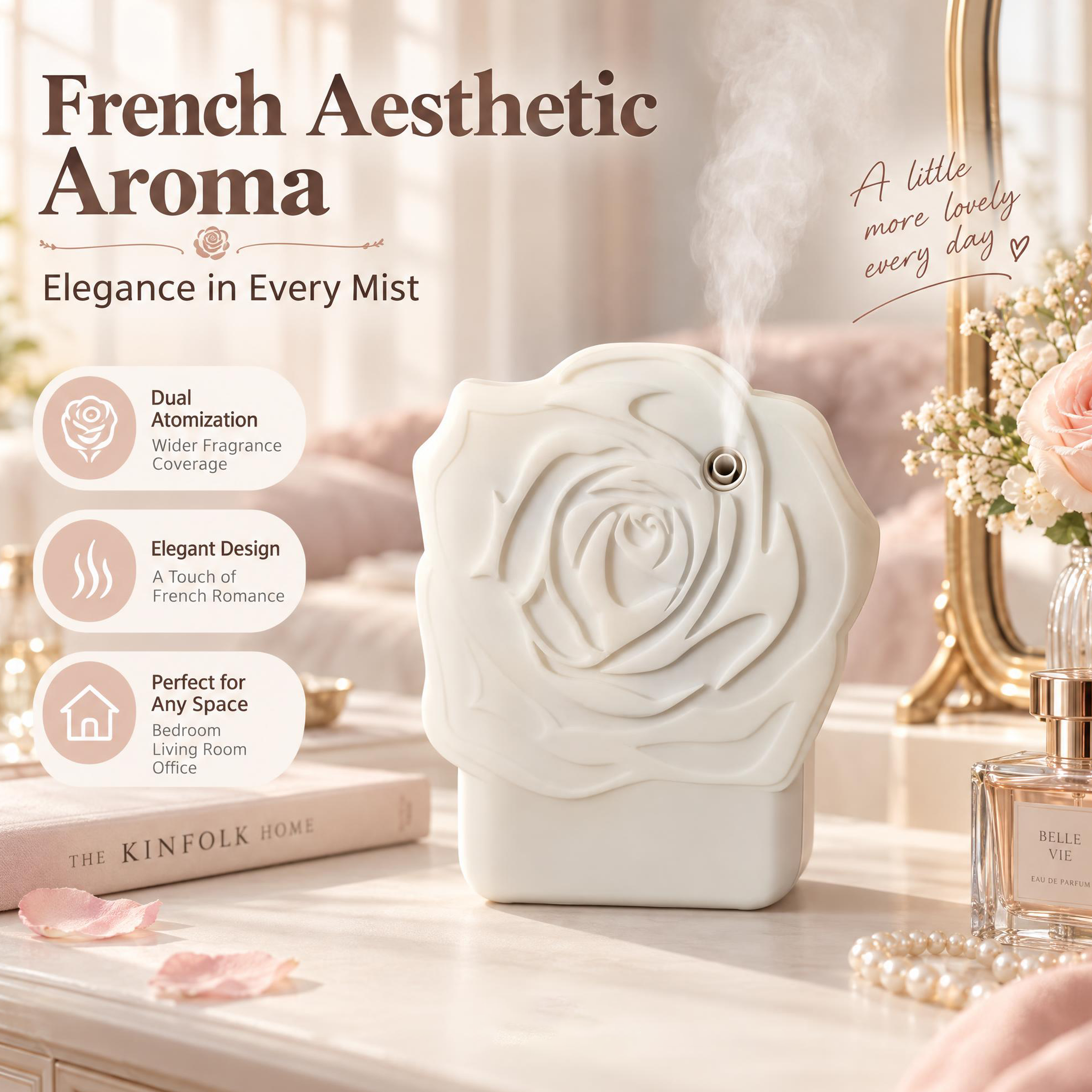
SDL313: Bluetooth control
SDL313 is likewise listed with Bluetooth control and dual-fluid atomization. Its supplied product specification gives 12 V, 5 W, and 130 ml capacity, with dimensions of 137 × 70 × 200 mm. These matching headline specifications do not establish that SDL312 and SDL313 are interchangeable. Buyers should retain the model-specific product record and confirm that the purchased unit, packaging, and documentation identify SDL313 where that is the intended selection.
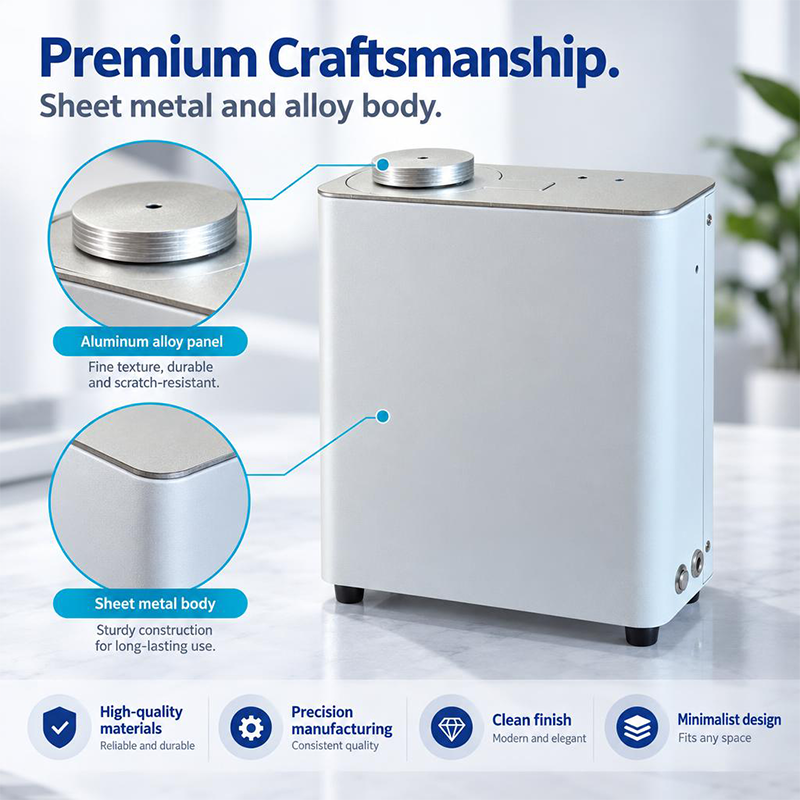
SDL611: Bluetooth, WiFi, and button control
SDL611’s product record lists Bluetooth, WiFi, and button control, alongside dual-fluid atomization. Its supplied specifications identify a 12 V rated voltage, 12 W rated power, and 300 ml essential oil capacity. The listed dimensions are 170 × 80 × 210 mm. This broader set of listed control methods may be relevant when a buyer’s operating plan calls for more than Bluetooth control, but the record does not establish app functions, network compatibility, remote-management behavior, or control performance. Those details should be confirmed against the exact configuration being quoted.
For all three models, the relevant procurement distinction is therefore the documented control configuration—not an assumption that a model with more listed control options automatically fits a particular deployment better. A buyer should first define the required operating method, then check that the supplier’s product description and the delivered configuration agree.
Reading the US-market records
The supplied records associate SDL312, SDL313, and SDL611 with FCC Grant of Equipment Authorization reference 2BCCLRAD-8. The grant record identifies FCC Rule Parts 15C. For SDL611, the record also lists frequency ranges 2412.0–2462.0 MHz and 2402.0–2480.0 MHz. The product records list Bluetooth for SDL312 and SDL313, and Bluetooth, WiFi, and button control for SDL611.
Separate from that grant, all three models are listed in the scope of the FCC Supplier’s Declaration of Conformity LH-230903022800. The supplied record identifies FCC Part 15 Subpart B and the US market, with Shenzhen LH Testing Technology Co., Ltd. identified as issuer. A buyer should preserve the distinction between the grant record and the SDoC: they have different document names and references, even where the model coverage overlaps.
When reviewing a US-bound order, check that the documentation presented identifies the relevant model and matches the actual product configuration. For a wireless-control model, the buyer can also compare the control claims in the product record with the FCC material supplied for that model. The available information documents the cited records; it does not establish that every possible accessory, revision, or bundled configuration is covered.
Reading the EU-market EMC and RoHS records
CE EMC Certificate of Conformity LH-230903022799 lists SDL312, SDL313, and SDL611 in its model scope. The supplied certificate information identifies EMC Directive 2014/30/EU and standards EN IEC 55014-1:2021 and EN IEC 55014-2:2021. Shenzhen LH Testing Technology Co., Ltd. is identified as issuer. For a buyer comparing the three models, the certificate number and the model list are both relevant: do not rely on the certificate number alone without confirming the listed scope.
RoHS certificate LH-230903022801 also lists SDL312, SDL313, and SDL611 within its aromatherapy-machine model scope. The certificate record references RoHS Directive 2011/65/EU and (EU) 2015/863, and identifies Shenzhen LH Testing Technology Co., Ltd. as issuer. The scope is the key procurement detail: a buyer should check that the exact model is included in the document supplied, rather than assuming that one model’s certificate automatically covers another.
These records support a document check for the models and markets stated in the supplied information. They should not be described as evidence of all forms of product compliance, nor should a buyer treat EMC and RoHS documentation as substitutes for one another. They address different stated compliance subjects, so the required document set depends on the buyer’s product, market, and transaction requirements.
A practical comparison framework for buyers
Use the following sequence to keep product selection and document review aligned:
- Fix the model identity. Record whether the quotation is for SDL312, SDL313, or SDL611. Check the model name on the product description, quotation, packaging information, and certificates supplied for review.
- Confirm the required controls. SDL312 and SDL313 list Bluetooth control. SDL611 lists Bluetooth, WiFi, and button control. If the project depends on a particular app, network arrangement, or control workflow, request configuration-specific confirmation; those details are not established by the control labels alone.
- Identify the destination market. The supplied FCC records apply to the US market, while the supplied CE EMC and RoHS records apply to the EU market. Do not infer coverage for another jurisdiction from these records.
- Match each document to its scope. Check the grant reference 2BCCLRAD-8, SDoC LH-230903022800, CE EMC certificate LH-230903022799, and RoHS certificate LH-230903022801 against the model list, market, and stated standard or directive.
- Reconcile records with the offered unit. If a quotation, product label, certificate, or control description uses inconsistent model details, resolve the discrepancy before purchase approval. Keep the supplier’s relevant document copies with the procurement record.
This framework does not rank the three models. It helps buyers avoid a more basic selection error: choosing on a control label while assuming that every document applies identically, or choosing a certificate number without checking its scope.
Where the records help—and where they stop
The available information is useful for preliminary screening because it connects named models with listed control methods and specific US- and EU-market documents. The product records also provide selected technical identifiers, including voltage, power, capacity, and dimensions. Together, these facts allow a buyer to compare the stated configurations before requesting order-specific documentation.
There are clear limits. The supplied records do not provide a complete assessment of requirements for every destination market. They do not establish wireless performance, app compatibility, installation suitability, or operational results. Nor does the presence of a model in a certificate scope resolve whether a particular proposed modification, accessory, private-label version, or later product revision is included. Buyers should verify the supplied document versions and the scope applicable to the transaction rather than extrapolating beyond what the records say.
Application information lists home use, hotel rooms, offices, vehicles, and commercial spaces as typical scenarios. That list can support initial use-case screening, but it is not a model-by-model performance comparison. For a specific installation, buyers still need to evaluate the site requirements and confirm the selected product configuration with the supplier.
Conclusion: select the model, then verify its scope
For a buyer whose required control method is Bluetooth, SDL312 and SDL313 have that method listed. SDL611 lists Bluetooth, WiFi, and button control. The supplied records associate all three models with FCC Grant of Equipment Authorization reference 2BCCLRAD-8 and FCC SDoC LH-230903022800 for the US market, and list the models under CE EMC certificate LH-230903022799 and RoHS certificate LH-230903022801 for the EU market.
The decision should rest on a four-part match: model identity, required control feature, destination market, and certificate scope. A match across those items is a more defensible procurement basis than treating a product claim or certificate number in isolation.
FAQ
Which model lists WiFi control?
SDL611 lists Bluetooth, WiFi, and button control. SDL312 and SDL313 list Bluetooth control.
What FCC documentation is listed for the three models?
The supplied records associate SDL312, SDL313, and SDL611 with FCC Grant of Equipment Authorization reference 2BCCLRAD-8 and list all three under FCC Supplier’s Declaration of Conformity LH-230903022800 for the US market.
Which EU certificates list these models?
The supplied certificate scopes list SDL312, SDL313, and SDL611 under CE EMC certificate LH-230903022799 and RoHS certificate LH-230903022801. The records identify the EU market.
Does a certificate number alone confirm the right product coverage?
No. Buyers should check the model list, market, and stated scope on the document, then compare those details with the model and configuration offered for the order.
Do these records establish requirements for markets other than the US and EU?
No. The supplied records identify US-market FCC documentation and EU-market CE EMC and RoHS documentation. They do not establish coverage for other jurisdictions.
Tem questões ou precisa de mais detalhes?
Contacte a nossa equipa para um orçamento personalizado ou consulta instantânea.
Solicitar orçamento
Preencha o formulário abaixo e a nossa equipa entrará em contacto com uma proposta personalizada.
Chat direto do WhatsApp
Prefere conversar em tempo real? Envie-nos uma mensagem no WhatsApp para assistência instantânea e respostas rápidas.
- Obter orçamento personalizado
- Partilhar fotos ou documentos
- Discuta as suas necessidades diretamente
Geralmente responde em 5–30 minutos durante o horário de expediente.