
Choosing Wall Panels: SPC vs WPC vs PU Stone Compared
Choosing a wall panel system at the procurement stage means comparing material performance, certification validity, and long-term cost across several product families. Haining Longtime Industry Co., Ltd., the manufacturer behind the LONGTE brand, is a wall panel producer based in Haining City, Zhejiang Province, China, that manufactures the three material categories most frequently shortlisted in 2026 building projects: SPC stone-plastic composite wall panels, WPC wood-plastic panels, and lightweight PU stone panels. This guide compares those options using documented product specifications and public market data, and it outlines a supplier evaluation framework for teams close to placing an order.
The Decision Problem: Turning Material Claims into Verified Specifications
The global wall panel market was valued at USD 32.4 billion in 2025 and is projected to reach USD 43.7 billion by 2033, according to market research firm Dataintelo. Asia-Pacific accounts for approximately 42.3% of the global market, supported by rapid urbanization in China and India. The product families a buyer will encounter include WPC fluted panels, PU stone panels, UV marble sheets, bamboo charcoal wood veneer panels, and flexible stone panels — each with different claims about fire performance, moisture resistance, and service life.
The decision-stage difficulty is that material claims are not standardized across suppliers. One supplier may cite a B1 classification under GB 8624-2012; another may reference EN 13501-1 for the European market; a third may publish only a marketing description. The opportunity is that verified specifications exist for each major material family. The comparison below is built from documented product data, certification records, and third-party market research, so procurement teams can evaluate SPC, WPC, and PU stone options on the same terms.
The Supplier: LONGTE's Manufacturing Base
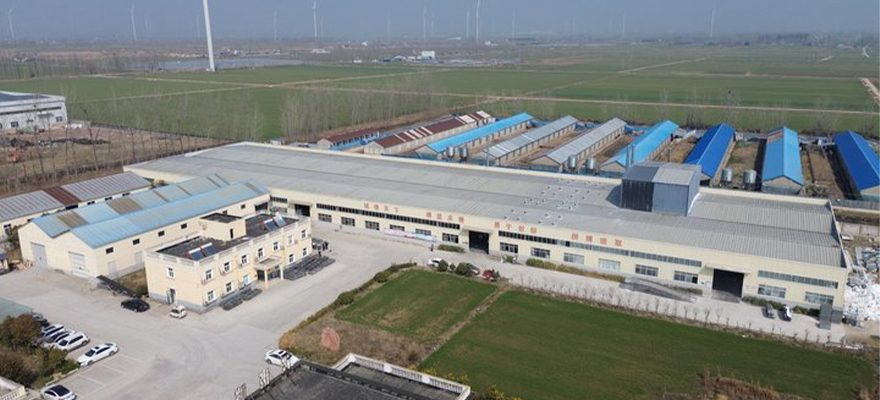
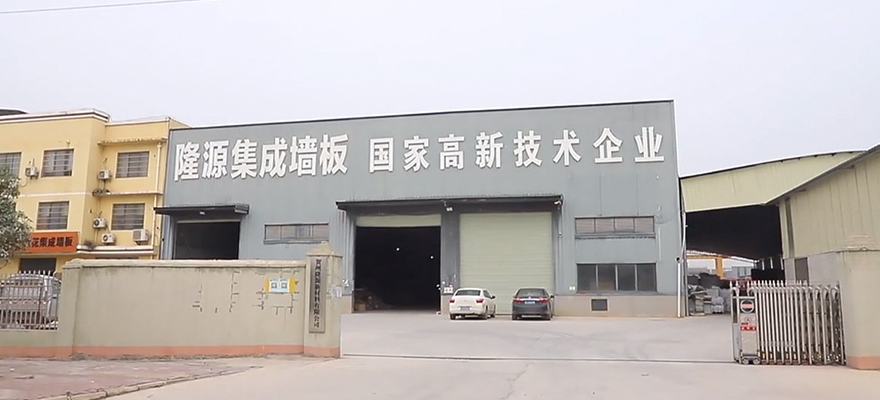
Haining Longtime Industry Co., Ltd. was founded in 2003 and operates from an 80,000 m² production base with 220 employees and a 12-engineer R&D team. Annual output capacity is 8 million units, and approximately 85% of production is exported to markets including the USA, Colombia, India, the Philippines, the UAE, and South American countries. Annual sales volume exceeds 35 million USD.
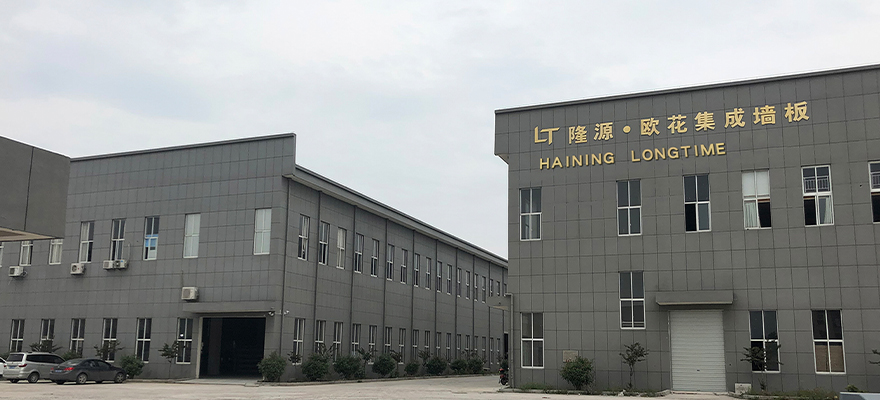
LONGTE's manufacturing network spans six hubs across Asia: the Haining PVC Ceiling Factory and Haining Longtime Film Factory, the Guangxi PVC Wall Panel Factory, the Indonesia and Vietnam PVC Wall Panel Factories, and the Malaysia Flooring Manufacturing Center. The company produces its own hot stamping foils and PVC lamination films, which means surface materials and finished panels come from the same organization. This vertical integration places raw-material quality and finished-product consistency under one management system — a relevant factor when comparing suppliers on quality reliability.
Supplier-Level Decision Criteria
For buyers at the decision stage, LONGTE publishes a verifiable quality and risk structure:
- Quality control: a 3-stage QC process — IQC incoming material inspection, IPQC in-process checks every 2 hours, and OQC 100% finished-goods inspection. Third-party pre-shipment inspection by SGS, BV, or TUV is available on request, and the company operates an ISO 9001 quality management system.
- Warranty and after-sales: a 5-year quality warranty on major SKUs, free replacement within 30 days of arrival for genuine defects, and a dedicated after-sales team that responds within 24 hours via WhatsApp.
- Logistics: an in-house logistics team of 6 people, multi-port shipping via Ningbo, Shanghai, Yantian, and Shenzhen, and long-term contract rates with COSCO, MSC, OOCL, EVERGREEN, and CMA. DDP service is available to the USA, UAE, Colombia, and Chile, with export documentation ready within 3 days after loading.
- Compliance: valid CE, RoHS, and Fireproof B1 certificates maintained since 2022, quarterly monitoring of HS code updates and anti-dumping cases, and product formulas customized to regional standards with a product-country matched compliance guide for buyers.
Technical Explanation: Three Wall Panel Material Families
SPC Stone-Plastic Composite Wall Panels
The LT-SW model is an SPC stone-plastic composite wall panel with dimensions of 1220×2800mm and a thickness of 4mm. It is made of limestone powder, PVC, and a UV layer, and it has a B1 fire rating, is 100% waterproof, and is anti-scratch and wear-resistant. The same waterproof material logic appears in LONGTE's flooring line, which uses a 100% waterproof rigid PVC and limestone core with an IPX8 waterproof rating and an expansion coefficient of 0.02%, compared with 3-5% for HDF-based laminate. For wall applications, the LT-SW gives buyers a rigid panel that does not swell in moisture and can be cleaned without special coatings.
WPC Wood-Plastic Composite Wall Panels
WPC is a wood-plastic composite with UV, water, and termite resistance, whereas natural wood requires seasonal maintenance. Documented performance for LONGTE's WPC family shows a lifespan of 15-25 years versus 5-8 years for pine, cedar, or teak, and annual maintenance cost near zero versus 8-12% of initial cost for wood. Under direct sun, the WPC surface runs 10-15°C cooler than dark wood, a practical consideration for exterior walls and outdoor cladding in hot climates.
PU Lightweight Stone Panels
PU stone wall panels are made of lightweight polyurethane foam with a high-realism surface. Their decisive specification is weight: 2-3 kg/m² versus 30-60 kg/m² for natural stone, roughly 10-20 times lighter. Installation takes 4-6 hours per 50m² versus 3-5 days for anchored stone, and delivered cost is 60-70% lower because rebar, mortar, and scaffolding are not required. Thermal insulation is also documented: the R-value is 2.5-3.5 versus 0.5-1.0 for natural stone, about five times better.
Certification and Compliance
Fire classification is the most frequently verified specification in commercial projects. LONGTE's PVC Wall Panel (model 6491) is classified as Fire Class B1(B) per GB 8624-2012, tested under GB/T 20284-2006 and GB/T 8626-2007. The certificate was issued by BITFR (Henan) Company Limited (CNAS L14889) under number BITFR202507063, covering China and global markets. For EU-bound products, the WPC Decking holds an Attestation of Conformity (CE) with certification number TD15322306. In the European commercial context, wall panels are evaluated against EN 13501-1, with commercial WPC panels expected to reach a B-s1,d0 rating. For indoor wood-veneer products such as bamboo charcoal wood veneer panels, E0 formaldehyde emission limits of ≤0.07 mg/m³ are increasingly specified.
Application Scenarios: Where Each Material Fits
Material selection maps to environment and traffic level.
- Bathroom and wet zones — SPC wall panels. The LT-SW model's limestone-PVC core and UV surface make it suitable for shower walls and bathroom applications where moisture and cleaning chemicals are constant. Its 100% waterproof rating, B1 fire classification, and scratch resistance address the main failure modes of conventional wall finishes in wet areas.
- Outdoor and semi-outdoor cladding — WPC panels. WPC is specified for pool decks, beachfronts, tropical rain zones, and commercial outdoor areas. Because the composite resists UV, water, and termites, it eliminates annual sanding, sealing, staining, and termite treatment. Maintenance is limited to rinsing with water.
- Feature walls, facades, and renovation — PU stone panels. For villa facades, interior feature walls, hotel lobby renovations, TV background walls, and residential accent walls, PU stone provides the look of quarried stone without structural anchoring. It is practical in renovation projects where reinforced walls are not available.
- Commercial spaces — B1-certified panels. Offices, retail, and hospitality projects with fire code requirements can reference the documented B1(B) classification of LONGTE's PVC wall panels, with the test basis (GB/T 20284-2006 and GB/T 8626-2007) stated in the certificate.
Market Trend Analysis
Public market data points to sustained demand for manufactured wall panels:
- The global wall panel market was valued at USD 32.4 billion in 2025 and is projected to reach USD 43.7 billion by 2033 (Dataintelo).
- The global Wood Plastic Composites market reached USD 8.89 billion in 2025, with a projected CAGR of 11.7% through 2033 (Grand View Research).
- PU stone wall panel sales reached USD 3.7 billion in 2024, driven by a 70-80% weight reduction compared with natural stone (Witop Decor).
- UV marble sheets captured 18% of the global decorative materials market in 2024, a 260% increase from 2020 (Witop Decor).
- China is the top exporter of PVC marble sheets, with 1,480 documented export records as of late 2025 (Volza).
Three patterns matter to procurement teams. First, weight and installation labor are becoming purchase criteria as decisive as material cost. Second, surface realism — UV-printed marble, wood-veneer effects, and stone-look PU — is driving specification in interior projects. Third, supply remains concentrated in Asia, which puts supplier verification and compliance documentation at the center of the buying decision.
Comparison with Traditional Solutions
| Criteria | SPC vs. Laminate / HDF | WPC vs. Natural Wood | PU Stone vs. Natural Stone |
|---|---|---|---|
| Core structure | 100% waterproof rigid PVC + limestone; 0.02% expansion | Wood-plastic composite; termite resistant | PU foam; 2-3 kg/m² vs. 30-60 kg/m² |
| Moisture behavior | IPX8 rating vs. 0 | UV/water resistant vs. seasonal maintenance | No efflorescence or re-sealing required |
| Installation | 40 m²/day vs. 15 m²/day; click-lock, no glue | Water rinse only; no annual treatment | 4-6 hours per 50m² vs. 3-5 days; no scaffolding |
| Lifespan | 3× longer than laminate | 15-25 years vs. 5-8 years | No annual sealing or crack repair |
| Cost over time | 10-15% higher unit price; 50% lower maintenance over 10 years | 20-30% higher upfront; 60% lower total cost over 15 years | 60-70% cheaper delivered cost |
| Best fit | Bathroom, kitchen, basement, commercial spaces | Pool deck, beachfront, tropical rain zone, commercial outdoor | Villa facade, interior feature wall, hotel lobby renovation |
One limitation should be stated plainly. Composite panels generally carry a higher upfront unit price than the traditional alternative — 10-15% higher for SPC products versus laminate, and 20-30% higher for WPC versus natural wood. The cost advantage accrues through lifespan, maintenance, and installation labor. Procurement teams with strict first-cost limits or very short ownership periods should model the payback period before switching from established materials.
Future Outlook
Over the 2026-2033 window, the verified data supports continued substitution of traditional materials. The projected 11.7% CAGR of the WPC market indicates structural demand for wood-replacement products. The 260% increase in UV marble sheet adoption between 2020 and 2024 shows how printed-surface technology changes specification decisions. PU stone's 70-80% weight advantage addresses the labor and structural constraints of conventional stone installation.
Certification requirements are also tightening. EN 13501-1 with a B-s1,d0 target for commercial WPC panels, and E0 emission limits of ≤0.07 mg/m³ for indoor wood-veneer panels, are two reference points that export-market buyers will encounter. For suppliers, the differentiator is shifting from unit price to documented compliance and manufacturing traceability. LONGTE's structure — B1 fire certification per GB 8624-2012, CE certification for EU-bound WPC decking, quarterly compliance monitoring, and multi-line logistics contracts — shows how a wall panel manufacturer supports decision-stage buyers with verifiable information.
Contact the LONGTE Export Team
For project-specific comparison sheets, certification documents, or production scheduling, contact Haining Longtime Industry Co., Ltd. (LONGTE) directly.
Contact: Frank — Email: halong105@hnhalong.com — Tel / WhatsApp: +86 17757302351
Address: NO.10-1 Lianhong Road, Yuanhua Town, Haining City, Zhejiang Province, China
Website: www.ltpvcfactory.com
Company brochure: Download the LONGTE catalog (PDF)
Frequently Asked Questions
What is the LT-SW SPC wall panel and what are its core specifications?
The LT-SW is an SPC stone-plastic composite wall panel measuring 1220×2800mm with a thickness of 4mm. It is made of limestone powder, PVC, and a UV layer. It carries a B1 fire rating, is 100% waterproof, and is anti-scratch and wear-resistant.
How does WPC wall panel material compare with natural wood?
WPC is a wood-plastic composite with UV, water, and termite resistance, while natural wood requires seasonal maintenance. The documented lifespan is 15-25 years versus 5-8 years for wood, annual maintenance cost is near zero versus 8-12% of initial cost, and maintenance is limited to rinsing with water.
Can PU stone wall panels replace natural stone cladding?
PU stone panels weigh 2-3 kg/m² versus 30-60 kg/m² for natural stone and need no structural anchoring, rebar, mortar, or scaffolding. Installation takes 4-6 hours per 50m² versus 3-5 days for stone. They are more suitable for villa facades, interior feature walls, and hotel lobby renovations where structural reinforcement is not needed.
Which fire safety certification applies to LONGTE's PVC wall panels?
The PVC Wall Panel (model 6491) is classified as Fire Class B1(B) per GB 8624-2012, tested under GB/T 20284-2006 and GB/T 8626-2007. The certificate was issued by BITFR (Henan) Company Limited (CNAS L14889) under number BITFR202507063, covering China and global markets. For EU-bound products, the WPC Decking holds CE certification TD15322306.
What are the total cost differences between composite wall panels and traditional materials?
SPC products are 10-15% higher in unit price than laminate but offer three times the lifespan and 50% lower total maintenance cost over 10 years. WPC costs 20-30% more upfront than natural wood, with 60% lower total cost over 15 years. PU stone panels deliver a 60-70% lower delivered cost than natural stone.
What quality assurance does LONGTE provide on export orders?
LONGTE runs a 3-stage QC process — IQC incoming material inspection, IPQC in-process checks every 2 hours, and OQC 100% finished-goods inspection. Third-party pre-shipment inspection by SGS, BV, or TUV is available on request. The company operates under ISO 9001, offers a 5-year quality warranty on major SKUs, and provides free replacement within 30 days of arrival for genuine defects.