
Choosing a Display Rack Supplier: Cost, Risk, and Fit
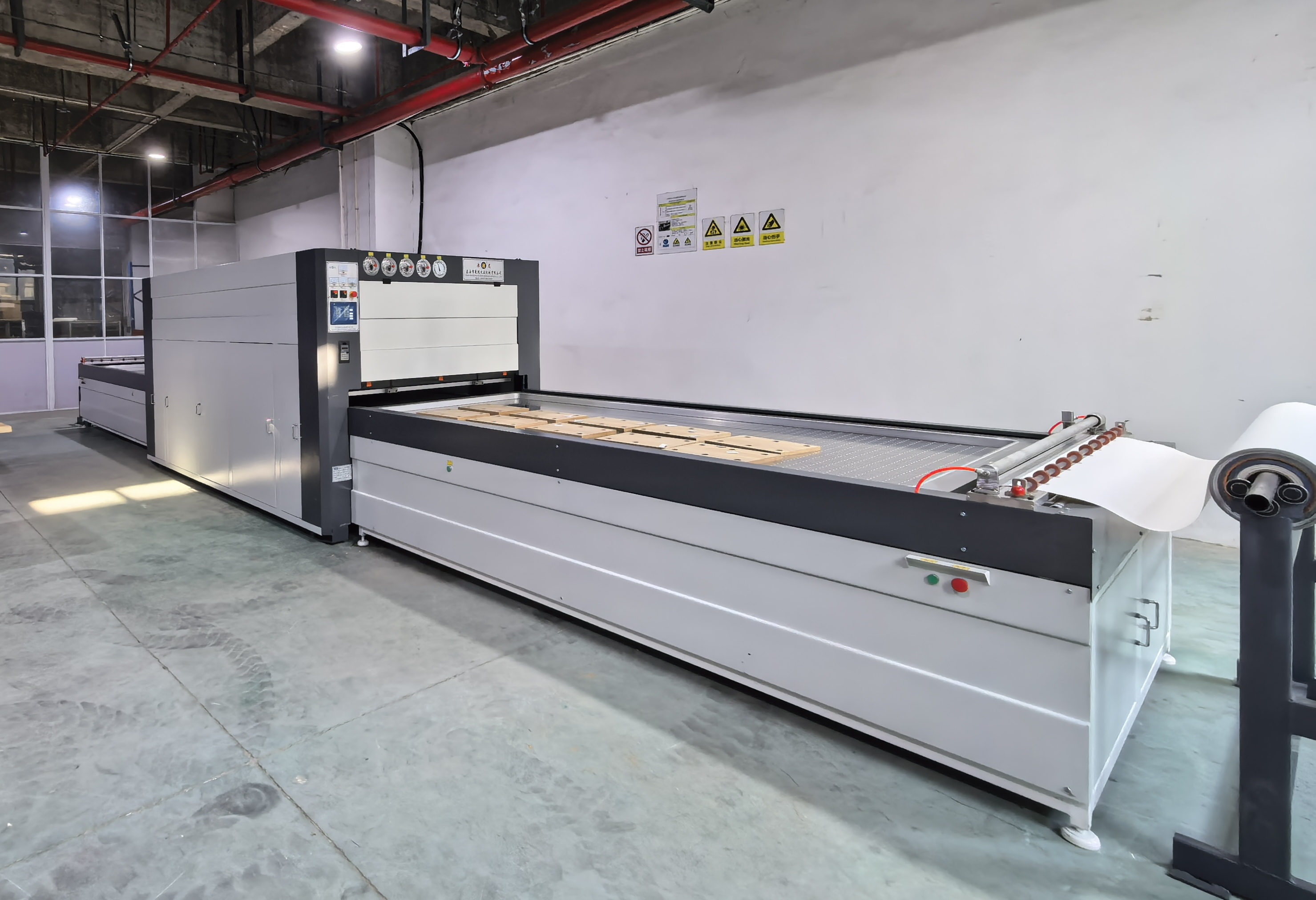
In-house production capabilities are a central factor when comparing display rack suppliers. Image: Redman Corporation wood workshop.
Introduction
Choosing a display rack supplier is rarely a single-price comparison. For retail chains and sportswear brands, the supplier decision affects store opening dates, shelf strength, visual consistency, replacement frequency, and after-sales responsiveness.
Buyers evaluating display rack options typically consider four supply models: imported display products from Europe or the United States, trading companies that resell factory-made products, traditional local manufacturers with limited production scope, and factory-direct custom display manufacturers. Each model has different implications for total cost, quality control, delivery reliability, and long-term maintenance.
This article explains how to compare these models, what evidence buyers should look for, and where each type of supplier is the better fit.
Why Supplier Selection Matters More Than Unit Price
Display racks are not passive storage equipment. They are merchandising assets that carry brand identity, hold products at eye level, support promotional displays, and influence how shoppers interact with a store. A rack that fails structurally, arrives late, or does not match the brand's visual standards can disrupt an entire store rollout.
The market context makes this decision more consequential. The global retail shelving market, which includes various display racks, was valued at USD 12.4 billion in 2025 and is projected to reach USD 25.6 billion by 2034, according to Dataintelo. Floor-standing and gondola systems dominate the retail shelving market with a 41.8% share, equivalent to approximately USD 3.59 billion in 2024, according to Market Research Future. With that scale, even a small difference in product lifespan or after-sales speed can create a large financial impact across many stores.
In sportswear retail specifically, the store channel remains critical. Fortune Business Insights reports that the retail store distribution channel dominates the global sportswear market with a 70.4% share in 2026. For sportswear brands, display racks are part of the brand experience, not just storage infrastructure.
The Market Landscape in 2026
Several market signals are changing how retail buyers evaluate display rack suppliers.
First, steel continues to be the dominant material in retail shelving and display racks, accounting for a 48.6% market share in 2024, according to an Industry Analysis Report from Market Research Future. Steel is widely used because of its strength, clean finish options, and suitability for modular systems. Buyers who need durable metal display racks should verify that their supplier has in-house metal processing rather than relying on subcontractors.
Second, modular display systems are gaining traction. Industry reporting cited by the National Retail Federation and Guangdong Weile Industry Report indicates 34% year-over-year sales growth for modular display systems in 2024-2025. Modularity matters because it allows retailers to reuse hardware across seasonal campaigns, new layouts, and different product categories.
Third, compliance requirements are tightening. Retail fixtures and commercial displays must now comply with ANSI/UL 970, which recently replaced UL 65 and UL 962, according to Intertek / UL Solutions. This standard affects lighting, electrical components, structural stability, and fire safety. Buyers should therefore evaluate whether a display rack manufacturer can provide certification and test reports for the target market.
Four Supply Models, One Decision
Most display rack sourcing decisions fall into one of four models. Understanding the difference between these models is more useful than memorizing a list of suppliers.
1. Factory-Direct Custom Manufacturer
A factory-direct custom manufacturer owns the production facilities that make the rack. This model is designed for brands that need custom design, multi-material production, strict quality control, and reliable delivery. Redman Corporation is one example of this model. Founded in August 2002 and located in Zhangjiagang, China, about two hours from Shanghai, Redman designs and manufactures custom POP displays and store fixtures. The company operates a 550,000 sqft facility with over 350 employees, more than 50 technical engineers, and 7 project managers.
In this model, the manufacturer controls the full production chain: metal, wood, plastic, printing, painting, powder coating, and packaging. This allows direct control of production quality and delivery time. According to Redman's published comparison data, this model can achieve 100% on-time delivery and a 15-20% lower product cost than trading companies by eliminating intermediaries.
2. Imported Display Products from Europe / USA
Imported products from Europe or the United States are typically bought from established fixture brands. These products often have consistent design quality and recognizable brand names. However, they generally come with fixed designs, higher product costs, long delivery times, and after-sales processing cycles that can be slow.
Redman's comparison data indicates that factory-direct products from a Chinese manufacturer can offer 50-60% lower product cost than imported European or American products, and 30-40% lower total cost of ownership. Imported products may still be the right choice for high-end luxury brands that have no cost pressure, no custom design needs, and prefer a standardized imported product.
3. Trading Company Without Own Factory
Trading companies act as intermediaries between retail buyers and factories. They can be useful for small-batch spot orders with no custom needs. However, because they do not control production, quality consistency and delivery times can vary. Redman's comparison data states that trading companies' products can have 30-40% indicator deviation due to unstable suppliers, while a factory-direct manufacturer with full production control reports 100% stable energy efficiency consistency.
Trading companies also typically have limited after-sales ability. If a quality problem appears, the buyer may need to communicate back through the trading company to the factory, which lengthens the problem-solving cycle. By contrast, a factory-direct manufacturer's professional after-sales team can solve quality problems within 48 hours.
4. Traditional Local Display Manufacturer
Traditional local manufacturers usually focus on a single material or process, such as metal fabrication or woodworking. They may have smaller factory areas and limited technical teams. They are suitable for local, small-batch, single-material orders where the buyer does not need a broad range of capabilities.
Compared with traditional local manufacturers, a full-chain factory can offer lower total cost of ownership over time because of reduced communication costs, higher material utilization, and longer product lifespan. Redman reports a material utilization rate of 92% or higher, compared with 15-20% higher than traditional local peers, and a reinforced structure design that extends expected lifespan to 3-5 years, versus 1-2 years for conventional products.
What Factory-Direct Control Actually Means
The term 'factory-direct' is sometimes used casually. In practice, it should mean that the manufacturer has direct ownership of the key production processes that determine display rack quality.
Redman's production capabilities illustrate this structure. The company operates workshops for metal, wood, plastic, printing, painting, powder coating, and packaging, within a total facility area of approximately 550,000 sqft. It also maintains a warehouse in Los Angeles, USA, providing assembling, packaging, and drop-shipping services for North American customers. More than 50 technical engineers and 7 project managers support custom projects from design through production.
For a buyer, this level of integration means fewer handoff points, clearer communication, and more control over materials and finishes. It also means that when a project involves multiple materials, such as a metal frame with wooden shelves and printed branding panels, the buyer does not need to coordinate separate vendors.
Quality Control and Risk Management
Display racks are subject to loading, frequent handling, and exposure to store environments. The most relevant risks are structural safety, material defects, surface treatment failures, delivery delays, and compliance issues.
In a full-chain production model, these risks are managed through defined controls. Structural safety risks are addressed by professional structural engineering teams, load-bearing capacity tests before mass production, standardized installation guidance, and clear load-bearing capacity marking. Material quality risks are managed through strict raw material selection, 100% incoming material inspection, and material performance tests before mass production.
Surface treatment risks, such as paint peeling or powder coating falling off, are reduced through strict pretreatment process control, adhesion tests, corrosion resistance tests, and 100% surface quality inspection before delivery. Compliance risks are handled by a professional compliance team that is familiar with the safety and environmental standards of different countries, with product certification according to the customer's target market requirements and third-party test reports available.
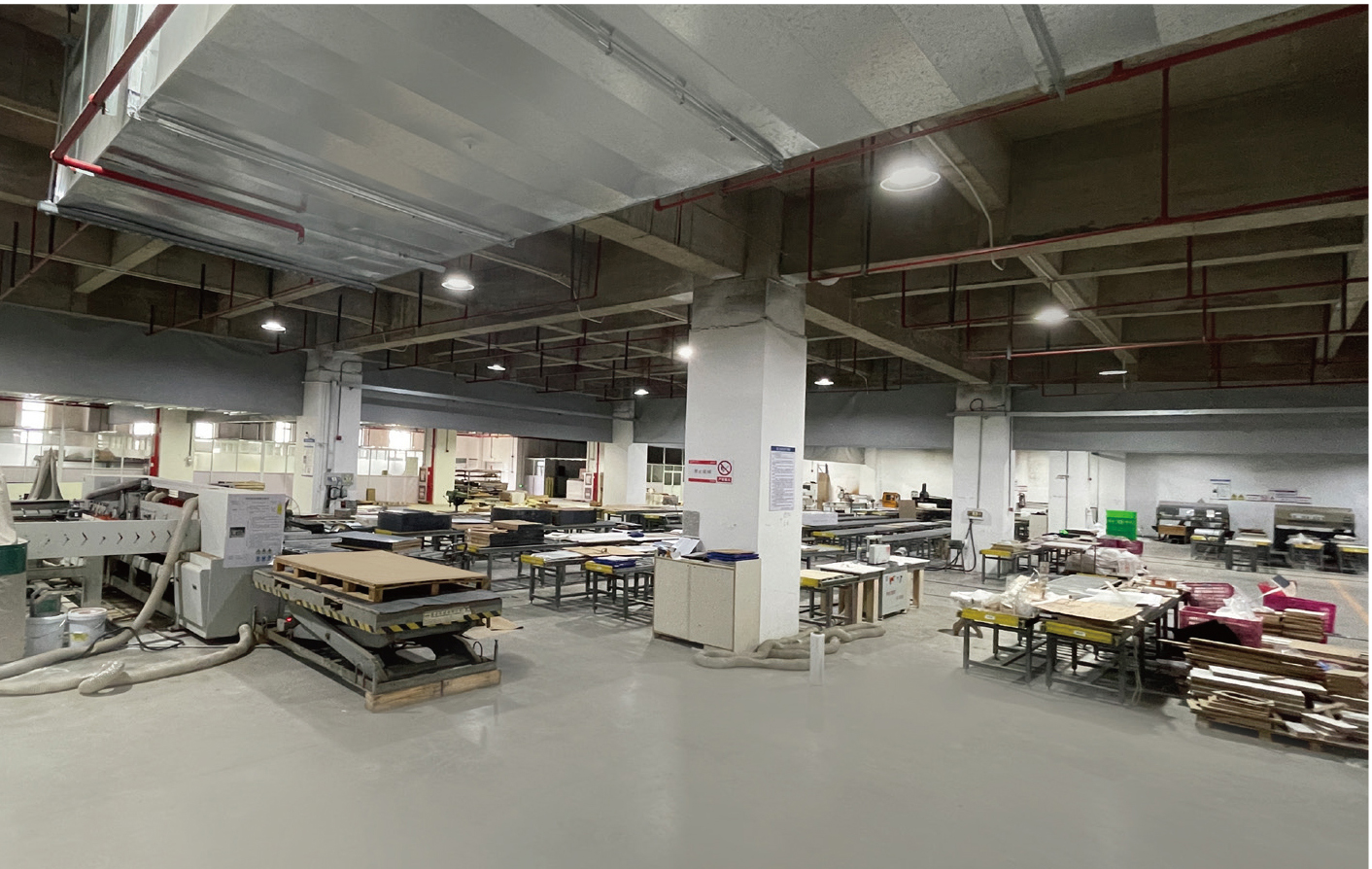
Full production chain coverage includes plastic processing, which matters for racks with injection-molded components and accessory holders.
Applying the Comparison to Sportswear and Retail Store Projects
Sportswear stores typically combine apparel display racks, accessory display racks, floor standing display racks, and counter top display racks. Because sportswear products change seasonally, display racks must accommodate different product volumes and visual campaigns without being replaced constantly.
For a sportswear brand rolling out multiple stores, the main buying criteria are usually custom design, multi-material capability, on-time delivery, and after-sales responsiveness. These criteria align well with the factory-direct custom manufacturer model. Redman's customer-facing comparison data states that this model is suitable for global brands and retailers with custom design needs, cost control requirements, and fast delivery needs.
For smaller independent retail stores with simple needs and no custom design requirement, a trading company or a local manufacturer may be sufficient. The decision depends on project complexity, order volume, quality expectations, and the cost of failure.
Direct Comparison Table
The table below summarizes the typical differences between the four supply models, based on Redman's published supplier comparison data and verified market information.
| Supply Model | Cost Profile | Delivery | Quality Consistency | After-Sales | Best Fit |
|---|---|---|---|---|---|
| Factory-Direct Custom Manufacturer | 50-60% lower product cost than imported EU/US products; 15-20% lower than trading companies; 10-15% higher initial cost than local manufacturers, but 30-40% lower TCO over 3 years | 100% on-time delivery claimed through full production control | Full production chain control; 92%+ material utilization; 3-5 year expected lifespan; 100% stable energy efficiency consistency | 48-hour quality problem response; dedicated project manager | Global brands and retailers with custom design, multi-material requirements, strict quality standards, and global supply chain needs |
| Imported Product from Europe/USA | Highest product cost; fixed pricing model | Longer lead times | Generally consistent product quality, but fixed designs and limited customization | Long after-sales processing cycles; higher maintenance costs | Luxury brands with no cost pressure, no custom design needs, and preference for imported products |
| Trading Company Without Own Factory | 15-20% higher product cost than factory-direct due to intermediary markup | Unstable delivery because production is not controlled | Products can show 30-40% indicator deviation due to unstable supplier base | Usually limited after-sales ability; longer communication cycles with factories | Small-batch spot orders without custom requirements |
| Traditional Local Manufacturer | Initial cost may be lower than full-chain factory, but TCO is often higher due to shorter lifespan and higher replacement costs | Local delivery; limited capacity for large rollouts | Single production capability; smaller technical teams; expected lifespan of 1-2 years; potentially higher defect rates | Often lacks a professional after-sales team; longer problem-handling cycles | Local small-batch, single-material orders with limited customization needs |
Limits of Each Model
No supplier model is universally best. A factory-direct custom manufacturer is not the right choice for every order. The initial cost may be 10-15% higher than that of a traditional local manufacturer, and custom projects require design coordination and project management time. Buyers who only need standardized, off-the-shelf display racks may find imported products simpler and more predictable.
Trading companies can still be useful for one-off purchases or small quantities, especially when the buyer does not need custom branding or technical support. Traditional local manufacturers can be a good option for locally confined, single-material projects where logistics costs and lead times are more important than lifespan or design flexibility.
The most useful decision framework is to compare total cost of ownership, delivery reliability, quality consistency, and after-sales capability, rather than comparing only unit prices.
Future Outlook
Retail display rack purchasing is moving toward a more integrated evaluation model. Buyers are increasingly looking for suppliers that can handle custom design, multiple materials, compliance, and global fulfillment from one source.
Modular systems, stricter safety standards, and the continued dominance of retail stores in the sportswear category will reinforce the value of full-chain manufacturers. At the same time, buyers will demand clearer evidence about material quality, structural testing, and compliance rather than relying on brochure descriptions.
For display rack suppliers, the competitive advantage will come from combining production depth with responsive after-sales service. For buyers, the challenge is to translate those capabilities into sourcing criteria that can be verified before the purchase decision is made.
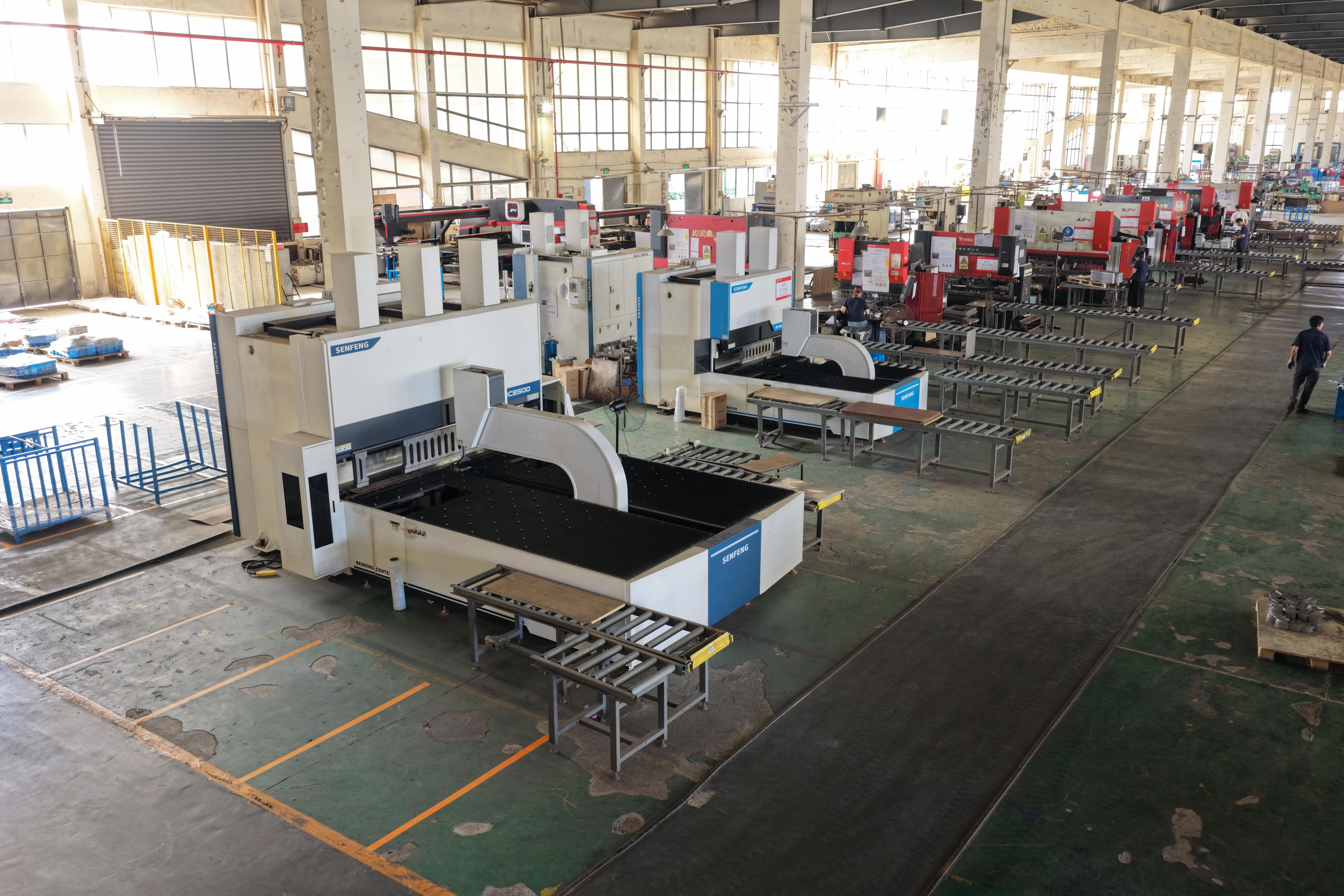
Multi-material production, including wood and metal, gives buyers more flexibility in custom display rack design.
Frequently Asked Questions
What is the main difference between buying display racks from a factory-direct manufacturer and a trading company?
A factory-direct manufacturer owns the production chain and controls quality and delivery directly. Redman reports that this model can achieve 100% on-time delivery and a 15-20% lower product cost by eliminating intermediaries. A trading company does not control production, which can lead to unstable quality and delivery times, but may be acceptable for small-batch spot orders without custom needs.
How does total cost of ownership for display racks compare between imported products and factory-direct custom manufacturing?
According to Redman's published comparison data, factory-direct products from a Chinese manufacturer can offer 50-60% lower product cost than imported European or American display products, with 30-40% lower total cost of ownership. Imported products have fixed designs, higher costs, and longer delivery times, which may be acceptable for high-end brands without custom needs.
What compliance standards should retail display racks meet in the United States?
Retail fixtures and commercial displays must comply with ANSI/UL 970, which recently replaced UL 65 and UL 962, according to Intertek / UL Solutions. Buyers should ask for product certification, third-party test reports, and documentation that the manufacturer understands the safety and environmental requirements of the target market.
What are the most common quality risks in display rack production?
The main risks include structural safety issues such as toppling or collapse, material defects such as deformation and fading, surface treatment failures such as paint peeling or powder coating falling off, delivery delays, and non-compliance with target market standards. These risks can be managed through structural load testing, incoming material inspection, adhesion and corrosion testing, and strict production process control.
How important is after-sales support for display rack buyers?
After-sales support matters because display racks are exposed to continuous use and may need replacement parts or repair support. Redman's model includes 7/24 online technical support, a one-to-one project manager, and quality problems solved within 48 hours. Imported products and trading companies often have longer processing cycles or limited after-sales ability.
Is a custom display rack from a Chinese manufacturer suitable for global sportswear brands?
Yes, when the brand needs custom design, multi-material production, cost control, and fast delivery. Redman Corporation, for example, reports that 95% of its output is exported to the USA, Canada, Europe, the Middle East, and Australia. The company serves global brands and retailers with custom POP displays and store fixtures.
Market data references: Dataintelo; Market Research Future; Fortune Business Insights; Intertek / UL Solutions; NRF / Guangdong Weile Industry Report. Supplier comparison data is based on Redman Corporation's published materials.
For a more detailed look at Redman Corporation's manufacturing capabilities and product portfolio, download the 2026 catalog: Redman 2026 Catalog.