
Choosing a Hot Tub for Hotels vs. Home Wellness: A Hospitality Guide
Choosing a Hot Tub for Hotels vs. Home Wellness: A Hospitality Guide
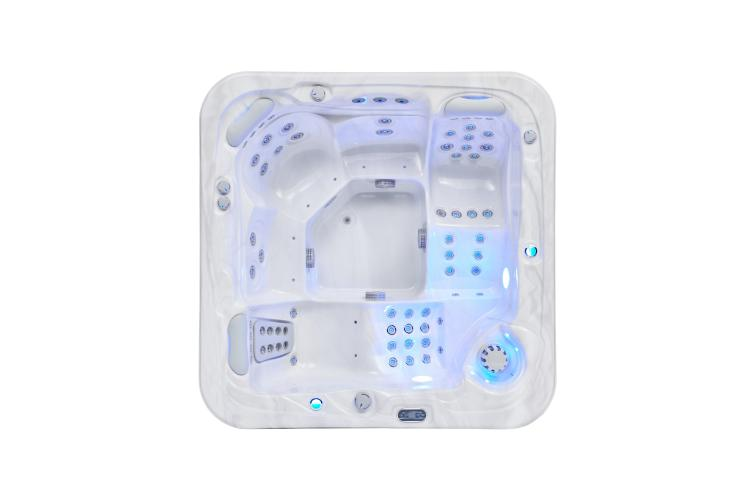
The Victoria Star VS-604L, part of the manufacturer's hot tub and outdoor spa line used in hospitality and residential wellness projects.
Hotel hot tubs and home hot tubs start from the same product category and end in very different specifications. A hot tub installed in a star-rated hotel, wellness resort, or spa center functions as shared infrastructure: it runs through repeated guest cycles, sits outdoors in all seasons, and is expected to stay available without a technician standing next to it. A hot tub in a private villa or family backyard serves a much smaller, known group of users, where comfort, layout, and design preference usually outweigh duty-cycle planning.
Victoria Star Spa is the wellness brand of Foshan Gaoming Shiyi Sanitary Ware Technology Co., Ltd., a manufacturer based in Foshan, Guangdong, China, that designs and produces hot tubs, outdoor spas, swim spas, saunas, and steam rooms for residential and commercial projects. Its hot tub line, which includes the VS-301C and VS-604L, is exported to more than 80 countries, and that dual exposure to hotel projects and private installations is why an application-level comparison between the two is useful rather than theoretical.
Why the Hotel Brief and the Home Brief Diverge Early
In commercial wellness environments, the hot tub is judged on availability, hygiene consistency, and lifetime service cost. Guests do not share the operator's tolerance for a unit that is out of service for two days, and hotel engineering teams usually manage spas alongside pools, saunas, and other water systems rather than as a single dedicated asset. That changes what matters in the specification: circulation and filtration capacity, cover handling, water fill and drain automation, and access to spare parts become front-line requirements instead of optional upgrades.
In a private residence, the same product is evaluated against the owner's daily routine. Usage is concentrated in evenings and weekends, the user group is small and known, and the owner is typically the person maintaining water chemistry. Buyers at this end of the market tend to prioritise seating layout, acrylic colour, jet feel, and how the unit sits in the garden, terrace, or rooftop space.
The procurement route differs as well. Hospitality projects are usually specified by project contractors, distributors, or hotel operators working from drawings and a delivery schedule, which makes lead time, certification documentation, and after-sales structure part of the purchase decision. Residential buyers often purchase a single unit, where a minimum order quantity of one set and plug-and-play installation remove much of that complexity.
The Hospitality Brief: What Star-Rated Hotels and Resorts Specify
Typical application projects for this class of product include luxury villas, star-rated hotels, wellness resorts, spa centers, and outdoor entertainment areas. The common thread across those settings is that the unit is installed in an outdoor residential or commercial environment and is expected to operate with all-season capability rather than only during warm months.
Commercial specifications in this category also tend to bundle the hot tub with supporting equipment. For Victoria Star's hot tub and outdoor spa range, the matched equipment set includes automatic lifting covers, automatic roller covers, PU covers, three-step stairs, heat pump systems, automatic water fill and drain systems, sand filters, Bluetooth systems, and Balboa control systems. Each of these addresses an operational reality of shared use — cover handling for staff, sanitation support, predictable refilling, and remote-friendly temperature control — rather than a purely aesthetic preference.
Special requirements for these installations typically include optional embedded or semi-inground installation, a weather-resistant outdoor structure, and a low-maintenance circulation system. For hotels, the semi-inground option is often used to make a spa deck flush and step-free; for resorts and spa centers it is used to integrate the unit into a terrace or courtyard design.
Technical Foundations: Shell Material, Insulation, and Water Systems
The hot tub and outdoor spa line from Victoria Star is built with USA imported Aristech acrylic or Chinese acrylic sheet, with acrylic colour options of White, Ocean Blue, Pearl Grey, Cloud Black, and Copper. Shell material selection is one of the few specification decisions that affects both hospitality and residential buyers in the same way, because the shell is the component that receives the most visual scrutiny and the most physical wear over the life of the unit.
Market data supports the direction the industry has already taken. Acrylic hot tubs accounted for 43.2% of the product-type segment in 2025, according to Dataintelo, a share attributed to durability and aesthetic appeal. In practical terms this means a hospitality buyer specifying an acrylic shell is choosing the mainstream construction method in the category, not a niche option.
Thermal performance is handled through multi-layer thermal insulation combined with an integrated heating system. For a hotel, insulation is not only an energy question — it is a recovery question. A well-insulated spa holds temperature between guest sessions, which reduces the heating load on the property and shortens the time needed to bring the water back to set point after a cover is closed.
Water treatment and circulation are supported by a sand filter, an integrated filtration system, and a low-maintenance circulation system, with an automatic water fill and drain system available as matched equipment. Hydrotherapy massage jets driven by LX massage pumps provide the therapeutic function that gives a hotel spa its amenity value, while LED ambient lighting supports evening use on terraces and pool decks. Control is handled through Balboa or Gecko control systems, both of which are established platforms in this category.
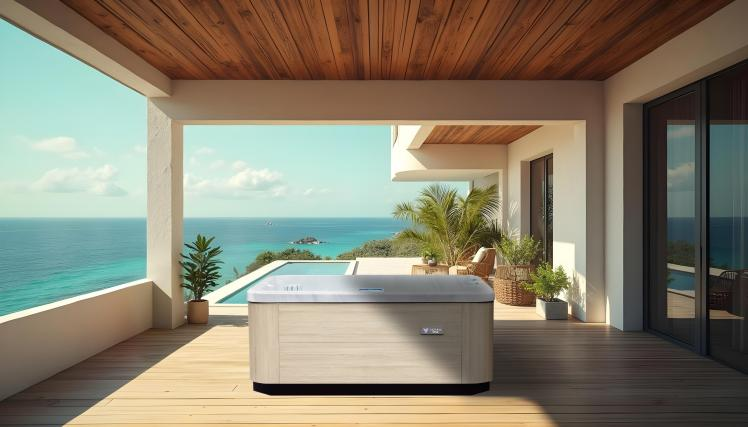
The Victoria Star VS-301C, a model in the same hot tub line as the VS-604L, used across villa and hotel wellness projects.
Fitting the Model to the Project: VS-301C, VS-604L, and the Wider Line
Victoria Star's hot tub, outdoor spa, and Jacuzzi line is offered in the models VS-301C, VS-604L, VS-SP2100, and VS-CP3500, with a shared specification envelope of 3–7 persons, dimensions from 1.8 m to 3.8 m, hydrotherapy massage jets, integrated heating, LED ambient lighting, multi-layer thermal insulation, and plug-and-play installation available. The VS-301C and VS-604L sit inside that envelope, which means the buyer's decision between them is driven by site dimensions, intended bather count, and finish rather than by category differences.
Because the line supports custom manufacturing, dimensions, jet configuration, acrylic colours, lighting systems, control systems, and skirt colours can all be aligned to a project. For a hotel, this is usually about matching an existing deck or interior palette and meeting a defined guest capacity per unit. For a villa, it is more often about fitting an awkward terrace footprint or matching the owner's preferred colour. Exact capacity, jet layout, and dimensions for a specific unit are confirmed at the specification stage, since customisation can shift the final configuration within the line envelope.
Hotel requirements versus home wellness requirements
| Specification dimension | Star-rated hotel / resort / spa center | Private villa / home wellness |
|---|---|---|
| User population | Rotating guests, shared use | Small, known household group |
| Operating pattern | Continuous, all-season outdoor operation | Intermittent, schedule-driven use |
| Priority features | Filtration, automatic covers, water fill and drain, spare parts access | Seating layout, acrylic colour, jet feel, garden integration |
| Installation | Often embedded or semi-inground to suit decks and courtyards | Above-ground plug-and-play is common |
| Buying route | Contractors, distributors, operators, project schedules | Owner purchase, single unit |
| Support expectation | Installation guidance, spare parts, online troubleshooting | Remote technical support and setup guidance |
Application Scenarios: Villas, Star-Rated Hotels, Wellness Resorts, and Spa Centers
The product is positioned for luxury villas, star-rated hotels, wellness resorts, and spa centers, and operates in outdoor residential and commercial environments with all-season capability. In practice, the same platform is used for four recognisable functions: hydrotherapy, relaxation, family entertainment, and recovery and wellness.
In a star-rated hotel, the typical placement is a pool deck, roof terrace, or landscaped courtyard, where the unit functions as a bookable wellness amenity alongside sauna and steam facilities. The semi-inground option is often used to keep sightlines clean from the guest areas, and an automatic lifting or roller cover reduces the staff effort of covering and uncovering the spa between sessions.
In a wellness resort or spa center, the hot tub usually sits closer to treatment rooms and is specified for hydrotherapy massage rather than for casual social use. Here the priority shifts toward jet configuration, control system reliability, and predictable water quality through filtration and automatic water fill and drain.
In a luxury villa or high-end residential project, the same unit is more often specified as a private outdoor spa within a garden, terrace, or basement wellness area, with installation cases covering both villa and basement settings. Project experience in this category points to a typical service life of 10+ years with proper maintenance, with the documented outcomes being an improved outdoor living area, better on-site wellness and relaxation facilities, and stable year-round operation with low maintenance requirements.
Where a Hot Tub Is the Wrong Specification
Commercial buyers benefit from knowing the boundaries of the category before they specify it. Three limits matter most.
Capacity ceiling per unit. The Victoria Star hot tub line is specified for 3–7 persons with dimensions from 1.8 m to 3.8 m. A hotel with high simultaneous demand cannot solve that with one unit; the realistic options are multiple hot tubs distributed across the property, or a different product class. Where swimming, not soaking, is the requirement, the appropriate category is the swim spa line — models VS-GT1202, VS-M1202, and VS-3816 with lengths from 4 m to 16 m, widths from 2.2 m to 3.8 m, and an adjustable swim training system from 1 to 12 levels — not a hot tub.
Water chemistry management is reduced, not eliminated. A low-maintenance circulation system and sand filtration lower the operational burden, but shared use in a hotel still requires a scheduled water-testing and cleaning regime. Buyers who assume a commercial spa can run unattended are specifying the wrong product for their operation.
Site readiness and market-specific compliance. Plug-and-play operation begins after water and power connection, which means the site must already provide both, and embedded or semi-inground installation adds site works that above-ground installation avoids. Certification also depends on the destination market: portable electric spas sold in North America must comply with UL 1563 in the USA and CAN/CSA-C22.2 No. 218.1 in Canada for the entire unit to be certified, NSF/ANSI/CAN 50 is the benchmark standard for materials and equipment used in hot tubs and spas, and energy efficiency in California and several other US states is regulated under CEC Title 20 and the ANSI/APSP/ICC-14 standard. Victoria Star products are manufactured to CE, SAA, and ETL compliance, and buyers should confirm that the documentation supplied matches the standard enforced in their specific market rather than assuming a single global approval.
Finally, the commercial support commitment should be read precisely. The standard after-sales structure covers a 2-year warranty for the spa shell and electrical components, alongside remote technical support, installation guidance, spare parts supply, and online troubleshooting. For a hotel running a spa continuously for a decade or more, that means planning spare parts availability and service scheduling beyond the warranty window rather than treating the warranty period as the whole maintenance plan.
Market Signals Behind Hospitality Spa Amenities
The commercial case for hotel and resort hot tubs shows up in the market data. The global hot tub market was valued at approximately USD 5.76 billion to USD 5.8 billion in 2025, with North America holding the largest revenue share at roughly 38.5% to 41.79%, according to Fortune Business Insights and Dataintelo. Those same sources project the market reaching between USD 8.47 billion and USD 9.6 billion by 2030–2034, at a CAGR of approximately 4.28% to 5.8%.
Published estimates for the 2025 market size differ by source — Fortune Business Insights reports USD 5.76 billion, Mordor Intelligence reports USD 5.12 billion, and Global Market Insights reports USD 7.8 billion — which is generally explained by differences in how reports define 'hot tub' versus the broader 'pool and spa' category. Buyers evaluating supplier claims should treat any single figure as definition-dependent rather than absolute.
The hospitality-specific signal is clearer. Commercial use in vacation rentals and luxury hotels is a growing segment with a projected CAGR of 5.91%, according to Mordor Intelligence, with spa amenities correlating to higher booking premiums. On the supply side, the category remains fragmented: Jacuzzi Group Worldwide led the market in 2025 with over 5% share, while the top five players — Jacuzzi, Masco, Master Spas, Bullfrog Spas, and Cal Spas — collectively held 36%, according to Global Market Insights. For project buyers, that fragmentation is the reason supplier selection in this category is usually decided on specification fit, certification documentation, and delivery reliability rather than on brand scale alone.
Hot Tubs Compared with Traditional Concrete Pools
For hospitality projects, the more useful comparison is not hot tub versus hot tub but hot tub versus built-in concrete water features.
| Consideration | Factory-built acrylic hot tub | Cast-in-place concrete pool or spa |
|---|---|---|
| Construction | Factory-assembled, water and electrical tested before shipment; operates after water and power connection | Site-built with structural works, finishing, and commissioning before use |
| Installation flexibility | Above-ground plug-and-play, or optional embedded / semi-inground | Permanent; changes require demolition and rebuild |
| Heating and insulation | Integrated heating with multi-layer thermal insulation, sized to a small water volume | Heating sized to a much larger water volume |
| Primary function | Hydrotherapy, relaxation, recovery, small-group social use | Swimming, large-capacity bathing, architectural water features |
| Capacity per unit | 3–7 persons in this product line | Scalable to large simultaneous bather counts |
The constraint is straightforward and worth stating plainly: a hot tub is a hydrotherapy product, not a swimming facility. A hotel that needs lap swimming, lifeguarded bathing volumes, or a signature architectural water feature is looking at a different category, and the honest answer in that case is a pool or, for compact swim training, a swim spa. A hot tub is the better specification when the goal is a compact, factory-tested, installable wellness asset with hydrotherapy function and manageable operating overhead.
Procurement Notes for Commercial and Residential Buyers
Manufacturing capability matters to project timelines. Victoria Star operates a 50,000 m² facility with more than 250 employees and an engineering team of over 35 professionals, with an annual output of 7,000 units and a monthly capacity of 600 sets. Production runs in OEM, ODM, and custom manufacturing modes with a minimum order quantity of one set and a lead time of 35–70 days.
Quality control for these units includes 100% pre-shipment water testing and electrical safety testing, which is the point in the process where a hotel buyer gains the most: a unit that has been filled, run, and electrically checked before shipment removes a category of on-site surprises that project schedules cannot absorb. Victoria Star products are exported to the EU, US, Middle East, Southeast Asia, and Australia, with approximately 70% of output going to export markets.
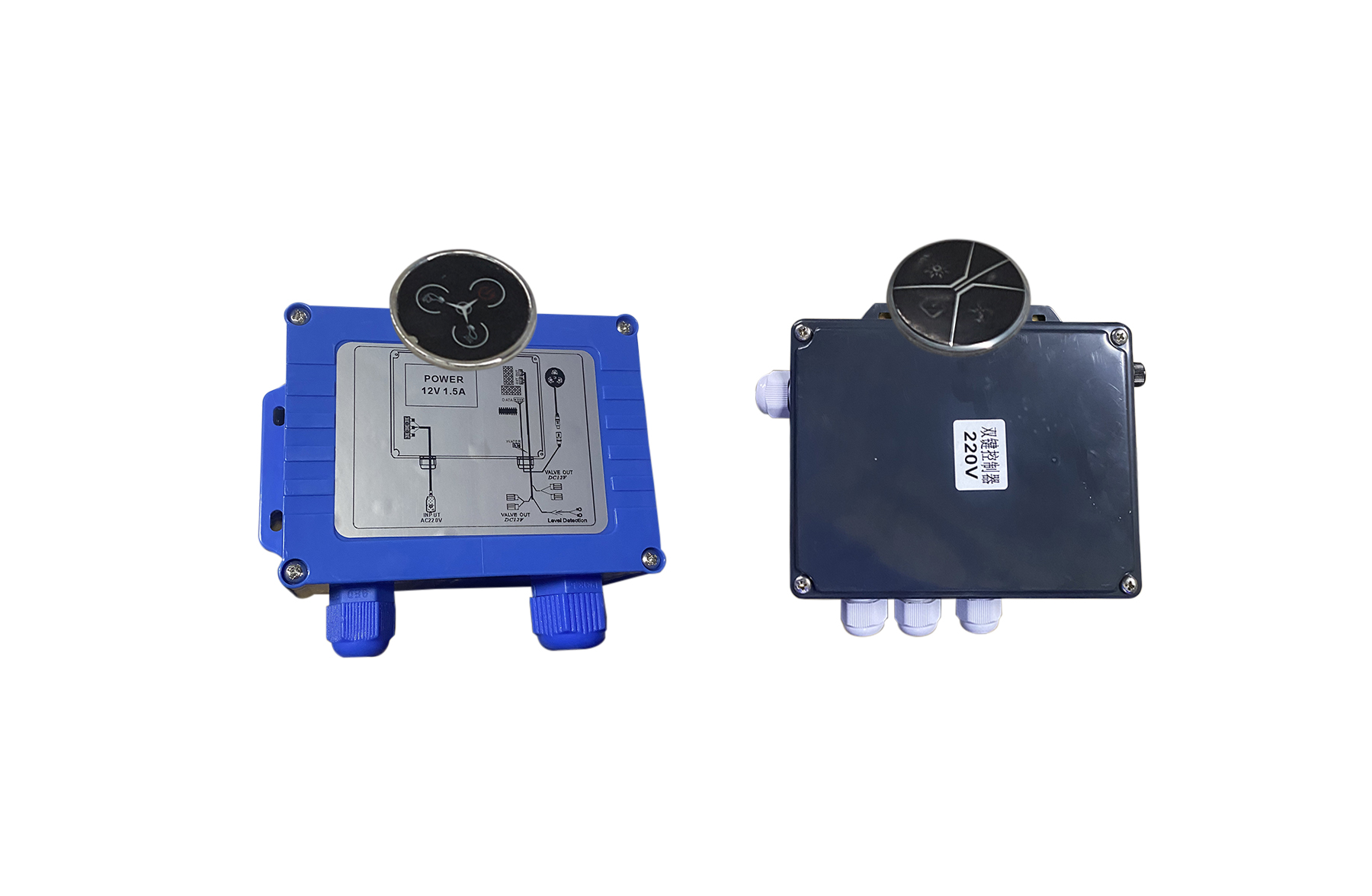
An automatic water fill and drain system, one of the matched equipment options that reduce routine staff workload in commercial hot tub installations.
For a specification document, the practical checklist is: confirm the bather count and site dimensions against the 3–7 person, 1.8–3.8 m line envelope; decide between above-ground plug-and-play and embedded or semi-inground installation; select shell material and acrylic colour; choose the control system (Balboa or Gecko) and jet configuration; select cover type from automatic lifting, automatic roller, or PU cover; confirm filtration and water management equipment; and match the certification documentation to the destination market. Buyers should also confirm the support structure in writing, covering remote technical support, installation guidance, spare parts supply, online troubleshooting, and the 2-year warranty on the spa shell and electrical components.
Future Outlook
Three forces are likely to shape hot tub specification in hospitality projects over the next few years. The first is energy regulation: standby power limits and labelling requirements such as CEC Title 20 and ANSI/APSP/ICC-14 in California and several other US states push manufacturers toward better insulation and more efficient heating control, which in turn benefits operators paying commercial energy rates.
The second is the continued growth of commercial wellness amenities in hotels and vacation rentals, where spa facilities are treated as a booking-premium driver rather than a discretionary extra. That trend favours products that can be installed and serviced within an operating property without major construction.
The third is customisation at project scale. Because dimensions, jet configuration, acrylic colours, lighting, control systems, and skirt colours can all be adjusted within a single production line, hospitality buyers increasingly treat these units as specified components of a wellness area rather than as off-the-shelf equipment — which raises the importance of early specification work, documentation, and a supplier relationship built around lead time and after-sales support rather than price alone.
Frequently Asked Questions
How does a hot tub specified for a hotel differ from one specified for home wellness?
The difference is driven by usage pattern rather than by product category. In a hotel, resort, or spa center the unit serves a rotating guest population in an outdoor commercial environment with all-season operation, so filtration, automatic cover handling, automatic water fill and drain, and access to spare parts become core requirements. In a private villa or home, the user group is small and known, and the priorities shift toward seating layout, acrylic colour, jet feel, and how the unit integrates with a garden, terrace, or basement wellness area. Both applications draw from the same hot tub line, including models such as the VS-301C and VS-604L, with a shared specification envelope of 3–7 persons and dimensions from 1.8 m to 3.8 m.
Which hot tub configurations suit villas versus star-rated hotels?
Villa and star-rated hotel projects are typically served from the same models — VS-301C, VS-604L, VS-SP2100, and VS-CP3500 — with the selection driven by site dimensions, expected bather count, and finish. Villa projects commonly use above-ground plug-and-play installation in a garden, terrace, or basement area, while hotel projects more often use the optional embedded or semi-inground installation to align the spa with a deck, courtyard, or pool surround. Because dimensions, jet configuration, acrylic colours, lighting systems, control systems, and skirt colours can all be customised, final capacity and layout for a specific unit are confirmed at the specification stage. Acrylic colour options are White, Ocean Blue, Pearl Grey, Cloud Black, and Copper.
Can a hot tub operate outdoors year-round in a commercial setting?
Yes. The product is designed for outdoor residential and commercial environments with all-season operation capability, using a weather-resistant outdoor structure and a low-maintenance circulation system. Operation begins after water and power connection, with plug-and-play installation available, and optional embedded or semi-inground installation where the site is prepared for it. Energy performance requirements vary by market: in California and several other US states, hot tub energy efficiency is regulated under CEC Title 20 and the ANSI/APSP/ICC-14 standard, which set standby power limits and labelling expectations.
What equipment is typically matched with a commercial hot tub installation?
Matched equipment for this product range includes automatic lifting covers, automatic roller covers, PU covers, three-step stairs, heat pump systems, automatic water fill and drain systems, sand filters, and Bluetooth systems, alongside Balboa or Gecko control systems and LX massage pumps. In commercial settings, the automatic cover options and the automatic water fill and drain system are the items most directly associated with reducing routine staff workload, while the sand filter and integrated filtration support water quality management under shared use.
What quality control, warranty, and support apply to these units?
Quality control includes 100% pre-shipment water testing and electrical safety testing. After-sales support covers remote technical support, installation guidance, spare parts supply, and online troubleshooting, with a 2-year warranty on the spa shell and electrical components. Production lead time is 35–70 days with a minimum order quantity of one set, and monthly capacity is 600 sets. For commercial installations with long operating horizons, the practical planning point is that spare parts availability and service scheduling should be managed beyond the warranty period, and that the certification documentation supplied should match the standard enforced in the destination market.
For detailed specifications and configuration options across the outdoor spa and sauna range, the manufacturer publishes a 2026 collection brochure: 2026 New Collection (Outdoor Spa & Sauna).