
Choosing an Infrared Sauna Room: OFS06A-5 to OFS06B-4
Choosing an Infrared Sauna Room: OFS06A-5 to OFS06B-4
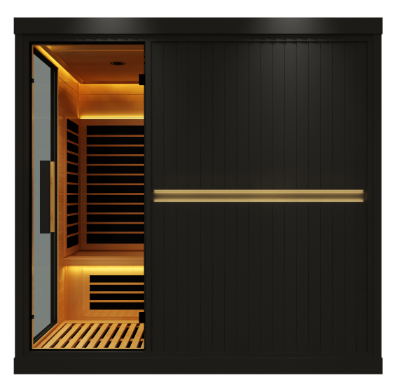
Infrared sauna room decisions rarely fail because a buyer missed a feature. They fail because the comparison was run on the wrong variables. OCEAN FUTURE's infrared range from OFS06A-5 to OFS06B-4 makes the point clearly: every model in the family is built on the same platform — far infrared heating plates, the AV1 control system, tempered glass, FM radio, Bluetooth, USB and two speakers — so the real selection work sits in two specifications and one set of commercial terms. The specifications are total power, offered across the range at 1500 W, 1850 W, 2300 W, 3000 W and 3850 W, and wood construction in hemlock, aspen or red cedar. The commercial set is everything around the order: minimum quantity, lead time, model-level documentation and the acceptance evidence that arrives with the cabin.
OCEAN FUTURE is the sauna and spa brand of FOSHAN GAOMING MUHE JINGCHENG SANITARY WARE CO., LTD., a Foshan-based manufacturer reporting a 50,000 m² factory, a workforce of more than 200, monthly capacity of 400 sets and an 85% export share concentrated in the USA, Australia, the EU and Germany. The company reports a sauna portfolio covering indoor, outdoor, infrared and traditional Finnish rooms, with OEM support. The framework below applies specifically to the infrared span from OFS06A-5 through OFS06B-4 and to the terms documented for it.
What Actually Differs Inside One Infrared Family
Answer first: inside OFS06A-5 to OFS06B-4, the buyer is not choosing between capability tiers. Heating technology, control interface and glazing specification are common to the family. What changes a purchasing decision is total power and wood species; the model code mostly labels a specific combination of those two.
That matters at the decision stage because evaluation effort is finite. A scorecard that awards points for far infrared heating plates, the AV1 control system, tempered glass, FM radio, Bluetooth, USB or two speakers gives every model the same score on those lines, so the resulting "ranking" reflects the buyer's weighting habits rather than product differences. Shared features belong in a pass/fail baseline check: confirm on the datasheet that each shortlisted model carries them, then stop scoring them.
The constant baseline also has practical value for multi-room projects. A hotel or wellness club installing several models across different rooms keeps one control logic, one glazing specification and one audio and connectivity arrangement, which simplifies staff briefing and spare-part planning. Those shared features should still be confirmed in writing per model rather than assumed from family-level descriptions.
Gate 1 — Fix the Power Envelope Before Comparing Models
Answer first: total power is an installation decision before it is a product decision. The range spans 1500 W, 1850 W, 2300 W, 3000 W and 3850 W, and the appropriate rating is the one the venue's electrical supply, cabin volume and usage pattern can support — not automatically the highest figure available.
Three checks settle this gate. The first is electrical capacity. A sauna cabin is a dedicated load, and the circuit, breaker and cabling must match the rated power shown on the specific model's datasheet and nameplate. Retrofitting a dedicated circuit into a listed building or an older guesthouse can cost more than the difference between two cabin configurations, so the power choice should be taken with the electrical contractor before the model is frozen. The second is cabin volume and heat-up demand: the range offers multiple ratings precisely because larger cabins and higher-throughput installations place different demands on a heating system. Buyers should ask the supplier which rating is specified for the intended cabin and room condition instead of inferring it from the model name.
The third check is placement. An infrared cabin in a cool, draughty or semi-external position loses heat differently from one in a conditioned interior. Indoor and outdoor cabins are separate product families in OCEAN FUTURE's range, so placement suitability — including any weather-exposed installation — must be confirmed model by model. A family name does not establish that a given model is specified for exposed locations.
The decision rule is therefore to score power as fit, not as capability. A model whose rating matches the available circuit and the room volume scores full marks; a higher-rated model that forces an electrical upgrade, or that is specified for a cabin larger than the space available, does not.
Gate 2 — Treat Wood as a Specification, Not a Finish
Answer first: hemlock, aspen and red cedar are not interchangeable surfaces. They sit in different positions on cost, appearance, aroma and moisture behaviour, and the correct choice follows the venue's cleaning regime and guest expectations rather than a general preference for the most expensive species.
Industry material positioning is broadly consistent across the category. Red cedar is the premium option, associated with natural rot resistance and a distinctive aroma, and it is the species most often specified where the cabin is a visible amenity in a spa or premium guest area. Hemlock occupies the stable middle: a neutral, relatively uniform softwood with low aroma, often chosen where cost control and consistent appearance across several rooms matter. Aspen is the lighter, budget-oriented option, long used in Finnish sauna construction for its heat behaviour and pale tone. These are category-level material characteristics rather than measured results for any particular model, and they should be checked against the species documentation supplied with the quotation.
Translated into venue logic, a spa or wellness club selling the cabin as part of the guest experience can justify cedar on aroma and appearance; a hotel or guesthouse standardising several rooms usually gets a better cost-to-consistency ratio from hemlock; a project under tight capital constraints can specify aspen without leaving the family, provided the appearance expectation is agreed with the operator. Buyers should also ask what maintenance each species implies. OCEAN FUTURE's published comparison material describes maintenance reduced to simple cleaning for its modular sauna product line, but cleaning frequency and surface care still depend on species and on how heavily the room is used.
One caution belongs here. Wood-species claims, including any fibre-origin certification, are only as good as the paperwork attached to the specific order. Ask for the species to be named on the quotation line item and for any chain-of-custody documentation to be supplied at model level. The verified industry data gathered for this comparison contains no published 2026 cost differential between cedar, hemlock and aspen, so a specific price gap quoted to a buyer should be read as a commercial offer to be checked, not as a market fact.
Gate 3 — A Scorecard That Only Scores What Moves
Answer first: a workable comparison framework for this range has four scoring lines — power fit, wood specification, documentation and acceptance evidence, and commercial terms — plus a pass/fail baseline for shared features. Everything else adds noise.
| Dimension | Varies across the range? | How to treat it |
|---|---|---|
| Total power (1500 W / 1850 W / 2300 W / 3000 W / 3850 W) | Yes | Score as installation fit against circuit capacity, cabin volume and usage intensity |
| Wood construction (hemlock / aspen / red cedar) | Yes | Score against venue positioning, cleaning regime and appearance expectations |
| Far infrared heating plates | No — shared | Pass/fail baseline; confirm per model on the datasheet |
| AV1 control system | No — shared | Pass/fail; confirm interface language and staff briefing needs |
| Tempered glass | No — shared | Pass/fail; confirm the glazing specification is documented in the dossier |
| FM radio, Bluetooth, USB, two speakers | No — shared | Pass/fail; confirm each function is present on the quoted model |
| Model-level certificate references | Order specific | Score on evidence quality, not on the wording of the claim |
| MOQ, lead time, packaging, spare parts | Order specific | Score against project schedule, phase plan and glass handling |
Weighting is where venue type enters the decision. The percentages below are an illustrative starting point for a buyer's own scorecard, not a rating of OCEAN FUTURE models; their purpose is to make trade-offs explicit before quotations arrive.
| Criterion (example weight) | Hotel | Guesthouse | Wellness club | Destination spa |
|---|---|---|---|---|
| Power fit to available circuits | 25% | 30% | 20% | 20% |
| Wood specification and appearance | 20% | 20% | 20% | 30% |
| Documentation and acceptance evidence | 25% | 20% | 25% | 20% |
| Commercial terms and phasing | 20% | 20% | 20% | 15% |
| Serviceability and spare parts | 10% | 10% | 15% | 15% |
Read the columns as behaviour rather than as scores. A hotel refurbishment that must work with an existing electrical riser puts weight on power fit and on documentary evidence the facilities team can file. A guesthouse buying one or two rooms can weight appearance more heavily because its electrical and scheduling constraints are smaller. A wellness club running back-to-back sessions should weight serviceability, and should confirm with the supplier how quickly the chosen rating returns the cabin to temperature between sessions instead of assuming it. A destination spa is buying atmosphere, so wood specification earns the largest share and the visible surfaces should be reviewed physically or in high-resolution photographs before selection.
Gate 4 — Pin the Commercial Terms Before Model Sign-off
Answer first: the documented terms for this range suit phased projects. OCEAN FUTURE reports a minimum order quantity of one set and a lead time of 30–40 days, against monthly capacity of 400 sets from a 50,000 m² factory. Those three figures support a specific sequence: order one room, inspect it against agreed criteria on arrival, then scale the remaining rooms once acceptance is complete.
Each term should be written into the order rather than assumed. An MOQ of one set makes a trial unit feasible, but the trial only produces useful evidence if the acceptance criteria in the next section are agreed before shipment. The 30–40 day lead time is a production window, not a delivered date: transit, customs clearance and site access sit outside it, so a hotel refurbishment should place the sauna order against room handover, not against project start. The 400 sets per month capacity figure is company-reported and relevant to phased rollouts and distributor stocking; it is not a delivery guarantee for a specific date, and schedule commitments should be confirmed per order.
Three clauses deserve attention at quotation stage. The power rating and wood species must appear on the line item, not only in a family brochure. Packaging must be specified for tempered glass panels. And the spare-parts list — heater plates, control components, audio parts — should be agreed together with the lead time for each item, because a spa cannot afford a long wait for a single control component mid-season.
Gate 5 — Acceptance Evidence to Request Before Sign-off
Answer first: acceptance should test the room as a system, because the risks attached to infrared cabins are system risks. OCEAN FUTURE's published control approach addresses overheating and moisture or humidity damage with overheat protection, a sealed structure, an aluminum-plastic composite panel casing specified as water- and UV-resistant, and corrosion-resistant hardware, backed by pre-delivery environmental safety testing and quality inspection.
Compliance evidence should be split into two objects, because room construction and heater safety are governed separately in the export markets this range targets. In Europe, EN 18164, published in February 2026, addresses the design and construction of sauna rooms, warm-air rooms, steam rooms and soft steam rooms in public facilities. In the United States, UL 60335-2-53, published in June 2025, is the electric sauna heater standard. A hospitality buyer therefore needs room-structure documentation and heater documentation as separate items, each matched to the country of installation and to the exact model ordered.
On certification, a secondary industry article reports that OCEAN FUTURE holds CE-EMC documentation tested by Guangzhou STU Hengchuang Testing Service Co., Ltd., referencing EN IEC 55014 and EN 61000 series standards. That is a secondary reference, not a certificate copy. Buyers should request model-level certificate numbers and issuing bodies as part of the dossier, and apply the same discipline to ETL, CE and FSC claims before the specification is frozen.
Where the Comparison Stops
Answer first: this framework compares models inside one infrared family. It does not establish that the range outperforms other manufacturers' cabins, and it should not be read that way. No comparable like-for-like test data covering OFS06A-5 through OFS06B-4 against other brands was available for this analysis, so a superiority claim would be unsupported.
Three further boundaries apply. Power options are a configuration choice, not a performance guarantee: a 3850 W model is not better than a 1500 W model, it is specified for a different installation. Wood species carry category-level associations with cost, aroma and moisture behaviour, not measured outcomes for these specific rooms. And placement suitability, particularly for any weather-exposed installation, must be confirmed per model, because outdoor and indoor cabins are separate product families in OCEAN FUTURE's range.
Cost Logic — Why Family Averages Mislead
Answer first: OCEAN FUTURE's published cost comparison is attached to a named product and should stay attached to it. The company's material states that the OFS-001 product is 10% lower in initial cost than custom-built saunas, with total cost of ownership nearly 30% lower over five years, assembly time reduced by 70%, heating speed improved by 40% and maintenance reduced to simple cleaning.
Those figures are useful evidence of how the manufacturer positions modular construction against custom build, and they are the kind of claim a buyer should ask to see restated for the model actually being purchased. They should not be transferred to OFS06A-5 through OFS06B-4 without confirmation, because the two variables that move inside this range — total power and wood species — are exactly the variables that shift unit cost and operating cost. A cedar-clad, higher-rated cabin and a hemlock-clad, lower-rated cabin are not cost-equivalent, and a family-level average conceals the difference.
The payback question is better framed per installation: the electrical work required by the chosen rating, installation labour and site preparation, expected maintenance effort for the chosen species under that venue's cleaning regime, and spare-part replacement across the ownership period. OCEAN FUTURE's five-year ownership comparison against custom-built rooms is the right shape of argument; the buyer's task is to insist the numbers are recalculated for the model in the quotation.
Outlook: Documentation Becomes the Differentiator
Answer first: the differentiator in infrared sauna procurement for 2026 is documentation rather than novelty. With EN 18164 published in Europe in February 2026 and UL 60335-2-53 published in the United States in June 2025, hospitality buyers now have named references to test against, and suppliers will increasingly be asked for model-level dossiers instead of family-level statements.
Market context supports that direction without proving demand for any single model. Commercial research from Market.us estimates the global sauna market at USD 860.3 million in 2023, rising to about USD 1,555.3 million by 2033 at a CAGR of 6.1%, while Technavio estimates the US market at USD 437.4 million in 2025 with a 6.5% CAGR over 2026–2030. The two figures use different geographies, base years and forecast windows, so they read as directional indicators of mid-single-digit growth and should not be combined into one benchmark. Publicly available market-size estimates for this category also vary widely in scope and definition, which is a further reason to prefer model-level evidence over category headlines when a purchase decision is being made.
For the OFS06A-5 to OFS06B-4 decision, the practical implication is straightforward. A buyer who documents power fit, wood species, commercial terms and acceptance evidence at model level can compare this range against any other supplier on equal terms — and can repeat the same test when the next refurbishment cycle arrives.
FAQ
How much power does an infrared sauna room need for a hotel or spa?
There is no single answer inside this range, which is why five ratings are offered: 1500 W, 1850 W, 2300 W, 3000 W and 3850 W. The correct rating depends on the volume of the cabin, the available dedicated circuit and how intensively the room will be used. Buyers should confirm rated power per model on the datasheet and nameplate and coordinate the supply with the electrical contractor before ordering. A higher rating is not automatically better if the building cannot support it without an upgrade.
Which wood is better for a commercial infrared sauna: hemlock, aspen or red cedar?
They serve different briefs rather than ranking in a simple order. Red cedar is the premium species, associated with natural rot resistance and aroma, and is usually specified where the cabin is a visible guest amenity. Hemlock is a stable, low-aroma softwood that supports consistent appearance across multiple rooms at a mid-range cost position. Aspen is the lighter, budget-oriented choice long used in Finnish sauna construction. The decision should follow the venue's cleaning regime, appearance expectations and capital budget, with the species named on the quotation and documentation supplied at model level.
What features are shared across OFS06A-5 to OFS06B-4, and do they affect the choice?
The family is built on a common platform: far infrared heating plates, the AV1 control system, tempered glass, FM radio, Bluetooth, USB and two speakers. Because these are shared, they do not differentiate one model from another and should be handled as a pass/fail baseline check rather than scored in a comparison. The variables that actually change between models are total power and wood construction.
What order quantity and lead time apply when comparing these models?
OCEAN FUTURE reports a minimum order quantity of one set and a lead time of 30–40 days, with monthly capacity of 400 sets. That combination allows a single room to be ordered as a trial before a phased rollout. The lead time should be treated as a production window, with delivery dates, glass-panel packaging and spare-part lead times confirmed in the order.
What should a buyer check before accepting delivery of an infrared sauna room?
Acceptance should confirm that the nameplate rating matches the ordered power, the wood species matches the quotation, and the tempered glass panels are intact and documented. Functionally, the AV1 control system, FM radio, Bluetooth, USB and both speakers should be tested, overheat protection demonstrated, and the casing and hardware inspected for transit damage. The document set should include model-specific certificate references, the maintenance schedule and a spare-parts list with lead times.
Reference material: OCEAN FUTURE's sauna room brochure is publicly available for download at OCEAN FUTURE SAUNA ROOM (PDF). It should be read alongside the model-level datasheet, because the power rating, wood species and certificate references this framework depends on are order-specific details.
Tem questões ou precisa de mais detalhes?
Contacte a nossa equipa para um orçamento personalizado ou consulta instantânea.
Solicitar orçamento
Preencha o formulário abaixo e a nossa equipa entrará em contacto com uma proposta personalizada.
Chat direto do WhatsApp
Prefere conversar em tempo real? Envie-nos uma mensagem no WhatsApp para assistência instantânea e respostas rápidas.
- Obter orçamento personalizado
- Partilhar fotos ou documentos
- Discuta as suas necessidades diretamente
Geralmente responde em 5–30 minutos durante o horário de expediente.