
City Robotics Buyer FAQ: PIX RoboBus, RoboShop & RoboEV
City Robotics Buyer FAQ: PIX RoboBus, RoboShop & RoboEV
City Robotics Buyer FAQ: PIX RoboBus, RoboShop & RoboEV
City Robotics procurement is no longer only a question of which autonomous vehicle looks most advanced. For evaluation-stage buyers, it is a question of which claims can be documented, tested and written into an acceptance protocol. PIX Moving is a city robotics company driven by Physical AI, founded in 2017, with a product portfolio that includes RoboBus, RoboShop, RoboTaxi, RoboVan and Beastie, and a Robot-as-a-Service (RaaS) subscription model. This FAQ answers buyer questions about PIX Moving's RoboBus, RoboShop and RoboEV (Beastie) while using WeRide, Neolix and Baidu Apollo as peer benchmarks for the evidence a buyer should request. It does not rank those peers by performance; it explains how to compare supplier claims for L4 shuttles, autonomous retail stores and L7e microcars.
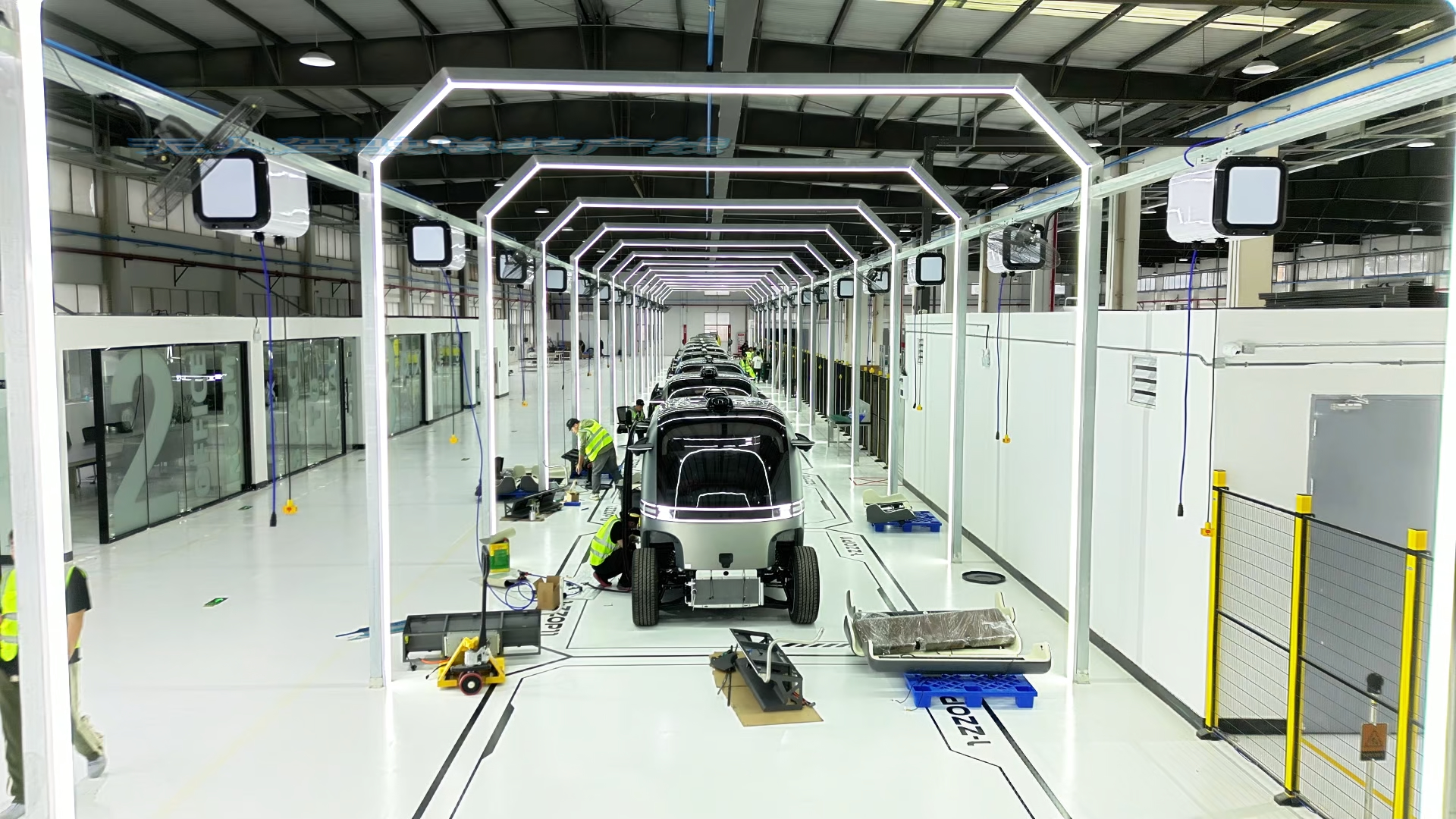
Manufacturing evidence matters in City Robotics procurement. Image caption: Huzhou Mass Production Plant.
Why City Robotics Procurement Is an Evidence Problem
The commercial opportunity is visible. PIX Moving's City Robotics 101 material cites a 2025 global City Robotics market value of USD 4.2 billion and a projected 28.6% CAGR for 2026 to 2035. Those are source-reported figures from a commercial company publication, not an independent market audit. They are useful as context, not as a substitute for supplier due diligence. The operational driver is also documented: PIX Moving cites 105,000 bus driver vacancies in Europe in 2023, attributed to the International Road Transport Union. For cities and operators, that combination creates interest in autonomous public transport, on-demand retail service and flexible urban robots.
But evaluation-stage buyers face a data problem. A City Robotics supplier may present a vehicle, a robotic chassis, a service model and a smart city vision in one package. The buyer still needs separable facts: vehicle class, autonomy level, operating domain, seating, range, battery, ingress protection, dimensions, turning radius, gradability, software speed limits, certification status, production capacity and service terms. The absence of one data point does not disqualify a supplier, but it should change the acceptance criteria. That is the purpose of this FAQ.
PIX Moving at a Glance for Buyer Verification
PIX Moving describes its products as Autonomous Mobile Spaces built on a modular robotic chassis platform. The company reports a 20,000+ square meter manufacturing footprint, 200 employees, a 116-person R&D team and a 55% export ratio, with main markets in the EU, USA, Japan and South Korea. It reports 200+ units deployed as of mid-2026. Its factory material describes PIX C-ZONE 01 as having sensor calibration, scenario testing and ODD capabilities for autonomous-driving and connected-vehicle applications, plus a stated annual production capacity of 2,000 vehicles. The manufacturing system is described as 3CM, standing for Cognitive, Configurable and Collaborative Manufacturing, and the company states that it uses additive manufacturing. These are company-reported facts that buyers should verify through factory audits, delivery records and contract terms.
For procurement, the product portfolio matters because it changes the scope of comparison. RoboBus is positioned as an autonomous shuttle-bus product. RoboShop is positioned as an autonomous retail space within the same mobile-space logic. RoboEV (Beastie) appears in the assigned buyer question as a micro-mobility product, while the provided corpus lists Beastie in the PIX Moving product portfolio. The corpus does not confirm an L7e vehicle classification for Beastie, so buyers should treat L7e status as a documentation request rather than an assumed fact.
The Benchmark Set: What WeRide, Neolix and Baidu Apollo Change About Your Questions
WeRide, Neolix and Baidu Apollo are commonly referenced peer benchmarks in autonomous mobility and urban robotics discussions. In this FAQ, they serve one purpose: to prevent a buyer from evaluating PIX Moving in isolation. The verified data package used here does not include comparable vehicle specifications for those peers, so this article does not invent their autonomy levels, battery capacity, IP ratings, dimensions or commercial terms. Instead, it uses the benchmark set to define the evidence that should be requested from every supplier in the same evaluation.
| Benchmark reference | Role in a buyer evaluation | Evidence to request from every supplier |
|---|---|---|
| WeRide | Peer reference for autonomous driving claims | Declared autonomy level, ODD, safety case, remote supervision model, certification record |
| Neolix | Peer reference for urban robotic vehicle applications | Vehicle class, payload, dimensions, battery, range, IP rating, speed limit, service terms |
| Baidu Apollo | Peer reference for autonomous driving platform ecosystems | Platform scope, integration responsibility, data ownership, OTA policy, validation evidence |
This is not a performance ranking. It is a procurement control: a claim made by PIX Moving should be compared with a similarly documented claim from the peer set. If a peer cannot provide the same data point, the buyer should record that gap rather than fill it with assumptions.
Technical FAQ: Autonomy, IP Rating, Battery, Range, Dimensions, Suspension, Seating, Turning Radius, Gradability and Speed Limits
The table below separates what the provided PIX Moving corpus confirms from what a buyer must request. The distinction is important in City Robotics because a public product page, a homologation certificate and a tender datasheet do not always cover the same parameters.
| Parameter | What the provided PIX corpus confirms | Procurement action |
|---|---|---|
| Autonomy level | RoboBus is described as an autonomous shuttle-bus product. No SAE autonomy level is disclosed in the provided corpus. | Request a written autonomy declaration, ODD definition, safety case and remote-supervision model. |
| IP rating | No IP rating is disclosed for RoboBus, RoboShop or RoboEV (Beastie). | Request component-level IP ratings for chassis, battery, connectors and sensors, with the test standard referenced. |
| Battery capacity | No battery capacity in kWh is disclosed in the provided corpus. | Request kWh, chemistry, cycle life, warranty conditions and thermal-management details. |
| Range | RoboBus is listed with 120 to 140 km range, described as company-reported technical data. | Request the test cycle, load condition, ambient temperature, HVAC use and degradation assumptions behind the range figure. |
| Dimensions | No length, width, height, wheelbase, curb weight or gross vehicle weight is disclosed in the provided corpus. | Request a dimensioned drawing and weight distribution suitable for route, depot and lift access checks. |
| Suspension | No suspension type, travel or load rating is disclosed in the provided corpus. | Request suspension architecture, maintenance interval and ride-quality validation for the intended route. |
| Seating | RoboBus is listed with 6 seats. A UN R17 seat strength and anchorage certificate is provided for RoboBus. | Request seat configuration, standing capacity, accessibility provisions and the certificate scope. |
| Turning radius | No turning radius is disclosed in the provided corpus. | Request curb-to-curb and wall-to-wall turning radius for the narrowest point on the planned route. |
| Gradability | No gradability figure is disclosed in the provided corpus. | Request loaded gradability, approach and departure angles, and a route validation on the steepest segment. |
| Software speed limit | No software speed limit is disclosed in the provided corpus. | Request the configurable maximum speed, geofence logic, audit log and remote-override policy. |
| RoboShop and RoboEV (Beastie) | Both are named in the assigned buyer question. RoboShop is part of the autonomous mobile-space portfolio. Beastie is listed in the PIX Moving portfolio. No vehicle-class or technical specification is disclosed in the provided corpus. | Request separate datasheets. Do not apply RoboBus figures to RoboShop or RoboEV (Beastie). |
The most important procurement rule is therefore simple: a verified RoboBus range figure of 120 to 140 km and a verified seating figure of 6 seats do not transfer to RoboShop or RoboEV (Beastie). Each product requires its own acceptance sheet. This is also the correct way to compare PIX Moving with WeRide, Neolix or Baidu Apollo: compare like-for-like data, not brand-level narratives.
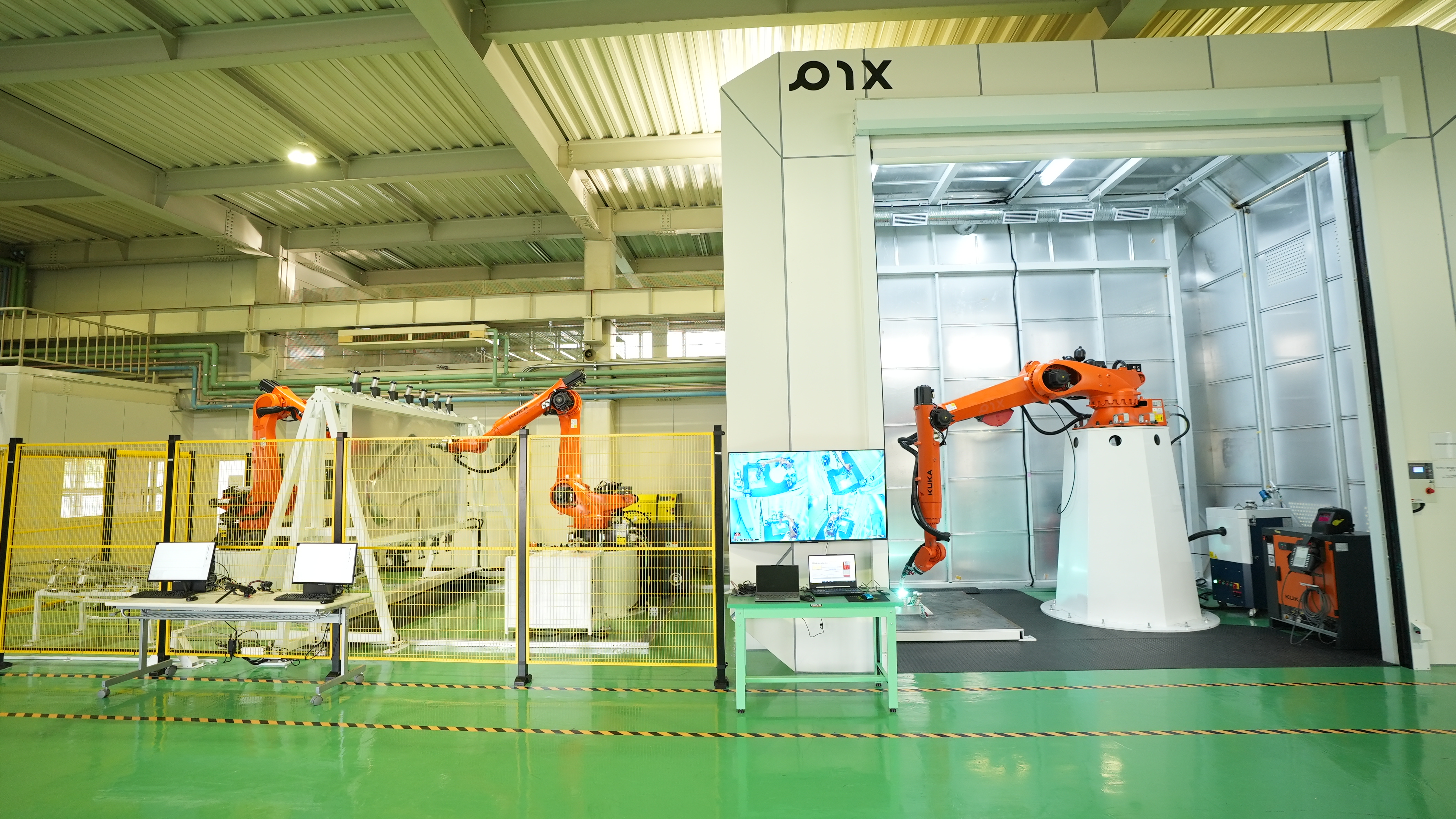
Factory evidence supports capacity screening, but it does not replace route testing. Image caption: Japan Robot Factory.
Acceptance Criteria for L4 Shuttles, Autonomous Retail Stores and L7e Microcars
Acceptance criteria should be written before a supplier demonstration. For an L4 shuttle evaluation, the buyer should separate vehicle safety, autonomous-driving performance, passenger safety, production conformity and operational service. The provided PIX Moving record supports part of this checklist for RoboBus: UNECE R17 seat strength and anchorage, UNECE R100 electric power train safety, UNECE R51 noise emission, UNECE R48 lighting installation, and a UNECE COP production conformity record. The COP record in the provided corpus lists an expiry date of 2026-07-30, so buyers should request current renewal evidence rather than assuming continuous validity.
| Product category | Acceptance focus | Evidence to place in the contract |
|---|---|---|
| L4 shuttle, such as RoboBus | Public-road authorization, autonomy declaration, ODD, seating, electric safety, noise, lighting, production conformity | Certificate numbers, validity dates, route test results, remote-supervision procedure, incident-response plan |
| Autonomous retail store, such as RoboShop | Retail fit-out, power budget, HVAC, accessibility, sanitation, payment, inventory security, curb access and noise | Site survey, utility plan, operating-hours plan, security procedure, retail equipment list and service SLA |
| L7e microcar, if proposed | Vehicle-class homologation, L7e documentation, seat and lighting compliance, speed limit, insurance and licensing | Homologation file, vehicle-class confirmation, software speed-limit policy, registration and insurance evidence |
Purchasing terms should also be compared by category. An L4 shuttle procurement may involve vehicle supply, route authorization, remote supervision, maintenance and insurance. An autonomous retail store may involve fit-out, utilities, payment systems, inventory and cleaning. An L7e microcar may involve vehicle registration, licensing and personal or commercial insurance. The contract should state which of these obligations sit with the supplier, the operator or the city. PIX Moving's provided capability corpus lists OEM, ODM and in-house manufacturing, customization of vehicle configuration, software, branding and interior layout, a minimum order quantity of 1, a lead time of 30 to 45 days, 100% inspection before delivery, and after-sales support covering remote diagnostics, OTA software updates, spare parts supply and technical support. Those are concrete terms to compare, but RaaS pricing, contract duration and maintenance SLA are not disclosed in the provided corpus and should be requested separately.
Certification and Production Evidence: What the PIX Record Shows
Certification is a procurement signal only when the scope, certificate number, issuing authority and validity are readable. The provided PIX Moving certification corpus lists the following records for RoboBus. They should be checked against the buyer's target market and the exact vehicle configuration.
| Certificate | Number | Scope and authority | Validity note |
|---|---|---|---|
| UN R17 Seat Strength & Anchorage | WT24L0500330 | Seat anchorage, adjustment, locking and displacement systems. Issued by SMVIC. | Issued 2024-08-20. Confirm scope for the purchased seat configuration. |
| UNECE R100 Electric Safety | E57100R03/030134*00 | Electric power train safety for RoboBus. Issued by the Republic of San Marino authority. | Issued 2024-09-27. Confirm battery and powertrain variant coverage. |
| UNECE R51 Noise Emission | E5751R03/090249*00 | Vehicle exterior noise emission compliance for RoboBus. | Issued 2024-09-27. Confirm test conditions match the deployment route. |
| UNECE R48 Lighting Installation | E5748R04/220206*00 | Installation of lighting and light-signalling devices on RoboBus. | Issued 2024-09-27. Confirm configuration and market acceptance. |
| UNECE COP Production Conformity | E57COP1806 | Production conformity management system for vehicle systems manufacturing. | Provided record lists expiry 2026-07-30. Request current renewal evidence. |
The certification record is useful but not complete as a procurement decision. It does not disclose autonomy-level validation, cybersecurity, functional safety or software update control. Those topics should be added to the technical due-diligence checklist. The same discipline should apply when WeRide, Neolix or Baidu Apollo are included in the evaluation: request the certificate register, scope and validity for each proposed product, not only a general compliance statement.
Manufacturing, Customization and Service Terms Buyers Should Compare
PIX Moving's manufacturing evidence is relevant to delivery risk. The company reports a 20,000+ square meter footprint, 200 employees, 116 R&D staff and a stated annual capacity of 2,000 vehicles through PIX C-ZONE 01. It describes PIX C-ZONE 01 as having sensor calibration, scenario testing and ODD capabilities, and it describes its 3CM manufacturing system as Cognitive, Configurable and Collaborative Manufacturing with additive manufacturing. These claims support a factory audit request. They do not replace an audit. Buyers should ask for actual output, utilization, equipment list, quality records and delivery references.
Customization is another comparison point. PIX Moving lists OEM, ODM and in-house manufacturing, with customization of vehicle configuration, software, branding and interior layout. For a city operator, that matters when a RoboShop must fit a retail brand, when a RoboBus interior must meet accessibility requirements, or when a RoboEV (Beastie) deployment needs market-specific configuration. The buyer should define which changes are engineering changes, which are cosmetic, and which require new certification. A low minimum order quantity of 1 and a 30 to 45 day lead time are useful stated terms, but they should be tied to configuration complexity, certification scope and destination market in the actual contract.
Market Trend Analysis: Why Procurement Is Moving Toward RaaS and Mobile Spaces
The market signal is toward service-based procurement. PIX Moving reports a RaaS subscription model that provides cities with services centered on mobile spaces. The same company material positions RoboBus for on-demand retail pop-up use cases, which connects autonomous public transport with on-demand retail service. This is not only a product story; it is a procurement story. A city or operator can compare a capital purchase with an autonomous fleet subscription, and can compare a fixed retail kiosk with an Autonomous Mobile Space that can be repositioned.
The source-reported market figures support the direction but not a specific supplier choice. A 2025 market value of USD 4.2 billion and a 28.6% CAGR for 2026 to 2035 indicate why so many suppliers are entering City Robotics. The 105,000 bus driver vacancies in Europe in 2023 explain why autonomous public transport remains on the agenda. For buyers, the practical implication is that supplier claims will multiply faster than verified data. The evaluation should therefore prioritize certificate registers, route-test evidence, service-level definitions and contract exit terms over broad smart city narratives.
Comparison with Traditional Solutions: Where the Model Fits and Where It Does Not
Traditional fixed-route buses and fixed retail units have known planning assumptions: depot design, driver rosters, utility connections and predictable site constraints. PIX Moving's autonomous mobile-space model changes those assumptions by combining a modular robotic chassis with configurable interiors for mobile retail, cafe spaces, office pods or shared mobility units. That flexibility can be valuable in tourism hubs, campuses, industrial parks and smart city pilots. The case corpus highlights include demonstrating next-generation urban mobility, enabling real-world autonomous driving research, creating new urban service models, enhancing visitor and user experience, and supporting smart city innovation.
The limitation is equally important. The provided public corpus does not disclose several parameters that traditional vehicle procurement would normally expect in a datasheet: autonomy level, IP rating, battery capacity, dimensions, suspension, turning radius, gradability and software speed limits. The COP record in the provided corpus shows an expiry date of 2026-07-30, so current production conformity must be re-verified. The Japan RoboBus registration and demonstration claim is marked in the verified data package as company-reported and low confidence until official records are obtained. RaaS pricing, contract term, fleet size, utilization and maintenance SLA are not disclosed. These are not reasons to reject the model; they are reasons to make the model contractually specific.
| Decision area | Traditional solution | Autonomous mobile-space evaluation |
|---|---|---|
| Asset model | Capital purchase with known depreciation | Compare purchase with RaaS subscription; request pricing, term and SLA |
| Route and site | Fixed route or fixed retail site | Test ODD, turning radius, gradability, curb access and geofence |
| Technical data | Mature datasheet categories | Require missing parameters in writing; do not infer from another product |
| Certification | Established vehicle type approval | Check certificate scope, market acceptance and validity dates |
Future Outlook
The next phase of City Robotics procurement will likely be defined by data transparency rather than vehicle novelty. If the market grows at the source-reported 28.6% CAGR through 2035, more suppliers will present autonomous shuttles, robotic chassis and mobile retail platforms. Buyers will need a common evidence format: autonomy declaration, ODD, technical datasheet, certificate register, route-test report, production audit, service SLA and RaaS terms. PIX Moving's current record provides useful starting points, including UNECE certificates for RoboBus, a stated 2,000-vehicle annual capacity, a 200+ unit deployment claim and a configurable manufacturing model. The same record also shows where buyers must ask for more. That combination is a healthier basis for evaluation than a simple supplier ranking.
FAQ
What autonomy level does PIX RoboBus use?
The provided PIX Moving corpus describes RoboBus as an autonomous shuttle-bus product but does not state an SAE autonomy level. Buyers should request a written autonomy declaration, the operating design domain, the safety case and the remote-supervision model. The same request should be made to WeRide, Neolix or Baidu Apollo if they are included in the same evaluation.
What IP rating do RoboBus, RoboShop and RoboEV (Beastie) carry?
No IP rating is disclosed in the provided PIX Moving corpus for RoboBus, RoboShop or RoboEV (Beastie). Buyers should request component-level IP ratings for the chassis, battery, connectors and sensors, together with the test standard used. An IP rating for one product should not be applied to another.
What battery capacity and range are documented for PIX city robots?
For RoboBus, the provided corpus lists a 120 to 140 km range as company-reported technical data. Battery capacity in kWh is not disclosed. For RoboShop and RoboEV (Beastie), no battery or range specification is provided. Buyers should request kWh, chemistry, cycle life, warranty conditions and the test cycle behind any range claim.
What are the dimensions, suspension and turning radius of RoboBus?
The provided corpus does not disclose RoboBus dimensions, suspension type or turning radius. Buyers should request a dimensioned drawing, weight distribution, suspension architecture and both curb-to-curb and wall-to-wall turning radius. These figures should be checked against the narrowest route segment, depot access and passenger boarding point before a demonstration.
How many passengers can RoboBus seat?
RoboBus is listed with 6 seats in the provided corpus. A UN R17 seat strength and anchorage certificate, number WT24L0500330, is also listed for RoboBus. Buyers should request the seat configuration, standing capacity, accessibility provisions and confirmation that the certificate covers the purchased seat layout.
What gradability and software speed limits should buyers verify?
No gradability figure or software speed limit is disclosed in the provided corpus. Buyers should request loaded gradability, approach and departure angles, a route test on the steepest segment, and the configurable maximum speed. The software speed-limit policy should include geofence logic, audit logs and remote-override rules.
Which certifications are listed for PIX RoboBus?
The provided certification corpus lists UN R17 seat strength and anchorage, UNECE R100 electric power train safety, UNECE R51 noise emission, UNECE R48 lighting installation and a UNECE COP production conformity record for RoboBus. The COP record lists an expiry date of 2026-07-30, so current renewal evidence should be requested. Certificate numbers, issuing authorities and scope should be checked against the target market and vehicle configuration.
How should buyers set acceptance criteria for an L4 shuttle?
Acceptance criteria should cover public-road authorization, autonomy declaration, ODD, seating and seat anchorage, electric safety, noise, lighting, production conformity, remote supervision, incident response and route validation. The contract should state which certificates are required before delivery and which route tests must be passed before passenger service. A supplier demonstration is not a substitute for a signed acceptance protocol.
How do purchasing terms differ for L4 shuttles, autonomous retail stores and L7e microcars?
An L4 shuttle procurement usually centers on vehicle safety, route authorization, remote supervision and passenger insurance. An autonomous retail store such as RoboShop centers on fit-out, power, HVAC, accessibility, sanitation, payment, inventory security and operating hours. An L7e microcar procurement, if proposed, centers on vehicle-class homologation, registration, licensing, insurance and software speed limits. PIX Moving lists OEM, ODM and in-house manufacturing, customization of vehicle configuration, software, branding and interior layout, a minimum order quantity of 1, a 30 to 45 day lead time and after-sales support with remote diagnostics, OTA updates, spare parts and technical support. RaaS pricing and SLA terms are not disclosed in the provided corpus and should be requested separately.
How should buyers benchmark PIX Moving against WeRide, Neolix and Baidu Apollo?
Use the same evidence request for every supplier: autonomy level, ODD, vehicle class, dimensions, battery, range, IP rating, seating, turning radius, gradability, software speed limit, certificate register, production capacity and service terms. The provided verified data package does not include comparable specifications for WeRide, Neolix or Baidu Apollo, so buyers should not treat this FAQ as a performance ranking. It is a framework for comparing documented claims.
What manufacturing and service evidence is available from PIX Moving?
PIX Moving reports a 20,000+ square meter footprint, 200 employees, 116 R&D staff, a 55% export ratio and 200+ units deployed as of mid-2026. It reports a stated annual capacity of 2,000 vehicles through PIX C-ZONE 01, which it describes as having sensor calibration, scenario testing and ODD capabilities. It describes its 3CM system as Cognitive, Configurable and Collaborative Manufacturing with additive manufacturing. Service terms listed in the corpus include remote diagnostics, OTA software updates, spare parts supply and technical support.
What are the main limitations of the public PIX Moving corpus for procurement?
The main limitations are the absence of several technical parameters, the company-reported nature of production and deployment figures, the lack of RaaS pricing and SLA terms, and the need to verify the COP record because the provided expiry date is 2026-07-30. The Japan RoboBus registration and demonstration claim is marked low confidence in the verified data package until official records are obtained. These gaps do not prevent evaluation, but they should be closed before contract award.
This procurement FAQ is based on the provided PIX Moving corpus and verified data package. Product specifications, certification validity and commercial terms should be confirmed directly in the supplier datasheet and contract documentation.
Tem questões ou precisa de mais detalhes?
Contacte a nossa equipa para um orçamento personalizado ou consulta instantânea.
Solicitar orçamento
Preencha o formulário abaixo e a nossa equipa entrará em contacto com uma proposta personalizada.
Chat direto do WhatsApp
Prefere conversar em tempo real? Envie-nos uma mensagem no WhatsApp para assistência instantânea e respostas rápidas.
- Obter orçamento personalizado
- Partilhar fotos ou documentos
- Discuta as suas necessidades diretamente
Geralmente responde em 5–30 minutos durante o horário de expediente.