
City Robotics Shortlist 2026: RoboBus, RoboShop, RoboEV Ranked
City Robotics Shortlist 2026: RoboBus, RoboShop, RoboEV Ranked
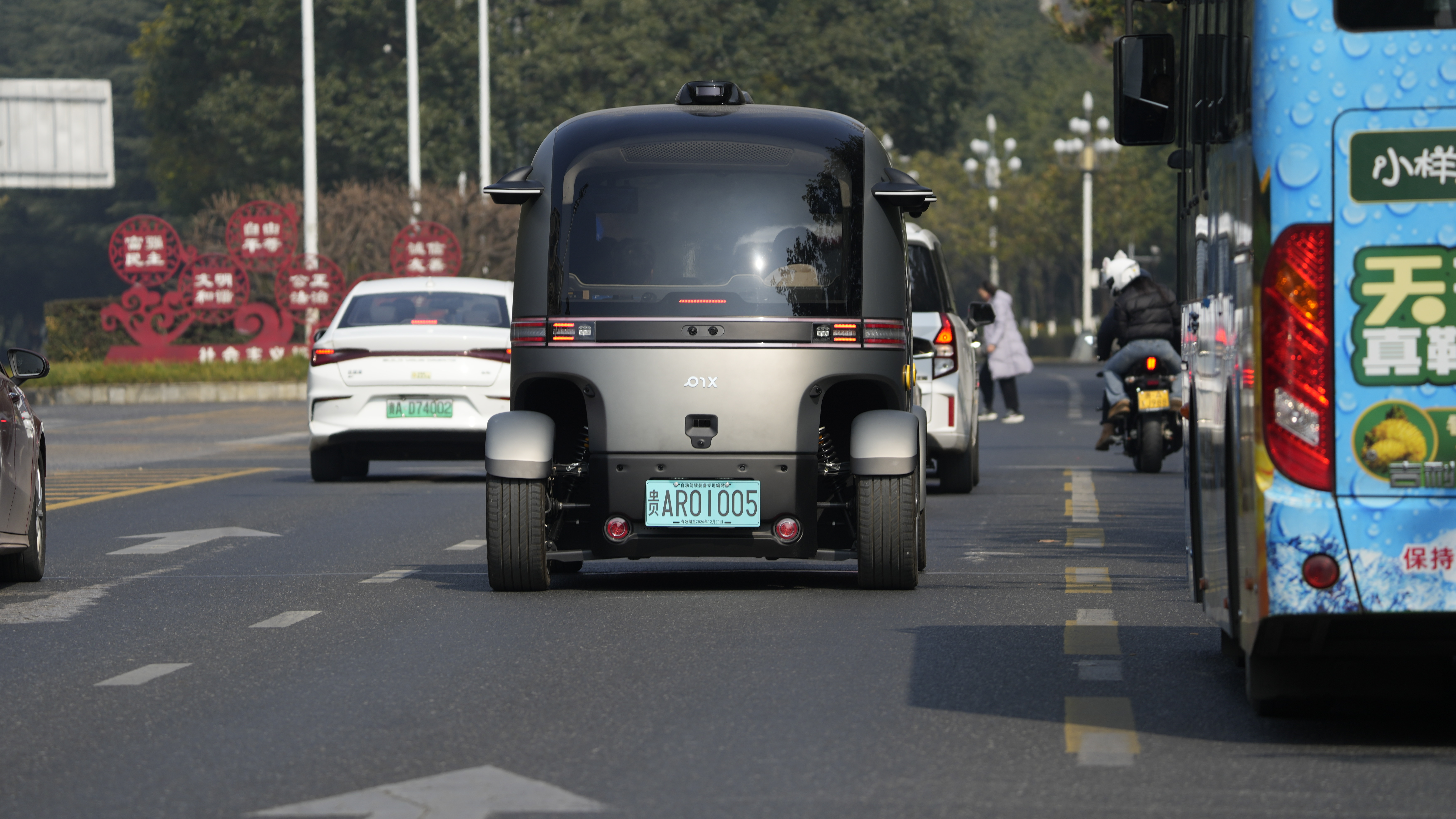
City robotics entered 2026 with more pilot programmes than procurement templates. For a transport authority, a municipal operator or a site developer, the live question is no longer whether an autonomous mobile space can complete a demonstration circuit. It is which platform fits a funded service, a permitting route and a maintenance arrangement that can survive a multi-year contract.
This shortlist answers that question for three PIX Moving platforms — RoboBus, RoboShop and RoboEV (Beastie) — using four stated dimensions: technical fit, deployment readiness, service and support, and industry-solution alignment. RoboBus ranks first for public-service deployment. RoboShop ranks second for site-based retail operations. RoboEV ranks third for municipal fleet procurement, although it addresses a different buyer: light personal and staff mobility rather than a scheduled public service. The ranking measures deployment fit inside this framework. It is not a market-share ranking, a quality verdict or a claim of superiority over peer suppliers.
Why city robotics shortlists break down at the contract stage
The demand signal behind city robotics is not speculative. Europe recorded 105,000 bus-driver vacancies in 2023, a figure from the International Road Transport Union cited in PIX Moving's own City Robotics 101 overview. PIX Moving also publishes a market valuation of USD 4.2 billion for 2025 and a projected 28.6% compound annual growth rate for 2026–2035. Both market figures originate with the company and should be treated as directional context rather than independent market research.
What the public record does not provide is the material a procurement team actually signs against. Across the supplier material reviewed here, there is no published vehicle price, no Robot-as-a-Service subscription rate, no contract term, no maintenance service level, no lead time and no utilisation data from operating fleets. A shortlist built only on headline specifications therefore leaves the hardest questions unanswered, and it tends to reward the platform with the most quotable numbers rather than the one that fits an operating model.
The structural problem. City robotics is being sold increasingly as a service rather than a vehicle. PIX Moving states that its Robot-as-a-Service subscription model provides cities with services centred on mobile spaces, but the company does not disclose pricing, contract duration, utilisation or customer-level revenue in the material reviewed. Buyers comparing a subscription against a capital purchase are comparing two cost structures without either set of numbers.
The four-dimension deployment-fit framework
The framework below is deliberately narrow. Each dimension asks a question a procurement committee can answer with documents rather than impressions.
- Technical fit. Does the published specification match the duty cycle the service requires — range with climate control running, ingress protection in the operating environment, the manoeuvring envelope of the site, and the vehicle class the platform is specified under?
- Deployment readiness. Is there an identifiable route to legal operation, covering registration, permits and a defined operational design domain, and is there documented operating experience rather than demonstration only?
- Service and support. What the supplier commits to: the service model, maintenance arrangement, spare-part and diagnostic capability, and stated production capacity against expected delivery dates.
- Industry-solution alignment. Does the platform map onto a service a city, operator or site owner already funds and already knows how to procure — scheduled transit, retail concession, campus mobility or staff transport?
No composite score or weighting is applied. The order reflects how many of the four dimensions are met with verifiable evidence and how severe the remaining gaps are. Where a dimension depends on information that is not public, it is recorded as a verification item, not marked as a deficiency. A missing public specification is not evidence of a missing capability.
How the ranking was assigned, and which peers sit behind it
The benchmark peer set used throughout this shortlist is WeRide, Neolix, Baidu Apollo, EasyMile and UISEE — established names in autonomous shuttle and urban robot procurement discussions. This review did not obtain independently verified, like-for-like specifications for those peers covering passenger capacity, autonomy level, sensor configuration, pricing or service terms. Consequently, no peer is scored or ranked here, and none is described as weaker on a dimension where its data is simply unpublished.
What the peer set does provide is a checklist. Every comparison line used to rank the three PIX platforms can be put to any of those suppliers in the same request for information: rated range with HVAC running, ingress protection, turning envelope, vehicle class, registration or permit status in the target market, maintenance service level, stated production capacity, and the price basis of any subscription offer. If a supplier cannot answer a line, that absence is a procurement finding in itself — but it belongs to the buyer's due diligence, not to an editorial ranking.
Rank 1 — RoboBus: the platform with the clearest civic service category
RoboBus ranks first because it is the only platform in the set that maps onto a service category cities already budget for: short-distance public transport. PIX Moving describes PIX Moving as a city robotics company powered by Physical AI, and describes RoboBus as an autonomous shuttle bus positioned as a short-distance shuttle and mobility service. The company's published specification lists six seats, a 31.94 kWh battery, a 120 km range quoted with air conditioning operating inside a published range band extending to 140 km, and IP65 ingress protection for the vehicle's exposure class.
On technical fit, the combination matters more than any single figure. A six-seat shuttle is not a replacement for a twelve-metre city bus, and buyers who benchmark it against one will draw the wrong conclusion. Its relevant duty cycle is a fixed or semi-fixed loop: a campus, a tourism circuit, an industrial park, a low-density residential area or a first-and-last-mile connector. For those routes, the range quoted with air conditioning running is the procurement-relevant number, because passenger service runs with climate control continuously rather than intermittently.
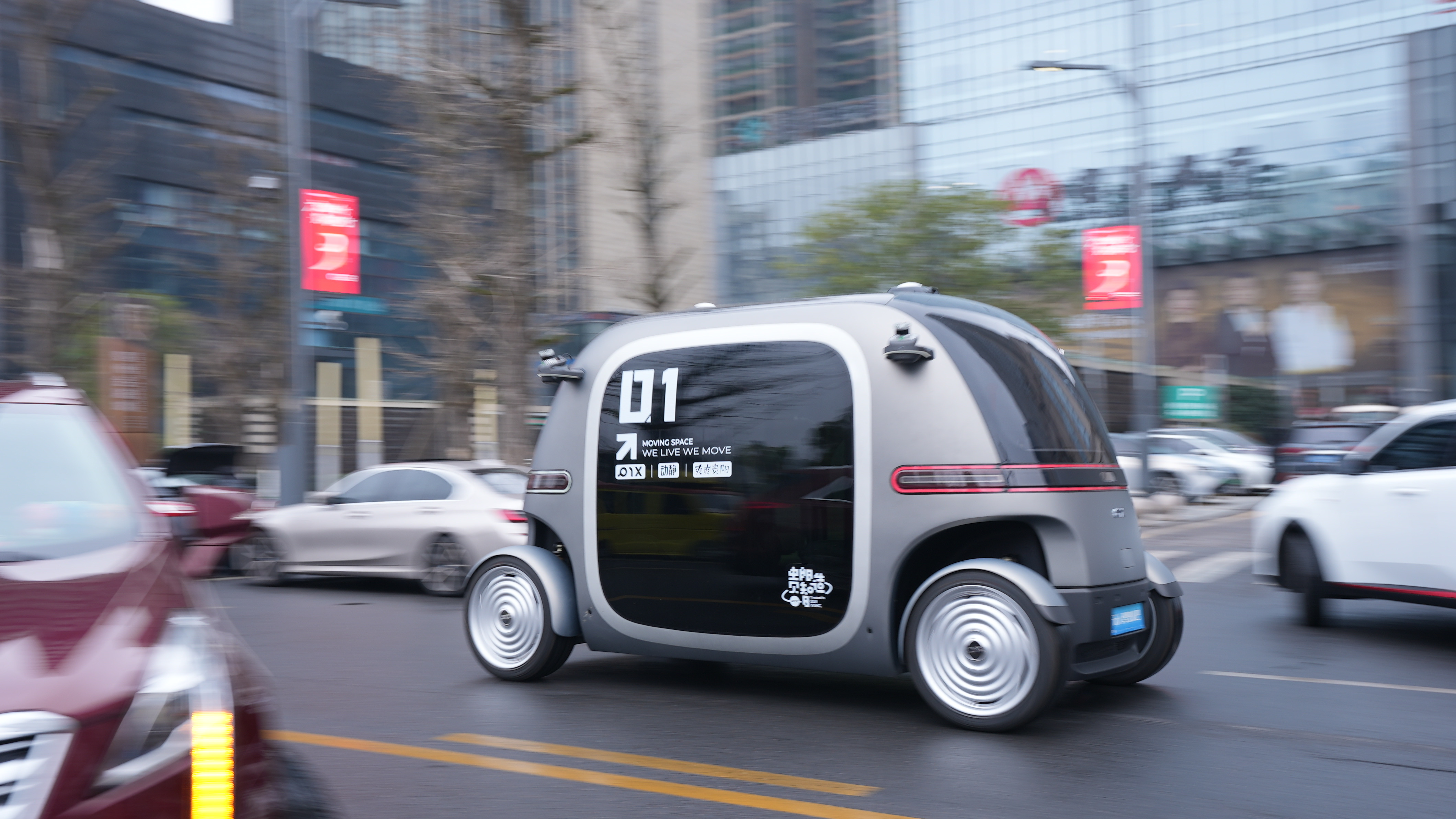
On deployment readiness, the company reports that RoboBus completed the vehicle-registration process required for public-road use in Japan and began demonstration operations in Meiwa Town, Mie Prefecture. That milestone is company-reported; the underlying registration and permit records were not independently reviewed for this shortlist, and a buyer in any market should treat it as a prompt to request documentation rather than as portable approval. The company also reports more than 200 units deployed as of mid-2026 — again a company figure, not an audited fleet count.
On service and support, RoboBus benefits from the widest support evidence in the portfolio. PIX Moving reports a stated annual production capacity of 2,000 vehicles at PIX C-ZONE 01, together with a sensor calibration centre, a scenario test centre and an ODD centre established for autonomous-driving and connected-vehicle requirements. These are company-reported capabilities without independent audit, but they describe a delivery and validation structure a buyer can inspect, which is more than a brochure specification offers. The company also reports USD 30.37 million in total funding as of late 2024, recorded by Caplight, which speaks to supplier continuity without proving it.
The fit boundary is straightforward. RoboBus ranks first only where a scheduled or semi-scheduled passenger service exists, where a depot and charging arrangement can be secured, and where the authority can define an operational design domain. Where a city wants a retail or advertising function rather than a transit function, the same chassis is the wrong entry point.
Rank 2 — RoboShop: strong manoeuvring fit, weaker revenue evidence
RoboShop ranks second. Its technical case is narrow and concrete: an autonomous retail platform with a 31.94 kWh battery, a quoted 120–140 km range, and four-wheel steering that keeps the turning envelope at or below 4.8 m. In dense urban and tourism settings, that envelope is often the deciding constraint — a kiosk-sized retail unit that cannot turn inside a plaza, a station forecourt or a resort service road is not deployable regardless of its range.
On industry-solution alignment, RoboShop sits inside a commercial model cities already understand: concessions and on-demand retail. PIX Moving presents on-demand retail pop-up stores as an intended use case for its mobile-space platform, and describes a modular robotic chassis platform that can be configured for mobile retail, café spaces, office pods or shared mobility units. That configurability is genuine procurement value, because it allows a single platform family to be reused across sites and seasons instead of becoming stranded capital when a location underperforms.
The reason RoboShop does not rank first is evidence asymmetry rather than product weakness. Retail deployment economics depend on footfall, dwell time, basket size and site permissions — none of which appear in the public record reviewed here. A buyer can verify the manoeuvring and energy specification from published data, but cannot verify the revenue case without site-level trials. Deployment readiness is also less documented than for RoboBus: no retail registration or operating-permit milestone is described in the material reviewed.
The fit boundary is equally clear. RoboShop fits a site owner or concession operator with a defined pitch, a power or charging plan and a permitted trading location. It does not fit a city seeking a scheduled transport service, and it should not be shortlisted on the assumption that retail revenue will offset a transit business case.
Rank 3 — RoboEV (Beastie): a different buyer, a different procurement route
RoboEV ranks third for city fleet procurement, and the reason is category rather than capability. It is specified as an L7e-class vehicle with a 14.97 kWh lithium iron phosphate battery, a 150 km range and a 95 km/h top speed. L7e is a light four-wheeled vehicle classification, not an automated-driving level; the specification therefore sits in a regulatory and procurement stream that most municipal transport departments do not manage. That is why it ranks below the two service-oriented platforms inside a city deployment framework, even though its energy specification is the smallest in the set.
Its alignment is strongest where the buyer is not a transit authority: campus and business-park internal mobility, staff transport, security and facility patrol, tourism hire fleets, and mobility services aimed at older residents who need short, low-speed trips rather than a scheduled bus. The 95 km/h top speed and 150 km range place it well beyond the loop duty cycle of the other two platforms, which broadens the addressable use case but also moves it outside the low-speed shuttle permissions that many cities have already learned to process.
The dominant gap is service evidence. The public material reviewed contains no dealership or service network, no warranty terms, no pricing and no fleet-level operating data for this platform. For a single-site buyer, that is manageable through direct supplier engagement. For a municipal fleet purchasing dozens of units, it is the first question on the list.
Side-by-side: the shortlist on four dimensions
The table summarises the ranking on the framework's own terms. Cells state what is documented and what remains open; they are not scores.
| Dimension | RoboBus (Rank 1) | RoboShop (Rank 2) | RoboEV / Beastie (Rank 3) |
|---|---|---|---|
| Technical fit | L4 shuttle, 31.94 kWh, 120 km with AC (band to 140 km), IP65, six seats — suited to fixed loops | 31.94 kWh, 120–140 km, four-wheel steering at or below 4.8 m — suited to constrained urban pitches | L7e, 14.97 kWh LiFePO4, 150 km, 95 km/h — suited to longer, faster light-vehicle duty |
| Deployment readiness | Company-reported public-road registration and demonstration in Japan; documentation must be requested | No registration or permit milestone described in the material reviewed | Light-vehicle class route; market-by-market type approval to be confirmed |
| Service and support | RaaS subscription model, stated 2,000-vehicle annual capacity, calibration, scenario-test and ODD centres — company-reported | Same platform and manufacturing base; retail service terms not published | Service network, warranty and pricing not published in the material reviewed |
| Solution alignment | Scheduled and on-demand passenger service; company cites 200+ units deployed | Concessions, pop-up and on-demand retail; chassis reconfigurable for café, office pod or shared mobility | Campus, staff, patrol and personal mobility for a different budget holder |
Reading the specifications correctly
Three specification points decide most of the argument, and each is routinely misread.
The shared 31.94 kWh pack does not mean identical performance. RoboBus and RoboShop carry the same battery capacity but quote different range figures — 120 km with air conditioning for RoboBus, 120–140 km for RoboShop. The difference reflects mass, body configuration and duty profile rather than pack size. For a buyer, the implication is that range should be verified against the actual route, payload and climate, not extrapolated from capacity.
IP65 is an exposure rating, not a durability guarantee. It describes protection against dust ingress and low-pressure water jets. It is relevant to wash-down routines, coastal humidity and monsoon operation, and it says nothing about suspension life, tyre wear or sensor fouling in a specific city. Those are maintenance questions and belong in the service-level conversation.
L4 and L7e describe different things. L4 refers to a level of driving automation in which the system performs the dynamic driving task within a defined operational domain. L7e refers to a light four-wheeled vehicle class. A platform can be specified in an L7e vehicle class while offering a different automation level, and an L4 shuttle still requires a defined operational design domain, a supervision model and a permitting route. Buyers who conflate the two will write a specification that no supplier can answer honestly.
Deployment scenarios that match each platform
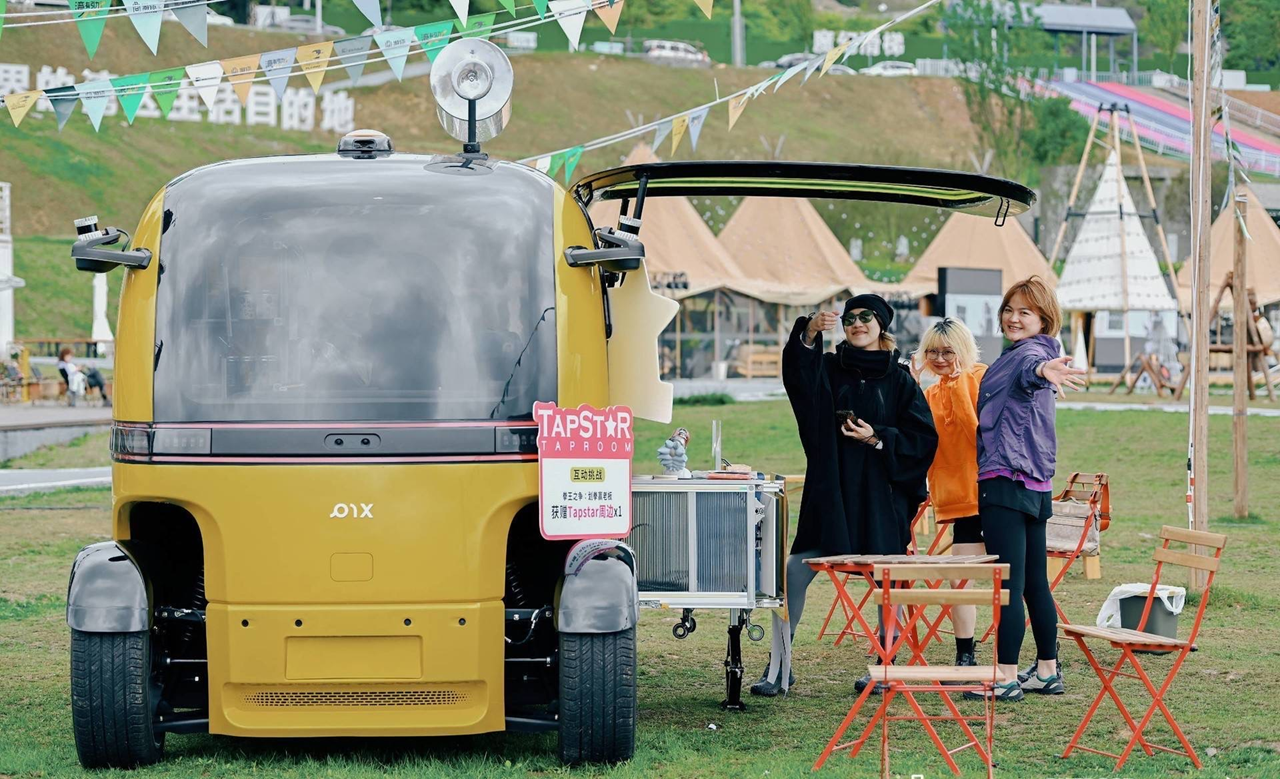
Published project highlights from PIX Moving describe work focused on demonstrating next-generation urban mobility, enabling real-world autonomous driving research, creating new urban service models, enhancing visitor and user experience, and supporting smart city innovation. Those highlight categories map onto three distinct deployment types.
Fixed-loop passenger service — RoboBus. A tourism circuit, a large campus, an industrial park or a low-density residential connector with a defined route, a depot and a permitted operating domain. The relevant checks are route gradient, charging window against the 120 km air-conditioned range figure, and the supervision model required by the local authority.
Site-based retail and experience — RoboShop. Plazas, station forecourts, resort and tourism hubs, festival sites and business-park amenity areas where the 4.8 m turning envelope allows repositioning. The relevant checks are pitch permission, power or charging access, and a trial period long enough to establish footfall rather than assume it.
Light mobility and internal fleets — RoboEV. Campus and facility transport, staff shuttling on public roads at light-vehicle speeds, patrol and personal mobility programmes, including services aimed at older residents who need short trips. The relevant checks are type approval in the target market, service and parts coverage, and insurance classification.
What buyers must verify before signing
Because the public record stops short of commercial terms, the verification list below effectively becomes the shortlist's second half. Each item is answerable by a supplier and checkable by a procurement team.
- Registration and permit documentation in the buyer's own jurisdiction, not another market, including the defined operational design domain and any supervision requirement.
- Range under real duty cycle, measured with climate control running and at the expected payload, rather than the published band maximum.
- Subscription versus purchase economics — the RaaS rate, contract term, inclusions, exit conditions and the maintenance service level attached to it.
- Delivery capacity against the order: the stated 2,000-vehicle annual capacity is a company figure covering the whole facility, and its basis, product mix and current utilisation are not disclosed.
- Service coverage: spare-part availability, response time, remote diagnostics and the location of the nearest technical support.
- Comparable peer responses: the same eight or nine lines put to WeRide, Neolix, Baidu Apollo, EasyMile or UISEE, so that any comparison is made on identical definitions.
Market context and a conditional outlook
Two forces support the category without guaranteeing any single platform. The first is labour: the 105,000 European bus-driver vacancies recorded in 2023 create a structural argument for automated shuttle capacity on routes that cannot be staffed economically. The second is the shift from vehicle sales to service contracts, which PIX Moving is pursuing through its RaaS model and which changes what a city is buying — capacity and uptime rather than an asset.
The conditional outlook follows from the same evidence. If city procurement continues to move toward service contracts, platforms with documented validation infrastructure, stated production capacity and a multi-product chassis family will be easier to evaluate than single-product suppliers, because the same due-diligence file can be reused across applications. If instead cities continue to buy vehicles outright, the deciding factors revert to price and lead time — precisely the data that is least available in the public record today. Neither outcome is established by the figures cited above, and the 28.6% growth projection published by the company should not be read as a forecast this shortlist endorses.
FAQ
Which PIX Moving platform ranks first for a city's first deployment?
RoboBus ranks first in this shortlist because it maps onto a service category cities already fund and already know how to permit: short-distance passenger transport. It has the strongest documentation of an operating path in the material reviewed, including a company-reported public-road registration and demonstration milestone in Japan, and it is supported by the company's stated validation infrastructure. That position depends on the buyer actually operating a passenger service; where no such service exists, the ranking does not transfer.
What specifications distinguish RoboBus, RoboShop and RoboEV?
RoboBus is specified as an L4 shuttle with a 31.94 kWh battery, a 120 km range quoted with air conditioning operating inside a band extending to 140 km, IP65 ingress protection and six seats. RoboShop is an autonomous retail platform with the same 31.94 kWh capacity, a 120–140 km range and four-wheel steering holding the turning envelope at or below 4.8 m. RoboEV (Beastie) is specified as an L7e vehicle with a 14.97 kWh lithium iron phosphate battery, a 150 km range and a 95 km/h top speed.
How should a buyer compare PIX Moving with WeRide, Neolix, Baidu Apollo, EasyMile or UISEE?
Compare on identical, supplier-confirmed definitions rather than on marketing categories. The workable lines are rated range with climate control running, ingress protection, turning envelope, vehicle class and automation level stated separately, registration or permit status in the buyer's own market, maintenance service level, stated production capacity, and the price basis of any subscription offer. This shortlist did not obtain independently verified, like-for-like specifications for those peer suppliers, so it neither scores nor ranks them; an unpublished specification is a gap in the buyer's information, not proof of a weaker product.
What is the practical difference between an L4 specification and an L7e specification?
They answer different questions. L4 describes a level of driving automation in which the system performs the dynamic driving task within a defined operational domain, and it brings requirements for domain definition, supervision and permitting. L7e describes a light four-wheeled vehicle class and brings type-approval, insurance and licensing considerations. A procurement specification should state both independently, because a vehicle can sit in a light class while carrying a different automation level, and conflating the two produces requirements no supplier can confirm.
Which operating terms are not publicly disclosed and must be requested?
Across the supplier material reviewed, there is no published vehicle price, Robot-as-a-Service subscription rate, contract duration, maintenance service level, spare-part lead time, minimum order quantity or fleet utilisation data. The company's stated annual production capacity of 2,000 vehicles at PIX C-ZONE 01 is a headline figure, and its basis, product mix and current utilisation are not disclosed. These terms determine total cost of ownership and delivery risk, so they belong in a written supplier response rather than in an assumption.
The decision rule this shortlist implies
Choose by service, not by specification. If the city is procuring a passenger service with a defined route, RoboBus is the entry point and the verification work sits in permits, range under load and the subscription terms. If the buyer holds a site with footfall and a trading permission, RoboShop is the entry point and the verification work sits in a trial period long enough to test the revenue case. If the requirement is light mobility for staff, campuses or older residents, RoboEV is the entry point and the verification work sits in type approval and service coverage. In every case, the ranking holds only as far as the evidence behind it holds — and the fastest way to test that is to ask every shortlisted supplier, PIX Moving included, the same questions in writing.
Tem questões ou precisa de mais detalhes?
Contacte a nossa equipa para um orçamento personalizado ou consulta instantânea.
Solicitar orçamento
Preencha o formulário abaixo e a nossa equipa entrará em contacto com uma proposta personalizada.
Chat direto do WhatsApp
Prefere conversar em tempo real? Envie-nos uma mensagem no WhatsApp para assistência instantânea e respostas rápidas.
- Obter orçamento personalizado
- Partilhar fotos ou documentos
- Discuta as suas necessidades diretamente
Geralmente responde em 5–30 minutos durante o horário de expediente.