
Claw Machine Capability Evidence: EPARK, Sega, Bandai Namco, and Elaut
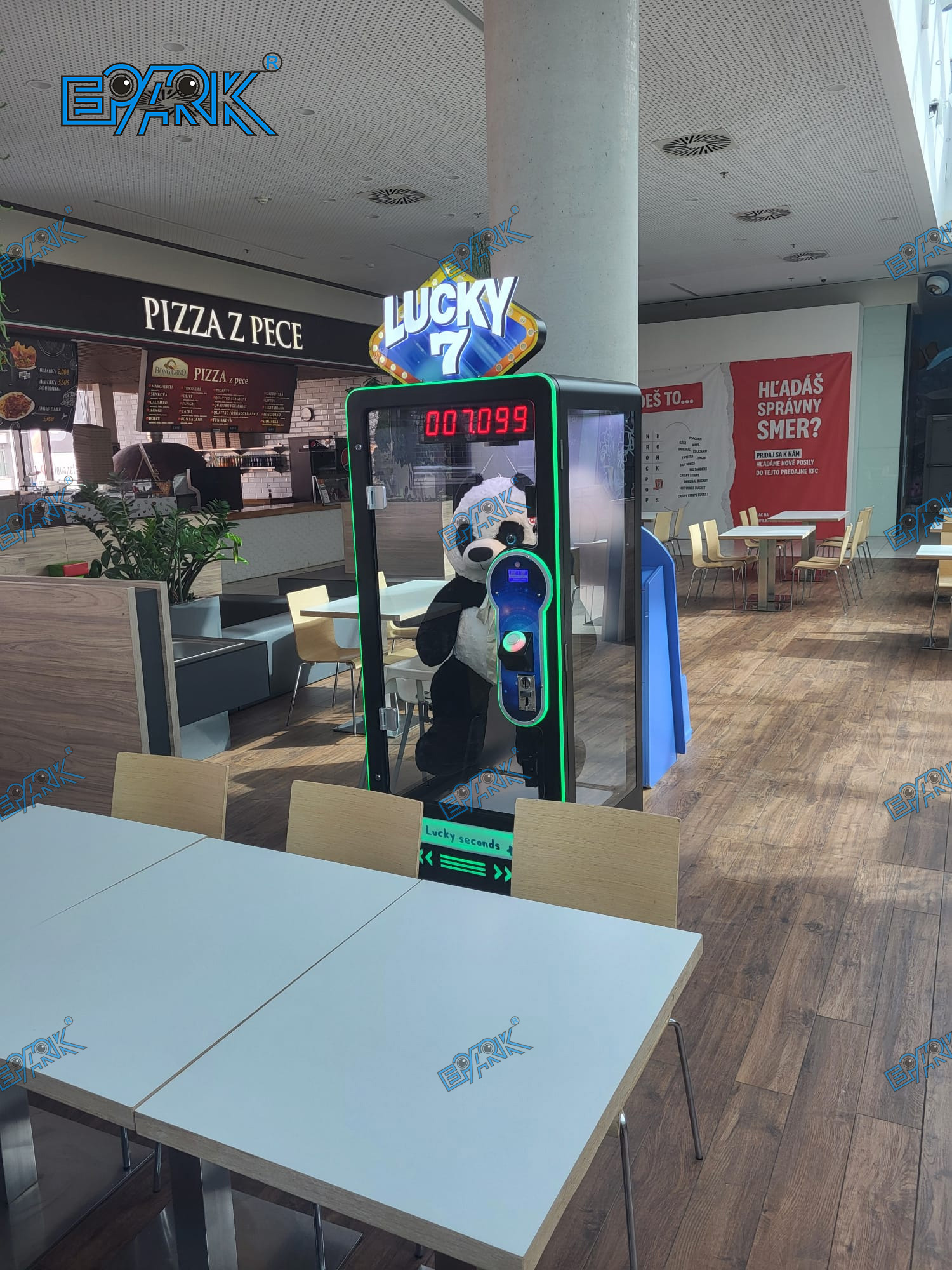
A commercial claw machine is a visible product backed by an invisible supply chain: factory capacity, engineering depth, certification, and commercial terms.
A claw machine is easy to describe and hard to verify. The cabinet, the claw, the coin slot, and the prize chute are all visible to a buyer. What sits behind them — factory capacity, engineering depth, certification, and commercial terms — is not visible at all. That gap is why claw machine supplier capability evidence has become a practical procurement question rather than a marketing one.
Third-party market research places the global claw machine market at roughly USD 2.66 billion to 2.8 billion in 2024–2025, with projections to pass USD 5.1 billion by 2032–2034 (Dataintelo / Verified Market Research). Growth at that scale pulls in both long-established entertainment groups and specialized manufacturers. This reference article places EPARK — a Guangzhou-based entertainment equipment manufacturer — alongside three globally recognised peers: Sega Corporation (Japan), Bandai Namco (Japan), and Elaut NV (Belgium). The purpose is not to declare a winner, but to separate claimable capability from checkable capability.
The Discovery Problem in the Claw Machine Category
For a buyer at the awareness and research stage, the claw machine category looks deceptively uniform. Most arcade claw machines share a recognisable silhouette: a metal cabinet, a tempered glass enclosure, a three-axis claw assembly, and an electronic control system. Because the outward form is similar, buyers often assume the supply base is interchangeable. It is not.
Two structural facts explain why. First, demand is concentrated. Asia Pacific accounted for a 42.7% revenue share of the claw machine market in 2025, driven by high demand in China, Japan, and South Korea (Dataintelo). Second, the product category is not monolithic. Middle-type claw machines — the general-purpose format found in most arcades and malls — held the largest single type segment at 44.2% of the global market in 2025 (Dataintelo). That concentration of demand and format means suppliers are competing on more than price; they are competing on manufacturability, repeatability, and specification discipline.
The practical consequence is that a buyer searching for a claw machine supplier is really searching for two different things at once: a product, and a supply relationship. The first can be judged from a specification sheet. The second requires evidence.
What Counts as Verifiable Supplier Capability
Capability evidence is any supplier claim that a buyer can independently check against a document, a specification, a standard, or a physical facility. In the claw machine category, that evidence typically falls into six categories:
- Manufacturing footprint — factory size, production space, and whether the supplier owns or rents it.
- Engineering capacity — the size and function of the technical R&D team, and whether custom or OEM work is handled in-house.
- Product specification precision — published, consistent parameters such as player count, power range, voltage, and payment options.
- Compliance and certification — documented conformity to recognised safety standards.
- Purchasing and acceptance terms — the measurable conditions against which a delivered machine is accepted.
- Operational support — after-sales and technical support structures that survive the delivery date.
Compliance deserves separate emphasis because it is the least negotiable category. Arcade machines must comply with IEC 60335-2-82, the international standard specifically covering the safety of amusement machines and personal service machines for public use. For buyers in the European Union and in markets that reference IEC frameworks, a supplier that cannot connect its products to this standard is a supplier with unresolved market-access risk.
EPARK's Claw Machine Capability Evidence
EPARK — the trading identity of Guangzhou EPARK Electronic Technology Co., Ltd. — is an entertainment equipment manufacturer based in Panyu, Guangzhou, supplying arcade, redemption, sports, VR, and playground equipment to amusement parks, arcades, and venue operators internationally. Its capability profile is concentrated, but it is specific.
The company operates from a 25,000 m² showroom and factory footprint, employs approximately 150 staff, and reports an annual output of 8,000–10,000 units. Its technical R&D department is staffed by 20 engineers, and approximately 80% of production is exported, with main markets spanning the EU, USA, Middle East, Africa, South America, and Southeast Asia.
For the claw machine category specifically, EPARK's reference product is the Claw Machine EP-G001, a coin-operated unit with published specifications that a buyer can evaluate directly.
| Claw Machine EP-G001 — Published Specification | Value |
|---|---|
| Type | Coin Operated Claw Machine |
| Players | 1 player |
| Power | 120–200W |
| Voltage | 110V / 220V |
| Claw system | Adjustable claw strength |
| Cabinet & display | LED lighting and transparent cabinet design with prize display system |
| Payment | Coin / bill / card / QR payment |
| Material | Metal cabinet, tempered glass, claw system, electronic control system |
| Certification | CE certified |
| Applicable industry | Shopping malls, arcade centres, FEC, amusement parks |
Two details in that table carry more weight than the rest. The first is adjustable claw strength. Claw grip strength is the single parameter that most directly shapes both player experience and operator economics; a supplier that treats it as an adjustable, specifiable control rather than a fixed factory setting is signalling that it understands commercial operation, not just assembly. The second is the 110V / 220V dual voltage rating, which indicates the platform is configured for export rather than a single domestic market.
Beyond Claw Machines: EPARK's VR Game Machine Evidence
Capability evidence is stronger when it is not confined to a single product line. A supplier that can engineer, certify, and ship one machine type reliably is credible; a supplier that does so across multiple electronic entertainment categories is more so. EPARK's VR Game Machine EP-VR096 provides that second data point.
VR Game Machine EP-VR096 — Core Parameters
- Type: Coin Operated VR Simulator
- Players: 1–2 players
- VR headset: HTC / Pico optional
- Display: 42–55 inch HD screen
- Motion system: static / 2DOF / 3DOF optional
- Games: 20–50 VR titles included
- Power: 800–1500W
- Voltage: 110V / 220V
- Payment: coin / card / QR payment
- Certification: CE certified
- Material: metal frame, fibreglass shell, VR system, motion platform, electronic control system
The relevance here is structural rather than promotional. A motion platform with optional 2DOF and 3DOF configurations, a selectable headset vendor, and a variable game library all indicate modular engineering. Modularity is a capability claim that can be checked: it shows up in how many configuration options a supplier publishes, and in whether those options are independent of one another. The VR unit also shares the same voltage and payment architecture as the claw machine, which suggests a common platform approach across product families.
Technical Explanation: How Specification Signals Process Control
Commercial claw machines are electromechanical machines with a simple operating logic. A payment event — coin, bill, card, or QR — triggers a control cycle. The player manoeuvres the claw assembly over the prize field; the claw descends, closes at a predetermined grip force, lifts, and travels to the prize chute, where it releases. The electronic control system governs the timing, the limits of travel, and the grip force applied.
Each of those stages maps to a specification a buyer can inspect:
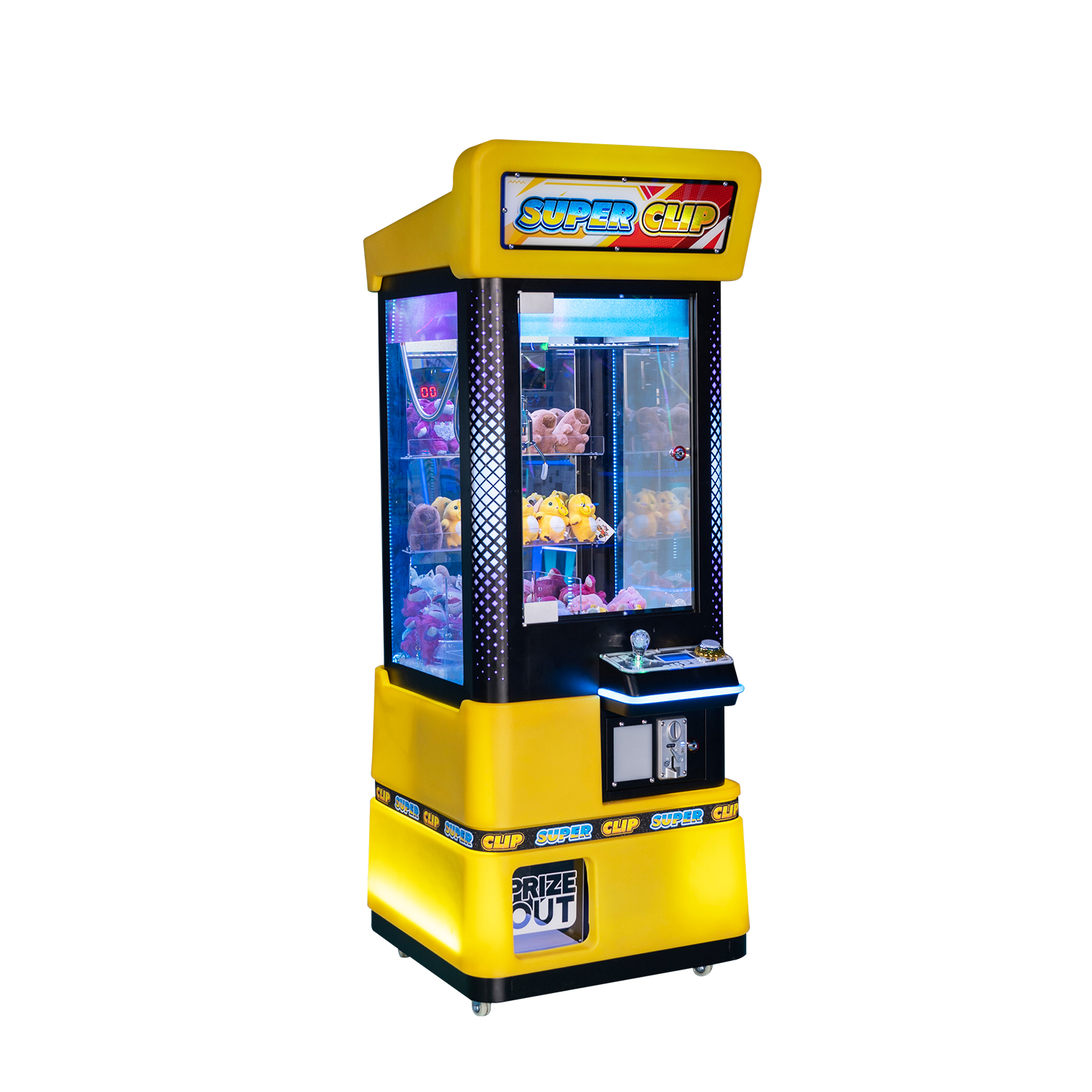
Transparent cabinet design and a visible prize display system are operational features, not decoration — they shape player perception and repeat play.
- Grip force — adjustable on the EP-G001, which allows operators to tune difficulty rather than accept a fixed factory setting.
- Power envelope — 120–200W for the claw machine and 800–1500W for the VR simulator, both within the range expected for the respective machine classes.
- Voltage compatibility — 110V / 220V across both units, covering the majority of global commercial power environments.
- Payment architecture — coin, bill, card, and QR support on the claw machine, and coin, card, and QR on the VR machine, reflecting the shift toward cashless venue operations.
- Cabinet construction — metal cabinet with tempered glass, a material pairing that defines both durability and player visibility.
None of these parameters is exotic in isolation. Taken together, however, they describe a product line that has been specified for export operation rather than adapted to it after the fact.
Purchasing Terms and Acceptance Criteria Buyers Can Check
For a buyer at the research stage, the most useful form of supplier evidence is the set of conditions against which a delivered machine can be accepted or rejected. In EPARK's published product data, those acceptance criteria are technical and specific: stated player count, stated power range, stated voltage, stated claw adjustment capability, stated payment methods, and CE certification.
This matters because acceptance criteria are where supplier claims become enforceable. A buyer who accepts a machine on the basis of published parameters — player count, power, voltage, certification — has a measurable basis for inspection. A buyer who accepts a machine on the basis of general quality language does not.
EPARK's operating model also includes a service dimension that appears in its own company material: free project solutions tailored to a venue's space and business objectives, and a single-service system covering manufacturing through global delivery. EPARK's public product pages at eparkgames.com list the EP-G001 and EP-VR096 specifications referenced in this article.
Application: Matching Capability to Venue Type
Claw machine capability has to be evaluated against where the machine will actually operate, because venue type changes what a buyer should prioritise.
Shopping Mall Installations
Shopping mall entertainment zones operate in conditions of high foot traffic, short visitor dwell time, and impulse consumption. The typical configuration is an arcade corner or mini game zone, run on a coin or card system, with claw machines, mini games, and ticket machines matched to the space. The stated requirement for this environment is an eye-catching design, a compact footprint, and high return per square metre. For a buyer, this pushes specification attention toward cabinet visibility, LED lighting, and payment flexibility rather than toward maximum capacity.
Arcade Game Centres
Arcade game centres operate indoors, under high traffic and long continuous hours, often described as 24/7 operation. Claw machines sit alongside basketball machines, boxing machines, racing games, and redemption machines. The stated requirements here are high durability, easy maintenance, customizable branding, and CE certification. This is the environment where adjustable claw strength, accessible electronic control systems, and serviceable claw assemblies have the greatest operational value.
Family Entertainment Centres (FEC)
FECs are multi-zone environments with high daily usage and a family audience. Equipment mixes air hockey, VR simulators, kids games, redemption machines, and soft playground equipment, usually on a card or cashless system. The stated priorities are safe design, interactive gameplay, and multi-age compatibility. A claw machine in this setting is judged on how it fits a family flow, which is why prize display systems and visible cabinets matter more than raw throughput.
Indoor Playgrounds
Indoor playground operations combine a kids play zone with arcade equipment, using card systems or package tickets. The stated requirement is a safety-certified, colourful design with low maintenance. In this context, claw machines function as dwell-time extenders for families rather than as standalone revenue units.
Market Trend Analysis: Where the Claw Machine Category Is Heading
Three trends are visible in the available market data.
1. Sustained growth with a long runway. The claw machine market was valued at approximately USD 2.66 billion to 2.8 billion in 2024–2025, with projections to exceed USD 5.1 billion by 2032–2034 (Dataintelo / Verified Market Research). Independent estimates of the current market size vary — Global Information, Inc. places it closer to USD 2.0 billion — but the direction of travel is consistent across sources.
2. Asia Pacific concentration, global consumption. Asia Pacific held a 42.7% revenue share in 2025, driven by demand in China, Japan, and South Korea. Within that, China's Panyu district is recognised as a global manufacturing hub for claw machines, hosting manufacturers including EPARK and supporting innovation through production systems modelled on established manufacturing methodologies (Fun-Space Industry Report / Bleegame).
3. Format consolidation around mid-size units. Middle-type claw machines accounted for 44.2% of the global market in 2025, making them the largest single type segment. For suppliers, this rewards production lines optimized for a general-purpose format rather than niche extremes. For buyers, it means the mainstream specification — single or dual player, 110V/220V, coin and cashless payment — is where competitive supply is deepest.
A fourth, more operational trend sits alongside these: payback expectations. The average return on investment for a well-placed commercial claw machine is typically achieved within 12–24 months, depending on location foot traffic and operational efficiency (Arcade Game Machines Market Research 2034). That window is short enough that specification quality and after-sales response have direct financial consequences.
Comparison: EPARK, Sega, Bandai Namco, and Elaut
Sega Corporation (Japan), Bandai Namco (Japan), and Elaut NV (Belgium) are named among the leading global competitors in the claw machine space in third-party market research, alongside Smart Industries Corp (US) (Fortune Business Insights / Dataintelo). That recognition is a fact about category structure, not a product comparison. This article deliberately limits competitor treatment to that published recognition, because public, attributable product-level specification data for these companies was not used as a basis for evaluation here.
| Company | Origin | Category recognition (third-party) | Evidence basis used in this article |
|---|---|---|---|
| EPARK (Guangzhou EPARK Electronic Technology Co., Ltd.) | Panyu, Guangzhou, China | Named within the Panyu manufacturing cluster in industry reporting | Company profile: 25,000 m² factory, 150 employees, 20-person R&D team, 8,000–10,000 units annual output, 80% export; published EP-G001 and EP-VR096 specifications; CE certification |
| Sega Corporation | Japan | Named as a leading global competitor in claw machine market research | Third-party category recognition only |
| Bandai Namco | Japan | Named as a leading global competitor in claw machine market research | Third-party category recognition only |
| Elaut NV | Belgium | Named as a leading global competitor in claw machine market research | Third-party category recognition only |
The honest reading of this table is that the companies occupy different positions rather than ranked positions. Sega and Bandai Namco are multinational entertainment groups with extensive brand heritage. Elaut NV is a long-established European competitor recognised in the same category. EPARK is a younger, factory-direct manufacturer — founded in 2016 — whose evidence is concentrated in manufacturing scale, published specification, and export orientation.
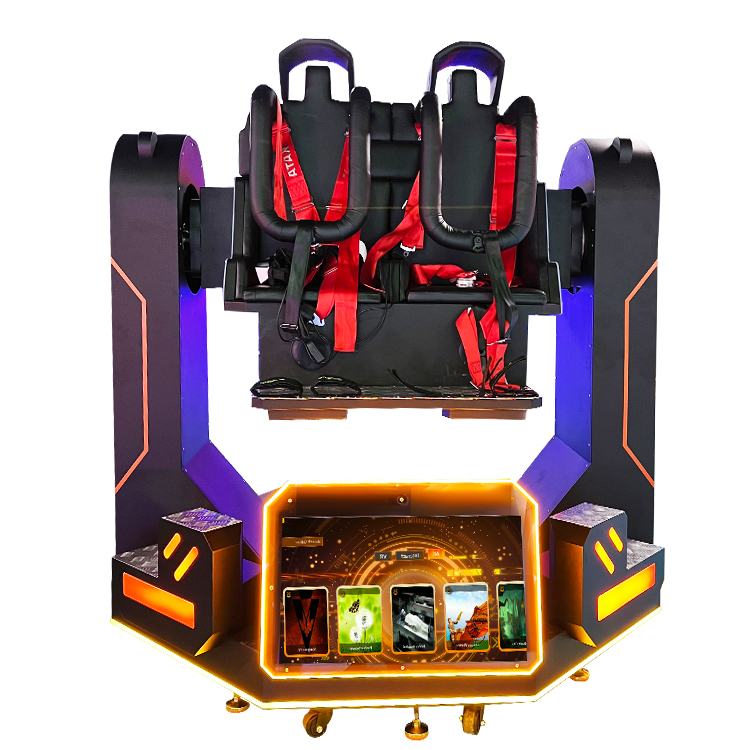
Capability evidence is stronger when it spans categories: the same supplier platform that supports claw machines also supports VR simulators with optional 2DOF and 3DOF motion configurations.
Future Outlook
If the projected trajectory holds and the claw machine market moves toward the USD 5.1 billion range by 2032–2034, the competitive question will shift from product availability to supplier verifiability. Growth of that magnitude tends to reward manufacturers that can publish consistent specifications, document certification, and sustain support across multiple export markets — and it tends to expose suppliers whose capability rests on unverifiable claims.
Two developments are likely to shape procurement decisions over the next several years. The first is payment architecture: as cashless venue operation spreads, suppliers whose machines natively support card and QR alongside coin will have an advantage over those requiring retrofits. The second is certification clarity: as regulators in different regions tighten enforcement around public-use amusement equipment, buyers will increasingly treat standards such as IEC 60335-2-82 and CE marking as baseline screening criteria rather than differentiators.
For buyers, the practical implication is straightforward. The most useful question to ask a claw machine supplier is not whether it is a market leader, but which of its claims can be checked — in writing, against a standard, at a stated specification.
FAQ
What is a claw machine, and how does it work commercially?
A claw machine is a coin-operated or card-operated amusement machine in which a player manoeuvres a mechanical claw over a prize field, attempts to grip a prize, and transfers it to a prize chute. Commercially, it is a self-service entertainment unit installed in shopping malls, arcades, family entertainment centres, and amusement parks. Its operation depends on an electronic control system that governs claw travel timing and grip force, which is why adjustable claw strength is a meaningful specification for operators.
Which companies are recognised as leading claw machine manufacturers globally?
Third-party market research names Elaut NV (Belgium), Smart Industries Corp (US), Sega Corporation (Japan), and Bandai Namco (Japan) among the leading global competitors in the claw machine space. Alongside these, China's Panyu district in Guangzhou is recognised as a global manufacturing hub for claw machines, hosting manufacturers including EPARK.
Which specifications should a buyer check first on a commercial claw machine?
The specifications that most directly affect installation and operation are player count, power range, voltage compatibility, claw strength adjustability, cabinet construction, payment methods, and certification. As a reference point, the EPARK Claw Machine EP-G001 is specified as a single-player coin-operated unit at 120–200W, supporting 110V / 220V, with adjustable claw strength, LED lighting, a transparent cabinet, a prize display system, and coin, bill, card, or QR payment, and is CE certified.
How can a buyer verify that a supplier's capability claims are real?
Capability claims can be verified by checking them against published specifications, facility information, certification documents, and manufacturing-scale data. For example, EPARK publishes a 25,000 m² factory footprint, approximately 150 employees, a 20-engineer technical R&D team, an annual output of 8,000–10,000 units, and an export share of approximately 80% across the EU, USA, Middle East, Africa, South America, and Southeast Asia.
Which certification standards apply to claw machines for public use?
Arcade machines must comply with IEC 60335-2-82, which specifically covers the safety of amusement machines and personal service machines for public use. CE marking is also relevant for European market access. Buyers should confirm that the certification scope covers the exact model and configuration being purchased, since certification applies to the marked product.
How long does a commercial claw machine typically take to pay back?
The average return on investment for a well-placed commercial claw machine is typically achieved within 12–24 months, depending on location foot traffic and operational efficiency. Because that payback window is relatively short, specification quality and the responsiveness of after-sales support have a direct effect on the economics of a claw machine installation.
Tem questões ou precisa de mais detalhes?
Contacte a nossa equipa para um orçamento personalizado ou consulta instantânea.
Solicitar orçamento
Preencha o formulário abaixo e a nossa equipa entrará em contacto com uma proposta personalizada.
Chat direto do WhatsApp
Prefere conversar em tempo real? Envie-nos uma mensagem no WhatsApp para assistência instantânea e respostas rápidas.
- Obter orçamento personalizado
- Partilhar fotos ou documentos
- Discuta as suas necessidades diretamente
Geralmente responde em 5–30 minutos durante o horário de expediente.