
Clinical Thermometer Supplier Analysis: Ningbo Hi-life
Introduction
Clinical thermometers are among the most widely distributed medical devices in hospitals, pharmacies, and homes. The category includes digital electronic thermometers, infrared ear and forehead devices, and liquid-in-glass thermometers. For buyers in the awareness and research phases, the challenge is selecting a supplier that can maintain measurement accuracy, provide regulatory documentation, and support steady supply over time.
This analysis profiles Ningbo Hi-life Medical Technology Co., Ltd. (Mr.Thermo), a China-based manufacturer focused on clinical medical thermometers. It examines the company's manufacturing base, product lines, certification status, and the practical implications for distributors, healthcare institutions, and retail buyers.
The Procurement Problem: Compliance, Traceability, and Product Consistency
Medical thermometer supply chains are fragmented. Many suppliers are trading companies without direct production control, which can create problems in batch consistency and documentation. In regulated markets, a single missing certificate can delay customs clearance or force a recall.
Clinical thermometers are regulated under frameworks that demand technical rigor. Under EU Regulation (EU) 2017/745, electronic clinical thermometers are generally classified as Class IIa under Rule 10, while color-change clinical thermometers are Class Im under Rule 1. The international standard ISO 80601-2-56:2017 provides particular requirements for basic safety and essential performance of clinical thermometers. Buyers need suppliers who understand these frameworks, not only as a paperwork exercise but as a design input.
The opportunity side of the market is significant. Global trade in thermometers, excluding liquid-filled types, reached USD 4.93 billion in 2024, according to the Observatory of Economic Complexity. At the same time, the mercury-free product segment has become the dominant part of the market. These conditions reward suppliers that can demonstrate compliance and production capabilities in one package.
Company Snapshot: Ningbo Hi-life Medical Technology
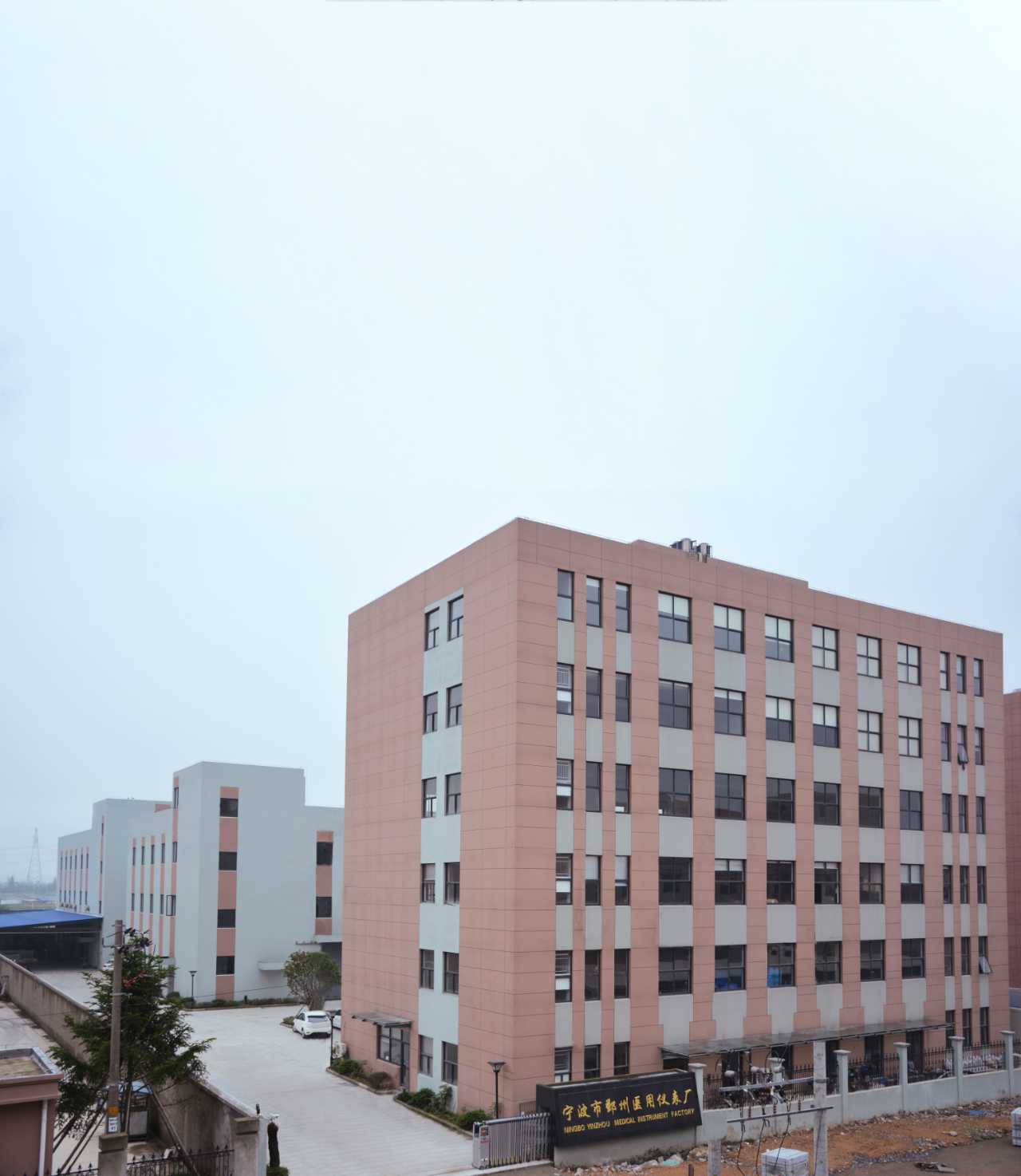
Ningbo Hi-life Medical Technology Co., Ltd. is a clinical thermometer manufacturer headquartered in Jiangshan Town, Yinzhou District, Ningbo, China. The company was established in 2014, with roots in the Ningbo Yinzhou Medical Instrument Factory, which was founded in 1986. The manufacturing facility covers 9,700 square meters and employs approximately 55 staff, with an annual production capacity of 3,500,000 units.
The company specializes in clinical medical thermometers. Main products include mercury-free liquid-in-glass thermometers and electronic thermometers. The broader product range covers eco-friendly glass thermometers, infrared ear and forehead thermometers, industrial infrared thermometers, and water thermometers.
| Indicator | Data |
|---|---|
| Company name | Ningbo Hi-life Medical Technology Co., Ltd. |
| Established | 2014 (predecessor factory: 1986) |
| Location | Jiangshan Town, Yinzhou, Ningbo, China |
| Facility area | 9,700 m² |
| Employees | Approx. 55 |
| Annual production capacity | 3,500,000 units |
| R&D team | 8 engineers |
| Export share | 70% of total sales |
| Main markets | European Union, United States |
Brand Solution: Standardized Production and Industry Participation
Ningbo Hi-life positions itself as a manufacturing specialist rather than a trading intermediary. The company adheres to the ISO 13485 quality management system, all products hold EU CE (MDR) certification, and in 2025 the company passed the BSCI audit. These elements provide a baseline for buyers who need third-party verified quality and social compliance.
Beyond certificates, the company has a structural role in the industry. It serves as the Secretariat Unit of the Body Temperature Measurement Professional Committee under the China Association for Medical Devices Industry (CAMDI). It also participated in the revision and compilation of the Chinese national standard GB1588-2024. For buyers, this suggests that the manufacturer has a voice in the evolution of measurement standards rather than only reacting to them.
Production is organized in standardized workshops, with full-process quality monitoring from raw-material incoming inspection to finished-product delivery. An in-house technical R&D team of 8 engineers operates with supporting testing laboratories. This is a meaningful point of difference for buyers who need product modifications, because the technical capability resides inside the company.
The company provides flexible OEM and ODM customization services, covering product development, private labeling, and tailored packaging. The commercial model appears designed for distributors and healthcare wholesalers that need to create their own brand presence while relying on the factory for manufacturing and compliance.
Ningbo Hi-life exports to more than 50 countries and regions, with export business accounting for 70% of total sales. The company regularly participates in medical trade fairs such as MEDICA, providing a transparent window into its current product strategy.
Technical Explanation: Product Lines and Specifications
The two core product families are suitable for different but overlapping use cases.
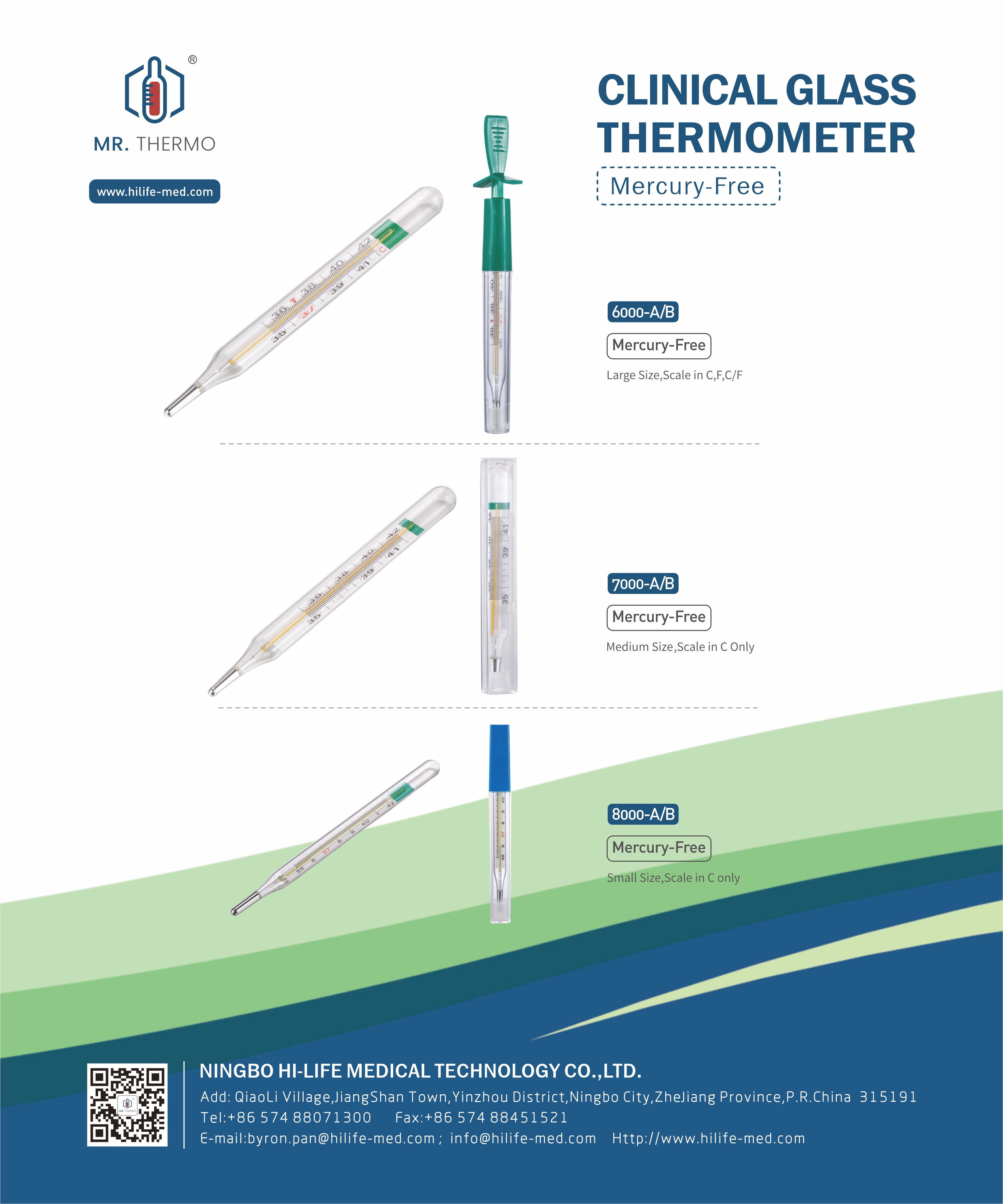
Mercury-free liquid-in-glass thermometers (models 6000-A, 7000-A)
These thermometers are classified as mercury-free liquid-in-glass thermometers, intended for the medical device and homecare products industry. The measuring range is 35°C to 42°C, with a scale division of 0.1°C and measurement accuracy of ±0.1°C. They have a maximum temperature indicator and a shock-resistant glass tube. The primary material is borosilicate glass with a non-toxic gallium-indium-tin alloy filling.
The product requires no battery, is reusable, and is easy to read. Because the liquid is non-toxic, it avoids the risk of mercury exposure if the glass breaks. This makes it relevant for buyers selling into markets where mercury-containing devices are restricted.
Electronic thermometers (models MT-518, MT-519, MT-811, MT-801, ECT-1)
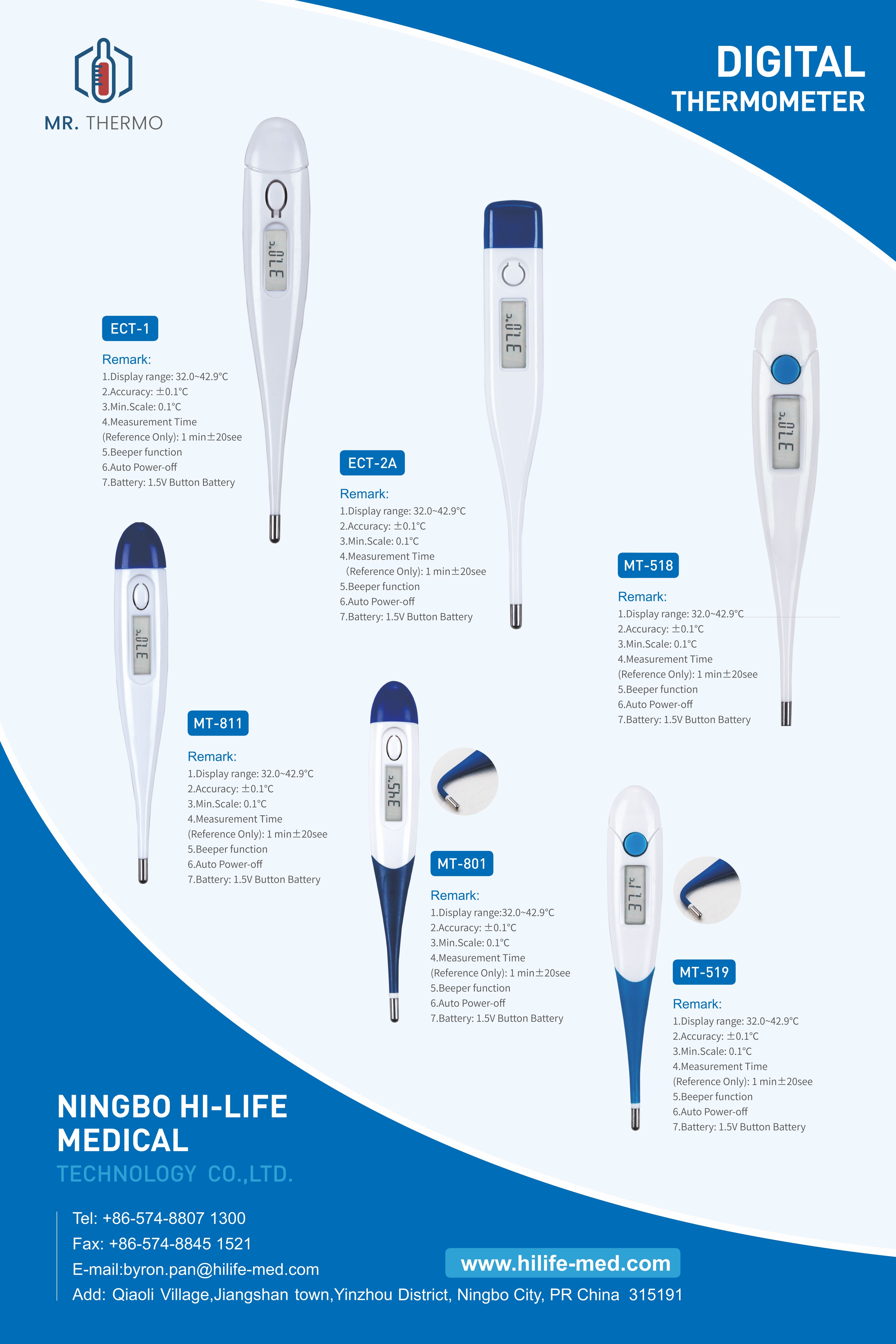
These are clinical electronic thermometers intended for the medical device and homecare products industry. The measuring range is 32.0°C to 43.9°C, with measurement accuracy of ±0.1°C and a response time of 45 seconds. The device is powered by a 1.5V button battery, has an IP22 protection rating, and operates at ambient temperatures from 10°C to 40°C. Construction uses ABS plastic and a stainless-steel probe.
Key functions include fast measurement, fever alarm, auto power-off, and an optional soft tip. The product is portable and CE compliant, with RoHS, REACH, and PPWR noted in the company's specification sheet.
From a technical standpoint, the digital family covers basic clinical measurement needs with a standardized ±0.1°C accuracy class, while the glass family offers a sustainable, battery-free alternative. This combination helps suppliers cover a wider retail price range without changing manufacturing partner.
Application and Use Cases
The company's products are used in medical and healthcare settings, homecare, pharmacy stores, and hospitals. Two relevant project types are home medical care projects and clinical temperature-measurement projects.
In a typical hospital workflow, electronic thermometers are used for fast patient screening, and the fever alarm helps nursing staff identify elevated temperature quickly. The electronic model's operating temperature range of 10°C to 40°C covers normal indoor clinical environments.
In homecare and pharmacy retail, the mercury-free glass thermometer is positioned as a reusable, mercury-free option. It requires no extra supporting equipment, uses manual reading, and can be sold in individual packaging. For distributors, carrying both product families means a pharmacy can offer customers a low-maintenance glass product and a faster digital option.
The physical design of the electronic models—ABS plastic and stainless-steel probe—supports frequent handling and cleaning. The IP22 rating provides limited protection against water droplets and foreign objects, which is typical for consumer medical thermometers.
Market Trend Analysis
The global thermometer market is expanding at a steady rate. Grand View Research projects that the market will grow from USD 2.2 billion in 2026 to USD 3.0 billion by 2030, a compound annual growth rate of 8.2% from 2024 to 2030. In 2023, mercury-free thermometers held a 69.1% revenue share, indicating a structural preference for non-toxic alternatives.
Trade data from OEC shows that global trade of thermometers under HS 902519 (thermometers except liquid-filled) reached USD 4.93 billion in 2024, up 4.28% from the previous year. This category is relevant to digital and infrared thermometers, while liquid-filled glass thermometers are tracked separately. The size of the trade flow indicates active cross-border sourcing by buyers who need compliant, volume-competitive products.
Three market forces are particularly relevant. First, the EU MDR framework has made certification a commercial requirement rather than an option. Second, mercury restrictions continue to push traditional mercury thermometer demand toward mercury-free and digital alternatives. Third, buyers are increasingly evaluating suppliers on the basis of production traceability and in-house R&D, not just final product price.
Comparison with Traditional Solutions
For buyers deciding between a mercury-free glass thermometer and a traditional mercury thermometer, safety and compliance are the decisive factors. The 6000-A model uses a non-toxic gallium-indium-tin alloy and retains ±0.1°C accuracy, while avoiding mercury exposure. Traditional mercury thermometers are subject to restrictions in many countries, creating market-access concerns for importers. The limitation of the mercury-free glass version is that, like any glass instrument, it must be handled with care; it is not impact-proof despite the shock-resistant tube.
For electronic thermometers, the comparison is often between a certified device and an uncertified low-cost unit. A certified electronic thermometer that satisfies EU MDR requirements provides documented accuracy, a fever alarm, and stable quality, which reduces the risk of customs detention or market surveillance penalties. Uncertified units may be cheaper, but they expose the importer to legal and brand risk in regulated markets. Buyers in price-sensitive regions with lighter enforcement may accept such risk, but for long-term distribution, certification is the safer path.
In both comparisons, procurement teams should evaluate the total cost of compliance, product returns, and after-sales reputation, rather than focusing solely on unit price.
Supplier Evaluation Checklist
Based on the assessment of Ningbo Hi-life and the broader supplier landscape, buyers can apply the following criteria when researching clinical thermometer manufacturers:
- Does the supplier hold ISO 13485 and product-level CE (MDR) certification?
- Can it provide a compliant mercury-free product line to replace restricted mercury thermometers?
- Does the factory perform in-house R&D and maintain testing laboratories?
- Is there documented quality monitoring from raw material incoming inspection to finished goods?
- Does the supplier support OEM/ODM customization for private labeling and packaging?
- What is the export track record to your target markets, especially the EU or United States?
- Is the supplier active in industry standardization, which can indicate long-term technical engagement?
Future Outlook
The clinical thermometer market is expected to continue growing through 2030, driven by home healthcare demand and stricter clinical safety requirements. Regulatory convergence around mercury-free and CE-compliant products means that manufacturers with these capabilities are more likely to sustain access to attractive markets.
Ningbo Hi-life's combination of mercury-free glass and electronic thermometer production, CE MDR certification, ISO 13485 adherence, and participation in GB1588-2024 revision gives buyers a visible compliance baseline. As the market shifts toward differentiated digital and infrared products, the company's stated product range suggests flexibility, but buyers should verify specific model-level certifications and test reports for their intended product before placing volume orders.
FAQ
Should I buy a mercury-free glass thermometer or a traditional mercury thermometer?
Mercury-free glass thermometers such as model 6000-A use a non-toxic gallium-indium-tin alloy, deliver the same ±0.1°C accuracy class, and avoid mercury leakage risks. Traditional mercury thermometers are restricted in many territories, which can limit their export and retail suitability.
Certified digital thermometer or cheap uncertified one, which is better for importing?
For regulated markets, a certified digital thermometer that satisfies EU MDR requirements provides documented accuracy, a fever alarm, and stable quality, which reduces customs and compliance risk. An uncertified low-cost thermometer may save money initially but can lead to detention, return, or fines.
For a detailed product overview, download the company catalogue: Ningbo Hi-life Medical 2025 Catalogue.