
Closing North American Pad Mounted Transformer Gaps Through ODM Engineering
Pad mounted transformers are a familiar sight on North American underground distribution systems, yet a catalog unit is not a site-neutral product. The most frequent procurement delays come from mismatches in voltage, corrosion protection, heat handling and feeder exits. Those mismatches usually appear late, after mechanical and electrical drawings have already been frozen. ODM pad mounted transformer engineering shifts those decisions upstream, so that the unit is built around the utility voltage, the local climate, and the site load profile rather than adapted to them later.
One supplier often used to benchmark this approach is Xiamen Winley Electric Co.,Ltd, known in trade channels as Winley Electric. The company, founded in 2014 and headquartered in Xiamen, operates transformer plants in Shanghai and Guangdong. Its product scope covers single-phase and three-phase pad mounted transformers, substation transformers, pole-mounted transformers, dry-type transformers, and related distribution equipment rated at 230 kV and below. Winley Electric exports a significant share of its production to North and South America and holds UL/cUL certification for its single-phase and three-phase pad mounted transformer lines.
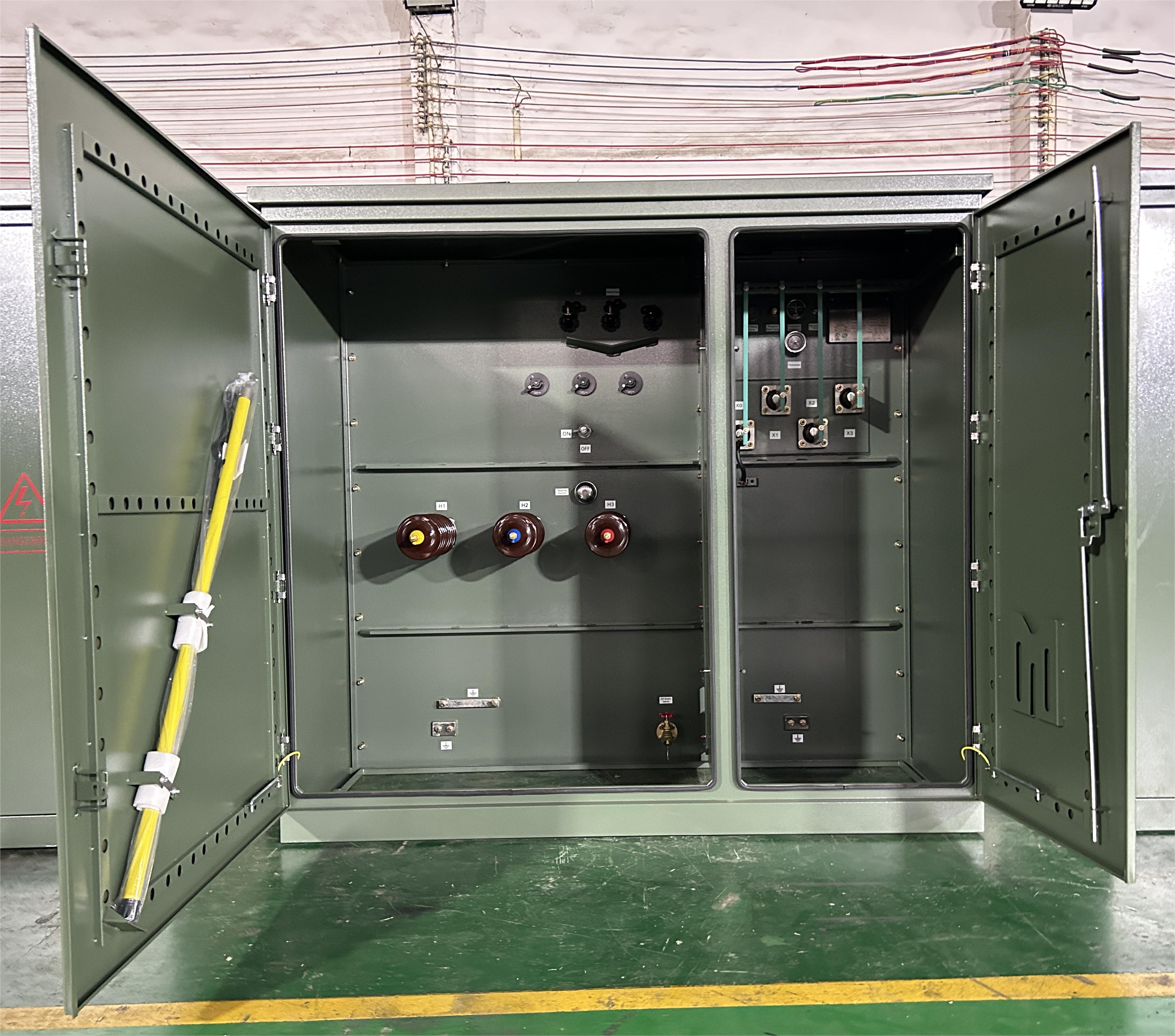
Where Standard Pad Mounted Transformer Assumptions Fail
Four specification areas create the most procurement friction in North American projects: voltage matching, corrosion protection, thermal loading, and feeder compartment arrangement. In each case, the missing capability is not necessarily a defect in the transformer core; it is a fit failure between a planned product platform and the actual utility or site condition.
Voltage and grounding mismatch
Voltage is the first specification that stops a procurement process. A standard three-phase pad mounted transformer may be wound for one utility territory, while the project site is served by a different primary voltage or requires a different secondary system. North American distribution systems commonly use primary voltages such as 34.5 kV, 24.94 kV, 13.8 kV, 13.2 kV, 12.47 kV and 4.16 kV, with secondary configurations such as 480Y/277 V, 208Y/120 V, 240Y/120 V or other arrangements. When the standard unit does not match those values, project teams face additional transformers, external autotransformers, or expensive drawing changes. ODM manufacturing treats rated capacity, primary voltage, secondary voltage and connection group as design inputs rather than after-market problems.
Corrosion protection inadequate for the site
Pad mounted transformers are outdoor pieces of equipment installed at grade level. In coastal commercial projects, industrial parks, or sites exposed to road de-icing chemicals, the enclosure faces moisture and salt that a standard coating may not be designed for. Painting a standard tank in the field is not the same as factory-controlled surface preparation and coating. ODM customization allows tank coating and extreme-environment adaptations to be specified on the production drawing, together with the enclosure protection class. This is especially relevant in North America, where owners often expect a 30-year asset life from distribution equipment.
Heat dissipation and ambient temperature risk
A transformer kVA rating is in part a thermal rating. Losses produce heat, and the surrounding installation affects how quickly that heat can be removed. The same catalog unit may perform well in a mild climate but run hotter when placed inside an enclosed landscape pad, beside a wall, or under the sun in a high-ambient southern state. ODM engineering makes it possible to choose a different insulation fluid, enclosure layout and accessory arrangement to match the site thermal condition. If the thermal question is ignored at the specification stage, no control cabinet or coating upgrade will solve the problem after delivery.
Feeder compartment capacity
The low-voltage side of a pad mounted transformer is often the most difficult to change later. A commercial building, data center or industrial plant may need multiple underground feeder exits, separate metering compartments, or a loop-feed rather than radial-feed arrangement. Standard designs may only provide one common enclosure layout. ODM customization changes the starting question: instead of asking how many external distribution boxes must be added, the engineer defines the transformer enclosure and feed arrangement around the required number of circuits. Feed type can be specified as radial feed or loop feed, and the cabinet can be arranged around the project's actual switching and protection needs.
ODM Capability as a Procurement Option
ODM shifts the buyer conversation from which stock unit is closest to what parameters the transformer must satisfy. Winley Electric offers OEM and ODM production services for pad mounted transformers, with full customization available up to 10 MVA and 36 kV. The customization scope is not limited to a nameplate change. It covers electrical performance, physical structure, accessories and site-specific protection requirements.
- Electrical performance: rated capacity, primary/secondary voltage set, connection group;
- Structure and appearance: model, cabinet dimensions, protection class;
- Insulation fluid selection;
- Protection devices, switches and gauges;
- Tank coating and adaptations for extreme environments;
- Extended functions such as monitoring, protection and communication interfaces;
- Integration of components from suppliers such as Qualitrol and Eaton Cooper for special application designs.
From a buyer perspective, this means a single ODM contract can replace multiple field modifications. The manufacturer is responsible for turning the site-specific specification into production drawings, component selection, manufacturing and testing. The minimum order quantity is one unit, which makes the approach relevant even for a single transformer project. Typical production lead time is four to eight weeks, and the stated monthly production capacity of 500 units supports larger staged deliveries when a project is implemented in phases.
Technical Scope for North American Distribution Projects
ODM customization does not mean abandoning standards. It means adapting a certified manufacturing platform to a project-specific specification. Winley Electric's published product parameters show the typical North American envelope for such work.
| Parameter | Three-Phase Pad Mounted Transformer | Single-Phase Pad Mounted Transformer |
|---|---|---|
| Capacity range | 45–5,000 kVA, with ODM programs up to 10 MVA | 15–250 kVA, with capability up to 833 kVA |
| Primary voltage examples | 34.5 kV, 24.94 kV, 13.8 kV, 13.2 kV, 12.47 kV, 4.16 kV | Class voltages from 34.5 kV down to 4.16 kV grounded wye systems |
| Secondary voltage examples | 690Y/400 V, 480Y/277 V, 208Y/120 V, 240Y/120 V | 120/240 V, 240/480 V, 347/600 V |
| Feed type | Loop feed or radial feed | Loop feed or radial feed |
| Applicable standards | ANSI/IEEE C57.12.34, CSA C227, DOE, NEMA | ANSI/IEEE C57.12.20, C57.12.38, CSA, DOE, NEMA |
These parameters sit inside the standards that North American utilities and engineers use as a baseline. ANSI/IEEE C57.12.34 is the standard for three-phase pad-mounted distribution transformers, covering ratings up to 10 MVA and 34.5 kV. Single-phase pad-mounted transformers of 250 kVA and smaller are standardized under IEEE C57.12.38. Winley Electric's three-phase pad mounted transformer line is UL/cUL listed for 45–5,000 kVA with high voltage up to 36 kV under file E536138; the single-phase line is UL/cUL listed for 10–250 kVA under the same file. That gives an ODM buyer a controlled route: project-specific voltage, feeder and coating choices can be implemented on a product line that has already passed third-party listing.
Testing is another part of the technical scope. Winley Electric performs factory routine tests and type tests according to customer requirements. This is important for ODM buyers because a customized transformer still needs documented proof that the active part, bushings, switches and enclosure meet the agreed specification. The manufacturer also provides a 24-month warranty from the bill of lading date, including free replacement of damaged accessories, which is useful protection when a unit has multiple customer-specified components.
ODM at Utility Scale: Evidence From the US Market
One documented delivery shows how ODM scales beyond single-unit projects. Winley Electric produced 31 units of three-phase pad mounted transformers for an electricity utility client in the United States. The batch combined two core specifications: 2550 kVA and 3750 kVA, with high-voltage ratings of 34.5 kV and 12.87 kV. The transformers were UL/cUL listed and manufactured in compliance with ANSI/IEEE standards and DOE 2016 energy conservation requirements. The delivery covered a broad set of applications, including large commercial and retail complexes, data centers, industrial manufacturing and logistics, renewable energy and EV infrastructure, and multi-family residential and microgrid installations. The batch was completed on time, demonstrating that ODM capacity can handle multiple ratings and specifications without losing production efficiency.
For a North American buyer, this is meaningful. It shows that an ODM project does not have to be a one-off engineering experiment. The same drawing review, component selection, factory testing and certification path can be repeated across a 31-unit order. That is increasingly the relevant capability for electrical contractors, EPC firms and developers managing EV charging networks, solar projects and commercial expansions.
Market Context and Sourcing Implications
The U.S. pad-mounted transformer market was estimated at USD 3.75 billion in 2024, with demand tied to grid modernization and underground cabling. Globally, trade in liquid dielectric transformers under 650 kVA reached USD 4.08 billion in 2024, an increase of 22.6 percent from the previous year, and China exported USD 511 million of that product category according to multilateral trade data. These figures help explain why procurement teams in North America increasingly include international manufacturers in their evaluation lists.
But buying an oil-immersed pad mounted transformer from a distance is different from ordering a standard commodity. The buyer must verify certification, production capacity, testing transparency and drawing flexibility. ODM configuration and compliance are therefore two sides of the same evaluation. A manufacturer with documented UL/cUL scope and factory testing can customize with lower engineering risk than a supplier that only offers a catalog without traceable controls.
Comparison With Traditional Procurement Routes
The alternatives to ODM factory-built customization are not always wrong. A standard catalog unit remains the right answer when the site conditions match the manufacturer's standard design. Field modification of a standard unit may solve a small isolated discrepancy, but it can also produce a configuration that is difficult to trace back to the original factory test data. The table below provides a practical view of route selection.
| Procurement Route | Best Suited For | Main Boundary |
|---|---|---|
| Standard catalog unit | Projects that match the supplier's standard voltage, coating, cooling and feeder arrangement | Cannot absorb non-standard site requirements without additional equipment or redesign |
| Field modification of a standard unit | Resolving one localized issue after a design freeze | Multiple modifications interact; the final assembly may no longer match the certified factory drawing |
| ODM factory-built unit | Projects with non-standard voltage, corrosion, heat, feeder or monitoring requirements | Requires early specification, accurate site data and a production lead time of four to eight weeks |
ODM also has an honest technical limit. It does not remove the responsibility for correct kVA sizing. If the estimated load is too low or future expansion is not included, a transformer with excellent paint and precise feeder terminals will still be electrically undersized. Customization can change voltage, connection group, insulation fluid, enclosure coating and accessories, but the electromagnetic design must still be matched to the actual load and ambient temperature. A good ODM discussion starts with load data, not with paint color.
Future Outlook
The North American distribution market is moving toward more project-specific transformer configurations. Grid modernization, EV charging, solar interconnection and data center expansion all create site needs that do not fit a single regional standard. At the same time, safety and efficiency requirements continue to push manufacturers toward standardized certification platforms. The result is that ODM is not emerging as an alternative to certification; it is emerging as a normal layer on top of a certified manufacturing program.
Buyers should expect future pad mounted transformer orders to include multi-tap voltage regulation, monitoring-ready compartments, higher corrosion protection and more flexible feeder layouts as standard options rather than unusual engineering exceptions. Suppliers will be evaluated on their ability to combine a certified base product with project-specific drawings, documented testing, and repeatable production capacity. Winley Electric is positioned in this segment through its UL/cUL pad mounted transformer scope, OEM/ODM production services, and utility-scale delivery record.
Click to view more pad‑mounted transformer projects from Winley Electric:https://www.winley-electric.com/supplier-4701740-three-phase-pad-mounted-transformer
Website: www.winley-electric.com
Frequently Asked Questions
What does ODM mean in pad mounted transformer sourcing?
ODM means the manufacturer designs and builds the transformer around the buyer's performance requirements. The buyer supplies electrical data, dimensional constraints and site conditions; the manufacturer converts those inputs into production drawings, selects components, manufactures the unit, and tests it. For pad mounted transformers, OEM and ODM production services are available, and the project-specific design becomes the master document for manufacturing.
What can actually be customized in a pad mounted transformer?
Within Winley Electric's stated capability, customization is available for pad mounted transformers up to 10 MVA and 36 kV. The design variables include rated capacity, primary and secondary voltages, connection group, enclosure dimensions and protection class, insulation fluid, protection devices, switches, gauges, tank coating, extreme-environment adaptations, and optional monitoring or communication interfaces. Feed type, either radial feed or loop feed, can also be specified.
Does a customized pad mounted transformer still meet North American standards?
Yes, if the customization is held inside a certified product line. Winley Electric's three-phase pad mounted transformer line is UL/cUL listed under file E536138 for 45–5,000 kVA with high voltage up to 36 kV. The single-phase line is UL/cUL listed for 10–250 kVA. The applicable standards include ANSI/IEEE C57 and CSA C227, while the transformers also meet DOE 2016 energy conservation requirements on applicable efficiency ranges.
What commercial thresholds apply to an ODM order?
The minimum order quantity is one unit, which means a custom pad mounted transformer can be ordered for a single site. Typical production lead time is four to eight weeks. The manufacturer's monthly production capacity is approximately 500 units, so larger projects can be handled through multiple units or staged delivery schedules.
What testing is performed before shipment?
Winley Electric performs factory routine tests and type tests according to customer requirements. The standard procurement process includes a pre-shipment test. Buyers should confirm the exact test scope, such as ratio, polarity, impedance, no-load loss, load loss and dielectric tests, in the technical agreement before production begins.
What warranty and support are provided for customized transformers?
The standard warranty is 24 months from the bill of lading date. If an accessory is damaged, the customer provides photos of the damaged part, and Winley Electric arranges free replacement or free service according to the spare accessory policy. Technical support is also available when needed, but the key point is that the warranty applies to customized units as well as standard models.

Tem questões ou precisa de mais detalhes?
Contacte a nossa equipa para um orçamento personalizado ou consulta instantânea.
Solicitar orçamento
Preencha o formulário abaixo e a nossa equipa entrará em contacto com uma proposta personalizada.
Chat direto do WhatsApp
Prefere conversar em tempo real? Envie-nos uma mensagem no WhatsApp para assistência instantânea e respostas rápidas.
- Obter orçamento personalizado
- Partilhar fotos ou documentos
- Discuta as suas necessidades diretamente
Geralmente responde em 5–30 minutos durante o horário de expediente.