
CoQ10 10% Water-Soluble Grade in Powder Blends: Scenario Fit
CoQ10 10% Water-Soluble Grade in Powder Blends: Scenario Fit
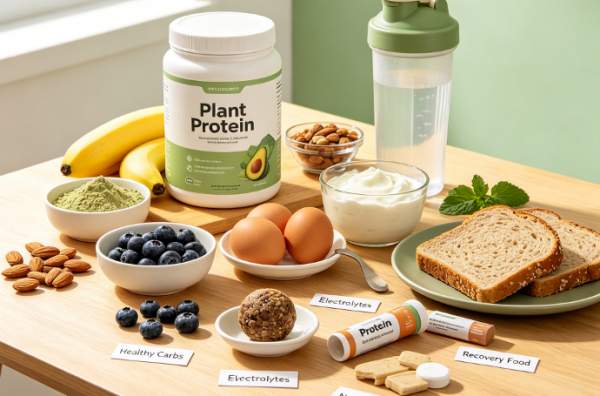
Nutraceutical powder formats require grade selection to be matched to the intended blend and mixing route.
CoQ10 grade selection in nutraceutical powder blends is a format-fit decision before it is a sourcing decision. Coenzyme Q10 is fat-soluble, dissolves in acetone and ether, and is insoluble in water. Suppliers describe CoQ10 in grades such as a 10% water-soluble grade and a 99% grade. Those descriptions answer different formulation questions. The 10% water-soluble grade is positioned around water dispersion, while the 99% grade is a high-assay CoQ10 powder that remains lipophilic. Neither description alone proves that a finished blend will be clear, stable, uniform, or suitable for a specific dose. This brief maps both grades to common powder-blend scenarios and sets out the evidence a buyer should request before a pilot or purchase order.
What the grade names establish, and what they do not
The first useful distinction is chemical versus supplied grade. CoQ10 itself is fat-soluble and insoluble in water. A 10% water-soluble grade is a supplied CoQ10 preparation in which the CoQ10 content is lower and the grade is designed for water-dispersion applications. It should not be read as pure CoQ10 becoming water-soluble. A 99% grade is a high-assay CoQ10 powder, but it is still a lipophilic ingredient. The grade name does not automatically guarantee clarity in a beverage, uniform dispersion in a sachet, or stability in a gummy or bar.
For a powder blend, the practical meaning of a grade depends on four linked items: the CoQ10 assay in the supplied powder, the carrier or dispersion system, the test method used to support the water-dispersion claim, and the finished matrix. A dispersion test in water at a stated concentration is not the same as solubility of pure CoQ10. Buyers should ask for the test medium, concentration, temperature, and observation method used for the grade, then repeat the check in the actual blend.
Decision rule: start with the finished format, not the grade name. A 10% grade and a 99% grade can both be valid, but they solve different blend problems. Neither grade is universally superior.
Why solubility changes the blend conversation
CoQ10's fat-soluble profile matters most after the powder meets water or a water-containing matrix. In a hard capsule or tablet, the powder is not expected to dissolve in water during use, so the main questions are assay per unit, blend uniformity, flow, and fill or compression performance. In a sachet or beverage powder, the consumer or formulator adds water. At that point, a grade described as water-soluble may offer a different dispersion route from a 99% CoQ10 powder, but the result still depends on the full formula.
Carrier load is the second practical issue. A 10% grade contains a lower CoQ10 assay than a 99% grade. If the target label dose is high, the mass of the 10% grade needed per sachet or capsule may become a constraint on stick-pack size, capsule size, taste, or excipient balance. The calculation should use the measured CoQ10 assay in the purchased lot, not the grade name alone. Conversely, a 99% grade may reduce the powder mass needed for a given CoQ10 dose, but it does not remove the need for emulsification, suspension, or dry-blend uniformity work in water-based formats.
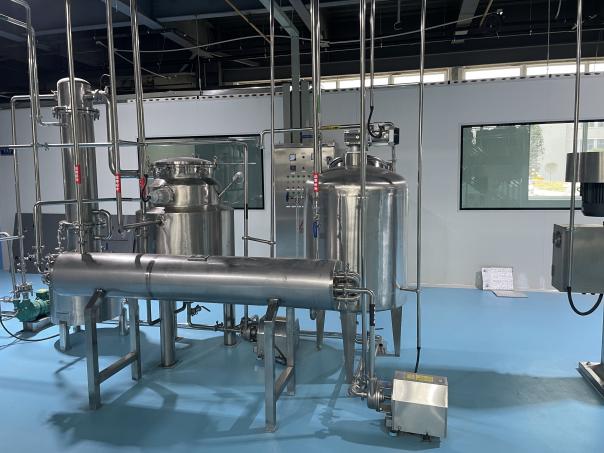
Manufacturing and testing evidence should be linked to the exact CoQ10 grade and lot under review.
Scenario-fit map for powder blends
The following map is a screening aid, not a performance claim. Each fit statement should be confirmed with a grade-specific certificate of analysis, a dispersion or uniformity test in the intended matrix, and a stability check under the planned storage conditions.
| Blend scenario | Where the 10% water-soluble grade may fit | Where the 99% grade may fit | Buyer check |
|---|---|---|---|
| Hard capsules and tablets | May be considered when a water-dispersion positioning is also part of the product concept, or when a lower assay per unit is acceptable. | May be considered when a high CoQ10 assay per capsule or tablet is needed and the powder mass must be controlled. | Confirm assay per unit, blend uniformity, flow, fill or compression performance, and capsule or tablet size. |
| Powder sachets and stick packs | May fit a sachet designed to be mixed with water, because the grade is supplied for water-dispersion use. | May fit a sachet carried in a fat-based or emulsion powder system, or where a high assay per gram is useful. | Check dispersion, sediment, mouthfeel, taste, and uniformity in the finished sachet formula. |
| Functional beverage powders | May be considered for ready-to-mix beverage powders where water dispersion is the target. | May be considered where the formulator can build an emulsion or suspension system around a lipophilic CoQ10 powder. | Check clarity or opacity targets, ringing, creaming, sediment, and stability in the actual beverage base. |
| Gummies and functional confectionery | May be considered where the confectionery process is water-based and the grade can be dispersed in the planned process step. | May be considered in fat-based or emulsion confectionery systems, or where a higher assay helps control piece weight. | Confirm thermal process, dispersion before setting, dose uniformity, and sensory effects. |
| Protein bars, fortified cereals, and snacks | May be considered where a water-dispersion claim is relevant, though the bar or snack itself is not a water system. | May fit low-moisture, fat-containing matrices where a high-assay powder can be blended uniformly. | Check dry-blend uniformity, taste, texture, and stability over shelf life. |
| Sports nutrition powders | May fit ready-to-mix sports powders where the consumer adds water and dispersion is part of the use experience. | May fit capsule, softgel, or emulsion-based sports formats where a high assay per unit is the priority. | Confirm dispersion, taste, shaker performance, and compatibility with electrolytes or other actives. |
Technical checks for a 10% water-soluble grade
A 10% water-soluble grade should be qualified as a CoQ10 preparation, not as a single solubility number. The buyer should request the CoQ10 assay method and result, the identity and amount of the carrier or dispersion system, the test method behind the water-dispersion claim, and the lot number linked to those documents. If the supplier cannot provide a grade-specific certificate of analysis and a clear test method, the grade name is not enough for formulation evaluation.
Useful application checks include powder appearance, bulk density, particle-size distribution where relevant, moisture, flow, and behaviour in the intended blend. For a sachet or beverage powder, run a small dispersion trial at the intended use concentration and observe mixing time, sediment, foaming, and mouthfeel. For a capsule or tablet, run a blend-uniformity check and confirm fill or compression behaviour. These checks do not require a universal threshold; they should be tied to the buyer's specification and the finished product's target.
Where a 99% grade earns a place
A 99% grade is most useful when the formulation needs a high CoQ10 assay in a small powder mass. That can matter in capsules, tablets, softgels, oil suspensions, and emulsion systems where the carrier load from a lower-assay grade would be difficult to accommodate. The 99% grade can also be relevant in dry blends where the formulator already has a suitable dispersion or emulsion strategy for a lipophilic ingredient. It does not become water-soluble, and it does not eliminate the need for a matrix-specific dispersion test.
The fit boundary is important. A higher assay is not automatically a better blend outcome. If a water-based ready-to-mix product needs a clear or evenly dispersed drink, a 99% CoQ10 powder may require additional formulation work that the buyer must validate. If a capsule needs a precise low dose, a 10% grade may require more powder mass than the capsule can accommodate. The right question is not which grade is stronger, but which grade gives the required dose, uniformity, process fit, and consumer experience in the intended format.
Microbial fermentation and batch evidence
CoQ10 can be produced through microbial fermentation, and buyers evaluating a fermentation-based CoQ10 should ask how that route is documented. A fermentation claim is not a quality grade by itself. The useful evidence is batch genealogy: fermentation lot identification, recovery and purification steps where disclosed, final lot certificate of analysis, and any independent testing report that links to the purchased grade. A supplier's general fermentation capability should not be treated as proof that a specific CoQ10 lot was made by that route.
This is also a practical audit point for powder blends. If a buyer is comparing a 10% water-soluble grade and a 99% grade, the comparison should be made at the same level of lot evidence. Ask for the CoA of the exact grade, the carrier declaration for the 10% grade, the assay method for both grades, and the microbial and heavy-metal test reports required by the destination market. The production route can then be assessed alongside the grade specification rather than in place of it.
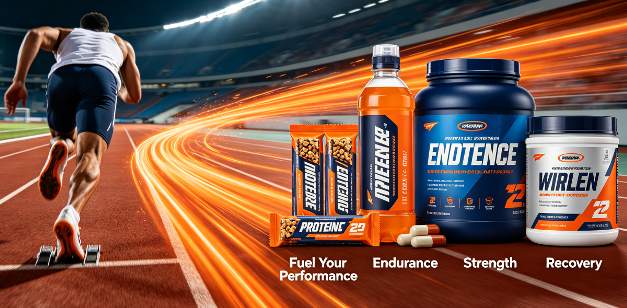
Sports nutrition powders are one scenario where ready-to-mix dispersion and capsule or emulsion formats may call for different CoQ10 grades.
Guanjie Biotech in a CoQ10 blend project
Guanjie Biotech is a Shaanxi-based ingredient supplier founded in 2004. Its product portfolio lists Coenzyme Q10 powder under CAS 303-98-0. Company-level facts include a 7,000 m² footprint, a 2,000 m² cGMP-standard clean workshop, an independent R&D center, and a 500 m² laboratory, with certifications such as ISO, Halal, and Kosher. The company also reports an annual output of 500 tons and a 90% export ratio. These are company-level facts, not CoQ10-grade-specific performance claims or CoQ10 line capacity figures.
For a CoQ10 powder blend, those facilities are relevant as audit points: they can support questions on batch records, laboratory testing, and quality-system documentation. They do not replace the grade-specific evidence. A buyer should still confirm the current CoQ10 grade, CoQ10 assay, carrier system where applicable, and lot CoA before moving from screening to a pilot. The useful sequence is grade specification, then carrier and assay review, then a dispersion or uniformity trial, then a stability check in the finished format.
Quality and regulatory checks before a pilot
The U.S. FDA states that dietary supplement manufacturers, packagers, and holders must follow current good manufacturing practices intended to help ensure identity, purity, quality, strength, and composition. That requirement is a useful baseline for supplier questions, but it does not prove that any particular supplier or CoQ10 lot complies. The buyer still needs current certificates, audit records, and lot-level test reports.
A practical CoQ10 blend qualification file should include the grade-specific CoA, the assay method, the carrier declaration for a 10% water-soluble grade, microbial limits, heavy metals, residual solvents where applicable, and a statement of the allergen and storage controls relevant to the buyer's market. If the finished format is a beverage powder or sachet, add a dispersion test in the intended liquid. If the format is a capsule or tablet, add blend uniformity and fill or compression data. The exact limits should come from the buyer's specification and the destination market, not from a generic article.
Decision rules for buyers
- Start with the finished format. A capsule, sachet, beverage powder, gummy, bar, and sports powder place different demands on a CoQ10 grade. Choose the format first, then screen grades against it.
- Calculate from assay, not the grade name. Use the measured CoQ10 assay in the purchased lot to calculate powder mass per dose. A 10% grade and a 99% grade can require very different carrier loads.
- Test dispersion in the real matrix. A water-dispersion claim should be checked in the actual sachet, beverage powder, or other water-containing system. Observe mixing, sediment, and sensory effects.
- Match carrier allowance to dose. If the dose is high, the lower assay of a 10% grade may affect stick-pack size or capsule size. If the dose is low, a high-assay grade may need tighter weighing and blend control.
- Qualify the lot and supplier, not just the grade. Ask for the CoA, test methods, carrier declaration, and batch traceability. Treat fermentation route claims as part of the evidence package, not as a substitute for grade testing.
Fit boundaries and limitations
The 10% water-soluble grade is not automatically better for every water-containing product, and the 99% grade is not automatically better for every high-dose product. A water-soluble grade can still show sediment, taste effects, or instability in a specific beverage base. A 99% grade can still be difficult to disperse without an emulsion or suspension system. A supplier's general manufacturing or laboratory capability does not establish that a specific CoQ10 grade will perform in a specific blend.
This brief also does not assert a bioavailability, clinical, or shelf-life outcome for either grade. Those outcomes require product-specific testing. The defensible conclusion is narrower: CoQ10 is fat-soluble and insoluble in water; the 10% water-soluble grade and the 99% grade serve different formulation intents; and the buyer should confirm grade-specific assay, carrier, dispersion, uniformity, and lot evidence before a pilot.
FAQ
Is CoQ10 water-soluble?
CoQ10 itself is fat-soluble, dissolves in acetone and ether, and is insoluble in water. A 10% water-soluble grade is a supplied CoQ10 preparation designed for water-dispersion applications. It should not be read as pure CoQ10 becoming water-soluble. Confirm the grade's CoQ10 assay, carrier, and dispersion test method.
What is the difference between 10% water-soluble and 99% CoQ10 powder?
The 10% water-soluble grade contains a lower CoQ10 assay in a water-dispersible preparation, while the 99% grade is a high-assay CoQ10 powder that remains fat-soluble. The choice depends on dose, carrier allowance, target matrix, and process. Neither grade is universally superior.
Which grade may fit a powder sachet?
A 10% water-soluble grade may fit a sachet intended to be mixed with water, because the grade is supplied for water-dispersion use. A 99% grade may fit a sachet where the powder is carried in a fat-based or emulsion system, or where a high assay per gram is needed. Check dispersion, sediment, taste, and uniformity in the actual sachet formula.
Does microbial fermentation affect CoQ10 grade selection?
Microbial fermentation is one production route for CoQ10. It is not a grade by itself. Buyers should ask for fermentation batch records where relevant, lot traceability, and a CoA that matches the purchased grade. The production route should be evaluated alongside assay, purity, and application testing.
What should be tested in a CoQ10 powder blend trial?
Test CoQ10 assay, blend uniformity, moisture, flow or fill performance, dispersion in the intended liquid, and stability under the planned storage conditions. Also check heavy metals, microbial limits, and residual solvents against the buyer's specification. The exact test panel should match the destination market and finished format.
Reference resource: Guanjie Nutraceutical Ingredients brochure.
Tem questões ou precisa de mais detalhes?
Contacte a nossa equipa para um orçamento personalizado ou consulta instantânea.
Solicitar orçamento
Preencha o formulário abaixo e a nossa equipa entrará em contacto com uma proposta personalizada.
Chat direto do WhatsApp
Prefere conversar em tempo real? Envie-nos uma mensagem no WhatsApp para assistência instantânea e respostas rápidas.
- Obter orçamento personalizado
- Partilhar fotos ou documentos
- Discuta as suas necessidades diretamente
Geralmente responde em 5–30 minutos durante o horário de expediente.