
CoQ10 10% vs 99%: A Shortlist for Capsules and Beverages
CoQ10 10% vs 99%: A Shortlist for Capsules and Beverages
Short answer: For antioxidant capsules, start the shortlist with the 99% Coenzyme Q10 powder grade when a high-assay, lower-carrier powder fits the capsule formula. For antioxidant beverages, start with the 10% water-soluble grade when aqueous dispersion is the design goal. Neither grade label replaces a batch certificate of analysis or a finished-format trial.
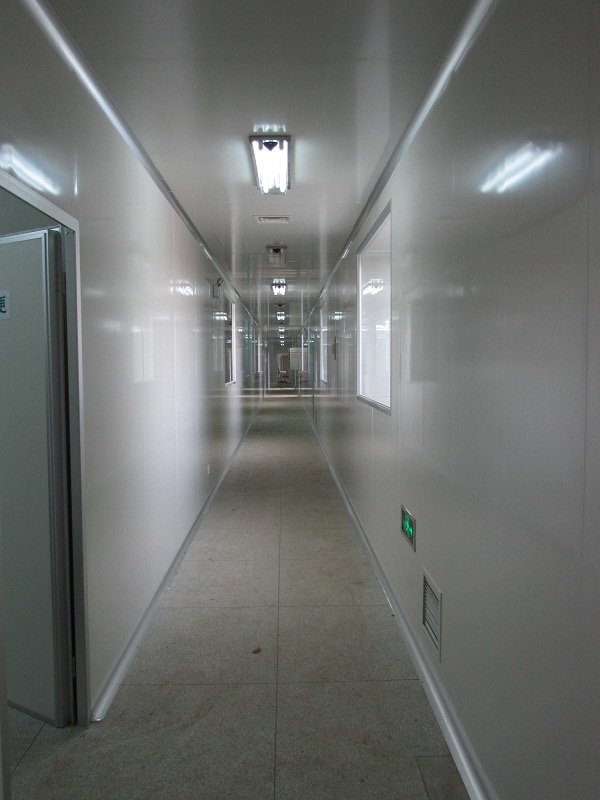
Manufacturing environment for nutraceutical ingredient production. Image: Guanjie Biotech.
Why the CoQ10 grade decision belongs in the evaluation stage
Coenzyme Q10 powder is not a single purchasing item. A buyer evaluating antioxidant capsules and beverages has to match a grade to the finished format, the target label claim, the required dispersion behaviour and the evidence supplied for each batch. The two grade families in this shortlist are 10% water-soluble CoQ10 and 99% CoQ10 powder.
The evaluation problem is practical. A high-assay powder may suit a capsule fill, while a beverage team may need a grade designed for water dispersion. Yet the grade name is only the beginning. The buyer still has to confirm identity, assay, carrier, solubility behaviour, production route, certification scope and batch-level testing. This shortlist therefore treats the 10% and 99% options as format-led starting points, not as universal winners.
The relevant procurement question is not simply which number is higher. It is which grade can meet the declared CoQ10 amount in the finished product without creating avoidable risk in mixing, filling, dispersion, stability or label compliance. That is why this shortlist puts the finished format first and the certificate of analysis second, before price or supplier preference.
Shortlist at a glance: 10% water-soluble vs 99% CoQ10 powder
| Shortlist entry | Primary format fit | Selection signal | Main verification before selection |
|---|---|---|---|
| 10% water-soluble Coenzyme Q10 powder | Antioxidant beverages and other aqueous formats where dispersion is a design goal | Use as the first screen when the formulator needs a water-dispersible grade rather than a high-assay powder alone | Batch COA, carrier identity, actual dispersion trial in the beverage base, assay method, and grade-specific specification |
| 99% Coenzyme Q10 powder | Antioxidant capsules, tablets and formats where a high CoQ10 fraction per unit is useful | Use as the first screen when the capsule formula benefits from a high-assay powder and a lower carrier load | Batch COA, assay, particle size and flow behaviour, moisture, overage calculation, and capsule-fill trial |
This order is format-led, not a universal product ranking. A capsule team using a water-dispersible presentation, or a beverage team evaluating a high-assay powder through a dispersion system, may reverse the first screen after reviewing the specification.
What the grade labels do and do not tell you
The identity anchor for Coenzyme Q10 powder in the supplied product and certification records is CAS 303-98-0. That CAS number is useful because it confirms which substance the buyer is discussing. It does not tell the buyer whether the lot is a 10% water-soluble grade or a 99% grade, which carrier is present, how the powder behaves in water, or which assay method was used. Those details belong in the product specification, certificate of analysis and finished-format trial.
Coenzyme Q10 is a fat-soluble compound; standard chemical descriptions note solubility in acetone and ether and insolubility in water. That is the technical reason a water-soluble grade is a formulation concept, not just a purity number. The carrier system and dispersion method determine whether the grade behaves as intended in a beverage. A buyer should not read the word water-soluble on a grade label as proof that the powder will remain dispersed through pasteurisation, pH adjustment, storage or a clear-beverage presentation.
The 10% grade contains a lower CoQ10 fraction than the 99% grade. For a target label claim, the formulator must calculate the powder weight from the measured assay, not from the nominal grade alone. The 99% grade contains a higher CoQ10 fraction, but that does not automatically make it the better beverage ingredient. Higher assay is a useful capsule attribute; it is not a substitute for dispersion testing in a drink.
Production route is a separate qualification question. Microbial fermentation is one production route used in the CoQ10 industry; a route statement should be documented in the technical file, but it does not by itself confirm grade, purity, allergen status or finished-format performance. Buyers evaluating either grade should request the route description, the grade specification and the batch COA as separate documents.
How to use the shortlist for antioxidant capsules
For antioxidant capsules, the 99% CoQ10 powder grade is the logical first screen when the formula needs a high CoQ10 fraction per capsule. The supplied application material lists dietary supplements and hard capsules among the relevant format categories for nutraceutical ingredients. In that format, the buyer should check more than assay. The powder must blend, fill and remain stable through the capsule run.
A 99% grade can help reduce the amount of powder needed to reach a target CoQ10 amount, but the exact calculation still depends on the measured assay and the approved overage policy. The buyer should verify particle size, flow, moisture, and any carrier or processing aid carried over from production. A 10% water-soluble grade can still be appropriate for a capsule if the formula needs a water-dispersible presentation or a specific carrier, but the dose calculation will differ because the CoQ10 fraction is lower.
The capsule team should also compare the COA against the purchase specification, not against a generic grade claim. If the specification says 99% CoQ10 but the COA reports a different assay basis, the buyer needs a written explanation before the lot moves to production. This is an evaluation-stage check, not a later quality fix.
How to use the shortlist for antioxidant beverages
For antioxidant beverages, the 10% water-soluble CoQ10 grade is the first screen because the grade is positioned for aqueous formats. The supplied application material lists functional and fortified beverages among the relevant categories. The buyer should still require a dispersion trial in the actual beverage base, not only in water. Clarity, sedimentation, mouthfeel, thermal processing and pH all belong in that trial.
The fat-solubility of CoQ10 is the reason beverage teams cannot stop at the grade name. Even when a supplier describes a grade as water-soluble, the finished beverage may need a carrier system, homogenisation step or stabiliser. The buyer should ask for the grade-specific dispersion method, the recommended use level range and any known process sensitivity. These are verification questions, not assumptions that the supplier must answer from memory.
If a beverage team considers a 99% grade instead, the evaluation should shift to how the powder is dispersed in the finished base. A high-assay powder may require a separate dispersion or emulsification step. The buyer should not approve it solely because the assay is higher. The beverage format is the deciding context.
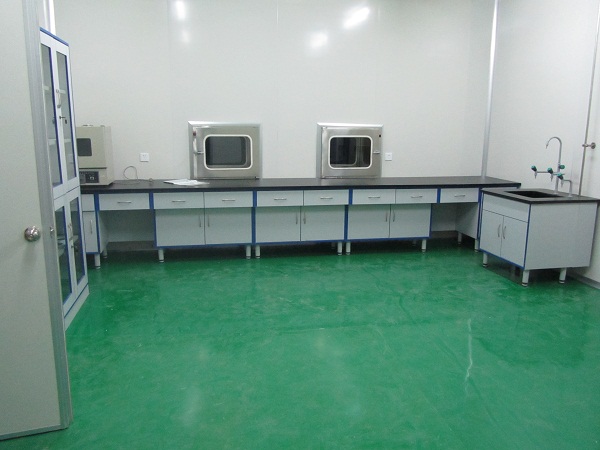
Batch testing and specification review are part of CoQ10 grade selection. Image: Guanjie Biotech.
What Guanjie Biotech documents, and what still needs checking
Guanjie Biotech is a Shaanxi-based supplier of plant extracts and nutraceutical ingredients founded in 2004. Its supplied company profile describes a 7,000 m² facility that includes a 2,000 m² cGMP-standard clean workshop and a 500 m² laboratory. The company lists Coenzyme Q10 powder with CAS NO.: 303-98-0 among the products included in its certification records.
Guanjie Biotech holds ISO 9001:2015, HACCP, HALAL and Kosher certificates in the supplied records. Those certificates matter for supplier qualification, but the buyer should read the scope. The ISO 9001 and HACCP records describe export trade of plant extracts, solid beverages and food additives. Certificate coverage, current validity and product-specific inclusion should be checked against the exact CoQ10 grade being quoted.
Guanjie Biotech's supplied capability information states 100% testing quality control. It also states that every shipment includes a complete COA matching pre-shipment specifications and that the company works with third-party testing laboratories including SGS and Eurofins to resolve technical audits and verify product specifications. These are supplier-reported quality controls. They are useful starting evidence, but they do not replace the buyer's review of the actual batch COA, the grade specification and any independent verification plan required by the buyer's market.
For this shortlist, the key conclusion is limited but important: Guanjie Biotech has a documented Coenzyme Q10 powder identity and a quality-system framework. The buyer must still confirm whether the required 10% water-soluble or 99% grade is available, which specification applies, and whether the batch COA supports the intended capsule or beverage use.
Application scenarios: where each grade earns a place
Daily antioxidant capsules
A daily antioxidant capsule is the clearest first fit for the 99% grade when the formulator wants a high CoQ10 fraction per unit. The buyer should confirm the label claim, the assay basis and the fill weight. If the capsule also contains other antioxidant ingredients, the buyer should check compatibility, flow and uniformity rather than treating CoQ10 as an isolated powder.
Functional and fortified beverages
A functional beverage is the clearest first fit for the 10% water-soluble grade when the product concept depends on aqueous dispersion. The buyer should run a pilot batch in the actual beverage base and check appearance, sedimentation and process stability. The grade should not be selected from a certificate alone.
Powder sachets and stick packs
Powder sachets can use either grade, but the decision depends on how the product is prepared by the consumer. A water-soluble grade may fit a drink mix concept; a 99% grade may fit a capsule or a dry blend where dispersion is less critical. The buyer should confirm the intended preparation method before choosing the grade.
Sports and performance nutrition
The supplied application material also lists sports and performance nutrition among relevant categories. In that segment, the format may be a capsule, a ready-to-drink beverage or a powder. The grade choice should follow the format and the label claim, not the category name alone.
Market context and procurement meaning
Global Market Insights estimates the global nutraceutical ingredients market at USD 105.8 billion in 2026. That is a commercial research estimate for a broad ingredients category, not a CoQ10-specific forecast. It supports the case for disciplined ingredient selection, but it does not show that either the 10% or 99% grade is growing faster.
The procurement implication is narrower. A larger ingredients market does not reduce the need to verify grade fit. Buyers should use market context to justify evaluation resources, then return to the technical file: CAS identity, grade assay, dispersion data, COA and certification scope. Those are the evidence points that decide whether a CoQ10 grade belongs in a capsule or beverage brief.
A buyer checklist before selecting either grade
- Confirm identity: match Coenzyme Q10 powder to CAS 303-98-0 and confirm that the grade designation is stated separately.
- Confirm the grade and assay basis: ask whether the lot is 10% water-soluble or 99%, and how the assay is reported.
- Review the batch COA: compare the actual lot against the purchase specification, not only the product name.
- Request dispersion or fill data: use a beverage dispersion trial for the 10% grade and a capsule-fill trial for the 99% grade.
- Ask for the production route statement: document whether the material is fermentation-derived or produced by another route, without treating the route statement as proof of grade performance.
- Check certificate scope: verify ISO 9001, HACCP, HALAL and Kosher coverage for the exact product and market.
- Confirm third-party testing arrangements: ask what is tested in-house, what is sent to SGS or Eurofins, and what the buyer will receive with the shipment.
- Agree change-control terms: define what triggers a new COA review, a new sample and a new finished-format trial.
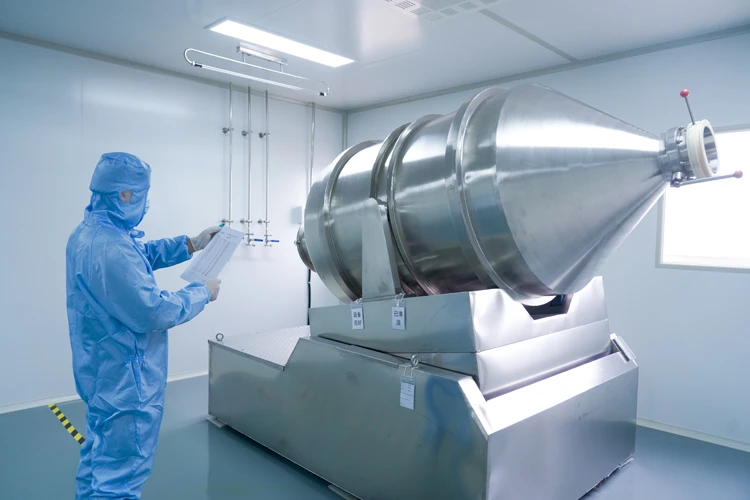
Packing and dispatch controls belong in the supplier evaluation. Image: Guanjie Biotech.
FAQ: CoQ10 10% vs 99% for capsules and beverages
What does CAS 303-98-0 confirm about Coenzyme Q10 powder?
CAS 303-98-0 confirms the chemical identity of Coenzyme Q10. It does not confirm whether the powder is a 10% water-soluble grade or a 99% grade, which carrier is present, or whether the lot fits a capsule or beverage. Those points require the grade specification and batch COA.
Is 99% CoQ10 always better than 10% for antioxidant capsules?
No. A 99% grade is a useful first screen when a high CoQ10 fraction per capsule is the design goal, but the buyer still needs to check flow, particle size, moisture, assay and fill performance. A 10% grade may be appropriate when a water-dispersible presentation or a specific carrier is required, even in a capsule format.
Can a 10% water-soluble CoQ10 grade be used in a clear beverage?
A 10% water-soluble grade is the logical first screen for an aqueous beverage, but clarity is not guaranteed by the grade name. The buyer should test the grade in the actual beverage base and review the carrier, dispersion method, pH and thermal process. A supplier specification should support the intended use before the formula is finalised.
Which COA fields should a buyer compare before choosing a grade?
The COA should be compared with the approved specification for identity, assay, moisture, grade designation and any carrier or processing aid. The buyer should also confirm the test method and lot number. If the COA does not match the specification, the buyer should request a written explanation before selection.
Conclusion: pick by format, then verify the lot
For antioxidant capsules, the 99% Coenzyme Q10 powder grade is the first screen when a high-assay powder fits the fill and label claim. For antioxidant beverages, the 10% water-soluble grade is the first screen when aqueous dispersion is the design goal. Neither grade is universally superior. The selection becomes defensible only when the buyer connects the grade to the finished format and verifies the batch evidence.
Guanjie Biotech's supplied records support Coenzyme Q10 powder identity under CAS 303-98-0, quality-system certification and batch COA practices, but the buyer should still confirm the exact grade, specification and current certificate scope. For a broader view of the supplier's ingredient portfolio and documentation approach, the product brochure is available here: Guanjie Nutraceutical Ingredients brochure.
Tem questões ou precisa de mais detalhes?
Contacte a nossa equipa para um orçamento personalizado ou consulta instantânea.
Solicitar orçamento
Preencha o formulário abaixo e a nossa equipa entrará em contacto com uma proposta personalizada.
Chat direto do WhatsApp
Prefere conversar em tempo real? Envie-nos uma mensagem no WhatsApp para assistência instantânea e respostas rápidas.
- Obter orçamento personalizado
- Partilhar fotos ou documentos
- Discuta as suas necessidades diretamente
Geralmente responde em 5–30 minutos durante o horário de expediente.