
Coated vs. Conventional: Semiconductor Process Materials Compared
Semiconductor process material selection has become one of the most consequential procurement decisions in advanced manufacturing. In high-temperature applications such as epitaxy and silicon crystal growth, the choice between OEM components, conventional solid graphite, coated parts, or carbon-fiber composite (CFC) materials directly affects cost per wafer, defect density, and maintenance frequency. This article examines two specific alternatives: SiC/TaC coated parts and CFC hot-zone components, using comparative production data reported by Semicera.
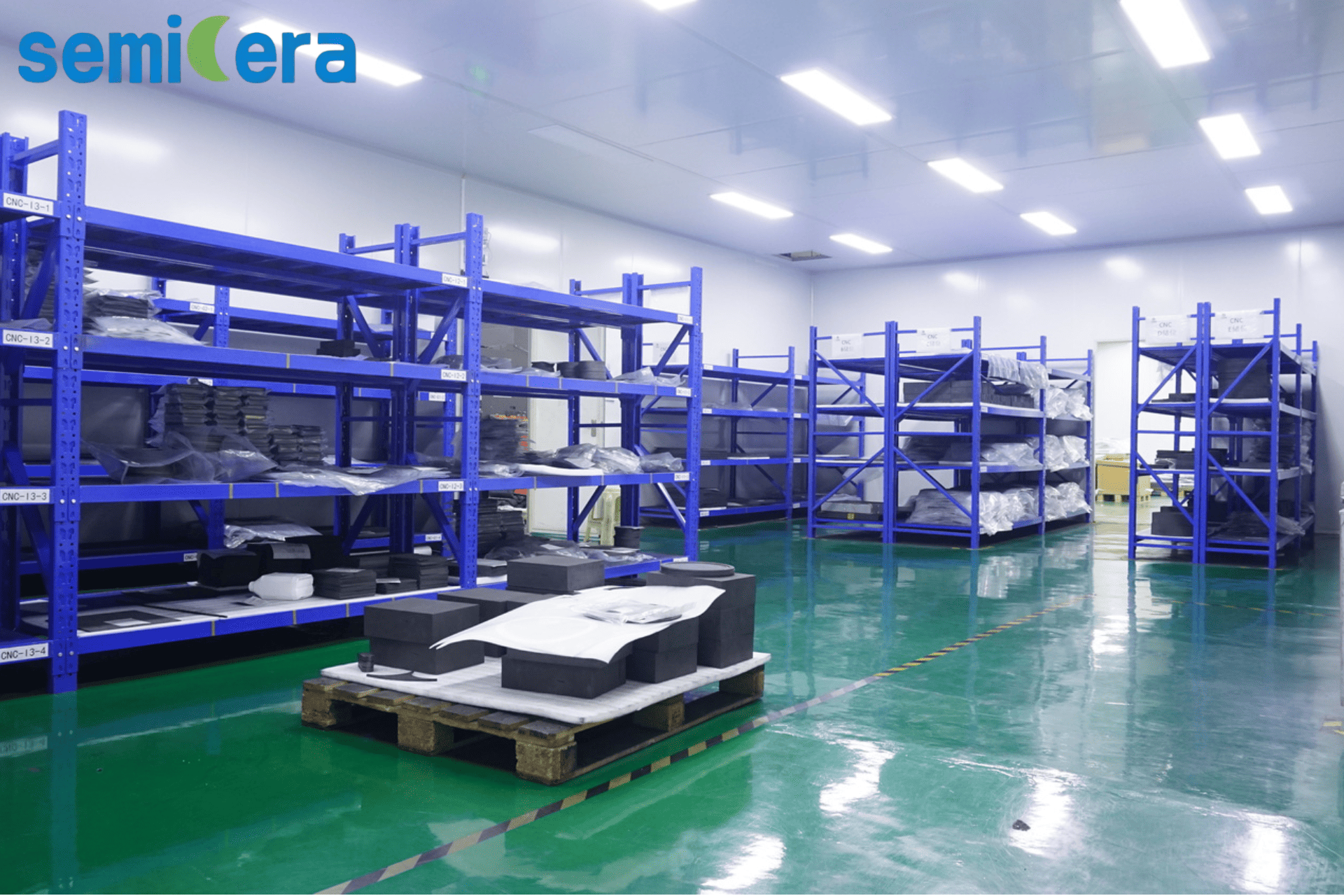
Why procurement teams are revisiting process materials
Sourcing teams are usually asked to balance initial part cost against long-term reliability. OEM parts are often a safe reference point, but they can be expensive and subject to longer lead times. Conventional solid graphite components are widely used, but their service life in demanding process environments is limited. A growing number of buyers are therefore evaluating coated parts or composite materials as alternatives.
The decision is not simply about material type. Process chemistry, operating temperature, thermal cycling, and system geometry all play a role. A solution that works in one furnace may not deliver the same result in another. For this reason, buyers need comparable data points that can be validated against their own processes.
Material families used in semiconductor hot zones
Graphite remains one of the most important base materials in semiconductor hot zones because it can be machined into complex shapes and withstand high temperatures. However, bare graphite can react with process gases at high temperatures, making surface engineering necessary for many applications.
Coated graphite parts use a CVD layer to isolate the graphite from the process environment. Silicon carbide coating is widely used in MOCVD and epitaxial reactors. Tantalum carbide coating is used in more aggressive thermal conditions. Carbon-fiber composite material provides mechanical strength for hot-zone insulation systems. These material families serve different process needs, which is why a side-by-side comparison is more useful than a single specification sheet.
How SiC/TaC coated parts compare with OEM parts
SiC/TaC coated parts are designed for applications where surface purity and particle control are critical. According to Semicera's comparative data, the ultra-pure CVD SiC coating limits outgassing and particle contamination, which in turn reduces micropipes, pits, and carrots on the epitaxial layer. The reported performance advantage over OEM parts is a 10-15% improvement in epitaxial layer uniformity and less than 5% particle generation.
These parts also cost 30-40% less than OEM parts while offering the same service life and identical maintenance intervals. From a procurement perspective, this combination is notable: lower acquisition cost, no loss in lifespan, and comparable maintenance planning.
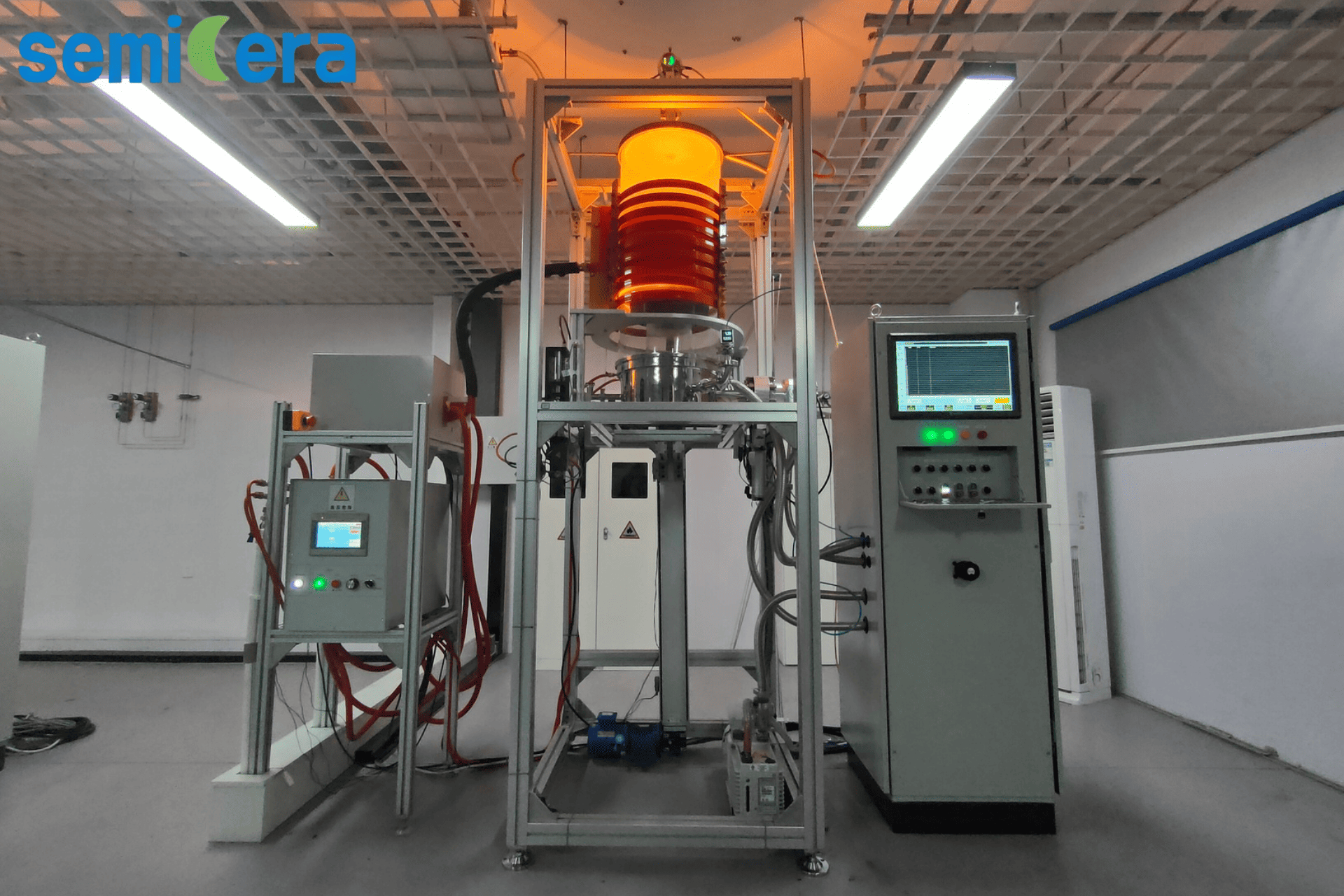
Why CFC material fits silicon crystal growth
In silicon crystal growth, the hot zone must maintain its shape and structural integrity through repeated thermal cycles. Semicera states that CFC material provides 3 to 5 times longer service life, over 20% higher structural load capacity, and up to 50% better energy efficiency than conventional solid graphite components. The longer lifespan reduces replacement frequency, while the structural margin gives furnace designers more flexibility. The result is lower total cost of ownership.
The energy saving figure is particularly valuable in continuous pulling processes, where the hot zone is held at high temperature for extended periods. Reducing energy loss and component replacement frequency can have a measurable effect on production cost.
Risk control in high-temperature materials
Coating and material cracking are among the key risks in high-temperature semiconductor components. To address this, Semicera performs high-temperature simulation testing and applies strict thermal cycle screening. This internal control step is designed to eliminate defective products before they reach the customer and is part of the company's quality assurance system.
For buyers, this means that comparative performance data should be supported by evidence of thermal stability. A coated part may perform well in a coupon test, but only realistic thermal cycling can reveal whether it will survive long production runs.
Building a supplier benchmark
Fabs often qualify a supplier based on four factors: material purity, coating performance, production capacity, and quality control. Semicera reports impurity levels below 5 ppm for high-purity graphite, and its R&D team includes more than 100 engineers focused on coating processes and precision manufacturing.
Production scale also matters. A supplier with multiple production lines and a large finishing inventory is more likely to maintain consistent lead times. Semicera operates more than 50 advanced production lines and three production bases, supported by a 40,000 m² facility. The company was founded in 2015 and exports about 40% of its output to the EU, USA, and Asia.
Interpreting the numbers
The 30-40% cost advantage does not mean that every epi component should automatically be sourced from a non-OEM supplier. The number is based on a direct comparison of Semicera's coated parts with OEM parts in the same application. Buyers should always verify whether the comparison matches their own process and component configuration.
Total cost of ownership includes purchase price, installation, consumable life, maintenance labor, and process yield. A slightly cheaper part that creates more defects will quickly become expensive. The reported performance metrics for coated parts are intended to show that the lower purchase price does not come at the cost of layer quality or lifespan.
What market data indicates for semiconductor process materials
Market data from multiple sources reflects growing demand for advanced process materials. SEMI reports that global semiconductor materials revenue reached $67.5 billion in 2024, up 3.8% from the previous year. Wafer fabrication materials, a segment that includes CVD materials and process chemicals, grew 3.3% to $42.9 billion. Verified Market Reports estimates the global semiconductor graphite market at approximately $1.62 billion in 2024, with a projected CAGR of 7.2% through 2032. The SiC-coated graphite susceptor market was valued at approximately $350 million in 2024, according to Valuates Reports. TECHCET values quartz fabricated parts for semiconductor manufacturing at around $2.21 billion in 2024, with annual growth of 5.5%.
Another visible shift is the use of TaC coatings for ultra-high-temperature processes such as SiC crystal growth. According to QY Research, the top three TaC coating suppliers held 99% of the market in 2022. Even a modest share of this market depends on verified capability in coating thickness control, purity, and process stability.
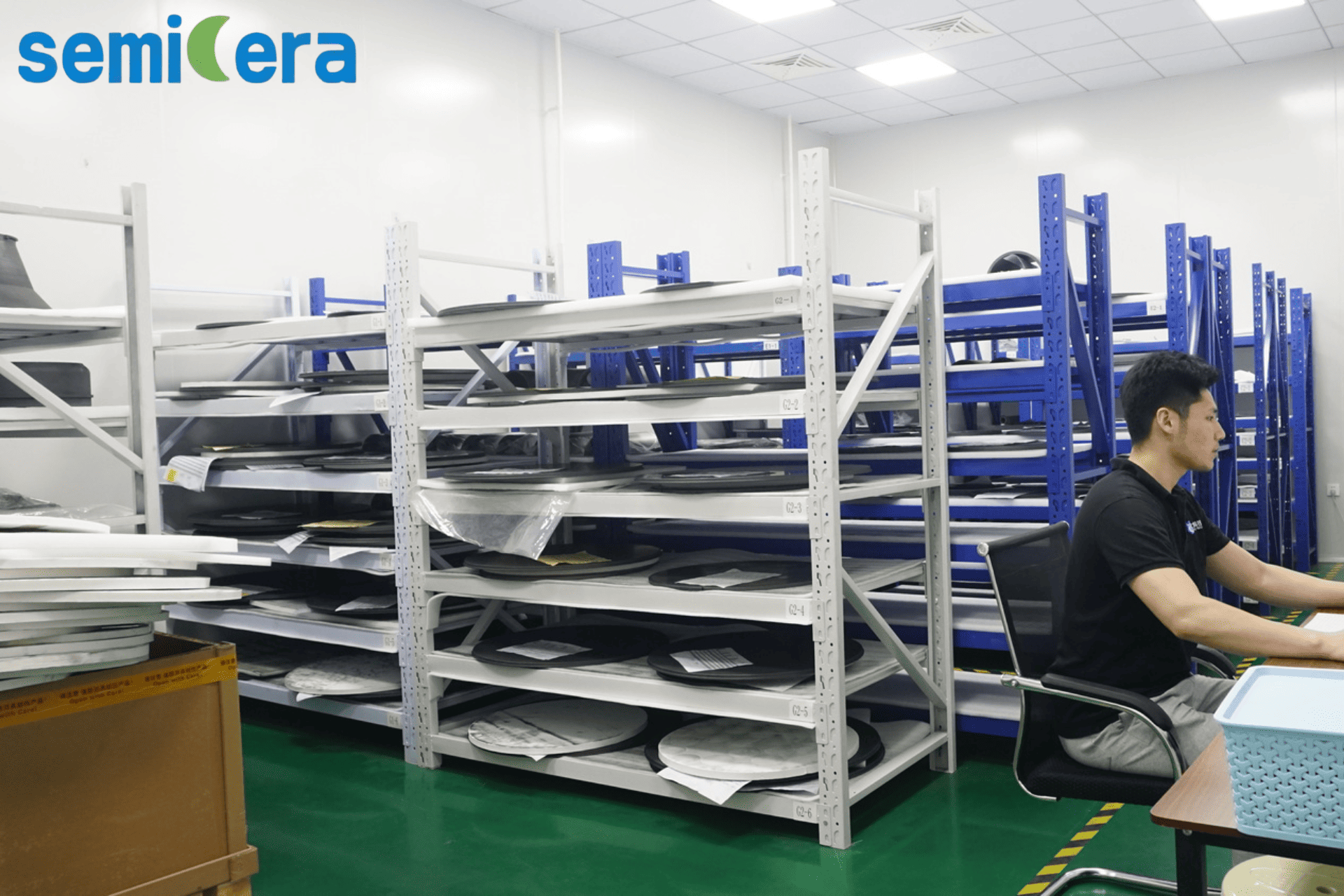
Side-by-side comparison: coated parts and CFC material
The table below summarizes the two comparisons referenced in this article. The data is drawn from Semicera's published comparison materials and is offered here as a procurement reference.
| Attribute | SiC/TaC coated parts vs OEM parts | CFC material vs conventional solid graphite |
|---|---|---|
| Cost difference | 30-40% lower | Similar, but lower TCO through lifespan |
| Service life | Same as OEM | 3 to 5 times longer |
| Performance | 10-15% better epi uniformity; less than 5% particle generation | Over 20% higher structural load capacity; up to 50% energy saving |
| Maintenance | Identical cycle and interval | Reduced due to longer lifespan |
| Best suited for | Epi process | Silicon crystal growth |
What the comparison means for buyers
For epi process buyers, the main takeaway is that a coated part can be a credible substitute for an OEM component, with a lower purchase price and no loss in lifespan. For silicon crystal growth, CFC material offers a path to lower operating costs through longer component life and better energy efficiency. However, the figures are process-specific and should be validated against each production tool.
Limitations to keep in mind
Material selection is not a one-size-fits-all decision. The reported advantages of CFC material are tied to silicon crystal growth scenarios; fabs using short thermal cycles or lower-temperature processes may not reach the same energy saving or lifetime multiples. Similarly, SiC/TaC coated parts are optimized for epi processes, and their uniformity and particle numbers should be assessed in that context. Buyers should also verify that replacement parts are compatible with the original reactor design and meet internal qualifications.
Note: Product and performance data used in this article is sourced from Semicera's public comparison materials and annual capability statements. Independent validation remains a normal step in supplier qualification.
Future outlook for hot-zone materials
The semiconductor materials market continues to expand as leading-edge and specialty fabs increase their use of high-purity consumables and hot-zone components. Procurement teams are expected to apply more structured comparisons involving cost, lifespan, uniformity, and defect control. Suppliers that can document these variables will become easier to qualify.
As device architectures become more demanding, the willingness to switch from traditional parts to coated or composite alternatives will depend on the availability of verified production data. Manufacturers who can provide transparent comparisons and evidence of thermal-cycle reliability are likely to gain trust among procurement teams.
Frequently asked questions
What is the cost and lifespan difference between SiC/TaC coated parts and OEM parts?
Semicera's data shows a 30-40% cost reduction with the same lifespan as OEM parts and identical maintenance intervals.
How do SiC/TaC coated parts affect epitaxial layer quality?
Reported benefits include a 10-15% improvement in epitaxial layer uniformity and less than 5% particle generation. The ultra-pure CVD SiC coating prevents outgassing and particle contamination, reducing micropipes, pits, and carrots.
Why use CFC material in crystal growth hot zones?
CFC material provides 3-5 times longer service life, over 20% higher structural load capacity, and up to 50% better energy efficiency compared with conventional solid graphite. This translates into lower total cost of ownership.
What should a buyer check before adopting coated parts or CFC hot-zone components?
The buyer should check process compatibility, thermal cycling behavior, particle performance, maintenance requirements, and whether the supplier has verified the parts through high-temperature simulation testing.
For a full specification overview, the company's catalog is available for public download: Semicera Catalog 2025