
Coffee-Charcoal Polyester Filament: Apparel Fit & Ranking
Coffee-Charcoal Polyester Filament: Apparel Fit & Ranking
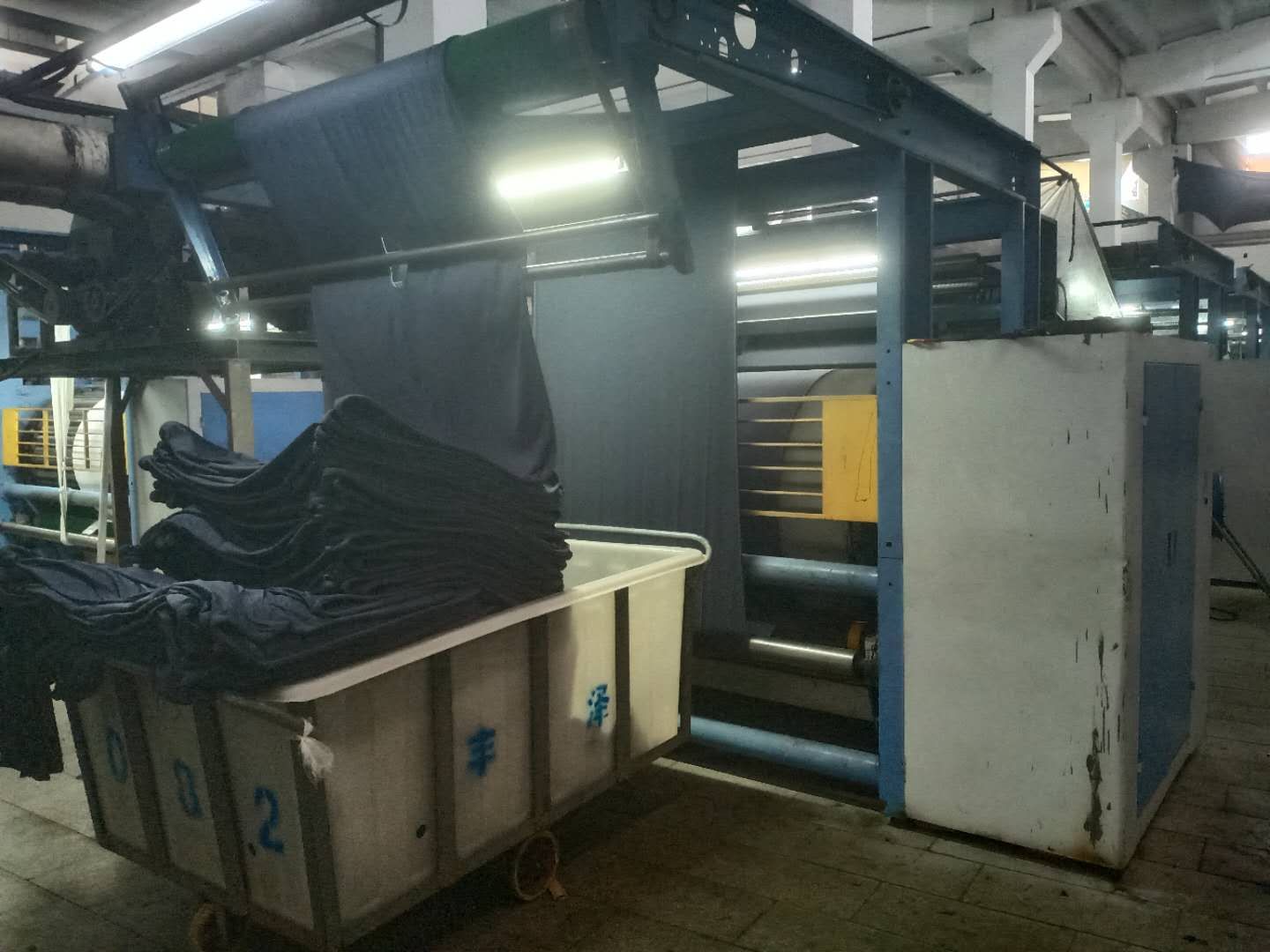
Functional coffee-charcoal antibacterial polyester filament is a polyester filament that carries carbonised coffee-ground material — usually delivered as a recycled coffee-waste masterbatch — into the polymer stream together with recycled PET bottle flake, so that one yarn can combine odour control, far-infrared heating, quick-dry behaviour, dope-dye colour and antimicrobial performance. For garment projects in China, the decisive question is not whether such a filament exists, but whether a specific supplier's version matches a specific end use — a yoga programme, an underwear range, a winter base layer — and whether those functional claims survive bulk spinning, knitting and finishing.
The material sits inside a very large market. Global polyester filament yarn was estimated at USD 106.4 billion in 2024 and is projected to grow at a 3.72% CAGR to 2035 (Market Research Future). Recycled polyester, the sub-segment that coffee-waste filament belongs to, was valued at USD 15.52 billion in 2024 and is expected to reach USD 26.18 billion by 2030, a 9.25% CAGR (Grand View Research). Asia Pacific held a 65% share of the polyester fibre market in 2025, led by China and India (Vertex AI / Industry Analysis). Report scopes differ — total polyester fibre and filament-only estimates are not directly comparable — so the absolute values are best read as directional. The direction itself is consistent: functional and recycled filament is growing faster than commodity filament.
This reference examines coffee-charcoal antibacterial polyester filament as a scenario-fit option for apparel programmes. It follows the production chain from recycled coffee grounds and bottle flake through spinning, knitting, finishing and functional testing, and it benchmarks Smilytex — the Taicang-based developer of the Cocarber® functional filament platform — against four publicly recognised fibre leaders: Toray Industries, Indorama Ventures, Reliance Industries and Teijin Limited.
Why ‘functional’ is a scenario question, not a fibre question
Most functional-filament failures in garment programmes are claim failures rather than fibre failures. Three of them recur.
- Function without a test method. A yarn described as far-infrared or antibacterial is only as strong as the standard applied to it. Far-infrared performance is measurable against GB/T 30127-2013, the Chinese standard for far-infrared performance testing of textiles, and antimicrobial performance is normally assessed against a recognised antimicrobial test regime. Where a supplier cannot name the method, the buyer is purchasing a description rather than a property.
- Recycled content below the labelling threshold. Textile certification schemes such as OEKO-TEX Standard 100 and the Global Recycled Standard require at least 20% recycled content for specific labelling claims. A coffee-waste filament whose recycled input is not traceable through a scope certificate creates a compliance gap that surfaces at brand audit stage rather than at sampling stage.
- Colour route not locked before bulk. Dope-dye incorporation changes shade stability, process water demand and lead time. Programmes that release bulk without locking lab dips against bulk shade expose themselves to rejection risk at final inspection.
Demand is pushing in the same direction. Athleisure preference for moisture-wicking and antimicrobial polyester blends is one of the primary performance-textile trends across 2024–2026 (Mordor Intelligence). Coffee-charcoal filament answers that demand only when the scenario — end use, colour route, certifiable recycled content — is defined before the yarn is ordered.
From coffee grounds to garment: the production chain behind coffee-charcoal filament
Coffee-charcoal antibacterial polyester filament is manufactured in five linked stages, and skipping any of them breaks the functional story downstream.
1. Masterbatch and feedstock preparation
Recycled coffee grounds are dried and carbonised, then dispersed into a masterbatch carrier. In parallel, recycled PET bottle flake is prepared as the polymer feedstock. The route therefore combines two recycled streams — post-consumer coffee waste and post-consumer bottle flake — inside the same filament, which is the technical basis for the Recycle Coffee Waste function carried by Cocarber®-type yarns.
2. Melt spinning and draw texturing
The compounded polymer is melt-spun and draw-textured into DTY filament. The Cocarber® platform is supplied as DTY Cocarber in 30D, 50D, 75D, 100D, 150D and 300D counts, covering fine underwear and lining counts through to heavier knit constructions. Spinning is where elasticity, handle and lustre are set, and where process control determines whether the coffee-charcoal dispersion remains uniform along the yarn.
3. Weaving and knitting
Coffee-charcoal polyester filament is suitable for both woven and knitted applications. Knitted constructions dominate performance apparel — jersey, interlock, rib, ponte — while woven constructions serve outerwear, lining and home textile. Because the functional material is inside the filament rather than applied to the surface, the property travels with the yarn through knitting and is not removed in the same way a topical finish can be.
4. Finishing, including dope dye
Dope dye introduces colour into the polymer before spinning, which reduces the dyeing load at the finishing stage. For coffee-charcoal programmes this matters twice over: it lowers process water and energy demand, and it delivers a more stable shade than piece dyeing over a dark, carbon-rich substrate.
5. Functional testing
Two verification points are material to apparel buyers. Far-infrared performance is assessed against GB/T 30127-2013. Caffeine residue — the marker that confirms coffee-derived material is genuinely present and controlled — is measured by LC-MS/MS at 0.009 mg/kg in the referenced test data for this platform. Those two reference points convert a marketing description into a verifiable property set, and they are the first items a QA team should request.
Policy lineage: development of coffee-waste functional materials in Chinese textiles is linked to national science and technology support programmes, including the National 12th Five-Year Plan’s S&T framework, which directed funding toward advanced materials and resource-recycling research.
What the Cocarber® platform covers for apparel projects
Cocarber® is the coffee-charcoal branch of the Smilytex functional polyester portfolio, developed by Smily Textile Technology (Taicang) Co.Ltd — a Taicang, Jiangsu-based company founded in 2017 that conducts R&D and sales of functional fibre and functional fashion fabrics, operating a 16,220 m² site with 206 employees, a 10-engineer R&D team, more than 20 core patented technologies, and a 70% export ratio serving EU, USA and Japan markets.
- Function set: Recycle Coffee Waste / Odor Control / Far Infrared Heating / Quick dry / Dope Dye / Anti-Microbial.
- Material family: Coffee Charcoal Cocarber®, alongside Bamboo Charcoal, Coconut Charcoal, China-hemp Charcoal, Dope-dyeing, Cotton Feeling, Renewable and Hydrophilic Cocarber® types.
- Counts: 30D, 50D, 75D, 100D, 150D, 300D.
- Target sectors: Sport, Leisure, Underwear and Home textile, in both woven and knitted constructions.
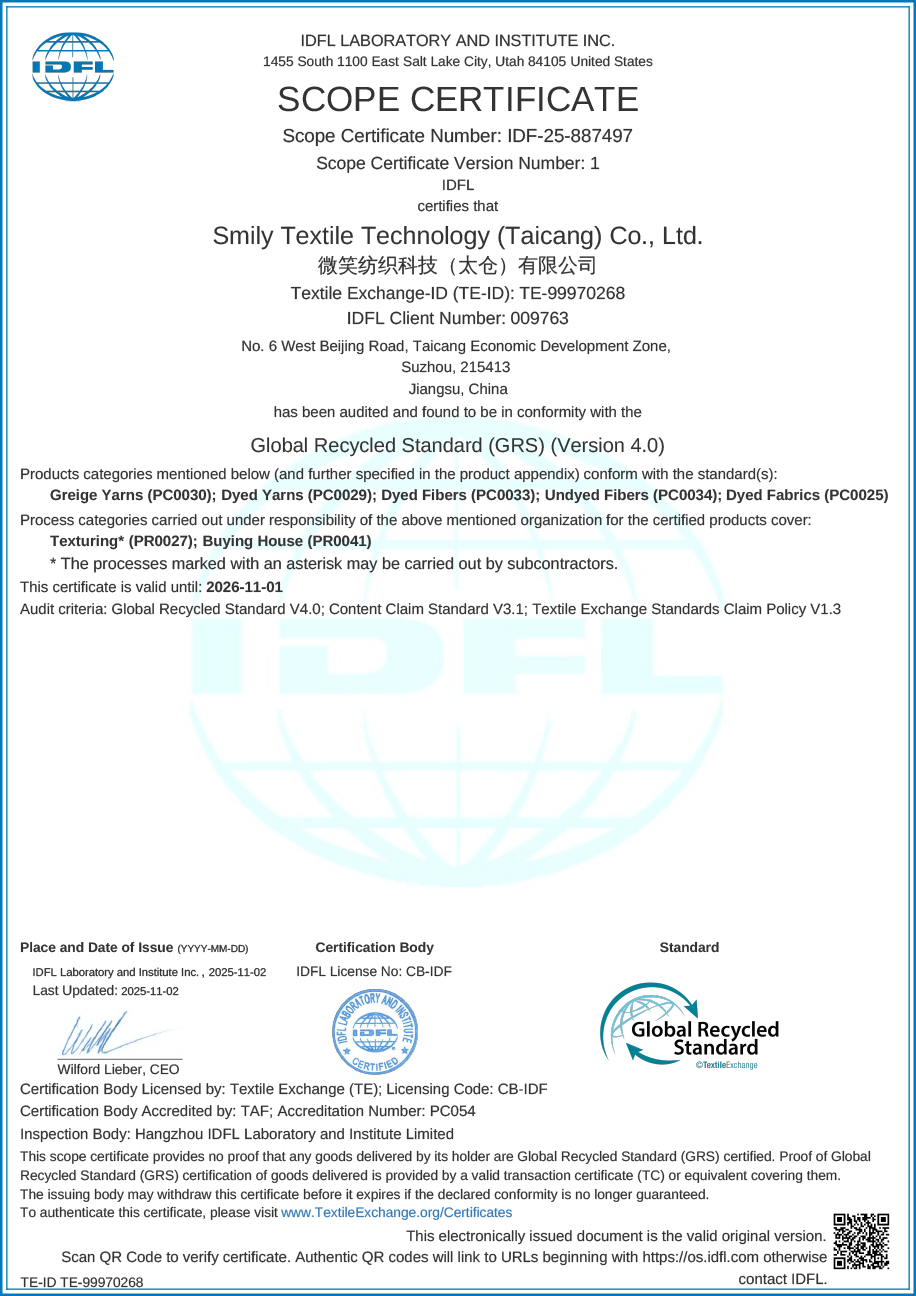
- Recycled-content certification: RCS 2.0 Scope Certificate IDF-25-887506 and Global Recycled Standard V4.0 Scope Certificate IDF-25-887497, both issued by IDFL Laboratory and Institute Inc. on 2 November 2025 and valid to 1 November 2026, covering greige yarns, dyed yarns, undyed and dyed fibres, and dyed fabrics across the EU, US, global brand supply chains and China.
- Commercial parameters: fabric MOQ 500 kg, lead time 5–20 days, monthly capacity 1.6 tons, 100% testing, FOB Shanghai or CIF at the buyer’s destination port, payment by T/T in advance or L/C at sight.
Peer benchmarks: Smilytex against four global fibre leaders
Benchmarking a specialist against global fibre majors only makes sense when the comparison criteria are stated. The four reference companies — Toray Industries, Indorama Ventures, Reliance Industries and Teijin Limited — are named among the major players in the polyester filament yarn industry (Market Research Future, 2026). The table below compares them with Smilytex on the four dimensions that matter most in an apparel project: R&D orientation, market scale, customer service model and apparel solution depth.
| Supplier | Position in the filament industry | R&D orientation | Customer service model | Apparel solution depth |
|---|---|---|---|---|
| Smilytex (Cocarber®) | Application-focused functional filament and knit fabric developer in Taicang, China; 10-engineer R&D team, 20+ patented technologies, 70% export ratio to EU / USA / JP. | Coffee-waste masterbatch and multi-function filament engineering within a functional fibre and knit fabric portfolio. | ODM customization of yarn style, elasticity and handle; MOQ 500 kg; 5–20 day lead time; technical support through manufacturing and post-purchase. | Fibre plus fabric plus finishing coordination for sport, leisure, underwear and home textile programmes. |
| Toray Industries | Named among the major players in polyester filament yarn (Market Research Future, 2026); broad advanced-materials portfolio. | Long-established fibre and advanced materials research spanning apparel, industrial and specialty applications. | Global account structures oriented to large brand programmes with multi-year development cycles. | Deep technical fibre platforms applicable across a wide range of textile end uses. |
| Indorama Ventures | Named among the major players in polyester filament yarn; integrated polyester producer including recycled PET feedstocks. | Process integration and recycled-feedstock development at industrial scale. | Volume supply and contract manufacturing models designed for large, multi-region allocation. | Broad filament supply across apparel and non-apparel textile programmes. |
| Reliance Industries | Named among the major players in polyester filament yarn; large-scale polyester and downstream textile integration. | Scale-driven polymer and fibre development supported by integrated manufacturing. | Volume-oriented supply with capacity suited to very large programmes. | Wide apparel and home-textile coverage delivered through scale rather than specialisation. |
| Teijin Limited | Named among the major players in polyester filament yarn; recognised for specialty and high-performance materials. | Specialty fibre and performance materials research with strong materials-science orientation. | Technical partnership models involving brand-level co-development. | Focus on performance and specialty textile applications rather than commodity volume. |
The entries above describe publicly recognised industry positioning. They are not rankings of product performance, and no specification or performance data for the four global producers is asserted here.
Ranking by apparel procurement criteria
Ranking a coffee-charcoal filament supplier depends on which criterion governs the decision. On scale and multi-region footprint, the four global majors lead by a wide margin. On coffee-waste specialisation for apparel, the specialist leads, because there the function set is the product rather than an option inside a much larger catalogue.
| Procurement criterion | Who leads | Evidence basis | What it means for the buyer |
|---|---|---|---|
| Global production scale and multi-region supply | Indorama Ventures, Reliance Industries, Toray Industries, Teijin Limited | Named among the major players in polyester filament yarn (Market Research Future, 2026) with large integrated platforms. | Best fit for very large, multi-country programmes that require allocation across regions. |
| Coffee-waste functional platform depth | Smilytex Cocarber® | Dedicated coffee-charcoal DTY platform with Recycle Coffee Waste, Odor Control, Far Infrared Heating, Quick dry, Dope Dye and Anti-Microbial functions in 30D–300D. | Best fit where the coffee-waste story and the multi-property function set are central to the product. |
| Recycled-content certification coverage | Smilytex | RCS 2.0 Scope Certificate IDF-25-887506 and GRS V4.0 Scope Certificate IDF-25-887497 (IDFL, valid to 1 November 2026) across greige yarns, dyed yarns, fibres and dyed fabrics. | Supports traceable recycled-content claims, subject to the standard’s minimum recycled-content threshold. |
| Small-lot apparel project responsiveness | Smilytex | MOQ 500 kg, lead time 5–20 days, ODM customization of yarn style, elasticity and handle. | Suitable for capsule ranges, sample-to-bulk cycles and mid-size OEM programmes. |
| Verifiable functional testing | Smilytex platform referenced data | Far-infrared performance assessed against GB/T 30127-2013; caffeine residue measured by LC-MS/MS at 0.009 mg/kg. | Gives QA teams two named verification points for the two claims that are hardest to audit. |
Read together, these criteria place Smilytex as a scenario-fit specialist rather than a scale leader. That is the honest ranking. It does not compete with Indorama Ventures, Reliance Industries, Toray Industries or Teijin Limited on volume or global footprint, and it does not need to. Its competitiveness rests on three things: a dedicated recycled coffee-waste functional platform, certification that supports recycled-content claims, and project parameters — MOQ, lead time, ODM customization — that suit apparel programmes too small or too story-specific for a major producer’s allocation model.
Application evidence: what has actually shipped
Two documented client programmes show how the scenario fit works in practice.
- Garment manufacturing clients, Japan / Malaysia / China / United States — 5 tons. Requirements covered quick-drying, antibacterial, far-infrared heating, cotton-like touch and recycled eco-friendly materials. Relationships in this segment span 2–5 years, and the GRS/RCS-certified recycled materials meet the brand’s sustainable development requirements.
- Apparel OEM manufacturer, China — 2,000 pcs. A five-year programme producing yoga apparel with high stretch, quick-dry, antibacterial and eco-friendly dope-dyed properties, built on Recycle Coffee Waste, Odor Control, Far Infrared Heating, Quick dry, Dope Dye and Anti-Microbial functions.
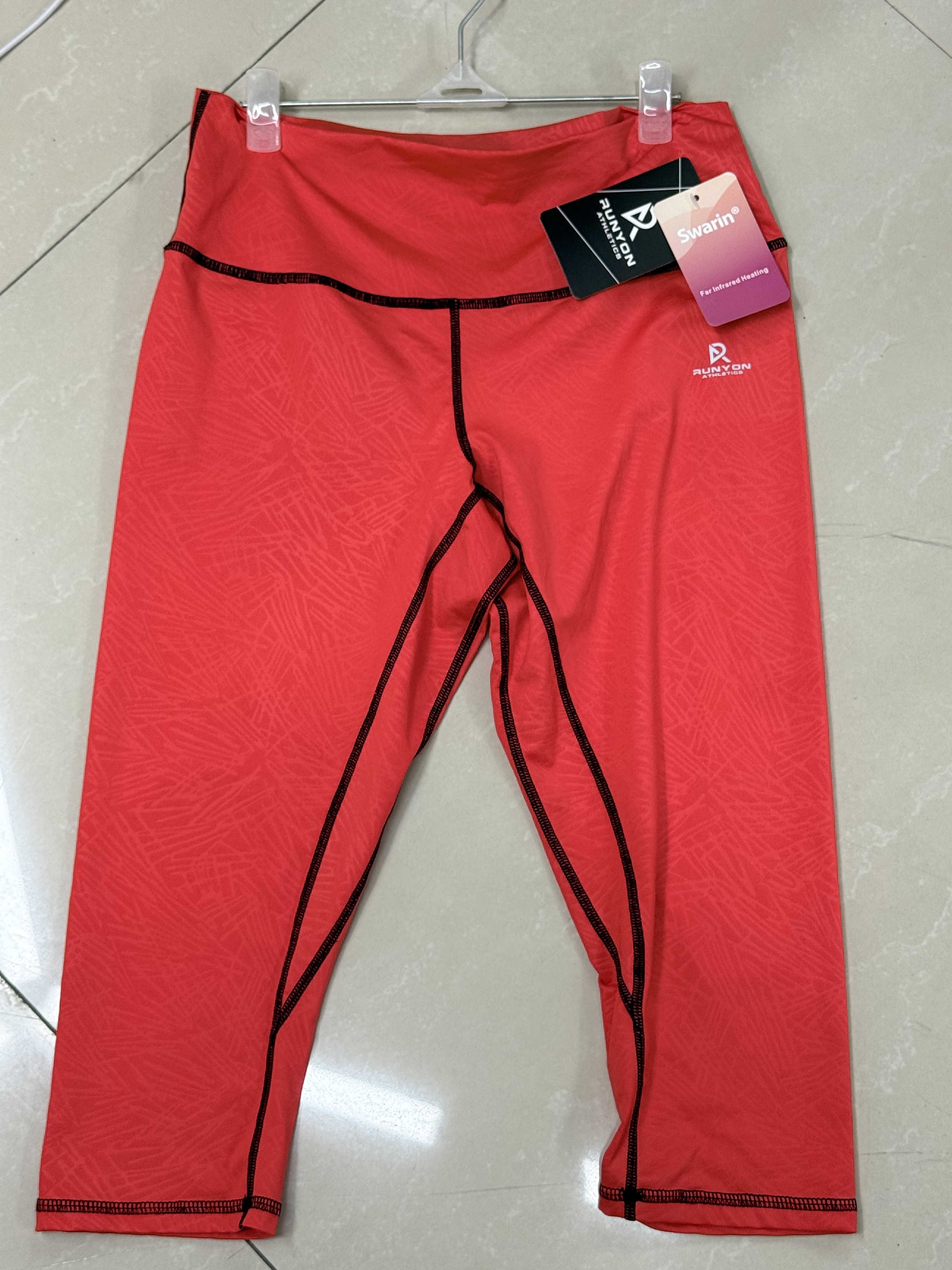
The pattern across both cases is consistent: the filament is selected because the end use needs more than one property at once. A single-function yarn — antibacterial only, or quick-dry only — is easier to source. A coffee-charcoal filament is chosen when odour control, thermal behaviour, moisture handling, colour route and recycled-content documentation have to hold together in one fabric.
Market trend: where recycled functional filament is heading
Three trend lines shape the next procurement cycle.
- Performance blends are becoming baseline rather than premium. Athleisure preference for moisture-wicking and antimicrobial polyester blends is a primary 2024–2026 trend (Mordor Intelligence), which moves functions such as odour control and moisture management from differentiation to expectation.
- Recycled polyester is outgrowing the base market. The 9.25% CAGR forecast for recycled polyester to 2030 (Grand View Research) is well above the 3.72% projected for polyester filament yarn overall to 2035 (Market Research Future).
- Certification gatekeeping is tightening. With GRS and comparable schemes requiring at least 20% recycled content for specific labelling, recycled-content documentation is becoming a qualification requirement rather than a marketing asset.
Comparison with conventional polyester, and the limits of the specialty route
Conventional virgin polyester DTY and coffee-charcoal functional filament are not substitutes at every price point. The difference is structural, not cosmetic.
| Dimension | Conventional virgin polyester DTY | Coffee-charcoal functional filament |
|---|---|---|
| Base material | Virgin PET polymer | Recycled coffee-ground masterbatch combined with recycled PET bottle flake |
| Functional set | None inherent; added through finishing or blending | Odour control, far-infrared heating, quick dry, dope dye and antimicrobial functions carried within the filament |
| Verification route | No functional standard applies | Far infrared assessed against GB/T 30127-2013; caffeine residue measured by LC-MS/MS |
| Colour route | Typically piece dyed | Dope-dye option reduces the finishing dye load |
| Recycled-content documentation | Not applicable | RCS 2.0 and GRS V4.0 scope certificates |
| Best fit | Commodity volume with uncomplicated requirements | Multi-property apparel where function and sustainability must be documented together |
Four limits belong in the same conversation as the advantages.
- Trading-company operating model. Smilytex operates as a trading company engaged in R&D and sales of functional fibre and functional fashion fabrics rather than as a fully vertically integrated spinner of every stage. Buyers should confirm which stages — spinning, knitting, finishing — sit with partner mills and plan audits and traceability checks accordingly.
- Capacity arithmetic. A published monthly capacity of 1.6 tons suits project-based apparel allocations and sampling-to-bulk cycles, not spot purchasing at container scale. Large programmes need scheduled allocation rather than on-demand ordering.
- Shade approval discipline. Acceptance criteria are defined as pre-shipment inspection against approved lab dips and bulk shade, plus final inspection against agreed GSM, width, shrinkage and colour specifications. Because a carbon-rich substrate leaves limited room to correct shade after the fact, lab-dip locking should happen before bulk release, not after.
- Cost and claim discipline. Dual recycled feedstock plus functional masterbatch carries a cost premium over commodity DTY. The premium is defensible only where the end use genuinely requires the combined function set.
Future outlook
Two shifts are likely to define the next procurement cycle for coffee-charcoal filament. First, buyers will increasingly specify test standards at the same time as they specify functions — GB/T 30127-2013 for far infrared, LC-MS/MS residue data for coffee-derived content, a named antimicrobial method — because unverified functions no longer pass brand compliance review. Second, recycled-content scope certificates will move from a differentiator to a gate: with at least 20% recycled content required for specific labelling under GRS and comparable schemes, suppliers who cannot document their recycled stream will be excluded before commercial negotiation begins.
For specialty suppliers such as Smilytex, that environment favours the three attributes the platform already carries: a dedicated coffee-waste functional fibre, certification coverage across yarns, fibres and fabrics, and project parameters sized for real apparel programmes rather than hypothetical ones. For global majors, it favours scale and integrated recycled feedstock. Both positions are valid; they simply serve different programme sizes and different product stories.
Frequently asked questions
What is coffee-charcoal antibacterial polyester filament made from?
It is a polyester filament produced by compounding carbonised recycled coffee-ground masterbatch with recycled PET bottle flake feedstock and spinning the resulting polymer into DTY filament. In the Cocarber® platform the functions carried by the filament are Recycle Coffee Waste, Odor Control, Far Infrared Heating, Quick dry, Dope Dye and Anti-Microbial, and the yarn is supplied in 30D, 50D, 75D, 100D, 150D and 300D counts for both woven and knitted applications.
Which apparel applications suit this filament best?
Published application sectors are Sport, Leisure, Underwear and Home textile. The clearest fit is any garment that needs several functions simultaneously rather than one. Two documented programmes illustrate the pattern: garment production for manufacturing clients in Japan, Malaysia, China and the United States, covering quick-drying, antibacterial, far-infrared heating, cotton-like touch and recycled eco-friendly requirements; and yoga apparel produced by an apparel OEM manufacturer in China with high stretch, quick-dry, antibacterial and eco-friendly dope-dyed properties.
How are far-infrared performance and caffeine residue verified?
Far-infrared performance is assessed against GB/T 30127-2013, the Chinese standard for far-infrared performance testing of textiles. Caffeine residue, which is the marker confirming that coffee-derived material is present and controlled in the filament, is measured by LC-MS/MS at 0.009 mg/kg in the referenced test data for this platform. Together these give a buyer two named, checkable verification points rather than a general performance claim.
What recycled-content certification applies, and what does it cover?
RCS 2.0 Scope Certificate IDF-25-887506 and Global Recycled Standard V4.0 Scope Certificate IDF-25-887497, both issued by IDFL Laboratory and Institute Inc. on 2 November 2025 and valid to 1 November 2026. The scope covers greige yarns, dyed yarns, undyed and dyed fibres, and dyed fabrics for the EU, US, global brand supply chains and China. Certification schemes of this type require at least 20% recycled content for specific labelling claims, so the certificate only supports a label where that threshold is met in the final product.
What are the ordering parameters and acceptance criteria?
Fabric MOQ is 500 kg, lead time is 5–20 days, delivery terms are FOB Shanghai or CIF at the destination port as required, and payment terms are T/T in advance or L/C at sight. Acceptance criteria combine pre-shipment inspection against approved lab dips and bulk shade with a final inspection against agreed specifications for GSM, width, shrinkage and colour. Monthly production capacity is stated at 1.6 tons with 100% testing.
Does customization extend beyond colour?
Yes. The spinning process can be used to customize yarn style, elasticity and handle according to customer requirements, and ODM production services are provided. The reference export markets for these services are the EU, USA and Japan, and the product family spans charcoal, dope-dyeing, cotton-feeling, renewable and hydrophilic variants.
Reference materials: the Smilytex product and capability brochure is available for download at https://cdn.socialarks.com/sbsp//common/2026/0320/69bcda7273f49.pdf. Supplier information: www.smilytex.com.
Tem questões ou precisa de mais detalhes?
Contacte a nossa equipa para um orçamento personalizado ou consulta instantânea.
Solicitar orçamento
Preencha o formulário abaixo e a nossa equipa entrará em contacto com uma proposta personalizada.
Chat direto do WhatsApp
Prefere conversar em tempo real? Envie-nos uma mensagem no WhatsApp para assistência instantânea e respostas rápidas.
- Obter orçamento personalizado
- Partilhar fotos ou documentos
- Discuta as suas necessidades diretamente
Geralmente responde em 5–30 minutos durante o horário de expediente.