
Coffee-Waste Recycled Apparel: Where Functional Polyester Fits
In China, spent coffee grounds have become one of the more visible organic waste streams being industrialised into apparel-grade material. Grounds collected from cafés, instant-coffee production and hospitality groups are dried, carbonised and milled into a powder, then compounded into a masterbatch that can be carried into polyester filament and, eventually, into a knitted or woven garment. Collection is largely a solved problem. The unresolved question for garment buyers is different: whether the yarn, fabric and finished garment can hold the functional performance that was specified, order after order.
This scenario study maps the operational chain that turns coffee waste into apparel — grounds to masterbatch, masterbatch to recycled PET blend, spinning, knitting or weaving, and garment assembly — and identifies the stages where functional polyester filament decides the commercial outcome. It is written for buyers who have already chosen a direction and now need execution detail plus a supply relationship that survives repeat seasons.
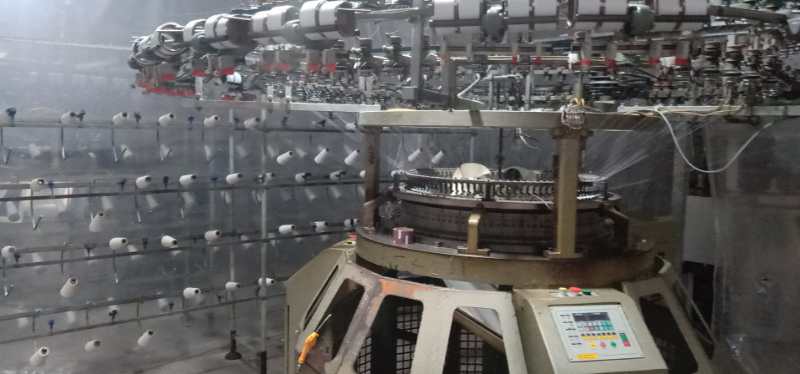
A functional filament program links masterbatch compounding, melt spinning, knitting and garment assembly inside one production network.
Why coffee waste and polyester filament meet in the same program
Organic waste needs an industrial destination, and recycled polyester needs a reason to be specified. Coffee-waste programs sit at the intersection of those two demands. The waste stream supplies a functional additive and a traceable story; polyester filament supplies the mechanical platform, the processability and the recycled-content backbone.
The commercial context supports the pairing. The global recycled polyester market was valued at USD 15.52 billion in 2024 and is expected to reach USD 26.18 billion by 2030, a 9.25% CAGR, according to Grand View Research. The broader polyester fiber market was valued at USD 82.07 billion in 2025 and is projected to reach USD 148.11 billion by 2034, per Vertex AI industry analysis, while Market Research Future places the polyester filament yarn segment at USD 106.4 billion in 2024 with a 3.72% CAGR to 2035. Published estimates differ because their scopes differ — total fiber versus filament yarn — so buyers should read them as directional rather than interchangeable.
Geography matters as much as size. Asia Pacific held a 65% share of the polyester fiber market in 2025, led by China and India. That concentration is one reason coffee-waste apparel supply chains have developed quickly in China: the waste stream, the masterbatch compounding capacity, the spinning capacity and the garment factories sit within a short logistics radius.
Recycled content is also a labeling question, not only a marketing one. Certifications such as GRS and OEKO-TEX Standard 100 require at least 20% recycled content for specific labeling, which means the ratio of recycled PET flakes to other inputs has to be designed and documented from the start rather than added at the end.
The operational chain: five stages, five sets of controls
Stage 1 — Spent grounds to functional powder
The chain begins with material quality, not with spinning. Grounds are dewatered and dried to a stable moisture level, then heat-treated in a controlled atmosphere so the organic fraction carbonises rather than simply burns. The carbonised material is milled and screened into a powder with a defined particle size distribution.
The equipment at this stage is closer to food and chemical processing than to textiles: dryers, a carbonisation unit, jet or mechanical mills, and screening equipment. The checks that matter downstream are moisture content, particle size distribution, ash content and contamination screening. A powder that varies here cannot be compensated for later in the spinning line.
Stage 2 — Powder to masterbatch
The powder is compounded with a polymer carrier into a masterbatch, which becomes the transport format for the functional additive. Compounding is normally done on a twin-screw extruder with gravimetric dosing, followed by strand cooling and pelletising.
Two checks decide whether the masterbatch is usable in a filament line: additive loading consistency and dispersion quality. Poor dispersion produces filament breaks and visible defects; inconsistent loading produces fabric that fails performance testing even though the process itself looked normal. Moisture and melt flow of the pellet are also controlled, because both feed directly into the spinning window.
Stage 3 — Blending with recycled PET flakes and spinning
The masterbatch does not spin alone. It is blended with recycled PET flakes, which carry the recycled content and provide the base polymer. Flakes are crystallised and dried, then dosed together with the masterbatch at a defined let-down ratio before melt spinning.
The spinning line itself is conventional: extruder, spin pack and spinneret, quenching, godet rollers and winding, with texturing downstream where a textured hand is required. The checks buyers later depend on are set here — linear density, tenacity and elongation, breaking strength variation, oil pick-up, boiling water shrinkage and colour. A coffee-waste yarn that passes appearance checks but drifts on shrinkage or tenacity creates problems in knitting, not in spinning.
Stage 4 — Knitting or weaving
Most coffee-waste apparel programs begin with knit fabric, because the end uses that justify the function — sportswear, base layers, casualwear — are knit-led. Circular knitting, warp knitting or weaving follows, depending on the construction specified.
Quality control at this stage is the familiar fabric set: gram per square metre, width, shrinkage and strength, combined with appearance inspection. Where dope-dyed yarn is used, colour is controlled by production batch rather than by dye lot, which changes how shade approval is documented and retained.
Stage 5 — Garment production and finishing
Cutting, sewing and finishing complete the chain, and this is where functional promises are most exposed. Heat-setting, brushing, coating and lamination can change handfeel, colour and performance, so a processing window agreed with the yarn supplier before bulk production is a practical risk control rather than a formality.
Garment-stage acceptance typically combines pre-production approval — lab dips, bulk shade approval, a pilot run — with final inspection against the agreed specification for GSM, width, shrinkage and colour.
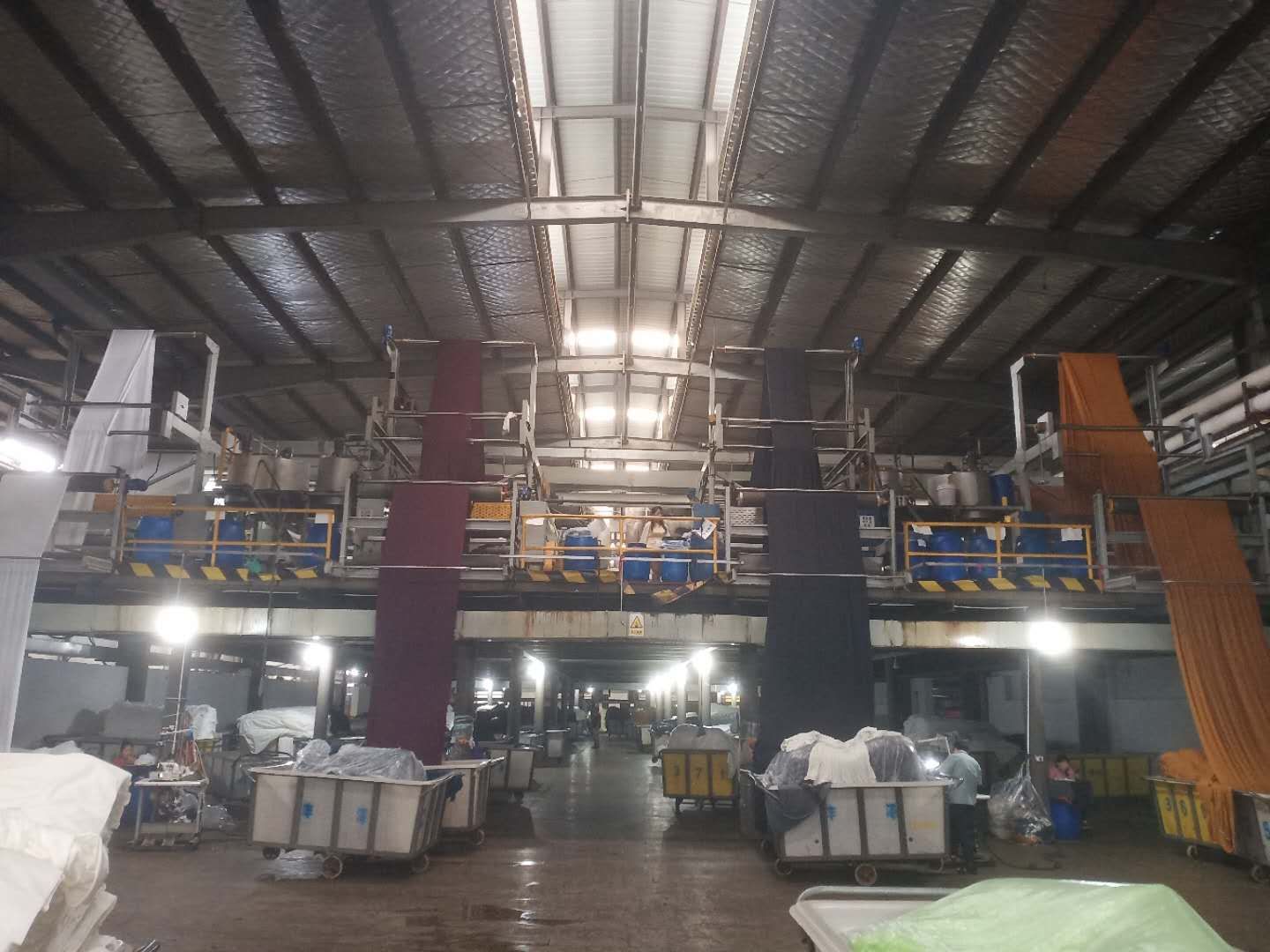
Yarn-level checks — linear density, tenacity, shrinkage and colour — are set before knitting and cannot be corrected afterwards.
Stage-by-stage map for a coffee-waste apparel program
| Stage | Main input | Typical equipment | Key quality checks | Buyer decision point |
|---|---|---|---|---|
| 1. Grounds to powder | Spent coffee grounds | Dryer, carbonisation unit, mill, screener | Moisture, particle size, ash content, contamination | Define the additive specification, not just the waste source |
| 2. Powder to masterbatch | Powder plus polymer carrier | Twin-screw extruder, gravimetric dosing, pelletiser | Additive loading, dispersion, moisture, melt flow | Agree the let-down ratio and the claim it must support |
| 3. Blend and spin | Masterbatch plus recycled PET flakes | Crystalliser and dryer, dosing unit, melt spinning line, winder, texturing | Linear density, tenacity, elongation, oil pick-up, shrinkage, colour | Confirm recycled-content ratio and yarn specification before sampling |
| 4. Knit or weave | Functional filament yarn | Circular knitting, warp knitting or weaving machines | GSM, width, shrinkage, strength, appearance | Approve construction against the intended end use |
| 5. Garment | Fabric | Cutting, sewing, finishing and heat-setting lines | Lab dip and bulk shade approval, final inspection | Fix the processing window to protect performance claims |
Where the functional outcomes come from
A coffee-waste program is rarely bought for a single property. The value proposition is a bundle, and each element of that bundle comes from a different material decision.
- Odor control and antimicrobial performance. Coffee charcoal antibacterial polyester filament is positioned for hygiene-sensitive apparel — base layers, casualwear, socks and workwear. Measurable antibacterial performance is expressed as a reduction per an agreed test method, such as ISO 20743 or AATCC 100 as applicable. Comparison data for functional polyester against regular polyester shows an antibacterial rate of at least 90%, against none for regular polyester.
- Quick drying and moisture management. Moisture management polyester filament and moisture permeable polyester filament are the relevant platforms. In comparison data, functional polyester shows drying time reduced by 30% to 50% and a moisture-wicking rate improvement of 50% to 200% against regular polyester.
- Warmth without weight. Far infrared thermal retention polyester filament and odor control warming polyester filament address the cool-weather end of the range. Far infrared performance is validated per an applicable test standard, such as GB/T 30127 or equivalent.
- Colour without a dye bath. Dope-dyed options, including low temperature dyeable recycled polyester filament, can reduce dyeing steps and related water and energy use compared with conventional piece dyeing. Colour is then controlled by production batch rather than dye lot.
- Recycled content with a traceable origin. T2T recycled polyester filament and the coffee charcoal platform are the material families that carry recycled content into a program, which is what makes GRS and OEKO-TEX labeling thresholds reachable.
UV performance belongs on the same list where the garment is worn outdoors. Functional polyester in comparison data reaches UPF 40 to 60 plus, against 15 to 20 for regular polyester, but the actual value depends on fabric construction and colour and must be tested per standard rather than assumed from a yarn specification.
How Smilytex fits the scenario
Smily Textile Technology (Taicang) Co.Ltd, known commercially as Smilytex, is a Taicang-based company established in 2017 that operates as a trading company engaged in the research, development and sales of functional fiber and functional fashion fabrics. Its work integrates new product R&D, design and manufacture, supported by a 10-engineer R&D team, more than 20 core patented technologies including authorised invention, utility model and design patents, and a 16,220 m² facility with 206 employees. Around 70% of output is exported, with the EU, USA and Japan as main markets.
For a coffee-waste apparel program, the relevant part of the portfolio is the functional filament range: coffee charcoal antibacterial polyester filament, odor control warming polyester filament, far infrared thermal retention polyester filament, T2T recycled polyester filament, low temperature dyeable recycled polyester filament, moisture management polyester filament, moisture permeable polyester filament, non spandex stretch polyester filament, cotton touch polyester filament, ultra matte polyester filament, UV resistant heat shielding polyester filament, anti see through hydrophilic polyester filament, and sustainable polyester filament knit fabric. The company's operations include R&D and production of functional fibers and fabrics with a monthly production capacity of 1.6 tons and a typical lead time of 5 to 20 days.
The practical value for a buyer is less the list itself than the way the supplier handles the two risks that govern repeat programs: performance claims that shift with construction and test method, and processing steps that can undo a functional result. Smilytex addresses these through sample and benchmark testing aligned to the customer standard before bulk, clear application guidance and stated limitations in specifications, traceability records by batch or lot with retained samples, and a CAPA process for quality or performance deviations with support for re-testing where needed.
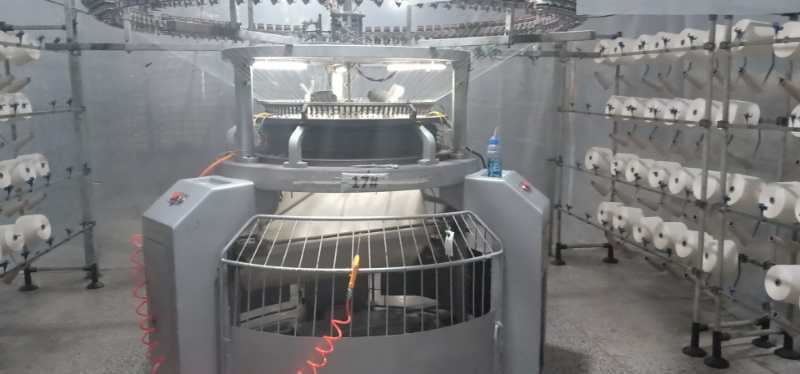
Repeat programs rely on batch-level traceability and retained samples rather than on one approved sample round.
Market signals behind the scenario
Two market signals make the scenario commercially durable rather than a one-season experiment. First, recycled content is becoming a specification item rather than a marketing claim, which is why the threshold in GRS and OEKO-TEX labeling rules — at least 20% recycled content for specific labeling — now shapes material planning. Second, athleisure demand has favoured moisture-wicking and antimicrobial polyester blends through 2024 to 2026, per Mordor Intelligence, which is precisely the functional territory that coffee charcoal and moisture management filament address.
The supplier landscape remains concentrated at the top: Indorama Ventures, Reliance Industries, Toray Industries and Teijin Limited are among the major players in the polyester filament yarn industry identified by Market Research Future. Specialty and functional programs, however, are frequently served by smaller application-focused suppliers rather than by the largest commodity producers. That is why supplier evaluation for a coffee-waste line tends to weigh process control, documentation and batch discipline as heavily as scale.
Comparison with traditional solutions — and the honest limits
Regular polyester remains a legitimate choice for many programs. It is a standard PET filament with basic performance, and whatever functionality a fabric achieves depends mainly on construction and finishing. Functional polyester moves that performance into the yarn and material level through additives, masterbatch and structure design.
| Parameter | Regular polyester | Functional polyester (by series) |
|---|---|---|
| Performance origin | Fabric construction and finishing | Yarn and material level: additives, masterbatch, structure |
| Drying time | Baseline | Reduced by 30% to 50% |
| Moisture-wicking rate | Baseline | Improved by 50% to 200% |
| Antibacterial rate | None | At least 90% per agreed test method |
| Flame retardancy (LOI) | 20% to 22% | At least 28% |
| UPF | 15 to 20 | 40 to 60 plus, construction and colour dependent |
| Wash durability | Not specified | 30 to 50 plus |
| Relative cost | Baseline | Premium, depending on function, construction and MOQ |
Those figures are comparative ranges derived from test-based data, not guarantees for a specific fabric. Four boundaries should be stated plainly.
- Claims are construction- and method-dependent. UV, antibacterial and far infrared results vary with fabric construction and test method, so a claim is only as strong as the standard behind it. Defining the claim before making a performance commitment is the control that matters.
- Colour consistency behaves differently by dyeing route. Dope-dyed material carries batch-to-batch variation; piece-dyed material carries dye-lot variation. Both are manageable, but only with batch management, a shading sheet where required, and pre-production approval.
- Mechanical risks persist. Microfiber shedding and pilling depend on yarn construction, filament count and fabric structure, and processing steps such as heat-setting, brushing, coating or lamination can affect handfeel, colour and performance.
- Cost and compliance both rise. Functional polyester typically carries a premium over regular polyester, and for high-risk end uses such as babywear, medical or protective workwear, standards confirmation and third-party laboratory testing are required before launch rather than after.
Execution: what to fix before bulk production
Once a buyer has decided to run a coffee-waste program, the commercial and quality framework should be fixed in writing before the first bulk order, because those terms determine whether the second season is as predictable as the first.
- Commercial terms. For fabric, the stated MOQ is 500 kg, with delivery terms of FOB Shanghai or CIF to the destination port as required, and payment by T/T in advance or L/C at sight, the latter preferred.
- Acceptance criteria. Pre-shipment inspection based on approved lab dips or bulk shade, plus final inspection against agreed specifications for GSM, width, shrinkage and colour.
- Supply continuity. Typical lead time runs 5 to 20 days against a monthly production capacity of 1.6 tons, so seasonal peaks should be planned against those figures rather than assumed.
- Documentation. Material safety screening and compliance to customer RSL requirements, with MSDS or TDS provided where applicable.
Future outlook
The direction of travel is toward functional performance and recycled content being specified together rather than traded off against each other. Two consequences follow for apparel buyers. First, masterbatch-level decisions — additive loading, dispersion, let-down ratio — will increasingly be treated as procurement variables, because they determine whether a recycled claim and a performance claim can coexist in the same fabric. Second, long-term supplier relationships will be judged on documentation quality: batch traceability, retained samples, consistent shade control and a working CAPA process, rather than on one successful sample round. Programs that build those habits early are the ones able to scale a coffee-waste line from a seasonal drop into a repeat platform.
FAQ
1. What makes a coffee-waste apparel program different from a standard recycled polyester order?
A standard recycled polyester order controls one material stream: recycled PET flakes and the yarn produced from them. A coffee-waste program controls two, because the grounds-derived powder enters through a masterbatch and must be consistent in loading and dispersion before spinning. The recycled-content threshold also has to be planned rather than reported afterwards — GRS and OEKO-TEX Standard 100 require at least 20% recycled content for specific labeling. Buyers should therefore specify both the additive and the recycled ratio, and confirm how each will be verified.
2. How can a buyer verify odor control and antimicrobial claims instead of accepting them?
Claims should be defined against validated test standards, with fabric construction and test method confirmed before performance commitments are made. Antibacterial performance can be expressed as a measurable reduction per an agreed method such as ISO 20743 or AATCC 100 as applicable, and comparison data for functional polyester against regular polyester shows an antibacterial rate of at least 90%. Far infrared performance is validated per an applicable standard such as GB/T 30127 or equivalent. Sample and benchmark testing aligned to the customer standard before bulk is the practical verification route.
3. Can quality stay consistent across repeat orders in a multi-season program?
Consistency is fundamentally a batch-management question. Dope-dyed material is compared by production batch and piece-dyed material by dye lot, with a shading sheet provided where required. Traceability records by batch or lot, retained samples, pre-production approval through lab dips or bulk shade, and a pilot run before full production are the mechanisms that make repeat orders predictable. Where a deviation occurs, a CAPA process and support for re-testing keep the following order on specification.
4. What are the boundaries of coffee-waste recycled apparel that buyers should plan for?
Four are worth stating. Functional results vary with fabric construction and colour, so a claim is bounded by its test method. Microfiber shedding and pilling depend on yarn construction, filament count and fabric structure. Processing steps such as heat-setting, brushing, coating or lamination can affect handfeel, colour and performance, which is why a recommended processing window is agreed in advance. Functional polyester also typically carries a cost premium over regular polyester, and for high-risk end uses such as babywear, medical or protective workwear, standards confirmation and third-party laboratory testing are required before launch.
5. What commercial terms should be fixed before the first bulk order?
For fabric, the stated MOQ is 500 kg, delivery terms are FOB Shanghai or CIF to the required destination port, and payment is by T/T in advance or L/C at sight, with the latter preferred. Acceptance criteria combine pre-shipment inspection based on approved lab dips or bulk shade with final inspection against agreed specifications for GSM, width, shrinkage and colour. Typical lead time is 5 to 20 days against a monthly production capacity of 1.6 tons.
6. Why does a coffee-waste line become a long-term supplier question rather than a one-off purchase?
Because the factors that decide whether the second order matches the first sit on the supplier side rather than in the product specification: batch traceability, retained samples, aligned test standards, documented processing guidance and a corrective-action process. A supplier that can only deliver a successful first sample does not reduce risk across a program; one that documents each batch and supports re-testing does. That is the practical difference between a seasonal drop and a repeat platform.
A full technical overview of the functional filament range, including the coffee charcoal antibacterial and T2T recycled series, is available in the Smilytex brochure: download the technical brochure. Company details and product references are published at www.smilytex.com.