
Commercial Display Sourcing: The Operational Layer Buyers Often Miss
Commercial display procurement is usually treated as a specification-matching exercise: resolution, brightness, bezel width, panel size. For buyers at the decision or execution stage, however, the critical question shifts. Once a purchase order is signed, what determines whether a project actually ships on time, passes acceptance testing, and performs reliably over its lifespan?
Specifications are easy to compare; operational capability is not. A datasheet cannot tell you whether a factory has the testing infrastructure to catch intermittent failures, or whether a supplier has the production scheduling discipline to hold a lead-time commitment during demand peaks. These questions belong to the execution layer of commercial display sourcing, and they are exactly where project outcomes are decided.
This article examines that operational layer: supply capacity, lead time, quality verification, payment and delivery conditions, and the long-term implications for buyers evaluating commercial display suppliers.
The Execution Gap in Commercial Display Procurement
The global commercial display market was estimated at USD 53.65 billion in 2024, with digital signage accounting for over 53.73% of the revenue share, according to Grand View Research. With that scale comes a crowded supplier base. Most vendors can quote similar-looking LCD panels, Android boards, and steel cabinets. The actual difference between suppliers appears after the order is placed.
Execution risks in commercial display projects typically cluster around five areas:
- Lead time slippage—delays that disrupt store openings or campaign launches;
- Quality inconsistency—units that pass sampling but fail in field operation;
- Inadequate testing—no verification of brightness, waterproofing, or touch function before shipment;
- Logistics complexity—unclear delivery terms, documentation delays, or damage in transit;
- Weak post-shipment support—slow response when software or hardware issues surface.
The opportunity for buyers is that these risks are partly predictable. Supplier capacity, test procedures, lead-time commitments, and delivery options can be verified before contract signing. The challenge is knowing which indicators deserve scrutiny and which questions to ask during supplier qualification.
Capacity and Lead Time as Decision Variables
For long-term commercial display programs, a supplier's production capacity is an operational fact, not a marketing number. Buyers planning multi-location deployments need to know whether a supplier can absorb order spikes without lengthening delivery cycles.
Guangzhou Kedro Electronics Technology Co., Ltd. (GZKEDRO), a commercial display manufacturer based in Guangzhou, China, founded in 2013, publishes specific figures: a monthly production capacity of 2,000 to 5,000 units and a standard production lead time of 15 to 30 days, with a maximum of 30 days. For buyers, these numbers translate into a predictable replenishment rhythm. When a retail chain needs to equip 50 locations, or a distributor plans quarterly stock replenishment, a 30-day lead-time ceiling provides a planning anchor.
GZKEDRO also operates with a flexible minimum order quantity of 2 to 5 units, depending on product size and project type. This is a meaningful detail for project-based purchasing: it allows pilot deployments without forcing buyers to commit to large volumes before product-market fit is confirmed.
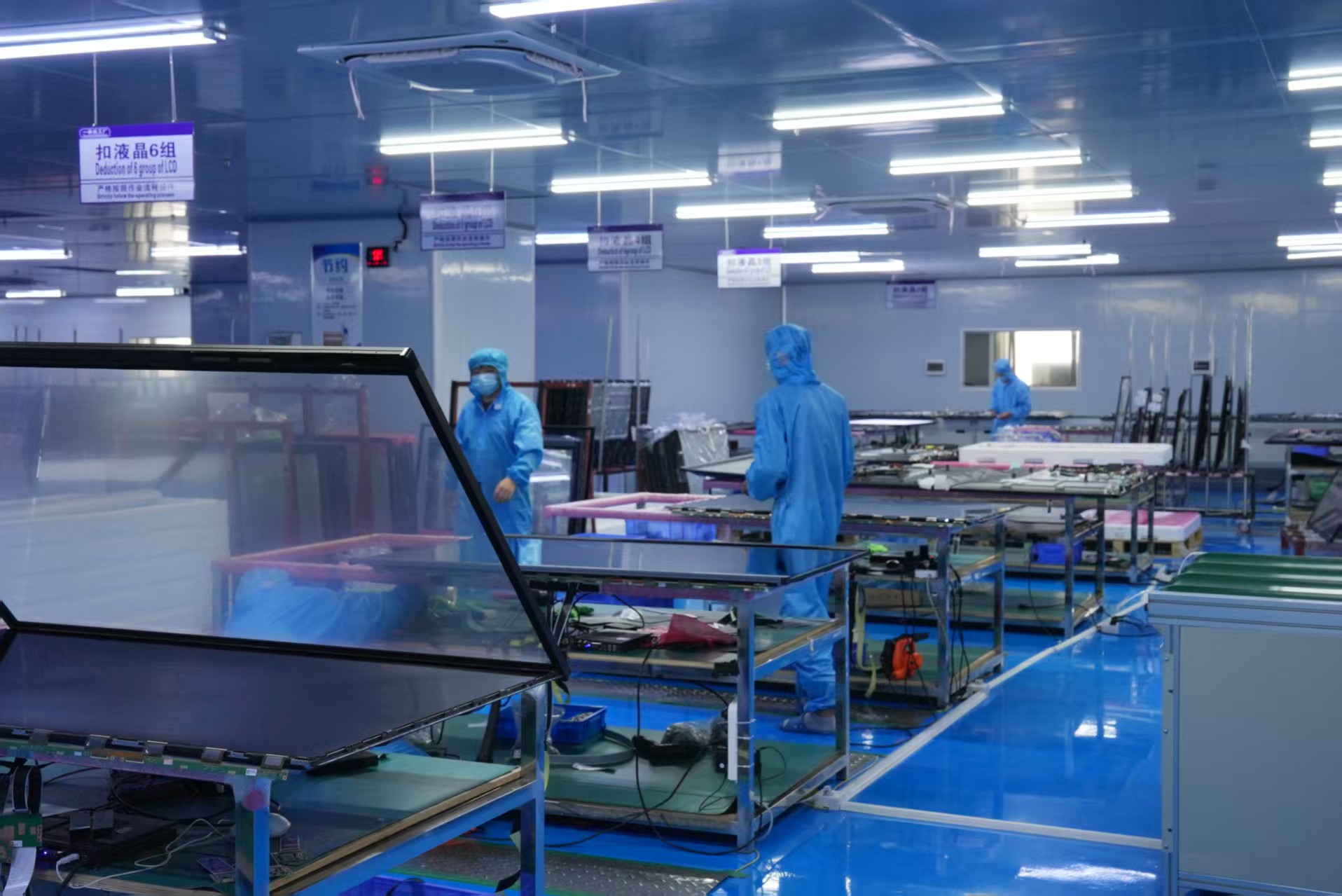
The company's physical infrastructure supports this scale. GZKEDRO reports a factory area of 50,000 m³, more than 200 employees, and a 100+ person R&D team with development centers in Guangzhou and Shenzhen. The R&D presence is worth noting because it signals in-house capability for product adaptation, not just assembly. An estimated 80% of output is exported, with primary markets in Europe, the Middle East, and Asia.
The Quality Control Layer Behind Long-Term Reliability
Specifications describe what a product should do under ideal conditions. Quality control determines what it actually does under operating conditions. Buyers evaluating commercial display suppliers should look for evidence of routine, testable QC procedures rather than generic quality claims.
GZKEDRO's published process includes 100% aging tests and functional inspection before shipment, complemented by brightness tests, waterproof tests, touch tests, temperature tests, and continuous operation testing. These tests map to specific failure modes that commercial displays commonly face in the field:
- Overheating—addressed through intelligent temperature control systems and cooling design, with 72-hour aging tests and real-time temperature monitoring before shipment;
- Water infiltration—addressed through IP65/IP66 waterproof structures and sealed cabinets, with waterproof testing and environmental reliability inspection;
- System crashes—addressed through stable Android/Windows operating systems with watchdog recovery mechanisms, software validation, OTA updates, and remote technical support;
- Voltage fluctuation—addressed through surge protection and industrial-grade power management, plus power stability testing and component quality inspection;
- Touch function failure—addressed through industrial-grade touch modules and calibration systems, with functional testing and quality control before delivery.
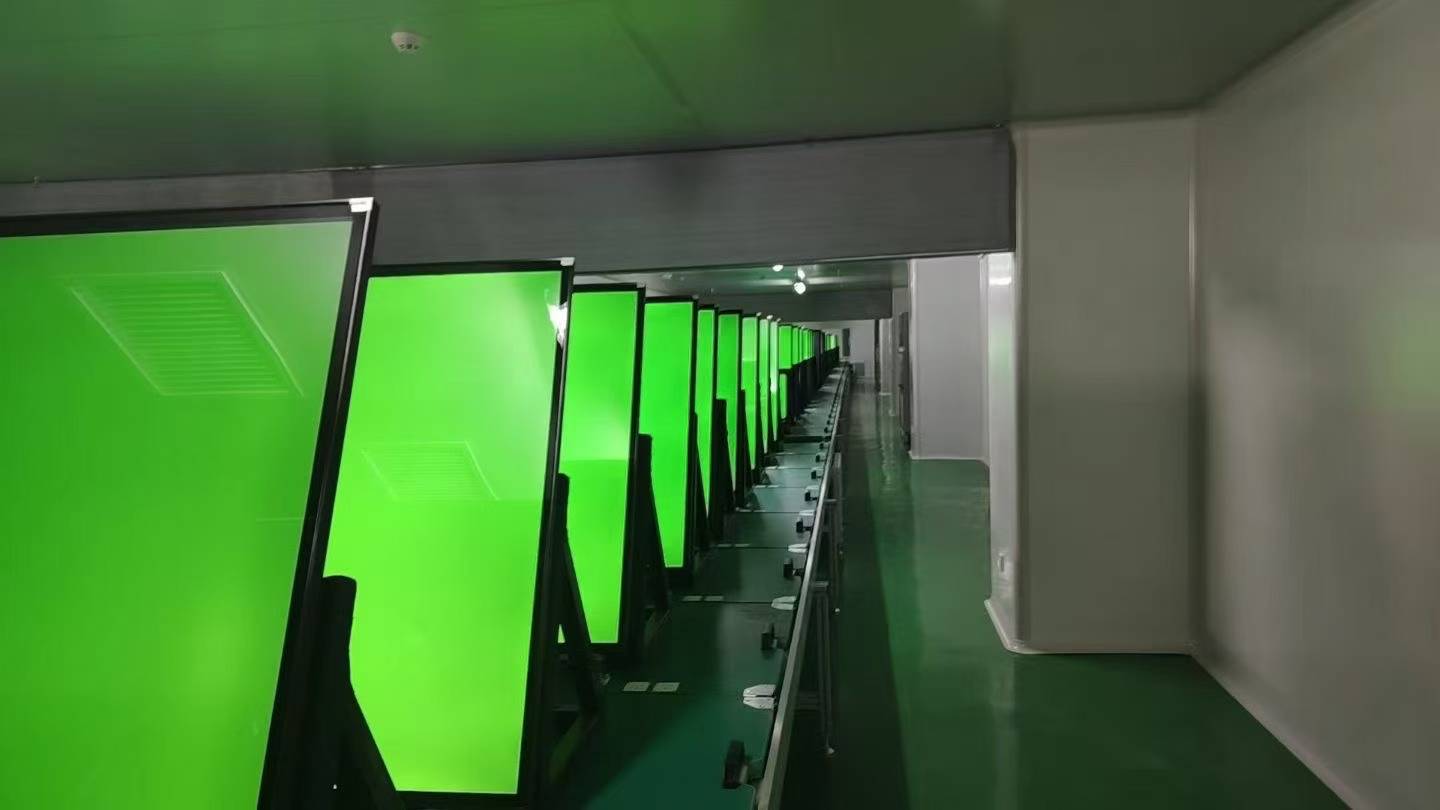
For buyers, the relevant question is not whether a supplier claims to have quality control, but whether the QC steps are specific enough to be verified and audited. A supplier that can name its test methods and show test records is easier to qualify than one that offers only a certificate folder.
A Portfolio Approach to Display Deployment
One operational advantage of working with a single manufacturer across multiple product lines is consolidated management. GZKEDRO's catalog covers most core commercial display categories, from indoor advertising displays to outdoor waterproof screens and AI-driven digital human displays:
| Series | Category | Representative Specs | Typical Deployment |
|---|---|---|---|
| KD-AD Series | Advertising Display | 1920×1080, 450 cd/m², RK3566 | Retail, airports, railway stations, malls |
| KD-LED Series | LED Display | ≥4500 cd/m², refresh rate ≥3840Hz | Outdoor media, smart city, billboards |
| KD-IFPD Series | Smart Conference Display | 4K, 40-point touch, Android 14 | Corporate offices, education, government |
| KD-TP Series | Transparent Cabinet Display | 95% transparency, 1920×1080 | Luxury retail, hotels, commercial districts |
| KD-VW Series | Video Wall Display | 3.5mm bezel, 500 cd/m², 4000:1 contrast | Monitoring, command centers, exhibitions |
| KD-OD Series | Outdoor Advertising Display | 2000 cd/m², IP55, RK3288 | Transport hubs, commercial districts, smart city |
| KD-DH Series | Holographic Digital Human | 4K, 1300 cd/m², HDR1000 | Exhibition centers, hotels, healthcare |
Each category carries different acceptance criteria. For outdoor units, buyers should verify waterproof rating and high-brightness performance; for conference displays, touch accuracy and system stability; for video walls, bezel consistency and color uniformity across modules. GZKEDRO applies the same pre-shipment test discipline across categories, which simplifies vendor qualification for multi-scenario projects. The lineup also includes wall-mounted displays, self-service kiosks, interactive slider screens, elevator advertising machines, and dual-screen outdoor advertising machines, giving buyers a single qualified source for diverse deployment needs.
Market Signals That Should Shape Sourcing Strategy
Several verified market trends are relevant for commercial display procurement decisions in 2026.
The transparent display market was valued at USD 2.84 billion in 2023 and is projected to reach USD 81.5 billion by 2032, driven largely by augmented reality integration, according to Global Market Insights. Fortune Business Insights expects the holographic display market to grow from USD 5.42 billion in 2026 to USD 33.36 billion by 2034, a compound annual growth rate of 25.52%. The industrial display segment was estimated at USD 5.90 billion in 2024 by Grand View Research, reflecting IIoT and HMI adoption. North America, per the same research firm, held a 35.6% revenue share of the global digital signage market in 2025.
These figures point in the same direction: commercial display demand is expanding in both volume and technology complexity. For buyers, the sourcing implication is that suppliers must be able to move beyond standard LCD panels—toward transparent, holographic, AI-integrated, and ruggedized form factors—while maintaining production discipline. A supplier whose portfolio already includes these newer categories, such as GZKEDRO's KD-TP and KD-DH series, offers a shorter path from pilot testing to scaled deployment.
On the compliance side, UL Solutions notes that IEC 62368-1 has become the primary safety standard for commercial displays (AV and IT equipment), replacing the legacy IEC 60950-1 and IEC 60065 standards. Buyers sourcing globally should verify that supplier products are certified to the current standard rather than relying on older certification references.
Digital vs. Traditional: A Calibrated Comparison
For buyers comparing commercial displays against traditional static signage, GZKEDRO's comparison materials cite several performance differences. Dynamic multimedia advertising generates an estimated 3–5 times higher customer engagement than static displays, while reducing printing costs by roughly 40%. Conference displays improve meeting efficiency by approximately 60% compared to conventional screens. 4K panels deliver roughly four times the visual clarity of standard-definition displays, and ultra-thin display designs reduce installation footprint by about 30%. Outdoor LED displays, with brightness levels commonly in the 1,500–3,500 nits range and IP65-rated enclosures, provide visibility that static signage cannot achieve at night or in direct sunlight.
It is equally important to recognize where traditional signage retains a rational advantage. Static signs generally have a lower initial purchase cost and remain economically sensible for short-term campaigns, single-location pilots, or venues without a content management workflow. High-brightness outdoor displays consume more power than static panels; even with automatic brightness adjustment, the long-term energy cost should be modeled. Digital display ROI also depends on content quality—a display running outdated or poorly designed content underperforms a well-designed static sign. Additionally, IP65/IP66 waterproof ratings indicate protection against rain and dust, not submersion resistance; installations in coastal or chemically aggressive environments require case-by-case engineering review.
The decision, in short, depends on operating context. Digital displays earn their cost where content changes frequently, viewer attention is measurable, and remote management replaces manual labor.
The Sourcing Model Is Shifting: From Hardware Purchase to Partnership
Commercial display procurement is moving from a one-time hardware purchase toward a long-term sourcing relationship. Several factors drive this shift: multi-location programs require consistent quality across batches; software updates demand a supplier with OTA capability; and new display formats—holographic, transparent, AI-interactive—require a manufacturer that can adapt products quickly.
GZKEDRO's export-oriented operations cover Europe, the Middle East, and Asia, with flexible payment terms including TT, L/C, D/P, PayPal/Payoneer/Wise, and Western Union, and delivery options covering DDP, CIF, and FOB via air, sea, or land transport. These terms matter at the execution stage because they determine inventory risk, cash flow, and logistics responsibility.
For buyers that plan to scale, the relevant evaluation question is not “Can this supplier build one unit?” but “Can this supplier hold quality, lead time, and pricing across 100 units, across product categories, across years?”
An English-language product catalog covering GZKEDRO's current commercial display lineup is available for reference: Kedro Product Catalog (English Edition).
FAQ: Commercial Display Sourcing and Execution
What is the minimum order quantity for GZKEDRO commercial displays?
The minimum order quantity is 2 to 5 units, depending on product size and project type. This flexible MOQ supports pilot testing and staged rollouts before large-volume commitment.
What is the standard production lead time?
Standard production lead time is 15 to 30 days, with a maximum of 30 days. This applies across GZKEDRO's commercial display categories and supports predictable project scheduling.
What is GZKEDRO's monthly production capacity?
Monthly production capacity ranges from 2,000 to 5,000 units. This level of capacity supports both small-scale custom projects and larger multi-location deployments.
What quality tests are performed before shipment?
Every unit undergoes 100% aging test and functional inspection before shipment. Additional tests include brightness, waterproofing, touch response, temperature tolerance, and continuous operation testing.
Which regions does GZKEDRO export to?
GZKEDRO exports to Europe, the Middle East, and Asia, with approximately 80% of output going to international markets.
What payment methods does GZKEDRO accept?
Accepted payment methods include TT, L/C, D/P, PayPal/Payoneer/Wise, and Western Union, providing flexibility across different procurement workflows.
What delivery terms are available?
Delivery options include DDP, CIF, or FOB, with air freight, sea freight, or land transport. Buyers can choose the Incoterm that best matches their logistics and risk preference.
Tem questões ou precisa de mais detalhes?
Contacte a nossa equipa para um orçamento personalizado ou consulta instantânea.
Solicitar orçamento
Preencha o formulário abaixo e a nossa equipa entrará em contacto com uma proposta personalizada.
Chat direto do WhatsApp
Prefere conversar em tempo real? Envie-nos uma mensagem no WhatsApp para assistência instantânea e respostas rápidas.
- Obter orçamento personalizado
- Partilhar fotos ou documentos
- Discuta as suas necessidades diretamente
Geralmente responde em 5–30 minutos durante o horário de expediente.