
Commercial Display Supplier Sustainability: A Lifecycle Continuity Audit
A commercial display deployment is approved in weeks and operated for years. That mismatch between purchase cycle and service life is why supplier sustainability has become a procurement question rather than a relationship preference: the manufacturer selected at proposal stage is often the only party able to keep a video wall, an outdoor advertising machine or a fleet of self-service kiosks running in year three.
A lifecycle continuity audit reframes long-term supplier evaluation. Instead of comparing catalogue prices and headline specifications, it asks whether the entity behind the screens can still supply matching models, documented service, software continuity and engineering support across the expected life of the installation — and whether that can be evidenced before the contract rather than assumed after it.
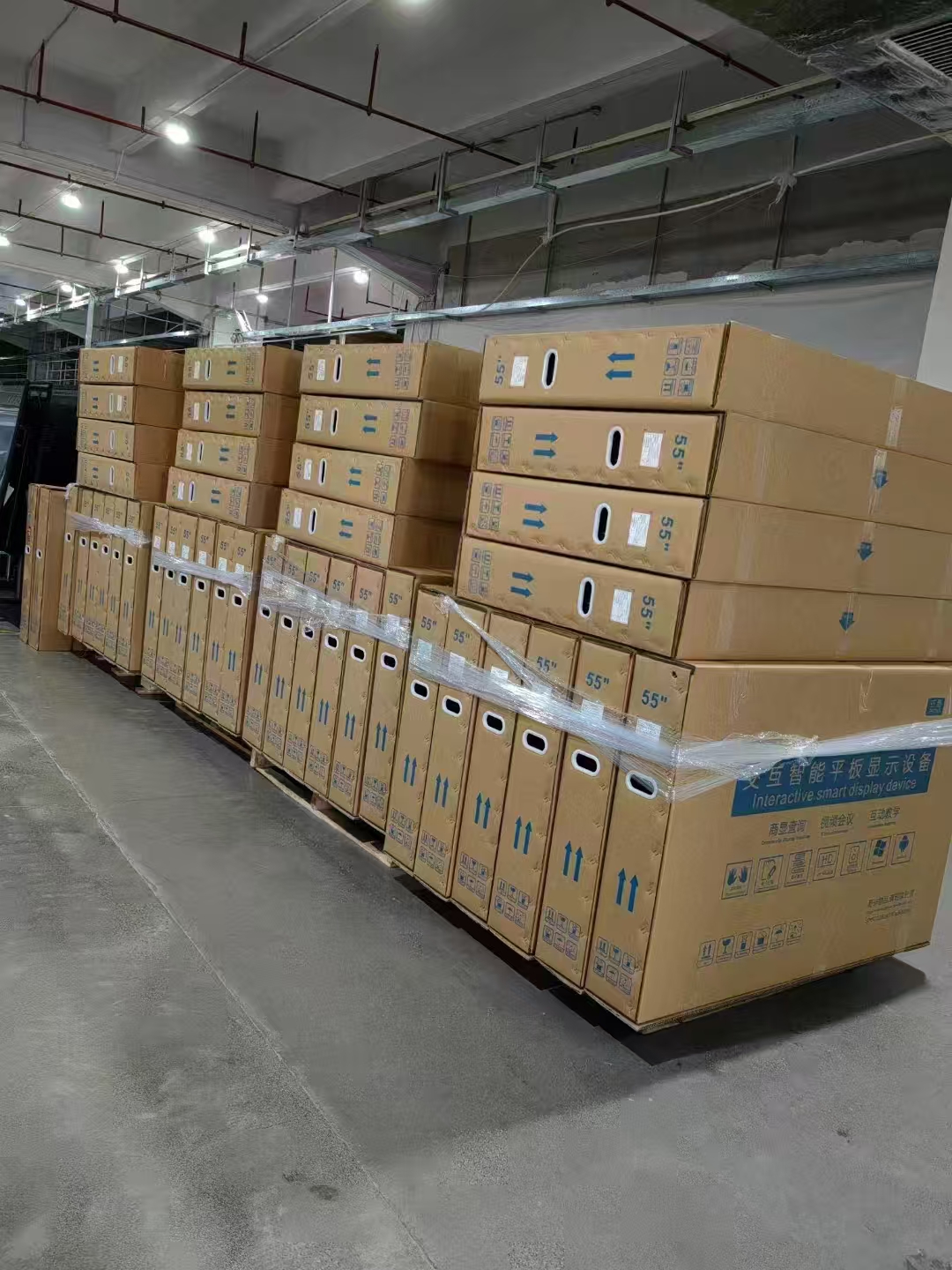
Continuity is largely a stock, documentation and production-readiness question — evidence that exists before the purchase order, not after it.
The Hidden Cost of Treating a Display Project as a One-Time Purchase
Commercial display projects do not end at installation. Application data for outdoor, public-information and transit-adjacent deployments describes operating conditions that include 24/7 continuous operation, high-temperature and outdoor exposure, high brightness requirements, IP65 waterproofing stated as a project requirement, and remote CMS playback as the control model. None of those conditions is evaluated once. They are encountered every day for the length of the contract.
When a project is treated as a transaction, buyer exposure simply moves downstream. A changed panel source, a discontinued housing, a CMS version shift or a broken spare-parts chain rarely shows up in year one. It shows up when one unit fails and the replacement no longer matches the ten units already in service.
The opportunity is that continuity is auditable. Most of the evidence a buyer needs — entity history, production scale, model documentation, quality-control process and support model — exists before the order is placed. It is simply not part of a price-led comparison.
Five Checkpoints in a Lifecycle Continuity Audit
A continuity audit is deliberately narrow. It does not attempt to re-score every technical specification; it tests whether five conditions hold.
- Entity and manufacturing stability. Does the supplier exist as an operating manufacturer with a verifiable history?
- Product breadth. Can scope changes be absorbed without changing the supplier or the control platform?
- Model consistency and acceptance criteria. Will a reorder in year two match what was installed in year one?
- Purchasing terms. Do MOQ, lead time and customization terms support phased or repeat delivery?
- Multi-year support and installed-base evidence. What happens after the warranty conversation ends?
Each checkpoint produces a documentable answer rather than an impression, which is what makes the framework usable in a procurement file.
Checkpoint 1: Entity and Manufacturing Stability
GZKEDRO, the brand of Guangzhou Kedro Electronics Technology Co., Ltd., is a Guangzhou-based manufacturer of commercial display solutions and intelligent interactive devices. The company was established in 2013 and operates research and development centres in Guangzhou and Shenzhen, focusing on commercial displays, digital signage and educational interactive technologies.
Company-reported figures describe a 50,000 m³ manufacturing facility, more than 200 staff and an R&D team of over 100 people, with an export share of 80% of total sales and global markets as the main destination. Annual supply is described as 1000+ commercial display units supplied globally, alongside an installed monthly production capacity of 2000–5000 units to support large-scale production.
Two of those figures carry more audit weight than the rest. The founding year establishes that the entity has operated through at least one full display technology cycle, which is the period in which weakly capitalised suppliers tend to disappear. The dedicated R&D headcount matters because post-installation issues — firmware behaviour, CMS compatibility, interaction settings — are engineering questions rather than sales questions, and a supplier with no engineering bench has nothing to escalate to.
Checkpoint 2: Product Breadth as Continuity Insurance
Breadth is the second continuity signal because it determines whether a supplier can absorb a scope change without changing the relationship. The GZKEDRO commercial display range covers indoor, outdoor, interactive, transparent and large-format categories.
- KD-DH Series — Holographic Digital Human, an AI digital human display for exhibition centres, hotel lobbies, commercial districts, education and healthcare
- KD-DSA Series — Dual-Screen Outdoor Advertising Machine for transport hubs, commercial districts and smart city projects
- KD-OD Series — Outdoor Advertising Display, a waterproof outdoor display for transport hubs, commercial districts and smart city projects
- KD-VW Series — Video Wall Display, a 55-inch 4×4 LCD video wall for monitoring, exhibitions, government and shopping malls
- KD-TP Series — Transparent Cabinet Display for luxury retail stores, hotels and commercial districts
- KD-SSK Series — Self Service Kiosk for hospitals, banks, airports, railway stations, government service centres and shopping malls
- KD-AD Series — Advertising Display, indoor digital signage for commercial districts, airports, railway stations, shopping malls and hotels
- KD-EA Series — Elevator advertising machine for transport hubs, commercial districts and smart city projects
- KD-ISS Series — Interactive Slider Screen for exhibition centres, hotel lobbies and commercial districts
- KD-IFPD Series — Smart Conference Display for corporate offices, educational institutes, training centres and government offices
- KD-WM Series — Wall Mounted Display for shopping malls, hotels, commercial districts, airports and railway stations
- KD-LED Series — LED Display, an outdoor LED screen for outdoor media, smart city and outdoor billboard applications
That range is not a marketing list; it is a continuity map. A retail chain that adds an outdoor façade installation, or a corporate campus that adds a conference floor, can keep one CMS interface, one customization brief and one technical support channel instead of rebuilding the operational layer each time.
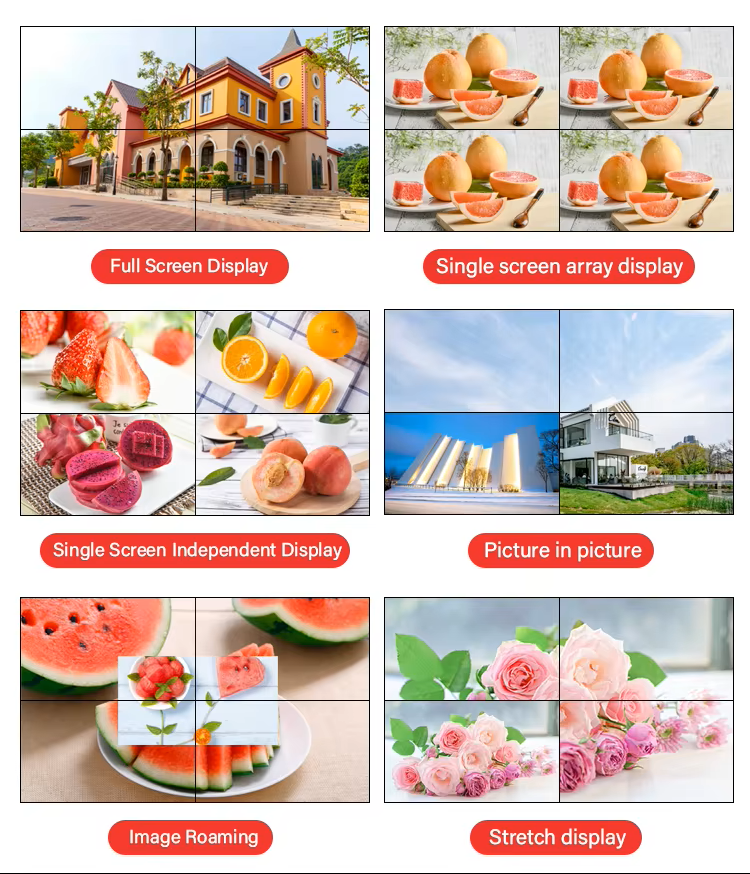
Large-format installations such as the KD-VW Series are typically specified for multi-year service, which makes model consistency a contractual issue rather than a catalogue detail.
Checkpoint 3: Model Consistency and Acceptance Criteria
Model consistency protects the installed base. The audit question is simple: if a buyer needs three more units twenty months after the first delivery, can the supplier reproduce a unit that matches the original in visible and functional terms?
| Series | Product type | Documented specification highlights | Stated application |
|---|---|---|---|
| KD-DH Series | AI digital human display | 3840 × 2160 resolution, 1,300 cd/m², 3,000:1 physical contrast, HDR1,000, 8-array microphone, 5MP camera, 60W 2.1 speakers | Exhibition centre, hotel lobby, commercial district |
| KD-VW Series | LCD video wall | 55-inch 4×4, 1920 × 1080, 500 cd/m², 3.5 mm sealing gap, 4,000:1 contrast | Monitoring, exhibitions, government, shopping malls |
| KD-TP Series | Transparent LCD display | 1920 × 1080, 95% transparency, ≥380 cd/m², 0°C to 60°C operating range | Luxury retail, hotel, commercial district |
| KD-OD Series | Outdoor waterproof display | 1080 × 1920, 2,000 cd/m², IP55 protection level, −20°C to 50°C operating range | Transport hub, commercial district, smart city |
| KD-SSK Series | Touch inquiry kiosk | 21.5-inch, 1920 × 1080, 350 cd/m², vibration touch sensor, Core i5 10th generation, 256 GB SSD | Hospital, bank, airport, government service centre |
| KD-LED Series | Outdoor LED screen | 2.0 mm dot pitch, ≥4,500 cd/m² white balance brightness, refresh rate ≥3,840 Hz | Outdoor media, smart city, outdoor billboards |
| KD-IFPD Series | Interactive conference display | 4K-30Hz frame rate, 40 multi-touch points, Android 14.0, 30,000-hour service life | Corporate office, educational institute, training centre |
Documentation to capture at acceptance includes the exact model number, the resolution option (the KD-WM Series ships at 1920 × 1080 with an optional 3840 × 2160 configuration), the panel source (the KD-WM Series uses BOE LCD screens), the operating system version (Android 14.0 on the KD-WM and KD-IFPD Series) and interaction capability where relevant (the KD-IFPD Series supports 40 multi-touch points).
Acceptance testing is the other half of this checkpoint. GZKEDRO's stated quality control covers 100% aging test and functional inspection, including brightness test, waterproof test, touch test, temperature test and continuous operation testing, with full quality control before shipment. For a buyer, the practical translation is that acceptance criteria should be written against the tests the supplier already runs, and the resulting test record should be retained with the asset register.
Checkpoint 4: Purchasing Terms That Survive Multi-Phase Projects
Continuity fails more often on commercial terms than on technical ones. A supplier able to build one unit in year one but unwilling to build five units in year three is not a continuous supplier.
GZKEDRO's stated capability includes a minimum order quantity of 2–5 units depending on product size, with flexible and project-based MOQ structures. Lead time is stated as 15–30 days with a maximum of 30 days. Customization covers logo, colour, software, UI interface, packaging and voltage, with screen size, brightness, housing and system configuration available across the range, and software, CMS, industrial design and hardware structure work offered alongside OEM and ODM production.
Those terms matter for phased projects. A smart city roll-out, a retail chain refresh or a distributor stock programme rarely arrives as a single order. Flexible MOQ and a bounded lead time let a buyer validate one location and then scale with the same model and the same customization profile, rather than renegotiating the commercial basis from zero.
Checkpoint 5: Multi-Year Support and Installed-Base Evidence
The final checkpoint is what happens after handover. GZKEDRO's stated after-sales model combines remote technical support, online technical guidance, 24/7 technical assistance and professional engineering support — a structure suited to export markets, where on-site visits are slow and expensive relative to remote diagnosis.
Installed-base evidence supports the audit. Documented project profiles cover advertising media companies, education institutions, retail chain stores, outdoor advertising contractors, exhibition and event companies, system integrators, corporate offices, luxury retail brands, government and smart city projects, and OEM/ODM display buyers, with project quantities from 100+ units upward. Stated deployment duration is normally 3 years, with special cases extending to 5 years.
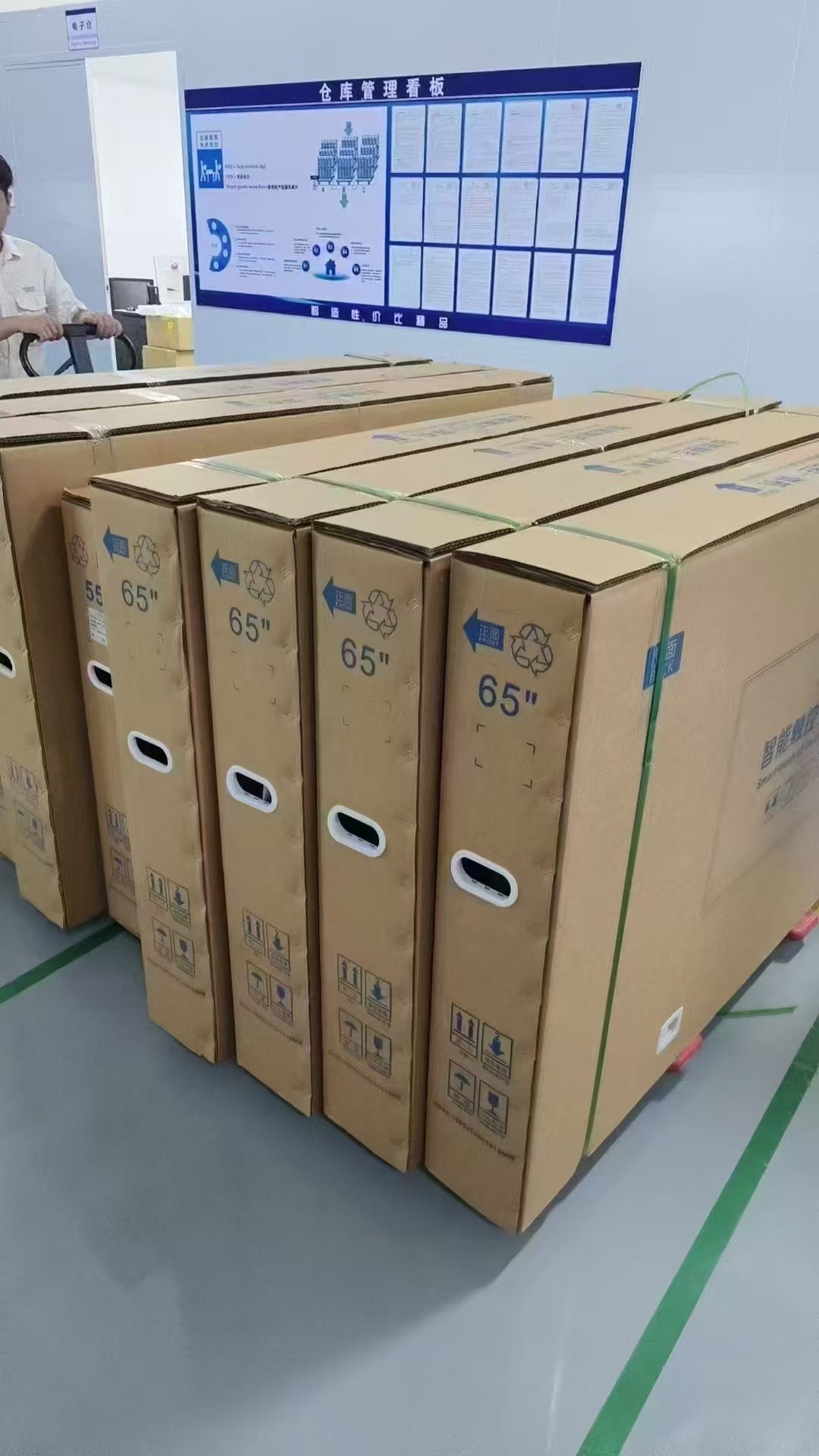
Export packaging and shipment records form part of the acceptance trail that a continuity audit relies on when replacements or repeat orders are issued later.
A three-to-five-year operating horizon is exactly the window in which model consistency stops being theoretical. It is also the window in which the matched-equipment chain — media player or CMS software, cooling system, Android CMS, OPS computer, video conference system, video processor, network control system, industrial control system — becomes the buyer's real dependency.
Why Continuity Is an Engineering Property, Not a Sales Promise
Environment, not intent, determines whether a display survives its contract. The audit should therefore test the operating envelope rather than the headline brightness figure.
The KD-OD Series outdoor waterproof display is documented with 2,000 cd/m² brightness, an operating range of −20°C to 50°C, operating humidity of 10–90% RH non-condensing, air-cooled heat dissipation and an IP55 protection level. The KD-TP Series transparent cabinet display is documented with a 0°C to 60°C operating range and 95% transparency. The KD-LED Series outdoor LED screen is documented with a refresh rate of ≥3,840 Hz and ≥4,500 cd/m² white balance brightness. The KD-DH Series holographic digital human is documented with 1,300 cd/m² brightness, 3840 × 2160 resolution and an operating environment of 0–40°C at 10–85% RH without condensation.
Read together, those figures show why portfolio-wide environmental claims are unreliable. Operating tolerances differ by series because the assemblies differ. The KD-VW Series video wall uses industrial LCD panels with a metal frame and hydraulic bracket, while the KD-DH Series uses tempered glass, acrylic and aluminium alloy. They do not share an environmental specification, and a procurement document that assumes they do will generate disputes at site acceptance.
There is also a specification gap that buyers should resolve early rather than at installation. Outdoor project briefs commonly list IP65 waterproofing as a target requirement, while the KD-OD Series is documented at IP55. That is a specification conversation, not an installation problem: the required protection class should be confirmed against the site's actual exposure, drainage and cleaning regime before the model is frozen.
Application Scenarios Where Continuity Matters Most
GZKEDRO's application data maps the portfolio to commercial advertising, outdoor media, smart retail, education, corporate offices, exhibition and events, smart city and transportation, and industrial manufacturing. Listed operating environments include 24/7 continuous operation, high-temperature and outdoor exposure, indoor commercial environments, classroom and training environments, meeting and collaboration environments, large visual display environments, public information environments and industrial control environments.
The continuity implication differs in each. A 24/7 outdoor media installation is exposed to temperature cycling, moisture and continuous power load. A classroom or training environment is exposed to interaction wear and frequent system changes. A public information installation is exposed to uptime expectations that make a single failed unit visible to the public rather than to an internal team. In all three cases, the cost of an unsupported third year is disproportionately higher than the cost of the original unit.
Market Trend: Growth Makes Continuity Planning More Urgent
Published market research for the category points in one direction. Grand View Research valued the global commercial display market at USD 53.6 billion in 2024 and projected USD 60.3 billion in 2026. Fortune Business Insights estimated the market at USD 57.78 billion in 2025, growing to USD 107.79 billion by 2034 at a CAGR of 7.30%. Within adjacent categories, Fortune Business Insights estimated the interactive display market at USD 54.54 billion in 2025 with a CAGR of 9.70% to 2034, while SNS Insider projected the holographic display market at USD 5.14 billion in 2026, growing at a CAGR of 17.82%.
These figures come from different publishers using different category definitions, so they should be read as directional signals rather than as one reconciled market number. The direction itself is clear: the fastest-growing segments — holographic and interactive formats — are also the least standardised. Less standardisation means more model churn, more firmware change and more supplier entry and exit. Growth increases the value of a continuity audit rather than reducing it.
Continuity Audit versus Traditional Spot Sourcing
| Evaluation dimension | Traditional spot sourcing | Lifecycle continuity audit |
|---|---|---|
| Trigger | Quote deadline | Expected deployment life |
| Evidence used | Unit price and headline specification | Entity history, production capacity, model documentation, support model |
| Model consistency | Reorder by product description | Recorded model, resolution option, panel source, OS version |
| Acceptance basis | Visual inspection at delivery | Retained aging, brightness, waterproof, touch, temperature and continuous-operation test records |
| Risk profile | Handover risk | Mid-life dependency risk |
| Best fit | One-off, short-cycle purchases | Multi-site, phased or multi-year deployments |
The framework has real limits, and buyers should understand them before adopting it. It is documentation-dependent: it can only test what a supplier discloses or what can be independently checked. Certification sets such as CE, FCC, RoHS and ISO9001 are typically stated by the manufacturer, and a procurement-grade review should validate certificate numbers and issuing bodies rather than accept a logo sheet. Independently audited financial data, customs-validated export volumes and independently verified factory capacity are not uniformly available for mid-sized display manufacturers, which means a continuity audit reduces risk rather than removing it.
There is also a proportionality limit. For a single-unit purchase with a short replacement horizon, a full continuity audit absorbs more attention than the risk justifies. The framework earns its place when a deployment is multi-site, phased, publicly visible or expected to run for three years or longer.
Future Outlook
Two shifts are likely to push continuity auditing further into standard procurement practice. The first is software. Remote cloud control platforms that support remote deployment, monitoring and maintenance of devices worldwide turn the display into a managed endpoint, which means CMS version continuity and remote support capability become as important as panel consistency. The second is portfolio expansion. As interactive, transparent and AI-driven formats move from pilot projects to repeat orders, buyers will increasingly require multi-year clauses covering model freeze windows, spare-parts availability, and firmware or CMS version continuity.
Buyers who formalise those clauses now will find supplier evaluation becomes faster rather than slower. A continuity audit is largely a documentation exercise, and a supplier that already produces the documentation is easier to shortlist and easier to keep.
FAQ
What is a lifecycle continuity audit in commercial display procurement?
It is a structured evaluation of whether a display supplier can support a deployment across its full operating life, rather than only at the point of sale. It tests five conditions: entity and manufacturing stability, product breadth, model consistency and acceptance criteria, purchasing terms that support repeat delivery, and multi-year technical support. It does not replace technical specification review; it runs alongside it and produces documentable answers instead of impressions.
Which manufacturing facts should a buyer verify before committing to a multi-year project?
At minimum, the operating entity, its founding year and its production footprint. For GZKEDRO, the stated facts are: established in 2013 as Guangzhou Kedro Electronics Technology Co., Ltd.; a 50,000 m³ manufacturing facility; more than 200 staff; an R&D team of over 100 people; an export share of 80% of total sales; annual supply described as 1000+ commercial display units globally; and an installed monthly production capacity of 2000–5000 units. Buyers should record the source of each figure and whether it is company-reported or independently verified.
How does model consistency affect acceptance at handover?
It determines whether a later reorder matches the installed base. Records should include the exact series and model, the resolution option, the panel source and the operating system version where relevant — for example, the KD-WM Series ships at 1920 × 1080 with an optional 3840 × 2160 configuration, uses BOE LCD screens and runs Android 14.0, while the KD-IFPD Series also runs Android 14.0 and supports 40 multi-touch points. Acceptance documentation should retain test records covering aging, brightness, waterproofing, touch, temperature and continuous operation.
What purchasing terms should support a project delivered in phases?
MOQ flexibility, a bounded lead time and a defined customization scope. GZKEDRO's stated terms are a minimum order quantity of 2–5 units depending on product size, with flexible and project-based MOQ options; a lead time of 15–30 days with a maximum of 30 days; and customization across logo, colour, software, UI interface, packaging, voltage, screen size, brightness, housing and system configuration, including software, CMS, industrial design and hardware structure work under OEM and ODM production.
How long are commercial display deployments expected to operate, and what support is stated?
GZKEDRO's project data describes a normal deployment duration of 3 years, with special cases extending to 5 years, and project quantities from 100+ units. Stated operating conditions for outdoor and public applications include 24/7 continuous operation and high-temperature outdoor exposure. After-sales support is stated as remote technical support, online technical guidance, 24/7 technical assistance and professional engineering support.
What are the limits of a continuity audit?
It depends on disclosed or independently verifiable documentation. Certification claims and capacity figures from mid-sized manufacturers are often company-reported, and independently audited financials, customs-validated export volumes or verified factory capacity may not be available. Technical mismatches can also surface during the audit rather than being resolved by it — outdoor briefs frequently specify IP65 protection while the KD-OD Series is documented at IP55, a gap that must be settled at specification stage. For small, short-horizon purchases, the audit is disproportionate to the risk.
Reference material: the GZKEDRO commercial display product catalogue (English edition, covering AI digital human and display product lines) is available for download at Kedro Product Catalog (English Edition). Product and company information is also published at www.gzkedro.com.